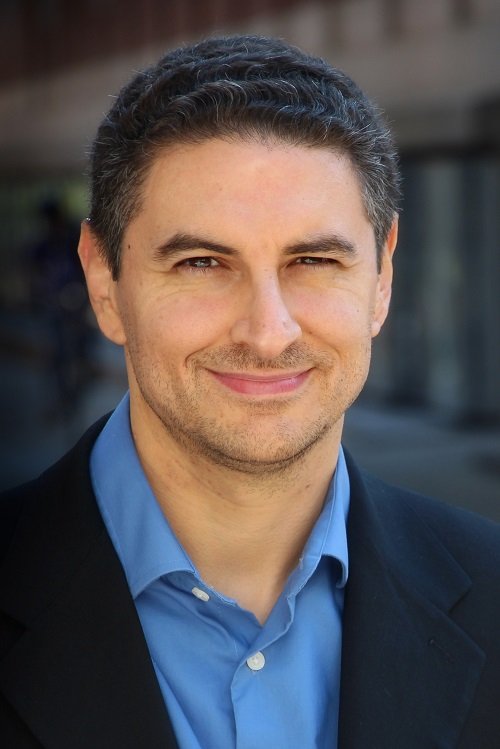
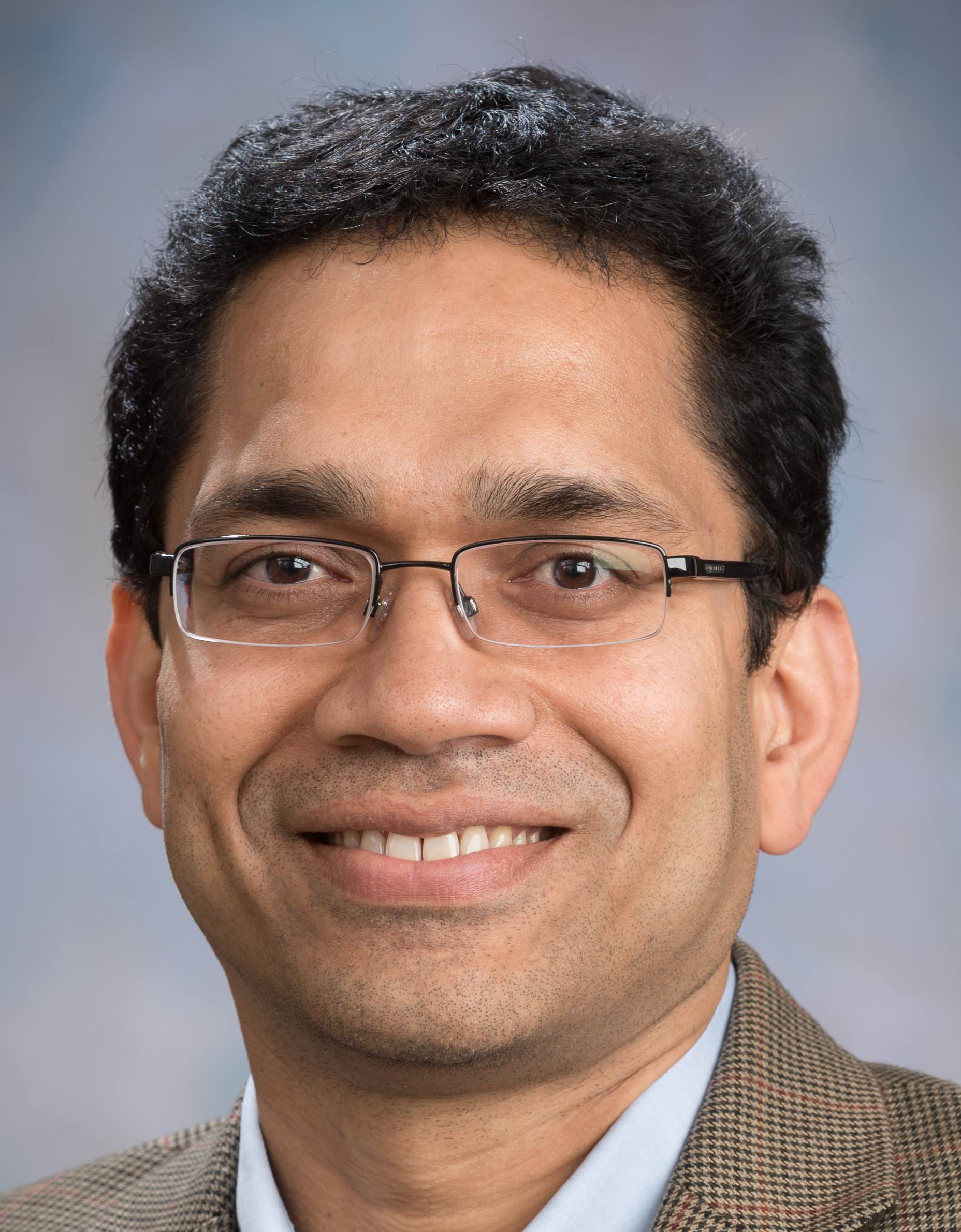
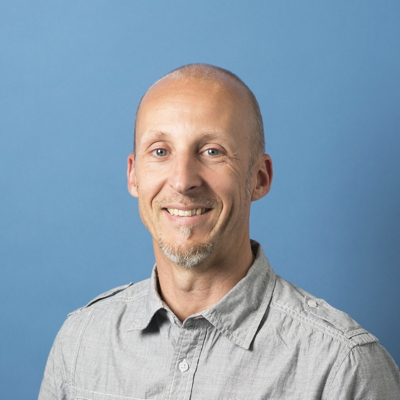
Michael McAlpine is a Professor in the Mechanical Engineering department at the University of Minnesota . He also holds affiliations with the Biomedical Engineering and Electrical and Computer Engineering departments. His research focuses on 3D printing functional materials & devices , Nanoscale inks , Biomedical devices , Bioelectronics , and Flexible Microsystems . Research Interests : 3D Printing, Biomedical Engineering, Nanotechnology, Flexible Electronics, Microfluidics Labs : ME 361/363 Contact : mcalpine@umn.edu , (612) 626-3303, ME 117 Recent Research Trends include 3D Printed Biomedical Devices , Flexible Electronics , and Bioprinting Applications . His work spans from Spinal Organoid Formation to Programmable Drug Release Capsules . Scientific Award : Circulation Research 2020 Best Manuscript Award
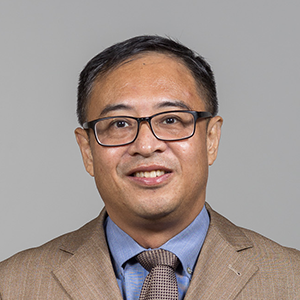
Zhiyong Huang is an Associate Professor at the National University of Singapore (NUS) School of Computing. He holds multiple leadership roles, including Deputy Director of the NUS Business Analytics Centre, Director of the Computing Translational Research & Development (C-TReND) Centre, and Assistant Dean (Industry Relations). He is also a Senior Principal Investigator at the NUS Chongqing Research Institute. Education: PhD in Computer Science from École Polytechnique Fédérale de Lausanne (EPFL), MEng and BEng in Computer Engineering from Tsinghua University. Leadership: Senior Member of ACM and IEEE, Pioneer Member of ACM SIGGRAPH, and Chair of the Singapore ACM SIGGRAPH Chapter. Research Interests: His work spans Data Analytics, Machine Learning, Computer Vision, Human-Robot Interaction, and Computer Graphics. Key projects include the NUS Digital Twin initiative and secure data analytics pipelines. Article Trends: Recent publications focus on time series generation, cryptocurrency benchmarks, medical image registration, and phishing detection. These works integrate machine learning, computer vision, and multimodal systems. Scientific Awards: Finalist, World Technology Summit & Awards (Entertainment, 2010) Bronze, National Science and Technology Progress Award (1992) Tsinghua 12.9 Distinguished Young Teacher Award (1989) Grants & Service: Extensive involvement in Singapore's IT Standards Committee, review panels for EDB SIIRD projects, and editorial roles. He has served as PC co-chair, local chair, and reviewer for numerous conferences and journals.
Arie E. Kaufman is a Distinguished Professor in the Department of Computer Science at Stony Brook University, serving as Chief Scientist of the Center of Excellence in Wireless and Information Technology (CEWIT) and Director of the Center of Visual Computing (CVC). He additionally holds a Distinguished Professorship in Radiology, with a 40+ year career at Stony Brook since joining in 1985 and chairing the CS department from 1999-2009. His seminal research spans computer graphics, visualization, and virtual reality with biomedical applications, pioneering breakthroughs including 3D Virtual Colonoscopy (FDA-approved colon cancer screening), Cube hardware architectures (commercialized as VolumePro), the Reality Deck (1.5 billion-pixel immersive display), and foundational work in volume visualization. His interests focus on real-time rendering, medical imaging, and immersive analytics, with recent work integrating machine learning for healthcare and environmental risk visualization. Recent publications demonstrate continued leadership in high-resolution immersive displays (Silo), XR analytics with LLMs, storm surge visualization, and neural reconstruction techniques. His work bridges theoretical innovation with practical applications, particularly in pancreatic cancer prognosis and disaster preparedness. Major honors include: IEEE Visualization Career Award (2005) Fellow of the National Academy of Inventors (2017) ACM Fellow (2009) IEEE Fellow (1998) Long Island Technology Hall of Fame (2013) European Academy of Sciences membership (2002) As PI on 100+ research grants, Kaufman's work has generated 300+ refereed papers, 40+ patents, and extensive media coverage (New York Times, Science, Wall Street Journal). He leads the Center of Visual Computing with focus on translational research, including VolVis software (5,000+ installations) and Reality Deck deployments for big data analytics. His lab develops cutting-edge visualization infrastructure for medical diagnostics and environmental modeling, with current projects advancing immersive storm surge analytics, neural structure extraction, and VR-based risk communication systems. Future work emphasizes AI-enhanced visualization for precision medicine and climate resilience planning.
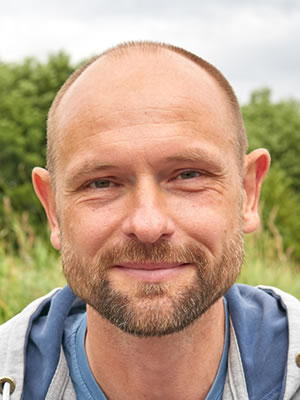
Prof. Dr. sc. techn. ETH Oliver Staadt is Full Professor of Computer Science and Chair of Visual Computing at the University of Rostock , Germany. Since 2023 he also serves as Director of the Institute for Visual and Analytic Computing within the Faculty of Computer Science and Electrical Engineering . Previously he was Dean (2016–2018) and Vice Dean (2010–2016) of the same faculty. Education Ph.D. in Computer Science, ETH Zürich (2001) M.Sc. in Computer Science, TU Darmstadt (1994) Research Interests Prof. Staadt’s research spans virtual and augmented reality , computer graphics , visualization , telepresence , immersive analytics , and human–computer interaction . A particular focus lies on real-time rendering and display technologies for large high-resolution display systems, depth-image enhancement for RGB-D sensors, and interaction techniques that leverage spatial cognition and eye-tracking. His work is frequently applied to collaborative settings and microgravity environments, including experiments aboard parabolic flights and the International Space Station. Recent Publication Trends Between 2019 and 2021 his output centers on foveated rendering , AR viewpoint guidance , collaborative analytics on wall-sized displays , and embodied interaction metaphors . Earlier work addressed bandwidth-efficient telepresence, depth-image filtering, and physically-based animation. The corpus reveals a steady evolution from fundamental graphics algorithms toward applied immersive systems. Scientific Awards & Honors Fellow of the Eurographics Association Associate Editor, IEEE Transactions on Visualization and Computer Graphics (past) Associate Editor, Computers & Graphics (past) Associate Editor, Computer Animation and Virtual Worlds (past) Associate Editor, Frontiers in Virtual Reality (current) Chair, Expert Group on Virtual & Augmented Reality, German Informatics Society (2013–2020) Advising & Funding He has successfully supervised more than ten PhD graduates whose dissertations range from collision detection and physically-based animation to 3D interaction in microgravity and predictive user modeling. Current PhD researchers include Bipul Mohanto, Mana Takhsha, and Sven Kluge. His projects are supported by national and EU programs such as EVOCATION, SMOOTH, ARGuide, 3DPick, DIVA, and Telepresence. Labs & Teams Prof. Staadt leads the Visual Computing Group at Rostock, operating state-of-the-art facilities including large tiled display walls, VR/AR laboratories, and motion-capture systems. The institute hosts interdisciplinary collaborations with partners in visualization, computer vision, psychology, and aerospace engineering.
Christian Tominski serves as an apl. Professor (non-tenured) at the University of Rostock, holding the außerplanmäßige Professur for Human-Data Interaction within the Institute for Visual and Analytic Computing. His academic work spans teaching in Visual Computing and Computer Science programs, with active research contributions in data visualization and visual analytics. His research focuses on multi-variate data visualization, time-series and geo-visualization, graph visualization, and coordinated multiple views. He investigates interaction techniques including interactive lenses, visual comparison, navigation, and guidance mechanisms, alongside computational aspects such as efficient algorithms and asynchronous processing for visualization systems. Recent work emphasizes task-driven approaches and analytic support for interactive exploration. Analysis of his publication trends reveals strong emphasis on visual analytics for complex data structures, particularly in process mining and multivariate graphs. His work consistently explores guidance frameworks, progressive computation models, and novel interaction paradigms for large high-resolution displays, bridging theoretical foundations with practical applications in visual data analysis. Tominski holds professional roles as a member of the Faculty Council of IEF and the System Technical Group of Computer Science Institutes at the University of Rostock. He actively participates in the Informatik-Forum Rostock (INFO.RO), contributing to the regional computer science community through collaborative initiatives and knowledge sharing.
Shrideep Pallickara is a Professor in the Department of Computer Science at Colorado State University, where he also directs the Center for eXascale Spatial Data Analytics and Computing (XSD) . His research is funded by the National Science Foundation, Department of Homeland Security, Environmental Protection Agency, Department of Agriculture, and the UK's e-Science program. Research Interests: His research lies at the intersection of machine learning and large-scale systems, focusing on: Spatiotemporal data management and analytics Extreme-scale storage systems Stream processing for IoT and cyber-physical systems Deep learning over petabyte-scale, high-dimensional datasets Model construction for forecasting natural and urban phenomena His work addresses challenges in computational tractability, resource utilization, and convergence in distributed environments. Systems developed in his lab are deployed in domains such as urban sustainability, agriculture, epidemiology, environmental monitoring, healthcare, and defense. Research Trends in Publications: His recent publications demonstrate a strong focus on scalable analytics for geospatial and environmental data. Key themes include deep learning for soil moisture and salinity prediction, efficient visualization of massive satellite datasets, spatiotemporal search and summarization, and model performance profiling across spatial domains. The work integrates scientific domain knowledge with machine learning and systems innovation. Scientific Awards: NSF CAREER Award Board of Governors Award for Excellence in Undergraduate Teaching OLIE Award N. Preston Davis Award Monfort Professorship Best Paper Award at IEEE/ACM CCGrid 2019 Best Paper Award at BDCAT 2023 Best Paper Award at IEEE Cluster 2012 Best Student Paper Award at IEEE CloudCom 2010 Shortlisted for ACM DEBS-2015 Grand Challenge Award One of the Six Best Papers at ACM/IEEE GRID 2005 Advising and Grants: He advises numerous graduate students, many of whom are co-authors on his publications. His research is supported by major grants from NSF, DHS, EPA, USDA, and UK e-Science, enabling the development of open-source systems such as Granules, NaradaBrokering, Galileo, Funnel, and Spindle. Labs and Teams: He leads the XSD Center, which develops and maintains large-scale open-source software systems involving over 2500 classes and a million lines of code. These systems are used in academic, commercial, and defense applications.
Hans-Peter Seidel is a leading academic in computer graphics, serving as Director of the Max Planck Institute for Informatics and Full Professor at Saarland University since 1999. Previously held roles include Full Professor at University of Erlangen (1992–1999) and Assistant Professor at University of Waterloo (1989–1992). Holds a PhD in Mathematics (1987) and Habilitation in Informatics (1989) from University of Tübingen. Research focuses on 3D image analysis, digital geometry processing, visual computing, and free viewpoint rendering. Key achievements include pioneering work in surface editing, motion capture, and multi-view video processing. Has organized major conferences like Eurographics and SIGGRAPH, serving as editor for journals including IEEE TVCG and Computer Aided Geometric Design. Recipient of the Eurographics Distinguished Career Award (2012), Gottfried Wilhelm Leibniz Prize (2003), and numerous fellowships. Led initiatives such as the Cluster of Excellence on Multimodal Computing and Interaction (M2CI) and the Max Planck Center for Visual Computing and Communication (MPC-VCC). Active in academic leadership roles including Eurographics Chair and DFG committees. Publications span over 30 SIGGRAPH and 50 Eurographics contributions, with an h-index of 62 and 14,000+ citations. Recognized as a top-cited researcher in computer graphics. Current research explores advanced visualization techniques and geometric modeling innovations.
Prof. Dr. Renato Pajarola is the Head of the Visualization and MultiMedia Lab at the Department of Informatics, University of Zurich. His research focuses on computer graphics, scientific visualization, and geometric processing, with applications in 3D scanning, point cloud analysis, and real-time rendering. He leads a team developing advanced visualization techniques for high-dimensional data, parallel rendering frameworks, and interactive systems for complex datasets. Key research areas include: 3D reconstruction of indoor environments Tensor approximation for volume visualization Interactive ray tracing and point cloud processing Parallel rendering frameworks (e.g., Equalizer) Scientific computing and sensitivity analysis His recent publications emphasize: High-dimensional data exploration using tensor methods Efficient rendering techniques for large-scale point clouds Integration of citizen-reported weather data for environmental analysis Prof. Pajarola’s lab collaborates on projects like VIAN (visual annotation tool for film analysis) and Terrender (web-based terrain visualization). His Erdős number is 3, reflecting interdisciplinary research connections in mathematics and computer science.
Nicholas Tan Jerome is a Researcher at the Karlsruhe Institute of Technology (KIT), specifically working at the Institute for Process Data Processing and Electronics (IPE). His research focuses on scientific data management, real-time monitoring, low-latency computing, and scientific visualization for large-scale physics experiments and medical imaging applications. Dr. Jerome earned his PhD in Electrical Engineering from KIT in 2019, following an MSc (2010) and Dipl.-Ing. (2009) from University of Applied Science Mannheim. His educational background in electrical and automation engineering provides the foundation for his current research in scientific data systems. His research program addresses critical challenges in managing and visualizing data from large-scale scientific experiments. Dr. Jerome has developed innovative approaches for real-time data processing, low-latency visualization, and scientific data management systems. His work bridges computer science, electrical engineering, and domain-specific applications in physics and medical imaging, with particular focus on applying machine learning to time-series forecasting and causal inference in complex experimental setups. Analysis of his recent publications reveals a strong trajectory in neutrino physics data systems (KATRIN experiment) and advanced visualization frameworks (BORA). His work demonstrates consistent innovation in making scientific data more accessible and interpretable for researchers working with complex experimental setups. Dr. Jerome has received recognition through publications in high-impact journals including Science, Nature Communications, and Physical Review Letters. His collaborative approach is evident in his extensive co-authorship across physics, computer science, and biomedical domains. He has advised or collaborated with numerous researchers across disciplines, contributing to projects that integrate data acquisition, processing, and visualization for scientific discovery. His current work focuses on developing practical tools that help scientists make better, faster decisions from noisy and high-dimensional experimental data. Dr. Jerome leads development of the BORA framework for personalized data display in large-scale experiments and contributes to the KATRIN experiment's scientific data management infrastructure. His technical expertise spans real-time systems, scientific visualization, and machine learning applications for experimental physics.
Jonathan Sarton is a Lecturer in Computer Science at the University of Strasbourg and a Researcher at the ICube laboratory. He holds an affiliation with the Geometric and Graphics Computing (IGG) team within the UFR of Mathematics and Computer Science. His primary research focuses on scientific visualization, volume rendering, and GPU programming. Education includes a PhD (2018) from the University of Reims Champagne-Ardenne titled 'High-performance interactive visualizations of massive volumetric data: an out-of-core multiresolution approach based on GPUs' , and a Master's in Visualization, Imaging, and Performance (2014) from the University of Orléans. He has held roles including Temporary Teaching and Research Associate (ATER) at the University of Reims (2018-2019) and a doctoral researcher at CReSTIC (2015-2018). Current research emphasizes interactive visualization of large unstructured meshes from numerical simulations, supported by the ANR LUM-Vis project. His technical work includes GPU-based out-of-core architectures for handling AMR time series data and distributed visualization systems. Professional activities include teaching computer science courses at undergraduate and graduate levels, focusing on 3D graphics, parallel programming, and algorithms. Professional contact: Office C118 at ICube, sarton@unistra.fr .
Tore Brox-Larsen is an Associate Professor in the Department of Informatics at UiT The Arctic University of Norway. He is actively involved in research and teaching, with a focus on distributed computing, high-performance systems, and visualization technologies. His work is centered on scalable systems for large displays, sensor networks, and remote data visualization, often in collaboration with interdisciplinary teams. His research interests include distributed and parallel computing, remote visualization over wide-area networks, large-scale display systems, health informatics, and Arctic monitoring technologies. He has contributed significantly to the development of systems for tiled display walls, genomics visualization, and sensor-based observatories. His work bridges theoretical computer science with practical applications in healthcare, environmental monitoring, and collaborative research environments. The most recent publications reflect a strong trend in applying computing technologies to real-world challenges, particularly in Arctic research and healthcare. His work emphasizes performance optimization, usability, and scalability in distributed systems. Topics span from low-level communication latency analysis to high-level collaborative visualization frameworks. Scientific Awards: No scientific awards mentioned in the provided text. Advising and Grants: There is no explicit information about students advised or research grants received. However, his extensive publication record and collaborative projects suggest active participation in funded research initiatives and potential mentorship of junior researchers and students. Labs and Teams: Tore Brox-Larsen is part of a long-standing research group at UiT involving Otto Anshus, John Markus Bjørndalen, and others, focusing on high-performance distributed systems. He has contributed to the development of the MultiStream system, scalable display walls, and the Arctic observatory sensor network. His work indicates involvement in both software and systems research teams, likely associated with UiT’s informatics infrastructure and high-performance computing initiatives.
Saeed Boorboor is a Principal Research Scientist at Stony Brook University's Center for Visual Computing and an Adjunct Assistant Professor at the University of Illinois at Chicago. His research focuses on immersive visualization systems, AR/VR/MR, medical imaging, and applied AI. He received his Ph.D. from Stony Brook University under Arie E. Kaufman and a B.S. from LUMS, Pakistan. He will join UIC as an Assistant Professor in Fall 2025. Education: Ph.D. in Computer Science, Stony Brook University (2015–2023) B.S. in Computer Science, LUMS, Pakistan (2010–2014) Research Interests: Dr. Boorboor designs visualization systems for scientific data exploration, leveraging immersive technologies like AR/VR. His work emphasizes human-centered design, applied AI, and novel interaction methods. Recent projects include Explainable XR , Silo , and NeuRegenerate . Publications & Awards: Over 20 peer-reviewed papers, patents in medical imaging, and awards including the IACS Junior Researcher Award and Stony Brook Chair Fellowship. His work has been presented at IEEE VIS, SIGGRAPH, and EuroVis. Teaching: Taught courses like CSE 366 (VR), EMP 532 (Big Data Systems), and mentored 17+ students. Currently recruiting students for his UIC lab.
Guido Reina is a Senior Academic Councillor at the Visualization Institute of the University of Stuttgart (VISUS), affiliated with the Ertl Working Group. His research focuses on scientific visualization, computer graphics, and virtual reality, with a particular emphasis on rendering techniques for particle data, foveated visualization, and reproducibility in visualization workflows. His work spans interdisciplinary applications, including porous media analysis, energy-efficient rendering, and integration of visualizations into gaming consoles. He has contributed to frameworks like MegaMol and explored adaptive resolution scaling for high-performance 2D visualization. Guido is also a co-author of the EGPGV 2023 Best Paper Award. EGPGV 2023 Best Paper Award Guido collaborates with teams at VISUS and the University of Stuttgart, advancing immersive analytics and in situ visualization methodologies. His publications highlight the evolution of visualization research toward handling large-scale datasets, optimizing rendering pipelines, and enhancing user interaction in augmented/virtual reality environments.
FH-Prof. Dipl.-Ing. Dr. Franz Fidler is a Professor and Head of the Faculty of Technology and Economics at St. Pölten University of Applied Sciences. He also serves as Academic Director for multiple Master’s programs including Digital Design, Media Management, and Interactive Technologies. His roles include overseeing the Department of Media and Digital Technologies, contributing to Extended University Leadership, and leading the Digital Future Management certification program. Dr. Fidler holds a Dr.techn. from Vienna University of Technology (2007) and has held academic and industrial roles, including post-doctoral research at Columbia University and Bell Labs (2008–2009). He was Technical Director at Global Bright Media and C SEED Entertainment Systems (2010–2013) and co-founded TriLite Technologies GmbH (2011). His research focuses on optical technologies, MEMS-based systems, laser displays, and Industry 4.0 applications. Publications highlight advancements in MEMS mirror systems, autostereoscopic displays, and decentralized production control. His work bridges academic and industrial innovation, with contributions to both technical and educational domains.
James C. Sturm is the Stephen R. Forrest Professor of Electrical Engineering and Associated Faculty at the Princeton Materials Institute. He leads the Sturm Lab, focusing on materials, processing, and devices for microelectronics and macroelectronics. His work spans silicon-based heterojunctions, three-dimensional integration, and large-area electronics for flexible displays and biomedical applications. He holds a B.S.E. from Princeton University and a Ph.D. from Stanford University. His research bridges nanoscale device scaling and low-cost, large-area manufacturing technologies for organic semiconductors and TFTs. Key research areas include VLSI scaling, optoelectronics, and applications of zinc-oxide thin-film transistors (ZnO TFTs) for GHz circuits. He has pioneered methods for microfluidic cell processing and structural health monitoring using sensing sheets. His lab develops soft robotics and hybrid LAE-CMOS systems for tactile sensing skins. Education: Ph.D., Stanford University, 1985 M.S.E.E., Stanford University, 1981 B.S.E., Electrical Engineering (Engineering Physics), Princeton University, 1979 His publications highlight breakthroughs in GHz-frequency electronics, piezoelectric robotics, and large-area RFID systems. Awards include the IEEE Fellowship and Princeton’s President’s Distinguished Teaching Award. He advises students in microelectronics, macroelectronics, and biomedical engineering. Recent work integrates AI with large-area electronics for smart spaces and explores drug gradient effects on cancer cell evolution. The Sturm Lab collaborates on projects like the 'evolution accelerator' for real-time cancer cell observation and 3D semiconductor integration with industrial FDSOI platforms.