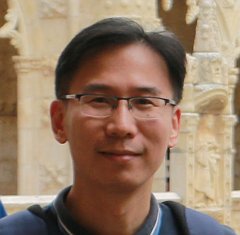
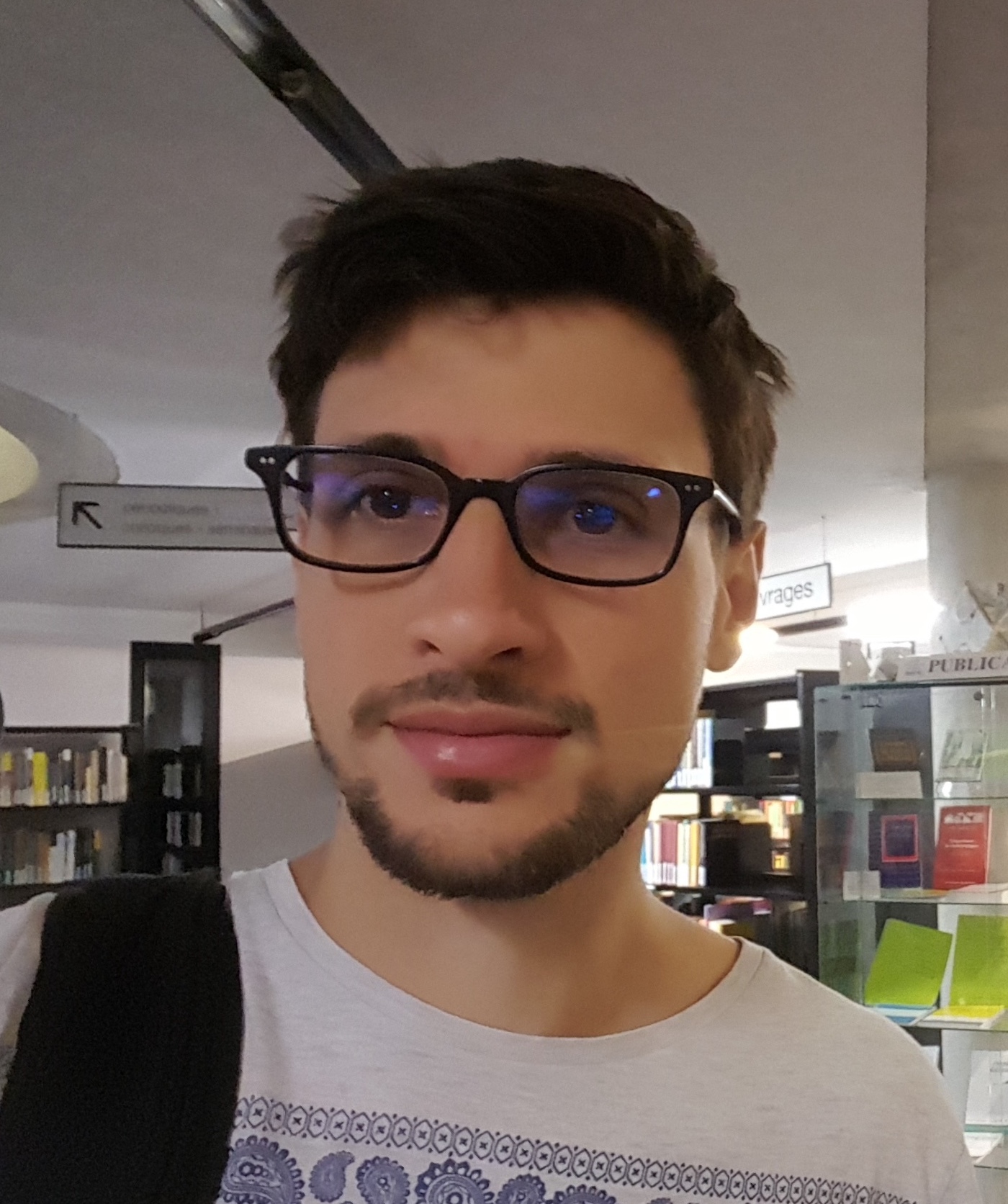
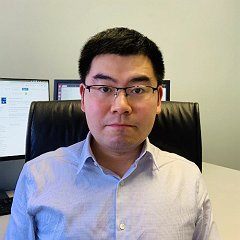
Prof. Dr. Nina Gantert is a distinguished Professor of Probability Theory at the Technical University of Munich (TUM) , affiliated with the TUM School of Computation, Information and Technology . She has held faculty positions at Karlsruhe Institute of Technology and the University of Münster prior to joining TUM in 2011. Her research focuses on probability theory , particularly stochastic processes , large deviations , and random media . She investigates random walks in random environments as models for transport in disordered systems and explores applications in physics and biology . Recent publications highlight her work on branching random walks , mixing times , biased random walks , and large deviation principles for complex stochastic systems. She has co-authored studies on random walks in dynamical percolation , interacting edge-reinforced processes , and extremal point processes in branching models. Scientific Awards: Elected fellow of the IMS (2016) Her academic career spans institutions including ETH Zürich, University of Bonn, Technical University of Berlin, and TUM. She has supervised numerous Bachelor’s and Master’s theses on topics ranging from mixing time analysis to percolation theory , often collaborating with international co-authors.
Noam Berger Steiger is a Professor of Stochastic Processes at the Technical University of Munich (TUM), within the School of Computation, Information and Technology and the Department of Mathematics. His office is located at Parkring 11, Garching bei München, and he can be contacted at noam.berger@tum.de. His research focuses on stochastic processes in random environments, percolation theory, and random walks. Key contributions include asymptotic analysis of preferential attachment graphs, quenched invariance principles for non-elliptic random walks, and slowdown phenomena in ballistic random motion. His work bridges theoretical probability with applications in complex systems. Analysis of his 2012-2014 publications reveals consistent focus on random walk dynamics in disordered media, with significant results on ballisticity conditions, trail detection in random scenery, and distributional limits. His research employs advanced probabilistic techniques published in top-tier journals including Annals of Probability and Probability Theory and Related Fields . Professor Berger has supervised 11 theses: 5 bachelor's theses at TUM covering Brownian motion properties and investment strategies for risk-averse investors, and 6 master's theses (3 at TUM, 3 at Hebrew University) on topics including return times for random walks, mass transport principles, and spin-glass percolation. His current teaching includes Markov Chains, Probability on Graphs, and Brownian Motion seminars. He is an active member of TUM's Probability Theory research group, which participates in the TUM-ICL Mathematical Sciences Hub and Exzellenzcluster MCQST. The group collaborates on quantum science initiatives while maintaining strong foundations in classical probability theory and stochastic analysis.
Max Planck Institute for the Physics of Complex SystemsGermany
Prof. Dr. Holger Kantz serves as Head of the research unit "Nonlinear Dynamics and Time Series analysis" at the Max Planck Institute for the Physics of Complex Systems in Dresden, Germany. He also holds an Adjunct Professorship (Honorprofessor) in Statistical Physics at the Institute of Theoretical Physics within the Department of Physics at the Technical University Dresden. Dr. Kantz's research spans multiple disciplines within nonlinear dynamics and statistical physics. His work focuses on time series analysis, nonlinear dynamics, stochastic processes, and complex systems. He has made significant contributions to understanding anomalous diffusion, extreme events prediction, and the statistical properties of chaotic systems. His research has applications in atmospheric science, climate modeling, power grid dynamics, and biological systems. Analysis of Dr. Kantz's recent publications reveals a strong interdisciplinary approach connecting statistical physics with climate science, energy systems, and scientometrics. His work demonstrates sophisticated applications of stochastic modeling to real-world complex systems, with particular attention to anomalous diffusion processes, extreme events, and predictability limits in chaotic systems. The publications show increasing methodological sophistication in handling nonstationary time series and developing predictive models for rare events. Dr. Kantz leads a research group focused on nonlinear dynamics and time series analysis at the Max Planck Institute. His work has significant implications for understanding and predicting complex phenomena across multiple scientific domains, from climate dynamics to power grid stability, with practical applications in risk assessment and system reliability.
Professor Vitali Wachtel of Bielefeld University's Faculty of Mathematics specializes in advanced stochastic processes, probability theory, and their applications in mathematical modeling. Since 2021, he holds a W3 Professorship and serves as Principal Investigator in CRC 1283 'Taming uncertainty and profiting from randomness and low regularity in analysis, stochastics and their applications' since 2023. Chaired Examination Boards for Bachelor & Master Business Mathematics Member, Bielefeld Graduate School in Theoretical Sciences Research focus: Markov processes, random walks in cones, branching processes Research Trends: His recent work spans critical multitype branching in random environments (2025), asymptotic expansions for conditioned random walks (2024), and invariance principles for integrated processes. He explores connections between stochastic processes, combinatorial structures, and risk modeling with level-dependent premiums. Awards: Feodor Lynen Research Fellowship (2017), Alexander von Humboldt Foundation Teaching: Coordinates modules including 'Stochastic Processes' (24-M-PT-STP) and 'Introduction to Probability Theory' (24-B-EW-5). Active in curriculum development and academic governance through multiple university committees.
Max Planck Institute for Security and PrivacyGermany
Chang Xu is a Professor and Ph.D. supervisor at Nanjing University, affiliated with the State Key Laboratory for Novel Software Technology, School of Computer Science, and Institute of Computer Software (ICS). He has been a full-time faculty member since 2010, when he joined as an associate professor and was later promoted to full professor in 2015. Education: Ph.D. from The Hong Kong University of Science and Technology (HKUST) in 2008 (advisor: Prof. S.C. Cheung) M.Eng. from Institute of Software, Chinese Academy of Sciences (ISCAS) in 2003 B.Eng. from University of Science and Technology of China (USTC) in 2000 Research Interests: Professor Xu's research focuses on big data software engineering, intelligent software testing and analysis, and adaptive and autonomous software systems. His recent work centers on constructing and providing runtime support for intelligent software in open environments, with emphasis on inconsistency detection and resolution for environments, and quality assurance for adaptive, concurrent, learning-based, smartphone-based, and spreadsheet-based applications. His work bridges theoretical foundations with practical applications in software engineering, particularly in program analysis, software testing, and self-adaptive systems. Scientific Awards: ACM SIGSOFT Distinguished Paper Award from ICSE 2025 Best Student Paper Award from EUROSYS 2025 ACM Distinguished Member in 2024 Best Paper Award from SOSP 2023 Best Paper Candidate from ISSRE 2022 Yangtze River Scholar by the Ministry of Education in 2021 Multiple ACM SIGSOFT Distinguished Paper Awards from conferences including ASE, ICSE National Science and Technology Progress Award (Second Class) in 2011 Academic Service and Advising: Professor Xu has served on numerous program committees for top software engineering conferences including ICSE, ASE, ESEC/FSE, and ISSTA. He is an editorial board member for several journals including Journal of Computer Science and Technology and Frontiers of Computer Science. He has supervised numerous Ph.D. and MSc students, with research topics spanning program analysis, software testing, self-adaptive systems, and more. His students have gone on to successful careers in both academia and industry. Research Groups: Professor Xu is associated with the SPAR research group at Nanjing University and the CASTLE research group at HKUST, focusing on software analysis, reliability, and testing.
Prof. Dr. Matthias Weidlich is a faculty member at Humboldt University of Berlin within the Institute of Computer Science under the Faculty of Mathematics and Natural Sciences . His research focuses on Process Mining , Complex Event Processing , and Data Privacy with applications in Business Process Management and Scientific Workflows . Research Interests: Business Process Management and Process Mining Complex Event Processing and Stream Data Analysis Data Privacy and Security in Process Systems Scientific Workflow Systems and User Behavior Heterogeneous Network Embeddings Algorithm Design and Optimization Recent Publications (2023-2025) demonstrate expertise in: Efficient stream processing techniques Privacy-preserving process mining frameworks Scientific workflow analysis tools Graph neural network applications Multi-modal data integration Adaptive querying systems Contact: Office: Unter den Linden 6, 10099 Berlin Phone: 030 2093-41277 Email: matthias.weidlich@hu-berlin.de Web: hu.berlin/data
Rhenish Friedrich Wilhelm University of BonnGermany
Riddhipratim Basu is an Associate Professor at the International Centre for Theoretical Sciences (ICTS-TIFR) in Bengaluru, India, since September 2017. Previously, he was a Szegö Assistant Professor of Mathematics at Stanford University (2015–2017) and a Ph.D. graduate in Statistics from UC Berkeley (2015), supervised by Allan Sly. Research focuses on Probability Theory, with emphasis on First/Last Passage Percolation, Interacting Particle Systems, Large Deviations, and Random Matrix Theory. Key collaborators include Allan Sly, Shirshendu Ganguly, Mahan Mj, and Manan Bhatia. Publications span journals like Communications on Pure and Applied Mathematics , Annals of Probability , and Comm. Math. Phys. His work explores geodesic structures in percolation models, scaling exponents in KPZ universality, and geometric properties of stochastic processes. Recent studies include Liouville Quantum Gravity and Airy process fluctuations.
Max Fathi is a Professor of Mathematics at Université Paris Cité, affiliated with the Laboratoire Jacques-Louis Lions (LJLL) and Laboratoire de Probabilités, Statistique et Modélisation (LPSM). He concurrently holds a part-time teaching position at the Department of Mathematics and Applications (DMA) at École Normale Supérieure (ENS). Since 2023, he has been a member of the Institut Universitaire de France (IUF), a prestigious national research fellowship in France. He completed his PhD in 2013 at Université Pierre et Marie Curie under Cédric Villani, followed by a postdoctoral position at the University of California, Berkeley with Lawrence C. Evans and Fraydoun Rezakhanlou. Previously, he was a CNRS researcher at the Institut de Mathématiques de Toulouse before joining Université Paris Cité. His habilitation thesis (2019) focuses on optimal transport applications in analysis and probability. Fathi's research centers on optimal transport theory, particularly its applications to analysis, probability, and statistical physics. Key topics include interacting particle systems, functional inequalities (e.g., Poincaré, log-Sobolev), high-dimensional phenomena, Ricci curvature in discrete/continuous spaces, Stein's method, concentration of measure, and numerical methods for stochastic dynamics. His work is supported by the ANR project 'Conviviality.' He has delivered courses on functional analysis at ENS and participated in summer schools, including an MSRI course on functional inequalities and localization techniques. His teaching materials include lecture notes on optimal transport and stochastic processes. His contributions have been recognized through awards such as the IUF membership. Notable research collaborations include work with Thomas Courtade, Matthias Erbar, and Gabriel Stoltz on topics ranging from stability estimates of inequalities to hypocoercivity and numerical analysis of stochastic systems.
Max Planck Institute for Mathematics in the SciencesGermany
Felix Otto is a Director at the Max Planck Institute for Mathematics in the Sciences and an Honorary Professor for Analysis and Mathematical Modeling at the University of Leipzig. His research focuses on pattern formation, energy landscapes, and scaling laws, with contributions to stochastic homogenization, PDEs, and optimal transport. He has held academic positions at the University of California and the Hausdorff Center for Mathematics. Notable grants include projects on microstructure formation in thin coatings and stochastic homogenization. He has organized conferences such as the ICM satellite conference on Probability and Mathematical Physics. His work bridges pure and applied mathematics, with implications for materials science and fluid dynamics. Education: Diplom (1990), PhD (1993) from Bonn University. Postdoctoral roles at Bonn, Courant Institute, and CMU. Tenured faculty roles at UCSB (1998–2010) and Bonn (1999–2010). Research interests span stochastic PDEs, calculus of variations, and the mathematical theory of materials. Grants include BMBF and DFG projects on microstructure modeling and homogenization.
Prof. Dr. Igor Lesanovsky is a leading researcher in quantum physics at the University of Tübingen, where he heads the Arbeitsgruppe (Research Group) Lesanovsky within the Institute of Theoretical Physics, part of the Faculty of Mathematics and Natural Sciences. His research focuses on quantum many-body systems, particularly utilizing Rydberg atoms for quantum simulation, quantum information processing, and exploring non-equilibrium phenomena. His research interests span quantum many-body physics, Rydberg atom systems, quantum simulation techniques, non-equilibrium quantum dynamics, quantum thermodynamics, and quantum soft-matter physics. His group investigates how highly excited Rydberg atoms can be used to simulate complex quantum processes, study phase transitions, and develop applications for quantum information processing. They're particularly interested in emergent phenomena such as time-crystals, quantum glassiness, and non-ergodic behavior in quantum systems. The publication record shows a consistent stream of high-impact research, primarily in Physical Review Letters, Physical Review A, and other top physics journals. The research trends indicate a strong focus on quantum simulation with Rydberg systems, quantum non-equilibrium dynamics, quantum information applications, and increasingly on the intersection of quantum physics with machine learning. Recent work explores quantum neural networks, quantum measurement theory, and the application of large-deviation methods to quantum trajectory ensembles. Prof. Lesanovsky's research is supported by multiple prestigious projects including the BMBF Quantum Technology project 'Neural quantum networks on NISQ quantum computers', the DFG Excellence Cluster 'Machine Learning: New Perspectives for Science', DFG Research Units on long-range interacting quantum spin systems and quantum thermalization, the EU EIC Pathfinder Project 'Brisk Rydberg Ions for Scalable Quantum Processors', the QuantERA Project CoQuaDis, and The Center for Integrated Quantum Science and Technology (IQST). The group maintains strong connections with experimental teams, particularly in the areas of quantum simulation of interacting many-body systems and the development of matter wave interferometers and collectively enhanced electric field sensors. They collaborate extensively across Germany and internationally, with publications showing co-authorship with researchers from multiple institutions worldwide.
Dr. Michiel Renger is a researcher at the Department of Mathematics, Technische Universität München (TUM), within the School of Computation, Information and Technology. His research focuses on variational calculus, partial differential equations, large deviations theory, non-equilibrium thermodynamics, and chemical reaction networks. He has contributed to advancing the understanding of macroscopic fluctuation theory, gradient flows, and their applications in stochastic systems. Teaching responsibilities include courses on higher mathematics for engineering students at TUM and specialized lectures on large deviations and convex analysis at TU Berlin. His work bridges theoretical mathematics with applications in physics and engineering, emphasizing interdisciplinary approaches. Renger’s publications span peer-reviewed journals in mathematics and physics, with a focus on rigorous probabilistic and analytical methods. He holds a PhD in Mathematics from Technische Universiteit Eindhoven (2013) and has collaborated on projects in collaboration engineering, addressing challenges in collaborative modeling and organizational design. His research also extends to applied problems like node counting in wireless networks and statistical consulting for industry.
Julien Poisat is a Lecturer (equivalent to Assistant Professor) at CEREMADE, Paris-Dauphine University, where he has been affiliated since 2014. Previously, he was a postdoctoral researcher at Leiden University (2012-2014) and completed his Ph.D. at Lyon 1 University (2008-2012). His research focuses on probability theory and statistical mechanics, with specific interests in disordered systems, polymers, random walks, and large deviations. He investigates phenomena such as localization, pinning, and phase transitions in various models including copolymers, charged polymers, and random environments. His recent publications primarily explore rigorous analyses of stochastic systems, with recurring themes including large deviations for random walks, critical behavior of polymer models, and asymptotic properties of disordered systems. Research often involves mathematical techniques from renewal theory, potential theory, and weak convergence methods. He leads the ANR LOCAL grant (2022-2027) focused on localization phenomena in polymers and random walks. Currently advises two doctoral students: Nicolas Bouchot (2021-2024) and Elric Angot (2022-2025). Active in academic community, recently co-organized the 2023 Workshop on Random Walks, Localization and Reinforcement in Paris.
Liss V. Rodriguez is a Group Leader at the Max Planck Institute for Nuclear Physics (MPIK) and an affiliated researcher at CERN, where she leads the Laboratory for Laser Induced Atomic Fluorescence and ionization (LIAF). She holds a W2 position within the Max-Planck Society, directing an independent research group focused on advancing collinear laser spectroscopy techniques to study exotic, short-lived radioactive nuclei. Her work is central to the COLLAPS collaboration at CERN’s ISOLDE facility, where she serves as spokesperson or co-spokesperson for multiple high-impact experiments. Education: Ph.D. in Nuclear Physics, University of Paris-Saclay, Orsay, France (2015–2018) Licenciado (Master's equivalent) in Nuclear Physics, InSTEC, Havana, Cuba (2007–2012), First Class Honours Bachelor, Vocational Pre-University Institute of Exact Sciences, Matanzas, Cuba (2004–2007) Her research interests lie at the frontier of nuclear structure physics, particularly in probing the limits of nuclear existence using high-precision laser spectroscopy. She investigates nuclear spins, electromagnetic moments, and charge radii to uncover emergent patterns in complex nuclei far from stability. Her work addresses fundamental questions about nuclear matter and the origin of nuclear phenomena. She has developed and applied advanced spectroscopic techniques at major international facilities, contributing significantly to our understanding of nuclear structure evolution across isotopic chains. The most recent publications reflect a strong focus on high-resolution laser spectroscopy of neutron-rich and neutron-deficient isotopes of elements like scandium, germanium, nickel, antimony, aluminum, and tin. These studies reveal trends in charge radii, electromagnetic moments, and shell structure, often highlighting deviations from expected behavior near magic numbers. The work combines experimental precision with theoretical insights, contributing to broader fields such as nuclear astrophysics and fundamental symmetries. Scientific Awards: Fellowship at CERN (2020) Best Poster Award, ISOLDE Workshop (2017) Best Poster Award, 20th Colloque GANIL (2017) CNRS Doctoral Grant (2015) First Class Honours, 'Título de Oro', InSTEC (2012) Liss V. Rodriguez actively mentors the next generation of physicists, currently supervising 3 PhD students and 3 undergraduate students. Her leadership extends to institutional roles, including serving on the Jyväskylä Program Advisory Committee and organizing seminars and workshops. She has secured significant research opportunities through her roles as spokesperson for multiple CERN ISOLDE experiments, demonstrating her ability to lead large-scale collaborative projects. Her career progression—from doctoral researcher to CERN Research Fellow to independent group leader—reflects sustained excellence and growing influence in the field of experimental nuclear physics. She is involved in several key teams and laboratories: leading the LIAF group, coordinating the COLLAPS experiment at CERN as local team leader since 2018, and participating in major collaborations including ISOLDE and NUSTAR. Her work integrates closely with theoretical efforts to interpret nuclear data and refine models of nuclear structure.
Prof. Dr. Sebastian Mentemeier is a permanent Professor (W2) in the Department of Mathematics 2 at the Institute for Mathematics, Mathematics Education and Computer Science Education, University of Hildesheim, Germany, a position he has held since October 2019. He also holds significant administrative roles as Vice Dean and Dean of Studies in Faculty 4 (Mathematics, Natural Sciences, Economics & Computer Science), and is a member of the Institute's Board and the Central Commission for Studies and Teaching. His research is centered on advanced probability theory, with a focus on branching processes, products of random matrices, and extreme value theory for time series. His research interests include: Non-Gaussian limit theorems Branching processes, particularly Multitype Branching Random Walks Products of random matrices Extreme value theory for time series Heavy-tailed random variables Conditional limit theorems His recent publications, spanning from 2012 to 2022, demonstrate a consistent and high-impact research trajectory in theoretical probability. The articles reveal a strong trend in analyzing the asymptotic behavior of complex stochastic systems, particularly those defined by recursive equations and random matrix products. His work frequently intersects with statistical mechanics and time series analysis, often investigating the tail behavior and limit laws of solutions to stochastic fixed-point equations, with a particular emphasis on heavy-tailed and multivariate settings. Prof. Mentemeier has been a Principal Investigator on two major DFG projects: 'Nonlinear stochastic fixed-point equations with applications in statistical mechanics' (2017-2023) and 'Products of Random Matrices, Noncommutative Branching Random Walks, and Multitype Branching Random Walks in Random Environments' (since 2021). He is an active member of the academic community, serving as a referee for journals such as Stochastic Processes and their Applications and Journal of Theoretical Probability , and has co-organized international conferences on recursive stochastic processes and branching models. He supervises PhD and Master's students, although specific names are not listed on his profile. He has led a research group within the Department of Mathematics 2 and is a key member of the Institute's academic board. His work is conducted within the broader context of the Faculty of Mathematics, Natural Sciences, Economics & Computer Science at the University of Hildesheim.
Max Planck Institute for Security and PrivacyGermany
Daoyuan Wu is an Assistant Professor at the School of Data Science, Lingnan University, Hong Kong, one of eight UGC-funded universities in the region. Previously, he held positions as a Research Assistant Professor at HKUST CSE, Senior Research Fellow at Nanyang Technological University, Senior Researcher at Huawei HKRC, and Research Assistant Professor in the Department of Information Engineering at The Chinese University of Hong Kong (CUHK), where he also served as an Adjunct Assistant Professor from 2022-2023. His research focuses on the intersection of Large Language Models and security, with specialization in LLM for Security and Security of AI/Blockchain/Code/Mobile . His work spans multiple domains including AI/LLM4Sec (using LLMs for vulnerability detection), AI/LLM-Sec (securing LLMs themselves), Blockchain and Web3 Security, and Mobile and Software Security. He leads the AIS2Lab which is actively researching LLM applications in cybersecurity contexts. His recent publications demonstrate a strong trend toward applying LLMs to security problems across multiple domains, with significant contributions to smart contract security through tools like PropertyGPT (which received a Distinguished Paper Award at NDSS 2025), GPTScan, and ACFix. His work combines program analysis with LLM capabilities to address complex security challenges that traditional methods struggle with. Distinguished Paper Award at NDSS 2025 for PropertyGPT: LLM-driven Formal Verification of Smart Contracts through Retrieval-Augmented Property Generation Dr. Wu actively advises PhD and research students, with several former students now working at top institutions and companies including Huawei, OKX, and academia. He's currently hiring PhD students for Fall 2026 with scholarship support of approximately HK$19,000 per month. His lab receives funding from multiple internal and external grants supporting PhD students, RAs, and PostDocs. He leads the AIS2Lab which focuses on AI/LLM applications in security contexts across multiple domains including blockchain, mobile security, and software security. The lab maintains active collaborations with researchers at top institutions globally and has developed multiple influential tools and frameworks for security analysis.