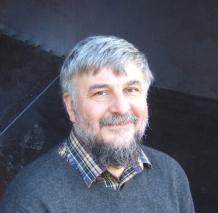
Professor Zdzislaw Brzezniak is a Professor in the Department of Mathematics at the University of York, where he has been since 2005. He holds a PhD in PDEs from Jagellonian University, Krakow (1988). His research focuses on stochastic partial differential equations (SPDEs), turbulence, geometric analysis, and harmonic analysis, with notable contributions to Navier-Stokes and Euler equations. He has organized major international workshops, including events on stochastic PDEs at ICMS (Edinburgh) and the Isaac Newton Institute. Education: PhD in PDEs (Jagellonian University, 1988). Research Interests: SPDEs, stochastic geometric problems (e.g., Landau-Lifshitz equations), fluid dynamics, and applications in physics. His work bridges pure and applied mathematics, influencing theoretical frameworks in micromagnetism and quantum field theory. Key Awards: 2013 Best Paper Award, 1st Prize, Institute of Information Theory and Automation. Supervision: Advised over 10 PhD students, including Nimit Rana (2019) and Fabian Hornung (2018). Current students include Asma Alalyani and Hessa Alharbi. Active in mentoring across stochastic analysis and geometric PDEs. Labs/Groups: Member of Mathematical Finance and Stochastic Analysis Research Group, and Geometry and Analysis Research Group at the University of York.
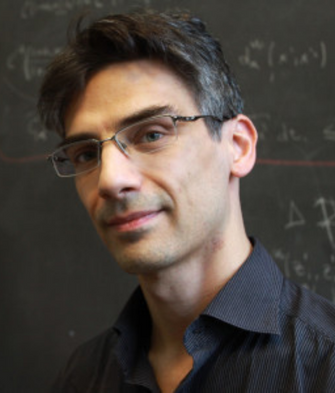
Evgeni Dimitrov is an Assistant Professor of Mathematics in the Department of Mathematics at the University of Southern California, housed within the USC Dana and David Dornsife College of Letters, Arts and Sciences. Before joining USC, he served as a Ritt Assistant Professor in the Mathematics Department at Columbia University. Education: PhD in Mathematics, Massachusetts Institute of Technology (MIT), advised by Alexei Borodin Undergraduate degree, Princeton University Research Interests: Dimitrov’s research sits at the intersection of probability, representation theory, and combinatorics, with a central focus on the asymptotic analysis of stochastic integrable systems . He develops hybrid techniques that blend algebraic methods from representation theory with analytic and combinatorial tools to study universal scaling limits—particularly those falling within the Kardar–Parisi–Zhang (KPZ) universality class . Key objects of study include Gibbsian line ensembles , random matrix models , log-gamma polymers , and exactly-solved stochastic particle systems such as ASEP and the six-vertex model. Publication Profile: Across 2021–2025, Dimitrov has produced a concentrated body of work addressing edge fluctuations , multi-level loop equations , and global large-deviation principles for discrete β-ensembles and related integrable systems. His papers repeatedly explore the convergence of discrete stochastic models to Airy-like universal processes, tightness questions for line ensembles, and the rigorous derivation of KPZ scaling laws, underscoring a cohesive research trajectory toward understanding universal random geometry. Scientific Awards: No awards are explicitly mentioned in the supplied material. Advising & Grants: No specific PhD students, grants, or funding details are provided in the text. Labs & Teams: No laboratory or research-group information is available from the supplied content.
Jacopo De Simoi is a Professor in the Department of Mathematics at the University of Toronto, holding appointments at both the St. George and Mississauga campuses. His research focuses on dynamical systems, particularly hyperbolic dynamics, billiards, and rigidity phenomena. He has held roles at institutions like Université Paris Diderot and the University of Maryland, College Park, and currently teaches courses such as Game Theory and Real Analysis. His work explores the interplay between deterministic systems and stochastic processes, with contributions to topics like Fermi acceleration and KAM theory. Education: Ph.D. in Mathematics from the University of Maryland (2009), Diploma di Licenza in Physics from Scuola Normale Superiore (2005), and M.Sc./B.Sc. in Physics from Università di Pisa. Research interests include stochastic properties of dynamical systems, conservative dynamics, and the ergodic theory of billiards. He has published extensively on spectral rigidity, entropy rigidity, and applications of renormalization group techniques. His recent work addresses inverse problems in billiard geometry and the statistical behavior of fast-slow systems. Teaching includes undergraduate and graduate courses in analysis, calculus, and dynamical systems. Collaborations span institutions globally, and he serves on editorial boards for journals like Communications in Mathematical Physics.
Edward T Crane is a Heilbronn Associate Professor at the School of Mathematics, University of Bristol, specializing in Probability, Analysis and Dynamics within the Pure Mathematics department. His research is affiliated with the Heilbronn Institute for Mathematical Research. Dr. Crane's research interests span multiple areas of mathematics, with particular focus on: Probability theory and stochastic processes Asymptotic analysis Circle mathematics and unit disk problems Riemann surfaces and connected components Polynomial mathematics and edge theory His recent research has focused on stochastic models, branching processes, and large deviation principles. Crane has published in top probability journals including Stochastic Processes and their Applications, Annals of Probability, and Annals of Applied Probability. His work often bridges theoretical mathematics with applications in areas like queueing theory and biological modeling, demonstrating both theoretical depth and practical relevance across multiple domains of mathematical research. Dr. Crane maintains an active research profile with 17 academic publications to date, with his most recent work in 2024 examining the limit point in Jante's law process and establishing its absolutely continuous distribution properties. His professional affiliations include: Heilbronn Institute for Mathematical Research Dr. Crane holds academic qualifications including a B.A. from Cambridge, A.M. from Harvard, and Ph.D. from Cambridge. He can be contacted at Edward.Crane@bristol.ac.uk and maintains an ORCID profile at https://orcid.org/0000-0002-4215-2884.
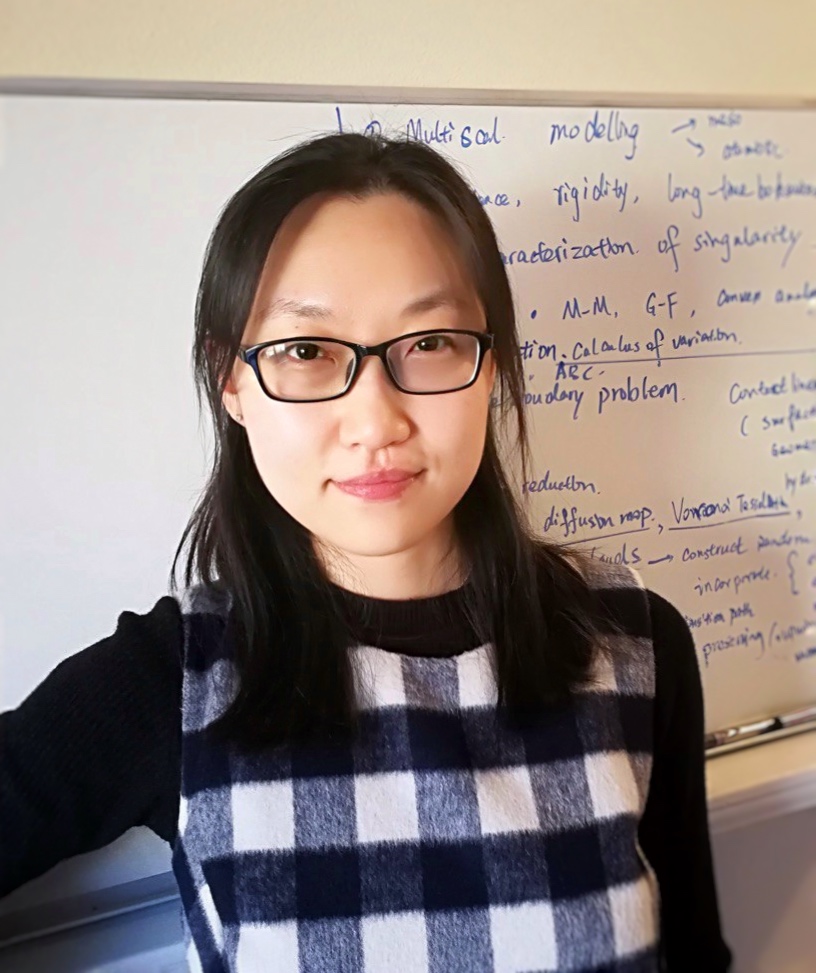
Yuan Gao is an Assistant Professor of Mathematics at Purdue University's Department of Mathematics (College of Science). His research focuses on analysis and computations of PDEs in materials science, biology, and microfluidics, with recent emphasis on optimal control, Hamilton-Jacobi equations, and non-equilibrium chemical reactions. His work is supported by NSF awards DMS-2204288 and DMS-2440651. Previously, he held the William W. Elliott Assistant Research Professor position at Duke University (2019-2021). Research interests include PDE analysis in materials science (crystal growth, dislocation dynamics), numerical methods for interface dynamics, applied stochastic analysis (Langevin dynamics, transition path theory), and mean-field games for fluid systems. He organizes the PSU-Purdue-UMD Joint Seminar on Mathematical Data Science. Key publications span topics like dislocation evolution, Wasserstein gradient flows, and stochastic algorithms for rare events. Awards include NSF CAREER funding recognizing his contributions to mathematical analysis of non-equilibrium systems.
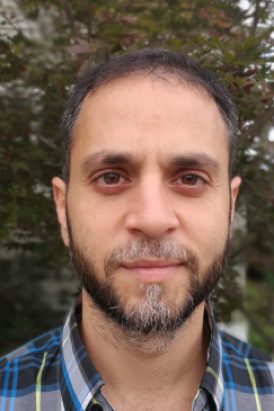
Asaf Cohen is an Associate Professor in the Department of Mathematics at the University of Michigan, Ann Arbor, affiliated with the College of Literature, Science, and the Arts. He holds a B.Sc., M.Sc., and Ph.D. from Tel-Aviv University (2005–2013). His research focuses on applied probability, stochastic processes, and control theory, with emphasis on mean-field games, mathematical finance, actuarial science, diffusion and large deviation analysis, machine learning, and risk-sensitive control. His work also addresses applications in stochastic networks, energy markets, epidemiology, and economics. Key research areas include diffusion approximations, large deviations, queueing theory, and partial differential equations. Dr. Cohen has contributed to the analysis of multiclass queueing systems, optimal dividend strategies, and strategic server behavior in heavy traffic regimes. His methods often involve advanced stochastic control techniques and game-theoretic models. He has published extensively on topics such as mean-field games, SIR models for epidemics, and Bayesian sequential testing. His academic contributions span theoretical advancements and practical applications in finance, insurance, and operations research.
Christian Hirsch is an Associate Professor for Data Science and Statistics at Aarhus University, where he studies random networks motivated from biology and health sciences through techniques from topological data analysis and stochastic geometry. He is a member of the Stochastics group at the Department of Mathematics and holds additional affiliations as an Associate Fellow of the Aarhus Institute for Advanced Studies, and with the AU DIGIT Centre and the AU Quantum Campus. Current Position: Associate Professor for Data Science and Statistics, Aarhus University Previous Positions: Assistant Professor at University of Groningen and University of Mannheim Postdoctoral Experience: Aalborg University, LMU Munich, WIAS Berlin Education: PhD from Ulm University Christian Hirsch's research focuses on the statistical foundations of topological data analysis, large deviations theory in stochastic geometry, and percolation theory of spatial random networks. His work bridges theoretical mathematics with practical applications in data science, particularly in analyzing complex structures through topological methods. He investigates how topological features form and disappear in growing data structures, developing statistical tests to determine whether observed patterns are significant or merely random occurrences. His recent publications reveal a strong trend toward applying topological data analysis to increasingly complex structures, with significant focus on statistical validation of topological features. Hirsch has made substantial contributions to understanding the probabilistic behavior of persistent homology, developing functional central limit theorems and large deviation principles for topological functionals. His work spans theoretical foundations in stochastic geometry while finding applications in materials science, neural networks, and wireless communication systems. As an educator, Hirsch teaches graduate courses including Topological Data Analysis, Stochastic Geometry, Monte Carlo Simulation, Markov Decision Processes, Probability Theory, and Stochastic Processes. He has supervised numerous PhD, MSc, and BSc students, with several of his former students securing academic positions at institutions like University of Leiden, Tokyo Institute of Technology, and Budapest University of Technology. Hirsch leads a research group within the Stochastics group at Aarhus University, collaborating extensively with researchers across Europe and North America. His work demonstrates how topological methods can provide rigorous statistical insights into complex data structures, making significant contributions to both theoretical mathematics and practical data analysis techniques.
Alice Guionnet is a French mathematician and Research Director at the CNRS, affiliated with the Unité de Mathématiques Pures et Appliquées (UMPA) at École Normale Supérieure de Lyon since 2005. Her research focuses on random matrix theory, probability theory, and their applications in statistical mechanics and large deviations principles. She completed her doctorate in 1995 with a thesis on spin glass dynamics, supervised by Gérard Ben Arous. Her work includes groundbreaking contributions such as the Single Ring Theorem (2009) and studies on large deviations for eigenvalues of Wigner and heavy-tailed matrices. She has been honored with the Oberwolfach Prize (1998), Loève Prize (2009), and Blaise Pascal Medal (2018), and was elected to the French Academy of Sciences in 2017. Key research interests include non-linear Wigner spiked models, spectral phase transitions, and free probability. She has authored over 80 publications, including influential papers on matrix models, eigenvector delocalization, and stochastic processes in disordered systems. Her ERC Project LDRAM (Large Deviations in Random Matrices) explores asymptotic behaviors of random matrix ensembles. Education: PhD from École Normale Supérieure (1995), MSc in Mathematics (ENS Paris, 1989). Labs/Teams: UMPA Lyon, collaborations with CNRS and international institutions. Grants/Awards: Simons Investigator (2012–2015), CNRS Silver Medal (2010).
Lenka Zdeborová is an Associate Professor at EPFL, jointly affiliated with the School of Basic Sciences and School of Computer and Communication Sciences. She leads the Laboratory of Statistical Physics of Computational Systems, where her research bridges statistical physics, machine learning, and computational biology. Education: PhD in Physics, Université Paris-Cité (2012) MSc in Fundamental Physics, École Normale Supérieure (2009) BSc in Physics, École Normale Supérieure de Lyon (2007) Her work focuses on phase transitions in learning algorithms, high-dimensional statistics, and neural network theory. Current projects investigate fundamental limits of machine learning, dynamics of graph neural networks, and applications to biological systems. Recent publications explore attention mechanisms in transformers, neural network depth advantages, and Bayes-optimal learning. Methodological innovations include cavity methods for hypergraphs and analysis of high-dimensional inference problems. Supervises doctoral students researching statistical physics approaches to machine learning and optimization. Teaches graduate courses in data science and machine learning for physicists.
Benjamin Fehrman is an Assistant Professor in the Department of Mathematics at Louisiana State University, specializing in stochastic analysis with a focus on stochastic partial differential equations and their applications to statistical physics. His research encompasses diffusion processes in random environments, stochastic homogenization, and randomized optimization algorithms in machine learning. His research interests center on the mathematical theory of stochastic partial differential equations, particularly those arising in statistical physics. Fehrman investigates fluctuating hydrodynamics, non-equilibrium systems, and the connection between interacting particle systems and their continuum limits. His work often involves developing well-posedness theory for challenging SPDEs with conservative noise structures and analyzing large-scale behavior in random media. Analysis of his recent publications reveals a strong focus on conservative stochastic PDEs and their connection to interacting particle systems, particularly the zero-range process and symmetric simple exclusion process. His research shows increasing attention to large deviation principles, kinetic formulations of skeleton equations, and the mathematical foundations of fluctuating hydrodynamics. The interdisciplinary nature of his work bridges probability theory, partial differential equations, and mathematical physics. Fehrman's research has been supported by prestigious grants including the National Science Foundation DMS-Probability Standard Grant 2348650, the Simons Foundation Travel Grant MPS-TSM-00007753, and the Louisiana Board of Regents RCS Grant 20130014386. He has supervised PhD students Andrea Clini (University of Oxford, 2020-2024) and Shyam Popat (University of Oxford, 2021-present), as well as postdoc Simone Floreani (University of Oxford, 2022-2023). Fehrman has also organized significant academic events including the "Interacting Particles, Fluctuating Systems, and SPDEs" workshop at the University of Oxford in June 2023, funded by an EPSRC Early Career Fellowship. His teaching portfolio includes advanced courses in stochastic analysis, stochastic differential equations, and stochastic homogenization at both Louisiana State University and the University of Oxford, where he previously held a position.
Shui Feng is a Professor in the Department of Mathematics and Statistics at McMaster University. His research focuses on stochastic processes and their applications in ecology, finance, population genetics, and statistical physics, with current work emphasizing Bayesian non-parametrics and measure-valued processes. He holds a PhD in Math and Stats from Carleton University (1993), an MSc in Mathematics from Beijing Normal University (1987), and a BSc in Mathematics from Beijing Normal University (1984). Research interests include stochastic processes, probability theory, and stochastic models (queueing, simulation). He has published extensively on topics such as Poisson-Dirichlet distributions, large deviation principles, and applications in population genetics and finance. Teaching responsibilities include advanced courses like Stochastic Processes (STATS 3U03), Intermediate Probability Theory (STATS 4D03/6D03), and Graduate Level Topics in Statistics (STATS 5GT3). Recent publications (2015–2025) explore theoretical advancements in stochastic models and their real-world applications.
Dr Peter Braunsteins serves as a Lecturer in Statistics within the School of Mathematics and Statistics at the University of New South Wales (UNSW Sydney), operating under the Faculty of Science. His academic appointment focuses on advancing theoretical and applied probability through rigorous mathematical research. He completed his PhD at the University of Melbourne in 2018, followed by postdoctoral positions at the University of Amsterdam and King Abdullah University of Science and Technology (KAUST) before joining UNSW. His scholarly background bridges European and Middle Eastern research institutions with Australian academia. Braunsteins' research centers on stochastic processes , with pioneering contributions in three interconnected domains: branching processes (modeling population dynamics and extinction events), random graphs (analyzing network evolution and structural properties), and spatial extremes (studying rare events in geographical contexts). His work combines deep theoretical insights with applications in epidemiology, insurance risk modeling, and network science, often employing large deviation principles and parameter estimation techniques for complex systems. Analysis of his 15 most recent publications reveals a sustained focus on branching process theory, particularly population-size-dependent models and extinction probabilities, while simultaneously developing novel frameworks for dynamic random graphs. His research demonstrates increasing interdisciplinary reach, connecting probability theory with actuarial science through adaptations of the Cramér-Lundberg model and with network science through graphon analysis. No scientific awards or major honors are documented in the available materials. His collaborative network includes prominent researchers such as Sophie Hautphenne, Frank den Hollander, and Michel Mandjes across multiple continents. Professional activities include manuscript review for leading probability journals and participation in academic seminars at UNSW, though specific advising roles or grant funding details remain undisclosed in the source material. His office is located in Room 2056 of the Anita B. Lawrence Centre at UNSW Sydney.
Andrew Török is a Professor in the Department of Mathematics at the University of Houston. His research focuses on dynamical systems, ergodic theory, and their applications to statistical mechanics and probability. He has contributed to studies on random dynamical systems, extreme value theory, and stability properties of hyperbolic flows. Teaching responsibilities include courses like MATH 3364: Introduction to Complex Analysis. His work spans topics such as cohomology of dynamical systems, transitivity of group extensions, and statistical limit theorems for non-uniformly hyperbolic systems. Key publications address Birkhoff sum convergence, stable laws for Gibbs-Markov systems, and transitivity properties of Heisenberg group extensions. Research extends to applications in financial mathematics and market dynamics through studies on stock price fluctuations. Professional activities include organizing the Dynamics Colloquium and participating in interdisciplinary projects like gene network modeling. His address is at PGH Building, University of Houston, with contact via torok@math.uh.edu.
Sandy Zabell is a Professor of Mathematics and Statistics and Data Science at Northwestern University, affiliated with the Department of Philosophy and the Science in Human Culture Program. He holds positions in CIERA (Center for Interdisciplinary Exploration and Research in Astrophysics) and serves as Director of Undergraduate Studies for Statistics. He earned his Ph.D. in 1974 from Harvard University. His research focuses on mathematical probability (e.g., large deviation theory), Bayesian statistics, and their historical/philosophical foundations. He is particularly known for work on exchangeability, DNA identification evidence, and the role of probability in legal contexts. His historical interests include WWII cryptography and the contributions of mathematicians during that era. Zabell’s publications span theoretical and applied domains, including influential works on statistical history and cryptography. His 2005 book Symmetry and its Discontents remains a key text in the philosophy of probability. Recent work includes analyses of Bletchley Park’s statistical methods and German wartime cryptology. Though no specific grants or awards are listed, his interdisciplinary contributions bridge mathematics, law, and history. No lab affiliations or teams are explicitly mentioned in the provided material.
Christopher Janjigian is an Assistant Professor in the Department of Mathematics at Purdue University, specializing in probability theory with a focus on random walks in random environments, KPZ universality class phenomena, and stochastic partial differential equations. He holds a Ph.D. from the University of Wisconsin-Madison (2016) and has held postdoctoral positions at Université Paris Diderot (2016–2017) and the University of Utah (2017–2020). His research explores the infinite volume structure of random walks in random potentials and connections to models like the Kardar-Parisi-Zhang equation. He organizes the Purdue University Probability Seminar and has taught advanced courses including Stochastic Processes, Probability Theory, and Stochastic Calculus. His work bridges theoretical probability with applications in mathematical physics, emphasizing geometric and dynamic properties of stochastic systems. Recent research focuses on geodesic structures in percolation models, Busemann functions, and ergodic properties of directed polymer models. His articles investigate topics like exit point bounds in last-passage percolation and synchronization in the KPZ equation, contributing to the understanding of universal behaviors in stochastic systems.