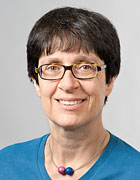
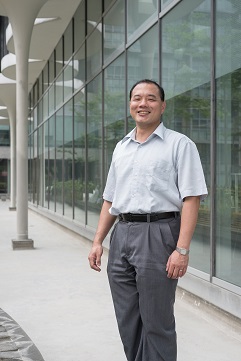
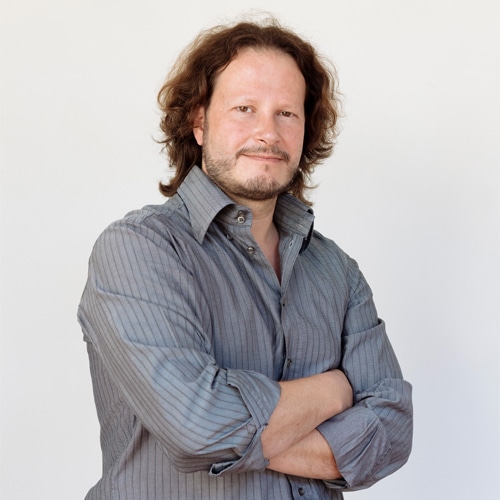
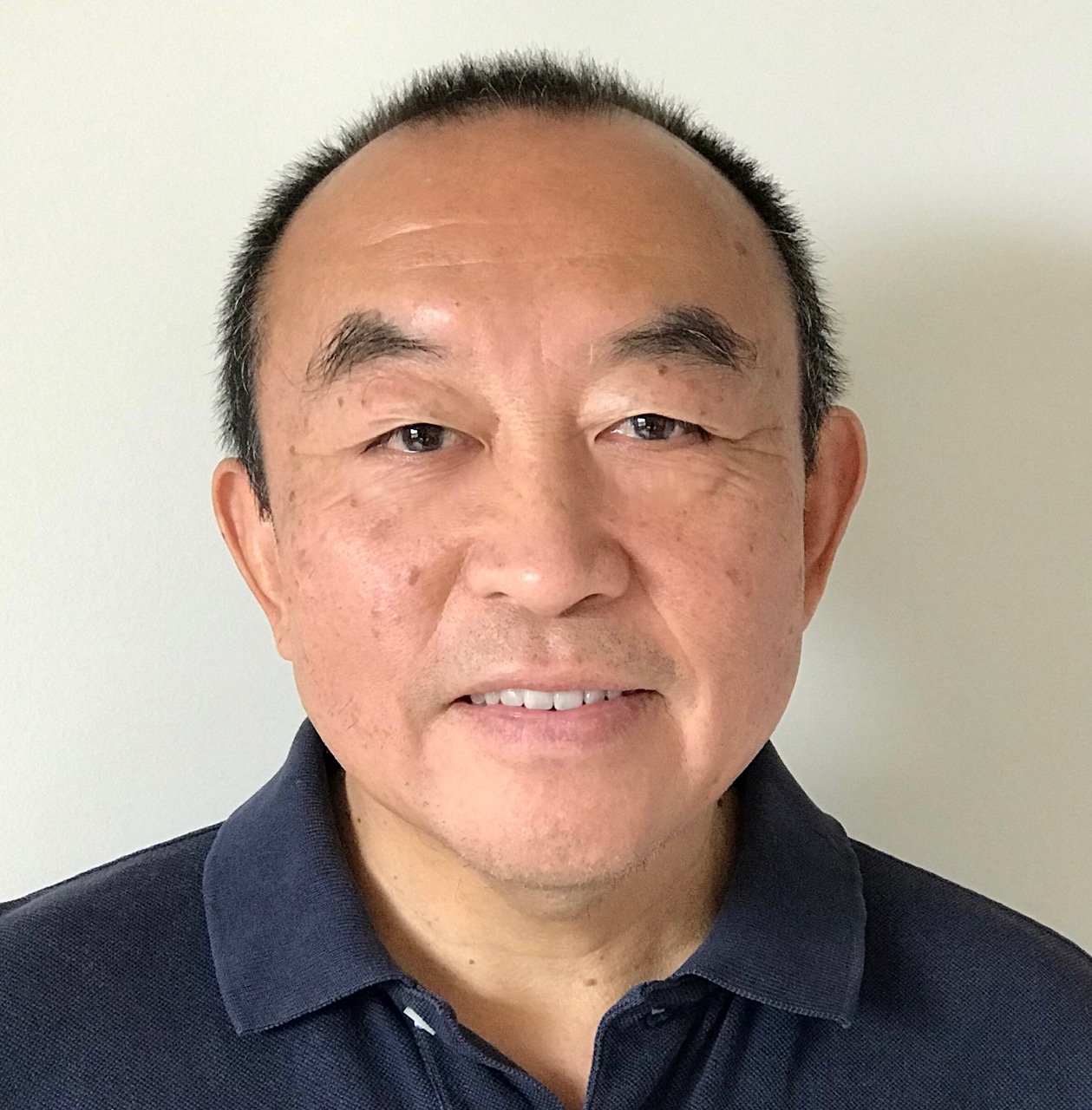
Prof. Dr. Nina Gantert is a distinguished Professor of Probability Theory at the Technical University of Munich (TUM) , affiliated with the TUM School of Computation, Information and Technology . She has held faculty positions at Karlsruhe Institute of Technology and the University of Münster prior to joining TUM in 2011. Her research focuses on probability theory , particularly stochastic processes , large deviations , and random media . She investigates random walks in random environments as models for transport in disordered systems and explores applications in physics and biology . Recent publications highlight her work on branching random walks , mixing times , biased random walks , and large deviation principles for complex stochastic systems. She has co-authored studies on random walks in dynamical percolation , interacting edge-reinforced processes , and extremal point processes in branching models. Scientific Awards: Elected fellow of the IMS (2016) Her academic career spans institutions including ETH Zürich, University of Bonn, Technical University of Berlin, and TUM. She has supervised numerous Bachelor’s and Master’s theses on topics ranging from mixing time analysis to percolation theory , often collaborating with international co-authors.
Massimiliano Esposito is a Full Professor of Theoretical Physics at the University of Luxembourg, affiliated with the Faculty of Science, Technology and Medicine (FSTM) and the Department of Physics and Materials Science. His research focuses on statistical physics, complex systems, thermodynamics, chemical networks, and quantitative biology. He holds positions such as ERC Fellow (2016-2021) and Attract Fellow (2012-2017). Education includes a Ph.D. in Sciences (2004) and a degree in Chemistry (2000) from the Free University of Brussels (Belgium), alongside a European Baccalaureate (1996) from Luxembourg. His work bridges stochastic thermodynamics, quantum thermodynamics, and chemical reaction networks, with contributions to fluctuation theorems, energy transduction, and non-equilibrium systems. Key achievements include seminal papers on nonequilibrium fluctuation-response relations, quantum thermodynamics, and chemical reaction network theory. He has been a guest editor for journals like Physica A and Physical Review X, and serves on editorial boards such as Physical Review Letters. His lab explores emergent phenomena in complex systems, with applications in biology and nanotechnology.
Jin Ma is a Professor in the Department of Mathematics at the University of Southern California (USC), where he has served since 2007. He previously held professorships at Purdue University (1994–2008). His research focuses on stochastic analysis, stochastic differential equations, mathematical finance, and control theory. He directs USC's Mathematical Finance Program and serves on editorial boards for journals like Probability, Uncertainty and Quantitative Risk and SIAM Journal on Control and Optimization . Ma received his Ph.D. in Mathematics from the University of Minnesota (1992) and M.S./B.S. in Applied Mathematics from Fudan University (1985/1982). His work bridges theoretical stochastic analysis and applied domains like finance and insurance, with notable contributions to forward-backward SDEs and mean-field games. Research Highlights: Developed frameworks for stochastic control and backward SDEs in financial and insurance contexts. Advanced mean-field game models for limit order book dynamics and equilibrium analysis. Explored set-valued stochastic differential equations and their applications in risk management. Grants & Advising: Advised numerous graduate students in stochastic processes and mathematical finance. Research supported by NSF grants and industry collaborations.
Joseph Tao-yi Wang is a Distinguished Professor in the Department of Economics at National Taiwan University (NTU). He holds a PhD from UCLA and previously served as a Postdoctoral Scholar and Visiting Associate at Caltech. His research spans experimental economics, neuroeconomics, game theory, and behavioral economics, with a focus on strategic decision-making, market design, and learning in games. Wang directs the Taiwan Social Sciences Experimental Laboratory (TASSEL), which hosts large-scale experimental research and conferences like the 2017 APESA. His work integrates eye-tracking, pupillometry, and machine learning to study cognitive processes in economic decisions. Wang is also active in educational innovation, developing flipped classroom models with experiments for economics courses. His publications consistently explore behavioral deviations from game-theoretic predictions, such as overcommunication in sender-receiver games and learning patterns in auctions. Recent work emphasizes reproducibility in management science and AI applications in education. Wang’s research uses diverse methodologies—from neuroimaging to field experiments—to test economic theories in real-world contexts. Wang mentors through NTU’s Berkeley Economics Student Assistant Program (BESAP) and organizes mini-courses for high school students. He has not received scientific awards per the available data.
Diego Garlaschelli is Professor of Theoretical Physics at the IMT School for Advanced Studies in Lucca, Italy, and at the Lorentz Institute for Theoretical Physics, University of Leiden, the Netherlands. He leads the NETWORKS research unit at IMT and the Econophysics and Network Theory group at Leiden. He is also an external faculty member at the Complexity Science Hub in Vienna and an associate member of the Enrico Fermi Research Center in Rome. His affiliations reflect a strong international and interdisciplinary research profile in network science and statistical physics. He holds a master's degree in theoretical physics from the University of Rome III (2001) and a PhD in Physics from the University of Siena (2005). His postdoctoral experience includes positions at the Australian National University, the University of Siena, the University of Oxford, and the Sant’Anna School of Advanced Studies in Pisa. Garlaschelli’s research spans network theory, statistical physics, econophysics, financial complexity, ecological networks, and social dynamics. He applies maximum entropy models, information theory, and random graph frameworks to understand complex real-world systems. His teaching includes courses in Network Theory, Econophysics, and Complex Systems at both PhD and MSc levels. The 15 most recent publications highlight a consistent focus on network reconstruction, ensemble inequivalence, renormalization, and applications to financial and socio-economic systems. Key themes include statistical inference in networks, resilience, and multi-scale modeling, with publications in top journals such as Nature Reviews Physics , Physics Reports , Science , and Physical Review Letters . His scientific awards include the Best Paper Award at the 6th International Workshop on Self-Organizing Systems (2012) and the Jan Kijne Prize (2013) as supervisor. He has secured multiple grants from NWO, the European Union, and the Royal Society, and has supervised over 40 students at PhD, master’s, and bachelor’s levels. He also mentors postdocs and visiting scientists. Garlaschelli leads and organizes major international workshops and schools in network science and complex systems. He serves on scientific committees and is an active referee for journals like Nature and Physical Review Letters , as well as funding agencies including the ERC and NWO.
George Yin is a Professor in the Department of Mathematics at the University of Connecticut (since 2020). Previously, he held the position of Distinguished Professor at Wayne State University (2017–2020) and has been a faculty member there since 1988. He earned his Ph.D. in Applied Mathematics from Brown University in 1987, along with M.S. degrees in Applied Mathematics and Electrical Engineering, and a B.S. in Mathematics from the University of Delaware (1983). His research focuses on stochastic optimization, control theory, stochastic systems, and numerical methods, with applications to biology, finance, and engineering. He has held editorial roles at journals such as SIAM Journal on Control and Optimization and has received prestigious awards including SIAM Fellow (2015), IEEE Fellow (2002), and IFAC Fellow (2014–2017). Key funding includes continuous NSF support since 1989, grants from the Air Force Office of Scientific Research, and others. His work spans theoretical advancements in stochastic systems and practical applications in energy systems, control engineering, and data science. He has advised numerous students and maintains active collaborations internationally. Labs/Teams: Goldenson Center for Actuarial Research, Quantitative Learning Center. Grants: NSF, AFOSR, ARO, NSA, and multiple institutional grants.
David Alan Goldberg is an Associate Professor in the School of Operations Research and Information Engineering (ORIE) at Cornell University, part of Cornell Engineering. He joined Cornell in 2017 and previously held the A. Russel Chandler III Associate Professorship at Georgia Tech’s Industrial and Systems Engineering department. Goldberg earned his Ph.D. in Operations Research from MIT (2011) and a B.S. in Computer Science from Columbia University (2006). Education: B.S. in Computer Science, Columbia University (2006) Ph.D. in Operations Research, MIT (2011) Research Interests: Goldberg’s work focuses on applied probability and stochastic processes, including optimal stopping, inventory and queueing models, combinatorial optimization, and robust optimization. He develops algorithms and insights for complex systems, addressing challenges like the curse of dimensionality. His research spans applications in data science, operations research, and stochastic modeling. Notable contributions include distributionally robust inventory control and high-dimensional decision-making frameworks. Awards and Honors: 2025 Community-Engaged Practice and Innovation Award (David M. Einhorn Center) 2023 Sunny Yau ’72 Teaching Award (Cornell) 2019 INFORMS Applied Probability Society Best Publication Award 2015 NSF CAREER Award Multiple INFORMS Nicholson Student Paper Competitions (First Place, 2019 & 2015) Teaching and Service: Goldberg leads Cornell ORIE’s undergraduate research program, connecting students to real-world applications of OR and data science. He teaches courses in probability modeling, stochastic models, and academic skills for PhD students. He chairs the INFORMS Applied Probability Society and serves on editorial boards for Operations Research and Stochastic Systems . At Cornell, he advises the Undergraduate ORIE Society and directs undergraduate studies in ORIE. Labs & Collaborations: Goldberg’s research integrates theoretical rigor with practical applications, often involving collaborations across disciplines. His work bridges operations research, statistics, and computer science to address modern challenges in inventory systems, queueing networks, and decision-making under uncertainty.
Samuel Johnston is a Lecturer in Probability Theory at the Department of Mathematics, King's College London, affiliated with the Faculty of Natural, Mathematical & Engineering Sciences. He joined King's in 2022 after postdoctoral roles at the University of Bath, University of Graz, and University College Dublin. MMath, University of Oxford (2014) PhD in Probability, University of Bath (2017) Johnston's research spans probability theory, with a focus on stochastic processes involving branching, coalescence, and fragmentation. He actively explores free probability, random matrices, integrable combinatorics, and combinatorial approaches to the Jacobian conjecture. His work intersects with statistical physics and asymptotic geometric analysis. Recent publications highlight coalescent structures in heavy-tailed branching processes, integrable probability models, free probability via entropic transport, and convexity in high dimensions. Keywords include universality classes, Berry-Esseen bounds, and fragmentation-scaling limits. Samuel has not been mentioned to have received specific scientific awards or honors. He advises PhD students Rohan Shiatis (2023-) and Neil Mukerji (2024-). Collaborations span institutions in the UK, USA, Mexico, Austria, and Poland, with invited talks at global conferences including Xiangtan University, Imperial College London, and UCLA.
Noam Berger Steiger is a Professor of Stochastic Processes at the Technical University of Munich (TUM), within the School of Computation, Information and Technology and the Department of Mathematics. His office is located at Parkring 11, Garching bei München, and he can be contacted at noam.berger@tum.de. His research focuses on stochastic processes in random environments, percolation theory, and random walks. Key contributions include asymptotic analysis of preferential attachment graphs, quenched invariance principles for non-elliptic random walks, and slowdown phenomena in ballistic random motion. His work bridges theoretical probability with applications in complex systems. Analysis of his 2012-2014 publications reveals consistent focus on random walk dynamics in disordered media, with significant results on ballisticity conditions, trail detection in random scenery, and distributional limits. His research employs advanced probabilistic techniques published in top-tier journals including Annals of Probability and Probability Theory and Related Fields . Professor Berger has supervised 11 theses: 5 bachelor's theses at TUM covering Brownian motion properties and investment strategies for risk-averse investors, and 6 master's theses (3 at TUM, 3 at Hebrew University) on topics including return times for random walks, mass transport principles, and spin-glass percolation. His current teaching includes Markov Chains, Probability on Graphs, and Brownian Motion seminars. He is an active member of TUM's Probability Theory research group, which participates in the TUM-ICL Mathematical Sciences Hub and Exzellenzcluster MCQST. The group collaborates on quantum science initiatives while maintaining strong foundations in classical probability theory and stochastic analysis.
Richard B. Sowers is a Professor at the University of Illinois at Urbana-Champaign, holding joint appointments in the Department of Industrial and Enterprise Systems Engineering, Mathematics, and Statistics (courtesy). He has held faculty positions since 1996, starting as an Assistant Professor in Mathematics and advancing to Professor across multiple departments. His research spans stochastic processes, financial engineering, and data analytics. He also serves as a Research Principal at the Office of Financial Research since 2012. Education: B.S. in Electrical Engineering (Drexel University, 1986), M.S. and Ph.D. in Applied Mathematics (University of Maryland, 1988 and 1991). Research Interests: Financial networks, stochastic systems, and applications in decision-making and control. His work bridges theoretical probability with practical domains like finance and healthcare. Recent articles focus on machine learning applications in gait analysis for neurological disorders and stochastic modeling in financial systems. Professional Contributions: Taught courses in stochastic calculus, deep learning, and financial mathematics. His research often involves interdisciplinary collaboration, including projects on credit risk, algorithmic trading, and wearable technology for health monitoring. Labs/Teams: Active in the Institute for Predictive and Computational Science, focusing on data-driven solutions for complex systems.
Will Perkins is an Associate Professor in the School of Computer Science at Georgia Institute of Technology. Previously, he held faculty positions at the University of Illinois at Chicago, the University of Birmingham (UK), and was an NSF Postdoc at Georgia Tech. He earned his PhD in 2011 from New York University's Courant Institute under Joel Spencer. His research focuses on algorithms, statistical physics, and discrete mathematics, particularly exploring algorithmic tractability of random computational problems, statistical physics spin models, and combinatorial methods derived from algorithmic intuition. Research Interests : Algorithms, statistical physics, combinatorics, phase transitions, random graphs, and Gibbs measures. His work bridges theoretical computer science and statistical mechanics, addressing questions about sampling, phase coexistence, and algorithmic barriers. Recent Activities : Director of the Algorithms and Randomness Center at Georgia Tech, Managing Editor of Combinatorial Theory , and Associate Editor of Random Structures and Algorithms and SIAM Journal on Discrete Mathematics . Upcoming engagements include the Rocky Mountain Summer Workshop (2024), Park City Mathematics Institute (2024), and conferences on Random Structures and Algorithms (2025). Teaching : Courses include Design and Analysis of Algorithms (CS 3510), Advanced Algorithms (CS 4540), and specialized topics like Statistical Physics in Algorithms and Combinatorics (CS 8803). He has taught across institutions, including at the University of Birmingham and University of Illinois at Chicago. Key Contributions : His work on phase transitions in combinatorial structures, algorithmic sampling in statistical physics models, and rigorous analysis of Gibbs measures has been published in top venues like FOCS, STOC, and Communications in Mathematical Physics. Notable results include hardness of sampling for anti-ferromagnetic Ising models and novel contour methods for Pirogov-Sinai theory.
Professor Vitali Wachtel of Bielefeld University's Faculty of Mathematics specializes in advanced stochastic processes, probability theory, and their applications in mathematical modeling. Since 2021, he holds a W3 Professorship and serves as Principal Investigator in CRC 1283 'Taming uncertainty and profiting from randomness and low regularity in analysis, stochastics and their applications' since 2023. Chaired Examination Boards for Bachelor & Master Business Mathematics Member, Bielefeld Graduate School in Theoretical Sciences Research focus: Markov processes, random walks in cones, branching processes Research Trends: His recent work spans critical multitype branching in random environments (2025), asymptotic expansions for conditioned random walks (2024), and invariance principles for integrated processes. He explores connections between stochastic processes, combinatorial structures, and risk modeling with level-dependent premiums. Awards: Feodor Lynen Research Fellowship (2017), Alexander von Humboldt Foundation Teaching: Coordinates modules including 'Stochastic Processes' (24-M-PT-STP) and 'Introduction to Probability Theory' (24-B-EW-5). Active in curriculum development and academic governance through multiple university committees.
Fima Klebaner is Professor in the School of Mathematics at Monash University and Director of the Centre for Modelling of Stochastic Systems. His research spans stochastic processes, financial mathematics, and population biology, with emphasis on limit theorems, branching processes, and diffusion models. Current projects include ARC-funded work on stochastic population dynamics and financial derivatives pricing. Key research areas: 1) Population-dependent stochastic systems; 2) Large deviation principles; 3) Financial mathematics (Dupire formula, volatility); 4) Approximation methods for complex processes. Recent publications (2018-2025) show balanced focus on theoretical probability (45%) and applied modeling (55%), particularly in ecology and finance. Article analysis reveals advanced methodologies in: 1) Stochastic calculus applications (33% of recent works); 2) Limit theorems for interacting systems (27%); 3) Financial mathematics innovations (20%). Theoretical contributions frequently interface with biological and financial applications.
Florent Krzakala is a Full Professor at École polytechnique fédérale de Lausanne (EPFL) in Switzerland, holding positions across multiple departments including the School of Basic Sciences (SB), School of Engineering (STI), and specifically within the Department of Physics (IPHYS) and Department of Electrical Engineering (IEM). He leads the Information, Learning and Physics Laboratory (IdePHICS) and maintains an office at ELD 239, Station 11, 1015 Lausanne. His research bridges statistical physics and computational disciplines, with significant contributions to understanding the theoretical foundations of machine learning and optimization problems. Dr. Krzakala received his MSc in Physics from Orsay, France in 1999, followed by a PhD in Statistical Physics from Orsay, Paris XI, France in 2002, and completed a postdoctoral position at Roma La Sapienza in 2004. This strong foundation in physics has informed his interdisciplinary approach to computational problems. His research interests span Statistical Physics, Machine Learning, Probability and Statistics, Computer Science, Information Theory, Inference on Graphs, Random Constraint Optimization, and Computational Optics. Krzakala's work focuses on applying methods from statistical physics to problems in theoretical computer science, probability, and machine learning. He investigates how concepts from disordered systems and phase transitions can illuminate computational barriers in optimization and inference tasks. His research has particular relevance for understanding the behavior of neural networks, compressed sensing, and high-dimensional statistical models. Analysis of his recent publications reveals a strong trend toward understanding the fundamental limits of learning in high-dimensional settings, with particular emphasis on phase transitions, statistical-to-computational gaps, and the theoretical properties of deep learning architectures. His work frequently bridges rigorous mathematical analysis with practical machine learning applications, demonstrating how insights from statistical physics can inform algorithm design and theoretical understanding in AI. Krzakala actively mentors the next generation of researchers, supervising numerous PhD students whose work continues to advance these interdisciplinary fields. His laboratory serves as a hub for researchers exploring the intersection of physics and computation, fostering collaborations across traditional disciplinary boundaries. He teaches advanced courses including Fundamentals of Inference and Learning, Statistical Physics, and Statistical Physics for Optimization & Learning, which examine the connections between physical principles and computational methods. His educational materials, including lecture notes on statistical physics methods in optimization and machine learning, have become valuable resources for students and researchers worldwide. As founder and scientific advisor of the startup Lighton, Krzakala has also demonstrated a commitment to translating theoretical insights into practical applications, particularly in the realm of optical computing for machine learning tasks.
Dr Nicholas Simm is a Principal Research Fellow in the Department of Mathematics at the University of Sussex, affiliated with the School of Mathematical and Physical Sciences. He has been funded by the Royal Society since October 2018 as a University Research Fellow. His research focuses on random matrix theory, probability, and mathematical physics, with applications to areas such as quantum physics and statistical mechanics. Key research interests include orthogonal polynomials, eigenvalue statistics, multiplicative chaos, and Painlevé transcendents. His work bridges pure mathematics and applied problems, leveraging tools from probability theory and integrable systems. Notable publications include studies on asymptotics of orthogonal polynomials, fluctuations in eigenvalues of random matrices, and connections to the Riemann zeta function. His recent work explores high-frequency limits in holomorphic multiplicative chaos and large deviations in elliptic random matrices. Dr Simm has secured grants from the Royal Society and Leverhulme Trust for projects on random matrices, log-correlated fields, and mesoscopic statistics. He collaborates widely, with co-authors including leading researchers in probability and mathematical physics.