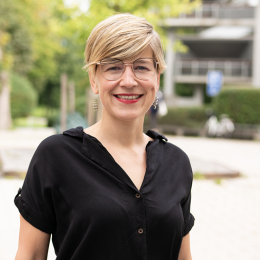
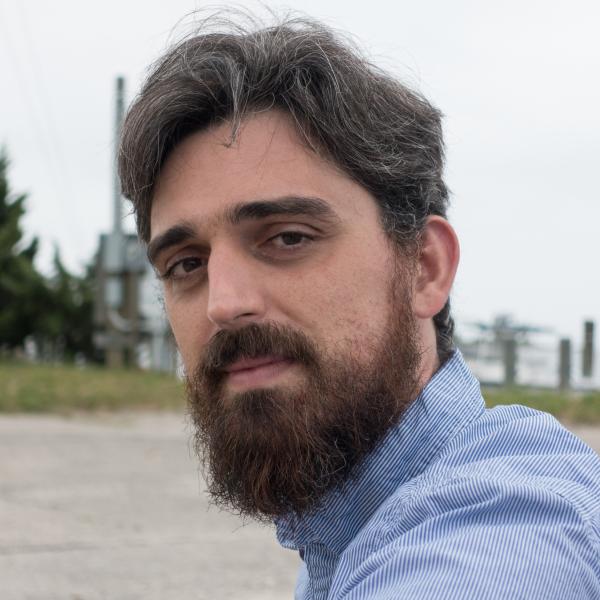
Birgit Tremml-Werner is a Lecturer at Stockholm University (since 2023) and former Associate Professor at Linnaeus University. She holds a PhD from the University of Vienna (2012), focusing on early modern Manila's trade and diplomacy. Her research explores global diplomatic history beyond Eurocentrism, emphasizing Southeast Asia and colonial dynamics. Co-founder of the Global Diplomacy Network (GDN) and co-creator of Global Archives Online (GAO), she promotes accessible historical resources. Teaching spans undergraduate to doctoral levels, including courses at Stockholm University and international institutions like the University of the Philippines and Universiteit Antwerpen. She advises three PhD students and leads initiatives like the 2024 doctoral course on GAO metadata usability. Research interests include early modern diplomacy, indigenous agency in colonial contexts, and material/knowledge archives. Projects such as 'Encountering Diplomacy in Early Modern Southeast Asia' and GAO reflect her commitment to interdisciplinary and globally inclusive historiography.
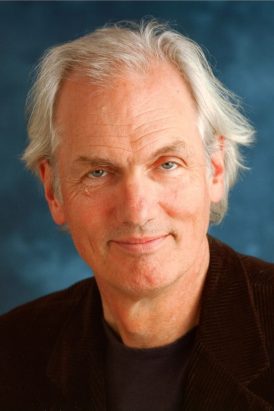
Prof Andrew Peacock holds the Bishop Wardlaw Professorship in the School of History at the University of St Andrews. His research focuses on Islamic and Middle Eastern history, with a particular emphasis on medieval Anatolia, Persian manuscripts, and the cultural exchanges in Southeast Asia and the Indian Ocean. He has supervised PhD students including Hebah Alheem, Ali Shapouran, and Weijie Xu. His recent publications explore Arabic literary culture in 17th-18th century Southeast Asia, Melaka’s historical sources, and the memoirs of Safavid ruler Shah Tahmasp I. Key projects include the ERC-funded 'IslamAnatolia' initiative (2012-2017) and a British Academy grant for studying Arabic language in early modern Southeast Asia. His work often bridges historical analysis with material culture, such as his edited volume on medieval Islamic inscriptions (2023). Prof Peacock’s research also engages with transnational themes, including Ottoman-Darfur diplomacy and the role of urban notables in medieval Anatolia.
Webb Keane is the George Herbert Mead Collegiate Professor of Anthropology at the University of Michigan. He is affiliated with the Center for Southeast Asian Studies, Global Islamic Studies Center, and the Interdisciplinary Program in Anthropology and History. His research focuses on ethics, semiotics, material culture, and religion in Southeast Asia and beyond. He holds a PhD and AM from the University of Chicago and a BA from Yale College. His major publications include Signs of Recognition , Christian Moderns , and Ethical Life , with his latest book Animals, Robots, Gods (2025) exploring non-human ethics. Keane has held fellowships from the Guggenheim Foundation and the National Endowment for the Humanities, and has lectured globally, including at Cambridge and the London School of Economics. Research Interests: Moral philosophy, semiotics, materiality, religion, media, and historical consciousness. Awards: Guggenheim Fellowship, Annette B. Weiner Memorial Lecturer, Edward Westermarck Memorial Lecturer. Teaching: Courses on language and culture, anthropology of religion, and Southeast Asian studies. Affiliations: Center for Southeast Asian Studies, Global Islamic Studies Center, Interdisciplinary Program in Anthropology and History.
Nanxin FU serves as a PartTime Lecturer in the Department of History at the Faculty of Arts and Science, University of Montreal, teaching core courses such as HST1062: Southeast Asia since 1500. She is formally affiliated with undergraduate programs across Humanities, Social Sciences, and Languages, including the Bachelor in Asian Studies, Major in East Asian Studies, History degrees, and International Studies. Her scholarly focus centers on Southeast Asian historical trajectories from the 16th century onward, with significant extensions to East Asian historical frameworks and interdisciplinary Asian Studies methodologies. This specialization directly informs curriculum development across Humanities and Social Sciences disciplines, emphasizing regional cultural and political evolution. As an educator, she contributes to program structures spanning Letters and Languages, Humanities, and Social Sciences streams, supporting student engagement through courses that integrate historical analysis with contemporary socio-political contexts in Asian regions.
National Institute of Oriental Languages and CivilizationsFrance
Delphine Allès is a University Professor at the National Institute of Oriental Languages and Civilizations (INALCO) in Paris, France, where she serves as Vice-President responsible for board of directors, organization and resources. She is a leading scholar in International Relations with a focus on Southeast Asia, particularly Indonesia, and specializes in non-Western approaches to international relations, religion in global politics, and Indo-Pacific security dynamics. Her research interests span multiple interconnected domains: Religion and International Relations Non-Western Approaches to International Relations Diplomacy, Security and Multilateral Cooperation in Southeast Asia (Indonesia / Indo-Pacific) Civilizational Narratives Global International Relations and Area Studies Allès's scholarly work demonstrates a consistent focus on decentralizing International Relations theory through empirical studies of Southeast Asian practices. Her recent publications examine the Indo-Pacific concept, religious diplomacy between Russia and Indonesia, and critiques of Western-centric security frameworks. She has pioneered research on how non-Western civilizations conceptualize international order, particularly through religious frameworks. Professor Allès serves on the editorial boards of multiple prestigious journals including European Journal of East Asian Affairs, Global: Jurnal politik internasional, and Archipel. She is also Scientific manager of the AMI-SHS DECRIPT program focused on crises and civilizational narratives. Her administrative leadership includes membership on the Scientific and Strategic Council of Pôle Asie (MEAE) and the board of the French Political Science Association. Previously, she directed the International Relations department at INALCO (2018-2023) and co-edited the journal Etudes internationales (2021-2024).
Mark Allon is an Associate Professor and Chair of Discipline in South Asian Buddhist Studies at the University of Sydney. He holds a PhD from the University of Cambridge and a BA (Honours) from the Australian National University. His research focuses on early Buddhist literature, Gandhari manuscripts, and the textual traditions of South and Southeast Asia. Allon leads major projects, including the study of the Senior Kharosthi manuscripts and the conservation of the Kuthodaw Pagoda inscriptions in Myanmar. Education: PhD (Buddhist Studies, Cambridge), BA (Asian Studies, ANU; Hons 1), Dip. Arts (City Art Institute) Key Roles: President of the Australasian Association of Buddhist Studies, Board Member of the International Association of Buddhist Studies, and member of the Sydney Southeast Asia Centre His research interests include the composition and transmission of early Buddhist texts, Gandhari and Pali languages, and the cultural heritage of Gandhara. Current projects involve digital humanities initiatives for Buddhist manuscripts and the study of marble stelae inscriptions in Mandalay. Allon has received grants such as the Robert H. No Ho Family Foundation Grant (2019) and the Australian Nuclear Science and Technology Organisation award (2019). He advises on the Dhammakaya Tipitaka Project and collaborates with institutions globally on manuscript preservation.
Julian Millie is a Professor in Indonesian Studies at Monash University, Faculty of Arts, where he coordinates and teaches in the Indonesian Studies program. His academic work bridges anthropology, religious studies, and Southeast Asian studies, with a focus on the social and political dimensions of Islamic practice in Indonesia. His research centers on embodied Islamic routines, including preaching, ritual, and commemoration of regional Islamic figures. He has led major ARC-funded projects such as Preaching Islam: politics, performers and publics and Glocalisation and sub-national Islams , and currently leads the international project Islamic Bureaucracies and Pious Publics in Turkey and Indonesia . Anthropology of Indonesia Islamic Culture and Society Ritual and Religion Public Islam and Preaching Social Change in Muslim Societies Political Anthropology His recent publications (2023–2024) reveal a continued focus on Islamic consumerism, reformist critiques of consumption, ritual embodiment, and the politics of Islamic education. These works span journals like Asian Studies Review and edited volumes on preaching and Malay-Indonesian Islamic studies, showing strong interdisciplinary reach into sociology, cultural studies, and education policy. Julian Millie has contributed to scholarly discourse through editorial roles, including guest editorships for Asian Studies Review (2023) and International Journal of Cultural Studies (2013). His media engagements highlight his commitment to public anthropology, commenting on the state of Indonesian studies in Australia and Islamic education policy. He is actively involved in research grants, including current funding from 2020 to 2025, and has collaborated with scholars across Australia, Indonesia, and Turkey. While no formal advisees are listed, his leadership in research projects suggests mentorship and team coordination. He is a central figure in the study of contemporary Indonesian Islam, contributing to both academic and public understanding.
Lizi Liao is an Assistant Professor at the School of Computing and Information Systems , Singapore Management University (SMU) , specializing in Artificial Intelligence and Conversational AI . Her research bridges Machine Learning , Natural Language Processing , and Multimodal Systems , focusing on proactive dialogue systems, multimodal conversational search, and task-oriented interactions. Education : PhD in Computer Science (2019) from the National University of Singapore (NUS) , advised by Professor Tat-Seng Chua . Research Interests center on principles of human conversational understanding and machine implementation, particularly in proactive conversational agents , multimodal dialogue systems , and target-driven conversation planning . Key applications include emotional support systems , intelligent shopping assistants , and learning companions . Recent Publications (2024-2025) highlight her work on LLM-based proactive dialogue , multimodal emotion recognition , and dynamic graph modeling , often integrating NLP , Multimedia , and Knowledge Graphs . Collaborative projects with her CoAgent Lab team emphasize human-AI interaction and ethical response generation . Scientific Awards : Google South Asia & Southeast Asia Research Award 2023 Lee Kong Chian Fellow Teaching includes Visual Analytics for Business Intelligence (undergraduate) and Text Analytics and Application (graduate). She also serves as Associate Editor for TOIS and TOMM , and organizes tutorials at ACL , SIGIR , and WSDM .
Thomas Pepinsky holds the prestigious Walter F. LaFeber Professorship of Government and Public Policy at Cornell University, where he is a faculty member in the Department of Government within the College of Arts and Sciences. He additionally serves as a Nonresident Senior Fellow at the Brookings Institution, bridging academic research with policy engagement. His academic career, which began at Cornell in 2008 after earning his Ph.D. from Yale University, has established him as a leading scholar in comparative politics with deep regional expertise in Southeast Asia. Professor Pepinsky's research examines the complex interactions between political and economic systems globally, with particular attention to democratic backsliding in Southeast Asia and Europe, the evolution of social categories like ethnicity in the Malay world, and methodological approaches to social science explanation. His work consistently connects theoretical political science with empirical analysis of real-world political phenomena, often employing innovative methodological frameworks to understand complex political dynamics across different contexts. His scholarly output demonstrates a clear trajectory from foundational work on Southeast Asian politics to increasingly comparative analyses examining democratic erosion, electoral behavior during political transitions, historical persistence of political attitudes, and the intersection of social categories with political economy. Recent publications reveal growing attention to contemporary crises including refugee flows, pandemic politics, and the challenges to democratic institutions worldwide. Among his significant professional activities, Dr. Pepinsky serves as editor of the Journal of East Asian Studies and is a co-founder and Executive Board member of the Southeast Asia Research Group (SEAREG). He also contributes to the Association for Analytical Learning about Islam and Muslim Societies (AALIMS) and the International Political Economy Society (IPES), reflecting his interdisciplinary approach. At Cornell, he actively participates in the Southeast Asia Program (SEAP) and teaches courses including Introduction to Comparative Government and Politics, Southeast Asian Politics at both undergraduate and graduate levels, and independent study opportunities. His international scholarly engagement is evident through visiting appointments at institutions including Amsterdam, the Australian National University, Freiburg, Griffith University, the Hertie School, and the National University of Singapore.
Dr. Hongxuan Lin serves as an Assistant Professor in the Department of Southeast Asian Studies at the National University of Singapore (NUS), Faculty of Arts and Social Sciences. His academic work centers on the complex relationship between Islam and Marxism in Indonesia, with broader interests in progressive Islamic discourses across the Muslim world. As a faculty member at one of Asia's premier research universities, Dr. Lin contributes significantly to Southeast Asian studies through his research, teaching, and publications. Dr. Lin earned his Doctor of Philosophy in History from the University of Washington, Seattle, between 2015 and 2020. His doctoral research focused on Indonesian intellectual history, examining how Muslim identity and Marxist analytical frameworks coexisted in the minds of Indonesian nationalists during the anti-colonial struggle and early republic period. His supervisors were Laurie J. Sears, Christoph Giebel, and Vicente L. Rafael, all prominent scholars in Southeast Asian studies. Dr. Lin's research primarily investigates the intersection of Islam and Marxism in Indonesia from 1915 to 1965, exploring conciliatory discourses where Marxist ideas were theorized as compatible with Islam within frameworks of anti-colonial resistance. He examines how Indonesian intellectuals adapted global political currents to local contexts, challenging state-driven narratives that position Islam and Marxism as mutually exclusive. His work also considers women's contributions to these discourses and is expanding to study the circulation of progressive Islamic ideas across the Indian Ocean region connecting Egypt, Arabia, Iran, South Asia, and the Malay Archipelago. His research reveals how progressive Islamic thinkers addressed socio-economic inequity, women's rights, intercommunal tolerance, and religious governance. Dr. Lin's publications demonstrate a consistent focus on Southeast Asian political history, particularly Indonesia's intellectual landscape during the colonial and post-colonial periods. His scholarship reveals patterns of creative adaptation where Indonesian thinkers engaged with global political currents while transforming them for local contexts. A notable trend across his work is the examination of transnational intellectual networks that connected Southeast Asia with broader global movements, showing how ideas traveled and were transformed across borders. His research challenges simplistic narratives about religious and political identity, revealing instead complex intellectual traditions that defy easy categorization. Dr. Lin is multilingual with proficiency in Indonesian (reading, writing, speaking, and understanding), Chinese (Mandarin) (reading, writing, speaking, and understanding), Dutch (reading), and French (reading). This linguistic capability supports his research across multiple archives and sources in different languages, enhancing the depth and authenticity of his historical analysis. His work bridges multiple disciplinary approaches including history, political science, religious studies, and post-colonial theory.
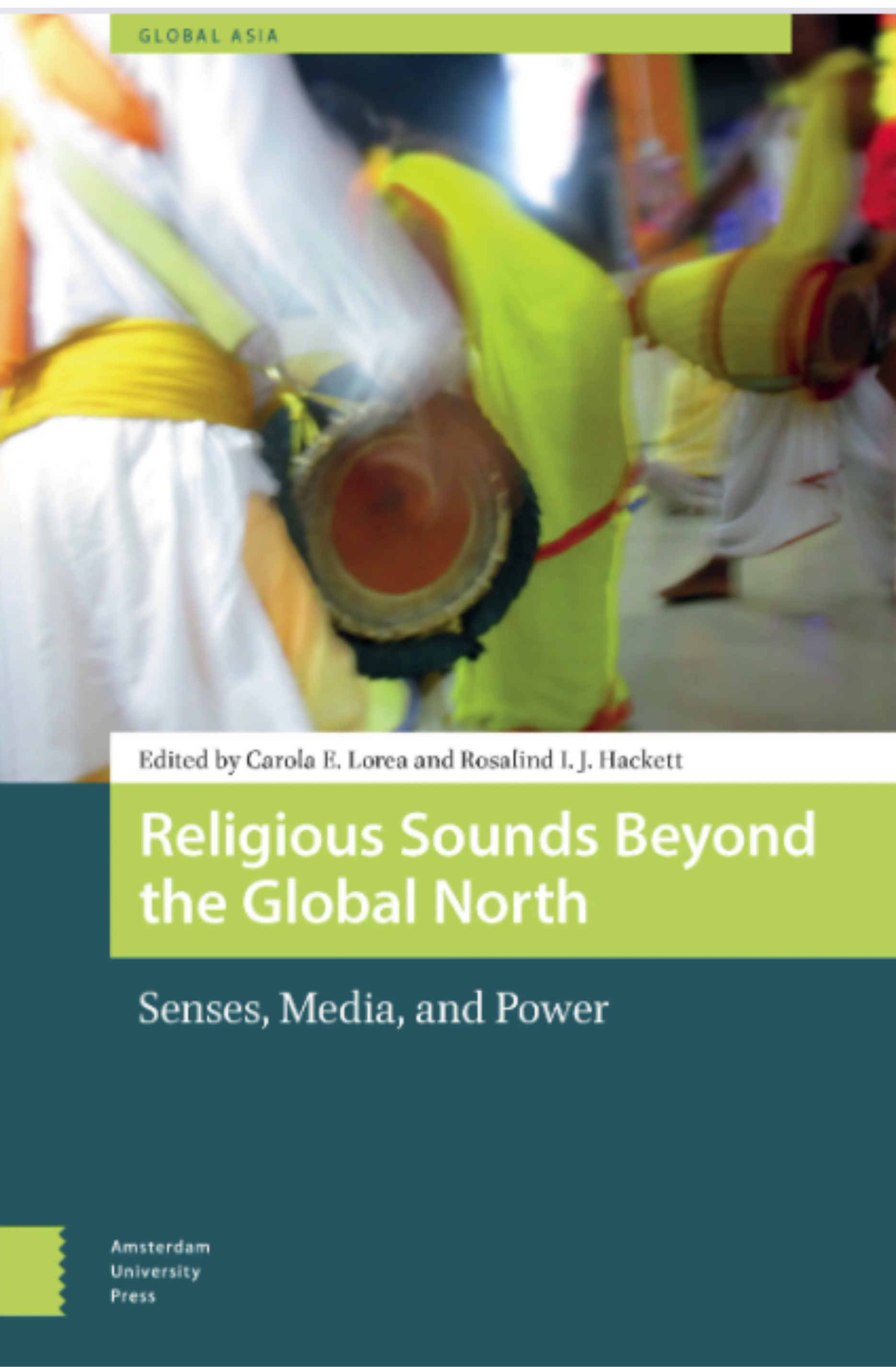
Dr. Carola Lorea is a Junior Professor at the Institute for Religious Studies, Faculty of Philosophy, University of Tübingen (since 2023) and former Senior Research Fellow at NUS's Asia Research Institute (2022-2023). Her work bridges religious studies, cultural anthropology, and digital humanities with a focus on South/Southeast Asian borderlands. PhD in South Asian Studies (2015, La Sapienza University of Rome) 2023 Habilitation Venia Legendi in religious studies and cultural anthropology Research centers on Matua traditions , Baul oral cultures , religion and pandemics , and sensory scholarship . She pioneered the CoronAsur research blog (2020) and leads the MANTRAMS project with ERC Synergy Grant (2023). Key contributions include: Digital Archive of Baul Songs (EAP1247 PI) Theoretical work on bricolage thinking in borderland communities Critical analysis of caste dynamics in post-Partition Andaman settlers Sonic approaches to religious studies Teaching includes courses on Religious Sounds (Tübingen 2024), Religion and South Asian Society , and Bengali language instruction. She founded the Digital Archive 'Songs of the Old Madmen' and co-edits volumes on global religious sound studies.
Professor Rachel V Harrison is a leading academic in Thai Cultural Studies at SOAS University of London. Her work bridges cinema, modern literature, postcolonial theory, and gender studies, with a focus on Thailand and mainland Southeast Asia. She also contributes to medical humanities and public engagement, particularly in Northeast Thailand (Isan) and Laos. Education: BA and PhD from the University of London. Roles: Professor of Thai Cultural Studies, Steering Committee Member of MA Cultural Studies. Research Interests : Cultural studies, cinema, and gender analysis intersect with themes of Orientalism, cultural difference, and literary criticism. Her work explores medical humanities and the comparative study of Southeast Asian literatures. She emphasizes the interplay between traditional and modern elements in Thai cultural production. Recent Publications : Harrison’s scholarship spans Thai cinema, postcolonial identity, and healthcare access for sex workers. Her 2025 article Entangled Worlds, Situated Knowledge highlights cultural context in global-local dynamics. Earlier works examine folk legends, masculinities, and eroticism in Thai literature. PhD Supervision : She has guided students on topics like Thai literature, diasporic identities, Burmese women’s writings, and Thai cinema’s gender representations. Collaborations : Frequent collaborations with scholars in medical humanities and Southeast Asian studies, including co-authoring on bullying in medicine and cultural engagement.
Dr. Luke Fleming is an Associate Professor in the Department of Anthropology at the University of Montreal's Faculty of Arts and Sciences. His research focuses on comparative linguistic anthropology, particularly the typology of honorific systems, kinship-related linguistic avoidance practices, and sociolinguistic dynamics in indigenous and small-scale societies. He has authored over 20 peer-reviewed publications and led numerous research projects funded by the Social Sciences and Humanities Research Council of Canada (SSHRC) and international institutions. Teaching responsibilities include courses on sociolinguistics, linguistic anthropology, and language and culture. He supervises graduate students engaged in interdisciplinary research spanning from Sri Lanka to the Amazon basin. Current projects investigate honorific pronoun systems across Theravada Buddhist communities and Tamil language usage in South Asia. Lead researcher for SSHRC-funded projects studying honorific systems and small-scale sociolinguistics Published in Journal of Linguistic Anthropology , Language in Society , and Anthropological Linguistics Advisor to 9 graduate students since 2018 Research networks include collaborative projects with Patagonian language speakers and ongoing comparative studies linking Southeast Asian honorifics to African avoidance practices. His forthcoming book On Speaking Terms examines kinship-related linguistic avoidance worldwide. Active in program development for interdisciplinary anthropology degrees, contributing to 15 academic programs at undergraduate and graduate levels.
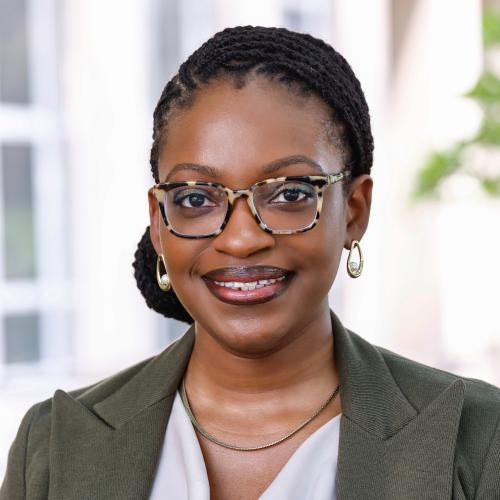
Chinasa T. Okolo is a Research Fellow in the Governance Studies program and Center for Technology Innovation (CTI) at the Brookings Institution. A recent computer science PhD graduate from Cornell University, she focuses on AI governance, data policy, and equity issues in artificial intelligence, particularly as they relate to the Global Majority and Africa. B.A. in Computer Science from Pomona College M.S. in Computer Science from Cornell University Ph.D. in Computer Science from Cornell University Dr. Okolo's research critically examines global equity in AI, with a focus on how African governments can develop robust AI and data governance frameworks. She investigates the geopolitical impacts of AI in the Majority World and analyzes datafication and algorithmic marginalization in Africa. Her work incorporates ethnographic methods to understand how frontline health care workers in rural settings perceive and value AI, with particular emphasis on explainability in AI-enabled technologies deployed throughout the Majority World. She has conducted significant research on the effective adoption of AI in Africa, COVID-19 misinformation spread on social networks within African communities, and the impact of generative AI within Africa. Her recent publications explore cultural encoding of gender bias in language models for African languages, AI safety governance approaches in Southeast Asia, and the impacts of generative AI within Africa. Her work spans the intersection of artificial intelligence, international development, and social justice, with publications at top-tier venues including ACM's CHI, CSCW, COMPASS, EAAMO, and FAccT conferences. Scientific Awards Named one of TIME's top 100 most influential people in AI of 2024 Honored in the inaugural Forbes '30 Under 30' AI list Recognized as one of 100 Brilliant Women in AI Ethics™ Dr. Okolo has received research funding from the Social Science Research Council, MacArthur Foundation, McGovern Foundation, Kapor Center, National GEM Consortium, Oracle Corporation, North American Network Operators' Group (NANOG), National Science Foundation (NSF), and Google. She serves as editor-in-chief of ACM SIGCAS Computers and Society, is a Scientific Advisory Committee member of the Global Index on Responsible AI, and an inaugural member of the Partnership on AI's SAIGE Council. She has contributed to global AI governance efforts including serving as a consulting expert on the African Union AU-AI Continental Strategy, an expert contributing writer to the International AI Safety Report, and a drafting member of the Nigerian Federal Government's National AI Strategy. She also participates in the IEEE Standards Association working group on algorithmic bias and is a member of the ACM US Technology Policy Committee. As founder of Technēculturǎ, Dr. Okolo leads initiatives focused on critically examining global equity in AI. She recently launched the 'AI Safety and the Global Majority' series at Brookings, convening experts from Africa, the Caribbean, Latin America, Oceania, and Southeast Asia to counter Western-centric assumptions in AI safety. She is actively engaged in current policy discussions, with her most recent work including 'AI Safety Governance, The Southeast Asian Way' report and upcoming participation in the AI Safety Asia launch event on August 28, 2025.
Thibaut d’Hubert is an Associate Professor at the University of Chicago in the Department of South Asian Languages & Civilizations . His research focuses on Middle Bengali poetry and Indo-Persian literature , with an emphasis on textual criticism, literary hermeneutics, and multilingualism in premodern South and Southeast Asia. Specializes in Bengali-Persianate literary interactions Co-organizer of Middle Bengali language/literature retreats Recipient of Zukunftsphilologie fellowship (2013-14) His monograph In the Shade of the Golden Palace (2018) examines Middle Bengali poet Ālāol’s translation practices, while Meaningful Rituals (2022) explores Persian-Arabic-Bengali multilingualism through the Nūrnāma tradition. Current projects include critical editions of Ālāol’s epic Saẏphulmuluk Badiujjāmāl (supported by NEH grant) and annotated translations of Persian ghazals. Supervises students in premodern South Asian literature Teaches courses on Bengali/Sanskrit/Persian literatures Works on musicology and text performance His research interests span: Perso-Arabic poetics in Bengal History of literary multilingualism Sufi and Gauḍīẏa Vaiṣṇava literature Cultural interactions between South/Southeast Asia Traditional philology and scribal practices Didactic/ritual uses of Persian texts in rural Bengal Key scientific awards : Zukunftsphilologie fellowship (2013-14) NEH Scholarly Editions and Translations grant