Ling Liu is a Professor in the School of Computer Science at Georgia Institute of Technology's College of Computing. She directs the Distributed Data Intensive Systems Lab (DiSL) and conducts research in big data systems, cloud computing, distributed systems, privacy, and trust. An IEEE Fellow and recipient of the IEEE Computer Society Technical Achievement Award, Liu has published over 300 papers with best paper awards at major conferences. Her research develops scalable systems for AI and data analytics with emphasis on performance, security, and privacy. Current projects include federated learning, adversarial robustness, and trustworthy distributed AI. Liu has served as Editor-in-Chief for IEEE Transactions on Service Computing and ACM Transactions on Internet Technology.
Dr. V. Menkovski serves as an Associate Professor in Data Mining at Eindhoven University of Technology's Department of Mathematics and Computer Science. He also holds associate professor positions with EAISI Health and EAISI High Tech Systems, and is an ICMS Affiliated member. His work spans multiple domains of artificial intelligence and computational physics, with significant contributions to fusion energy research. Mathematics and Computer Science, Data Mining (Primary Appointment) EAISI Health (Associate Professor) EAISI High Tech Systems (Associate Professor) ICMS (Affiliated Member) Menkovski's research focuses on Graph Neural Networks, Machine Learning, Deep Learning, and their applications in diverse fields from plasma physics to metamaterials. His work demonstrates strong interdisciplinary connections, particularly between computer science and fusion energy research. He has developed novel approaches for crowd simulation, tokamak plasma monitoring, and metamaterials homogenization using advanced neural architectures. His fingerprint reveals expertise in Quality-of-Experience, Autoencoders, Neural Networks, Annotation, Graph Neural Networks, Video Streaming, Adversarial Machine Learning, and Anomaly Detection. Analysis of his recent publications (2023-2025) shows a clear trend toward applying Graph Neural Networks to complex physical systems, particularly in fusion energy research and materials science. His work increasingly integrates symmetry principles with neural architectures, as seen in his research on equivariant networks for metamaterials and symmetry-informed networks for zeolite analysis. There's also significant focus on practical applications in fake news detection, anomaly detection, and plasma state monitoring. Best Paper Award ICPM 2021 (with Sommers and Fahland) Best Paper Award of LoG 2022 (with multiple co-authors including Huang, Chen, Fang, Zhao, Yin, Pei, Mocanu, Wang, Pechenizkiy, and Liu) Menkovski teaches several advanced courses including Deep Learning, Advanced Topics in Artificial Intelligence, and Sociophysics 2, which runs through August 2025. His supervised work portfolio includes 79 projects, indicating substantial mentorship activity. He has received significant media attention for his research, including coverage by 11 news outlets, blog posts, and mentions on social media platforms. His work on 'Supervised Learning of Process Discovery Techniques Using Graph Neural Networks' was particularly noted in media coverage. His research involves collaboration with multiple institutions and teams, particularly in fusion energy research (Eurofusion Tokamak Exploitation Team, ASDEX-Upgrade team, EUROfusion MST1 Team). He works closely with researchers across disciplines, including physicists working on tokamak plasma and materials scientists studying metamaterials and zeolites.
Carol Rounds is a Senior Lecturer in Hungarian at Columbia University's Department of Italian. She has been affiliated with Columbia since 1979 and specializes in Hungarian pedagogy and Uralic linguistics. Her research explores linguistic relationships among Finnish, Komi, and Hungarian, particularly focusing on definiteness in syntax. She holds a BA in Linguistics (1984), MA (1986), and PhD in Uralic Studies (1992). Her publications include seminal works like Hungarian: An Essential Grammar and Colloquial Hungarian , both widely used in language education. In 2010, she received the Pro Cultura Hungarica Award for advancing Hungarian language and culture abroad. Teaching focuses on Hungarian language instruction, including elementary, intermediate, and advanced courses. Courses recently taught include UN1101 (Elementary Hungarian I), UN2101 (Intermediate Hungarian I), and UN3341 (Advanced Readings in Hungarian). Education: BA in Linguistics (1984) MA in Uralic Studies (1986) PhD in Uralic Studies (1992) Research Highlights: Authored/co-authored major Hungarian language textbooks Explored accusative marking systems in Finno-Ugric languages Her publications reflect a sustained engagement with language pedagogy and comparative Uralic linguistics, bridging theoretical research with practical language instruction materials.
Massimo Orazio Spata is a Research Fellow in Computer Science at the University of Catania's Department of Mathematics and Computer Sciences, specializing in deep learning applications for biomedical, audio, and biometric systems. He has held roles at STMicroelectronics since 1999, focusing on system integration, image processing, and biomedical device R&D. He teaches courses such as Mobile Programming and Computer Architecture at secondary schools and has advised numerous students on grid computing and middleware projects. Education: PhD in Computer Science (University of Catania, 2008), MSc in Computer Science (University of Catania, 2013), and a teaching certification in Computer Science (University of Catania, 1998). Research interests include deep learning algorithms, biomedical device development, grid scheduling, and cybersecurity. He has authored patents on lab-on-chip systems, bio-computer analysis, and scheduling methods, and his work has been recognized with STMicroelectronics Innovation Awards (2016–2014) and a Cisco CCNA certification. Key collaborations include projects with Google (Mediapipe Objectron for robotics), Huawei (video deblurring), and involvement in the PNRR Horizon HiCONNECTS project (2024–present). He serves on conference committees (e.g., ICAETA 2023) and has developed e-learning systems and CAD tools for STMicroelectronics.
Professor Francesca Toni is a Professor in Computational Logic at the Department of Computing, Faculty of Engineering at Imperial College London. She leads research in Artificial Intelligence, focusing on explainable AI (XAI), argumentation theory, and neuro-symbolic systems. Her affiliations include the Centre for eXplainable AI (XAI), Argumentation-based Deep Interactive eXplanations (ADIX), and the Human-Like Computing initiative. Her work integrates computational logic with machine learning to develop interpretable models for healthcare, robotics, and decision support systems. Recent research emphasizes conflict analysis in neural networks, argumentative ensembling, and object-centric learning frameworks. Her research interests span AI ethics, formal argumentation, and the integration of symbolic reasoning with deep learning. Key contributions include neuro-argumentative learning architectures, benchmarking explainability methods (XAI-Units), and frameworks for robust recourse in model multiplicity scenarios. She actively explores applications in biomedical fraud detection (Pub-Guard-LLM) and personalized decision support via gradual bipolar argumentation. Her publications highlight trends in explainable AI, with a focus on visual debates, counterfactual explanations, and causal structure learning. She has pioneered systems like ProtoArgNet for interpretable image classification and DR-HAI for dialectical reconciliation in human-AI interactions. Her work bridges theoretical foundations (e.g., ABA semantics) with real-world applications in healthcare and legal reasoning. Notable projects include ROAD2H—an open-source XAI approach for managing comorbidities—and Cafe for conflict-aware feature explanations. She has contributed to legal AI systems (LawGIBA) and causal discovery methods. Current efforts focus on neuro-argumentative machine learning and object-centric representation learning.
Andrew Preshous is a Senior Lecturer in Academic English at the School of Humanities, Faculty of Arts and Humanities, Coventry University. With extensive international experience teaching English in Greece, Poland, Hong Kong, Malaysia, and the UK, he specializes in English for Specific Purposes (ESP) and English for Academic Purposes (EAP). Education: MA in Teaching English for Specific Purposes, University of Warwick BA (Hons) in English and Greek Civilisation, University of Leeds His research focuses on English for Specific Academic Purposes, discourse analysis (written and spoken), materials development in EAP, and teacher training methodologies. He has held key roles such as Module Leader for Advanced English for Business and Work Placement in ELT, and has lectured on MA in ELT courses including Designing Language Training Materials and English for Business. Recent publications include co-authored works on IELTS Foundation materials (2012), alongside articles on ESOL in Further Education, workplace English training, and Malaysian English features. His professional certifications include CELTA Trainer (2011), RSA/UCLES qualifications, and specialized FE training credentials. Andrew actively contributes to professional activities such as serving on the BALEAP executive committee, advancing standards in EAP and teacher training.
Bryan Koronkiewicz serves as Associate Professor of Spanish Linguistics within the Department of Modern Languages & Classics at the University of Alabama. His academic profile bridges theoretical linguistics and practical language education with specialized expertise in bilingual speech phenomena. His educational trajectory includes: PhD in Hispanic Studies (Linguistics), University of Illinois at Chicago (2014) MA in Hispanic Studies (Linguistics), University of Illinois at Chicago (2010) BA in Spanish / Communication Arts, University of Wisconsin-Madison Dr. Koronkiewicz's research centers on Spanish-English code-switching through experimental and quantitative lenses, examining syntactic constraints in heritage speakers' language production. His work interrogates phenomena like preposition stranding, adverb placement, and inalienable possession while addressing methodological challenges in bilingualism research. This interdisciplinary approach connects theoretical syntax with second language acquisition and heritage language pedagogy, emphasizing empirical validation of linguistic constraints. Analysis of his 13 publications (2013-2023) reveals consistent focus on experimental code-switching research using acceptability judgments and corpus methods. Key trends include systematic investigation of syntactic boundaries in bilingual speech, methodological innovations in data collection, and expansion into language pedagogy through studies of social media integration and writing assessment. His work demonstrates strong alignment with contemporary debates in bilingual syntax while maintaining practical relevance for heritage language education. No scientific awards or fellowships were documented in the source material. Dr. Koronkiewicz teaches across the curriculum from first-year language courses to graduate seminars in bilingualism, syntax, and second language teaching methods. While departmental highlights reference French PhD students (Awodirepo, Lambon, Dafong), no specific advisees in Spanish linguistics are identified. The text contains no mention of grant funding or research team leadership. No dedicated laboratories or research collectives are associated with his profile in the available documentation.
Musa KAYA is an Associate Professor at the Department of Turkish Education within the Faculty of Education at Bayburt University. His academic work focuses on Turkish language teaching, foreign language acquisition, and multicultural education. He actively contributes to curriculum development and analysis, particularly in alignment with European language standards. Research Interests : Turkish as a foreign language, language transfer phenomena, text simplification, cultural integration, value education, and reading comprehension. Article Trends : Recent publications examine Tunisian students' attitudes toward learning Turkish, comparative analyses of language programs, text complexity in Turkish instruction, and integration of cultural values through literature. Contact : Email - musakaya@bayburt.edu.tr | Phone - (458) 333-2033
Shigeru Eguchi is a Senior Lecturer in Japanese at Columbia University's Department of East Asian Languages & Cultures, where he has taught all levels of Japanese since 2006. He also serves as the Administrative Director of Columbia's Summer MA Program in Japanese Pedagogy and has prior teaching experience at Middlebury College’s Summer Program in Japanese and the Hokkaido International Foundation. BA: Teaching of English, Ibaraki University MA: Japanese Pedagogy, University of Iowa Eguchi specializes in Japanese pedagogy and grammar, with a focus on creative teaching methodologies. His work integrates haiku, video projects, and authentic cultural materials into language instruction to enhance learner engagement and proficiency. He has developed innovative curricula and textbooks tailored for intermediate-level Japanese learners. His publications and teaching materials emphasize curriculum development, cultural context integration, and contextualized language acquisition. Notably, Hiyaku: An Intermediate Japanese Course (2011) exemplifies his commitment to combining pedagogical rigor with multimedia resources.
Michael Eichberg is a Professor at Technische Universität Darmstadt, Germany, where his work centers on software engineering, static analysis, programming languages, and secure software development tools. He is the principal architect of the OPAL framework for Java bytecode analysis and has an extensive publication record spanning PLDI, ICSE, ESEC/FSE, ISSTA, ASE, FSE, SOAP, and other premier venues. Research Interests: Static program analysis and its scalability to real-world code bases Software security, particularly cryptographic API misuse and Android app repackaging detection Concurrent and parallel programming models, including deterministic concurrency in Scala Software architecture conformance, drift and erosion detection, and rule reuse Development of open extensible tools and frameworks (OPAL, LectureDoc, QScope, Sextant, XIRC, IRC) Publication Trends: His recent work (2015-2022) demonstrates a strong focus on empirical evaluation of static analysis techniques, modular composition of analyses, and security-related program understanding. Key themes include unsoundness in call graph construction, purity and immutability analyses, parallelization of static analyses, and large-scale studies of cryptographic API misuse. Tools & Frameworks: OPAL – A flexible Java bytecode analysis and manipulation framework (core developer until 2019) LectureDoc 2 – Web-based lecture material authoring and presentation system QScope – Open extensible metrics framework for modern software projects Sextant – Eclipse-integrated software exploration tool XIRC/IRC – Frameworks for enforcing system-wide properties and architectural constraints
Radmila Suzić is a Professor at Singidunum University, specializing in Applied Linguistics, English Language Teaching, and Digital Education Tools. She holds a PhD in Teaching Methodology from the University of Novi Sad's Faculty of Philosophy (2016) and has published extensively on language anxiety, curriculum development, and technology integration in education. Fields of Interest: Applied Linguistics, Language Anxiety, English Language Teaching, Curriculum Development, Translation Studies, Digital Education Tools Email: rsuzic@singidunum.ac.rs Key Collaborations: Co-authored works with M. Nedeljkovic, A. Puška, T. Dabić, and B. Radić-Bojanić Notable Publications: 'Evolving Methodologies' (2024), studies on multi-criteria analysis in agricultural selection, and research on digital tools in language teaching Her recent articles focus on agricultural decision-making models, digital transformation in education, and cross-cultural language studies. She actively participates in international conferences like SINTEZA and CILRAID.
Naoko Taguchi is a Professor in the Department of English at Northern Arizona University with over 100 scholarly publications spanning two decades. Her academic profile demonstrates sustained research productivity, including 102 documented works with significant citation impact (h-index 35, 3617 citations). She maintains active research leadership through editorial roles and contributions to major reference works in applied linguistics. Her research program centers on pragmatic competence development in second language acquisition, specializing in speech acts (particularly request-making), appropriateness judgments, and proficiency impacts. Key investigation areas include how learners acquire culturally appropriate language use across contexts, with growing emphasis on technological applications. Her fingerprint analysis reveals dominant expertise in Speech Acts (100%), Pragmatic Competence (61%), Proficiency (61%), and Request strategies (40%), indicating consistent theoretical focus over time. Recent publications (2024-2025) show strategic expansion into technology-mediated pragmatics, examining digital games for request-learning feedback systems and social VR environments for Spanish conversation management. This technological pivot complements ongoing work on prosody in Chinese pragmatics, demonstrating methodology evolution while maintaining core theoretical commitments across multiple target languages. No scientific awards were documented in the source material. Information regarding student advising, grant funding, or research supervision was not provided in the available text. No laboratory facilities, research teams, or collaborative infrastructure were described in the source documentation.
F. Frank Chen is a Professor in the Department of Mechanical Engineering at the University of Texas at San Antonio (UTSA) and holds the Lutcher Brown Distinguished Chair in Advanced Manufacturing. He is a Fellow of both the Society of Manufacturing Engineers (SME) and the Institute of Industrial and Systems Engineers (IISE). Ph.D. & MS, University of Missouri-Columbia BS, Tunghai University (Taiwan) Dr. Chen specializes in flexible manufacturing, lean systems, and AI integration. His research spans predictive maintenance, computer vision for defect detection, cybersecurity in industrial IoT, and sustainable production. He actively combines AI (deep learning, NLP) with lean methodologies to optimize manufacturing and healthcare workflows. Recent publications focus on AI-enabled sustainability (waste reduction, parking efficiency), advanced diagnostics (cancer detection via CNNs, transformers), and cybersecurity enhancements. His work bridges theoretical innovation with practical applications in smart manufacturing and lean healthcare. Fellow, IISE (2019) Operational Excellence Division Teaching Award, IISE (2015) SME College of Fellows (2011) Dr. Chen leads the Flexible Manufacturing and Lean Systems Lab, contributing to AI-aided lean manufacturing, intrusion detection systems, and voice-of-customer extraction. His interdisciplinary approach impacts both industrial processes and healthcare diagnostics, emphasizing efficiency, sustainability, and technological integration.
Edit Racz is a Lecturer in the Department of English Linguistics at the Faculty of Humanities and Social Sciences, Károli Gáspár Reformed University in Budapest, Hungary. She holds a PhD in educational science (awarded 2022) from the University of Pécs, with a dissertation titled "The Educational Potential of English Language Textbooks - A multidimensional comparative analysis of the content of B1 and B2 level English language textbook texts." Previously, she earned two MA degrees from Kossuth Lajos University (now University of Debrecen) in 1983 (English and Hungarian language and literature) and 1995 (general and applied linguistics with English specialization), plus an MBA in Business Administration (2001). Her research focuses on textbook analysis from multiple perspectives, examining how language textbooks convey cultural content, democratic values, environmental awareness, and intercultural communication. She investigates both the explicit and implicit educational potential within language teaching materials, with particular attention to how textbooks shape learners' worldviews and cultural understanding. Her methodological approach combines qualitative content analysis with educational theory to reveal the hidden curriculum within language teaching materials. Analysis of Dr. Racz's publications reveals consistent focus on textbook content analysis across multiple dimensions - cultural representation, intercultural communication, democratic citizenship, environmental education, and pragmatic aspects of language use. Her work spans both English language textbooks and materials for teaching Hungarian as a foreign language, demonstrating expertise in comparative textbook analysis across different language teaching contexts. The research shows increasing sophistication in analytical frameworks, moving from single-dimension analyses to multidimensional approaches that consider textbooks as complex educational artifacts. Faculty Award from University of Debrecen, Faculty of Economics and Business (2008) 'Globus' medal from Student Union of the Faculty of Economics and Business, University of Debrecen (2014) Dr. Racz has been actively involved in multiple research projects including the ERASMUS+ KA Project 2017-1-HU01-KA203-035918 and the TÁMOP-4.1.2.D-12/1/KONV-2012-0008 initiative. She is a member of the Theoretical and Experimental Linguistics Research Group at KRE BTK and has participated extensively in national and international academic conferences, presenting her research findings across Europe. Her work bridges theoretical linguistics with practical language teaching applications, contributing significantly to the understanding of how language textbooks function as educational tools beyond mere language instruction.
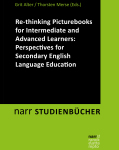
Thorsten Merse is Professor of English as a Foreign Language (EFL) Education at the University of Duisburg-Essen, focusing on Anglophone Literatures and Cultures. His research explores inter- and transcultural learning, cultural diversity, pedagogies of teaching literature, and digital education in EFL. He emphasizes LGBTIQ* diversity and Queer Theory in English language teaching, as well as teachers’ digital competences. He joined UDE in 2021 after positions at the University of Münster (2011–2016) and University of Munich (2016–2021), where he completed his PhD in 2017. PhD in English Education (LMU Munich, 2017) MA in English and Biology (WWU Münster) His research combines theoretical and conceptual frameworks, including meta-views on conducting EFL research. Recent work addresses queer pedagogies, global citizenship, and digital textualities. He co-edits publications such as Re-thinking Picturebooks for Intermediate and Advanced Learners (2023) and Global Citizenship in Foreign Language Education (2022). Articles highlight intersections of queer theory, digital education, and cultural diversity in ELT. Deutsche Gesellschaft für Fremdsprachenforschung (DGFF) Deutscher Anglistikverband (Beirat) International Association of Teachers of English as a Foreign Language (IATEFL) Merse supervises doctoral candidates like Lena Hertzel (Decolonizing Cultural Learning in EFL) and Albert Biel (Queer Teaching Processes in English). He coordinates interdisciplinary projects under the BMBF-funded Qualitätsoffensive Lehrerbildung and contributes to graduate school initiatives (GKQL). His lab work includes the EFL Lab (formerly SLZ), which integrates digital tools and queer pedagogies into language education.