Dr. Silke Hamann is a researcher at the University of Amsterdam, Faculty of Humanities, Department of Linguistics. Her work bridges phonology and phonetics, focusing on the emergence of phonological features, perceptual cues in segmental contrasts, and the interaction of phonology with orthography and language acquisition. Current projects: diachronic loanword adaptation, congenital amusia's impact on speech perception, Bantu languages (with Nancy Kula and Laura Downing), Catalan studies (with Francesc Torres-Tamarit) Research interests span synchronic/diachronic phonology, phonetic perception, computational modeling of phonological acquisition, and cross-linguistic analysis of retroflex consonants. Her publications analyze phenomena in Korean, Japanese, Bantu languages, German, Portuguese, and Slavic languages, with recurring themes of cue weighting, phonological constraints, and orthographic influence. Recent articles highlight her focus on creaky voice diagnostics, loanword phonotactics, congenital amusia, and Bantu intonation systems. Collaborations with Nancy Kula (Bantu) and Francesc Torres-Tamarit (Catalan) underscore her international research network.
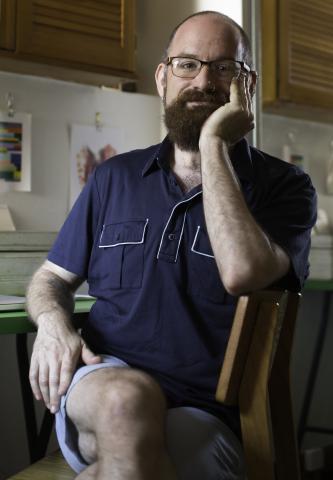
Nigel Robinson is a Senior Lecturer in Graphic Design at Bath School of Design, Bath Spa University. A founding director of the globally recognized 'Graphic Thought Facility' (GTF), he transitioned to an independent creative practice while maintaining a robust academic career. His teaching spans prestigious institutions like Central St Martins, Camberwell School of Art, and Yale University. Research and Practice: Nigel's work spans illustration, graphic design, moving image, and editorial projects. His designs have been featured in Creative Review , Baseline , and Graphics International . Notable contributions include covers for Wallpaper and Télérama magazines, focusing on themes like post-punk culture, urban studies, and handmade design. Academic Contributions: His scholarly outputs include exhibitions and publications that explore the intersection of music, typography, and visual storytelling. While specific scientific awards are not listed, his work has been recognized in major design retrospectives and cited in influential texts like 'The Birth of British Graphic Design' (Guardian, 2014). Education: Nigel holds a BA (Hons) in Graphic Design from Central St Martins and an MA from the Royal College of Art.
Rizvana Bradley is Associate Professor of Film and Media and Affiliated Faculty in the History of Art and the Center for Race and Gender at the University of California, Berkeley. She served as the 2023-24 Terra Foundation Visiting Professor for American Art at the John F. Kennedy Institute for North American Studies at Freie Universität Berlin, where she taught courses on Horror and the Cinematic Unconscious, Political Depression and the Aesthetics of Sovereignty, and Art, Race, and Media Poetics. Bradley's research spans Aesthetic Theory , Black Critical Theory , Contemporary Art , Continental Philosophy , Film Theory , and Race and the Philosophy of Media . Her work examines how Black art deconstructs aesthetic forms foundational to modernity, with particular attention to questions of race, gender, and representation. She approaches these themes through explorations of affect theory, its interlocutors, and its critics, with emphasis on what Sianne Ngai terms 'minor feelings' and 'negative affects' in their racial and gendered dimensionality. Her critically acclaimed book Anteaesthetics: Black Aesthesis and the Critique of Form (Stanford University Press, 2023) was named a Best Book of the Year by Frieze Magazine and shortlisted for the Modern Language Association Prize for a First Book. The book moves across multiple histories and artistic mediums—from nineteenth-century painting and early cinema to contemporary text-based works, video installations, and digital art—to inaugurate ante-formalism, a new method for interpretation that demonstrates black art's recursive deconstruction of aesthetic forms foundational to modernity. Advisory Board member of October Advisory Board member of Camera Obscura Bradley's scholarly articles appear in Diacritics , Film Quarterly , Black Camera , Discourse , and TDR: The Drama Review . Her art criticism has been published in The Yale Review , Artforum , e-flux , Art in America , and Parkett , as well as in exhibition catalogs for major institutions including the Serpentine Galleries, the New Museum, and the Berlin Biennale for Contemporary Art. Bradley has curated numerous academic arts symposia at institutions including the British Film Institute, Serpentine Galleries, and Stedelijk Museum of Art. Her work has been supported by the Andrew W. Mellon Foundation, the Terra Foundation for American Art, Creative Capital, and the Andy Warhol Foundation. She holds a PhD from Duke University and was a Helena Rubinstein Critical Studies Fellow at the Whitney Museum of American Art in New York.
Diane Kelley is a Professor in the Department of French & Francophone Studies at the University of Puget Sound. Her research focuses on early modern French literature and culture, particularly the 17th and 18th centuries, with an emphasis on women writers and material culture. Education BA, The College of William and Mary (1990) MA, University of California, Los Angeles (1993) PhD, University of California, Los Angeles (1998) Kelley’s expertise lies in analyzing works by women writers such as Mme de Lafayette, Catherine Bernard, and Mme de Tencin. Her recent research explores intersections between interior design, museum culture, and literary endings in Graffigny’s Lettres d’une Péruvienne . She also investigates representations of characters of African descent in 18th-century French fiction. Active in academic publishing, Kelley has contributed to journals like Dalhousie French Studies , New Perspectives on the Eighteenth Century , and Studies in Eighteenth-Century Culture . She integrates innovative pedagogical approaches, including Reacting to the Past, to teach language, history, and literature. Contact: Wyatt 239 , 253.879.3534, dkelley@pugetsound.edu.
Jessica Young Schmidt is an Associate Teaching Professor in the Department of Computer Science at North Carolina State University, serving as ABET Coordinator since 2017 and Course Coordinator for CSC226: Discrete Mathematics. Her primary focus is undergraduate education, particularly CSC116: Introduction to Computing – Java and CSC226, where she implements flipped classroom models and comprehensive end-of-semester exercises. Her educational background includes: Ph.D. in Computer Science, North Carolina State University, 2012 M.S. in Computer Science, North Carolina State University, 2009 B.S. in Computer Science and Mathematics, Roanoke College, 2007 Dr. Schmidt's research centers on computer science education, emphasizing active learning, instructional design, and software engineering pedagogy. She has pioneered methods like collaborative software engineering exercises for CS1 materials and frameworks for assessing critical thinking, with her work on end-of-semester integration earning a SIGCSE 2020 award. Her publications reveal an evolution from privacy policy analysis (2009-2012) toward educational innovation in recent years. Her scholarly contributions demonstrate consistent focus on curriculum development and assessment, particularly in integrating software testing throughout computer science education and enhancing student comprehension through structured reflection. She has received the following recognition: Third Best Paper, SIGCSE 2020 Technical Symposium (Experience Reports and Tools Track) As ABET Coordinator, Dr. Schmidt drives curriculum assessment and continuous improvement, while her CSC226 coordination ensures pedagogical consistency across sections. Her teaching innovations directly support student success in foundational computer science concepts.
Kathryn Seigfried-Spellar serves as an Adjunct Professor in the cyberforensics program within the School of Applied and Creative Computing at Purdue University's Polytechnic Institute. She holds a prominent international reputation as an expert in the psychosocial and technological factors associated with cybercriminal behavior, with particular expertise in the criminological characteristics and grooming strategies of online child sex offenders. Her professional appointments include membership in the Tippecanoe High Tech Crime Unit and Special Deputy status for the Tippecanoe County Prosecutor's Office. Dr. Seigfried-Spellar completed her academic training at Purdue University, earning a PhD in Technology with concentration in Cyberforensics and Psychology (2011), an MA in Forensic Psychology from City University of New York, John Jay College of Criminal Justice (2007), and a BA in Psychology and Law and Society from Purdue University (2005). Her research interests focus on the psychological aspects of cybercrime, particularly the personality and motivation of cyberdeviants, child sexual exploitation, and behavioral analysis of digital evidence. Her work bridges the gap between psychological theory and digital forensics practice, with significant contributions to understanding online child sex offenders' behaviors and characteristics. She has conducted international research including a 2022-2023 Fulbright Scholar position at the University of Valencia, Spain, studying criminological differences in online child sex offenders, and has been awarded the International Fellows Award for Summer 2024 at the University of Adelaide, Australia. Dr. Seigfried-Spellar's scholarly contributions have been recognized with numerous awards including the 2023 Jefferson Award, 2022 University Faculty Scholar designation at Purdue, the 2022 Outstanding Early Career Achievement in Forensic Science Award from the American Academy of Forensic Sciences, and multiple Outstanding Research Awards from the Digital and Multimedia Sciences Section of the American Academy of Forensic Sciences (2015-2018). She serves as the Chair of the Digital and Multimedia Sciences section of the American Academy of Forensic Sciences and is a Fellow of this organization. Her professional affiliations also include membership in the American Psychological Association, American Psychology-Law Society, and International Association of Law Enforcement Intelligence Analysts. In December 2023, she co-founded and co-organized the Child Sexual Abuse Reduction Research Network workshop at the University of Adelaide, bringing together academics, nonprofit institutions, and law enforcement professionals focused on combating online child sexual abuse.
Ashley Thorpe is a Senior Lecturer in the Department of Drama, Theatre and Dance at Royal Holloway, University of London. He co-founded the Noh Training Project UK and is a core member of Theatre Nohgaku, with collaborations in Paris and Japan. Research Interests His work spans Chinese xiqu (especially jinju ), Japanese nō in global contexts, and material practices like ceramics and photography . He explores intercultural performance frameworks and feminist interpretations through experimental art forms. Recent Creative Outputs Encyclopaedia of Jingju (2026, in press) Portrayals of China in British Political Playwriting (2026, in preparation) English-language nō play Emily (2019) Interdisciplinary ceramic projects (2025) Intercultural performances in Japan and the UK (2025) Collaborative and Institutional Engagement Thorpe leads workshops and international projects funded by the Daiwa Anglo-Japanese Foundation and Great Britain Sasakawa Foundation . He serves as Advisor to the Center for Research and Translation of Chinese Opera (2021–present) and has held visiting professorships in China. Methodological and Thematic Focus His practice-based research integrates performance history , anthropological analysis , and material experimentation across theatre, photography, and pottery. Projects emphasize relational ontologies and demon meta-noh play as tools for cultural and artistic innovation.
Gerhard Schwabe is a Professor in the Department of Informatics at the University of Zurich, Faculty of Business, Economics and Informatics. His research spans collaborative technologies, information management, E-government, blockchain applications, and digital health. He leads the Information Management Research Group and contributes to the university's Digital Society Initiative (DSI). Research Focus: Human-AI collaboration, blockchain systems, crisis informatics, persuasive technologies Key Projects: RefuGPT (refugee support chatbots), Scripted Medicine (health worker assistance), PROMISE (AI prompt orchestration) Technical Expertise: Design Science Research, conversational agents, data-driven governance His recent publications emphasize AI integration in collaborative workflows, blockchain applications for data markets, and digital solutions for crisis management. He explores how generative AI impacts freelance development practices and transforms advisory services through automated systems. Contact: schwabe@ifi.uzh.ch
Tanja Ackermann is a Professor of German Linguistics with a focus on Variation and Change at Bielefeld University , holding the position since 2023. She serves as project leader in two subprojects of the Collaborative Research Center 1646: Linguistic Creativity in Communication (projects A06 and B03), and as a member of BiSEd (Bielefeld School of Education). Her academic affiliations include the Faculty of Linguistics and Literary Studies and its Habilitation Committee . Doctorate in Linguistics (2017) Habilitation, Venia legendi in German Linguistics (2023) Prior academic roles: Acting Professor at University of Mainz (2020–2022), Research Associate at Freie Universität Berlin (2011–2023), and short-term lectureship at Peking University (2017). Research interests span diachronic and synchronic analysis of language variation (areal/sociolinguistic), language change (functional/contrastive), historical grammar (morphology/morphosyntax), and pragmatics (speech acts, address forms, (im)politeness, expressivity). She specializes in onomastics (name grammar, sociopragmatic aspects, phonology) and interactive linguistic creativity (interrogative forms, indirect meaning). Publications reflect trends in Germanic morphosyntax, historical pragmatics, and onomastic variation. Key themes include inflectional erosion , possessive markers , and gendered phonological patterns in proper names. Scientific Recognition Awarded Wilhelm von Humboldt Prize by the DGfS in 2019 Affiliation Highlights Project leader for SFB 1646 (linguistic creativity in communication) Previous involvement in SRC 980 'Episteme in Motion' (subproject C08, 2016–2020)
Arianna Bisazza is an Associate Professor in the Computational Linguistics Group at the University of Groningen, where she leads the InClow research group focused on Interpretable, Cognitively inspired, Low-resource language models. Her work bridges computational linguistics, cognitive science, and language acquisition to develop more robust and interpretable language processing algorithms that can adapt to diverse linguistic phenomena worldwide. Dr. Bisazza's research interests span statistical modeling of human languages in multilingual contexts, with particular focus on improving language model performance for "challenging" or low-resource languages. Her work explores how insights from human language acquisition can inform better language modeling techniques, and she investigates methods to make state-of-the-art NLP systems more interpretable and transparent. As a cross-disciplinary researcher, she actively seeks to enhance our understanding of human language processing and evolution through computational modeling tools. Her recent publications reveal a strong emphasis on multilingual evaluation frameworks (like TurBLiMP and MultiBLiMP), interpretability of language models, and connections between human language acquisition and neural network learning. Her work consistently addresses the challenge of making language technology more robust across diverse linguistic structures and typological features. Outstanding Paper Award at the BabyLM Challenge (CoNLL'24 Shared Task) for "BabyLM Challenge: Exploring the Effect of Variation Sets on Language Model Training Efficiency" Dr. Bisazza currently leads a Vidi project funded by the Dutch Research Council (NWO) on improving low-resource language modeling through child language acquisition insights. She is also part of two national consortium projects funded by NWA-ORC initiatives: InDeep (Interpreting deep learning models for language, speech & music) and LESSEN (Low Resource Chat-based Conversational Intelligence). She supervises multiple PhD students, including two China Scholarship Council (CSC)-funded researchers working on simulating human patterns of language learning and change. Her earlier research was supported by a Veni grant (2017-2021) focused on understanding and improving the encoding of linguistic structure in Neural Machine Translation models. As head of the InClow research group, Dr. Bisazza oversees a team investigating interpretable, cognitively inspired approaches to low-resource language modeling. The group's work combines insights from cognitive science and linguistics with cutting-edge NLP techniques to develop language models that better reflect human language processing capabilities, particularly in resource-constrained settings.
Prof. Dr. Catrin Misselhorn serves as Professor of Philosophy at the University of Göttingen since 2019, focusing on theoretical philosophy, machine ethics, and human-AI interaction. She is Deputy Director of the Institute of Philosophy and a member of the supervisory board at KIT (Karlsruhe Institute of Technology). Education Studied at University of Tübingen and University of North Carolina at Chapel Hill (1991-1998) PhD in Philosophy (2003) and Habilitation (2010) at University of Tübingen Feodor-Lynen Fellowship at Center of Affective Sciences (2007-2008) Research Interests Her work bridges machine ethics , philosophy of artificial intelligence , and human-machine interaction , with emphasis on moral agency in autonomous systems, empathy in AI, and ethical evaluation of technologies. She explores applications in geriatric care, autonomous weapons, and self-driving vehicles. Recent Article Trends Her 15 most recent publications (2022-2025) highlight intersections between AI governance , robot empathy , and moral implementation . Topics span care robotics , autonomous weapons , AI-generated art , and ethics of language models . Scientific Awards Feodor-Lynen Fellowship (2007-2008) Member, Niedersächsische Akademie der Wissenschaften (2024) Academic Leadership Director of Institute of Philosophy (2012-2019), University of Stuttgart Current editorial roles and media engagements (ARD, Süddeutsche Zeitung, DWIH New York)
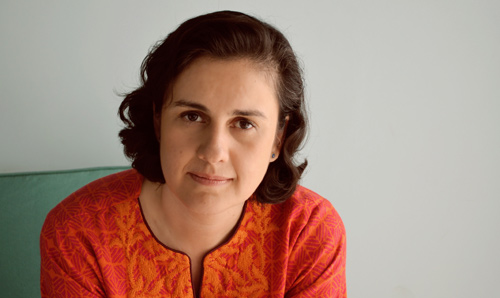
Kamila Shamsie is Professor of Creative Writing at the Centre for New Writing, School of Arts, Languages and Cultures, University of Manchester, where she joined in 2017. An internationally renowned novelist, her work has received significant critical acclaim and numerous prestigious awards. Shamsie is a Fellow of the Royal Society of Literature and serves as Patron of the Manchester Literature Festival. In 2013, she was named one of Granta's 'Best Young British Novelists,' highlighting her significant contribution to contemporary literature. Her creative interests span Creative Writing, Fiction, Postcolonial Literature, South Asian Literature, and Political Fiction. Shamsie's work consistently explores themes of identity, migration, political conflict, and cultural displacement, with particular focus on South Asian experiences within global contexts. Her writing demonstrates sophisticated understanding of historical contexts and their impact on personal and collective identities, often reimagining classical narratives for contemporary settings as seen in her Antigone adaptation Home Fire . Shamsie's literary contributions have been recognized with numerous prestigious awards: Winner of the 2018 Women's Prize for Fiction for Home Fire Shortlisted for the Orange Prize for Fiction for Burnt Shadows Winner of the Anisfield-Wolf Book Award for Burnt Shadows Shortlisted for the Bailey's Prize and Walter Scott Prize for A God in Every Stone Longlisted for the Man Booker Prize for Home Fire Shortlisted for the John Llewellyn Rhys award for Kartography Named one of Granta's 'Best Young British Novelists' in 2013 As an influential literary figure, Shamsie actively engages with broader cultural conversations through essays, journalism, and public speaking. Her contributions extend beyond creative work to include commentary on citizenship, migration, literature, and politics, demonstrating her commitment to using literature as a lens for examining contemporary social issues. She has participated in media discussions on diverse topics from cricket to refugee policy, reflecting her wide-ranging intellectual interests and public engagement.
Paul Théberge is a Professor at Carleton University, cross-appointed to the Institute for Comparative Studies in Literature, Art and Culture and the School for Studies in Art and Culture (Music). He teaches graduate courses in Cultural Mediations (technologies of culture), Film Studies (sound in visual media), and Music (sound studies), reflecting his interdisciplinary academic home within Ottawa's major research institution. His research interrogates the material and cultural dimensions of sound technologies, with core expertise in music-technology-culture intersections, internet-mediated musical practices, and sonic applications in film/television. Théberge's scholarship bridges musicology, media studies, and science and technology studies, examining how recording technologies reshape creative practice and auditory experience across historical periods from analog tape to digital streaming platforms. Analysis of his 15 most recent publications reveals persistent engagement with sound's materiality—from multichannel audio histories to the embodied nature of listening—and consistent exploration of technological transitions, particularly the internet's disruption of traditional music production/distribution models. His work demonstrates deep methodological versatility spanning archival research, ethnographic observation, and creative composition. Scientific recognition includes: International Association for the Study of Popular Music (US branch, 1998) Society for Ethnomusicology (2000) While the source text doesn't specify current advising activities, his extensive editorial work (e.g., co-editing Living Stereo ) and composition output suggest significant mentorship through collaborative projects. His research has been supported through Canada Research Chair funding and industry partnerships like Sony Classical International.
Brian Teare is an Associate Professor of English at the University of Virginia, where he also serves as Director of the Poetry Writing Concentration. Previously affiliated with Temple University and with experience teaching in the San Francisco Bay Area and Philadelphia, Teare maintains an active presence in both academic and literary communities. Teare's scholarly interests span American Poetry and Poetics, Ecopoetics and Environmental Humanities, Feminist Theory, Queer Theory, and Small Press Publishing. His work consistently explores the intersection of form and content, particularly how poetic structures can engage with ecological concerns and social justice issues. He approaches poetry as both a creative practice and a form of critical inquiry, often examining how poetic traditions respond to contemporary crises. Teare's publications reveal a trajectory from early formal experimentation toward increasingly engaged ecopoetic work. His writing demonstrates sophisticated engagement with literary history while maintaining urgent contemporary relevance, particularly in addressing climate change and social inequality through poetic form. His essays frequently bridge academic criticism and creative practice, offering insights into how poetry functions as both art form and social intervention. Woodberry Poetry Room Creative Grant (Harvard University), 2019-20 Pew Fellowship in the Arts, 2015-17 Four Quartets Prize winner for Doomstead Days Guggenheim Fellow (2020) Finalist for Kingsley Tufts Poetry Award (2014) Lambda Literary Award for Gay Male Poetry (2010) As an educator, Teare has mentored numerous students through poetry workshops and directed the Poetry Writing Concentration at UVA. His editorial work with Albion Books represents a significant contribution to small press publishing, supporting emerging voices while maintaining high artistic standards. Teare's approach to teaching emphasizes both technical mastery and conceptual innovation, encouraging students to develop their unique poetic voices while engaging with broader literary traditions. Teare maintains an active creative practice alongside his academic work, regularly participating in readings and literary events. His dual commitment to scholarly rigor and artistic innovation makes him a distinctive voice in contemporary poetry and criticism.
Deborah Harty is a Senior Lecturer in Fine Art and Director of Doctoral Programmes at the School of Design and Creative Arts, Loughborough University. Her research focuses on drawing practice as a phenomenological inquiry, exploring perception, experience, and the theoretical underpinnings of visual art. She has been a key member of the TRACEY drawing research network since 2005, serving as a journal editor and co-director of its expanded platform. Alongside collaborator Phil Sawdon, she co-founded humhyphenhum , a practice-based research duo investigating drawing processes within contemporary art contexts. Her work bridges theory and practice, emphasizing drawing’s role in generating knowledge through interdisciplinary methodologies. Notable projects include investigations into temporal traces, collaborative drawing dialogues, and hybrid digital-physical approaches. Harty’s contributions span exhibitions, catalogues, and the Journal for Artistic Research, reflecting her commitment to advancing drawing as a critical research tool. As Director of Doctoral Programmes, she oversees postgraduate research in creative arts while maintaining an active profile in international exhibitions and research networks. Her practice-led outputs emphasize the symbiotic relationship between artistic creation and scholarly inquiry.