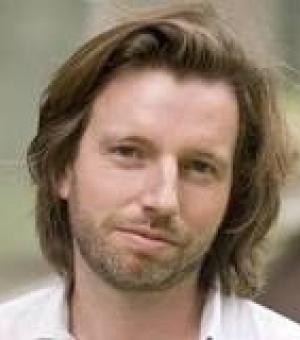
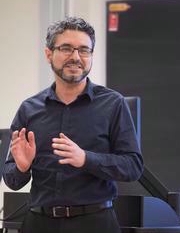
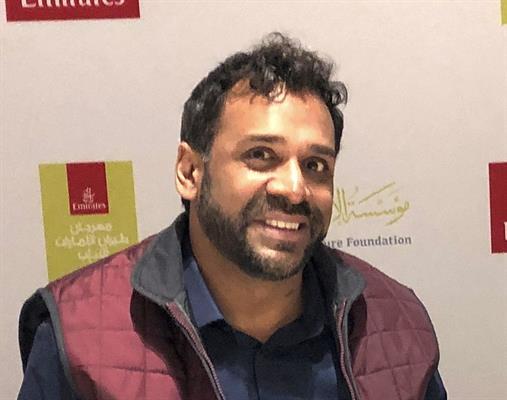
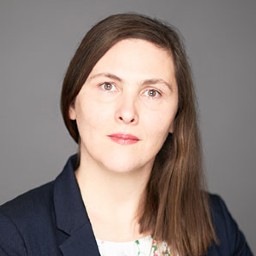
James Davis is an Assistant Professor in the Elmore Family School of Electrical and Computer Engineering at Purdue University. His research focuses on engineering robust computing systems through socio-technical approaches, emphasizing software correctness, security, and usability. He applies empirical methodologies to evaluate the practical impact of technical solutions. Research interests include software supply chain security, deep learning reproducibility, regular expression optimization, IoT cybersecurity, and the socio-technical challenges in system design. His work bridges theoretical foundations with real-world applications, addressing issues like regex denial-of-service (ReDoS), model reuse in AI, and developer practices for safety-critical systems. Recent publications span topics such as actor reputation metrics in software supply chains, AI safety for downstream developers, and edge-computing optimizations for vision transformers. His interdisciplinary approach integrates empirical studies, formal verification, and human-centered design principles. No scientific awards are explicitly mentioned in the provided materials. His advising record is currently unspecified, though his research group likely engages in collaborative projects with industry and academia. He contributes to initiatives like the Sigstore ecosystem and open-source security tooling, reflecting his commitment to practical impact.
Professor Matthew Reynolds is a Professor of English and Comparative Criticism at the University of Oxford and a Tutorial Fellow at St Anne's College. He is affiliated with the Faculty of English and chairs the Oxford Comparative Criticism and Translation Research Centre. His research focuses on translation studies, postcolonial literatures, and linguistic pluralism, with recent work exploring AI's role in decolonial translation practices. He led an AHRC-funded project (2016-23) on Prismatic Translation and authored Prismatic Jane Eyre (2023), an interactive study of Charlotte Brontë's global translations. He holds a Leverhulme Major Research Fellowship and has published widely on translation theory and multimodal literary analysis. Research interests include the redefinition of translation beyond standardized languages, multimodality in literature, and the intersections between academic language practices and global contexts. His creative works, such as Designs for a Happy Home (2009) and The World Was All Before Them (2013), reflect his scholarly themes of space, language, and trust. Key Projects: Prismatic Translation initiative, Translation: A Very Short Introduction (OUP, 2016) Grants: AHRC funding, Leverhulme Fellowship Labs/Teams: Founded and chairs the Oxford Comparative Criticism and Translation Research Centre, collaborating on global translation studies.
Morag Morrison-Helme is an Associate Professor in Arts Education at the University of Cambridge, Faculty of Education. She serves as a Fellow and Director of Studies at St John's College and is a Tutor there. Morag also acts as a Trustee for the Eastern Learning Alliance in the UK. Her research focuses on experiential and embodied learning, applied theatre, conflict management, and transformative practices in education. She has conducted studies in England, Kazakhstan, Sweden, and China, emphasizing drama pedagogy's role in second language acquisition, peer teaching, and democratic education. Education: B.A. (Griffith University, Australia), Grad Dip Teach (Mt Gravatt CAE, Australia), M.A. (University of Sussex, UK), PhD (Griffith University, Australia) Morag’s publications and projects span drama education, healthcare training, and cross-cultural pedagogy, including leadership in the DRACON international research initiative. Her work bridges arts, teacher development, and social justice, with a focus on disaffected learners and gender equity. She has supervised doctoral students in topics ranging from moral education in China to ethical challenges in Alabaman schools and radiography training in Sweden. Her teaching includes courses on drama and creativity, PGCE Secondary, and MEd/PhD programs. Scientific Awards: Award from Sigma Theta Tau (2012) for contributions to Nursing Education in Sweden
Dr. Kelly Fitzgerald is a Lecturer/Assistant Professor and Head of the School of Irish, Celtic Studies and Folklore at University College Dublin (UCD). She also served as Vice-Principal (International) at UCD from September 2020 to August 2023. Fitzgerald holds a BA and PhD from UCD, focusing on folklore and early Irish studies. Her research emphasizes the intellectual history of Irish folkloristics, archives, and oral history, with notable contributions to journals like Béaloideas . She chairs ANU Productions and directs oral history initiatives, including projects for Dublin’s Tenement Museum and social housing communities. Her teaching spans modules such as Folklore and Folkloristics , Healers and Healing , and Oral Text Interpretation . Fitzgerald has held leadership roles, including Head of Irish Folklore & Ethnology (2019) and Head of School (2021). She contributes to professional activities like committee memberships (e.g., The Royal Society of Antiquaries) and public engagements, including talks on Irish cultural traditions and folklore. Her research outputs include analyses of aging discourse, cultural heritage preservation, and interdisciplinary studies. Fitzgerald’s work bridges academic and public spheres, advocating for inclusive cultural narratives and policy-informed research on aging.
Associate Professor Lisa McGrath specializes in academic writing and English for Research and Publication Purposes (ERPP) at Sheffield Hallam University. She holds a PhD from Stockholm University and leads initiatives such as the SIoE 'Writing (better) for international publication' course and doctoral writing workshops. Her research focuses on genre pedagogy, L2 writing task design, and metacognition in academic contexts. She collaborates with institutions like Chalmers University and serves on editorial boards for journals including Journal of English for Academic Purposes . McGrath is Deputy Director of the White Rose Doctoral Training Partnership and editor of the Sheffield Institute of Education blog. Education: PhD in Education from Stockholm University Her teaching spans MA Education, MA TESOL, and EdD programs, covering topics like research project design and English for Specific Purposes. Current research projects include multi-genre pedagogy and disciplinary grading criteria analysis with Prof. Raffaella Negretti and Dr. Helen Donaghue. McGrath also supervises doctoral students in areas such as disability studies, BAME belonging, and TESOL. Recent publications emphasize embedding writing development in early-career lecturers' practices and innovating L2 writing task design. She actively engages in professional networks like BALEAP and delivers international training on academic writing for publication.
Enda Brophy is Associate Professor in the School of Communication at Simon Fraser University, where he researches and teaches at the intersection of political economy, labour, and social change in communication industries. Education & Training: While his formal degrees are not explicitly listed, Brophy’s extensive translation work of foundational Italian autonomist texts and his co-editorship of critical academic volumes signal advanced training in critical theory, labour studies, and communication research. Research Interests: Political economy of communication and digital media Labour and collective organising in media, cultural and creative industries Call-centre work and global outsourcing Platform labour and gig-economy dynamics Autonomist Marxist theory and worker inquiry Digital debt, financialisation, and resistance Student movements and university governance Precarious employment and creative labour Analysing his recent publications (2015-2020) reveals a consistent focus on the transformation of labour processes under communicative capitalism: from call-centre scripting and surveillance to food-delivery platform work during COVID-19, and from unpaid internships in creative industries to emergent forms of tech-worker organising using digital tools. These works collectively map how digital infrastructures mediate, discipline, and occasionally enable new solidarities among precarious workers. Awards & Recognition: 2018 Canadian Association of Work and Labour Studies Book of the Year Award for Language Put to Work 2018 Canadian Communication Association Gertrude J. Robinson Book of the Year Award for Language Put to Work Confederation of University Faculty Associations of BC Academic of the Year Award Research Grants & Collaborative Projects: He co-leads Cultural Workers Organize , a multi-investigator SSHRC-funded project with Greig de Peuter, Nicole Cohen, Kate Oakley and Marisol Sandoval, investigating collective responses to precarity among cultural and creative workers in Canada and the UK. Editorial board memberships at Studies in Political Economy , Work Organisation, Labour and Globalisation , and tripleC further anchor his scholarly leadership. Graduate Supervision & Teaching: Brophy currently teaches CMNS 130 Communication and Social Change and actively supervises MA and PhD students working on labour, social movements, and digital media. He is formally associated with SFU’s Labour Studies Program as an Associate.
Richard Scott is a Lecturer in Creative Writing at Goldsmiths, University of London, specializing in poetry and queer theory. He holds a BMus in Music & Performance (Opera) from the Royal College of Music (2004) and an MA in Creative & Life Writing from Goldsmiths (2012). His research explores queer poetics, ekphrasis, art history, and London's Soho district. Key publications include Soho (Faber & Faber, 2018), shortlisted for the T.S. Eliot Prize, and Wound (Rialto, 2016), winner of the Michael Marks Poetry Award. His work has been translated into German and French. Recent articles engage with queer ekphrasis (e.g., 'Still Life with Cup...'), mineral symbolism ('Red Jasper'), and urban queer narratives ('from Coy'). He has collaborated with institutions like Southwark Park Galleries and BBC Radio 4. Awards include the Poetry London Competition (2017) and residencies at Edwin Morgan Trust and Resonance FM. His teaching focuses on creative writing and life writing at the MA level.
Professor Barley Norton is a distinguished ethnomusicologist and filmmaker at Goldsmiths, University of London, where he serves as Director of the Asian Music Unit (AsMU), convenor of the MA in Music (Ethnomusicology), and leader of the Goldsmiths Gamelan Group. His academic career focuses on the music and culture of Southeast Asia, particularly Vietnam, where he has conducted extensive field research. His research interests span ethnomusicological filmmaking and theory, the cultural politics of musical practice, discourse on cultural heritage and music revival, music and religious experience, music and emotion, music and gender theory, music censorship, improvisation, and performance and modal theory. Norton's academic work is deeply informed by his practical musical engagement; during his field research in Vietnam, he learned to play the dan day and dan nguyet lutes, and he also performs Sundanese music from Indonesia on the kacapi zither and in the gamelan degung orchestra. Norton's scholarly output reveals significant trends in Southeast Asian music studies, particularly focusing on the intersection of traditional musical practices with contemporary political and social contexts. His work consistently examines how musical traditions navigate processes of canonization, heritage safeguarding, and creative innovation within rapidly changing cultural landscapes. A notable thread throughout his research is the relationship between music, ritual, and identity in Vietnamese cultural contexts, with increasing attention to environmental concerns and climate change impacts on musical heritage in his most recent work. American Musicology Society's 2014 Ruth A. Solie Award for 'Music and Protest in 1968' Commendation - Intangible Culture Film Prize at the Royal Anthropological Institute's 12th International Festival of Ethnographic Film for 'Hanoi Eclipse: The Music of Dai Lam Linh' Professor Norton has supervised numerous doctoral students including Christopher Hanby (Applied Ethnomusicology and Jèrriais language revitalization), Lin Lin (Creative Realization in the Compositional Process), Clare Salaman (Reimagining the trumpet marine), and Jasmine Hornabrook (Transnational networks in London's Tamil diaspora). His research has been generously funded by the Getty Foundation, Arts and Humanities Research Council, British Academy, and ASEASUK, supporting projects on Vietnamese music revival and audiovisual archiving. He has also undertaken consultancy work with UNESCO, the British Council, and Vietnamese cultural institutions on music heritage projects. As a key figure in the field, Norton directs Goldsmiths' Asian Music Unit, which serves as a hub for research, performance, and teaching focused on Asian musical traditions. The unit facilitates cross-cultural musical dialogue and supports field research in Asia, while the Goldsmiths Gamelan Group provides hands-on experience with Indonesian musical traditions. His leadership extends to international scholarly organizations, having served as Chair of the British Forum for Ethnomusicology (2015-2018) and as a member of the Society for Ethnomusicology Council (2017-2020).
Emma Anderson is a Senior Lecturer in the School of Humanities and Social Science at The University of Brighton. She is affiliated with the Centre for Arts and Wellbeing, Centre for Transforming Sexuality and Gender, and the Inclusive Digital Societies Research Excellence Group. Her research focuses on critical social and community psychology, employing discourse analysis and creative methodologies to explore how individuals navigate neoliberal contexts, particularly regarding mental health, wellbeing, and social citizenship. Her work includes participatory research with lived-experience researchers on arts in mental health, discursive analyses of happiness and wellbeing, and gendered approaches to self-help. She has collaborated on projects such as the Brighton and Hove Common Ambition initiative, addressing homeless healthcare systems. Anderson has presented her research at international conferences, including the International Society of Critical Health Psychology in Bratislava, Slovakia. Her research interests span critical approaches to health and citizenship, creative methodologies, media’s role in everyday life, and post-feminist sensibilities. Her publications reflect a strong engagement with interdisciplinary topics, blending psychology with social policy and arts-based interventions.
Mauricio Espinoza is an Assistant Professor in Spanish and Latin American Literature/Cultural Studies at the University of Cincinnati (2016–Present). He holds a Ph.D. (2015) and M.A. (2011) from The Ohio State University, and an M.A. (2000) from Universidad de Costa Rica in Latin American Literature. His research spans Latin American Cultural Studies, Latino/a Studies, Central American Literature, and Graphic Narrative, with a focus on migration, identity, and visual representation. Education: Ph.D. in Latin American Literatures and Cultures, The Ohio State University (2015) M.A. in Latin American Cultural Studies, The Ohio State University (2011) M.A. in Latin American Literature, Universidad de Costa Rica (2000) B.A. in Journalism, Electronic Media Production, and English, Ashland University (1998) His work analyzes intersections of neoliberalism, gender, and transnationalism in Latin American and Latino cultural production. Recent publications explore post-apocalyptic graphic narratives, indigenous gaming in Central America, and decolonial acts in visual media. His research emphasizes the role of comics and film in challenging societal norms. Grants include funding for the UC Latino Faculty Association. He serves on university committees related to Latin American, Caribbean, and Latinx Studies. Contact: espinojm@uc.edu | Office: 710C Old Chemistry Building, University of Cincinnati.
Ravi Shankar is a Lecturer in the Department of English at Tufts University, specializing in Creative Writing, Poetry, and Digital Humanities. He holds a PhD from the University of Sydney (2020), an MFA from Columbia University (2000), and a BA from the University of Virginia (1996). His research bridges literature, technology, and cultural studies, with notable work in Asian American literature and international translation. He has published 15 books, including the Muse India award-winning Andal: The Autobiography of a Goddess and The Many Uses of Mint , and co-edited Language for a New Century , hailed as a landmark in world literature. Dr. Shankar’s work emphasizes digital trust, global technology policy, and creative writing pedagogy. He has taught and performed worldwide, appearing in media such as The New York Times, NPR, and PBS Newshour. As founder of Drunken Boat , one of the oldest electronic literary journals, and Chairman of the Asia Pacific Writers & Translators (APWT), he advocates for cross-cultural literary exchange. His recent memoir Correctional (2021) explores incarceration and rehabilitation through a personal lens. His academic contributions include the Digital Planet series analyzing global digital competitiveness and the Digital Intelligence Index . Awards include the Pushcart Prize, Yaddo and MacDowell Colony fellowships, and grants from the Rhode Island and Connecticut Councils on the Arts. His current projects focus on AI’s societal impact, digital trust frameworks, and creative writing initiatives in underserved communities.
Katerina Kosta is a Lecturer and PhD candidate at Oxford Brookes Business School, funded by the university's 150 Anniversary Scholarship. Her research focuses on environmental sustainability in higher education and sustainability reporting practices. She holds an MSc in Educational Research from the University of Exeter and qualifications in English language teaching. Previously, she worked at the Environmental Association for Universities and Colleges (EAUC), co-authoring sustainability reporting guidelines for UK universities. Teaching responsibilities include Research Methods modules and leadership of the Environmentally Sustainable Business module. She has also taught Ethics in Business, Organisational Behaviour and Management, and Business in Society. Her work has been recognized through awards including the 2020 Teaching Excellence Award (Creative Teaching category) and a Best Paper Award at the 2017 Implementing Sustainability in the Curriculum conference. Research contributions include publications in the Encyclopedia of Sustainability in Higher Education and Springer's World Sustainability Series. She serves on the steering committee of the International Ecolinguistics Association and reviews for journals like the International Journal of Sustainability in Higher Education . Her conference presentations span topics from sustainability curriculum design to student engagement strategies in higher education.
Robert Hopkins is a Professor of Philosophy at New York University, affiliated with the Department of Philosophy in the College of Arts & Science. He holds a PhD from Cambridge (1993), an MPhil from University College London (1989), and a BA from Cambridge (1986). His research focuses on aesthetics, philosophy of mind, and philosophy of representation, with notable works like The Profile of Imagining exploring sensory imagination and its relation to perception and memory. Dr. Hopkins has led departments at NYU (2016–19) and the University of Sheffield (2008–11), and served as Honorary Secretary of the Mind Association and President of the European Society for Aesthetics. His 2014 Templeton Foundation-funded project examined historical and aesthetic understanding. Awards include the Philip Leverhulme Prize. Research Interests : Aesthetics of visual arts (sculpture, photography, film), philosophy of mind, moral epistemology, and interdisciplinary cognitive science. Publications : Over 50 articles and books, including Picture, Image and Experience (1998) and recent works on episodic memory and artistic style.
Dr. Iulia Ionescu is a Senior Lecturer and Programme Director for Creative Computing and Robotics postgraduate courses at UAL's Creative Computing Institute, with additional Visiting Senior Lecturer appointments at Royal College of Art and Imperial College London. She holds a Microsoft-sponsored PhD in AI design from RCA, complemented by an MA in Design (RCA), MSc in Mechanical Engineering (Imperial College), and BArch (Nottingham University). Her interdisciplinary research examines social phenomena in algorithmic societies, focusing on co-construction of meaning in human-AI interaction and anthropomorphism in technology design. Core interests include technology-mediated social dynamics, perceptual interfaces, and ethical implications of autonomous systems. Recent publications demonstrate consistent focus on human-centered technology design across robotics, linguistics, and interaction paradigms, with emerging patterns in embodied cognition and generative systems. Teaching includes course leadership for MA/MSc Creative Computing and development of 'Methods 1: Creative Computing Research Methods' curriculum.
Lyn van Swol is a Professor of Communication Science at the University of Wisconsin–Madison, with office hours available Tuesdays and by appointment. Her research focuses on factors influencing information acceptance during interactions, including group information sharing, advice utilization, persuasive messaging, chatbot communication, and environmental communication strategies. She holds a Ph.D. in Social Psychology with a minor in Quantitative Psychology from the University of Illinois (1999), an M.A. in Social Psychology from the same institution (1995), and a B.A. in Psychology (summa cum laude) from Loyola University (1993). Dr. van Swol's current projects examine emotional contagion in chatbot interactions, group discussion effects on climate change attitudes, and applying advice communication research to environmental contexts like forestry, aquatic invasive species, and PFAS mitigation. Her work emphasizes how peer groups establish norms through discussion to encourage pro-environmental behaviors. Her scholarly recognition includes multiple top paper awards from the National Communication Association (NCA) and International Communication Association (ICA), notably the Dennis Gouran Research Award (2007, 2018, 2021) and top three paper awards in group communication spanning 2005-2022. She co-edited the Oxford Handbook of Advice (2018) and teaches courses including Communication in Complex Organizations (CA 575), Theory and Practice of Persuasion (CA 368), and Theory in Communication Science (CA760).