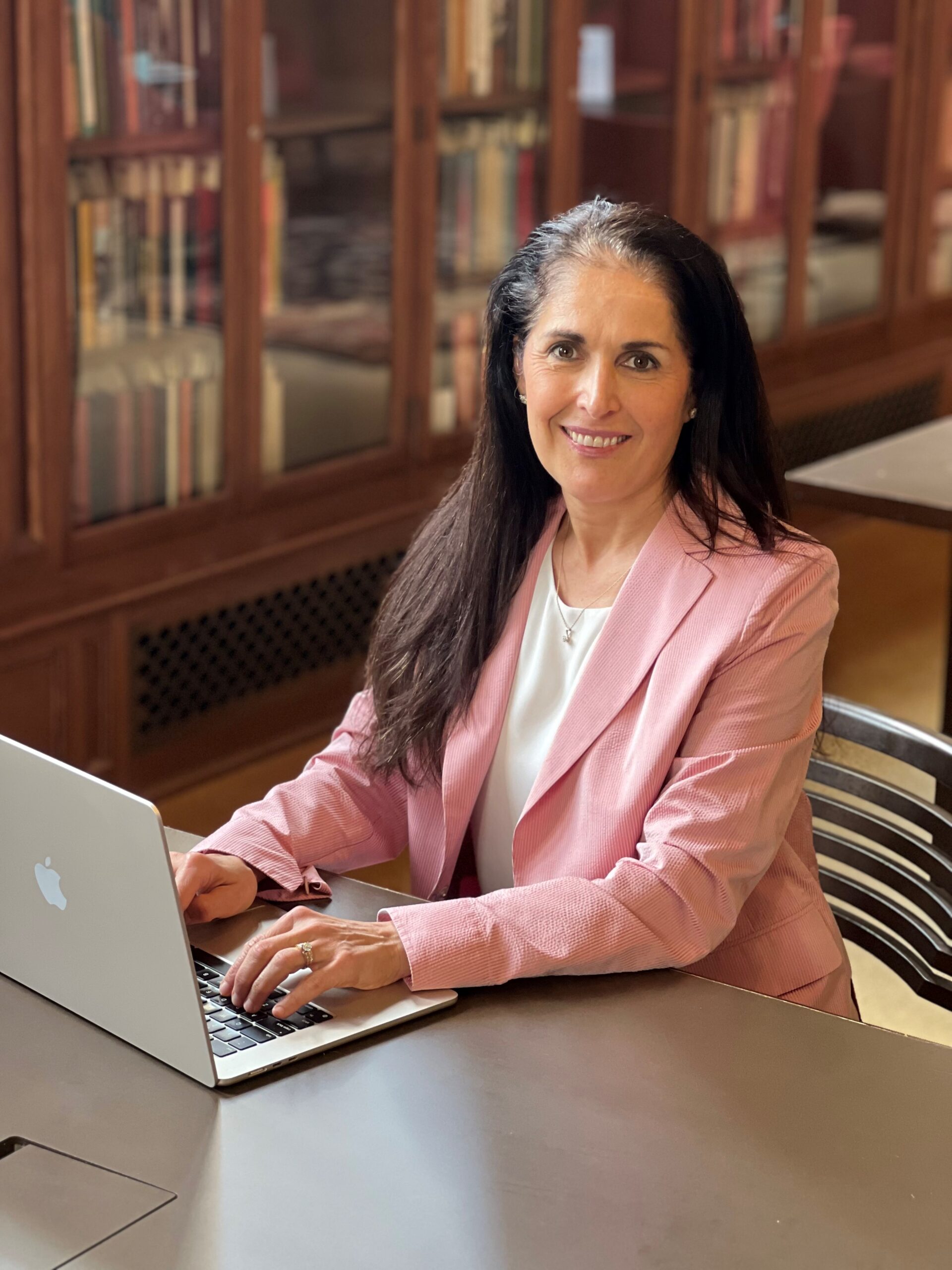
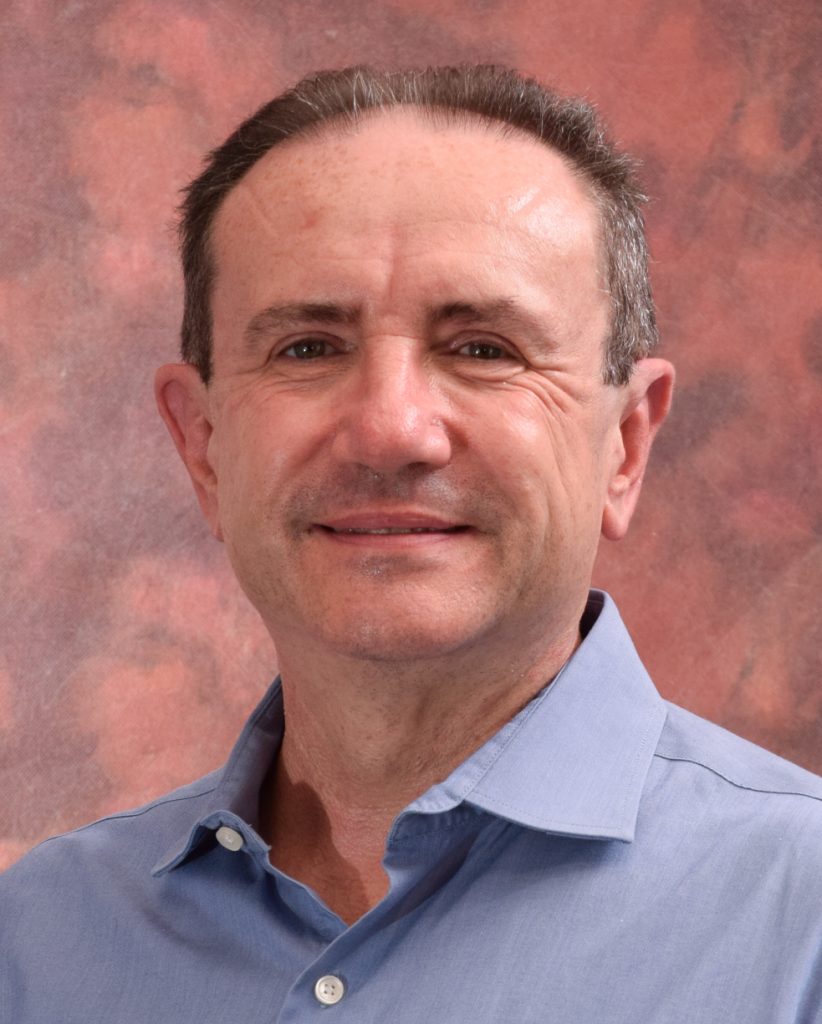
May Britt Drugli is a Professor at the Regional Centre for Child and Youth Mental Health and Child Welfare, affiliated with NTNU's Faculty of Medicine and Health Sciences and Department of Mental Health. Her research focuses on early childhood care, student-teacher relationships, child mental health, and intervention research. She has contributed to numerous publications addressing childcare quality, child well-being, and developmental outcomes. Her work includes studies on cortisol levels in toddlers in childcare, the impact of professional development programs like 'Thrive by Three,' and the importance of play-based learning in educational policies. She frequently collaborates with educators and policymakers to translate research into practical pedagogical strategies. Key areas of exploration include transition processes for young children entering childcare, the role of teacher-child interactions, and addressing socioeconomic disparities in early education. Her research emphasizes evidence-based practices to enhance child development and mental health.
Maria Cristina Morales is a Professor in the Department of Sociology & Anthropology at the University of Texas at El Paso, College of Liberal Arts . Her research critically examines how Latinx ethnicity intersects with social statuses and institutions, particularly along the U.S.-Mexico border , using quantitative and qualitative methodologies while prioritizing reflexive and theory-driven approaches . Education: PhD in Sociology, Texas A&M University (2004) Research Focus includes structural violence at the U.S.-Mexico border, environmental hazard perceptions near border ports, and gender/sexuality dynamics . Her publications and presentations bridge border studies, immigration, labor rights, and environmental justice . Recent projects include decolonizing survey research and Latinxs on the Margins (forthcoming). Scientific Awards include the Norma Williams Distinguished Service Award (2024), UT Regents Outstanding Teaching Award (2016), and multiple recognitions from the Southwestern Sociological Association and Building Scholars programs. Grants highlight her leadership in National Science Foundation and North American Development Bank funded projects addressing sociological issues, air quality assessment , and data accessibility for vulnerable communities.
Jen'nan Ghazal Read is a Professor of Sociology at Duke University with multiple cross-appointments as a Research Professor of Global Health at the Duke Global Health Institute and Professor in the Sanford School of Public Policy. She is also a Faculty Research Scholar at Duke's Population Research Center. Her interdisciplinary work bridges sociology, public health, and policy studies with a focus on ethnic diversity within racial categories. Professor of Sociology, Trinity College of Arts & Sciences (2018-Present) Research Professor of Global Health, Duke Global Health Institute (2018-Present) Professor in the Sanford School of Public Policy (2025-Present) Faculty Research Scholar, Duke Population Research Center (2010-Present) Dr. Read is an internationally renowned scholar who challenges conventional approaches to racial and ethnic categorization in health research. Her work demonstrates substantial health disparities among ethnic groups within broad racial categories like 'White,' particularly focusing on Middle Eastern Americans. She has conducted groundbreaking research showing that using non-Hispanic Whites as a reference category masks important health inequalities among White subgroups, including immigrants from different regions. Her expertise on U.S. Census categories contributed to recent revisions of federal standards for collecting race and ethnicity data. Her publication record reveals a consistent focus on health disparities, with recent work examining immigrant health advantages among White populations, discrimination effects on mental health, and the unique health experiences of Arab Americans. Dr. Read's research spans multiple methodologies including quantitative analysis of national datasets and qualitative interviews with Muslim American women. Bass Chair and Bass Society of Fellows (2019) Howard D. Johnson Teaching Award (2020) Outstanding Teaching Assistant of the Year, University of Texas (1999) Dr. Read has secured significant research funding including the 2022 Census Study Research grant, the ACCESS Arab American Research Initiative, and the Thriving after Surviving project focused on Muslim refugee students. She has been featured in major media outlets including The New York Times, NPR, and Al Jazeera English, and has presented at prestigious institutions worldwide including the National Academy of Medicine, the U.S. Census Bureau, and universities across Europe and the Middle East.
Shahin Jabbari is an Assistant Professor in the Computer Science Department at the College of Computing & Informatics, Drexel University, where he is a member of the EconCS research group. His research lies at the intersection of machine learning, game theory, and algorithmic fairness, with a focus on ethical AI and its societal implications. Prior to Drexel, he was a CRCS postdoctoral fellow at Harvard University's School of Engineering and Applied Sciences, hosted by Milind Tambe, and affiliated with the EconCS group. Education: PhD in Computer and Information Science, University of Pennsylvania (2013–2019), advised by Michael Kearns Master's in Computing Science, University of Alberta, advised by Robert Holte and Sandra Zilles Bachelor's in Computer Engineering, Sharif University of Technology His research interests center on machine learning, algorithmic fairness, and game theory, particularly focusing on how AI systems can be designed to be more equitable, interpretable, and robust. He investigates ethical aspects of algorithmic decision-making, aiming to ensure AI technologies contribute positively to society. His work often integrates human behavior modeling and experimental validation, especially in cybersecurity and public health domains. His recent publications span top venues including ICML, NeurIPS, AAAI, AAMAS, PNAS, and TMLR. The research trends show a consistent focus on fairness in AI, explainability, robustness, and strategic interactions in complex systems. Topics include fair influence maximization, adaptive phishing training, cyber deception games, and ethical machine learning frameworks. These works reflect a multidisciplinary approach combining theoretical rigor with real-world applicability. Scientific Awards and Recognitions: Best Paper Finalist, AAMAS 2021 Best Paper, GameSec 2020 Spotlight Presentation, ICML 2021 Best Paper, KI 2012 Shahin Jabbari actively contributes to the academic community through advising, teaching, and service. He teaches graduate courses such as CS 589: Responsible Machine Learning and CS 590: Privacy. He has served on the senior program committees of ICML and NeurIPS, is an Action Editor for TMLR, and has reviewed for numerous top-tier conferences and journals. He mentors students through research projects and invites prospective PhD candidates to apply through Drexel’s formal channels. He is involved in the Drexel Computer Science Theory Reading Group and contributes to advancing responsible AI practices. He is affiliated with the EconCS group at Drexel, which focuses on economic and computational aspects of AI, including game theory, mechanism design, and multi-agent systems. His lab integrates tools from machine learning, behavioral modeling, and optimization to develop AI systems that are not only intelligent but also fair and trustworthy. Future work is expected to further explore human-AI collaboration, ethical AI deployment, and policy-aware algorithm design.
Daniel Frumin is an Assistant Professor in the Department of Fundamental Computing Science at the University of Groningen, affiliated with the Bernoulli Institute. His research focuses on Logic, Type Theory, and Program Verification, with a particular emphasis on formal methods for concurrency, type systems, and homotopy type theory. He has contributed to foundational work in denotational semantics, modular programming language design, and mechanized verification of concurrent systems. His expertise includes the application of logical frameworks to concurrency models, such as ReLoC (Relational Logic for Concurrent Programming) and the integration of type theories with operational semantics. Recent work explores guarded interaction trees, interval domains in homotopy type theory, and compositional security properties for fine-grained systems. Frumin has published extensively in top-tier venues like ESOP, CONCUR, and ACM POPL, with peer-reviewed contributions on topics ranging from bunched implications in session-based concurrency to formal verification of data structures like concurrent queues. His research often bridges theoretical computer science and practical formal verification, leveraging tools like Coq for mechanized proofs. Collaborations include projects with institutions such as Aarhus University (Denmark) and the University of Bologna, focusing on univalent foundations, categorical semantics, and security verification. His work is supported by grants from the Dutch Research Council (NWO) and industry partnerships like Meta's Folly Library verification efforts. Labs/Teams: Active contributor to the Bernoulli Institute's Formal Methods Group and the Univalent Foundations initiative. His research group specializes in applying type-theoretic and categorical methods to concurrency and verification challenges.
Mohamed Sarwat is an Associate Professor at Arizona State University specializing in databases , spatial data management , and recommender systems . His research focuses on GeoSpark —a cluster computing framework for spatial data—and its extensions like GeoSparkViz for visualization and GeoSparkSim for traffic simulation. Key Contributions: LARS* (Location-Aware Recommender System), Horton* (Graph Reachability), Sindbad (GeoSocial Platform), and Riso-Tree (Graph Database Indexing) Research Themes: Integration of spatial/temporal data with machine learning, efficient indexing for big geospatial datasets, and scalable frameworks for mobility data science His work spans collaborations with 23+ co-authors across institutions like University of Minnesota, University of Melbourne, and University of Salzburg. Current projects emphasize GeoTorchAI —a spatiotemporal deep learning system—and mobility data science infrastructure.
Prof. Martin Teufel is a Professor at the University of Teacher Education Styria, Austria, affiliated with the Institute for Digital Media Education. He specializes in educational technology with a focus on mobile learning, digital competency, and innovative teaching methodologies. His work includes developing MOOC-based learning systems and analyzing student digital preparedness. Key projects include the Styrian University Conference digital competency analysis and the Digital Learning Lab initiative. He holds a BEd from the University of Graz and actively contributes to teacher training programs integrating emerging technologies. Research interests span digital pedagogy, seamless learning environments, and computational thinking tools like BBC micro:bit. His publications highlight patterns in online learning behaviors and institutional digital transformation strategies. He advises on educational technology policy and has led cross-institutional studies on student readiness for digital education. His work often bridges theory and practice through collaborative formats like the Hochschuldidaktik-Café for educators' professional development. Teaching responsibilities include courses on digital media in education and technology-enhanced learning design. He manages educational technology projects and serves as a consultant for digital learning infrastructure. His GPG public key (F361ADE9) indicates active engagement in secure academic communication.
Prof. Leon van der Torre is a full professor of computer science at the University of Luxembourg, affiliated with the Lab for Intelligent and Adaptive Systems (ILIAS). He specializes in formal models of reasoning and interaction in intelligent systems, with research spanning deontic logic, argumentation theory, cognitive robotics, and compliance technologies. He was granted the Bao Yugang Chair Professorship at Zhejiang University (2023) and has held visiting positions, including at Stanford University's CSLI (2013). His research focuses on integrating logical formalisms with computational systems to address normative reasoning, multiagent coordination, and ethical AI. Key contributions include work on argumentation frameworks, deontic logic applications, and formal models of normative systems. He teaches courses such as 'Introduction to Intelligent Systems' and 'Game Theory', reflecting his expertise in AI and computational reasoning. Prof. van der Torre actively participates in international conferences (e.g., DEON, PRIMA) and has authored over 400 publications. His work bridges theoretical foundations with practical applications, addressing challenges in AI ethics, legal reasoning, and multiagent systems coordination.
Dr. Kirsten Winter is an Honorary Senior Fellow at the University of Queensland's School of Electrical Engineering and Computer Science. Her research focuses on formal verification, concurrent programming, and weak memory models. She has contributed significantly to areas such as model checking, railway interlocking systems, and behavior trees. Her work spans theoretical foundations (e.g., linearizability, concurrency semantics) and practical applications in security and embedded systems. Recent projects include the Program Analysis Cell and BASIL: Boogie Analysis for Secure Information-Flow Logics. Winter has collaborated extensively with researchers like Graeme Smith and Robert Colvin. Her most recent publications address speculative execution vulnerabilities and compositional reasoning in weak memory architectures.
Dr. Spencer Jones is a Senior Lecturer in Armed Forces and War Studies at the University of Wolverhampton, within the Faculty of Arts, Business, and Social Sciences and the Department of History, Politics and War Studies. He is a leading historian specializing in the British Army during the Anglo-Boer War and the First World War, particularly the years 1914–1915. He also serves as the Regimental Historian for the Royal Regiment of Artillery, highlighting his deep institutional engagement with British military heritage. His research interests focus on: Military history of the British Army in the 20th century Tactical reform between the Boer War and World War I Military leadership and command Combat effectiveness and battlefield adaptation Colonial warfare influences on European conflict Dr. Jones's extensive publication record reveals a consistent focus on British military performance, leadership, and tactical evolution during the early years of World War I and the preceding Boer War. His works analyze primary sources, official records, and personal correspondence to reassess historical narratives. The articles span themes such as artillery use, infantry formations, marksmanship, leadership under pressure, and the adaptation of colonial experiences to continental warfare. A recurring thread is the examination of how the British Army learned—or failed to learn—from past conflicts. His scientific recognition includes: Douglas Haig Fellow (2018–2019), awarded for significant contributions to First World War studies Runner-up for the Templer Medal (2014) for his book Stemming the Tide: Officers and Leadership in the British Expeditionary Force 1914 Dr. Jones actively supervises doctoral and research-based degree students, with completed projects covering topics such as manpower, conscription, brigade command, and the influence of the American Civil War on British military thinking. He has secured competitive research grants from the Arts and Humanities Research Council (AHRC) under the Connected Communities program, supporting public engagement with military history. Additionally, he co-hosts the popular podcast Not So Quiet on the Western Front and has contributed to major television documentaries, including those by the BBC and Channel 4, enhancing public understanding of military history. He is associated with the Royal Artillery Historical Society and serves as Guild President of the Guild of Battlefield Guides, reflecting his commitment to both scholarly and public-facing military history.
Michael J. Fischer is a Professor of Computer Science at Yale University, renowned for foundational contributions to distributed systems theory, cryptography, and parallel algorithms. His work includes the seminal impossibility result for distributed consensus with faulty processes and the development of the parallel prefix algorithm fundamental to modern parallel computing. His educational background: B.S. in Mathematics, University of Michigan (1963) M.A. in Applied Mathematics, Harvard University (1965) Ph.D. in Applied Mathematics, Harvard University (1968) Fischer's research spans theoretical and applied computer science with emphasis on distributed systems (consensus protocols, fault tolerance), cryptography (information-theoretic security, card-based protocols), and electronic voting systems . His work bridges abstract theory with practical security applications, particularly in trust modeling for e-commerce. Current investigations focus on algorithmic approaches to establishing trust relationships in distributed environments. His publication trajectory reveals evolving expertise from early parallel algorithms (1970-80s) to distributed consensus breakthroughs (mid-1980s), then cryptographic protocols and secure e-voting systems (1985-2000s), with recent work synthesizing these domains through trust frameworks. Key thematic threads include fault tolerance in unreliable networks and verifiable security mechanisms. Scientific recognition: ACM Fellow Fischer has held significant leadership roles including Editor-in-Chief of the Journal of the ACM , chair of the Max-Planck-Institute for Computer Science International Scientific Advisory Board, and founding member of the Computing Research Association's subcommittee on Women in Computer Science. His advisory work extends to the National Science Foundation and Wuhan University's State Key Laboratory on Software Engineering. Outside academia, he actively participates in the Yale Figure Skating Club, having served multiple terms as president. He maintains international collaborations as Guest Professor at Wuhan University and through editorial roles including Acta Informatica , while continuing to teach core computer science courses from data structures to cryptography at Yale.
Fabrizio Riguzzi is a Full Professor at the Department of Mathematics and Computer Science of the University of Ferrara, Italy. His academic career spans over two decades at the same institution, having served as Associate Professor (2014-2020) and Assistant Professor/Ricercatore (1999-2014). He is an active researcher in the fields of Logic Programming and Statistical Relational Artificial Intelligence with numerous publications and leadership roles in international conferences. His educational background includes: PhD in Electronic and Computer Engineering from the University of Bologna (1999) Laurea in Computer Engineering from the University of Bologna (1995) Riguzzi's research focuses on probabilistic approaches to artificial intelligence, particularly probabilistic logic programming and statistical relational AI. His work bridges symbolic reasoning with probabilistic methods, developing frameworks for uncertain knowledge representation and reasoning. He has made significant contributions to probabilistic answer set programming, neuro-symbolic integration, and applications in areas like network intrusion detection and knowledge graph completion. His research demonstrates how logical formalisms can be enhanced with probabilistic reasoning to tackle real-world problems with uncertainty. An analysis of his recent publications reveals a strong trend toward integrating neural and symbolic approaches in AI, with significant work on probabilistic answer set programming frameworks. His research spans theoretical foundations of probabilistic logic programming, practical implementations, and applications in cybersecurity, knowledge graphs, and decision-making under uncertainty. The interdisciplinary nature of his work connects computer science theory with practical AI applications. His notable awards include: Alain Colmerauer 10-Year Test-of-Time Award at ICLP 2021 Best Paper Award for "BUNDLE: A Reasoner for Probabilistic Ontologies" at RR-2013 Highly Commended Paper Award for "Probabilistic declarative process mining" at KSEM 2010 Riguzzi has supervised several PhD students to completion, including Elena Bellodi, Riccardo Zese, and Giuseppe Cota, who have gone on to win prestigious awards for their theses. He has served in numerous editorial roles, including Associate Editor of the Journal of Artificial Intelligence Research and Editor in Chief of Intelligenza Artificiale. His leadership extends to organizing major conferences like ILP 2018 and serving on program committees for top AI venues including IJCAI, AAAI, and ECAI. He is a member of the ML@unife research group and has developed several online systems including cplint, TRILL, and an Online AUC calculator. His work has fostered collaborations across the AI research community, particularly in the areas of probabilistic logic programming and neuro-symbolic AI.
Professor Lingxiao Jiang is a full-time faculty member at the School of Computing and Information Systems (SCIS), Singapore Management University (SMU) , where he serves as Director of the Centre for Research on Intelligent Software Engineering (RISE) . His research and teaching focus on software engineering , program analysis , code search & reuse , and deep learning of code to enhance software quality, development productivity, and security. PhD, University of California, Davis (2009) Professor Jiang's research explores context-aware software deep learning , code clone detection , and security & privacy through tools like DECKARD (code clone detection), EqMiner (functionally equivalent code), and SmartEmbed (smart contract security). His work leverages distributed computing , symbolic execution , and neural program models for large-scale code analysis. Recent publications highlight trends in deep learning-based code analysis , smart contract vulnerabilities , and automated program transformation . Key themes include code clone detection , semantic patches , and cross-language API mappings . Scientific Awards ACM SIGSOFT Impact Paper Award (2018) for scalable code clone detection As advisor, Professor Jiang has mentored 14 graduate students, including Lucia (Ph.D. 2014) , Shaowei Wang (Ph.D. 2015) , and current advisees in intelligent software engineering. He leads multiple grants on code mining , security of digital platforms , and AI systems governance . RISE Lab at SMU develops tools like MANDO (smart contract analysis), iTiger (issue title generation), and TreeCaps (code processing with capsule networks). The lab actively recruits researchers in software engineering and AI.
Johannes Bjerva is a Full Professor at Aalborg University's Department of Computer Science (Campus Copenhagen), leading the Copenhagen branch and conducting interdisciplinary NLP research integrating linguistic typology. His work focuses on low-resource languages, language model security, and societal AI impact. PhD (University of Groningen, 2017): Thesis on multitask/multilingual lexical modeling M.A. & B.A. in Computational Linguistics (Stockholm University) Research interests span linguistically-informed NLP , language model security , and low-resource language technology . Current projects include the DFF Sapere Aude grant (2025) for language model detection security and the LM2-SEC project (2025–2030). His 2024 ACL paper on embedding inversion security and 2024 EMNLP paper on typological diversity exemplify recent work. Scientific awards include: 2021: Teacher of the Year (AAU Computer Science) 2019: Google Cloud research credits 2022: Carlsberg Semper Ardens (5M DKK) 2024: Novo Nordisk Data Science grant (~10M DKK) Supervision includes 8 PhD students across projects like CreoleVal and HiFi-KPI . He serves on the Industrial Researcher Committee at Innovation Fund Denmark and is a member of Det Unge Akademi (2023–2028).
Teresa Marat-Mendes is a Full Professor in the Department of Architecture and Urban Planning at ISCTE - University Institute of Lisbon, where she is also an Integrated Researcher at DINÂMIA'CET-Iscte - Center for Studies on Socioeconomic Change and Territory. Her work bridges academia and policy, focusing on sustainable urban transitions, urban metabolism, and spatial planning reform. Full Professor, Department of Architecture and Urban Planning, ISCTE-IUL Integrated Researcher, DINÂMIA'CET-Iscte Coordinator of major research projects: MEMO, SPLACH, HAT Member of ISUF and former President of the Portuguese-language Network on Urban Morphology (PNUM) Teresa's research centers on urban sustainability, with a strong emphasis on urban form, ecological urbanism, food systems, and the 15-minute city concept. She investigates how urban morphology influences material flows, energy use, and social equity, advocating for evidence-based, transformative planning policies that respond to climate change and urban sprawl. Her recent publications and projects reflect a clear trajectory toward integrating urban agriculture, transit-oriented development, and proximity-based urban models. The HAT project (2025–2028) exemplifies this trend, aiming to reduce automobile dependence and food imports through green Proximity-Oriented Development (PODs). Earlier work like the MEMO project analyzed historical urban metabolism in Lisbon, providing sustainable lessons from the past. Scientific recognition includes: Women in Science 2019 Award in Architecture (Ciência Viva) Author of Atlas of the Food System. Challenges for a Sustainable transition of the Lisbon Region (Springer) Strong citation metrics: H-index 14 (Google Scholar), 7 (Scopus) Teresa has supervised numerous research initiatives and collaborated with institutions across Europe. She has served as ERASMUS Coordinator (2002–2016) and Vice Director of her department (2013–2016), contributing to academic governance at ISCTE. Her work connects academic research with business and policy sectors to catalyze urban transitions. She has been involved in key research centers and networks: DINÂMIA'CET-Iscte (research leadership) CITTA and GOVCOPP collaborations Portuguese-language Network on Urban Morphology (PNUM), which she co-founded and led (2015–2018)