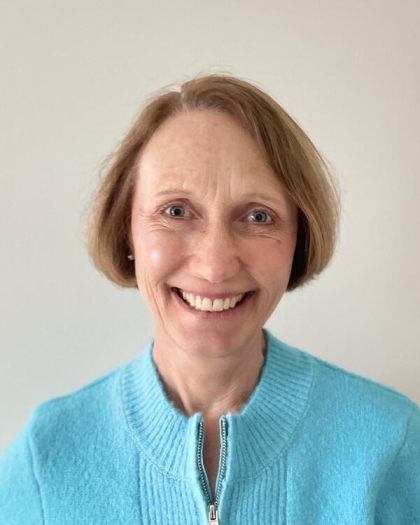
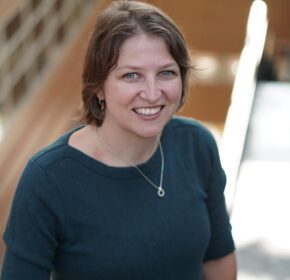
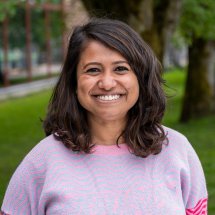
Erik Velldal is a Professor in the Language Technology Group (LTG) at the Section for Machine Learning , Department of Informatics, University of Oslo . With over 25 years of experience in machine learning and natural language processing (NLP), he leads the SANT project focused on sentiment analysis and contributes to major research initiatives including MediaFutures , NorwAI , and Integreat (Norwegian Center for AI Research). His work bridges linguistic theory and computational methods, emphasizing semantic modeling and uncertainty detection. Research interests include sentiment analysis , language modeling , event extraction , and machine learning applications to NLP. Recent publications address cross-domain sentiment classification , generative event analysis , and multilingual model adaptation . He co-developed the Norwegian Review Corpus (NoReC) and Norwegian Anaphora Resolution Corpus (NARC) , foundational resources for Norwegian NLP. His projects often involve collaboration with international institutions, reflected in publications at venues like ACL, COLING, and EMNLP. Current efforts focus on entity-level sentiment analysis , diagnostic datasets for Norwegian , and evaluating compositional generalization in language models. No public record of scientific awards or part-time appointments exists.
Jan Buts is an Associate Professor at the Sustainable Health Unit within the Faculty of Medicine at the University of Oslo, specializing in the intersection of translation theory, medical humanities, and corpus linguistics with a focus on sustainable health and development discourses. His academic background includes: Linguistics and Literature studies at KU Leuven (Belgium) PhD in Translation and Intercultural Studies from the University of Manchester (UK) Postdoctoral research at Trinity College Dublin (Ireland) Assistant Professor position at Boğaziçi University (Turkey) Buts' research centers on corpus-assisted discourse analysis applied to translation theory, medical humanities, and sustainable development. He actively develops the Sustainability and Health Corpus to analyze how language shapes public health narratives, gender discourses in development aid, and conceptual frameworks around sustainability. His work bridges linguistic analysis with critical perspectives on social justice and health equity. Analysis of his recent publications reveals a strong trajectory toward integrating corpus linguistics with medical humanities and sustainable development goals. Key trends include examining gendered vulnerabilities in policy discourse, translation's role in knowledge dissemination for sustainability, and digital media's impact on health communication – all characterized by methodological innovation in corpus construction and conceptual analysis. His scientific recognition includes: Runner-up for the Martha Cheung Award (2023) Buts serves on the executive council of IATIS (International Association for Translation and Intercultural Studies) and leads multiple research initiatives including the SHE Corpus project. His grant activities focus on interdisciplinary collaborations between translation studies and medical humanities, particularly through projects like KNOWIT (Knowledge in Translation) and MEDRA (Medicalisation of Democratic Rights in Abortion debates). He directs the Sustainable Health Unit, fostering cross-disciplinary teams that combine linguists, medical researchers, and public health experts to advance data-driven critical analysis of health and sustainability discourses through innovative corpus methodologies.
Unn Røyneland is a Professor of Scandinavian Linguistics and Multilingualism at the University of Oslo 's Faculty of Humanities . She is affiliated with the Center for Multilingualism in Society Across the Lifespan (MultiLing) and has been a key figure in Norwegian language policy and standardization efforts, including the Nynorsk 2011 orthographic revision . Current Research Focus: Multilingual and multilectal practices on social media Dialect acquisition among migrants Dialect levelling and language attitudes Language and embodiment Multiethnolectal speech styles Language policy and planning Ongoing Projects: Multilectal Literacy in Education (2020-2025) (RCN-funded, Co-PI) Multilectal Practices on Social Media (2020) (with Øystein A. Vangsnes) Urban Talk and Text (MultiLing Core-group project, 2021) AquaAurora (2021, UiT The Arctic University of Norway) Her scholarly work spans 15+ years of research output, with recent publications analyzing: Language activism and social justice (2024) Multilingualism across the lifespan (2022) Migration-induced dialect acquisition (2020) Youth multilingual practices in digital spaces (2018) Nynorsk standardization processes (2016) Multiethnolectal speech patterns (2008-2010) As Co-Chief Editor of the LME Linguistic Minorities in Europe Online series at De Gruyter, she continues shaping academic discourse in multilingualism studies.
Yuri Cowan is a Professor at the Department of Language and Literature, Faculty of Humanities, Norwegian University of Science and Technology (NTNU). He holds a doctorate from the University of Toronto (2008) and joined NTNU in 2012 after a post-doctoral fellowship at Ghent University's Research Project on Authorship as Performance. His research focuses on book history, medieval material culture, and speculative fiction, with a particular emphasis on William Morris's works, Victorian print culture, and textual histories. He is currently completing a book manuscript on William Morris and Medieval Material Culture and exploring speculative fiction's portrayal of book technologies. Dr. Cowan serves as co-editor of Book History (since 2019) and founding editor of Authorship . He also contributes to Mémoires du livre and maintains the online catalog of William Morris's library. His editorial roles include managing editorships and advisory board memberships for several journals, reflecting his commitment to open-access scholarship and digital preservation. Research highlights include studies on Norwegian broadside ballads, Victorian periodicals, and the Aesthetic Movement. His work bridges historical analysis with contemporary speculative fiction, addressing themes like authorship, materiality, and textual recovery. Recent outreach activities include lectures on book history and science fiction’s regional variations in Cascadia and California.
Minerva Maaria Piha is an Associate Professor at Nord University specializing in Southern Sami language and archaeology. She holds a PhD in Finno-Ugric language studies from the University of Turku (2020), with prior degrees including two Master of Philosophy degrees in Archaeology (2011) and Finno-Ugric Language Studies (2016). Her research focuses on interdisciplinary connections between linguistics, archaeology, and history, particularly in the context of Saami peoples and cultures. Her key areas of expertise include Southern Sami history and archaeology, Finno-Ugric linguistics, and the intersection of archaeological terminology with linguistic policies. Notable projects include The Iron Saami (collaborative study on iron production and Saami language diffusion) and analyses of language policies in Saami archaeological research. She has published extensively on topics like Iron Age material culture, Saami linguistic terminology, and prehistoric cultural interactions. Her work bridges archaeological evidence with linguistic insights, addressing questions of cultural identity, migration, and language evolution in Northern Europe. Collaborations with institutions like the University of Helsinki highlight her commitment to multidisciplinary research. Current research trends emphasize critical analysis of academic discourse and the role of language in preserving indigenous heritage.
Haley De Korne is a Professor at the University of Oslo's Institute for Literature, Area Studies and European Languages within the Faculty of Humanities. Her academic work spans the intersections of linguistics, education, and anthropology, focusing on multilingual education contexts with particular attention to minoritized and indigenous languages. Dr. De Korne holds a PhD in Educational Linguistics from the University of Pennsylvania, an MA in Applied Linguistics from the University of Victoria, and a BA (Hons) in Combined Social Sciences from Durham University. Her academic journey reflects a strong foundation across multiple disciplines that inform her interdisciplinary approach to language research. PhD Educational Linguistics, University of Pennsylvania, USA MA Applied Linguistics, University of Victoria, Canada BA Hons Combined Social Sciences, Durham University, UK Her research interests focus on critical language awareness among teachers, social change imaginaries in multilingual regions, and pedagogies for language reclamation. She specializes in minoritized languages in education, multilingual education policy and pedagogy, language politics, indigenous language reclamation & revitalization, and language ideologies, with specific expertise in Isthmus Zapotec (Mexico) and Anishinaabemowin (US & Canada). Her methodological approach combines ethnography and interactional sociolinguistics within linguistic anthropology. Analysis of Dr. De Korne's recent publications reveals a consistent focus on language revitalization, particularly examining how educational contexts can support or hinder minoritized language maintenance. Her work increasingly addresses global North-South perspectives on language education, with attention to place-based pedagogy and critical language awareness. A significant thread throughout her research examines translanguaging practices and how they challenge traditional monolingual approaches to language education. Her scholarship demonstrates strong community engagement, particularly with Zapotec-speaking communities in Mexico. Dr. De Korne serves on the editorial board of Multilingua - Journal of Cross-cultural and Interlanguage Communication (2023-2025) and is an active member of the Norwegian Academy for Young Researchers (2021-2025). She also chairs the American Association of Applied Linguistics Committee for Online Education and Outreach Webinar subcommittee. Member, Norwegian Academy for Young Researchers (2021-2025) Editorial board member, Multilingua Journal (2023-2025) Chair, AAAL Committee for Online Education and Outreach (2023) Partner, Multilingualism in Transitions Research Project (2021-2025) Affiliated researcher, MultiNor Research Group At the University of Oslo, Dr. De Korne teaches courses including MULTI 4150 Project-based research in multilingualism, NOAS 4102 Additional language learning in socio-cognitive and sociocultural perspectives, and several linguistics courses on language acquisition, multilingualism, and research methods. She also leads PhD courses on communication in multilingual workplaces and revitalization of indigenous and minority languages. Her current research projects include FOSTERLANG (Indigenous language resilience), Language and culture maintenance in Wilamowice, and Linguistics and Sustainability.
Per-Arne Andersen is an Associate Professor at the Department of Information and Communication Technology within the University of Agder . His research focuses on artificial intelligence , reinforcement learning , Tsetlin machines , and deep learning , with applications in real-time strategy games , industrial environments , and IoT systems . Projects: RESTORE Research Groups: CAIR - Center for Artificial Intelligence Research, CIEM - Center for Integrated Crisis Management, Intelligent Mechatronics (iTron) His work explores safe and sustainable reinforcement learning , interpretable AI , and generative environment modeling . He has developed frameworks like CaiRL and CostNet for high-performance RL environments and goal-directed learning. Recent publications include advancements in Tsetlin automaton analysis , GNSS jamming classification , and road quality detection . Articles from 2025-2016 span machine learning , computer vision , and environmental modeling . He contributes to IEEE , Springer , and LNCS publications, with a focus on interdisciplinary AI applications in crisis management , cybersecurity , and industrial optimization .
Jon Andoni Duñabeitia is a Full Professor at the School of Languages and Education of Universidad Nebrija in Madrid. He serves as Director of the Centro de Investigación Nebrija en Cognición (CINC) and the International Chair in Cognitive Health . With an h-index of 43 (Scopus), he has published 170+ articles across psycholinguistics, multilingualism, cognitive training, and virtual reality applications in education. His research examines how language processing interacts with cognitive load, emotional modulation, and technological innovation. Principal Investigator for 8+ projects funded by Spanish Government, Basque Government, BBVA Foundation Associate Editor and Editorial Board Member of high-impact journals Recognized among Spain's top 3% scientists across all disciplines Recent publications span topics including: Second-language reading dynamics in VR environments Multilingual cognitive interactions in neurological conditions Emoji/typographic effects on word processing Computerized cognitive assessment and training systems He actively contributes to scientific meetings as invited speaker across Europe, Asia, and Americas. His work bridges basic research in psycholinguistics with applied technologies for cognitive health.
Inger Johansen is a Lecturer in the Norwegian language section at Nord University, with dual affiliations to the Department of Language and Literature at NTNU and Sámi allaskuvla/Sámi University of Applied Sciences. Her research focuses on sociolinguistics, indigenous studies, and revitalization of the Southern Sami language. She investigates language policy, multilingualism, and the intersection of language identity among minority communities. Key research themes include barriers to Southern Sami language use among youth, the role of 'language policing' in revitalization efforts, and the socio-cultural dynamics of minority language maintenance. Johansen's work emphasizes the importance of creating inclusive educational resources and language planning strategies tailored to diverse speaker groups. Her publications analyze linguistic practices in revitalization contexts, language ideologies, and historical-political dimensions of Sami identity. While no awards are explicitly mentioned, her contributions highlight critical discourse around minority language legitimacy and cultural preservation. Teaching and research activities span Northern Norway's multilingual educational landscapes, with a focus on integrating indigenous knowledge systems into institutional frameworks. She collaborates with both academic and community-based organizations to advance language revitalization initiatives.
Antonio Fábregas (b. 1978) is a Professor at the Department of Language and Literature, Norwegian University of Science and Technology (NTNU), specializing in Spanish grammar, variation, morphosyntax, comparative linguistics, and semantics. He has authored 8 monographs and over 150 articles/book chapters. Research : Focuses on syntax, semantics, phonology, and their interactions in word formation. Explores Spanish language variation, sociolinguistic contact phenomena, and theoretical morphology. Teaching : Engaged in linguistics education at NTNU (office: Bygg 4 Dragvoll, Trondheim). Publications : Recent work includes analyses of Spanish prefixation, argument structure, elative compounds, and negation-participle constructions. Key contributions to morphological theory and Romance language comparison.
Sverre Stausland Johnsen is Professor of General Linguistics and Scandinavian Linguistics in the Department of Linguistics and Scandinavian Studies at the University of Oslo. His academic work focuses on language change within the fields of phonology, historical linguistics, and sociolinguistics, with particular emphasis on Norwegian language history and Scandinavian languages. Johnsen's research interests span phonology, sound change, language change, historical linguistics, and sociolinguistics. His work often examines how linguistic structures evolve over time, with special attention to Norwegian orthographic reforms, phonological patterns in Scandinavian languages, and the historical development of linguistic features. He has made significant contributions to understanding vowel harmony, retroflexion in Norwegian, and the historical development of grammatical structures in Old Norse and related languages. His recent publications demonstrate a consistent focus on Norwegian language history, orthography reforms, and phonological patterns. The 2021-2025 publications show particular emphasis on Somali tonal systems, Norwegian word formation, stress patterns in loanwords, and historical aspects of Norwegian orthography, especially regarding the 1901 spelling reform. His work combines theoretical linguistic frameworks with detailed historical analysis of Scandinavian languages. Johnsen is actively involved in two research groups: Language Change and Phonology. His ongoing projects include studies on the spread of uvular /r/ in Norway, the historical development of grammatical structures, and the relationship between phonetic perception and phonological change. His research often bridges theoretical linguistics with practical applications in understanding language evolution and variation.
Sigrid Johanna Håheim Ørevik is an Associate Professor at the Department of Foreign Languages , University of Bergen. Her work focuses on multimodal text analysis in English education, genre theory, and assessment frameworks. Position: Associate Professor Email: sigrid.orevik@uib.no Research Groups: POTENT – Post-Truth English Teaching Research interests include: Multimodal pedagogies Genre patterns in EAL materials Assessment of student multimodal texts Digital learning resources Vocational English teaching Recent publications (2021–2025) explore: Multimodal design principles Agency in semiotic work Curriculum coherence challenges Remediation of digital resources Long-term genre stability in exams She contributes to the POTENT research group and collaborates internationally on multimodal English learning projects.
Astrid Marie Jorde Sandsør is a Professor at the Department of Special Needs Education, Faculty of Education, University of Oslo, and will serve as Vice Dean of Research at the Faculty of Education from January 2025-2029. She maintains strong affiliations with the Nordic Institute for Studies of Innovation, Research and Education (NIFU), where she has worked as a researcher, and serves as a principal investigator at CREATE - Centre for Research on Equality in Education. Her additional institutional roles include membership in the Young Academy of Norway, the Council of The Frisch Centre in Oslo, and affiliations with CESifo Research Network and the Institute for the Study of Labor (IZA). Dr. Sandsør earned her Doctorate in Economics from the University of Oslo in 2016 and her Master in Economics from the same institution in 2010. Her academic trajectory shows a consistent focus on empirical research in education economics, with early work examining small-group instruction effects and evolving toward comprehensive studies of educational inequality, early childhood interventions, and educational policy evaluation. Her research interests center on understanding and addressing educational inequality through rigorous empirical analysis. Sandsør investigates how socioeconomic background, genetic factors, and institutional arrangements interact to shape educational outcomes across the lifespan. Her work on universal early childhood education examines long-term effects on achievement gaps, while her research on admission systems analyzes mechanisms of access to higher education. She has made significant contributions to understanding gender differences in language learning, the impact of teacher density norms, and the effectiveness of interventions for at-risk students. Her methodological approach combines administrative data analysis, randomized field experiments, and causal inference techniques to produce policy-relevant findings. Analyzing her recent publication record reveals a strong focus on the intersection of genetics, environment, and educational outcomes, alongside persistent examination of socioeconomic inequality in education. Her work demonstrates increasing methodological sophistication, moving from descriptive analyses to experimental and quasi-experimental designs that establish causal relationships. The geographic focus remains predominantly Norwegian, leveraging the country's rich administrative data systems while contributing comparative insights to international literature on educational inequality and policy effectiveness. Through her position at NIFU and the University of Oslo, Sandsør has led numerous government-commissioned evaluations of educational policies, including assessments of teacher density norms, the teacher specialist scheme, and admission systems to higher education. Her research has directly informed Norwegian educational policy debates, particularly regarding equitable access to quality education and evidence-based interventions for reducing achievement gaps. She maintains active engagement with policymakers through expert testimony, commissioned reports, and public dissemination of research findings.
Moumita Sen is an Associate Professor of Cultural Studies at the University of Oslo, specializing in Indian Political Culture and Visual Studies. She leads major research projects including the ERC-funded 'Political Deification: Theorising from Asia' (2023–2028) and the RCN project 'Mythopolitics in South Asia' (2020–2024). Her work focuses on the intersection of aesthetics, religion, and politics, particularly in caste activism and visual culture. She holds a doctoral degree from the University of Oslo (2016), recognized with the Norwegian King’s Gold Medal for outstanding research in 2017. Her forthcoming monograph Mythopolitics in India: Caste, Religion, and Politics stems from her postdoctoral research. Research interests include religious iconography, festival studies, digital religion, and the political dimensions of mythology. She co-edited Nine Nights of the Goddess: The Navaratri Festival in South Asia (2018) and is a founder of the research collective Theory from the Margins . Her recent work examines topics like Islamophobia in digital spaces and the reinterpretation of mythological figures like Mahishasur in contemporary movements. Sen has held academic positions since 2012, including postdoctoral fellowships at the University of Oslo (2016–2020). Her education includes an M.Phil from the Centre for Studies in Social Sciences, Calcutta (2011), and an MA from Jawaharlal Nehru University (2009). She has published extensively on topics ranging from Durga Puja rituals to the political uses of deification in South Asia. Awards include the 2017 King’s Gold Medal and recognition for her work on caste and religion. She collaborates internationally on projects addressing mythopolitics, Islamophobia, and the digital transformation of religious practices.
Professor Ivar Berg is a leading scholar in Scandinavian linguistics at NTNU's Department of Language and Literature. His research focuses on the history of Norwegian and related languages over the past 1,500 years, encompassing both structural linguistic changes and sociolinguistic shifts. He teaches courses on modern Norwegian dialects and grammar, including NORX2200 (Old Norse/Runology) and NORD1106 (Dialectology and Language History). Research Interests: Historical sociolinguistics of Scandinavian languages Old Norse and medieval Icelandic textual analysis Toponymic evolution and cultural geography Phonological changes in Norwegian dialects Language policy during the Reformation Recent Work Trends: His 2025 doctoral dissertation on Latin manuscripts in medieval Iceland highlights intertextual recycling processes. Recent articles (2024-2021) explore palatalization in Norwegian phonology, toponymic history, and case system evolution. His 2019 book Språket som vart norsk provides a comprehensive overview of Norwegian language development from Proto-Norse to the 19th century. Outreach: Engages in public lectures on topics like dialect preservation, historical literacy practices, and the sociolinguistic impact of the Reformation. Recent speaking engagements include the University of Bristol (2025), SWPS University (2025), and the Nordic Dialectology Conference (2022).