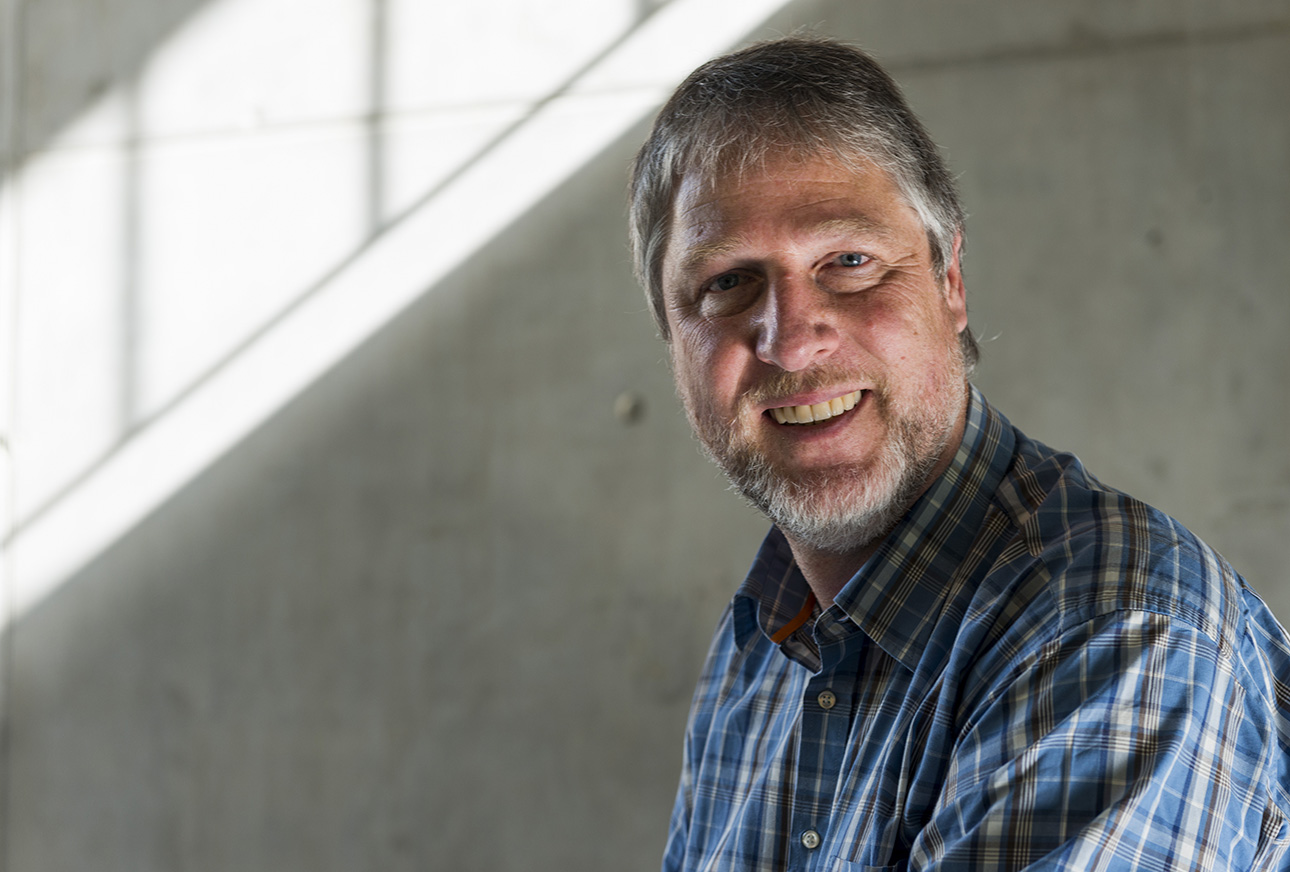
Professor Bernd Möbius is a leading academic in Phonetics and Phonology at the Department of Language Science and Technology, Saarland University. His research bridges phonetic theory with speech technology applications, focusing on text-to-speech systems, prosody modeling, and computational simulations of speech processes. Current research projects: DFG SFB 1102, C1: Information density and phonetic structure predictability DFG SFB 1102, C4: Slavic intercomprehension and surprisal theory (INCOMSLAV) Research Themes: Key areas include text-to-speech synthesis, speech prosody analysis, experimental methods in speech production/perception, information density in phonetics, and cross-linguistic studies of Slavic-Germanic languages. Scientific Contributions: Recent work explores Parkinson-induced dysarthria detection, breath noise acoustics, surprisal-driven speech behaviors, multilingual BERT models for idiomaticity, and perceptual consequences of acoustic adjustments.
Prof. Stefan Müller is a Professor at the Institute for German Language and Linguistics , part of the Faculty of Languages and Literature at Humboldt University. His research focuses on syntax, formal grammar theories (especially Head-Driven Phrase Structure Grammar), and computational linguistics. He leads the CoreGram Project , developing cross-linguistic grammars using HPSG formalisms. His work includes analyses of German syntax, constituent order, anaphoric binding, and register phenomena. He is also involved in open-access publishing initiatives through Language Science Press . Contact: St.Mueller@hu-berlin.de . Education and academic background details are not explicitly stated in the provided text, but his professional trajectory indicates deep expertise in theoretical linguistics. His research spans multiple languages including German, Mandarin, and Persian, with a focus on grammar implementation and syntax-semantics interfaces. Key contributions include the Head-Driven Phrase Structure Grammar Handbook (2024), analyses of headless nominal structures in German (2022), and exploration of large language models' theoretical implications (2024). He actively engages in interdisciplinary projects bridging formal grammar and computational methods.
Professor Alexander Ilin-Tomich serves as an Acting Professor at the Institute of Egyptology within the Department of History and Cultural Studies at the Free University of Berlin. His academic career spans multiple prestigious institutions including Johannes Gutenberg-Universität Mainz and the Russian Academy of Sciences. His educational background includes: 2022: Habilitation in Egyptology at Johannes Gutenberg-Universität Mainz with thesis "Egyptian name scarabs from the 12th to the 15th Dynasty: Geography and chronology of production" 2007-2011: Doctoral studies at Lomonosov University Moscow, earning "kandidat istoriceskich nauk" (equivalent to PhD) 2002-2007: Undergraduate studies in Ancient History (including Egyptology) at Lomonosov University Moscow Professor Ilin-Tomich specializes in Egyptian stelae, offering tables, scarabs, personal names, prosopography, and administration during the Middle Kingdom and Second Intermediate Period. His research combines philological, archaeological, and historical approaches to examine ancient Egyptian society, with particular focus on administrative structures, material culture, and regional variations. His work on scarab production and distribution has established him as a leading expert in this specialized field. His publication record demonstrates consistent focus on Middle Kingdom administration, with recent expansion into material analysis of Egyptian blue pigment and methodological approaches to studying small archaeological finds. He has developed significant digital resources including the open-access "Personen und Namen des Mittleren Reiches" database. Professor Ilin-Tomich has secured multiple competitive research grants: Fritz Thyssen Foundation project "Ancient Egyptian titles in official and familial contexts, 2055-1352 BC" (2021-2024) Fritz Thyssen Foundation project "Transformation and variability in the corpus of ancient Egyptian personal names 2055-1550 BC" (2017-2021) Alexander von Humboldt Foundation postdoctoral fellowship (2015-2017) Russian Foundation for the Humanities research grant (2013-2015) He actively contributes to the academic community through editorial work, including co-editing the 2023 Festschrift "Schöne Denkmäler sind entstanden. Studien zu Ehren von Ursula Verhoeven," and has established himself as a key researcher in Middle Kingdom studies through his monographs and numerous journal articles.
Bistra Andreeva is a full Professor of Phonetics and Phonology at Saarland University, Department of Language Science and Technology. She is also a principal investigator of the DFG-funded project “Judeo-Spanish in Bulgaria: a contact language between archaism and innovation” (2022-2025) and leads or co-leads several other externally funded projects on prosody, information structure, and language contact. She teaches and has taught at Saarland University, Sofia University “St. Kliment Ohridski”, and other European universities. Education & Academic Background Habilitation (kumulative Habilitationsschrift): “Contrastive Prosody: Bulgarian vs. German”, Saarland University, 2016. PhD (Dr. phil.): “Zur Phonetik und Phonologie der Intonation der Sofioter-Varietät des Bulgarischen”, Saarland University, 2007. Research Interests Andreeva’s research focuses on the phonetics and phonology of intonation and rhythm, cross-language and individual differences in the production and perception of syllabic prominence, the relation between intonation and information structure, minority languages (especially Judeo-Spanish in Bulgaria), and the interaction between information density and prosodic structure. Her methodological expertise includes experimental phonetics, corpus-based studies, and acoustic analysis. Major Projects SFB 1102 C1: “Information Density and the Predictability of Phonetic Structure” (DFG, 2014-2026) JuSpa: “Judeo-Spanish in Bulgaria: a contact language between archaism and innovation” (DFG, 2022-2025) Prosodic aspects of Bulgarian compared to other languages with lexical stress (Bulgarian National Science Fund, 2019-2024) Prosodic manifestations of focus in French and English from a Bulgarian point of view (DAAD & Sofia University, 2021-2023) Scientific Awards & Recognition While no major named prizes are listed, Andreeva’s work has been continuously supported by competitive grants from the German Research Foundation (DFG), DAAD, and Bulgarian National Science Fund. Her publications appear in top-tier journals and conference proceedings (Journal of the Acoustical Society of America, Interspeech, Speech Prosody, International Congress of Phonetic Sciences). Teaching & Supervision She offers a broad spectrum of courses including Experimental Phonetics, Prosody, Phonetics & Phonology of Slavic Languages, Introduction to Instrumental Phonetics, and seminars on language contact. She has supervised numerous BA, MA, and PhD theses and regularly teaches at the PhD School of Sofia University. Labs & Teams She is affiliated with the Phonetics Laboratory at Saarland University and collaborates closely with the Institute for Bulgarian Language (Bulgarian Academy of Sciences), working in interdisciplinary teams involving phoneticians, computational linguists, and field linguists.
Prof. Marianne Pouplier is a Professor at the Institute of Phonetics and Speech Processing (IPS) at Ludwig Maximilian University of Munich. Her research focuses on speech production mechanisms, particularly coarticulation, phonetic universals, and language-specific variations. She investigates articulatory timing, speech errors, and cross-linguistic differences in consonant clusters using advanced methodologies like real-time MRI and electromagnetic articulography. Her work bridges theoretical models (e.g., Articulatory Phonology) with empirical data, emphasizing the interplay between phonological representation and motor execution. Key contributions include studies on nasal coarticulation, larynx dynamics, and the role of articulatory effort in speech production. Selected publications highlight her expertise in analyzing speech motor control through interdisciplinary approaches. She collaborates internationally, contributing to projects like the Bavarian Archive for Speech Signals (BAS). No awards or grants are explicitly listed, but her extensive publication record underscores her scholarly impact.
Max Planck Institute for Evolutionary AnthropologyGermany
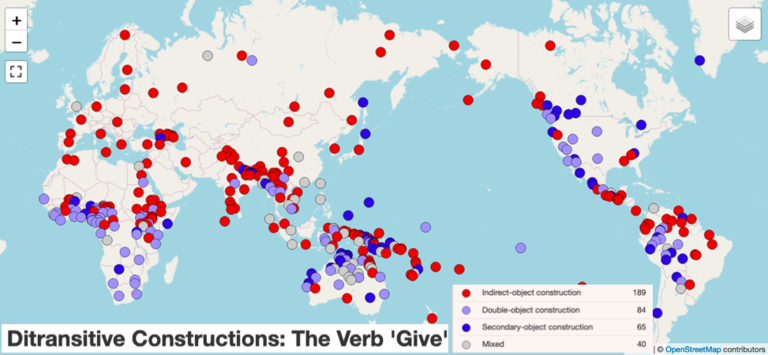
Martin Haspelmath is a Senior Research Scientist at the Department of Linguistic and Cultural Evolution at the Max Planck Institute for Evolutionary Anthropology (MPI-EVA), Leipzig, and an honorary (adjunct) professor at Leipzig University. His research focuses on comparative linguistics, language universals, and typology, particularly in syntactic and morphological systems. He co-edited the World Atlas of Language Structures (2005/2013) and co-founded Language Science Press . Education: PhD in Linguistics, Freie Universität Berlin (1990–1993) MA in Linguistics, University of Cologne and University at Buffalo (1985–1989) Undergraduate studies in Linguistics, University of Vienna (1983–1985) Research Interests: Haspelmath investigates global grammatical diversity, form-function correspondences, and universals in syntax, morphology, and lexical systems. His work emphasizes comparative concepts for cross-linguistic analysis and critiques traditional grammatical categories. Grants & Projects: ERC project leader at Leipzig University (2015–2020) Co-creator of Grambank , an open-access database of grammatical structures Leading initiatives for open-access publication and linguistic data sharing Labs/Teams: Active in the MPI's Department of Linguistic and Cultural Evolution, collaborating on projects like APICS (Atlas of Pidgin and Creole Language Structures) and ValPal (Valency Patterns Leipzig).
Dr. Vincent Fortuin is a tenure-track Assistant Professor at the Technical University of Munich (TUM) and a research group leader at Helmholtz AI in Munich. He leads the Efficient Learning and Probabilistic Inference for Science (ELPIS) group and holds multiple prestigious fellowships including the Branco Weiss Fellowship. His academic affiliations include the TUM School of Computation, Information and Technology, the Konrad Zuse School of Excellence in Reliable AI, and the Munich Center for Machine Learning. Dr. Fortuin earned his BSc in Molecular Life Sciences from the University of Hamburg (2012-2015), followed by an MSc in Computational Biology and Bioinformatics from ETH Zürich (2015-2017), where he received the ETH Excellence Scholarship and the Willi Studer Prize. He completed his PhD in Machine Learning at ETH Zürich (2017-2021) under the supervision of Gunnar Rätsch and Andreas Krause, supported by a Swiss Data Science Center PhD Fellowship. Prior to joining TUM, he was a Research Fellow at St. John's College, University of Cambridge (2022-2023). His research focuses on the intersection of Bayesian statistics and deep learning, specifically developing methods for more robust, data-efficient AI systems with reliable uncertainty estimates. His work addresses critical limitations in standard deep learning approaches, particularly their tendency to be overconfident in predictions and require large datasets for training. He investigates better priors and more efficient inference techniques for Bayesian deep learning, deep generative modeling, meta-learning, and PAC-Bayesian theory, with applications in scientific and biomedical domains. Dr. Fortuin's recent publications demonstrate a consistent focus on improving uncertainty quantification in deep learning systems, with increasing emphasis on practical applications in scientific contexts. His work spans from theoretical foundations of Bayesian deep learning to practical implementations in protein design, materials science, and medical applications. A notable trend is his exploration of how to make Bayesian methods more scalable and applicable to modern large-scale AI systems while maintaining theoretical guarantees. Branco Weiss Fellowship (2023) St John's College Research Fellowship (2022) Swiss National Science Foundation Postdoc.Mobility Fellowship (2022) Swiss Data Science Center PhD Fellowship (2018) ETH Excellence Scholarship (2015) Willi Studer Award (2018) Dr. Fortuin actively supervises PhD and Master's students through his ELPIS research group at Helmholtz AI. He serves as a regular reviewer and area chair for major machine learning conferences and is an action editor for TMLR. He co-organizes the Symposium on Advances in Approximate Bayesian Inference (AABI) and the ICBINB initiative, demonstrating his commitment to advancing the field through community building. His research group receives funding from multiple sources including Helmholtz AI, the Branco Weiss Fellowship, and collaborations with international institutions. Dr. Fortuin leads the Efficient Learning and Probabilistic Inference for Science (ELPIS) group at Helmholtz AI, which focuses on fundamental machine learning research motivated by real-world scientific problems. The group collaborates extensively with researchers across Helmholtz centers and international institutions, particularly in biomedical applications where reliable uncertainty estimates are crucial.
Prof. Dr. Pia Knoeferle is a leading academic at Humboldt-Universität zu Berlin , where she serves as a Professor in the Department of German Language and Linguistics . She is a principal investigator in the Collaborative Research Center (CRC 1412) focused on register phenomena and leads the Reaction Time, Eye-tracking, and EEG Laboratories . Her research spans psycholinguistics , cognitive neuroscience , and computational modeling of language , with a central interest in how real-time language comprehension interacts with social context , formality-register congruence , and morphosyntactic processing . Appointments: Professor at Humboldt-Universität (2024), CRC 1412 member Methodologies: Eye-tracking, EEG, Visual World Paradigm, ERP Her work investigates lifespan language processing (children, adults, older adults) through contextual cue integration , including emotional , spatial , and social context such as gender cues , eye gaze , and facial expressions . Key questions include: How do pragmatic and contextual factors modulate lexical and grammatical processing ? What representations underlie register sensitivity in spoken and written comprehension ? Recent articles (2022-2024) focus on register congruence effects in German sentence processing, age-related differences in formality-register anticipation , and interactions between register and morphosyntactic knowledge . Using eye-tracking and visual world paradigms , her team examines incremental integration of socially-situated context with verb-argument relations and grammatical constraints . Findings suggest subtle late-stage register effects and interference between pragmatic and syntactic processing . Her lab collaborates with researchers like Katja Maquate , Valentina Nicole Pescuma , and Camilo Ronderos , contributing to the Frame text of the Second Phase Proposal for CRC 1412 (2020) and subsequent reviews in Frontiers in Psychology (2023). The work emphasizes complementary methods to model register variability across languages , modalities , and cultural contexts .
Helmholtz Centre for Environmental ResearchGermany
Joakim Nivre is a Professor at Uppsala University's Department of Linguistics and Philology. He is a leading researcher in computational linguistics, with a focus on dependency parsing, Universal Dependencies (UD) framework development, and multilingual NLP applications. His recent work explores LLMs in climate change discourse analysis, pharmacovigilance explainability, and historical text processing. Key research areas: Dependency parsing theory, Universal Dependencies standardization, LLM evaluation Collaborations: SweSAT-1.0 benchmark development, ClimateEval project, PARSEME integration His 2025-2023 publications demonstrate expertise in explainable AI for healthcare, synthetic data generation for idioms, and multilingual benchmark design. Notably, he co-developed SweSAT-1.0 to evaluate Swedish LLMs and contributed to typology-informed UD revisions. Despite extensive work in NLP, no scientific awards are mentioned in available texts.
Florian Zemmin is a Professor at Freie Universität Berlin's Institute of Islamic Studies , serving as Co-Director of the Berlin Graduate School Muslim Cultures and Societies (BGSMCS). His research focuses on Islamic reformism , Middle Eastern conceptual history , and Arabic sociologies of religion within broader debates about modernity and secularity . Current affiliations: Freie Universität Berlin (since 2020) Previous affiliations: Universität Bern (2010-2020), Universität Leipzig (2015-2021) His research interests examine how Islamic traditions intersect with modern secular concepts through: Historical conceptual analysis in Arabic and Ottoman contexts Comparative secularisms beyond Western frameworks Postcolonial critiques of Eurocentric theory Sociological approaches to Islamic knowledge production Current projects include: Das soziokulturelle Leben soziologischer Konzepte – creating a critical lexicon of 60 sociological terms in Arabic Global Secularity: A Sourcebook – co-editing a 7-volume series on secular formations across regions Arabic Sociologies of Religion – challenging Eurocentric sociology through Arabic theoretical work Key publications address: Conceptual transfers in Islamic modernism Secularism in Islamic intellectual history Arabic sociology of religion Ottoman conceptual transformations Islamic responses to global social theory
Dr. Stefanie Jannedy is a senior researcher at the Leibniz-Zentrum Allgemeine Sprachwissenschaft (ZAS) in Berlin, where she has been employed since 2008. She is a Principal Investigator of the DFG project C02 "Variation in Situated Interaction" within the Collaborative Research Center 1412 (CRC 1412) on "Register: Language-Users' Knowledge of Situational-Functional Variation." As a member of the Laboratory Phonology Group, her work focuses on sociophonetic aspects of language variation. Dr. Jannedy's research centers on language register, phonetic variation, and sociolinguistic patterns in speech. Her work particularly examines how situational contexts influence phonetic detail in speech production, with a focus on intra-individual variation. She has developed innovative experimental methods, including smartphone applications like "Plapper" for self-recording speech data in controlled conditions. Her research spans formal and informal speech contexts, examining speech rate, vowel dispersion, filler particles, and other phonetic features that vary systematically across different communicative situations. Analysis of her publication record shows a strong focus on register variation, particularly how speakers systematically adjust their speech across different social contexts. Her work combines experimental methods with corpus-based approaches to investigate fine phonetic detail in relation to situational factors. Recent publications demonstrate increasing interdisciplinary connections between phonetics, sociolinguistics, and cognitive science in understanding register knowledge. Dr. Jannedy has advised several students including Schüppenhauer, Gediminas, Witt, Johannes, and Hong, Nhung-Le. Her research is primarily supported through the CRC 1412 framework, which represents a major collaborative effort in register studies. Her laboratory work involves experimental setups that simulate tele-conference interactions to systematically manipulate social contexts while measuring subtle phonetic differences. This methodological innovation allows for controlled examination of register variation that would be difficult to capture in naturalistic settings.
Olaf Ronneberger is an associate professor at the Albert-Ludwigs-Universität Freiburg and works at Google DeepMind . His research focuses on deep learning architectures , AI applications to scientific problems , and protein structure prediction . He leads seminars on deep learning and 3D image analysis, emphasizing vision-language integration and generative models. His publications include foundational work on U-Net architectures for biomedical image segmentation, AlphaFold 3 for biomolecular interaction prediction, and Gemini models for multimodal AI systems. Key subfields span medical imaging , protein folding , and vision-language models . Co-developer of U-Net , a widely used biomedical image segmentation framework. Contributor to AlphaFold 3 for structural biology. Research on Gemini 1.5/2.5 models for multimodal reasoning.
Alberto Cantera Glera is a Professor at the Institute of Iranian Studies within the Department of History and Cultural Studies at Freie Universität Berlin. His research focuses on Zoroastrian studies, Avestan language and literature, Iranian linguistics, and manuscript studies. He teaches courses on Young Avestan, Pahlavi, Zoroastrian rituals, and Iranian literature, with office hours held on Thursdays from 3-5 p.m. Professor Cantera Glera's research interests center on Zoroastrian religious practices, particularly the Long Liturgy, Avestan textual criticism, and the transmission of Zoroastrian texts through manuscript traditions. His work bridges linguistic analysis with religious studies, examining how ritual practices evolved from ancient to medieval Iran. He has made significant contributions to understanding the relationship between oral performance and written transmission in Zoroastrian traditions, as well as the linguistic features of Avestan and Middle Persian texts. His recent publications reveal a consistent focus on Zoroastrian ritual structures, particularly the Long Liturgy, with increasing attention to the relationship between textual manuscripts and ritual performance. The articles show progression from linguistic analysis of Avestan texts toward broader studies of ritual practice, sacred geography, and the historical development of Zoroastrian religious authority. His work demonstrates sophisticated integration of manuscript evidence with ritual theory and historical linguistics. PRIX ROMAN ET TANIA GHIRSHMAN 2021 Professor Cantera has supervised numerous PhD students including Nils Purwins, Stefan Härtel, Yusef Saadat, Jaime Porro, Soheil Delshad, and Xue Li. His research has been supported through various academic projects related to Zoroastrian manuscript studies and Avestan textual criticism, contributing significantly to the field of Iranian studies at Freie Universität Berlin.
Marlen Fröhlich is a Research Fellow at the Department of Palaeoanthropology within the Faculty of Science at Eberhard Karls University of Tübingen. As a primatologist, she leads the Volkswagen Foundation-funded 'Pathways to Language' project (2022-2028) investigating communicative plasticity in joint action coordination. Her research examines the evolution of human language through comparative studies of great ape communication, with fieldwork conducted across multiple sites studying chimpanzees, bonobos, and orangutans. Her primary research explores: Multimodal communication development in primates Plasticity in gestural and vocal signaling Infant-directed communication patterns Cross-species comparisons of communicative behaviors Environmental influences on communication systems Analysis of her 15 most recent publications (2022-2025) reveals strong emphasis on: Individual variation in primate communication Multimodal signal integration Captive versus wild behavior comparisons Maternal investment strategies Evolutionary pathways to language Significant scientific awards include: Freigeist Fellowship, Volkswagen Foundation (2022-2028) DFG Research Fellowship (2018-2021) Christiane Nüsslein-Volhard Foundation Stipend (2020-2022) PhD Thesis Award, German Primate Center (2016) Erhard Höpfner Award for Master's thesis (2012) She coordinates the Palaeoanthropology lab's research activities and maintains collaborations with field sites studying wild populations of great apes. Current work focuses on understanding how communicative plasticity facilitates coordination in joint action tasks.
Slava Jankin is a Professor of Data Science and Government at the University of Birmingham’s School of Government, where he also serves as Deputy Director of the Institute for Data and AI and Founding Director of the Centre for Artificial Intelligence in Government. He is concurrently a Fellow and Founding Director of the Data Science Lab at the Hertie School in Berlin. Previously, he held a Professorship at the University of Essex and has worked at University College London (UCL) and the London School of Economics (LSE). His research bridges computational methods, governance, and climate policy, with a focus on AI applications in public institutions, climate-health surveillance, and misinformation resilience. Jankin earned a PhD in Political Science from Trinity College Dublin (2009), a Postgraduate Diploma in Statistics (2006), and a BSc from Belarus State Economic University (2002). **Education**: • PhD in Political Science, Trinity College Dublin (2009) • Postgraduate Diploma in Statistics, Trinity College Dublin (2006) • BSc Econ with Distinction, Belarus State Economic University (2002) **Research Interests**: Jankin’s work integrates AI and computational methods with governance challenges, including climate policy, health surveillance, and institutional effectiveness. He leads initiatives like the Lancet Countdown’s climate-health monitoring and the CATALYSE project on climate impacts. His research also explores digital twins for governance systems and the role of cultural diversity in societal resilience against misinformation. **Grants & Collaborations**: He advises the UN and EU on AI and data science, co-leads the Lancet Countdown, and collaborates with institutions like the Alan Turing Institute. His applied work includes developing AI tools for public service optimization and policy simulations. **Labs & Teams**: Directs the Centre for AI in Government (University of Birmingham) and the Hertie School’s Data Science Lab, fostering interdisciplinary teams to advance computational methods in public policy.