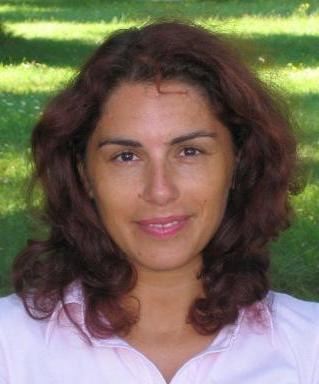
Dr. Soonja Choi is a Research Professor in the Comparative Psycholinguistics Group at the University of Vienna and Director of the Korean Studies Program at San Diego State University (SDSU), where she holds the title of Professor Emerita of Linguistics. She earned her Ph.D. in Linguistics from the University of Buffalo (1986) and holds advanced degrees from institutions in France and South Korea. Her research focuses on language and thought, semantics, spatial language, and Korean linguistics, with a particular emphasis on cross-linguistic studies of spatial categorization and its cognitive implications. Research Contributions: Her work has explored how language influences spatial perception and cognition, notably through long-term collaborations with the Max Planck Institute for Psycholinguistics and the National Science Foundation. Key contributions include studies on spatial term development in Korean/English children and cross-linguistic comparisons of spatial semantics between German, Korean, and English. Grants & Awards: Secured over $1.4M in grants including a EUR 600,000 Vienna Science Fund grant (2016-2020) and multiple NSF awards. Elected to the Academy of Europe (2019) as an Ordinary Member. Professional Roles: Served as Chair of SDSU's Department of Linguistics and Oriental Languages (1997-2000, 2001-2002), Graduate Advisor (multiple terms), and editorial board member for Language, Interaction, and Acquisition . Active in academic governance and international linguistic organizations.
Tobias Bolch is a full Professor at the Institute of Geodesy, Graz University of Technology (TU Graz), Austria, specializing in cryospheric research with a focus on High Mountain Asia and the Tibetan Plateau. His work integrates advanced geodetic and remote sensing methodologies to address critical climate change impacts on glaciers and related systems. His research spans: Glacier dynamics and mass balance monitoring using InSAR and optical satellite data Rock glacier kinematics and permafrost interactions Glacial lake evolution and outburst flood hazards Climate-glacier-hydrology linkages in Central Asian river basins Long-term cryosphere reconstruction using historical satellite archives Analysis of his 2023-2025 publications reveals dominant trends in quantifying ice loss acceleration, particularly from lake-terminating glaciers, and the application of multi-sensor approaches (Sentinel, ASTER, UAV) for decadal-scale change detection. His work consistently emphasizes the hydrological consequences of glacier retreat for downstream water security across High Mountain Asia. No scientific awards or specific grant programs were documented in the provided materials. While student supervision details are absent, his position at TU Graz's Institute of Geodesy indicates active mentorship within geospatial and cryospheric research programs. His homepage (https://ifg.tugraz.at) serves as the primary hub for research dissemination through the university's PURE portal.
Private University of Music and Arts of the City of ViennaAustria
Andreas Stoehr is a renowned Austrian conductor and professor at the Music and Arts Private University of the City of Vienna, leading the conducting department and symphony orchestra since 2013. His career spans prestigious engagements including the Paris Opéra Comique, Deutsche Oper am Rhein, and St. Gallen Theatre, focusing on operatic repertoire from Monteverdi to modernism. He is celebrated for reviving neglected works like Meyerbeer’s Emma di Resburgo and Gluck’s Ezio , emphasizing historical performance practices. His research explores stylistic transitions in music history, blending baroque precision with modern innovation. Education: Trained at Vienna's former Conservatory (now University of Music and Performing Arts), studying piano under Alfred Kremela, conducting with Gennadij Rozhdestvenskij, and musicology at the University of Vienna. Key mentors included David Lutz (accompaniment) and Reinhard Schwarz (conducting). Research Interests: Explores interdisciplinary connections between diverse musical eras, such as Bach’s influence on Schoenberg, and advocates for vocal-orchestral balance in historical repertoires. Projects include CD recordings of Amanda Maier-Röntgen and Andrea Tarrodi’s works, nominated for Swedish Grammis. Awards: Grammy nomination (2016) for Amanda Maier-Röntgen’s Violin Concerto recording. Recognized for innovative stagings of operas like Berg’s Wozzeck and Debussy’s Pelléas et Mélisande . Teaching & Leadership: As professor and symphony orchestra director, Stoehr mentors young conductors. Notable collaborations include the Langenlois Castle Festival (2012–2019) and interdisciplinary projects like Heart and Mouth, and Deed and Life blending Bach with sociological texts. His teaching emphasizes 21st-century conductorship as collaborative architecture, prioritizing emotional engagement over technical authoritarianism. Labs/Ensembles: Leads the MUK Symphony Orchestra, collaborating with ensembles like the Aarhus Symphony Orchestra and Orchestre Philharmonique de Liège. His work bridges academic research with performance practice through projects like the Styriarte Festival’s Schubert revival.
Claudia Plant is a Professor in the Faculty of Computer Science , leading the Research Group Data Mining and Machine Learning . Her research focuses on clustering algorithms, data mining, and machine learning applications in areas like biomedical data, wind energy, and causality inference. She has contributed to projects such as Knowledge-infused Deep Learning for Natural Language Processing (2020–2028) and Hybrid Computational Sciences (2021–2021). Plant has authored over 160 publications, with recent work emphasizing deep learning, anomaly detection, and GPU-optimized algorithms. She actively engages in academic activities, including talks on clustering methods and interdisciplinary projects like Governing Algorithms: The Politics of Data and Decision-Making . Her research interests span clustering algorithms , graph neural networks , causality discovery , and ethical digital transformation . Notable projects include causal analysis of wind farm dynamics and AI-enhanced education tools. Plant’s work bridges computational methods with societal challenges, such as empowering marginalized communities through ethical technology adoption.
Demirdache Hamida is a Full Professor of Linguistics at Nantes University and Director of the Nantes Linguistics Lab (LLING UMR 6310, CNRS). She holds a PhD from MIT (1991) and Habilitation à diriger des recherches from Nantes University (2003). Her research focuses on syntax-semantics interfaces, linguistic diversity, and formal syntactic theory with emphasis on Semitic languages and under-represented languages like Salish. She has pioneered experimental methodologies to probe logical form syntax, particularly in studies of temporal anaphora, distributivity, and quantification. Leadership roles: Founded LLING lab in 2004, elevated to CNRS status in 2016 Research grants: Coordinator of ANR-DFG projects (2022-2025), CHILL serious game initiative (2018-2021) Awards: Palmes académiques (2011), Descartes-Huygens Prize (2003), multiple PEDR/PES excellence awards Her experimental work bridges theoretical syntax and empirical child language studies, with recent focus on cross-linguistic variation in telicity and scalar implicatures. Supervised 15 PhD theses (including 3 double-doctorates) and 54 master’s theses. Active in international research networks including the Van Riemsdijk Foundation and Carnot Cognition Institute. LLING lab specializes in formal linguistics with particular expertise in: syntax-semantics interfaces, multilingualism, and experimental methods. Current projects investigate Boolean connectives (FRAL project), heritage language maintenance (AThEME EU project), and logical language acquisition through game-based learning (Cool Boole School).
Carita Paradis is a Professor Emerita at Lund University's Centre for Languages and Literature, specializing in English Linguistics. She holds a PhD from Lund University (1997) and has held leadership roles including Chair of the Swedish Research Council's Linguistics panel (2010–2015). She coordinates the Language, Cognition and Discourse@Lund (LCD@L) research group, focusing on discourse meaning, language acquisition, and sociocultural variation. Her research spans cognitive linguistics, discourse analysis, semantics, and sensory language. She has authored/co-authored over 100 refereed publications, 5 books, and edited 10 journal volumes. Awards include membership in Academia Europaea (2016) and leadership roles in Scandinavian linguistic associations. She has supervised 14 PhD students and 8 postdocs, taught at all academic levels, and participated in numerous national/international research projects. Her editorial roles include serving on Cognitive Semantics, Languages, and Human Cognitive Processing series.
Jürgen Spitzmüller is a Professor and Deputy Head of the Department of Linguistics at the University of Vienna. His academic work focuses on sociolinguistics, metapragmatics, and language ideologies, with a particular emphasis on discursive practices in digital and institutional contexts. Current role: Deputy Head, Department of Linguistics Teaching: Applied Linguistics, Theory of Science, Yiddish Studies Email: juergen.spitzmueller@univie.ac.at His research explores the intersection of language ideologies, social positioning, and discursive practices. Key areas include typographic variation as a social phenomenon, the role of multimodal elements in communication, and the construction of public spheres in digital contexts. Recent publications highlight trends in analyzing graphic variation, the socio-political implications of text design, and the interplay between language and cultural identity. His work often bridges theoretical frameworks from sociolinguistics, discourse analysis, and media studies. Spitzmüller’s teaching includes courses such as Introduction to Applied Linguistics , Methods of Applied Linguistics , and specialized seminars on Yiddish and language ideologies. He has also contributed to academic discourse through editorial work and collaborative research projects.
Univ.-Prof. Robert Rollinger is a full professor at the University of Innsbruck’s Department of Ancient History and Oriental Studies. He holds academic degrees from the Leopold-Franzens-Universität Innsbruck, including a M.A. (1989), PhD (1993), and Habilitation (1999). His research focuses on the interconnections between the Aegean and Ancient Near East, Achaemenid history, and global historiography. Rollinger has held prestigious positions such as editor of journals like Nikephoros and Ancient History Bulletin , and is a member of institutions including the Academia Europaea and the Austrian Academy of Sciences. Research Interests Contacts between Aegean and Near Eastern worlds Ancient Near Eastern historiography Empire studies (especially Achaemenid Persia) Global and entangled history approaches Awards Dr. Seibert-Preis (1995) Preis des Fürstentums Liechtenstein (1998) Wissenschaftspreis des Österreichischen Olympischen Comités (1999) Ausonius-Preis (2023) He leads major projects like the NAWA Chair on Achaemenid-Roman empire comparisons and chairs the Austrian Academy’s “Transformation Processes and Empire” commission. His work emphasizes cross-cultural connections and imperial legacies in antiquity.
Dirk Geeraerts is a full Professor of Linguistics at the University of Leuven (KU Leuven), where he has held a faculty position since 1993. He studied Germanic languages (Dutch and English) and holds a bachelor's degree in Philosophy, earning his PhD in 1981. His academic career includes professorships at the Kortrijk campus of the University of Leuven (1986–1993) and the University of Leiden (1985–1986), as well as foundational research at the Instituut voor Nederlandse Lexicologie (1977–1985). Research Focus : Geeraerts specializes in lexical semantics , lexicology , and cognitive linguistics , particularly examining social variation , diachronic change , and empirical semantic methods . His work bridges theoretical and applied lexicography, notably through his editorial role in the Van Dale Groot woordenboek van de Nederlandse taal (1995–2005). Scientific Contributions : Founded the international journal Cognitive Linguistics Co-editor of The Oxford Handbook of Cognitive Linguistics Managing editor of the Cognitive Linguistics Research monograph series Honors and Awards : 1978: L.K. Engels Award 1992: Flemish Government Award for Wat er in een woord zit 2003: Member of the Royal Academy for Dutch Language and Literature (KANTL) 2020: Matthias de Vries Medal for Dutch lexicology contributions Labs and Teams : Established the Quantitative Lexicology and Variational Linguistics (QLVL) research group at the University of Leuven, advancing empirical approaches to lexical and semantic studies.
Jennifer Culbertson is an Associate Professor at the University of Edinburgh, where she has been a faculty member since 2014 when she took up a Chancellor's Fellowship, later being promoted to Reader (equivalent to Associate Professor) in 2018. She is a founding member of the Centre for Language Evolution at Edinburgh and maintains an active research program in experimental linguistics and cognitive science. Dr. Culbertson obtained her PhD in Cognitive Science from Johns Hopkins University in 2010, with her dissertation receiving the Robert J. Glushko Prize for Outstanding Dissertations in Cognitive Science in 2011. Her primary research investigates how languages are shaped by learning and use, with particular focus on grammatical structures (like word order) and morphological categories (gender and person systems). She employs experimental and computational methods to explore how typological universals arise from properties of the human cognitive system. Her work bridges theoretical linguistics, cognitive science, and language evolution, examining the cognitive constraints that influence linguistic patterns across diverse languages and learning contexts. She frequently uses artificial language learning paradigms to isolate specific cognitive mechanisms underlying language structure. Analysis of her recent publications reveals a consistent focus on cognitive biases in linguistic structure, particularly in word order and morphological systems. Her research increasingly incorporates cross-population studies (including work with autistic learners) and developmental perspectives to understand how language patterns emerge across different populations and throughout the lifespan. She examines how simplicity principles, communicative efficiency, and statistical learning shape linguistic structure. Dr. Culbertson's scientific contributions have been recognized with several prestigious awards: Robert J. Glushko Prize for Outstanding Dissertations in Cognitive Science (2011) ERC Starting Grant Young Academy of Europe membership (2019) Her research has been supported by over €2 million in funding from the ESRC and ERC. While specific advisees aren't mentioned in the provided text, her active publication record with numerous co-authors suggests she mentors graduate students and early-career researchers. Her work has significant implications for understanding language universals, language acquisition, and the cognitive foundations of linguistic structure. As a founding member of the Centre for Language Evolution at Edinburgh, Dr. Culbertson collaborates with an interdisciplinary team investigating the biological, cognitive, and cultural foundations of human language. Her research often intersects with psychology, cognitive science, and computational linguistics, contributing to a comprehensive understanding of language as both a cognitive and social phenomenon.
Stefan-Michael Newerkla is a University Professor of West Slavic Linguistics at the Department of Slavonic Studies, Faculty of Philology and Cultural Studies, University of Vienna. He has served as Head of the Institute of Slavic Studies since 2022, following previous leadership roles as Deputy Head (2018-2022) and Head (2005-2008). His academic leadership extends to significant positions including Member of the Academy Council of the Austrian Academy of Sciences (2022-2026), Member of the International Board of Palacký University Olomouc (2022-2026), and Member of the Scientific Council of the Czech Academy of Sciences (since 2013). Professor Newerkla earned his doctorate in 1998 with a dissertation on "Intended and actual linguistic reality in Bohemia. Diglossia in the school system of the Czech-speaking countries of the Habsburg Monarchy 1740–1918 using the example of the West Bohemian district town of Plzeň (Pilsen)" and completed his habilitation in 2003 on "Language Contacts Czech – German – Slovak. German Loanwords in Czech and Slovak: Historical Development, Evidence, Previous and New Interpretations." His academic journey began with studies in Slavic Studies, English Studies, and American Studies at the University of Vienna from 1992-1998. His research focuses on West Slavic linguistics with particular emphasis on contact linguistics, areal linguistics, linguistic geography, and historical sociolinguistics. He investigates the development of linguistic contacts between German, Hungarian and Slavic languages, examining Central Europe as a linguistic area with special attention to Austriazisms and Internationalisms research. His work also explores the school system and language teaching in the Habsburg Monarchy, analyzing language legislation versus language reality and diglossia or polyglossia in the educational system. Additional research interests include the National Renewal in the Bohemian Lands, Vienna's role in the Czech National Renewal, the Slovak national awareness process, and the grammatology and grammarography of West Slavic languages. Analysis of his recent publications (2023-2025) reveals a continued focus on historical language contact in Central Europe, particularly examining multilingualism in the Habsburg Monarchy and linguistic heritage. His work increasingly incorporates interdisciplinary approaches, connecting linguistic analysis with historical, educational, and cultural studies perspectives. Recent publications show particular attention to Czech language in Austria, language teaching methodologies, and the reconstruction of historical language contact phenomena, with several multilingual publications reflecting his expertise in cross-cultural communication. Professor Newerkla's scientific achievements have been recognized with numerous prestigious awards: Medal of the Minister for Foreign Affairs of the Czech Republic (August 7, 2024) for Services to Diplomacy Premia Bohemica for 2023 for outstanding contribution to promoting Czech literature abroad Josef-Dobrovský-Ehrenmedaille of the Czech Academy of Sciences (April 25, 2017) Full member of the Austrian Academy of Sciences (since 2018) Corresponding Member of the Austrian Academy of Sciences (since 2014) Member of the Academic Assembly of the Czech Academy of Sciences (since 2010) Award from University of Vienna for Innovative Teaching (June 22, 2001) As an academic leader, Professor Newerkla has supervised numerous theses across various levels of study. His research is supported by significant grants, most notably his role since 2016 as consortium member and board member of the Special Research Programme "German in Austria. Variation – Contact – Perception" (SFB F 60-G23), where he heads Task Cluster C and subprojects 05 and 06. He also led the research project "Slavists in Exchange: Austria and Russia 1849-1939" (2021-2025). His administrative roles have included Chairman of the Curricular Commission of the Senate of the University of Vienna (2010-2016) and Member of the Senate of the University of Vienna (2009-2016). Professor Newerkla is actively involved in multiple international research teams and collaborations, including the Permanent Conference of Austrian and Czech Historians on Common Cultural Heritage (SKÖTH), which he has co-chaired since 2009. His research group at the University of Vienna's Institute of Slavic Studies focuses on West Slavic linguistics, with particular expertise in historical language contact phenomena and the linguistic heritage of Slavic languages in Central Europe. He has also served as editor for numerous publications including the Vienna Slavic Yearbook (New Series) since 2013.
Arne Ziegler is a full Professor at the Institute of German Studies within the Faculty of Humanities at the University of Graz, Austria. His academic career spans over two decades, with current leadership of the Austrian Science Fund (FWF)-supported Special Research Programme 'German in Austria' (DiÖ), running from 2016 to 2026. He maintains active roles in international academic governance and editorial boards. Professor Ziegler's research centers on grammatical variation in Standard German , with particular emphasis on Austrian German dialects, urban sociolinguistics, and youth language phenomena. His work bridges theoretical linguistics and practical applications, examining how regional, social, and historical factors shape language structures. Key contributions include the development of the 'Variant Grammar of Standard German' – a comprehensive digital reference work documenting areal grammatical differences across German-speaking regions. Analysis of his recent publications reveals consistent focus on urban language dynamics, grammatical variation patterns, and reference grammar development. His work demonstrates methodological innovation through quantitative analysis of spoken interaction, spatial distribution mapping of linguistic features, and interdisciplinary approaches combining sociolinguistics with historical text analysis. The 'German in Austria' project represents the cornerstone of his current research, investigating language variation, contact phenomena, and speaker perception across Austria. Professor Ziegler has secured significant competitive funding including three major FWF projects: 'German in Austria' (2016-2026), 'Youth language(s) in Austria' (2013-2016), and 'Variant Grammar of Standard German' (2015-2018). These initiatives involve extensive collaboration with researchers across German-speaking countries and support large-scale empirical investigations into contemporary language use. He holds prominent leadership positions including Chair of the International Association for German Studies (IVG) since 2000, Chair of the Society for German Language History since 2008, and editorial roles for 'Technical language' (International Advisory Board) and 'Contingentia' (Editorial Board). His academic service extends to co-editing six major book series including 'Writings on the German Language in Austria' (Peter Lang) and 'Lingua Historica Germanica' (de Gruyter), significantly shaping publication venues for German linguistic research.
Stefano Quaglia is an Assistant Professor at the Institute of Romance Studies , University of Graz. His research focuses on syntax and its interfaces with morphology and semantics , using Italian as a comparative framework within and beyond Romance languages. Email: stefano.quaglia@uni-graz.at Office: Room 003303056, Merangasse 70/III, Graz, Austria Consultation Hours: Wednesday, 3:30-4:30 p.m. Research interests include: Spatial expressions and functional sentence structure Long-distance dependencies Language contact phenomena Particle verbs and clausal organization Wh-movement and information structure Cross-linguistic syntactic analysis Recent publications highlight empirical and theoretical work on verbal theme vowels , Slavic prefix ordering , and L3 transfer dynamics . His studies integrate synchronic analysis with diachronic and contact linguistics frameworks. Articles demonstrate trends in: Syntax-morphology interfaces : Allomorphy, prefix stacking, particle systems Comparative Romance-Slavic analysis : Extraction patterns, convergence phenomena Language acquisition : CLI effects in bilingual/multilingual contexts Prosodic constraints : Stress and phrasing in particle verbs Information structure : Wh-questions in Romance
Martina Werner is a Senior Postdoc and Research Fellow at the Austrian Centre for Digital Humanities (ÖAW), affiliated with the Institute of German Studies at the University of Vienna's Faculty of Philology and Cultural Studies. She holds a habilitation in German Linguistics from the University of Vienna (2019) and a PhD from LMU Munich (2009). Her academic appointments include visiting professorships at Universität Würzburg (2024–2025) and LMU Munich (2019–2020), along with a guest professorship at the University of Vienna (2017/2018). Research Focus: Werner specializes in morphology, historical linguistics, and corpus-based approaches. Her work explores grammar theory, language change, syntax-morphology interfaces, and digital humanities methodologies. Current projects include FWF-funded research on relational adjectives in historical German (RAHiG) and the diachrony of nominalized infinitives. Publication Trends: Her recent articles (2016–2025) predominantly analyze diachronic morphology in German, focusing on nominalization patterns, compound structures, and suffix evolution. Corpus linguistics methodologies underpin her investigations into grammaticalization, language variation, and comparative Germanic linguistics. A strong interdisciplinary thread connects linguistic theory with empirical data analysis. Awards & Grants: FWF Project Funding: RAHiG – Relational Adjectives in the History of German (2019–2026) Elise Richter Project Grant: Diachrony of the Nominalized Infinitive in German (2014–2019) LMUMentoring Excellence Program (2008–2011) HWP Doctoral Scholarship (2005–2006) Academic Service: Werner co-leads research teams at ÖAW's Digital Humanities Centre, collaborates internationally on Germanic linguistics projects, and supervises academic initiatives through the Vienna Linguistic Society. Her teaching covers historical linguistics, morphology, and language development at undergraduate and graduate levels.
Dalina Kallulli is an Associate Professor at the University of Vienna , Department of Linguistics. Since 2012, she has been a leading figure in theoretical and comparative syntax, with a focus on Albanian and Balkan languages . Her work bridges syntax, semantics, and morphology, emphasizing interfaces and universals. Education: PhD in Theoretical Linguistics (University of Durham, 1999), Cand.Philol. in General Linguistics (University of Trondheim, 1995), MA in English (University of Tirana, 1991) Research Interests include grammar theory , comparative syntax , syntax-semantics interfaces , and language cognition . Her publications explore clitic doubling, voice systems, and cross-linguistic morphological phenomena. Notable fellowships include the Hertha Firnberg Fellowship (2004-2007) and APART Fellow (2008-2010). Recent Publications highlight diachronic aspects of voice systems, form copy in wh-dependencies, and the role of diminutives in suppressing root projections. She has been a visiting scholar at institutions like the University of Massachusetts at Amherst and New York University. Awards and Invitations: Hertha Firnberg Fellowship (FWF) APART Fellow (Austrian Academy of Sciences) W3 Professor (acting chair) at Ludwig Maximilian University of Munich Invited talks at major international conferences (GLOW, DGfS, NELS) Teaching encompasses courses in Theory of Grammar , Introductory Linguistics , and seminars on syntactic typology.