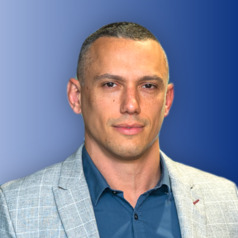
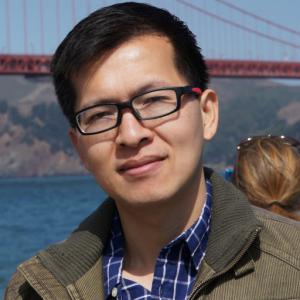
Dr. Antonio Lillo is a Professor of English Linguistics in the Department of English Philology at the University of Alicante. He is also the head of the research group 'Lexicology and Lexicography' (2022-) and has held administrative roles including Associate Dean for Postgraduate Studies and Digital Humanities (2017-18). Research focus: Slang lexicology, lexicography, phonological motivation in word-formation Key publications: A Dictionary of English Rhyming Slangs , Grammar in Gobbets , Transcribing English Published in top-tier journals: English World-Wide , Dictionaries , Journal of English Linguistics His research has been featured in media outlets such as the Sunday Times , Mirror , and ABC Radio National’s Lingua Franca . He received the Leocadio Martín Mingorance Research Award (2018) and maintains affiliations with international societies like the American Dialect Society and Global Anglicism Database Network.
Professor Mari Jones serves as Professor of French Linguistics and Language Change in the Department of French at the University of Cambridge's Faculty of Modern and Medieval Languages and Linguistics. She holds a Fellowship at Peterhouse College and maintains visiting positions at the University of Bamberg (Linguistics) and University of Canterbury (Christchurch, New Zealand), while also serving as a Fellow of the International Centre for Language Revitalisation. Her research centers on endangered languages, with particular expertise in French linguistics, language death theory, and dialectology. Jones has conducted extensive fieldwork on Welsh, Breton, and Insular/Mainland Norman dialects, focusing on language change, contact phenomena, and standardization processes. Her work demonstrates exceptional commitment to documenting linguistic diversity and developing revitalization frameworks for minority languages, especially Norman varieties in the Channel Islands. Analysis of her 15 most recent publications reveals consistent thematic focus on language endangerment, with increasing emphasis on technological applications and policy frameworks since 2013. Her scholarship bridges theoretical linguistics with practical community-based revitalization, showing particular strength in Norman dialect documentation and cross-linguistic comparisons of obsolescence patterns. Scientific recognition includes: 2016 Vice-Chancellor's Impact Award for School of Arts and Humanities 2021 Cambridge SU award for Inclusive Practice Fellowship of the Learned Society of Wales Fellowship of the International Centre for Language Revitalisation Professor Jones actively supervises graduate research and directs major funded projects including an AHRC-supported network on urban language structures in France, alongside collaborations with Caen and Rennes universities. She founded the Cambridge Endangered Languages and Cultures Group and the Cambridge Conferences in Language Endangerment series, establishing vital infrastructure for endangered language research. Her leadership extends to community engagement through the Cambridge Language Collective and Polyglossia Magazine, while her inclusive teaching practices earned specific student recognition in 2021. Current initiatives focus on Norman language preservation in Normandy and Channel Islands through the 'Patrimoine Linguistique en Normandie' project.
Bernhard Fisseni is a Researcher in German Studies/Linguistics and Medieval Studies at the University of Duisburg-Essen, Faculty of Humanities. He is affiliated with the Department of Edition and Edition Technology (AEET) and contributes to Korpora.org, a collection of German-language corpora including the Bonn Early New High German Corpus. His work spans computational linguistics, text technology, and research on the semi-formal language of mathematics through the Naproche project. Dr. Fisseni earned his Magister Artium from the University of Bonn in 2003 with a thesis on creating a markup language for natural language mathematical proofs. He completed his doctoral studies at the University of Duisburg-Essen in 2011 with a dissertation titled "Focus: Interpretation? Empirical Investigations on Focus Interpretation," which empirically evaluated formal-semantic and pragmatic focus theories. His research focuses on computational linguistics, text technology, and digital edition techniques. Dr. Fisseni applies empirical methods and formal models to study semantics, pragmatics, and narratology. A significant portion of his work examines the language of mathematics, particularly through the Naproche project which investigates semi-formal mathematical language. He also conducts research on Afrikaans in relation to German and Dutch languages, and maintains expertise in corpus linguistics with the Bonn Early New High German Corpus. Dr. Fisseni's recent publications demonstrate strong interdisciplinary work bridging computational linguistics, digital humanities, and mathematical logic. His research often focuses on formal frameworks for understanding language structures, particularly in mathematical texts and historical corpora. He has made significant contributions to research data management, digital archiving standards, and the development of computational tools for linguistic analysis. As an active member of academic communities, Dr. Fisseni serves as secretary of the German Society of Computational Linguistics (GSCL) since 2012. He has participated in numerous research projects including CLARIN-D and CLARIAH-DE, and has contributed to the development of web services for linguistic corpora. His technical expertise spans multiple programming languages including Python, Java, and XSLT, which he applies to create tools for linguistic research and digital editions. Dr. Fisseni is involved with the Department of Edition and Edition Technology (AEET) at the University of Duisburg-Essen, where he contributes to projects like the Archive of the Counts von Platen. He also participates in the Naproche project, which develops controlled natural language processing tools for mathematical texts. His work often involves collaboration across disciplines, connecting linguistics with computer science, mathematics, and digital humanities.
Mary Paster is Professor of Linguistics and Cognitive Science at Pomona College, where she has been a faculty member since 2006. She is currently on leave during Fall 2025. Her work bridges theoretical linguistics with community-based language preservation, with a strong emphasis on phonological theory and fieldwork. Research Interests: Phonology and Morphology, especially their interface Tone systems and vowel harmony in understudied languages Sound change and interspeaker phonological variation Field linguistics and language documentation Language reclamation and revitalization, particularly for African and Indigenous American languages Her research is deeply collaborative, involving direct work with native speaker communities across multiple continents. Though no recent publications are listed in the provided text, her research trajectory centers on descriptive and theoretical phonology within a cognitive science framework, often contributing to the understanding of typologically diverse and endangered languages. Scientific Affiliations and Initiatives: 7 College Native American Indigenous Studies Network Advocates for Indigenous California Language Survival African Linguistics School Association Contemporary African Linguistics CoLang: Institute for Collaborative Language Research Foundation for Endangered Languages Linguistic Variation journal NSF Dynamic Language Infrastructure – Documenting Endangered Languages Program NSF Linguistics Program Pomona College Linguistics and Cognitive Science Department Rumsen Language Reclamation Project Somali Bantu Community of San Diego Survey of California and Other Indian Languages Word Structure journal Yurok Language Project She mentors students in field methods and linguistic theory, and her work is grounded in ethical collaboration with language communities. She acknowledges that Pomona College resides on the traditional, ancestral, and unceded land of the Gabrielino-Tongva people. Education: Ph.D., University of California, Berkeley M.A., University of California, Berkeley B.A., summa cum laude, Ohio State University
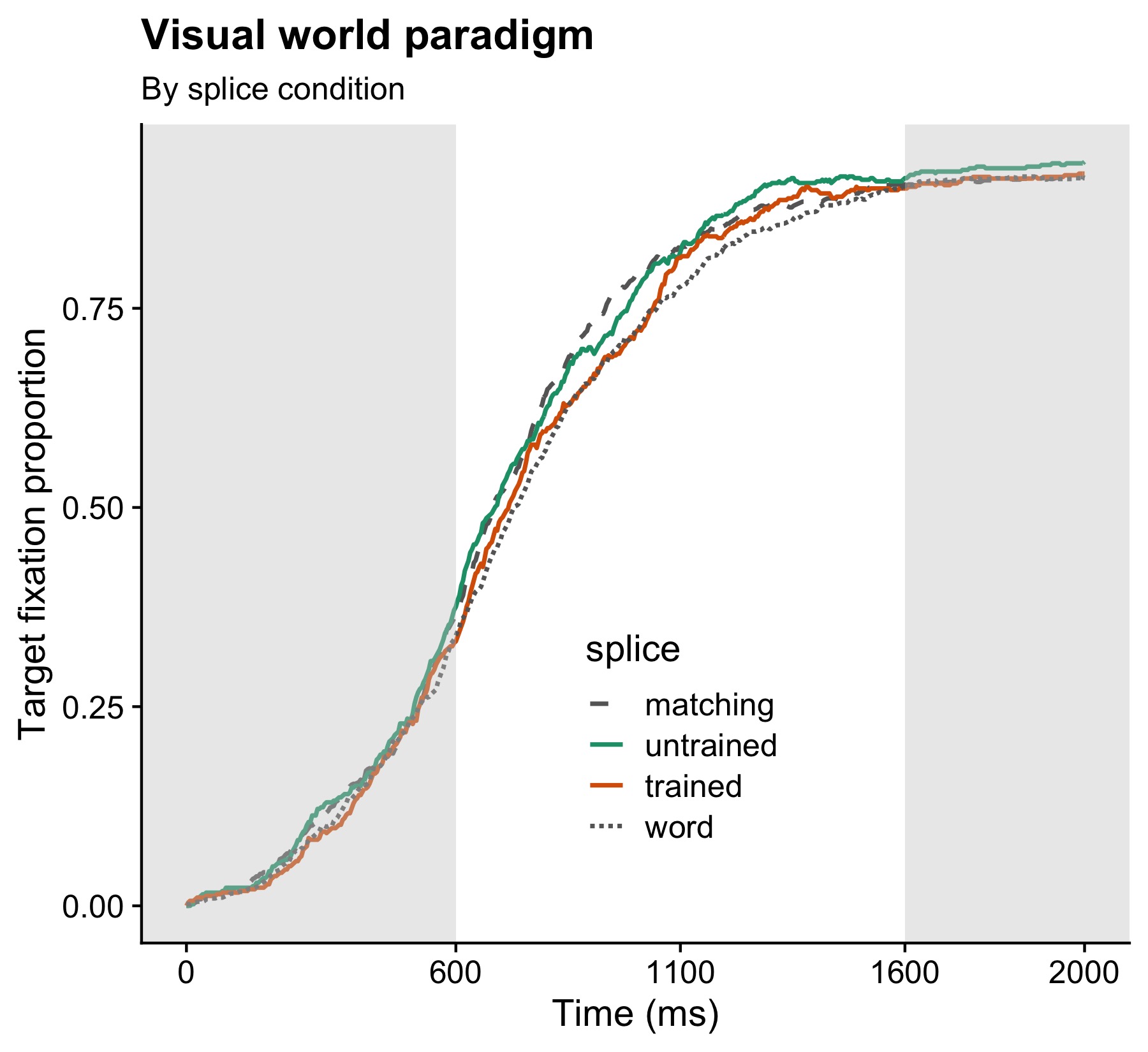
Donghyun Kim is an Assistant Professor at Kyungpook National University's Department of English Language and Literature. He holds a PhD in Linguistics from McGill University and conducted postdoctoral research in Cognitive Psychology at the University of Exeter with Nicolas Dumay and Arthur Samuel. His research focuses on psycholinguistics, speech perception, phonetics, applied linguistics, and second language acquisition, with particular emphasis on individual differences in speech perception under cognitive load, perceptual adaptation to variability, and the perception-production link in language learning. Education: PhD in Linguistics, McGill University Postdoctoral Research Fellow, Cognitive Psychology, University of Exeter Research Projects: Plasticity in Speech Perception under Cognitive Load Time Course of Novel Word Integration Longitudinal Acquisition of Novel Vowel Contrasts Perception-Production Link in Phonetic Imitation Courses Taught: Psycholinguistics 1 & 2 Language and Cognition Applied English Linguistics Workshops Conducted: Data Visualization for Linguistics with R Introduction to Data Analysis Using R Data Analysis in Linguistic Research His publications demonstrate trends in individual differences in phonetic adaptation, cognitive load effects on perception, and longitudinal studies of L2 vowel learning. Current teaching includes workshops on R-based data analysis methods for linguistics research.
Hans-Olav Enger is a renowned Professor of Scandinavian Linguistics at the University of Oslo since 2008. He has held previous academic positions at the University of Stavanger (2003–2008) and Stockholm University (1992–1993, 1996–2000), and served as a part-time "Guest professor/Professor II" at the University of Zurich (2012–2019). His work focuses on the Department of Nordic Languages with expertise in morphology, grammatical gender, and diachronic linguistics. Current affiliation: University of Oslo, Nordic Languages Previous roles: Professor II (Zurich), Professor (Stavanger), Lecturer (Stockholm) Key projects: MultiGender (2019–2020), co-editor of Maal og Minne (2016–2024) Enger's research delves into grammatical gender systems , inflectional morphology , and grammaticalization processes in Scandinavian languages. His work explores the interplay between semantic rules and morphological structures, particularly in Norwegian dialects. Notable contributions include analyzing the Animacy Hierarchy , changes in plural inflection , and the autonomy of morphology in the context of sound laws. His publications reveal a focus on historical linguistics , morphosyntactic variation , and agreement patterns across Scandinavian languages. Enger has contributed to understanding gender assignment mechanisms , definiteness markers , and syntactic evolution in Norwegian dialects and beyond. Enger has supervised MA theses on topics like gender appropriation in Norwegian , linguistic features in multiethnic environments , and inflectional class changes . He actively participates in the Language Change research group and has co-edited the journal Maal og Minne since 2016.
Dr. Gijs Leenders is a PhD Candidate at the Humanities Institute for Language Sciences (UiL-OTS) with affiliations to the Language Structure: Variation and Change and Language and Education research groups. He serves as a first-degree Dutch teacher at Amadeus Lyceum and contributes to educational design through the Dudoc-Alfa program . His work bridges academic research and secondary school practice. PhD Researcher at Utrecht University (2018–2024) Teacher Training at Rotterdam University of Applied Sciences (2024–present) His research focuses on conscious language proficiency and cross-linguistic grammar instruction for Dutch, English, and German. He investigates how reasoning-based grammar education can shift focus from rote answers to metalinguistic understanding. Key methodologies include SPSS analysis, focus group interviews, and experimental lesson series. Research trends reveal a progression from comparative grammar analysis (2015–2019) to process-oriented language awareness frameworks (2020–2023), culminating in his 2025 dissertation on Disentangling Language Awareness . Publications span topics like metalinguistic reasoning, cross-linguistic pedagogy, and grammar assessment innovation.
Dr. Jacomine Nortier is an Associate Professor at Utrecht University's Faculty of Humanities , Department of Languages, Literature and Communication. Her work focuses on language variation and change in multilingual urban contexts, particularly examining code-switching , urban youth languages , and the relationship between language and identity . Research Interests : Multilingualism in urban communities Ethnicity and language use Historical language contact Metalinguistic awareness in youth Language policy and education Advising : Primary supervisor for Nurenzia Yannuar's PhD research. Scientific Engagement : Keynote speaker at Sociolinguistics Symposium 21 (2023) Guest editor for Applied Linguistics Review (2017-2018) Organizer of Drongo Language Festival (2017) Member of NWO Teacher Grant Committee (2022-2023) Key Publication Trends include analyzing medieval multilingual songs , digital language practices , and multi-ethnolects through sociolinguistic and contact linguistics lenses. Scientific Awards : Aspasia Subsidy for NT2 teaching workshops (2013) Teaching encompasses multilingualism , language contact , sociolinguistics , and Nederlands als Tweede Taal at both undergraduate and graduate levels.
Hielke Vriesendorp is an Assistant Professor in English Linguistics at Utrecht University's Department of Languages, Literature and Communication within the Faculty of Humanities. Specializing in language structure, variation, and change, Vriesendorp teaches research methods, statistics, and courses on language variation in English, Dutch, and Frisian. Dr. Vriesendorp's research spans several interconnected domains within sociolinguistics, with particular focus on gender and sexuality in language , speech perception , language variation and change , and experimental linguistics . Their work combines macro, meso, and micro approaches to investigate linguistic phenomena, particularly in the context of queer linguistics and non-binary language. Vriesendorp employs experimental methods and statistical analysis (using R programming) to examine how social meaning is processed in language, with specific attention to accents, pronouns, and phonetic features. The researcher's publication record reveals a strong trajectory examining non-binary language and queer linguistics , particularly regarding Dutch non-binary pronouns (die/diens and hen/hun). Simultaneously, Vriesendorp maintains significant work on Northern English dialects , investigating accent recognition, dialect levelling, and phonetic variation across urban centers like Sheffield, Leeds, Manchester, Liverpool, and Newcastle. This dual focus demonstrates expertise in both experimental sociolinguistics and the sociopolitical dimensions of language variation. As an active academic, Vriesendorp regularly presents research at international conferences, with numerous invited talks and poster presentations from 2021-2025. Their work bridges theoretical linguistics with practical applications in survey research methodology, particularly regarding inclusive gender question design. The research contributes significantly to understanding how language variation reflects and shapes social identity, with implications for linguistic theory, language education, and social policy.
Lotta Aunio is a Senior Lecturer at the Department of Languages, University of Helsinki, specializing in Bantu languages. She holds a Docentship in African Studies and is affiliated with the Helsinki Inequality Initiative (INEQ), Institute of Sustainability Science (HELSUS), and the Teachers' Academy. She supervises doctoral programs in Gender, Culture and Society Studies, and Linguistics. PhD in Linguistics, University of Helsinki Docent in African Studies, University of Helsinki Her research focuses on Bantu languages, particularly phonology, tonology, and language contact in Tanzanian and South African contexts. She has published extensively on Mara Bantu languages, isiNdebele phonology, and relative agreement cycles in Bantu. Recent collaborations include the project Enhancing Linguistic Scholarship in Eastern Africa (2024–2025) and leadership in the Mara Bantu Comparative Grammar project (2016–2019). She actively participates in international conferences and media outreach, including podcasts and YouTube channels on language studies. Member of the Teachers' Academy (2013) Aunio teaches Swahili, African studies, and linguistics courses. Her projects often involve fieldwork, historical analysis, and documenting endangered linguistic features.
Olli Silvennoinen is a Researcher at the Department of Languages and a supervisor in the Doctoral Program in Linguistics at the University of Helsinki . He holds a PhD in General Linguistics (2019) and an MA in English Philology (2013) from the same university, with exchange studies at Université de Poitiers (2010). PhD, General Linguistics (2019) M.A., English Philology (2013) Exchange studies, Université de Poitiers (2010) Master of Arts, English Philology (2010) His research focuses on Negation , Construction Grammar , and Corpus Linguistics , examining grammatical variation, temporal specification asymmetries, and discourse-pragmatic changes in Finnish and other languages. His recent work includes typological analyses of negation in clause combining and object marking in Finnic languages. He has contributed to 18 publications and participated in 47 activities, including conferences, oral presentations, and editorial roles. He received the Chancellor Hugo Suolahti Memorial Fund award for his 2013 master's thesis in English philology. Academy of Finland: Contrastive Prohibition and Other Logical-Rhetorical Meanings (2020-2024) Project lead: NiCC: Negation in Clause Combining (2019-2021) He has also engaged in public outreach, including the Communication Stumbling Blocks Podcast (2023) and being named Language Bank Researcher of the Month (2019).
Dr. Heidi Niva is a Finnish linguist specializing in Construction Grammar, temporal expressions, and language change. She recently completed her doctoral thesis at the University of Helsinki, focusing on progressive structures in Finnish expressions of intention and anticipation. Currently serving as a substitute lecturer in the Department of Finnish Language and Culture, her research spans Vepsian adpositions, avertive constructions, and corpus linguistics. Key Research Areas: Construction Grammar, Finnish verb morphology, Vepsian language documentation, temporal semantics Awards: Artikkelipalkinto (2022), HYMY Prize (2019) Projects: VEPSÄLÄIS-FINNISH DICTIONARY, temporal motion studies (2015-2019) Her recent publications demonstrate engagement with collostructional analysis, digital discourse studies using the Suomi24 corpus, and cross-linguistic comparisons across Uralic and Baltic languages. She actively participates in linguistic research communities including the University of Helsinki's Construction Grammar Reading Group and the LOST DOC collective. Scientific awards include: Artikkelipalkinto (2022) HYMY Prize (2019)
Associate Professor Gustavo Machado is an NHMRC Investigator (EL2) and Robinson Fellow at the Institute for Musculoskeletal Health, Sydney Local Health District and the School of Public Health, University of Sydney. He serves on the Board of the Faculty of Medicine and Health, is a core member of the Emergency Care Institute Research Advisory Committee, and chairs multiple research steering committees including SMART-ED, BACK@HOME, and RESHAP-ED trials. His work spans clinical research, health services innovation, and implementation science with direct impact on emergency department care for musculoskeletal conditions. Dr. Machado completed his PhD in Medicine at the University of Sydney in 2017. His academic trajectory has been marked by significant research funding success including an NHMRC Early Career Fellowship (2017) and NHMRC Investigator Grant (2023), along with the prestigious Robinson Fellowship from the University of Sydney. Associate Professor Machado's research program focuses on transforming the care of people with musculoskeletal pain in emergency and pre-hospital settings. His work investigates effectiveness of interventions including medicines, physiotherapy, exercise therapy, and innovative care models through large-scale clinical trials, observational studies, and systematic reviews. With over 100 peer-reviewed publications in top journals including BMJ, Lancet Rheumatology, and Cochrane, his research has been cited over 5,500 times (h-index=32) and has changed clinical practice guidelines including NICE recommendations. He has developed hospital-based business intelligence platforms linking administrative health datasets, which won the NPS Medicinewise Award for Excellence in eHealth Resources. His publication portfolio demonstrates a clear evolution from foundational clinical epidemiology research toward implementation science and health services innovation, with increasing emphasis on reducing low-value care such as inappropriate opioid prescribing for back pain. His recent work focuses on virtual hospital models, primary-contact physiotherapy services, and data-driven quality improvement initiatives. Major Scientific Recognition: 2025 FMH Makers and Shapers Award for Outstanding Research - Teams 2024 EMCR Outstanding Publication Award for Lancet Rheum 2023,5:E643-E645 2023 NHMRC Investigator Grant (EL2) and Robinson Fellowship 2022 ANZMUSC Clinical Trial of the Year Award 2019 NSW Health Secretary's Award in Value Based Health Care 2018 NPS Medicinewise Award for Excellence in eHealth Resources 2017 NHMRC Early Career Fellowship Associate Professor Machado has supervised or mentored 16 research students and postdocs, with all former students securing prestigious academic positions. His students have received scholarships, best presentation awards, and best publication awards. He received the Dean's Citation Award for Learning & Teaching and was nominated for the SUPRA Supervisor of the Year Award and Good Mentor Award in 2023-24. His research has secured over $25.5 million in funding over the past 8 years from sources including NHMRC ($4.8M for SMART-ED) and MRFF ($3.2M for ADAPT-ED, $2.8M for RESHAP-ED). He leads six major research initiatives addressing critical challenges in emergency department management of musculoskeletal pain. He chairs the Digital and Virtual Care committee at Sydney Musculoskeletal Health and serves on multiple national research networks including the Australia & New Zealand Musculoskeletal Clinical Trials Network and Australasian College for Emergency Medicine Clinical Trials Network. His collaborative work spans international partnerships with institutions in Denmark, Netherlands, Norway, UK, and the United States.
Alan C.L. Yu is a Professor in the Department of Linguistics at the University of Chicago. He serves as the William Colvin Professor and Chair, directing the Phonology Laboratory while leading the Washo Documentation Project as principal investigator. Research focuses on theoretical and experimental phonology Investigates phonology-morphology interfaces Specializes in language variation/change and sound change phonologization Language focus areas: North America and Asia
Gessica Luisa De Angelis is a Professor at the Department of Teacher Education , Norwegian University of Science and Technology (NTNU), specializing in multilingualism and language assessment. She works extensively on testing and policy development for multilingual learners, with a focus on equity and inclusion in educational contexts. Her research explores critical questions in multilingual testing, language policy in higher education, and frameworks for data collection in linguistics. Recent publications emphasize standardized testing, linguistic discrimination, and integrating international staff through Norwegian language training. Her scientific contributions include articles on multilingual assessment frameworks, keynote lectures on European testing policies, and collaborative projects analyzing language needs at NTNU. She actively participates in institutional language policy discussions and academic outreach initiatives.