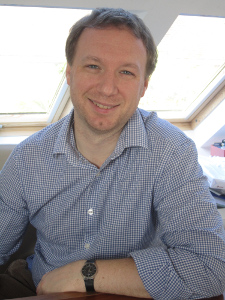
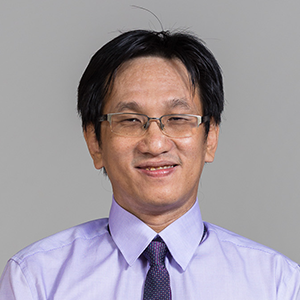
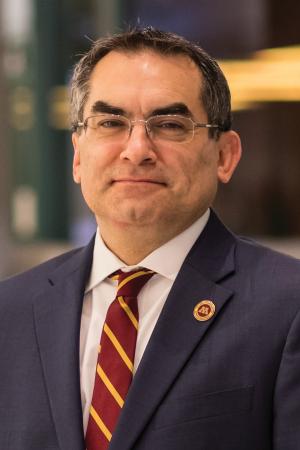
Timothy M. Jones is a Professor of Computer Architecture and Compilation at the University of Cambridge's Computer Laboratory, serving as Director of the Computer Architecture and Semiconductor Design Centre (CASCADE) and Fellow/Director of Studies at Gonville and Caius College. His research focuses on parallelism extraction in applications to enhance performance and address energy efficiency/reliability challenges in compilers, binary translators, and microarchitectures. Current work includes novel cache prefetching techniques, thread-level parallelism schemes, and advanced core prediction methods. He has an Erdős number of 4 and a Dijkstra number of 4 via collaborative networks. Research interests span computer architecture fundamentals, compiler optimizations, hardware security mechanisms, and fault tolerance strategies. Notable contributions include speculative vectorization, heterogeneous parallel error detection (MEEK/FireGuard), and security tools like MarkUs and MineSweeper. CASCADE oversees interdisciplinary projects addressing future microprocessor/system challenges. Jones supervises PhD students through CASCADE's 2025 intake program. Publications emphasize architectural innovations in memory systems, security, and energy efficiency. Key works include MASCOT (memory dependence prediction), Scalar Vector Runahead (2024), and Decoupled Vector Runahead (2023). His work integrates hardware-software co-design principles to tackle real-world processor bottlenecks.
Wolfgang Klas is a Professor at the Faculty of Computer Science, leading the Research Group Multimedia Information Systems. His research focuses on multimedia systems, data management, and information retrieval, with significant contributions to multimedia content analysis and database systems. He has been actively involved in multiple research projects, including TP2 PRECIOUS (2013-2016), SciLink (2011-2014), and OptFI (2010-2013). His work intersects with emerging technologies like blockchain, as seen in his public engagements and talks on topics such as 'From Blockchain to Web' and IT4S Forum presentations. His research interests span multimedia systems, database design, and the application of declarative programming for security and data integrity. Recent projects emphasize fake review detection and sentiment analysis using advanced algorithms and neural models. He has collaborated internationally, contributing to workshops like SMAP 2020 and publishing in journals like Algorithms and Applied Sciences . Grants/Projects: TP2 PRECIOUS (2013-2016), SciLink (2011-2014), OptFI (2010-2013) Activities: Speaker at IT4S Forum (2024), Blockchain-related talks (2020–present) Labs/Teams: Research Group Multimedia Information Systems
Prof. Michael Weyrich is a faculty member at the Institute of Industrial Automation and Software Engineering (IAS) within the University of Stuttgart , leading the Cluster of Excellence IntCDC . His academic rank is Professor, and he focuses on Industrial Automation , Digital Twins , and Large Language Models (LLMs) for manufacturing and automotive systems. His research explores integrating LLMs into industrial automation for adaptive control, cloud offloading of vehicle functions, and semantic interoperability via Asset Administration Shells . He investigates modular production architectures , connected vehicle systems , and synthetic data generation for autonomous machinery. Recent publications highlight LLM-driven production planning , dynamic sensor calibration , and machine learning for fault detection in electric vehicle powertrains. His work emphasizes real-time data modeling and flexible microservice orchestration .
James A. Millward is a Professor of Inter-societal History at Georgetown University's Edmund A. Walsh School of Foreign Service and Department of History. He holds a Ph.D. in History from Stanford University (1993), an MA from the School of Oriental and African Studies (University of London, 1985), and a BA in East Asian Languages and Civilizations from Harvard (1983). Millward specializes in Qing imperial history, the Silk Road, Xinjiang studies, and cross-cultural musical exchanges across Eurasia. Research Interests: His work critically examines Sinicization narratives, the Qing tribute system, and the impact of colonial historiography on contemporary China's ethnic policies. He also explores musical instrument diffusion along the Silk Road, comparing lutes like the pipa and oud. Publications: Notable works include Eurasian Crossroads: A History of Xinjiang (2007, 2021), The Silk Road: A Very Short Introduction (2013), and chapters in edited volumes analyzing Qing multiculturalism and cultural assimilation frameworks. Academic Leadership: As former president of the Central Eurasian Studies Society (2010) and contributor to the International Studies Association award-winning Culture and Order in World Politics (2019), Millward bridges historical analysis with modern political discourse. Media Engagement: A frequent contributor to The New York Times , Washington Post , and international media, he provides expert commentary on Xinjiang, Uyghur issues, and China-West relations. His current projects include a study of lute cultural exchange and the book Decolonizing History in China , challenging exceptionalist narratives in mainland historiography.
Michael J. Spivey is a Professor of Cognitive Science at the University of California, Merced, affiliated with the School of Social Sciences, Humanities and Arts. His research focuses on understanding human cognition through embodied and dynamic systems approaches, with particular expertise in eye-tracking methodologies and real-time language processing. As a faculty member in the Cognitive and Information Sciences department, he contributes to interdisciplinary research that bridges psychology, linguistics, and neuroscience. Dr. Spivey's educational background includes: Ph.D. in Brain and Cognitive Sciences from the University of Rochester (1996) M.A. in Brain and Cognitive Sciences from the University of Rochester (1995) B.A. from the University of California, Santa Cruz (1991) His research interests span psycholinguistics, visual perception, sensorimotor processing, embodied cognition, and dynamical systems theory. Dr. Spivey investigates how cognitive processes unfold in real-time through eye movements and other behavioral measures, challenging traditional modular views of cognition. His work emphasizes the continuous interaction between perception, action, and cognition, demonstrating how language processing is deeply embedded in our sensorimotor experiences. He has made significant contributions to understanding the time course of language comprehension, the role of visual context in linguistic processing, and the dynamic nature of cognitive representations. Analysis of Dr. Spivey's recent publications reveals a strong focus on embodied and dynamic approaches to cognition. His work spans diverse areas including eye-tracking and mouse-tracking methodologies, team cognition, creativity research, bilingual language processing, and the application of foraging theory to cognitive processes. A recurring theme across these publications is the investigation of real-time cognitive dynamics using continuous behavioral measures. His research increasingly incorporates ecological approaches, examining cognition in more naturalistic contexts while maintaining experimental rigor. The interdisciplinary nature of his work is evident in collaborations across psychology, linguistics, neuroscience, and even music cognition. Dr. Spivey is affiliated with the Center for Human Adaptive Systems and Environments and collaborates with researchers at Western University, Northwestern University, Brown University, and UCLA. His work with students likely focuses on training in advanced methodologies for measuring real-time cognitive processes.
Dr Kun Wei is a Lecturer in Computer Science at the University of the West of England (UWE), joining in 2015. Previously, he worked as a Research Associate at the University of York, focusing on timing properties of complex systems and formal development of safety-critical applications. His research spans formal verification, security protocols, concurrent programming, and model-checking tools. BSc in Computer Science MSc in Internet Computing PhD in Computer Science from the University of Surrey His expertise includes the analysis of timing properties in social-technical systems and cyber-physical systems using the timebands model, as well as formal verification of security protocols. He specializes in object-oriented software development , concurrent programming , and semantics of programming languages , with applications in safety-critical and dependable systems . His work integrates theorem-proving and model-checking tools for system development and verification.
Taishi Muraoka serves as an Assistant Research Fellow at Academia Sinica's Institute of Political Science in Taipei, Taiwan, a position he has held since 2022. His academic journey includes postdoctoral fellowships at Harvard University's Program on US-Japan Relations and Washington University's Weidenbaum Center, following his 2019 Ph.D. in Political Science from Washington University in St. Louis. His educational background encompasses a B.A. in Political Science from the University of North Carolina at Charlotte (2013) and a B.A. in Law from Chuo University, Japan (2011). His research expertise spans electoral politics, political institutions, and social media's role in political communication, with particular emphasis on cross-national comparative analysis. Muraoka's scholarly work reveals consistent focus on electoral system design and voter behavior, with recent publications examining polarization's emotional dimensions, multilingual party communication, and diaspora voting incentives. His methodological approach combines large-scale cross-national data analysis with quasi-experimental designs, frequently leveraging social media interactions as behavioral indicators. His scientific recognition includes the 2023 Richard E. Matland Best Paper Award from the Midwest Political Science Association and multiple travel grants from major associations like APSA and MPSA. His award portfolio reflects consistent early-career excellence in political methodology and comparative research. Current research initiatives include a 2025 Academia Sinica Grand Challenge grant on electoral system habit-formation and a Weidenbaum Center-funded project on radical-right party responses to extremism. His collaborative network spans institutions in Europe, Asia, and North America, with frequent co-authorship patterns indicating strong interdisciplinary partnerships.
Liadh Kelly is an Assistant Professor in the Department of Computer Science at Maynooth University's Faculty of Science & Engineering. She supervises PhD students in applied artificial intelligence, focusing on intelligent search, ubiquitous computing, and multimodal information access. She is affiliated with the ADAPT SFI Research Centre, SFI Centre for Research Training in Foundations of Data Science, and Human Health Institute. BSc in Computer Science MSc (Research) in Computer Science PhD in Computer Science Her research explores context-sensitive retrieval and evaluation methodology in AI-driven systems. Key areas include ubiquitous computing for personal data analysis, deep learning classification for mental wellness indicators, and multimodal lifelogging integration. Recent publications focus on urban mental wellbeing classification , contextual cue analysis , and AI-driven health search systems . Articles address smart city applications , consumer health search , and cross-lingual medical retrieval . Professional roles include Doctoral Consortium Chair at ECIR 2023 and Programme Committee member for SIGIR and ICWSM conferences. She leads grants for 4-year PhD studentships with stipend and fee coverage.
Mads Dam is a Professor in Teleinformatics at the School of Computer Science and Communication at Kungliga Tekniska Högskolan (KTH), where he heads the Department of Theoretical Computer Science. His research focuses on computer security, formal methods, and program logics, with particular emphasis on the formal modeling and verification of low-level hardware and software execution platforms for security and application isolation. His educational background includes: PhD in Computer Science from the University of Edinburgh (1990) MSc in Computer Engineering from Aalborg University, Denmark BSc in Information Technology from Aalborg University, Denmark Mads Dam's research interests center on computer security, formal methods, and program logics. His current work focuses on the formal modeling and verification of low-level hardware and software execution platforms such as hypervisors and OS kernels and their underlying hardware. He has made significant contributions to information flow security, verification of microarchitectural systems, and network programming language security. His research bridges theoretical foundations with practical security applications. His recent publications show a strong trend toward verifying low-level systems, with a focus on information flow security for processors, network programming languages (particularly P4), and microarchitectural vulnerabilities. His work combines formal methods with practical security concerns, developing verification techniques that address real-world security challenges in hardware and software systems. The research spans theoretical foundations in temporal and epistemic logics to practical applications in network security and processor verification. His scientific awards and recognition include: Two framework grants from the Swedish Foundation for Strategic Research A junior individual grant from the Swedish Foundation for Strategic Research Project grants and a five-year research fellowship from the Swedish Research Council (VR) Project grants from Ericsson, Microsoft Research, US Air Force, and Vinnova (the Swedish Innovation Agency) Mads Dam has been a principal investigator on numerous research projects and has supervised many graduate students. He has been a partner in several European projects including HATS, S3MS, VerifiCard, LOMAPS, and UaESMC. His research has been supported by substantial grants from major funding bodies, reflecting the significance and impact of his work in computer security and formal methods. He is a founding member of several research centers at KTH, including Access, the CASTOR software research center, and the CDIS center for cyber defense and information security. These centers bring together researchers from multiple disciplines to address complex challenges in cybersecurity and software engineering.
Gina Crocenzi (Masterson) serves as a Professor in the Department of Modern and Classical Languages at George Mason University, teaching French literature and related disciplines. She maintains prior faculty appointments at Georgetown University and Princeton University, with active teaching responsibilities confirmed for Fall 2025 courses. Her academic foundation includes a summa cum laude B.A. in Philosophy/History from Georgetown University and a Ph.D. in Modern French Literature and Literary Criticism from the Catholic University of America. Professional certifications encompass Hybrid Learning (American University, 2018) and Online Instruction (NOVA, 2020). Research spans dual domains: French literary studies focusing on Kristeva, Bachelard, 20th-century philosophy, and theology; alongside computational geospatial work in traffic simulation and ZIP code systems. This unusual interdisciplinary range reflects publications in both humanities (e.g., Literature and the Science of the Unknowable ) and computer science venues. Scientific recognition includes: Excellence in Teaching Award, Northern Va Community College, Office of the Dean (Spring 2021) No verifiable information exists regarding graduate student mentorship, research grants, or laboratory leadership. Her professional background additionally incorporates international business project management within the US federal government.
Anthony TUNG Kum Hoe is a Professor in the Department of Computer Science at the National University of Singapore (NUS), where he has established himself as a leading researcher in database systems and data mining. He is also affiliated with the NUS Graduate School for Integrative Sciences and Engineering and serves as a SINGA supervisor. His educational background includes a Ph.D. in Computer Science from Simon Fraser University (2001), an M.Sc. in Information Systems & Computer Science from NUS (1998), and a B.Sc. with 2nd Class Upper Honours in Information Systems & Computer Science from NUS (1997). Professor Tung's research spans several interconnected areas within database systems and data mining. His primary focus is on developing efficient methods for indexing and searching complex data structures including time series, trajectories, trees, graphs, and high-dimensional objects. He has pioneered work in visual query processing, keyword search, and ranking systems. His GENIE (Generic Inverted Index) and LAMP (semi-Lazy Mining Paradigm) projects represent significant contributions to big data analytics, particularly in handling the 'variety' aspect of big data by providing unified frameworks for processing diverse data structures while preserving semantic meaning. His research bridges theoretical database concepts with practical applications in visual data mining, collaborative analytics, and just-in-time model construction. His recent publications reveal a clear evolution from traditional database research toward more complex analytics on diverse data types. While maintaining his core expertise in database indexing and query processing, his work has expanded to incorporate machine learning techniques, particularly in areas like nearest neighbor search, anomaly detection, and predictive analytics. There's a noticeable trend toward interdisciplinary applications, with publications spanning computer vision, natural language processing, transportation systems, and social computing. His research group consistently publishes in top-tier venues including SIGMOD, VLDB, ICDE, and KDD, demonstrating both theoretical rigor and practical relevance. 2005 Best Paper Award for 'Indexing DNA Sequences Using q-grams' 2007 Invited panel speaker on 'Advice for a successful database researcher career in Asia' at SIGMOD 2010 Guest Lecturer for VLDB Database School 2012 VLDB 2012 Research PC Co-chairs 2015 10 Years Best Paper Award, DASFAA 2015 Invited to SIGMOD 2008 and SIGKDD 2008 Program Committees Professor Tung has supervised numerous PhD students and research associates throughout his career, including notable researchers like Zhang Zhenjie (recipient of the 2007 President Graduate Fellowship) and Wang Nan (published in SIGMOD'08). His research group has been consistently productive, with students publishing in top conferences including SIGMOD, ICDE, and VLDB. His professional service is extensive, having served as PC Chair for COMAD'06, Research PC Co-chair for VLDB 2012, and on program committees for virtually all major database and data mining conferences over the past two decades. His research has been supported by various grants that have enabled significant contributions to database technology. His GENIE and LAMP projects represent a cohesive research direction focused on developing systematic approaches to big data analytics. GENIE provides a unified platform for storage and retrieval of big data with various structures, while LAMP introduces a novel paradigm for predictive analytics that combines the strengths of lazy and eager learning approaches. These projects have evolved to incorporate GPU acceleration and parallel processing capabilities, reflecting his commitment to addressing real-world scalability challenges in data-intensive applications.
Ross Koppel is an Adjunct Professor of Sociology with expertise in healthcare information technology, medication errors, and ethics in social research. His work explores the intersection of technology and societal impacts, focusing on data governance, clinical workflows, and human factors in health IT systems. Research Interests Context-sensitive understanding of medication errors Societal implications of clinical data sharing Ethical challenges in AI and informatics Healthcare cost analysis Scientific Awards Fellow of the American College of Medical Informatics (FACMI)
Michael C. Rodriguez is the Dean of the College of Education and Human Development (CEHD) at the University of Minnesota and holds the Campbell Leadership Chair in Education and Human Development. He has been a professor of measurement at CEHD since 1999. Education: PhD in Measurement & Quantitative Methods (Michigan State University), MA in Public Affairs (University of Minnesota Twin Cities), BA in Psychology (University of Minnesota Morris) His research focuses on test development , measurement accessibility , social-emotional learning assessment , and psychometric meta-analysis . He pioneered the use of item response models to evaluate equity in testing for students with disabilities and English language learners. Recent publications emphasize fairness in assessment , longitudinal SEL measurement , and foundational competencies in educational measurement . His work bridges psychometrics with socio-cultural youth development contexts. Scientific Awards: All My Relations Equity in Action Award (2022), C. Eugene Allen Award (2019), Robert H. Beck Teaching Award (2008) He chairs the Technical Advisory Group of the National Board of Professional Teaching Standards and contributes to the revision of the Standards for Educational and Psychological Testing . As founding director of the Minnesota Youth Development Research Group, he explores measurement frameworks for educational equity and youth wellbeing.
Mauricio Tenorio Trillo serves as the Gustavus F. and Ann M. Swift Distinguished Service Professor of History at the University of Chicago and the College, while maintaining an affiliation as Profesor afiliado at Centro de Investigación y Docencia Económicas (CIDE) in Mexico City. With over two decades of scholarly work including thirteen years at Chicago, he remains actively engaged in research as evidenced by his upcoming research leave for Autumn 2025 and Winter 2026. Tenorio earned his PhD from Stanford University in 1992, establishing a foundation for his interdisciplinary approach that bridges historical methodology with linguistic analysis and urban studies. His academic trajectory demonstrates consistent engagement with Mexican and Latin American historical narratives across institutional contexts. Professor Tenorio's research explores the intricate relationships between language and historical understanding, urban development and national identity formation, and the conceptual frameworks that shape regional perceptions. His work critically examines how historical narratives are constructed, with particular focus on Mexico City's evolution and the conceptual construction of Latin America as a region. Recent scholarship increasingly addresses historical memory, monument culture, and the politics of historical representation, reflecting his evolving intellectual trajectory while maintaining core methodological commitments. Analyzing his publication trends reveals Tenorio's sustained commitment to conceptual history and the deconstruction of regional identities. His scholarship consistently demonstrates how historical narratives shape contemporary understandings of place and culture, with language serving as both medium and subject of historical inquiry. The interdisciplinary nature of his work bridges history with linguistics, urban anthropology, and cultural studies, creating a distinctive methodological approach that has influenced multiple fields. Professor Tenorio's scholarly contributions have been recognized through several prestigious awards: Honorary Mention for The Bolton-Johnson Prize from the American Historical Association (2013) Spiro Kostof Book Award from the Society of Architectural Historians (2015) Gordon J. Laing Prize from The University of Chicago Press (2015) Quantrell Award for Excellence in Undergraduate Teaching (2019) While specific details about current advising relationships aren't prominently featured, Tenorio's collaborative work such as 'El Porfiriato: Una propuesta y un balance' with Aurora Gómez demonstrates scholarly partnership. His extensive publication record and teaching recognition suggest significant student mentorship, with his work appearing in numerous academic journals and receiving translations that extend his scholarly impact beyond English-language academia. Professor Tenorio operates within a robust transnational scholarly network connecting the University of Chicago with Mexican academic institutions, particularly CIDE. This binational academic presence enables him to bridge North American and Latin American intellectual traditions, creating a distinctive conceptual space that informs his research on historical narratives and regional identity formation. His work exemplifies how transnational scholarly engagement can produce innovative historical methodologies and conceptual frameworks.
Ciara Atkinson serves as an Assistant Professor of Practice in the Department of Psychology at the University of Arizona, where she teaches foundational and specialized undergraduate courses including Introduction to Psychology (PSY 101), Social Psychology (PSY 360), and Research Methods (PSY 290A). Her pedagogical philosophy centers on making psychological science accessible through real-world applications, hands-on activities, and critical thinking development that connects theory to students' everyday experiences. Her academic credentials include: B.S. in Psychology from Otterbein University (2017) M.A. in Psychology from the University of Arizona (2019) Ph.D. in Social & Personality Psychology from the University of Arizona (2022) Dr. Atkinson's research investigates how societal expectations and gender stereotypes shape roles and identities, with particular focus on inequalities in helping-oriented occupations. Her work examines the gender roles inhibiting prosociality (GRIP) model, masculinity threats as barriers to communal engagement, and cross-national analyses of gender norms in caregiving. She employs experimental and survey methodologies to explore how traditional gender expectations constrain prosocial behavior, especially among men in communal roles. Analysis of her 15 most recent publications (2017-2025) reveals a cohesive research trajectory centered on gender dynamics in social psychology. The majority examine how traditional gender roles inhibit prosocial behavior through mechanisms like perceived backlash, masculinity threats, and policy influences, with strong methodological emphasis on cross-national comparisons (across 37-48 countries) and controlled experiments. Key thematic threads include pandemic impacts on domestic equality, AI-generated gender bias, and interventions promoting men's emotional flexibility for gender equity. Prior to her faculty appointment, she worked as a research analyst and program evaluator with the Community Research, Evaluation and Development (CRED) Team in the Norton School of Family and Consumer Sciences, Student Affairs, and the UA Cancer Center. These collaborations demonstrate her applied approach to program evaluation and community-focused research on gender dynamics in institutional settings.