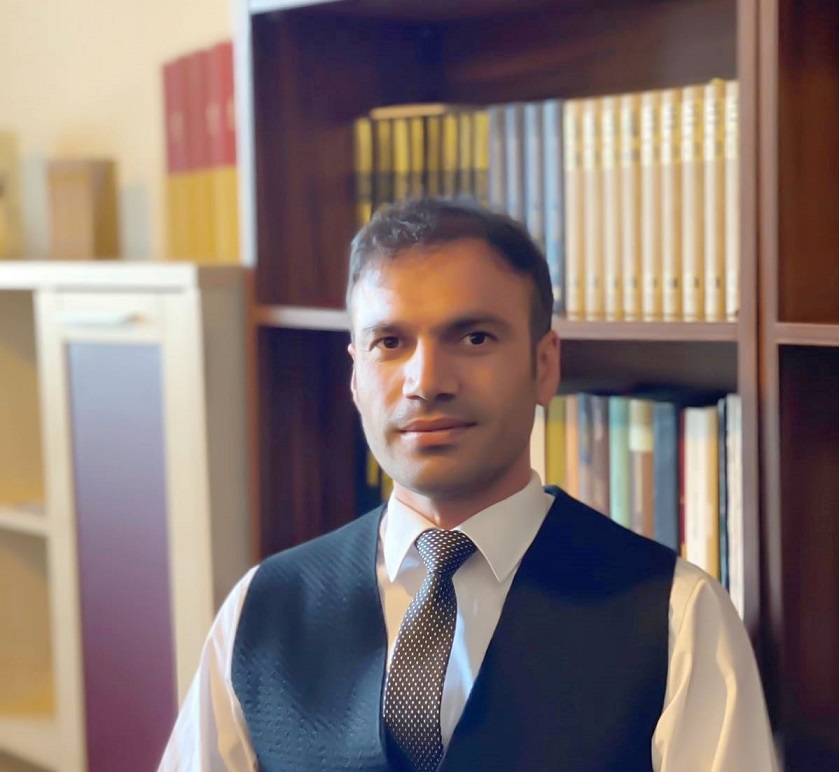
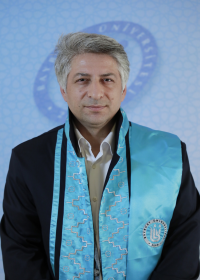
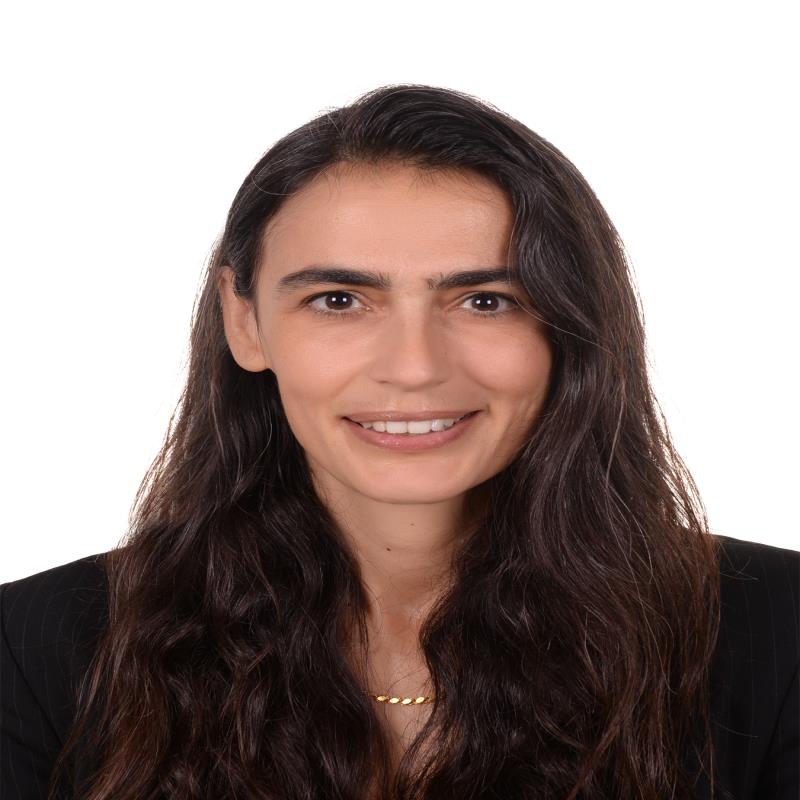
Assoc. Prof. Dr. Ali Şükrü Özbay currently serves as an Associate Professor at Karadeniz Technical University's Faculty of Arts, Department of English Language and Literature. He earned his PhD and MA in Applied Linguistics from Karadeniz Technical University and holds a BA in English Language and Literature from Ankara University. Education : PhD (2015) and MA (2004) from Karadeniz Technical University; BA (1996) from Ankara University Dr. Özbay's research focuses on Corpus Linguistics , Learner Corpora , Academic Writing , Translation Studies , and Language Pedagogy . His work investigates lexical bundles, support verb constructions, and pragmatic markers through computational corpus analysis. Recent publications analyze four-word recurrent expressions in educational technology contexts, collocational priming in Turkish EFL learners' mental lexicon, and semantic prosody of intensifiers in academic corpora. He supervises theses on data-driven learning applications and corpus-based teaching materials. Dr. Özbay has held managerial roles including Deputy Head of Department (2019–present) and Assistant Coordinator for Erasmus+ programs (2017–2021). He actively participates in international conferences and has published in journals like Turkish Studies , Australian Journal of Applied Linguistics , and Hacettepe Eğitim Dergisi .
Dr. Duygu Yavuz is an Assistant Professor at Yeditepe University's Faculty of Arts and Sciences, Department of Turkish Language and Literature. Her academic journey includes a PhD in Turkish Language and Literature from Sakarya University (2011-2017), MA in Old Turkish from Mimar Sinan Fine Arts University (2009-2011), and BA in Turkish Language and Literature from the same institution (2005-2009). Education: PhD: Turkish Language and Literature, Sakarya University (2011-2017) MA: Old Turkish, Mimar Sinan Fine Arts University (2009-2011) BA: Turkish Language and Literature, Mimar Sinan Fine Arts University (2005-2009) Her research focuses on historical linguistics, Turkic dialectology, metaphorical semantics, and loanword adaptation in Old Turkish texts. She has extensively analyzed Turkic conceptual systems through light and fire metaphors, verb morphology, and reduplication patterns in folklore. Recent publications examine Harezm Turkish, Uyghur texts, and compounding mechanisms in Turkic languages. She has presented at international conferences on topics like dialectal variations and cultural symbolism in historical linguistics. Teaching Experience: Turkish Language History (EDTR 121, TLL 113) Old Turkish (EDTR 211-212, TLL 219-220) Contemporary Turkish (EDTR 261-262, TKL 201-202) Teacher Training (PTUR 402-403) Previously worked at the Turkish Ministry of National Education (2014) teaching Turkish Language and Literature. Affiliated with academic societies tracked through memberships in indexing services like TR DİZİN, MLA, and SOBIAD.
Prof. Dr. ABDULBAKİ ÇETİN is a Professor of Turkish Language and Literature at Bingöl University's Faculty of Arts and Sciences. He holds a PhD from Atatürk University (2002) and has taught extensively since 2002. His current courses include Ottoman Turkish III/IV, Old Anatolian Turkish, and Chagatai Text Studies. He has supervised three doctoral theses focusing on medieval manuscripts and literary works. Licentiate: Atatürk University (1991-1995) Master's: Atatürk University (1996-1998) Doctorate: Atatürk University (1998-2002) His research focuses on pre-modern Turkic texts, Ottoman Turkish linguistics, and medieval Islamic manuscripts. He has published widely on topics like Persian grammar in Anatolia, Ottoman translations of classical texts, and Sufi literary traditions. Recent work includes analyses of 15th-17th century manuscripts and lexicographical studies. Prof. Çetin has authored/co-authored three books and contributed chapters on medieval Turkic scholars and literary works. His published articles span over two decades, with significant contributions to journals like Atatürk Üniversitesi Türkiyat Araştırmaları Enstitüsü Dergisi and Selçuk Üniversitesi Türkiyat Araştırmaları Dergisi.
Assoc. Prof. Dr. Osman AKTAŞ is a Turkish academic affiliated with Ankara Social Sciences University as an Associate Professor in the Faculty of Islamic Sciences , Department of Basic Islamic Sciences. His career spans roles such as Research Assistant (2013–2017) at Osmaniye Korkut Ata University and Doctorate Teaching Staff (2019–2022) at his current institution. Education: PhD in Fundamental Islamic Sciences (2016–2019), Ankara Yıldırım Beyazıt University Master's in Fundamental Islamic Sciences (2014–2016), Yıldırım Beyazıt University BA in Religious Culture and Moral Knowledge (2002–2006), Ankara University Research Interests include Arabic Language and Rhetoric , comparative linguistics between Turkish and Arabic, Islamic sciences, and interdisciplinary neuroscience studies on topics like epilepsy and laughter physiology. He has published extensively in these areas, including works on punctuation systems, prepositions, and word/sentence structures. Advising involves guiding four graduate students, including Mehmet Fevzi Sargın (PhD, 2024) and Asma Idrıs Mohammed Alfassı (Master’s, 2024). A TÜBİTAK 2211/A Domestic Doctoral Scholarship (2017–2019) supported his doctoral research. Despite his academic output, no scientific awards are documented.
Prof. Dr. Ali KARATAŞ is a Professor at the Department of Basic Islamic Sciences, Faculty of Theology at Sakarya University. He holds a PhD from Ankara University and has served in academic leadership roles, including Head of the Tafsir Department and member of the Senate. His expertise lies in Quranic exegesis (Tafsir), focusing on the Maturidi School and methodological approaches to interpretation. He has authored influential works like Tefsir Geleneğinde Rivayet and Anlamdan Yoruma Kur'an . Education: PhD: Ankara University, Institute of Social Sciences (2011) MA: Dicle University, Institute of Social Sciences (2002) Bachelor's: Ondokuz Mayıs University, Faculty of Theology (1999) His research emphasizes historical and philosophical dimensions of Tafsir, with a focus on Maturidi’s hermeneutics and contemporary challenges in Quranic interpretation. He has published over 50 articles in indexed journals and edited volumes, including works on the methodology of Tafsir and critical editions of classical texts. Prof. Karataş has supervised numerous PhD and master’s theses, such as those analyzing Maturidi’s works, contemporary Tafsir problems, and the role of narration in exegesis. He has also served as editor for journals like Tefsir Araştırmaları Dergisi and received the Best Presentation Award in 2016.
Prof. Dr. Gencer Elkılıç is a Full-time Professor at the Department of Western Languages and Literatures within the Faculty of Arts and Sciences at Kafkas University , Turkey. With a career spanning over two decades at the same institution since 2001, he has held administrative roles including Dean, Department Chair, and Director of Vocational Schools. His academic journey began with a PhD in English Language Teaching from Atatürk University (2000), preceded by an MA in Teaching English as a Foreign Language (1995) and BA in Foreign Language Education (1990).
Dr. Serkan Düzgün is an Associate Professor at Gazi University's Faculty of Education, Department of Basic Education, specializing in Classroom Education. He has previously worked as a part-time lecturer at Ankara Hacı Bayram Veli University and Ankara Yıldırım Beyazıt University. PhD, Master's, and Bachelor's degrees from Gazi University Active in instructional technologies, AI in education, STEM, and neuroscience applications Key contributor to Turkey's national education projects and civil society initiatives His research focuses on the integration of artificial intelligence in pedagogical practices, robotic coding platforms for K-12 education, and the cognitive impacts of neuroscience-based teaching methods . Recent work examines distance education challenges during the pandemic, learning style adaptations, and self-regulated learning in virtual environments. Current publications emphasize AI-driven educational tools , technology-enhanced literacy instruction , and virtual classroom dynamics . His 15 most recent articles (2021-2024) span topics like robotic coding in STEM education, emotional intelligence in remote teaching, and AI applications in qualitative research. Dr. Düzgün has conducted 108 projects, advised 3 theses, and actively participates in open-access initiatives and UN Sustainable Development Goals implementation through educational technology. He also played a pivotal role in establishing the "Voice of Turkish" Radio at Yunus Emre Institute.
Assoc. Prof. Dr. Ihab Said Ibrahim IBRAHİM is a faculty member at the Faculty of Theology , Kastamonu University , Turkey, since 2014. His research focuses on Arabic Language and Rhetoric within Islamic Studies, with expertise in phonology, semiotics, and Quranic exegesis. PhD in Arabic Language and Literature (Tanta University, 2011) MA in Arabic Language and Literature (Menoufia University, 2005) BA in Arabic Language and Literature (Menoufia University, 2000) His research explores phonological patterns in classical Arabic texts, semantic shifts in Quranic interpretation, and interdisciplinary applications of linguistics in literary and religious contexts. Recent publications analyze syntactic deviations in Arabic poetry, lexical semiotics in dictionaries, and phonetic analysis of Quran recitations. He has supervised 12 graduate theses, including studies on stylistic innovations in pre-Islamic poetry and phonetic analysis of Quranic manuscripts. His work appears in journals like Turkish Studies and Harran Theology Journal .
Musa KAYA is an Associate Professor at the Department of Turkish Education within the Faculty of Education at Bayburt University. His academic work focuses on Turkish language teaching, foreign language acquisition, and multicultural education. He actively contributes to curriculum development and analysis, particularly in alignment with European language standards. Research Interests : Turkish as a foreign language, language transfer phenomena, text simplification, cultural integration, value education, and reading comprehension. Article Trends : Recent publications examine Tunisian students' attitudes toward learning Turkish, comparative analyses of language programs, text complexity in Turkish instruction, and integration of cultural values through literature. Contact : Email - musakaya@bayburt.edu.tr | Phone - (458) 333-2033
ARİF ÇERÇİ is an Associate Professor at Gaziantep University's Faculty of Education, Department of Turkish Language and Social Sciences Education. He has been serving in this position since 2015, following a 14-year career as a Turkish Language and Literature Teacher at the Ministry of National Education (2001-2015). His academic background includes a Doctorate in Turkish Education from Necmettin Erbakan University (2009-2013), a Master's in Turkish Education from Selcuk University (2003-2006), and a Bachelor's degree in Turkish Language and Literature Teaching from Selcuk University (1997-2001). Dr. Çerçi's research focuses on Turkish Language Education, Teaching Turkish as a Foreign Language, and Grammar Education. His work particularly addresses challenges in teaching Turkish to Syrian refugee students and developing effective language teaching methodologies. He has published extensively on teacher self-efficacy, educational assessment, and language teaching materials development. His scholarly output shows a clear progression from foundational language teaching research to more specialized work on Turkish as a foreign language instruction, with increasing focus on refugee education integration since 2018. His publications span both Turkish and international journals, demonstrating his commitment to contributing to both national and global academic discourse in language education. Among his notable scientific contributions are his work on developing assessment tools for language teaching activities and his research on the integration challenges faced by Syrian students in the Turkish education system. His publications frequently address practical classroom applications of language teaching theories. 23 peer-reviewed journal articles 8 book chapters 17 conference papers 9 editorial works 2 TÜBİTAK-funded research projects Dr. Çerçi has supervised 11 master's theses on topics ranging from podcast usage in language teaching to activity development for teaching Turkish as a foreign language. His teaching portfolio includes courses on Turkish Grammar Teaching, Turkish Teaching Methods, Oral Expression, and Scientific Research Methods at undergraduate, graduate, and doctoral levels. He has also participated in national workshops related to educational assessment and Turkish teaching material development for refugee students.
Dr. Eşref İnan is an Assistant Professor at Bingöl University's Department of Arabic Translation and Interpreting within the Faculty of Arts and Sciences. He holds a PhD in Arabic Language and Rhetoric from Yüzüncü Yıl University (2020) and has extensive experience in religious and education sectors (1997-2022). His research focuses on Quranic language analysis, Arabic rhetoric, and translation studies. He teaches advanced Arabic grammar, classical prose, and Quranic storytelling techniques. Education: Dicle University (BA Education, 2004), Yüzüncü Yıl University (MA Tafsir, 2015; PhD Arabic Rhetoric, 2020) Research interests include Quranic narrative structures, Arabic linguistic concepts, and computational methods in religious text analysis. Authored 7 books and contributed 2 book chapters on Quranic linguistics and educational topics. Presented 16+ papers at international conferences on topics like Quranic language dynamics and interdisciplinary approaches to religious texts. Awards: Three 'Teşekkür Belgesi' certificates from education directorates (2007, 2010, 2018) Active in academic service as a referee for ŞARKİYAT journal and maintains advanced proficiency in Arabic (86.25 score). Current courses include Nahiv (Arabic grammar) and classical Arabic prose analysis at undergraduate and graduate levels.
SÜMEYYE AYDIN GÜRLER is an Associate Professor in the Department of Mathematics and Science Education at Nizip Education Faculty, Gaziantep University. She specializes in Science Education, with a particular focus on STEM/STEAM education, assessment methods, and science teacher training. Her academic career spans from her appointment as a Doctoral Lecturer in 2018 to her current position as Associate Professor since 2024. Education Background: Doctorate (2011-2016): Fırat University, Institute of Educational Sciences, Science Education Master's (2008-2011): Fırat University, Institute of Science, Science Education Bachelor's (2004-2008): Fırat University, Faculty of Education, Department of Mathematics and Science Education Research Interests: Dr. Aydın Gürler's research focuses on multiple aspects of science education. She has extensively studied assessment methods in science education, particularly rubric-based evaluation and academic achievement testing. Her work on STEM/STEAM education examines students' attitudes, critical thinking dispositions, and innovative thinking. She has also made significant contributions to environmental education research, investigating sustainable development awareness and students' metaphorical perceptions of natural resources. Her research on teacher education explores science teachers' awareness of international assessments like TIMSS and their implementation of science teaching methods. Her interdisciplinary approach connects science education with educational psychology, teacher training, and curriculum development. She has published numerous studies on how students connect science concepts to everyday life, particularly regarding matter properties, pure substances and mixtures, and motion characteristics. Publication Trends: Dr. Aydın Gürler's recent publications (2018-2023) demonstrate a clear focus on contemporary issues in science education. Her work increasingly addresses STEM/STEAM education, assessment methodologies, and environmental awareness. She has developed academic achievement tests and attitude scales while examining the relationship between scientific literacy and reading attitudes. Her research shows a growing interest in how students connect scientific concepts to everyday life and how teachers can better facilitate this connection. The international scope of her work is evident in publications in English addressing global educational concerns. Scientific Awards: TÜBİTAK Domestic Doctoral Scholarship (2211 code, 2011) TÜBİTAK Domestic Master's Scholarship (2210 code, 2009) Fırat University Science Teacher Education Department First Place (2008) Fırat University Faculty of Education First Place (2008) Fırat University University First Place (among 4-year faculties, 2008) Advising and Grants: Dr. Aydın Gürler currently supervises three ongoing master's theses focusing on elementary students' understanding of basic science concepts, metaphorical perceptions of environmental concepts, and the effects of educational games on science achievement. She has served as a consultant for the Adile Altınbaş Middle School Science Fair project (2018) and as an instructor for the Sustainable Environment and Climate Change International Science Festival Project (2021). Her research has been supported by prestigious TÜBİTAK scholarships during her graduate studies. Professional Activities: Dr. Aydın Gürler actively participates in the academic community through conference presentations, serving on scientific committees, and jury memberships. She has presented at numerous national and international conferences on science education topics and has served on the organizing committee for the 15th National Science and Mathematics Education Congress. Her contributions to teacher training include conducting workshops on context-based question preparation for science teachers at Nesibe Aydın Schools in Gaziantep and Diyarbakır.
Prof. Alexander WERTH is the Chair of German Linguistics (W3) at the University of Passau since 2021. He holds a PhD (Dr. phil.) from the University of Marburg (2009) and has held academic positions at institutions including the Universities of Augsburg, Bonn, and Erlangen-Nuremberg. His research focuses on German dialectology, historical linguistics (especially the Early Modern period), syntax, phonology, and sociolinguistics. He has authored monographs on topics like the definite article in personal names and perceptual foundations of prosody. WERTH serves on numerous academic committees, including the Franconian Dictionary Project and the Society for the History of Germanic Languages. He is the founding Dean of Studies at the Faculty of Humanities and Cultural Studies (2023) and oversees double-degree programs in Media and Communication at the Turkish-German University of Istanbul. Education: Master's degree (Mag. Artium) in German Linguistics, Political Science, and Media Studies (Universities of Marburg and Hamburg, 2000-2005) PhD in German Linguistics from the University of Marburg (2009) Research Interests: WERTH’s work bridges theoretical linguistics and empirical research, emphasizing dialectological, historical, and psycholinguistic approaches. Key areas include morphosyntactic variation, onymic Movierung, and the interaction between language and society. He co-edits the Journal of Language Variation and Sociolinguistics and has led projects funded by the DFG and EU. Grants & Projects: DFG-funded project on auxiliary variation in German (2023-2026) DAAD-supported programs in Istanbul and České Budějovice Labs/Teams: Director of the Department of Linguistic Research at the Institute for Cultural Research of Eastern Bavaria (since 2021).
Prof. Dr. Ahmed ÜRKMEZ is a Turkish academic specializing in Hadith studies, currently affiliated with Ankara Social Sciences University, Faculty of Islamic Sciences, Department of Hadith . He holds a Professor rank (since 2022) and has maintained full-time academic engagement since 2011. Born: 1977, Ankara Education: BA, MA, PhD in Hadith from Selçuk University Languages: Arabic (96), English (74) Research Focus includes: Moral dimensions of Hadith Relationship between Sunnah and societal mentality Interdisciplinary connections between Hadith and social sciences Critical edition methodologies Ottoman-era Hadith scholarship Systematic analysis of foundational Hadith sources Publications (2011-2021) demonstrate expertise in: Hadith textual integrity (repetition, abbreviations) Quranic pedagogy integration Historical political critique through Islamic texts Ethical frameworks from Prophet's traditions Translation challenges of Islamic classics Sociocultural reception of Hadith in Anatolia
Assoc. Prof. FİDEL ÇAKMAK is an academic at the Department of Foreign Language Education, Faculty of Education, Alanya Alaaddin Keykubat University. His academic journey includes roles as a lecturer and associate professor at institutions like Mersin University and Alanya Alaaddin Keykubat University. He holds a Doctorate from Boğaziçi University (2014) and has extensive experience in teacher training and curriculum development. His research focuses on mobile-assisted language learning (MALL), artificial intelligence (AI) in education, affective factors in language learning, and digital pedagogy. Notable projects include developing in-service training programs for educators and investigating the impact of AI on teacher well-being. He has also contributed to international journals like ReCALL and Computers in Human Behavior Reports . Prof. Çakmak has served on editorial boards, including CALL-EJ and Language and Technology , and is a member of organizations like EUROCALL and TESOL. His work emphasizes integrating technology with traditional teaching methods to enhance language acquisition and teacher effectiveness.