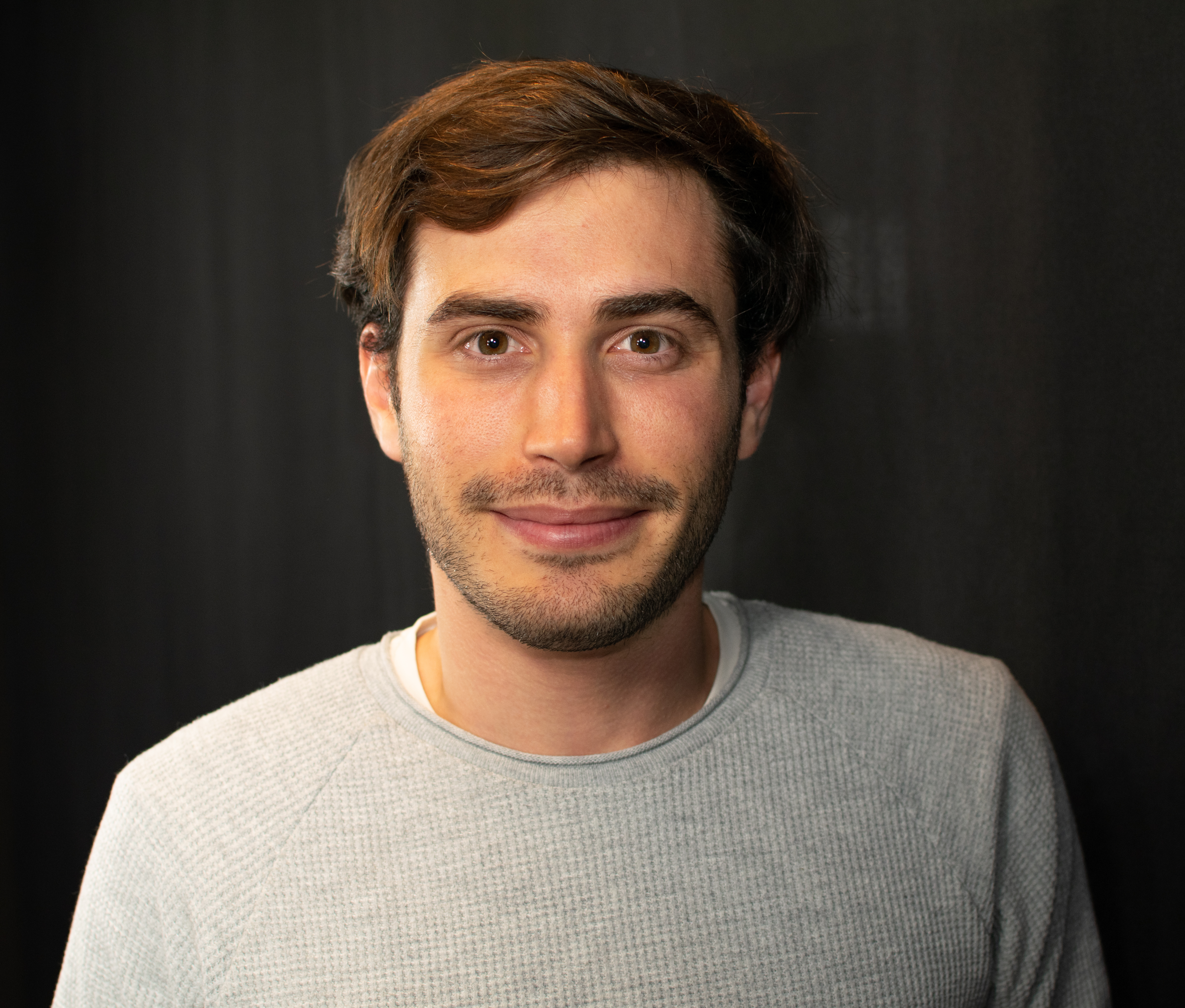
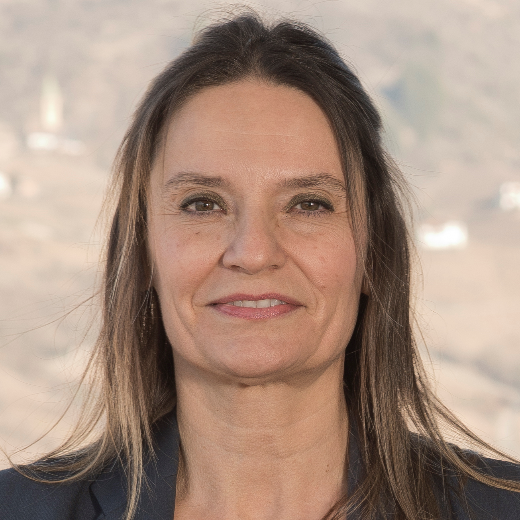
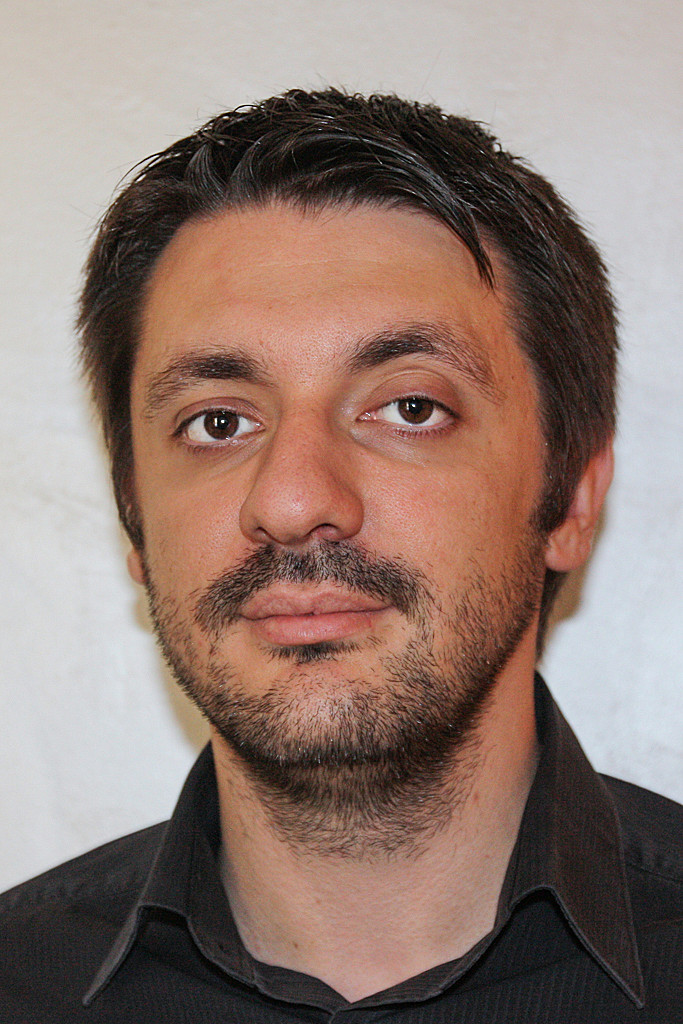
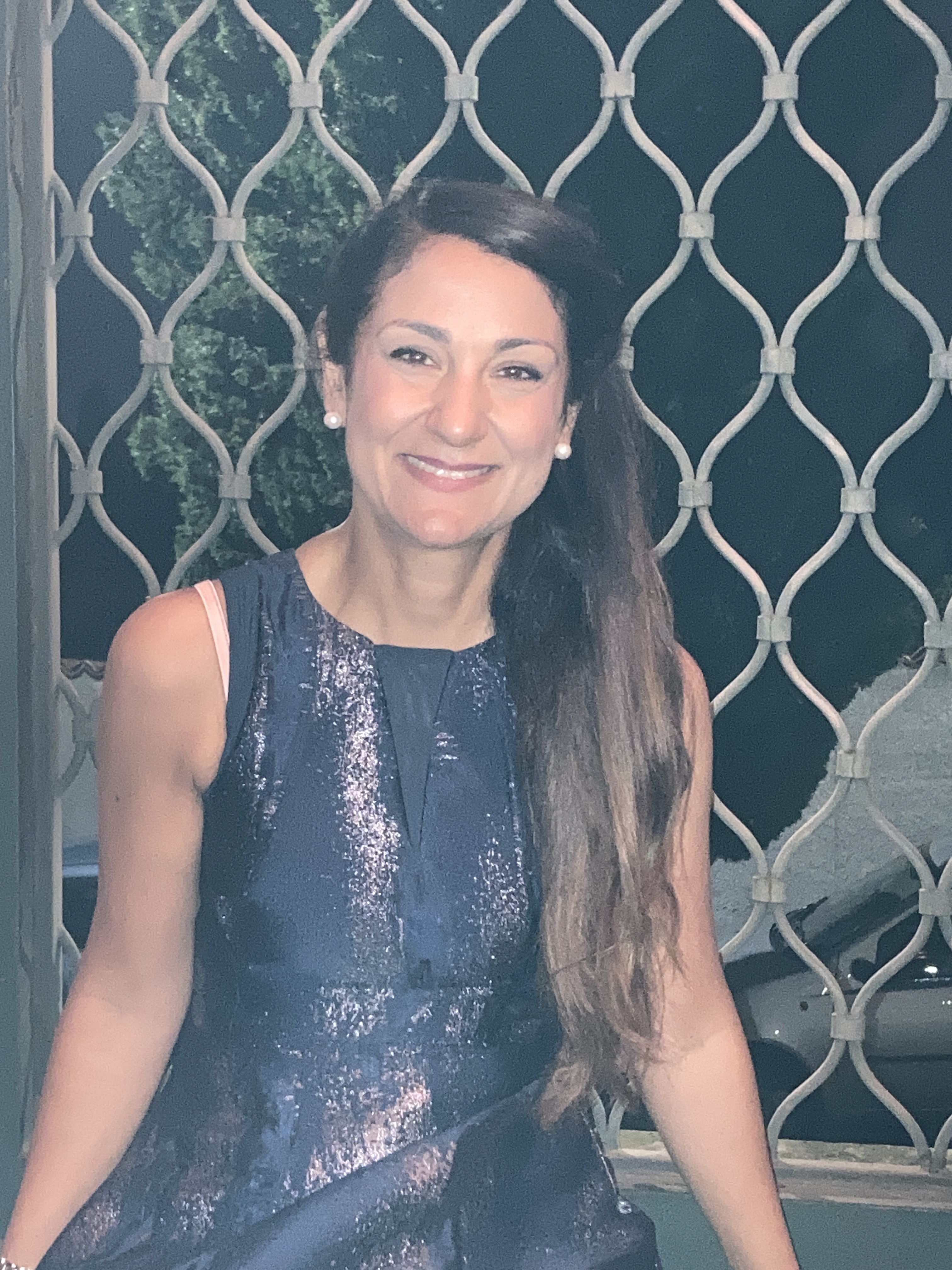
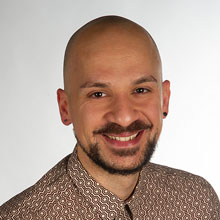
Filippo Lanubile is a Full Professor and Head of the Department of Computer Science at the University of Bari, where he leads the Collaborative Development Research Group (Collab). He co-founded the academic spin-off PeoplewareAI and previously served as a research associate at the University of Maryland. His research spans human factors in software engineering, AI-augmented development, engineering of AI-enabled systems, and health informatics. Major publications focus on MLOps, emotion recognition in development, and LLM applications in software engineering. Lanubile received the NASA Group Achievement Award (1996), IBM Eclipse Innovation Award (2006), IBM Faculty Award (2008), and Microsoft Research Software Engineering Innovation Foundation Award (2011). He chaired the ACM/IEEE ESEM symposium (2020-2021) and IEEE Software Advisory Board (2020-2023).
Pietro Belloni is a Researcher (RTDa) at the Department of Statistical Sciences, University of Padua, Italy. His primary role involves advancing statistical methodologies for drug safety and public health research through interdisciplinary projects like the Age-IT initiative. He holds a PhD in Statistics from the University of Padua, completed under Professors Giovanna Boccuzzo and Nicholas P. Tatonetti, with visiting research at Columbia University's Department of Biomedical Informatics. His academic journey includes a Master’s and Bachelor’s in Statistical Sciences from the University of Padua, complemented by an Erasmus exchange in Mathematics and Statistics at Århus University. Belloni’s research focuses on epidemiology, medical statistics, and social statistics, with particular emphasis on text mining, spatial epidemiology, and composite indicators for public health assessment. He actively contributes to research teams such as GLASS (a young Italian social statistics laboratory) and the Age-IT project addressing aging society challenges. Teaching responsibilities span epidemiology, medical statistics, and data analysis methods at both University of Padua and H-Farm College. His software contributions include R libraries like perla for mortality cluster analysis and MARMoT for statistical balancing techniques. Belloni’s work bridges theoretical statistics with practical applications in healthcare and social sciences, with publications in journals like Statistical Methods & Applications and Acta Otorhinolaryngol Italica , and book chapters on pharmacovigilance and text mining. His research has addressed topics ranging from cancer staging through NLP to pandemic sentiment analysis during the first wave of the COVID-19 crisis.
Barbara Russo is a Full Professor at the Faculty of Computer Science of the Free University of Bozen-Bolzano, Italy. She is a member of the International Software Engineering Research Network (ISERN) and has held visiting researcher positions at the Max-Planck Institute for Mathematics (Germany) and the University of Liverpool (UK). Her research focuses on Machine Learning in Software Engineering, Software Reliability/Testing, and Systems Engineering. She founded and coordinated the Software and Systems Engineering (SwSE) research group (2014–2017) and is involved in initiatives like the European Masters Program in Software Engineering (EMSE). Awarded the 2007 Best Public-Private Collaboration Award for establishing a dual BSc program in Computer Science. Established a makerspace (now FabLab) at her faculty and contributed to projects like the Euregio Trustworthy AI Lab. Research spans DevOps processes, embedded systems vulnerability, and collaborative AI assurance. Her work emphasizes empirical software engineering and practical industry collaboration, with notable contributions to scalability testing, performance modeling, and vulnerability detection.
Jacopo Sini is a Research Fellow at the Department of Automatic Control and Computer Science (DAUIN) of the Polytechnic University of Turin. His research focuses on safety-critical automotive systems, software reliability engineering, and emotion recognition. He collaborates on Master's courses related to model-based software design and autonomous vehicles. He is affiliated with the CAD - Electronic CAD & Reliability Group, contributing to projects involving ISO26262 compliance, hardware fault tolerance, and simulation methodologies. His work includes developing real-time driver monitoring systems and enhancing social acceptance of autonomous vehicles through emotion analysis. Key research outputs include studies on control flow checking for automotive embedded systems, emotion recognition algorithms, and test benches for hardware failure diagnostics. Recent publications explore Rust programming language safety features and AR-based educational platforms.
Luca Ardito is an Associate Professor at the Department of Control and Computer Engineering (DAUIN) of Politecnico di Torino. His research focuses on software engineering methodologies, mobile computing, and gamification strategies in education and testing. His work integrates technical domains such as Android development, GUI testing automation, energy efficiency in software systems, and IoT security. Ardito is a core member of the SoftEng research group, contributing to projects like SIFIS-home for privacy-preserving smart home systems. Research Interests: Advanced GUI testing techniques for Android and web applications Application of gamification in software education and quality assurance Energy-aware software development and green computing practices Certification frameworks for IoT device firmware and cybersecurity His recent work emphasizes empirical studies on gamification in UML modeling education, Kotlin adoption in Android ecosystems, and innovative approaches to firmware certification. Ardito has pioneered tools like Umlegend for gamified UML learning and Bipmin for BPMN education. Grants & Collaborations: Leading multidisciplinary projects combining computer science with agriculture (e.g., UAV-based hazelnut tree characterization) Active in industry partnerships for mobile testing frameworks (e.g., TOGGLE library) Labs & Teams: Core contributor to Politecnico's SoftEng Research Group , collaborating on projects like SIFIS-home (FP7/ERC-funded).
Giuseppe Vizzielli is an Associate Professor of Gynecology and Obstetrics at the University of Udine, with a clinical role at the Santa Maria della Misericordia University Hospital in Udine. His expertise spans gynecological oncology , minimally invasive surgery , and robotic/laparoscopic techniques , focusing on ovarian, endometrial, and cervical cancers. His research emphasizes Personalized medicine for gynecological malignancies Molecular classification of tumors Sentinel lymph node mapping Robotic surgery in severe obesity Recent articles highlight trends in endometrial cancer staging , sentinel node applications , inflammatory biomarkers , and AI in surgical education . Publications span clinical trials, meta-analyses, and translational studies.
Dr. Haewoon Kwak is an Associate Professor at the Luddy School of Informatics, Computing, and Engineering at Indiana University Bloomington. He co-directs the Soda Lab research group with Prof. An, focusing on investigating social phenomena through large-scale data and computational tools to address significant societal challenges. His research spans multiple interdisciplinary fields including network science, machine learning, and computational social science. His work examines online social networks, social media dynamics, game analytics, computational journalism, and human-computer interaction. His research has been widely recognized, most notably for the highly cited paper 'What is Twitter, a social network or news media?' (WWW 2010) which has received over 9,500 citations. Dr. Kwak's research portfolio demonstrates consistent innovation across multiple domains. His recent publications show a strong focus on computational journalism, deep learning applications for media analysis, and understanding toxic behavior in online spaces. His work often bridges theoretical insights with practical applications for understanding information flow and social dynamics in digital environments. Outstanding PhD thesis award in Computer Science Department, KAIST Best paper award at IMC '07 for 'I Tube, You Tube, Everybody Tubes' Best paper award at SocInfo 2019 for 'Gender and Racial Diversity in Commercial Brands' Advertising Images on Social Media' Highly cited paper 'What is Twitter, a social network or news media?' (WWW 2010) with over 9,500 citations Dr. Kwak has served on program committees for major computer science and computational social science conferences. His work has been featured in prominent media outlets including Nature News, ACM Tech News, BBC, The Times, The Economist, Slate, and Scientific American. His Soda Lab at Indiana University continues to produce influential research at the intersection of computing and social science.
Luca Spalazzi is an Associate Professor at the Department of Information Engineering , Università Politecnica delle Marche , Italy. His research spans multiple domains including cybersecurity , blockchain technology , machine learning , and telerehabilitation systems for Parkinson's disease. He applies formal methods to software verification and security analysis, with a focus on real-time systems and distributed architectures . Key research areas: Cybersecurity, Blockchain, Machine Learning, IoT, Formal Verification Recent work: Blockchain-based sustainable supply chains, Zero-Knowledge Proofs, Smartphone health monitoring His publications (2013-2025) demonstrate expertise in malware detection , smart contract verification , and AI-driven health solutions . Articles include BRAIN 2024 workshop organization and RAPIDO system for Parkinson's telerehabilitation.
Patrizia Turriziani is a Full Professor at the University of Palermo in the Department of Psychological, Pedagogical, Physical Exercise and Training Sciences . She serves as the Delegate for Supporting Neurodiversity and contributes to institutional initiatives like CE.N.DIS (University Center for Disability and Neurodiversity) and the ARTEMISIA Center for Gender Studies. Her research is centered in Neuropsychology and Cognitive Neuroscience , with a focus on sensory processing, memory, and physical activity's cognitive effects. Institutional Roles: Delegate for Neurodiversity, CE.N.DIS, ARTEMISIA Center, NeuroTeam srl Labs: Neuropsychology Lab Research Interests include cognitive rehabilitation, sensory-motor integration, neurodevelopmental disorders, and neuromodulation techniques like rTMS and tDCS. Her recent publications highlight stroke recovery , Alzheimer's interventions , and sensory processing in neurodiverse populations. She also investigates spatial cognition and memory enhancement through prism adaptation and digital therapeutics. Key Collaborations involve the Neuropsychology Lab and translational research with the NeuroTeam srl initiative. Her work spans both clinical and developmental neuropsychology , integrating applied neuroscience with educational and rehabilitation frameworks.
Sabra Boukelia serves as a French Language Lecturer at the University of Calabria, teaching across multiple departments including the Department of Political Science, Communication and International Relations, Department of Humanities, and Department of Education, Cultural Heritage and Tourism. Her teaching expertise spans all levels of French language instruction from beginner (A1) to advanced (B2), with specialized courses for International Relations students. She has consistently taught French language courses across multiple academic years from 2021/2022 through 2025/2026. Her language instruction encompasses Beginner French Language (SPOCRI), French Language Reading at various levels, Advanced French for International Relations, and specialized language courses for different degree programs including L-36, LM-52, LM-62, and others. She conducts examinations and publishes results for French language proficiency tests at multiple levels including B1 and B2, with documented test results through 2025.
Michele Loreti is Full Professor in Computer Science at the University of Camerino within the School of Science and Technology and serves as Director of the School of Advanced Studies. His career includes roles as Research Associate at University of Firenze (2002-2017) and Visiting Professor at IMT Institute for Advanced Studies (2012-2016). He holds a PhD in Mathematical Logic and Theoretical Computer Science from University of Siena (2001) and a Computer Science degree from University of Rome 'La Sapienza' (1997). Research interests: Formal tools for concurrent/distributed systems Quantitative analysis of collective adaptive systems Spatio-temporal model checking Process calculi and modal logics Programming languages for network-aware applications Runtime verification and dynamic system adaptation Article trends: His work focuses on formal verification of cyber-physical systems, spatio-temporal properties, stochastic process calculi, attribute-based communication, and tools like CARMA and muG for collective system analysis. Editorial roles: Assistant editor for Elsevier Journal on Logical and Algebraic Methods in Programming and member of the Reproducibility Board for ACM Transactions on Modelling and Computer Simulation.
Daniela Conti is an Associate Professor of General Psychology (PSIC-01/A) at the Department of Humanities of the University of Catania, where she teaches various courses in general and developmental psychology. She holds the National Scientific Qualification (Full Level) in competitive sector 11/PSIC-01 and serves as Student Ombudsman, member of the Quality Committee, and member of the Doctoral School in Interpreting Sciences. Her academic background includes: Degree in Psychology with honors International Doctorate in Neuroscience Daniela Conti's research lies at the intersection of psychology, cognitive neuroscience, and advanced technologies, with a particular focus on assistive robotics for autism and intellectual disabilities. Her work explores how social robots can support psychoeducational interventions, human-robot interaction, cognitive technologies, and evidence-based neuropsychological approaches. She investigates applications of cognitive neuroscience to education and rehabilitation, with special attention to social inclusion and caregiver support through advanced technologies. Her publication record demonstrates a consistent focus on human-robot interaction in educational and clinical settings, particularly for neurodevelopmental disorders. Recent work emphasizes trust in human-robot interaction, cultural dimensions, social robotics in education, bilingualism through robotics, and psychological measurements in educational robotics. Her research shows a clear trajectory toward integrating advanced technologies with psychological principles to address real-world challenges in education and healthcare. Her scientific recognition includes: National Scientific Qualification (Full Level) in competitive sector 11/PSIC-01 (2021) Individual Marie Skłodowska-Curie Fellowship (CARER-AID project) Deputy Director of GEV Area 11b (Psychological Sciences), VQR 2020-2024, ANVUR Membership in Italian Psychological Association (AIP), American Psychological Association (APA), and EUCognition Registration with the Order of Psychologists of Sicily region (A 6007) As an advisor, Daniela Conti has guided numerous students through thesis projects focusing on psychology, neuroscience, bilingualism, social robotics, and cognitive technologies. She serves as Principal Investigator for research projects funded by the University of Catania (Pia.ce.ri.) and collaborates with national and international healthcare institutions and research centers. Her grant activities include European projects like CARER-AID and University of Catania-funded initiatives. Daniela Conti leads research activities through collaborations with Sheffield Hallam University (UK) and participates in multidisciplinary teams focused on assistive robotics, cognitive technologies, and neurodevelopmental disorders. Her work bridges psychology, cognitive neuroscience, and engineering disciplines to develop innovative solutions for educational and clinical settings.
Emanuele Panizzi is an Associate Professor in Computer Science at Sapienza University of Rome, Italy. He is affiliated with the Department of Computer Science within the Faculty of Information Engineering, Computer Science, and Statistics. His research focuses on AI-driven Human-Computer Interaction (HCI), particularly in smart parking systems and earthquake early warning systems. Previously, he explored usability testing, compiler design, and parallel computing. Panizzi teaches HCI and Software Architecture courses in Sapienza’s AI and Computer Science programs. He advises four Ph.D. students and over 10 master’s/bachelor’s students, having supervised 350+ theses. His consulting experience includes firms like Telepass and Immobiliare.it, emphasizing technology transfer and team leadership in R&D. Research interests span AI applications in urban mobility, disaster response, and cultural heritage. He coordinates interdisciplinary projects and has led teams of 4–80 people, emphasizing practical innovation. His work bridges academia and industry through collaborative frameworks and prototyping. Panizzi’s contributions include over 50 publications, with recent work addressing LLMs in design, implicit interaction systems, and AI ethics. His labs focus on HCI innovations and IoT-based solutions for societal challenges.
Angelo Sotgiu is an Assistant Professor at the University of Cagliari's Department of Electronic and Computer Engineering. His research focuses on machine learning security, adversarial attacks, and malware detection. He holds an MSc in Telecommunication Engineering and a PhD in Electronic and Computer Engineering from the University of Cagliari. During his PhD (2019–2023), he conducted a visiting research period at CISPA Helmholtz Center for Information Security (Saarbrücken, Germany). He has worked as a Research Collaborator for the National Interuniversity Consortium for Informatics (CINI) from 2022–2023. His work emphasizes adversarial robustness, AI security, and practical defenses against attacks on machine learning systems. Key contributions include the ImageNet-Patch dataset for adversarial patch benchmarking, the secml Python library for secure ML, and frameworks like Fader for fast adversarial example rejection. His research bridges theoretical advancements with real-world cybersecurity applications.
Francesco Valentino is an Associate Professor at Ca' Foscari University of Venice, affiliated with the Department of Environmental Sciences, Computer Science and Statistics. He also holds roles at the Interdepartmental Center for Economics, Languages, and Entrepreneurship for International Exchanges and the Research Institute for Green and Blue Growth Safety. His research focuses on sustainable waste valorization, biorefinery processes, polyhydroxyalkanoates (PHA) production, and anaerobic fermentation technologies. He leads the Environmental Engineering Laboratory and has expertise in converting organic waste into bio-based products like biogas and platform chemicals. His work emphasizes innovation in wastewater treatment, membrane technologies, and circular economy strategies. Key contributions include pilot-scale demonstrations of urban biorefinery systems and optimization of nutrient recovery from industrial and municipal wastes. He has extensive experience with mixed microbial cultures (MMC), zeolite-assisted processes, and membrane-based separation systems. His research spans topics such as hydrogen production from urban waste, nitrogen recovery via gas-permeable membranes, and SCFAs optimization from food and sewage sludge. He collaborates internationally on projects involving bioconversion of hydrocarbons and bioplastic synthesis from organic substrates. His lab focuses on holistic approaches to minimize landfilling of tannery sludge and other waste streams through anaerobic fermentation and bioreactor design.