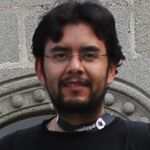
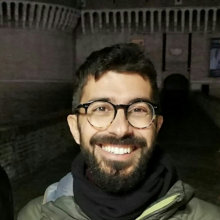
Saulo Maurilio DELLE DONNE is a University Researcher in the Department of Humanistic Studies at the University of Salento, specializing in Greek language and literature with expertise spanning Greek grammar, paleography, and the application of computer science to classical languages. His research interests include: Greek grammar and linguistics Greek paleography and codicology Teaching methodologies for classical languages Computer applications in classical philology Greek literary iconography Dr. DELLE DONNE co-teaches specialized laboratories including the Territory Culture Laboratory, Greek Literary Iconography Workshop, Greek Language Laboratory, and Computer Science Laboratory Applied to Classical Languages. He provides Greek language tutoring and oversees the Additional Learning Requirement (OFA) assessments in Greek language, which involve translation tests from Greek to Italian. His office is located in Studium 2000, Building 5, Via di Valesio, Lecce, on the 2nd Floor, Room 20. Office hours are Monday and Thursday from 11:30 to 13:30, with alternative appointments available via email.
Luis Alberto Barron Cedeno is an Associate Professor at the Department of Interpretation and Translation, University of Bologna since 2022, where he previously served as Senior Assistant Professor from 2019-2022. He holds a PhD in Computer Science from Universitat Politècnica de València (2012) and has worked at Qatar Computing Research Institute (2014-2019) and TALP Research Center (ERCIM fellowship, 2012-2014). PhD: Universitat Politècnica de València (2012) MSc: AI (Universitat Politècnica de València, 2009) MSc: Computing Science (UNAM, 2007) BEng: Computing (UNAM, 2004) His research focuses on NLP applications for analyzing text qualities like originality (plagiarism detection) and intent (hate speech, propaganda). Recent work includes persuasion techniques in spam emails , misogyny detection using argumentation theory, and Spanish language varieties analysis. He has published over 100 papers with 20+ in top-tier conferences. Key awards include SemEval 2020 Best Task for propaganda detection and ACL 2020 Best Demo . He serves as Specialty Chief Editor for Frontiers in Artificial Intelligence (NLP) since 2023. His students include PhD candidates Arianna Muti (misogyny detection), Katerina Korre (hate speech), and Paolo Gajo (inceldom analysis). 2020: SemEval Best Task 2020: ACL Best Demo 2012: PhD International Mention 2009: Best MSc Thesis 2007: MSc Cum Laude 2004: BEng Cum Laude He organizes the annual CheckThat! lab at CLEF since 2018 and chaired CLEF 2022. His teaching includes NLP courses, computational linguistics, and game localization for translation students.
Debora Nozza is an Assistant Professor in Computing Sciences at Bocconi University, where she leads research at the intersection of Natural Language Processing, ethics, and social impact. Her work focuses on detecting and countering hate speech, understanding algorithmic bias, and examining how people use large language models in everyday contexts. Education: PhD in Computer Science, 2018, University of Milano Bicocca Dr. Nozza's research centers on ethical challenges in Natural Language Processing, with particular emphasis on hate speech detection across multilingual contexts and bias mitigation in language technologies. Her work bridges technical NLP methods with social science perspectives, examining how language models interact with societal structures and cultural contexts. She has made significant contributions to understanding gender bias in machine translation and developing methods for more equitable language technologies. Her recent publications reveal a strong focus on practical applications of NLP for social good, with an increasing emphasis on evaluating and mitigating bias in multimodal systems and large language models. Her research spans technical methodology development, dataset creation for under-resourced languages, and critical analysis of evaluation metrics in bias research. Scientific Awards: €1.5 million ERC Starting Grant (2023) for research on personalized and subjective approaches to Natural Language Processing €120,000 grant from Fondazione Cariplo for the MONICA project on monitoring Italian measures in response to COVID-19 Dr. Nozza actively contributes to the NLP community through her leadership in the MilaNLP group. She has secured significant research funding that supports multiple researchers working on NLP for social impact. Her work has practical implications for social media platforms, policymakers, and organizations developing language technologies. She co-leads the MilaNLP research group at Bocconi University, which focuses on Natural Language Processing with social impact. The group has been active in major NLP conferences, organizing workshops on online abuse and gender bias, and contributing to shared tasks that advance the field's understanding of hate speech and bias in multilingual contexts.
Pierpaolo Oreste is a Full Professor in the Department of Environmental, Land and Infrastructure Engineering (DIATI) at the Polytechnic University of Turin. He serves as the Coordinator of the Student Discipline Committee and maintains an active academic career spanning multiple roles including supervision of PhD students across numerous cycles of the Civil and Environmental Engineering doctoral program from 2015 to 2025, and teaching various master's level courses focused on underground engineering, mining, and safety management. Professor Oreste's research focuses on geotechnical engineering with particular emphasis on underground construction and mining. His primary research interests include Applied geomechanics, Mining engineering, Rock reinforcements, Safety engineering, Support structures, Tunnel stability, and Underground works. His research lines specifically address ANALYSIS OF UNDERGROUND VOID STABILITY, ROCK REINFORCEMENT BEHAVIOR, ROCK SUPPORT INTERACTION, SAFETY ENGINEERING IN CRITICAL CONDITIONS, and SUPPORT STRUCTURE ANALYSIS. His work bridges theoretical geomechanics with practical engineering applications, particularly in tunneling, mining operations, and safety assessment in underground environments. An analysis of Professor Oreste's recent publications (2023-2025) reveals a strong focus on tunnel engineering, particularly examining segmental lining behavior, rock-bolt interactions, and grouting techniques. His research demonstrates advanced numerical modeling approaches to understand complex geomechanical behaviors in underground structures. A significant portion of his work addresses practical engineering challenges in tunnel construction, mining operations, and the long-term stability of underground voids. His publications frequently appear in high-impact journals such as Tunnelling and Underground Space Technology, Geotechnical and Geological Engineering, and Transportation Geotechnics. Professor Oreste has secured and led numerous research projects throughout his career. These include the REMUCK project (2007-2011) on sustainable recycling of tunnel excavation waste, and more recent commercial research projects spanning from 2020 to 2027. His research portfolio demonstrates strong industry engagement, with projects focused on tunnel safety verification, numerical modeling of marble quarries, carbon footprint analysis for mineral resource extraction, and stability assessment of underground voids. He has served as Scientific Manager for over fifteen research initiatives, indicating substantial grant funding and industry collaboration. Professor Oreste teaches several advanced courses including 'Underground works and mining' and 'Risk Assessment and Management in Industry and Construction Sites' across multiple degree programs. He has been consistently involved in the Civil and Environmental Engineering PhD program at the Polytechnic University of Turin for over a decade, supervising doctoral research in excavation engineering and safety. His teaching spans both Italian and English language programs, reflecting his international academic engagement.
FRANCO SCARSELLI is a Full Professor at the University of Siena, affiliated with the Department of Information Engineering and Mathematical Sciences. His primary research focuses on Graph Neural Networks (GNNs), machine learning applications in IoT, blockchain, bioinformatics, and medical imaging. He has contributed extensively to the theoretical foundations of GNNs, including their expressive power and VC dimensions. His teaching roles include courses on Advanced Machine Learning for the Master's program in Artificial Intelligence and Automation Engineering, as well as Information Systems for undergraduate Management Engineering students. He has been actively involved in curriculum development since at least 2021/2022. Research highlights include interdisciplinary work on agrifood supply chain traceability using IoT and blockchain, molecular property prediction with GNNs, and semantic analysis of diffusion models. Key collaborations involve institutions like the University of Siena and industry partners in smart logistics and healthcare. His publications span over two decades, with recent contributions emphasizing the theoretical underpinnings of GNN architectures and their applications in dynamic graphs, medical diagnostics, and industrial fault detection. He has also pioneered open-source tools like GNNKeras for graph neural network implementations.
Yashar Deldjoo is an Assistant Professor specializing in artificial intelligence, machine learning, and their applications in healthcare, user modeling, and recommender systems. His research focuses on explainable AI, ethical AI practices, multimodal learning, and brain-computer interfaces. He has contributed to projects like WeBIUM (Wearable Devices and Brain-Computer Interfaces for User Modelling) and ARIEL (emotional support via BCI and LLMs). His work bridges technical advancements with societal impacts, addressing challenges in healthcare diagnostics (e.g., Alzheimer’s disease prediction), environmental sensing (real-time pollution-aware recommendations), and cybersecurity (data poisoning attacks on recommendation systems). He also explores fairness in large language models and the integration of EEG-based emotion recognition systems. Notable contributions include frameworks like BRAINEX (CNN model evaluation for brain age prediction), Ducho (multimodal feature extraction for recommendation systems), and KGUF (knowledge-aware graph-based recommenders). He chairs conferences like RecSys and contributes to industry-relevant standards for trustworthy AI systems. His research emphasizes interdisciplinary collaboration, combining neural networks, ethical considerations, and human-computer interaction. Current projects involve neurorehabilitation tools, quantum security for smart cities, and AI-driven usability testing.
Dr. Cristina CAVINATO is an Associate Professor at the Department of Environmental Sciences, Computer Science and Statistics at Ca' Foscari University of Venice. She holds a PhD in Environmental Science and has been active in academic roles since 2006, progressing from a Contract Researcher to her current position. Her primary affiliations include the Research Institute for Green and Blue Growth and the Interdepartmental School of Economics, Languages, and Entrepreneurship for International Exchanges. Education : PhD in Environmental Science (2010), Master's in Industrial Biotechnology (2005), and a specialized Master's in Environmental and Chemical Engineering. Research Focus : Her work centers on chemical and process engineering for organic waste valorization and wastewater treatment. Key areas include anaerobic digestion of agricultural/industrial waste for bioenergy production, microalgae-based bioremediation, and dark fermentation for chemical synthesis. Recent projects explore digestate toxicity and CO₂ utilization via photosynthetic microorganisms. Notable Projects : MODSEN (2022): Energy efficiency in organic waste fermentation (€170k). PHOENIX-P2G (2018-2021): CO₂-to-CH₄ conversion in Porto Marghera (€6M). ECOPOLIMERI (2018-2021): Biocomposite materials from Posidonia oceanica fibers. Teaching : Leads courses in remediation technologies, laboratory practices, and environmental safety at the Master's level. Has taught internationally, including summer schools on biogas technology in Finland. Leadership Roles : Coordinator of the Research Institute for Green and Blue Growth, member of Ca' Foscari's Scientific Council for Global Challenges, and Vice-Coordinator of the Environmental Science Doctoral School.
Lorenzo Sabattini is an Associate Professor at the Department of Engineering Sciences and Methods (DISMI) at the University of Modena and Reggio Emilia, Italy. His research focuses on multi-robot systems, decentralized estimation/control, and human-robot interaction. He holds a Ph.D. in Control Systems and Operational Research from the University of Bologna (2012), and has been a Visiting Researcher at the University of Maryland (2010). He served as a founding co-chair of the IEEE RAS Technical Committee on Multi-Robot Systems from 2014–2021. His work has been recognized with awards such as the Fabrizio Flacco Young Author Best Paper Award (2018) and the IEEE RAS Most Active Technical Committee Award (2018). Research interests include multi-robot coordination, coverage control, human-robot collaboration, and Industry 5.0 applications. Notable projects involve digital twins for operator well-being, AGV fleet management, and socially acceptable robotics. He has organized workshops at IEEE ICRA, RSS, and ERF, and serves as an Associate Editor for International Journal of Robotics Research (2023–2024) and IEEE Robotics and Automation Letters (2015–2018). Publications span topics like connectivity maintenance in robot networks, multimodal stress assessment in HRC, and resilient multi-robot systems. He actively collaborates on industrial automation projects, such as the INCLUSIVE system for adaptive HMIs and autonomous depalletizing systems. His research bridges theory and practice, addressing challenges in logistics, manufacturing, and human-centric robotics.
Riccardo Coppola is a tenure-track Assistant Professor in the Department of Control and Computer Science (DAUIN) at Politecnico di Torino, Italy. He is affiliated with the College of Management and Production Engineering and the College of Computer, Film, and Mechatronics Engineering. His research and teaching focus on software engineering, gamification, empirical methods, and the integration of artificial intelligence in software development. Education: While formal education details are not explicitly mentioned in the provided text, his academic position and research supervision imply a doctoral degree in a relevant field, likely in Computer Science or Software Engineering. Research Interests: Riccardo's research spans several cutting-edge areas in software engineering and computer science. He investigates gamification in software testing and education, aiming to improve engagement and effectiveness. He explores the application of large language models and AI in software modeling and development, particularly in UML and requirements engineering. His work also addresses accessibility in software development , empirical software engineering , and ethical concerns in AI , such as gender stereotypes in language models. His scientific disciplinary sector is IINF-05/A - Information Processing Systems. Publication Trends: His recent publications (2023–2025) demonstrate a strong focus on the intersection of gamification and software engineering education, particularly using UML and BPMN. There is a growing emphasis on leveraging large language models for automated modeling tasks and analyzing their societal impact. His work is predominantly empirical, involving experimental studies, tool development, and longitudinal analyses, published in top software engineering venues. Scientific Awards: No specific awards or fellowships are mentioned in the provided text. Advising and Grants: Riccardo actively supervises three PhD students: Anna Arnaudo (on AI and software engineering), Lorenzo Laudadio (on gamified end-to-end testing), and Giacomo Garaccione (on gamification and automated techniques). He is a member of the SOFTENG research group and involved in competitive research projects like ASSISTANTS (funded by PNRR Mission 4). He also leads several commercial research and training projects, including the Software Testing Academy and courses on C++ and Python, serving as the Scientific Manager. Labs and Teams: He is a core member of the SOFTENG - Software Engineering Group (DAUIN) at Politecnico di Torino, which focuses on empirical and innovative approaches to software development, testing, and education.
Michele Bugliesi is a Full Professor of Computer Science at Ca' Foscari University of Venice, where he is affiliated with the Department of Environmental Sciences, Computer Science and Statistics. His research spans theoretical computer science with a strong emphasis on practical security applications in web technologies and distributed systems. Professor Bugliesi's primary research interests focus on computer security, particularly web security, formal methods for security analysis, programming languages, and blockchain technologies. His work combines theoretical foundations with practical implementations, addressing critical security challenges in modern computing environments. He has made significant contributions to understanding and preventing session hijacking attacks, developing content security policies, and analyzing smart contract security. Analysis of Professor Bugliesi's recent publications (2016-2025) reveals a clear evolution in his research focus. Initially centered on web security and formal verification methods, his work has expanded to include blockchain technologies, smart contracts, and more recently, the security implications of large language models. His publications consistently appear in top-tier computer security conferences and journals, demonstrating the high quality and impact of his research. Professor Bugliesi maintains an active research group and collaborates extensively with colleagues including Stefano Calzavara, Alvise Rabitti, and Sabina Rossi. His research has practical implications for improving the security of web applications, blockchain systems, and emerging AI technologies.
Massimo Melucci serves as Associate Professor of Computer Science at the University of Padua's Department of Information Engineering, maintaining an active research and teaching profile with office location in Building DEI/G, Room 312, Padova, Italy. His instructional responsibilities include undergraduate Information Retrieval and Databases courses, alongside graduate-level Computing Methods for Data Science instruction, complemented by freely available lecture notes on information retrieval fundamentals. His research program centers on two pioneering domains: Quantum-inspired Information Retrieval , where he develops mathematical frameworks applying quantum probability to model contextual relevance and interference effects in search systems, and Algorithmic Fairness , investigating trade-offs between ranking effectiveness and equitable outcomes. These threads converge in his exploration of fairness-effectiveness optimization through eigensystems and variation modeling, while his interdisciplinary work extends into diving medicine neurophysiology , analyzing EEG-based brain connectivity disruptions in professional divers under hyperbaric conditions. Recent publication analysis (2020-2025) reveals three dominant trajectories: quantum-inspired neural architectures for multimodal sentiment analysis, rigorous fairness-effectiveness quantification in ranking algorithms, and biomedical applications of signal processing in extreme environments. He actively fosters academic collaboration through initiatives like the BIRDS workshop series and CIRCLE conference, which bridge information science, retrieval, and data science communities. His work demonstrates consistent innovation in applying non-classical probability models to information access challenges while maintaining strong connections to real-world applications in both search technology and human safety.
Davide Mastrantonio is an Associate Professor of Italian Linguistics at Ca' Foscari University of Venice, Department of Humanities, where he has served since August 1, 2023. He holds the qualification to full professorship effective March 2025. His institutional roles include being the contact person for written Italian in the Humanities Area and responsible for linguistic training at the School for International Education (SIE). His research spans multiple dimensions of Italian linguistics, with particular focus on historical linguistics, textuality, and academic Italian. Mastrantonio investigates linguistic contact between Latin and vernacular Italian, syntax and textuality of ancient Italian, medieval Sienese documents, the language of Galileo Galilei, and the history of words. A significant portion of his work concerns academic Italian as a denotative written variety of medium-high formality that transcends disciplinary boundaries. His recent publications reveal a strong emphasis on textual analysis, discourse phenomena, and the development of academic language resources. The trend shows increasing focus on practical applications of linguistic research, particularly in language teaching and the creation of specialized dictionaries and language resources for academic contexts. His work bridges historical linguistics with contemporary language teaching methodologies. As Principal Investigator, Mastrantonio leads the PRIN 2022 PNRR project "Dictionary of Academic Italian: Textual Forms and Functions" (DIA), which involves Ca' Foscari University, the University of Milan, and the University for Foreigners of Siena. He serves on the scientific committees of the journal "La lingua italiana" (Serra Editore) and the series "Variae Voces" (Cesati Editore), and is a member of the editorial board of "Italiano a scuola". Mastrantonio teaches courses including Italian Philology, Linguistics and Literature, Professional Italian, Italian Linguistics II, and History of the Italian Language II across various degree programs. His teaching approach integrates historical linguistic knowledge with practical language skills development, particularly for academic contexts. He has also conducted teacher training for the IPRASE research institute and the "I Lincei per la Scuola" Foundation.
Fulvio Horn is a Full Professor in the Department of Control and Computer Science at the Polytechnic University of Turin, where he serves as Vice-Rector for Education. He holds multiple leadership positions including Coordinator of the Student Contribution and Planning Commission, Coordinator of the Investigative Committee for Teaching Coordination, and member of both the Board of Directors and Academic Senate. He also contributes to the Interdepartmental Center for Service Robotics and the Master's and Continuing Education School. His research spans Ambient Intelligence, Human-Computer Interaction, and Internet of Things, with specific focus on end-user development for smart environments, IoT security, and accessible technology design. He leads the e-Lite research group that develops innovative technologies at the intersection of Human-Computer Interaction, Ubiquitous Computing, and Artificial Intelligence. His ERC sectors include artificial intelligence systems, computer systems, human-computer interaction, and web information systems. Recent publications reveal a strong emphasis on IoT security challenges, end-user programming tools, and visualization techniques. His work addresses critical gaps in smart home security, novice developer experiences, and accessibility. Key contributions include TextCode for programming support, security frameworks for IoT gateways, and conversational interfaces for rule creation. Much of this research involves close collaboration with Luigi De Russis and other colleagues. Professor Horn has served as Editor-in-Chief of the Journal of Reliable Intelligent Environments (2015-2021) and as Director of IT Professional magazine since 2012. He has secured significant funding through EU programs, regional initiatives, and commercial contracts for projects including RESCHIP4EU, AccessCoVE, and EMPATHY. He actively mentors PhD students including Tommaso Calo' (working on AI realization algorithms) and Luca Mannella (focusing on IoT security). His teaching portfolio includes Web Applications, Human-Computer Interaction, and Programming Techniques across multiple engineering programs. He coordinates doctoral colleges in Computer and Systems Engineering at both Turin and Palermo universities. As leader of the ELITE research group (Intelligent and Interactive Systems) in LAB 10, Professor Horn's team develops practical solutions that bridge human needs and technology through intelligent software components. Current projects address sustainability, accessibility, and educational technology, with strong emphasis on open-source development and real-world implementation.
Andrea Esposito is a Research Fellow at the University of Bari Aldo Moro, affiliated with the IVU Laboratory (Interaction, Visualization, Usability & UX). He holds a Ph.D. in Computer Science (Artificial Intelligence) from the same institution, with visiting research stints at Ludwig-Maximilians Universität (LMU) Munich and Eusoft S.r.l. His work focuses on Human-Centered Artificial Intelligence, emphasizing explainability, human-AI collaboration, and ethical frameworks. He contributed to projects like the ISO 25000-certified 'eGLU-Box PA' and the 'SERENE' platform for UX evaluation. Education: B.Sc. in Computer Science and Digital Communication (University of Bari Aldo Moro), M.Sc. in Computer Science (Artificial Intelligence) (same university). Research interests include Human-Computer Interaction, XAI, and AI applications in healthcare. He collaborates with the European Humane-AI network and is active in ACM SIGCHI, SIGAI, and related organizations. Teaching roles include assisting in Human-Computer Interaction courses, focusing on UCD sprints. Labs/Teams: Core member of IVU Lab, contributing to interdisciplinary AI research.
Filippo Lanubile is a Full Professor and Head of the Department of Computer Science at the University of Bari, where he leads the Collaborative Development Research Group (Collab). He co-founded the academic spin-off PeoplewareAI and previously served as a research associate at the University of Maryland. His research spans human factors in software engineering, AI-augmented development, engineering of AI-enabled systems, and health informatics. Major publications focus on MLOps, emotion recognition in development, and LLM applications in software engineering. Lanubile received the NASA Group Achievement Award (1996), IBM Eclipse Innovation Award (2006), IBM Faculty Award (2008), and Microsoft Research Software Engineering Innovation Foundation Award (2011). He chaired the ACM/IEEE ESEM symposium (2020-2021) and IEEE Software Advisory Board (2020-2023).