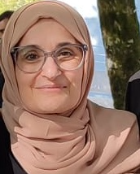
Dr Emma Bond is a Professor at the School of Modern Languages , University of St Andrews. Her work focuses on transnational literature and visual cultures , particularly the circulation of migration narratives, cultural artifacts, and colonial legacies. Key Affiliations : Academic Lead, Recollecting Empire Exhibition (2022); Co-editor, Transnational Italian Cultures series; Section Editor, Modern Languages Open . Research Themes : Migration, material culture, body studies, psychoanalytic theory, and decolonization in literature and museums. Scientific Awards : Philip Leverhulme Prize (2019), Associate Senior Fellow (2021), Sugaropolis Award (2015). Projects : Research Leave (2020-2022) for Curating Worlds ; Transnational Scotland Network (2019); Carnegie Trust-funded migration study (2017).
Jinjin Gu is a tenure-track Assistant Professor at Sofia University "St. Kliment Ohridski" 's INSAIT (Institute for Computer Science, Artificial Intelligence, and Technology), leading research on visual cognition and intelligence. Her work spans visual perception, processing, generation, and reasoning. Education: Ph.D. in Electrical and Computer Engineering (2024), University of Sydney B.Sc. in Computer Science and Engineering (2020), Chinese University of Hong Kong, Shenzhen Her research focuses on visual cognition , including agentic systems , diffusion models , GAN architectures , model interpretability , super-resolution , and multimodal vision-language systems . She has developed novel paradigms like HYPIR for diffusion-quality restoration at GAN speeds. Recent publications highlight advancements in image/video restoration , generative modeling , and visual reasoning . Her work addresses critical challenges in model generalization , causal interpretation , and real-world application robustness . Scientific Awards: Stanford University's World's Top 2% Scientists (2024) Yunfan Award at World Artificial Intelligence Conference (WAIC) (2023) She has advised students contributing to TPAMI, CVPR, and ICLR publications, and serves as Area Chair for ICLR 2026, NeurIPS 2025, and ICML 2025.
Mohammad Hamdaqa is an Associate Professor in the Department of Computer Engineering and Software Engineering at Polytechnique Montréal, where he leads the Laboratory of Software and Emerging Technologies. His academic journey includes a Ph.D. in Electrical and Computer Engineering from the University of Waterloo (2016), a Master's in Electrical and Computer Engineering from Concordia University, an MBA from the New York Institute of Technology, and a Bachelor's in Computer Engineering from Jordan University of Science and Technology. His research focuses on the intersection of software engineering and emerging technologies, particularly examining how software engineering approaches can be adapted for complex new platforms like cloud computing and blockchain. His work spans model-driven software engineering, cloud application architecture, smart contract development, and infrastructure as code. He investigates both how traditional software engineering practices can evolve to address the challenges of modern distributed systems and how emerging technologies can transform software development processes themselves. Analysis of his recent publications reveals a strong emphasis on blockchain technologies (particularly smart contracts), cloud-native applications, and the application of AI to software engineering tasks. His work shows a consistent thread of empirical research combined with practical tool development, with increasing focus on sustainability aspects of software systems in recent years. Much of his research bridges theoretical foundations with practical implementation concerns. Professor Hamdaqa serves as a thesis supervisor for multiple graduate students, with recent completed Master's theses focusing on smart contract auditing, prompt engineering for OCL generation, model-driven epidemiology, and security practices in infrastructure as code. He actively recruits students for research projects in his laboratory. He is a member of both the IEEE Computer Society and the Association for Computing Machinery (ACM), has served on program committees for major software engineering conferences, and is on the editorial board of Service Transaction on Internet of Thing. His laboratory, the Laboratory of Software and Emerging Technologies, serves as the hub for his research activities in blockchain, cloud computing, and model-driven engineering.
Minh Hue Nguyen is a Senior Lecturer in EAL/TESOL Teacher Education at Monash University's School of Curriculum, Teaching and Inclusive Education within the Faculty of Education. She holds a PhD in Education (TESOL focused) from Monash University and has taught at Vietnam National University, Deakin University, and the University of Melbourne. Her educational background includes: PhD in Education (TESOL focused), Monash University (2015) MA in Applied Linguistics, Victoria University of Wellington (2008) BA in English Language Teaching, Vietnam National University (2003) Nguyen's research centers on teachers' professional learning, curriculum, and pedagogy in TESOL and EAL contexts, with specific focus on emotional experiences, identity development, mentoring, agency, and collaboration. She explores sociocultural contexts of teacher development through activity theory and sociocultural perspectives, examining how institutions support teachers' learning journeys from preservice to in-service stages. Recent work investigates professional learning for teacher educators and implementation of the Victorian EAL Curriculum. Her 15 most recent publications (2024-2025) reveal a strong thematic focus on language teacher agency, identity negotiation, and multilingual pedagogies. The research increasingly examines emotional dimensions of teaching, cross-cultural identity tensions, and collaborative models between EAL and content teachers, with significant contributions to understanding how teachers navigate complex educational contexts while developing professional identities. Her scientific recognition includes: Penny McKay Award Special Commendation Monash Education Research Community's Publication Award ATEA/Kay Martinez Award for Best Paper Monash Dean of Education’s ECR Project Award Advancing Women's Research Success Grant Vietnamese Government Merit-based Scholarships Nguyen actively supervises PhD research in TESOL teacher professional learning, teacher identity, and curriculum development, though is currently unavailable for new PhD students until 2027. She contributes to editorial boards for Teaching and Teacher Education, Second Language Teacher Education, and System journals, and serves on the Australian Teacher Education Association. Her work supports UN Sustainable Development Goal 4 (Quality Education) through inclusive pedagogical frameworks. She leads research projects including 'Elucidating practices to assist EAL learners to acquire specialised science vocabulary' and 'Establishing an online community-of-practice model for learner agency during work placements,' demonstrating commitment to practical educational innovations.
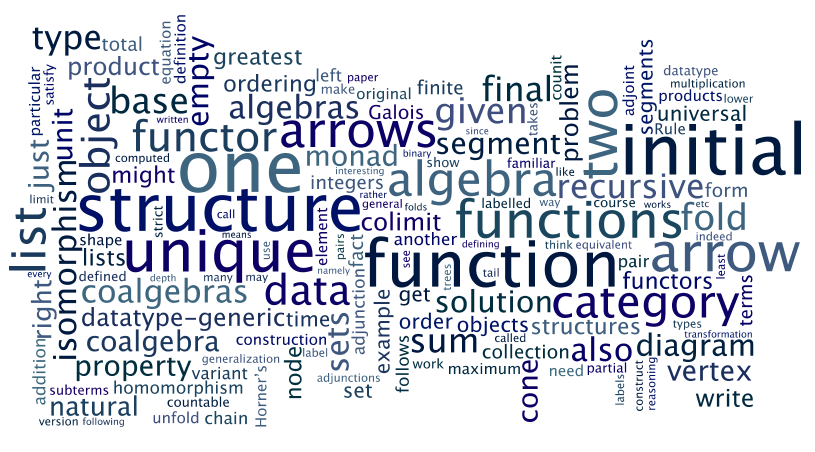
Jeremy Gibbons is a Professor of Computing at the University of Oxford, affiliated with the Department of Computer Science within the Faculty of Computer Science. He serves as Director of the Professional Programmes, overseeing part-time postgraduate degrees in Software Engineering. His roles include Chair of the Faculty of Computer Science (2012–2016), Director of the Software Engineering Programme, and Fellow of Kellogg College. Gibbons' research focuses on programming methodologies, particularly functional and object-oriented languages, with an emphasis on program calculation, design patterns, and bidirectional transformations. He leads the Algebra of Programming research group and is Editor-in-Chief of the Journal of Functional Programming and The Art, Science, and Engineering of Programming . Education includes a D.Phil. from Oxford University. His work spans formal methods, domain-specific modeling for clinical trials (e.g., CancerGrid project), and semantic frameworks for software systems. He has advised numerous students and contributed to open-access initiatives in publishing. Key collaborations include roles in ACM SIGPLAN and IFIP Working Groups 2.1 and 2.11. Research interests emphasize foundational aspects like profunctor optics, categorical programming, and algorithm design. Notable projects include datatype-generic programming and metadata-driven engineering for clinical trials. His work bridges theoretical computer science with practical applications in software architecture and system design.
Libby Gerard is an Associate Adjunct Research Professor at the University of California, Berkeley School of Education and a Research Director for the Technology-Enhanced Learning in Science (TELS) Center. Her work focuses on leveraging innovative technologies to enhance science education through student idea capture, automated assessment, and teacher professional development. Doctorate in Educational Leadership (EdD), Mills College (2008) Bachelor’s in English Literature and Philosophy, Emory University (2000) Her research emphasizes: Automated scoring of student essays using NLP to improve science explanations Real-time instructional customization using embedded assessment data Technology-driven professional development for teachers and principals Social justice integration in science pedagogy Collaborative revision frameworks for inquiry-based learning K-12 education adaptation during the pandemic Recent publications highlight trends in educational technology for science learning, with a focus on NLP applications, interactive inquiry modules, and equitable teaching practices. She has authored studies in journals like Science , Review of Educational Research , and Computers & Education , often exploring how automated systems can enhance teacher-student dynamics. Scientific Awards : Best Paper Award at the AI4EDU Workshop (AAAI Conference, 2020) Libby leads funded projects such as: TIPS (NSF, 2021-2025): NLP for science education ARISE (Hewlett Foundation, 2020-2023): Anti-racism in science education STRIDES (NSF, 2018-2022): Responsive instruction for science teachers PLANS (NSF, 2015-2020): Automated learning support systems She contributes to teacher training through courses like Research Methods for Science Teachers and Apprentice Teaching in Science , emphasizing data-driven pedagogy and inquiry-based instruction.
Daniel Varon is the Boeing Assistant Professor in Aeronautics and Astronautics at MIT, joining in July 2025. He is also affiliated with the MIT Institute for Data, Systems, and Society (IDSS). His research focuses on atmospheric composition, satellite remote sensing of greenhouse gases, and air pollution. Varon holds a PhD in Atmospheric Chemistry from Harvard University (2020), an MSc in Applied Mathematics, and dual undergraduate degrees in English Literature and Physics from McGill University. He has held postdoctoral roles at Harvard and Princeton University. His work uses satellite data to quantify methane and nitrogen oxide emissions, with applications in climate policy and environmental monitoring. Notable contributions include developing methods for detecting methane super-emitters via hyperspectral satellites and quantifying emissions from oil/gas fields. Varon has received over 3,000 citations and an h-index of 24 as of 2025, with extensive media coverage for his Nord Stream pipeline leak analysis. Varon has secured grants totaling $785K, including NOAA funding for geostationary satellite methane monitoring. He mentors postdocs and graduate students in satellite data analysis and machine learning applications. His teaching includes Harvard’s Atmospheric Chemistry course, where he received the Harvard Certificate of Distinction in Teaching. Varon serves as an Associate Editor for Atmospheric Measurement Techniques and contributes to initiatives like the Methane Emissions Detection Using Satellites Assessment (MEDUSA) Advisory Board. His lab focuses on integrating machine learning with satellite data to advance climate science.
Robert Bailey is an Instructor in the Department of Computer Science and Engineering at the Molinaroli College of Engineering and Computing, University of South Carolina. He holds a B.S. and M.S. in Computer Science from the same institution. His role focuses on teaching and academic support within the Computer Science and Engineering discipline. No specific research interests or publications are highlighted in the provided information, suggesting a primarily instructional focus. Contact details include an office in the Storey Innovation Center (Room 2247) and a LinkedIn profile. No grants, awards, or advised students are listed in the current profile.
Mathias Niepert is a Professor at the Institute for Artificial Intelligence within the Faculty of Computer Science, Electrical Engineering and Information Technology at the University of Stuttgart. His research focuses on advancing machine learning techniques with applications in scientific computing, graph neural networks, and medical imaging. He is particularly known for contributions to physics-informed neural networks, equivariant models, and graph learning frameworks. Key research areas include: Scientific Machine Learning for PDEs and molecular modeling Graph neural networks and their theoretical limitations Medical vision-language models and multimodal learning Efficient neural network architectures (transformers, FNOs) Domain knowledge integration in deep learning His work often bridges theoretical foundations with practical applications, as evidenced by extensive publications (2018–2025) on topics like adaptive message passing, equivariant networks, and medical imaging systems. He has contributed to benchmark development through initiatives like PDEBench and pioneered methods for equivariant diffusion models and molecular representation learning. His current projects emphasize: Improving generalization in Fourier Neural Operators Addressing oversmoothing in graph networks Combining physics principles with neural architectures Medical AI applications through multimodal fusion
Jalaa Hoblos is an Associate Professor of Practice in the Department of Computer Science at Stony Brook University, part of the College of Engineering and Applied Sciences. She holds a B.S. from the Lebanese University in Beirut, Lebanon, and an M.S. and Ph.D. in Computer Science from Kent State University. Prior to Stony Brook, she served as an Assistant Professor at Penn State Behrend, a Visiting Assistant Professor at Hiram College, and adjunct faculty at Kent State University and the University of Akron. Her primary roles include teaching and research. Her research focuses on Data Quality Analysis, Cloud Computing (particularly load balancing and security), Wireless Networks Security, and Statistical Mathematics. She has explored topics such as fairness and throughput in multi-hop wireless networks, malicious behavior detection in clouds, and protocol modifications like the adaptive 802.11 MAC. Her work integrates statistical methodologies with network optimization and security challenges. Recent publications emphasize anomaly detection in time-series data and fairness-enhancing protocols. She has also applied techniques like Latent Semantic Analysis to educational technology. No scientific awards are explicitly mentioned in the texts. While no advising or grant details are provided, her teaching includes courses like CSE 114 (OOP), CSE 101 (Principles), CSE 310 (Computer Networks), and security-focused courses such as ISE 331 (Fundamentals of Computer Security). She has maintained consistent academic engagement across institutions and disciplines.
Suvi Saarikallio is a Professor of Music Education at the University of Jyväskylä, Finland , affiliated with the Faculty of Humanities and Social Sciences and the Department of Music, Art and Culture Studies . She leads interdisciplinary research bridging music psychology, education, and therapy, with a focus on youth development, emotion regulation, and well-being. Research Groups: Centre of Excellence in Music, Mind, Body and Brain (2022-2029), Musiconnect (2022-2027) Key Projects: Music and You, Stress & music listening, MPACT (Music and Sports), Music and Cross-modal Associations, SOSUS (Social Sustainability for Children) Research Trends: Her recent publications explore music's role in emotional regulation, cross-modal perception, health outcomes, and educational applications. Themes include AI's impact on music evaluation, rhythm's connection to cognitive skills, and music's influence on stress and social-emotional development. Contact: suvi.saarikallio@jyu.fi
Adriana I. Kovashka is an Associate Professor in the Department of Computer Science at the University of Pittsburgh's School of Computing and Information. She serves as Chair of the Department of Computer Science. Her research focuses on computer vision, machine learning, and their intersections with human-machine communication and visual rhetoric analysis. Kovashka earned her BA in Computer Science and Media Studies from Pomona College (2008) and her PhD in Computer Science from the University of Texas at Austin (2014). She joined Pitt in 2015. Her work emphasizes improving image retrieval systems through semantic attributes, human-in-the-loop feedback, and crowd-sourced data. Notable projects include analyzing advertisements' persuasive strategies, developing object detection models resilient to domain shifts, and exploring multimodal learning with linguistic and visual inputs. She has secured significant grants, including NSF awards for geographic diversity in object detection (2023), CAREER funding for weak supervision methods (2021), and multiple Google Faculty Research Awards. Kovashka advises PhD students on topics ranging from multimodal intent modeling to domain generalization. She has organized workshops on advertising understanding and subjective attributes in vision conferences. Her lab's datasets, such as the 64,832-image ad repository and video ad collections, are widely used in vision research. Recent efforts include quantifying perceptual diversity in multilingual systems and mitigating bias in CNNs through shape regularization. Awards and recognitions include the NSF CAREER Award, Pitt's CRDF grants, and leadership roles in CVPR and WACV conferences. Her research bridges technical innovation with societal impact, addressing challenges in visual communication, ethical AI, and educational robotics.
James T. Hamilton is the Vice Provost for Undergraduate Education and Hearst Professor of Communication at Stanford University, where he also directs the Stanford Journalism Program. He previously taught at Duke University’s Sanford School of Public Policy and led the De Witt Wallace Center for Media and Democracy. His academic career spans over three decades, with a focus on media economics, investigative journalism, and environmental policy. Hamilton holds a B.A. (summa cum laude) and Ph.D. in Economics from Harvard University. His research explores how markets shape news content, the economics of investigative reporting, and the societal impact of information access. He co-founded the Stanford Computational Journalism Lab and is a Senior Fellow at the Stanford Institute for Economic Policy Research. His work emphasizes computational tools to enhance journalism’s accountability role, including automated fact-checking and data-driven story discovery. Key contributions include groundbreaking books like Democracy's Detectives (2016) and All the News That’s Fit to Sell (2004), which analyze media markets and transparency policies. Scientific Awards: David N Kershaw Award, Goldsmith Book Prize (twice), Frank Luther Mott Research Award (twice), Tankard Book Award Teaching Honors: Allyn Young Prize, Trinity College Distinguished Teaching Award, Susan Tifft Mentoring Award His current research addresses digital inequality, the psychological effects of online financial ads, and algorithmic transparency in journalism. He advises on media innovation through affiliations with the Brown Institute for Media Innovation and the JSK Fellowships Board.
Bradford S. Bell is the William J. Conaty Professor in Strategic Human Resources and Director of the Center for Advanced Human Resource Studies at Cornell University's ILR School. His academic career spans roles as editor of Personnel Psychology and fellowships with the Society for Industrial and Organizational Psychology and American Psychological Association. He holds a Ph.D. in Industrial and Organizational Psychology from Michigan State University. Education: B.A. Psychology, University of Maryland (College Park) M.A. and Ph.D. Industrial and Organizational Psychology, Michigan State University Research Focus: Dr. Bell's work centers on training/development, team dynamics, virtual work, and technology's impact on organizations. He has published widely in journals like Journal of Applied Psychology and Academy of Management Learning & Education , with over 150+ publications. His research emphasizes practical applications in workplace learning systems and team effectiveness. Awards: Early Career Achievement Award (Academy of Management HR Division, 2008) Professional Contributions: Advises organizations globally on HR strategy through the Center for Advanced Human Resource Studies. His consulting spans banking, manufacturing, and public sectors. Active in professional development, he teaches courses on HR management, training, and work teams.
WonSook Lee is a tenured Full Professor in the School of Electrical Engineering and Computer Science at the University of Ottawa’s Faculty of Engineering. Her expertise spans medical imaging, machine/deep learning, computer graphics, and computer vision. She earned her Ph.D. in Computer Science from the University of Geneva (Switzerland) and holds degrees from POSTECH (Korea) and NUS (Singapore). Before academia, she worked at Korea Telecom, Samsung Advanced Institute of Technology, and Eyematic Interfaces Inc. (USA). Her research focuses on applications such as virtual/augmented reality, MRI/CT/Ultrasound analysis, and 3D mesh modeling. She has authored over 130 publications, including 30+ journal papers, and serves on conference committees and editorial boards. Lee has secured major grants (NSERC, CFI, ORF) as Principal Investigator and contributed to global initiatives like South Korea’s National Research Foundation. Her lab explores cutting-edge techniques in medical imaging, AI-driven object detection, and multimodal systems. Notable projects include adversarial perturbation analysis for model robustness, cross-domain GANs for semantic segmentation, and real-time ultrasound-enhanced pronunciation training. She actively promotes interdisciplinary research in healthcare technology and autonomous systems.