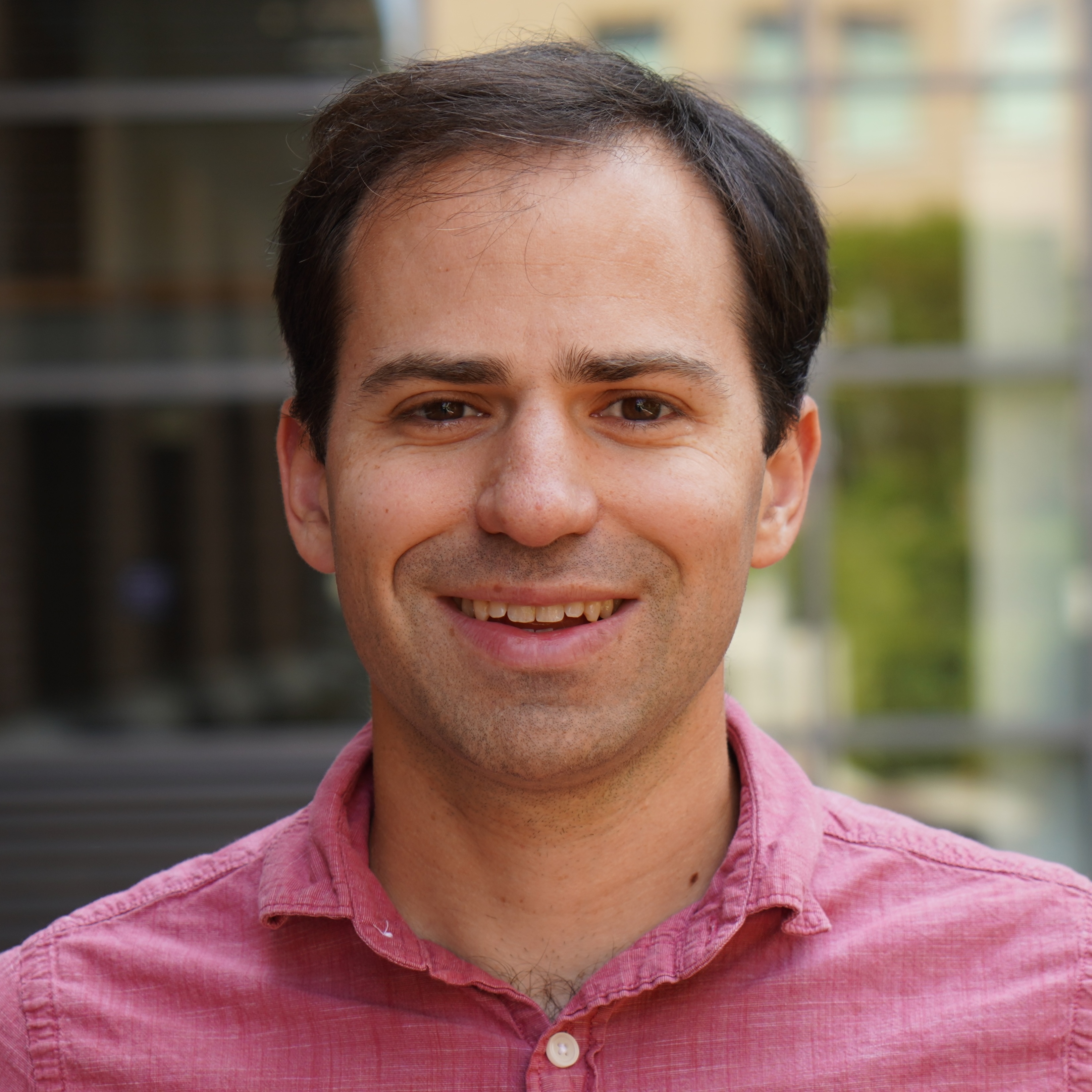
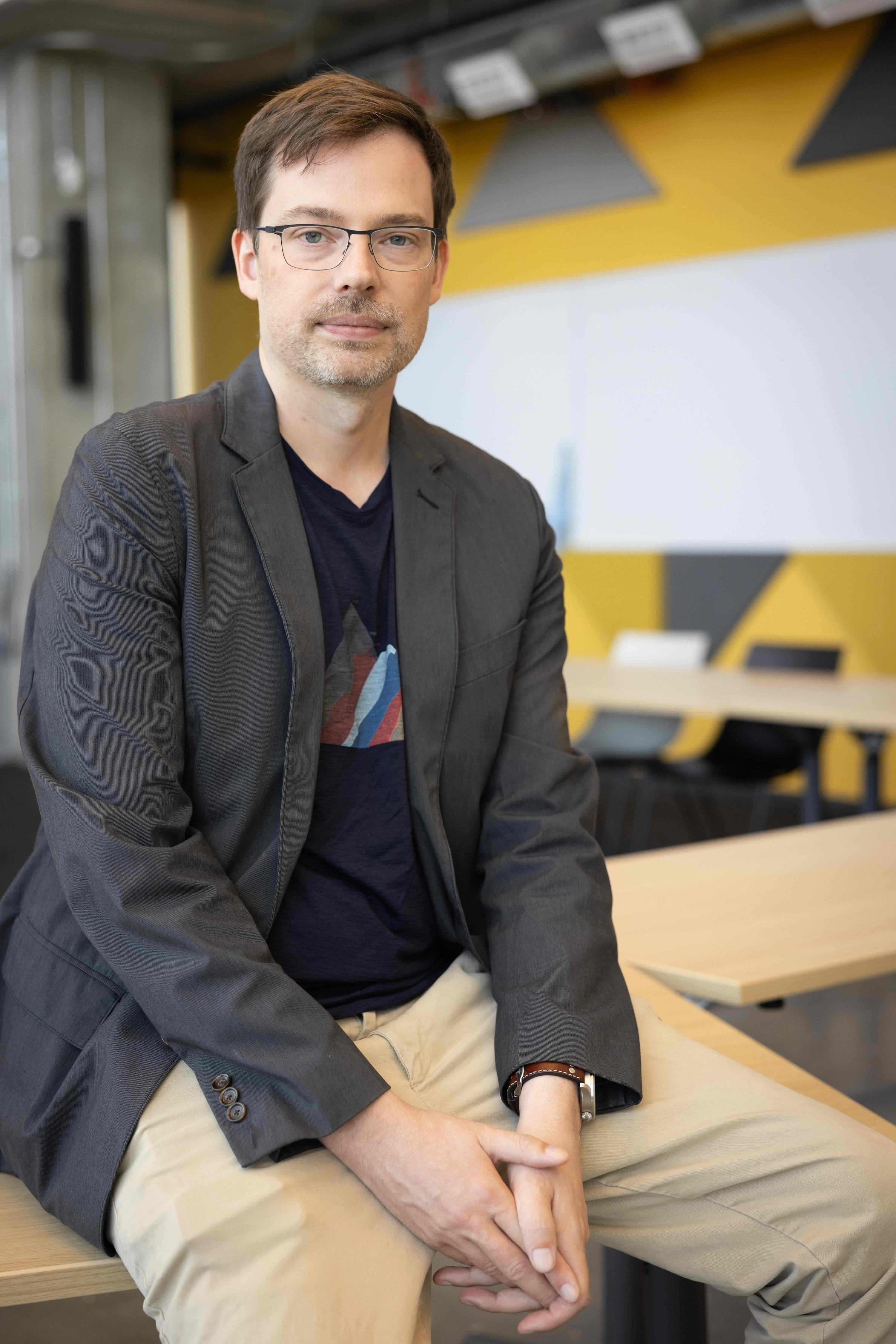
Daniel Epstein is an Associate Professor in the Department of Informatics at the University of California, Irvine (UCI), where he leads the Personal Informatics Everyday (PIE) Lab. He holds a courtesy appointment in the Department of Computer Science and is affiliated with the Connected Learning Lab, Institute for Future Health, and Accessibility Research Collective. Epstein earned his Ph.D. in Computer Science & Engineering from the University of Washington and a B.S. in Computer Science from the University of Virginia. His research focuses on how personal tracking technology can better serve diverse users' needs, emphasizing ethical design, health equity, and long-term user engagement. Notable areas include pregnancy tracking, wearable technology for children and ADHD management, and AI-driven health chatbots. Epstein has received grants from NSF, Snap Inc., and UCI programs, totaling over $650k in funding. Epstein's work bridges HCI and health informatics, with over 60 peer-reviewed publications. He advises six Ph.D. students and has mentored numerous undergraduates. Awards include the ACM Senior Member distinction (2025), CHI Best Paper (2023), and NSF CAREER Award (2023). Professional service includes program committees for CHI, CSCW, and UbiComp, plus leadership roles in workshops like the Workgroup on Interactive Systems in Healthcare (WISH). Beyond academia, Epstein enjoys hiking, collecting turtle figures, and advocating for accessible technology.
Katerina Fragkiadaki is the JPMorgan Chase Associate Professor of Computer Science in the Machine Learning Department at Carnegie Mellon University. She works at the intersection of Artificial Intelligence, Computer Vision, Machine Learning, Language Understanding, and Robotics. PhD from GRASP Lab, University of Pennsylvania Postdoctoral researcher at UC Berkeley (with Jitendra Malik) and Google Research Recipient of NSF CAREER, DARPA Young Investigator, Amazon, Google, Sony, UPMC, and AFOSR awards Organizer of CoRL 2023 Workshop on Generalist Robots ICLR 2024 Program Chair, multiple area chair roles Her research group focuses on developing machines that autonomously improve world models through human-environment interactions, with specific emphasis on: Representation learning and video understanding 2D/3D unified vision-language models Generative simulation and reinforcement learning Real2Sim/Sim2Real robot learning Continual learning and spatial common sense 3D scene reconstruction and dynamics Recent publications highlight advancements in: 3D mesh generation with compositional transformers Unified 2D/3D perception frameworks Physics-aware generative models Diffusion-based robotic manipulation policies Embodied agents with memory prompting Awards include: 2024: DARPA Young Investigator Award 2023: Amazon Faculty Award 2022: Sony Faculty Research Award 2021: UPMC Faculty Research Award 2020: NSF CAREER Award 2019: Google Faculty Award Key collaborations span institutions including UC Berkeley, Google Research, Stanford, MIT, and University of Tsukuba. Her work bridges theoretical innovation with practical applications in: Autonomous robot manipulation 4D world modeling Language-grounded perception Visual dynamics prediction Embodied program synthesis Physics-based simulation engines
Alan Ritter is an Associate Professor at the School of Interactive Computing , Georgia Institute of Technology, with additional affiliation to the Machine Learning Center . His research focuses on Natural Language Processing , particularly robust models across domains/languages with fewer labels and efficient resource use, plus data-driven dialogue agents for open-topic conversations. Research Interests : Robust NLP models, cross-lingual transfer, resource-efficient learning, dialogue systems, cultural bias measurement, and privacy-aware language models Students : Mentors Ph.D. students in Georgia Tech's ML and CS programs, including Junmo Kang, Yang Chen, and Duong Minh Le. Alumni include Fan Bai (Ph.D. 2023), Yang Chen (Ph.D. 2024), and Andrew Li (M.S. 2024). Awards : NSF CAREER Award, Amazon Research Award, ACL 2024 Best Social Impact Paper, IUI 2009 Best Student Paper. Recent Work : Studies training budget allocation between supervised and preference-based finetuning, cross-lingual information extraction, cultural bias in LLMs, and privacy risk mitigation in social media disclosures. Service : Served as Program Chair for NAACL 2025, Area Chair for multiple top-tier conferences (COLM, EMNLP, ACL, EACL, AAAI). Email : alan.ritter@cc.gatech.edu
Dr. Daniel J. Hsu is a Professor of Computer Science at Columbia University, affiliated with the Foundations of Data Science Center and TRIPODS Institute. His research focuses on algorithmic statistics, machine learning theory, and their applications in public health informatics. He has advised numerous students and postdocs, and his work bridges foundational theory with practical systems like foodborne illness detection via social media analysis. Key roles: Associate Editor (ACM Transactions on Algorithms), Program Chair (ICML 2025, COLT 2019) Research areas: Foundations of Data Science, Machine Learning Theory, Fairness, and High-dimensional Statistics His work on detecting foodborne illnesses using Yelp reviews has been deployed by NYC Health departments. Recent contributions include advancements in transformer architectures, group fairness algorithms, and multi-group learning frameworks. Scientific awards include the Sloan Fellowship and multiple NSF grants. He has pioneered interactive machine teaching methods and developed algorithms for robust parameter estimation in high-dimensional settings.
Greg Durrett is an Associate Professor in the Department of Computer Science at University of Texas at Austin, leading the TAUR Lab (Text Analysis, Understanding, and Reasoning ). His research focuses on advancing Large Language Models (LLMs) for knowledge-intensive tasks in medical information processing scientific discovery legal reasoning . He received his B.S. in Computer Science and Mathematics from MIT (2010) and Ph.D. in Computer Science from UC Berkeley (2016). His work develops techniques to train LLMs with new capabilities augment models for reliability assess model outputs improve reasoning frameworks . His 15 most recent publications (2021-2025) span knowledge propagation in LLMs chain-of-thought reasoning code generation benchmarks multi-modal reasoning fact verification discourse analysis . Scientific honors include NSF CAREER Award (2024) NSF grants (2018, 2024) Bloomberg Data Science Grant (2017) Facebook Fellowship (2014) Best Paper Finalist (EMNLP 2013) . Teaching: CS388: Natural Language Processing (graduate) CS371N: NLP (undergraduate) High school NLP module .
Bobak Mortazavi is an Associate Professor in the Department of Computer Science & Engineering at Texas A&M University. His research focuses on medical analytics, machine learning, wearable sensors, and cyber-physical systems. He leads interdisciplinary projects in healthcare technology, including AI-driven diagnostics and predictive modeling for cardiovascular diseases. He has received notable awards such as the Best Demonstration Award at IEEE EMBS 2012 and the Best Paper Award at the Fourth International Conference on Data Analytics 2015. His work bridges machine learning with clinical applications, emphasizing practical solutions for healthcare challenges. Recent research includes developing AI tools for aortic stenosis detection, electrolyte estimation via ECG, and real-time patient monitoring systems. He collaborates with industry and academic partners to advance telemedicine and wearable health technologies. Key contributions include the SMART-LV project for smartphone-based cardiac diagnostics and the ArterialNet framework for blood pressure reconstruction using wearable sensors. His work is published in top journals like IEEE Journal of Biomedical and Health Informatics and Elsevier's Pervasive and Mobile Computing.
Tijana Gajić is a researcher at Singidunum University in Belgrade, Serbia. She holds a Ph.D. in Philology (2020), an MA in English Language and Literature (2009), and a BA in the same field (2007) from the University of Belgrade. Her work focuses on the intersection of language education, digital tools, and critical pedagogy. Doctoral Studies: Philology , University of Belgrade (2017-2020) Master Studies: English Language and Literature , University of Belgrade (2008-2009) Bachelor Studies: English Language and Literature , University of Belgrade (2003-2007) Dr. Gajić’s research explores the impact of digital technologies on language acquisition, critical thinking development, and the sociopolitical dimensions of English language learning. She has published extensively on mobile applications like Duolingo, HelloTalk, and WordUp, analyzing their efficacy in modern pedagogy. Her recent publications (2024-2025) examine digital tools’ influence on language education, critical pedagogy in Serbian classrooms, and AI-driven language learning innovations. Earlier works (2020-2016) established her expertise in tandem learning, vocabulary enhancement via apps, and affective factors in language acquisition. Notable collaborations include partnerships with researchers like N. Maenza , A. Gagić , and J. Nikolić . While no specific grants or awards are mentioned, her involvement in conferences such as Sinteza and ELTA Serbia underscores her active role in advancing language education. Her 2022 book, Nastava stranih jezika i razvoj kritičkog mišljenja u eri neoliberalizma , synthesizes her critical pedagogy framework. Current projects likely continue her focus on digital transformation in language teaching.
Bo Dai is an Assistant Professor at the School of Computational Science and Engineering, Georgia Institute of Technology, and a Staff Research Scientist at Google DeepMind. His research focuses on Agent AI, Generative Models, and Representation Learning, aiming to create decision-making agents through world modeling. He holds a Ph.D. from Georgia Tech (2013–2018) and previously worked at Google Brain. Dai has authored numerous influential papers in top conferences like NeurIPS, ICML, and ICLR, and received the AISTATS Best Paper Award (2016). Education: Ph.D., School of Computational Science and Engineering, Georgia Tech (2013–2018) Research Interests: Reinforcement Learning and Representation Learning for decision-making agents Generative Models and their integration with Agent AI Provable and scalable algorithms for real-world applications His work bridges theory and practice, emphasizing spectral representations and provable guarantees in complex systems. Key Article Trends: His recent work emphasizes scalable spectral methods for multi-agent systems, diffusion policies, and representation-based techniques in reinforcement learning. He also explores LLM alignment and sim-to-real transfer learning. Awards: AISTATS Best Paper Award (2016) NeurIPS Workshop Best Paper (2017) Ross Fellowship (2011–2012) Advising & Grants: Supervises 6 current Ph.D. and M.S. students. Active in organizing workshops on reinforcement learning and serves as an Area Chair for top conferences. Labs & Software: Leads development of Representation-based Reinforcement Learning and Repr-Control toolboxes for nonlinear control and stochastic systems.
Assoc. Prof. Tatyana Yordanova is affiliated with the National Academy of Sports in Bulgaria, where she serves in the Faculty of Sports and Department of Technical and Ice Sports . She holds the academic rank of Associate Professor and has been leading the department since 2024. Education: Master's from State Central Institute of Physical Culture (1987); Doctorate in Sports Science (2019) Languages: English, Italian, Russian Her research focuses on technical elements in figure skating , speed-power abilities , balance stability , and judging systems . She has extensively studied jump mechanics and anthropometric factors in skaters. Her publications from 2018-2024 include studies on judging systems, jump techniques, and sports management. Key themes in her work involve training methodology, competition analytics, and biomechanics of skating. Since 2002, she has worked as an international figure skating judge, including at the Sochi 2014 Olympics . She chaired the Bulgarian Skating Federation (2011-2023) and participated in projects like Erasmus+ mobility (2022, 2024). Her pedagogical career includes roles as scientific assistant (1988), senior assistant (2006), and associate professor (2023).
Anurag S Andhare is a Lecturer at the School of Computing, Binghamton University. He holds an MS in Computer Science and an MTech in Computer Science and Engineering from Binghamton University, and is currently a PhD candidate there. Prior to this, he served as an Assistant Professor in India for approximately a decade. Education: PhD Candidate: Binghamton University MS: Binghamton University Research Interests: Andhare's work focuses on optimizing resource consumption in deep learning, machine learning, and large language model (LLM) systems, alongside addressing their security challenges. His research spans machine learning systems, deep learning systems, large language models, and the Internet of Things (IoT). These areas aim to enhance efficiency and security in AI-driven technologies. Grants and Advising: No specific grants or advised students are listed. His current role involves teaching and research at Binghamton University.
Alexei A. Efros is a Professor in the Department of Electrical Engineering and Computer Sciences (EECS) at UC Berkeley, where he holds the Howard Friesen Professorship and is affiliated with the Berkeley Artificial Intelligence Research (BAIR) Lab. He previously served on the faculty at the Robotics Institute of Carnegie Mellon University (CMU) and completed a postdoctoral fellowship at the University of Oxford. His research spans data-driven computer vision, self-supervised learning, computational photography, and applications to computer graphics and robotics. His research interests include: Data-Driven Computer Vision Self-Supervised and Unsupervised Learning Generative Models and Image Synthesis Visual Representation Learning Applications in Robotics and Human-Computer Interaction Intersections with Human Vision and the Humanities The recent publications highlight a strong trend toward self-supervised learning, visual reasoning, and generative modeling, particularly diffusion models and 3D scene understanding. His work increasingly bridges computer vision with language, robotics, and cognitive science, emphasizing interpretability and real-world applicability. There is a clear focus on leveraging unlabeled data and developing methods for robust, generalizable AI systems. His scientific awards and recognitions include: Berkeley Fellowship Google Fellowship Soros Fellowship NSF Fellowship SIGGRAPH Outstanding Doctoral Dissertation Award Facebook Fellowship Adobe Fellowship CMU School of Computer Science Distinguished Dissertation Award ACM Doctoral Dissertation Honorable Mention Alexei Efros has advised numerous PhD students and postdocs, many of whom have gone on to faculty positions at top institutions including CMU, Stanford, MIT, Columbia, NYU, and Georgia Tech. His lab has received research funding from major tech companies and federal agencies, though specific grants are not detailed in the text. He teaches core computer vision and machine learning courses at both undergraduate and graduate levels at UC Berkeley. His research group is highly active, with ongoing projects in 3D perception, generative modeling, and vision-language systems. He leads a vibrant research lab at UC Berkeley, part of the BAIR consortium, collaborating with leading researchers such as Jitendra Malik, Trevor Darrell, Pieter Abbeel, and Angjoo Kanazawa. His lab fosters strong interdisciplinary connections with institutions worldwide, including Oxford, INRIA, and École Normale Supérieure.
Anca Dragan is an Associate Professor in the Department of Electrical Engineering and Computer Sciences at the University of California, Berkeley, where she runs the InterACT Lab focused on algorithms for human-AI and human-robot interaction. Currently on leave from Berkeley, she leads AI Safety and Alignment at Google DeepMind, overseeing safety for Gemini models and preparing for future advancements. Dragan has been a co-PI of the Center for Human-Compatible AI and served on the steering committee for the Berkeley AI Research (BAIR) Lab. B.Sc. in Computer Science from Jacobs University Bremen, Germany Ph.D. from Carnegie Mellon University Dr. Dragan's research focuses on enabling AI agents to work effectively with, around, and in support of people. Her work bridges robotics, machine learning, and game theory to create systems that better understand human preferences and coordinate with users. Key areas include AI alignment (ensuring AI does what people actually want), learning reward functions from diverse human feedback forms, and developing algorithms for human-AI collaboration across domains like autonomous vehicles, brain-machine interfaces, and recommender systems. Her research emphasizes maintaining uncertainty about human preferences and accounting for the plurality of human values. Dr. Dragan's recent publications reveal a strong focus on addressing fundamental challenges in AI safety and alignment. Her work spans theoretical foundations of reward learning, practical implementations for human-AI coordination, and critical examinations of limitations in current approaches. There's a clear trajectory toward more robust, safe, and value-aligned AI systems that can handle complex human preferences while avoiding both present-day harms and potential catastrophic risks. IEEE RAS Early Academic Career Award in Robotics and Automation (2021) McEntyre Award for Excellence in Teaching (2020) PECASE (Presidential Early Career Award for Science and Engineering) (2019) Sloan Fellowship (2018) NSF CAREER Award (2017) Okawa Foundation Award (2017) MIT Tech Review 35 Innovators Under 35 (2017) Multiple best paper awards at top robotics and AI conferences Dr. Dragan has mentored numerous successful students who have gone on to faculty positions at MIT, Stanford, CMU, and Princeton, as well as industry roles at DeepMind, Waymo, and Meta. Her advising philosophy emphasizes both technical rigor and consideration of broader societal impacts. She has secured significant research funding including NSF CAREER, ONR Young Investigator, and Okawa Foundation awards, supporting work on human-AI interaction and alignment. Dragan has also consulted for Waymo for six years, helping develop roadmaps for deploying increasingly learning-based safety-critical systems. Dr. Dragan leads the InterACT Lab at UC Berkeley, which has produced influential work on Cooperative Inverse Reinforcement Learning, Inverse Reward Design, and other foundational concepts in human-AI interaction. The lab's research has significantly shaped the field of AI alignment, with applications spanning autonomous vehicles that coordinate with human drivers, brain-machine interfaces that adapt to user needs, and language models that better understand human preferences. Current work focuses on scaling safety approaches as AI capabilities advance, ensuring alignment keeps pace with technological progress.
Anamaria Crisan is an Assistant Professor at the University of Waterloo, affiliated with the Insight Lab. Her research focuses on interdisciplinary work at the intersection of Human-Computer Interaction (HCI), Data Visualization, and Applied AI/ML. She explores human-centered approaches to AI/ML systems, visualization design for decision-making, and healthcare data science applications. Dr. Crisan holds a PhD in Computer Science from the University of British Columbia (2019), an MSc in Bioinformatics (2010), and a BComp in Biomedical Computing from Queen’s University (2008). Her educational background bridges computer science, biology, and healthcare informatics. Her research interests include responsible AI/ML systems, interactive visualization for data-driven decisions, and leveraging visualization in healthcare to improve outcomes. She emphasizes transparency, trustworthiness, and human alignment in AI technologies. Her work spans diverse applications such as genomic epidemiology, dashboard design, and ethical AI evaluation. Notable contributions include studies on human-AI collaboration, visualization linters, and scalable dashboard census methodologies. She has published widely in top-tier venues like IEEE VIS and ACM CHI. Dr. Crisan’s lab (UW Insight Lab) focuses on human-centered approaches to automating data science and improving visualization practices in critical domains like healthcare and public health.
Andrew Stephen is the L’Oréal Professor of Marketing and Deputy Dean for Faculty and Research at Saïd Business School, University of Oxford. He leads the Marketing faculty and directs the Oxford Future of Marketing Initiative, focusing on emerging technologies like AI and data-driven strategies in marketing, media, and advertising. His research explores digital marketing, consumer behavior, and the impact of new technologies, earning him recognition as a top global marketing scholar. His academic contributions span leading journals such as the Journal of Consumer Research and Harvard Business Review. He serves as editor of the Journal of Consumer Research, co-editor of the International Journal of Research in Marketing, and actively engages with industry through councils like the Mobile Marketing Association’s Brand Safety Council. Teaching responsibilities include marketing curriculum oversight and courses across MBA, Executive MBA, and DPhil programs, focusing on digital transformation, marketing analytics, and the future of marketing. His work bridges academic rigor with industry relevance, addressing challenges in tech-enabled marketing and global brand strategies. Awards: Top marketing academic in the UK (AMA), featured in Poets & Quants’ top 40 under 40, multiple research excellence awards. Labs/Initiatives: Oxford Future of Marketing Initiative, fostering collaborations with leading companies to tackle industry challenges. Grants/Advising: Extensive industry partnerships and academic grants not explicitly detailed in the text.
Jonas Fischer is the head of the Explainable Machine Learning group at the Max Planck Institute for Informatics, Department of Computer Vision and Machine Learning. His research focuses on interpreting complex machine learning models, particularly in genomics and healthcare, aiming to enhance robustness and alignment with human decision-making. Prior to his role at MPI, he was a postdoctoral fellow at Harvard University's Department of Biostatistics, where he worked on interpretable models for gene regulatory systems in cancer. Education: PhD in Computer Science from Saarland University (2022), with a thesis titled More than the sum of its parts , exploring the intersection of pattern mining and deep learning. He has contributed to advancing methods in neural network pruning, federated learning, and low-dimensional embeddings (e.g., dtSNE, Mercat). His work bridges computational biology, data mining, and machine learning, with applications in DNA methylation analysis, graph-based differential networks, and biomedical informatics. Key research areas include: (1) Explainable AI and neural network interpretability, (2) Biomedical applications of machine learning (e.g., gene regulatory networks, cancer genomics), (3) Low-dimensional embeddings and visualization techniques, (4) Federated learning for privacy-preserving collaborative models, and (5) Pattern mining for error analysis in NLP and classification tasks. Publications span top venues like NeurIPS, ICLR, Bioinformatics, and Genome Biology. His group develops tools such as BONOBO for omics data integration and node2vec2rank for scalable graph analysis. He actively collaborates with biomedical researchers to address challenges in data-driven healthcare and precision medicine.