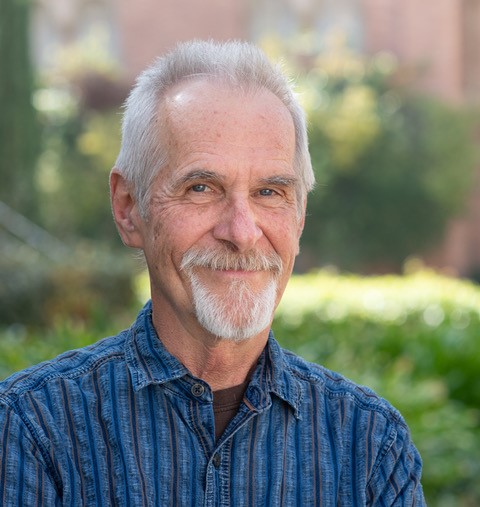
Nancy H. Hornberger is a distinguished Professor in Educational Linguistics at the University of Pennsylvania's Graduate School of Education. She joined the faculty in 1985 and has held leadership roles such as interim dean (1993-1995) and director of the Educational Linguistics program for over two decades. Her work focuses on bilingual education, Indigenous language revitalization, and multilingual policy across global contexts including the Andes, Brazil, and New Zealand. Her research integrates educational anthropology and sociolinguistics, emphasizing policy-practice connections in Indigenous and immigrant communities. Key projects include the Continua of Biliteracy framework and long-term studies in Philadelphia's Puerto Rican and Cambodian communities. She has authored/co-edited over 100 books and serves on editorial boards for journals like Anthropology and Education Quarterly . Hornberger's honors include the Charles A. Ferguson Award (2019), an honorary doctorate from Umeå University (2018), and National Academy of Education membership (2021). She maintains active collaborations in Sámi language education and global Indigenous revitalization initiatives.
Oliver Bond is a Reader in Linguistics (Associate Professor) at the University of Surrey, affiliated with the Surrey Morphology Group (SMG) within the School of Literature & Languages. He holds a PhD from the University of Manchester and specializes in linguistic typology, morphology, syntax, and language documentation. His research focuses on the systemic properties of language, particularly in African and Himalayan languages, exploring features like agreement systems, case marking, and morphological complexity. Key roles include Deputy Director of SMG and PhD Coordinator. His research projects include studies on Nuer (South Sudan/Ethiopia), Tibeto-Burman languages of Nepal, and prominent internal possessors. He has received a prestigious British Academy Award for his work on language evolution and analogy in morphological change. Bond supervises PhD students in areas such as morphology, syntax, and language documentation. Notable former students include Dávid Győrfi and Tatiana Reid. His publications span typological studies, language documentation, and theoretical morphology, with recent work on contact effects in Tibeto-Burman languages and negation systems in African languages. Bond’s contributions include collaborative projects like the Nuer Literacy Initiative and the Manang Languages Project. He actively publishes in journals like Journal of Linguistics and Linguistic Typology , and maintains a comprehensive resource, the Nuer Lexicon .
Kendall King is a Professor of Multilingual Education and Associate Dean for Graduate Education and Faculty Development at the University of Minnesota , College of Education and Human Development. With expertise in sociolinguistics and language policy, they coordinate the undergraduate TESL minor and lead research projects funded by the U.S. Department of Education through CARLA. B.A. Psychology, University of California, Santa Barbara (1991) M.S. TESOL, University of Pennsylvania (1993) Ph.D. Educational Linguistics, University of Pennsylvania (1997) Their research focuses on second language learning , bilingualism , and equity , particularly in contexts involving minoritized languages and immigrant/refugee populations. They examine how family and school practices influence language use and academic success, with a strong emphasis on native language literacy as a pedagogical resource. Recent publications analyze neoliberal influences on language policies, including critiques of state seals of biliteracy and bilingual parenting frameworks. Their work has shaped Minnesota's LEAPS Act (2014), promoting multilingual approaches for English learners. Collaborative studies with Martha Bigelow highlight literacy development in newcomer students. Scientific Awards: Distinguished Scholarship and Service Award (AAAL, 2024) Linda Duttenhaver Distinguished Alumni Award (UC Education Abroad, 2023) ACTFL Research Priorities Initiative (2019) Helen C. Bailey Alumni Award (2016) Imagine Fund Annual Award (UMN, 2014) CEHD Summer Research Award (UMN, 2012) King emphasizes responsive advising and co-publishing with PhD students, supporting their participation in conferences and departmental intellectual life. They co-lead initiatives to expand multilingual recognition through state biliteracy seals.
Rachel Nordlinger is a Professor of Linguistics and Director of the Research Unit for Indigenous Language at the University of Melbourne's School of Languages and Linguistics. Her research focuses on documenting and describing Australian Indigenous languages, with a particular emphasis on syntactic and morphological theory. She has conducted extensive fieldwork with communities speaking Bilinarra, Wambaya, Gudanji, Murrinhpatha, and Marri Ngarr, contributing to language preservation efforts. She holds a PhD from Stanford University and has authored influential works including A Grammar of Wambaya and co-edited volumes like The Languages and Linguistics of Australia . Nordlinger is a Fellow of the Australian Academy of Humanities (2017) and leads major grants like the ARC Centre of Excellence for Dynamics of Language (2014-2026). Her work integrates linguistic theory with community-driven language revitalization projects, emphasizing the interconnectedness of language and cultural knowledge. Key research grants include projects on polysynthetic language processing (2021-2025), Indigenous language documentation, and cross-linguistic syntactic analysis. Nordlinger collaborates with institutions such as PARADISEC and the Kanamkek-Yile Ngala Museum to preserve endangered language materials. Her interdisciplinary approach bridges formal linguistic analysis with applied community linguistics.
Gaston Bacquet is a Lecturer in Education Studies at the University of Glasgow's School of Education, specializing in Culture, Literacies, Inclusion & Pedagogy. A Chilean teacher trainer and educator based in Scotland, he also holds qualifications as a meditation and yoga instructor. With extensive international teaching experience across K-12 and higher education systems in Chile, Japan, Saudi Arabia, Myanmar, the US, and UK, his work bridges practical pedagogy and theoretical innovation. His educational background includes a DipTESOL from Trinity College London, an MA in TESOL from the Institute of Education (UCL), and a PhD in Education from the University of Glasgow. Bacquet currently teaches in the MSc/MEd Education Studies program and leads the undergraduate Asian Religions course, while supervising dissertation students across the School of Education. Research interests center on nonviolence as transformative educational practice, with emphases on decolonial approaches, contemplative pedagogy, and inclusion of minoritized groups. His work integrates Buddhist philosophy, indigenous wisdom traditions, and international perspectives to challenge Western epistemological dominance. Key methodological commitments include participatory action research and qualitative approaches that prioritize community voices. Recent publications reveal evolving trajectories from language education toward decolonial nonviolence frameworks, with increasing focus on Global South contexts, indigenous knowledge systems, and teacher preparation. His 2024-2025 work shows intensified engagement with Buddhist-Christian dialogue, indigenous contributions to peace education, and practical applications of nonviolence in classroom power structures. As a supervisor, Bacquet mentors Master's students in inclusion, nonviolence, and educational ethics, welcoming PhD proposals aligned with his research interests. His professional activities span editorial roles with Cogent Arts and Humanities and SAGE Open , alongside active participation in international scholarly networks including the Comparative and International Educational Society and the European Network for Buddhist-Christian Studies. Professional affiliations reflect his interdisciplinary reach: British Educational Research Association (2021-present), American Educational Research Association (2022-present), International Society for Contemplative Research (2023-present), and the International Society for the Scholarship of Teaching and Learning (2025-present). His conference presentations consistently address nonviolence pedagogy, decolonial curriculum development, and participatory research ethics across global contexts from Chile to New Zealand.
Karen Drake, an Associate Professor at Osgoode Hall Law School (York University), specializes in Anishinaabe constitutionalism and law, Indigenous-state legal interplay, and Canadian law impacting Indigenous peoples. She has taught and researched property law, dispute resolution (civil procedure/Indigenous methods), and legal epistemologies. Education : BA (Hons) in Philosophy (Lakehead University), MA in Philosophy (Queen’s University), JD and LLM (University of Toronto) Her work focuses on Indigenous law revitalization, governance grounded in Anishinaabe lifeworlds, and language preservation through Anishinaabemowin learning. She has collaborated extensively with Anishinaabe elders and communities. Drake previously served as Osgoode’s Associate Dean (Students) (2020-2023) and co-founded the Lakehead Law Journal as a founding Co-Editor in Chief. Her professional practice includes roles at Cassels Brock & Blackwell LLP, Ontario Court of Appeal clerkship, and Indigenous rights-focused legal work at Ericksons LLP. She has advised Canada’s Department of Justice, Ontario’s Ministry of Indigenous Relations, and the National Judicial Institute, and held leadership roles such as Commissioner of the Ontario Human Rights Commission and board member of the Indigenous Bar Association. Scientific Awards : Osgoode Legal and Literary Society Equity Award (2018) Osgoode Hall Law School Teaching Award (2019)
University of Illinois Urbana-ChampaignUnited States
Prof. Ryan Keith Shosted is a full-time tenured Professor at the University of Illinois at Urbana-Champaign , affiliated with the Department of Linguistics , Spanish and Portuguese , American Indian Studies Program , Beckman Institute , Lemann Center for Brazilian Studies , Center for Latin American and Caribbean Studies , and Center for African Studies . He serves as Director of the Program in Translation and Interpreting Studies and leads the Chin-Woo Kim Phonetics Laboratory . Education: Ph.D. , Linguistics, University of California, Berkeley (2006) M.A. , Linguistics, University of California, Berkeley (2003) B.A. , Linguistics, Brigham Young University (2000) Shosted's research focuses on the intersection of phonetics , phonology , and historical linguistics . He pioneered the application of ultrafast dynamic MRI to study the vocal tract's physiological-acoustic mapping in diverse languages, including Hittite cuneiform , Deseret Alphabet , and endangered languages like Q'anjob'al. His work spans speech production modeling , nasalization mechanisms , and cross-linguistic articulatory analysis . The 15 most recent publications demonstrate his leadership in dynamic speech imaging , phonetic-aerodynamic modeling , and historical sound change analysis . Key trends include advanced MRI techniques for speech study, phonetic universals , and historical writing systems as tools for linguistic reconstruction. Scientific Awards: Campus Award for Excellence in Undergraduate Teaching (2021) Dean's Award for Excellence in Undergraduate Teaching (2021) Arnold O. Beckman Award (2009, 2010) Jacob K. Javits Fellowship (2001-2005) Shosted's grant portfolio includes NSF funding for nasalization research (BCS-1651197, BCS-1121780) and NIH collaboration (1R01DE027989-01A1) on cleft palate speech. He has directed 12 graduate students and taught courses ranging from Hittite language to quantitative phonetic methods . The Chin-Woo Kim Phonetics Laboratory , under his directorship since 2007, expanded in 2010 to include articulatory phonetics facilities with EPG, ultrasound, and MRI analysis capabilities. He continues to lead Beckman Institute collaborations in speech imaging technology.
University of California , Santa Barbara (UCSB)United States
Emiliana Cruz Cruz is a professor-researcher at the Center for Research and Higher Education in Social Anthropology (CIESAS) in Mexico City, specializing in linguistic anthropology with a PhD from the University of Texas at Austin. Originally from Cieneguilla, San Juan Quiahije, Oaxaca, she focuses on indigenous language preservation and community collaboration. Her educational background includes: PhD in Linguistic Anthropology, University of Texas at Austin, USA Dr. Cruz Cruz's research spans linguistic anthropology, indigenous language documentation, and revitalization, with emphasis on education, language rights, and territory-indigenous identity relationships. She actively participates in the collective "Dialogues among Indigenous Scholars," centering indigenous epistemologies and community-driven methodologies to address language endangerment through ethnographic approaches. Her publications demonstrate consistent community-engaged scholarship on Chatino language transmission, intergenerational knowledge transfer, landscape-language interconnections, and theoretical contributions from indigenous researchers in anthropological fieldwork. Key recognitions include: Distinguished Community Engagement Award from the University of Massachusetts for the Chatino Language Documentation Project SNI Level I by the Mexican National System of Researchers She currently leads multiple initiatives including a Chatino dictionary with ethnographic context, neuroplasticity studies in endangered language speakers, and broader Chatino language preservation projects, maintaining deep collaboration with indigenous communities across Latin America.
James Essegbey is a Professor of African Languages and Linguistics in the Department of Languages, Literatures & Cultures at the University of Florida (Gainesville), affiliated with the Center for African Studies, Center for Latin American Studies, and African American Studies. His research focuses on language endangerment documentation, syntax-semantics interfaces, and West African languages like Ewe, Akan, and Nyangbo. He holds a PhD from Leiden University (1999) and has held postdoctoral fellowships in the Netherlands and Germany. Key research areas include: Documentation of endangered languages (e.g., Nyangbo, Tutrugbu) Syntax of Kwa languages and Atlantic creoles Cultural influences on linguistic structures (e.g., left-hand taboos in Ghana) Creole genesis and trans-Atlantic language contacts Award-winning scholar with over 20 years of grant-funded projects, including: NSF grants for CoLang and documentary linguistics training programs NSEP funding for African languages summer institutes Leadership in language revitalization initiatives Teaching includes courses on Akan language, African elements in the Americas, and methods of language documentation. Active in professional organizations like the African Studies Association and Society for Pidgin and Creole Languages.
University of California, Los AngelesUnited States
Paul V. Kroskrity is a Distinguished Professor of Anthropology and American Indian Studies at the University of California, Los Angeles (UCLA), serving as past and interim Chair of the Department of American Indian Studies. His research bridges linguistic anthropology and Indigenous studies, focusing on language ideologies, multilingualism, and language revitalization in Native American contexts. He holds a Ph.D. from Indiana University (1977). Key research interests include language contact dynamics, covert linguistic racism, and the documentation of Indigenous verbal art. He has contributed to theoretical frameworks like 'Language Ideological Assemblages' (LIA) and emphasized Indigenous agency in language revitalization through collaborative projects such as dictionaries and video documentation. His awards include multiple Faculty Recognition Awards (2006, 2008, 2010) and leadership roles, including President of the Society for Linguistic Anthropology (2013–2015). His work spans North American Indigenous communities, particularly the Pueblo Southwest and Central California, with global applications in language revitalization and critical discourse analysis.
Patrick HEINRICH is a Full Professor in the Department of Asian and North African Studies at Ca' Foscari University of Venice , where he has served since 2014, advancing to Full Professor in 2021. His academic journey includes positions in Germany, Japan, and Italy, with significant contributions to sociolinguistics, endangered languages, and language policy. He holds a Dr. phil in Japanese Studies from Gerhard-Mercator-University Duisburg (2002) and completed his habilitation at Duisburg-Essen University (2005). Research Interests: His work spans sociolinguistics , linguistic ideology , endangered languages (especially Ryukyuan languages), urban communication , and language revitalization . He has pioneered the concept of welfare linguistics , emphasizing language use as a contributor to human well-being. His research integrates historical, political, and ecological perspectives on language. Publication Trends: His recent articles (2023–2025) reflect a strong focus on decolonizing methodologies , language reclamation , and urban linguistic landscapes . He frequently publishes in international handbooks and journals, contributing to debates on identity, ideology, and language policy in Japan and beyond. His editorial leadership in volumes on Arabic sociolinguistics and Japanese communication ideologies underscores his global scholarly impact. Scientific Awards: Honorary President, Ryukyuan Heritage Language Society (2020) Honorary member, Foundation for Endangered Languages (2014) Tokugawa Award, Japanese Association for Sociolinguistic Sciences (2010) Best Dissertation of the Year, Duisburg University Society (2002) Advising, Grants, and Collaboration: While specific students are not listed, he actively mentors research and collaborates globally. He has received fellowships from DAAD, JSPS, and Erasmus, and has been a visiting professor at institutions including Toulouse Jean-Jaurès, Duisburg-Essen, and the University of Lapland. His editorial roles in journals such as East Asian Pragmatics , Contemporary Japan , and Current Issues in Language Planning highlight his leadership in the field. Labs and Teams: Although no formal lab is mentioned, he leads research networks focused on language revitalization, urban sociolinguistics, and welfare linguistics. His projects often involve international collaboration, including co-edited volumes and joint publications with scholars across Europe, Asia, and beyond.
Tomislav Dulic is a Professor at Uppsala University, affiliated with the Department of History and the Uppsala Centre for Holocaust and Genocide Studies. His research focuses on historical trauma, fascism, nationalism, ethnic violence, and memory culture in the Balkans and Europe. He has published extensively on mass violence during World War II and post-1989 transitional justice. Broad research themes include genocide, Holocaust studies, ethnic conflicts, and the microprocesses of violence. Recent work examines transnational fascism, collective memory transitions, and methodological innovations in violence geocoding. Publications reveal a thematic emphasis on 20th-century European atrocities, comparative genocide analysis, and the intersection of history with social sciences. Awards and editorial roles (e.g., in Fascism journal) highlight his academic leadership.
Thede Kahl is a University Professor for Southern Slavic and Southeastern European Studies at the University of Jena, Germany, and director of the Department of Slavistics and Caucasus Studies (until 2016). He leads major research projects such as BalkanNOMAD, IRDICH, and LaZAR, focusing on intangible cultural heritage, data archiving, and interethnic dynamics. His career includes roles at the Austrian Academy of Sciences, the Austrian Institute of East and Southeast European Studies, and teaching positions at Phillips University of Marburg and the University of Münster. Fields of expertise: Cultural relations of Southern Slavs, endangered dialects, interethnic coexistence, and minority studies in Southeast Europe. Notable awards: Dr. honoris causa (2015), Medal of Merit of Gagauzia (2016), and membership in prestigious academies. His research integrates fieldwork, sociolinguistics, and historical analysis, with projects funded by FWF, DFG, EU, and private entities like Henkel. He has authored/co-authored over 10 key publications on Balkan linguistics, cultural heritage, and minority communities.
Michelle MacLeod is a Professor of Gaelic and Head of the School of Language, Literature, Music and Visual Culture at the University of Aberdeen, where she has been a faculty member since 2004 and was promoted to Personal Chair in 2019. She is currently Dean for Impact and Engagement and leads research and teaching in Scottish Gaelic language, literature, and identity. Education: M.A. (Hons), PhD (University of Aberdeen) Her research centers on modern Gaelic literature, Gaelic drama, language planning, and the sociolinguistics of minority languages. She is deeply engaged in questions of Gaelic identity, adult language acquisition, and community language policy. Her work bridges academic scholarship and public policy, particularly through her role on Bord na Gaidhlig. The most recent publications show a strong focus on Gaelic cultural expression, language policy critique, and sociolinguistic analysis of new speakers and family language use. Her work increasingly integrates interdisciplinary methods, including digital pedagogy and motivational psychology in language learning. Scientific awards include: Donald Meek Prize for best non-fiction Gaelic book (2021) AHRC Future of Languages Research Fellow (2022) Students' Union & University of Aberdeen Prize for Most Inspirational Lecturer (2024) She supervises PhD students in Gaelic studies and linguistics and collaborates with institutions like Sabhal Mòr Ostaig and Comunn na Gàidhlig. Her leadership extends to national language planning and knowledge exchange, reflecting her commitment to the revitalization of Gaelic as a living community language. Michelle MacLeod is a key figure in the Gaelic academic community, leading both institutional and scholarly efforts to sustain and develop Scotland’s indigenous language through research, teaching, and policy engagement.
Lenore A. Grenoble is the John Matthews Manly Distinguished Service Professor at the University of Chicago , specializing in linguistics. Her research focuses on multilingualism, language contact/shift, and sustainability of Arctic Indigenous and Slavic languages. She works with communities in the Russian Far North and Greenland. Recipient of Guggenheim Fellowship, ACLS Fellowship, and Fulbright Arctic Distinguished Chair Member of American Academy of Arts & Sciences NSF grants for linguistics and endangered language documentation Her recent work explores language vitality in Arctic regions, bilingualism dynamics , and language policy in former Soviet territories. Publications span topics like tactile metaphors, spatial language in Kalaallisut, and the impact of urbanization on Indigenous languages. She co-authored Reconstructing Non-Standard Languages (2022) and edited volumes on language contact and revitalization. Her teaching includes courses on multilingualism theory and practice.