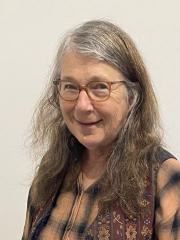
Dr Gregory Dickson is an Honorary Lecturer at the School of Culture, History & Language, Australian National University. His work centers on Australian Kriol, Pidgin and Creole Languages, and sociolinguistics, with a focus on Indigenous languages and their documentation. PhD (Australian National University) BA (Hons) (University of Queensland) Certified Provisional Interpreter (Kriol-English) (NAATI) Gregory’s research spans language variation, dialectology, and bilingual education, emphasizing Australian Aboriginal Languages and endangered language revitalisation. His recent publications explore sociolinguistic trends, reflexive structures in Kriol, and translation practices within Indigenous communities. A notable project, Stories from the saltwater as told by the old Marra ladies (2010–2011), highlights his commitment to community linguistics. His email contact is Greg.Dickson@anu.edu.au.
Dr. Jesse Hodgetts is a Senior Lecturer in Global Indigenous Studies at The Wollotuka Institute, University of Newcastle, specializing in Indigenous Education and Research. A Wangaaypuwan Ngiyampaa and Wiradjuri man from Central and Western NSW, he brings ancestral knowledge and contemporary academic expertise to his work. His research bridges traditional cultural practices with modern educational frameworks, focusing on Indigenous Knowledge Systems, Songlines, Language revitalization, and Kinship. Education: Aboriginal Studies, University of Newcastle Master of Teaching, University of Newcastle PhD: 'Guthi Girrmara (Old Songs Waking Up): Reawakening Archived Wangaaypuwan and Wiradjuri songs to inform our Culture, Language and Identity' Hodgetts' research centers on First Nations Cultural revitalization through Songlines, Language, and Kinship systems. He explores how traditional songs serve as vessels for cultural knowledge, connecting Country, identity, and intergenerational transmission. His work emphasizes decolonizing research methodologies and centering Indigenous voices in academic discourse. As both a cultural practitioner and academic, he develops frameworks for Indigenous-led song documentation and language revitalization that respect cultural protocols while adapting to contemporary contexts. His scholarly output reveals a consistent focus on Indigenous musicology, language documentation, and cultural revitalization. The publications demonstrate methodological innovation in representing Indigenous knowledge systems through culturally appropriate frameworks rather than Western academic conventions. A recurring theme is the development of Mayi (Aboriginal) terminology for discussing songs within their cultural context, challenging Western musicological approaches. His work bridges archival research with community-based application, particularly in language reclamation efforts. Scientific Awards: 3rd Place 3MT Competition, University of Newcastle (2021) Musicology Society Indigenous Postgraduate Prize, Musicology Australia (2019) Hodgetts actively supervises five PhD candidates and has completed one supervision, focusing on topics including Aboriginal music in digital platforms, language revitalization, land management, and cultural education. His teaching portfolio includes courses such as 'Aboriginal Ways of Knowing, Being and Doing' and 'Aboriginal Cultural Immersion,' which emphasize experiential learning through storytelling, art, weaving, dance, and language. As a trained secondary teacher with experience in Aboriginal communities and juvenile justice settings, he brings practical educational insights to his academic work. His creative practice as a singer of traditional Ngiyampaa and Wiradjuri songs informs his scholarly approach, creating a unique integration of cultural practice and academic research.
Christopher Joby is a Professor and Associate Tutor in the Faculty of Arts and Humanities at the University of East Anglia. He also holds the title of Honorary Research Fellow in the School of History and Art History, reflecting his ongoing scholarly contributions. His research centers on early modern history, with a focus on linguistic diversity, language revitalization, and cross-cultural religious missions. Key areas include the historical role of language in Norwich and missionary activities in 17th-century Taiwan, particularly involving the Siraya people. His recent publications span topics in historical linguistics, translation, colonialism, and community dynamics. These works demonstrate a strong interdisciplinary approach, combining textual analysis, cultural history, and sociolinguistics. Selected Scientific Contributions: Christian Mission in Seventeenth-Century Taiwan Language revitalisation using historical texts: The case of Siraya Law and order in exile communities in early modern Norfolk Norwich, an English Quadrilingual City in the Early Modern Period Christopher Joby has advised on language and historical research topics, though specific students are not listed. His work is supported by access to archival materials and interdisciplinary collaborations. He is involved in editorial roles, such as contributing to a special issue of History . His research is associated with the School of History and Art History at UEA, where he contributes to projects on polyglot texts, translation studies, and early modern cultural exchanges.
Dr. James Bednall is an Honorary Lecturer at the Australian National University (ANU) and a Lecturer in Linguistics at Charles Darwin University. His research focuses on morphosyntax, semantics, and pragmatics, with a specialization in Australian Aboriginal languages, particularly Anindilyakwa and Badimaya. He actively collaborates with Indigenous communities in Mid-West Western Australia and east Arnhem Land on language documentation, revitalization, and maintenance projects. Bednall holds a PhD from ANU and Université de Paris (2020), where his thesis examined temporal, aspectual, and modal expression in Anindilyakwa. His work bridges theoretical linguistics and applied language documentation, emphasizing community-led approaches. He has published extensively on tense-aspect-modality systems, lexicography, and emotion metaphors in Indigenous languages. His research interests include semantic typology, narrative structure, and the intersection of grammar and culture. He serves as Secretary of the Australian Linguistic Society and has produced resources such as dictionaries and wordlists for endangered languages. Bednall’s contributions span both academic scholarship and practical tools for language preservation.
Federica Formato is a Senior Lecturer at the University of Brighton, affiliated with the School of Humanities and Social Science and the Centre for Transforming Sexuality and Gender. Her academic career spans teaching at multiple UK institutions before securing a permanent position at Brighton, where she instructs modules on research methods, language revitalisation, gender and sexuality, and critical discourse studies. Education: Ph.D. in Linguistics from Lancaster University (2014), focusing on gender and language use in the Italian Parliament. Her research investigates intersections of language, gender, and sexuality in Italy and globally, employing methodologies such as corpus linguistics and critical discourse analysis. Key areas include sexist language in public-private binaries, gendered constructions of femminicidio (femicide), masculinities in far-right discourse, and inclusive language strategies. Recent publications highlight trends in gender-neutral language (2025), discrimination dynamics in Italy (2024), and masculinities in digital spaces (2022-2024). Collaborations span institutions like the University of Colorado Boulder, University of Bologna, and Oxfam Italia, where she consulted on workplace inclusivity. Scientific Awards: KICKSTART FUND (2024) IMPACT ACCELERATOR FUNDING (2023) RESEARCH AND KNOWLEDGE EXCHANGE PARTNERSHIP AND NETWORKING FUND (2023) GREAT MINDS scholarship (2022-2023) CUP RESEARCH AND KNOWLEDGE EXCHANGE PARTNERSHIP AND NETWORKING FUND (2021) She leads a global network on gender-inclusive language and contributes to public discourse through media engagements, including interviews on LGBTQIA+ issues and far-right rhetoric.
Amy Daniel is an Honorary Lecturer in the Department of Theatre, Film, and Television Studies at Aberystwyth University and a multi-award-winning filmmaker whose works have screened at BAFTA and Academy Award-qualifying festivals worldwide. In collaboration with the university she is currently establishing an artist-owned, low-carbon film and television production company supported by Media Cymru, aiming to transform sustainable practice across the industry. Research interests & creative practice Sustainable, low-carbon film and television production methods Artist-led and co-creative production models Documentary and fiction exploring LGBTQ+ identities, forced migration, climate change and Welsh cultural narratives Cross-disciplinary collaborations combining film, sound, visual art and data Her moving-image works span gallery installations, broadcast documentaries, music videos and community co-creation projects. Recent outputs address urgent social issues—climate crisis, forced displacement, queer histories—while pioneering environmentally responsible production workflows. Awards & recognition Winner, Best LGBT Film, 61st Ann Arbor Film Festival (Ysbrydion, 2022) Winner, Straeon Iris Award (Arth, 2018) Nominee, Lawrence Kasdan Award, 59th Ann Arbor Film Festival (The Legend of Bryngolau, 2020) Grants & leadership roles Project Lead, Ton Newydd Cymru | The Welsh New Wave (Cynnal y Cardi, UK Shared Prosperity Fund, 2024) Project Lead, Media Cymru Development Fund (2024) Project Lead, Media Cymru Seed Fund (2023) Selected participant, AberSEED and Media Cymru Innovation Lab (2023-24) Daniel leads interdisciplinary teams across university, industry and community partners, mentoring emerging filmmakers and contributing to policy discussions on sustainable production convened by BAFTA Albert and Media Cymru.
Julia Sallabank is a Professor of Language Policy and Revitalisation at SOAS University of London, affiliated with the School of Languages, Cultures and Linguistics and the Department of Linguistics. With a PhD from Lancaster University, her work focuses on endangered languages, particularly in contexts of revitalisation, policy, and sociolinguistics. She has secured significant funding, including an AHRC/CHASE grant for a collaborative PhD studentship on Sylheti multilingualism in Tower Hamlets. Her research expertise spans multilingualism, sociolinguistics, linguistic ethnography, and endangered language maintenance. Notable projects include collaborations in Thailand, New Zealand, Fiji, and Croatia, as well as long-term work with Guernsey’s endangered Norman language since 2000. She co-supervises interdisciplinary doctoral work, including projects on Ainu revitalisation with the Music department. Recent publications (2024–2021) address linguistic diversity, language policy critiques, and community-based revitalisation strategies. Earlier work (2002–2013) explores Guernsey French, language attitudes, and policy dynamics in small island communities. Her interdisciplinary interests include links between language and wellbeing, gender, and development. Professional activities include editing major works like Revitalizing Endangered Languages: A Practical Guide (2021) and Cambridge Handbook of Endangered Languages (2011). She contributes to global debates on language revitalisation methodologies and ethical documentation practices.
Professor Mari Jones serves as Professor of French Linguistics and Language Change in the Department of French at the University of Cambridge's Faculty of Modern and Medieval Languages and Linguistics. She holds a Fellowship at Peterhouse College and maintains visiting positions at the University of Bamberg (Linguistics) and University of Canterbury (Christchurch, New Zealand), while also serving as a Fellow of the International Centre for Language Revitalisation. Her research centers on endangered languages, with particular expertise in French linguistics, language death theory, and dialectology. Jones has conducted extensive fieldwork on Welsh, Breton, and Insular/Mainland Norman dialects, focusing on language change, contact phenomena, and standardization processes. Her work demonstrates exceptional commitment to documenting linguistic diversity and developing revitalization frameworks for minority languages, especially Norman varieties in the Channel Islands. Analysis of her 15 most recent publications reveals consistent thematic focus on language endangerment, with increasing emphasis on technological applications and policy frameworks since 2013. Her scholarship bridges theoretical linguistics with practical community-based revitalization, showing particular strength in Norman dialect documentation and cross-linguistic comparisons of obsolescence patterns. Scientific recognition includes: 2016 Vice-Chancellor's Impact Award for School of Arts and Humanities 2021 Cambridge SU award for Inclusive Practice Fellowship of the Learned Society of Wales Fellowship of the International Centre for Language Revitalisation Professor Jones actively supervises graduate research and directs major funded projects including an AHRC-supported network on urban language structures in France, alongside collaborations with Caen and Rennes universities. She founded the Cambridge Endangered Languages and Cultures Group and the Cambridge Conferences in Language Endangerment series, establishing vital infrastructure for endangered language research. Her leadership extends to community engagement through the Cambridge Language Collective and Polyglossia Magazine, while her inclusive teaching practices earned specific student recognition in 2021. Current initiatives focus on Norman language preservation in Normandy and Channel Islands through the 'Patrimoine Linguistique en Normandie' project.
Cassandra Nancarrow serves as a Casual Academic at the School of Languages and Cultures, The University of Queensland, contributing to language education programs across undergraduate and postgraduate offerings. Her role focuses on instructional delivery within the university's language curriculum framework. Her primary research domains include: Language Teaching methodologies Applied Linguistics Second Language Acquisition Cultural Studies Curriculum Development These interests align with the School's mission to advance cross-cultural communication through language education, emphasizing practical pedagogical approaches in diverse classroom settings. As a part-time academic staff member, she participates in the School's teaching initiatives without documented research supervision or grant activities. Her work supports the institution's commitment to language revitalization and international engagement through programs like the Indigenous Language Revitalisation Program and Work Integrated Learning.
James Bednall is a Lecturer in Linguistics at Charles Darwin University and an Honorary Lecturer at the Australian National University. He holds a PhD from both Université de Paris and the Australian National University, focusing on temporal, aspectual, and modal expression in Anindilyakwa. His research emphasizes language documentation, revitalization, and community-guided methodologies, particularly with First Nations communities in Western Australia and East Arnhem Land. Education: PhD (Temporal, aspectual and modal expression in Anindilyakwa), ANU/Université de Paris; PhD (L’expression de la temporalité, de l’aspectualité, et de la modalité en Anindilyakwa), Université de Paris; BA(Hons) Linguistics & BMus, University of Western Australia. Research Interests: Language documentation/description, language revitalization, morphosyntax-semantics-pragmatics interfaces, semantic typology, and mathematical expression in Indigenous languages. Projects include Anindilyakwa monolingual lexicography and Badimaya language portal development (FLA PLSP Grant 2021–23). Grants: CSFP Grant (2021–) for mathematical expression in Indigenous languages; CoEDL GFS Grant (2021–22) for monolingual lexicography methods. Labs/Teams: Collaborates with Groote Eylandt Language Centre, Bundiyarra-Irra Wangga Language Centre, and the Top End Language Lab. Supervises postgraduate research at CDU.
Dr. Samantha Disbray is a Senior Lecturer in Endangered Languages at the School of Languages and Cultures, Faculty of Humanities, Arts and Social Sciences at the University of Queensland. She serves as the Convenor of the Graduate Certificate in Indigenous Language Revitalisation Program and Co-Director of Indigenous Engagement. Dr. Disbray has established herself as a leading researcher in Indigenous language revitalisation and maintenance, with extensive work in Central Australia and Queensland. Dr. Disbray's research interests focus on Indigenous language revitalisation and the sociology of language, including languages in education, language policy and planning, and language in the arts. Her approach to both teaching and research is collaborative, community-guided, and applied, informed by her ongoing self-reflexivity as a non-Indigenous woman with experience living and working on unceded Kaurna, Arrernte, Warumungu, Warlpiri, Pintupi-Luritja country, and, since moving to the University of Queensland in 2019, Jagera and Turrbal country. Her recent publications demonstrate a strong focus on Indigenous language education, language revitalisation, and the intersection of language with cultural preservation. Her work spans academic publications and high-impact non-traditional research outputs, including exhibitions, curriculum materials, language teacher resources, and commissioned reports. A significant trend in her research is the emphasis on community-led approaches to language revitalisation and the documentation of Indigenous languages through innovative methods. Dr. Disbray has supervised multiple PhD students and has been involved in significant research projects including the Wangka Walytja project on the Papunya Literature Production Centre and the Ankkinyi Apparr, Ankkinyi Mangurr exhibition. She has received funding for projects such as the 'Illustrated Literature of Papunya and Strelley, 1979-1998' (2021-2024) and a 'Literature Review - First Nations Language Education in NSW' (2023). Her research has had substantial impact, contributing to the 2021 National Workforce Strategy for Indigenous Languages through her collaborative report with First Languages Australia. She has also co-authored an OECD international report on good practice models for Indigenous languages education and led the 'First Languages Literature Review' for the Gumbaynggirr Freedom School.
Nicholas Hugman is a Casual Academic & Casual Senior Research Assistant at the School of Languages and Cultures , University of Queensland. His work focuses on language education, revitalization, and cultural studies, aligning with the school's initiatives such as the Indigenous Language Revitalisation Program and Language Data Commons of Australia (LDaCA). Research Interests: Linguistics, Cultural Studies, Applied Linguistics, Language Technology, Language Education, and Language Revitalization.
Dr Vivien Johnson holds dual roles as Casual Project Officer and Research Associate at The University of Queensland's School of Languages and Cultures, actively engaged in Indigenous language initiatives through the Indigenous Language Revitalisation Program. Her current projects include the Wangka Walytja project (2020–2024) and the Illustrated Literature of Papunya and Strelley project (2022), focusing on Australian Aboriginal language documentation and literary production. Research interests emphasize Indigenous Language Revitalization and Australian Aboriginal Studies, with specific expertise in language documentation methodologies and community-based literature preservation. Her work centers on historical analysis (1979–1998) of Indigenous Australian literary movements, examining cultural continuity through linguistic practices in Papunya and Strelley communities while addressing colonial impacts on language sustainability. Johnson's publication record shows concentrated work in documenting Indigenous literature production centers, with her 2025 monograph analyzing the Papunya Literature Production Centre's sociolinguistic significance. This reflects consistent interdisciplinary engagement spanning linguistic anthropology, cultural heritage preservation, and decolonial research frameworks within Australian Indigenous contexts. Scientific Awards: No awards, fellowships, or medals are referenced in the source material. Grant activity is demonstrated through leadership in the Wangka Walytja project (2020–2024) and the Papunya/Strelley literature project (2022), though specific funding bodies remain unmentioned. No student supervisees are listed, but her Research Associate position inherently involves mentoring junior researchers within the Language Data Commons of Australia (LDaCA) ecosystem. Johnson operates within UQ's Indigenous Language Revitalisation Program infrastructure and likely interfaces with the Language Data Commons of Australia (LDaCA) research center. Her work with Papunya and Strelley communities indicates field-based collaboration with Indigenous language keepers, though dedicated lab affiliations or team structures beyond project descriptions aren't specified.
Dr Janet Watts is a Researcher at the Linguistics Discipline , School of Languages and Cultures , University of Queensland. She holds a Senior Research Assistant role and contributes to course development as a Casual Course Redeveloper . Her research focuses on Linguistics , particularly sociolinguistic analysis of Indigenous dialects, language revitalization, and educational challenges in multilingual contexts. Key areas include Dialectology , Applied Linguistics , and Language Education . Recent publications analyze the grammatical structures of Indigenous Australian varieties like Woorie Talk and pedagogical approaches for teaching mathematics language to Aboriginal learners. These works emphasize language documentation , educational linguistics , and cultural preservation . Her roles involve collaboration with the Language Data Commons of Australia (LDaCA) and participation in the School’s Indigenous Language Revitalisation Program . No scientific awards or student advising details are publicly listed.
Kristy Zeng is affiliated with the School of Languages and Cultures at the University of Queensland , specializing in Chinese language disciplines. Her role likely involves teaching and research contributions, particularly in areas related to language revitalization and cultural studies programs mentioned in the school's sub-navigation. Research Focus : Language revitalization, linguistics, and cultural preservation through initiatives like the Indigenous Language Revitalisation Program and the Language Data Commons of Australia (LDaCA). Contact : yueying.zeng@uq.edu.au