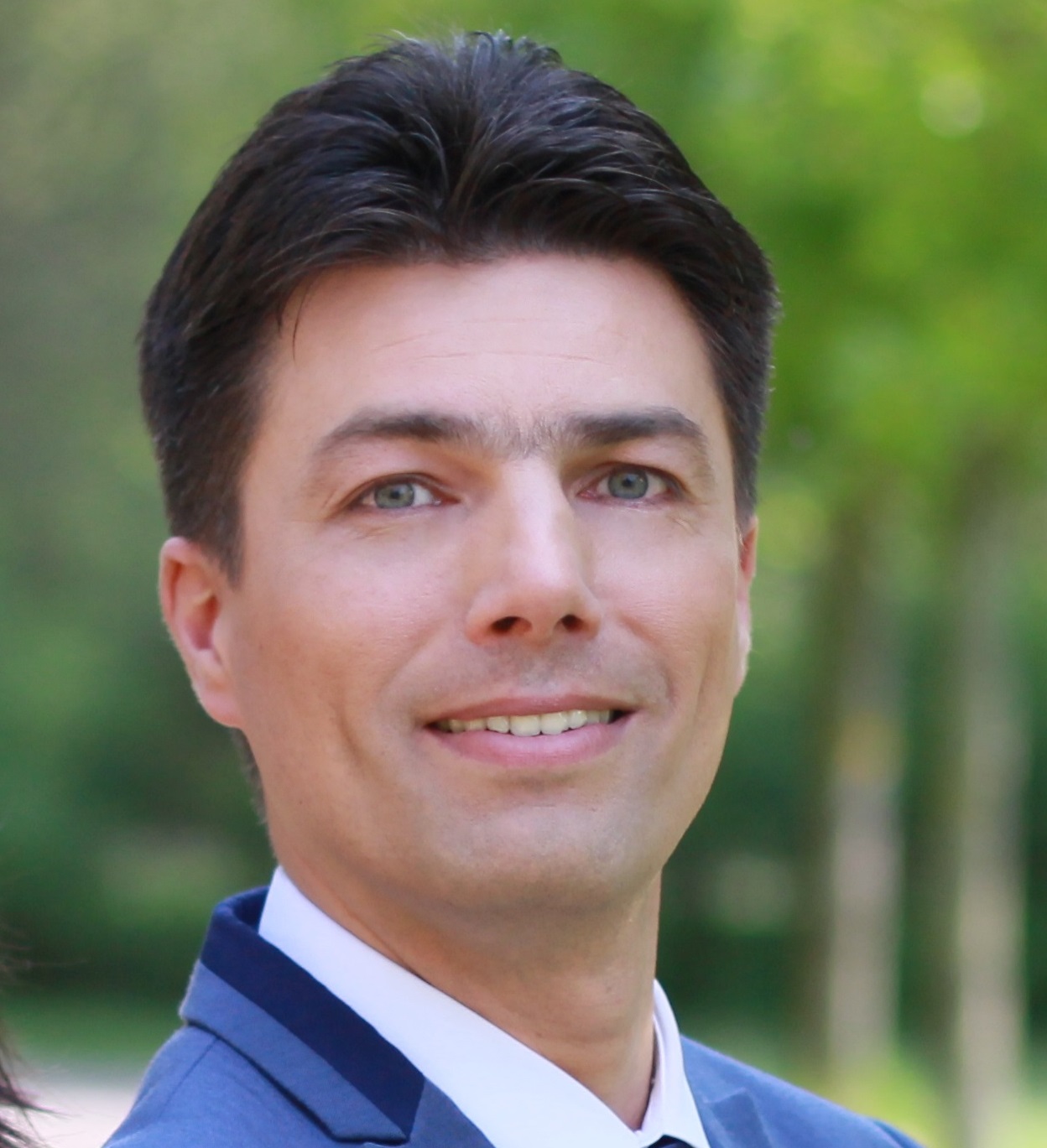
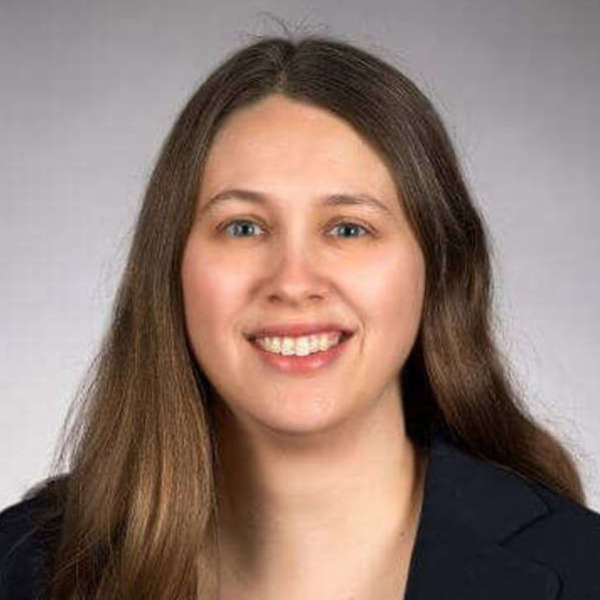
Brigitte Gagnon is an Adjunct Professor at the Faculty of Education, University of Sherbrooke, where she coordinates the Master's in Education Management research-action program. Her academic background includes a Professional Doctorate in Education (2020), a Graduate Diploma in Education Management (2013), a Master's in Preschool and Primary Education (2009), and additional certifications in cooperative learning and French language teaching. Her research examines: Individual/collective support systems for school leaders Well-being strategies for educational staff Pedagogical and organizational development in learning institutions Action research methodologies in education She leads multiple funded projects, including CRSH-supported studies on professional competence modeling and FRQSC collaborations on interprofessional school staffing. Her publications demonstrate strong focus on educational leadership development, well-being frameworks, and action research applications in Quebec's school systems. Recurring themes include mentorship models, organizational change, and professional competence in complex educational environments. She maintains active research partnerships with school service centers (notably Centre de services scolaire des Hautes-Rivières) and coordinates professional learning communities for educational leaders. Current projects involve developing resources for school administrator well-being and novice teacher support systems.
Dr. Ernest Cole serves as the John Dirk Werkman Professor of English and Chair of the Department of English at Hope College in Holland, Michigan. He began his tenure at Hope in July 2008 as an assistant professor on the tenure track, achieving tenure in 2014. In addition to his departmental leadership, Cole also serves as Director of Global Learning at the institution. His academic career spans multiple institutions across West Africa and the United States, reflecting his deep engagement with post-colonial contexts. Dr. Cole's educational background includes a Ph.D. from the University of Connecticut (2008), an MA in African literature from Fourah Bay College, University of Sierra Leone (1994), and a BA in English language and literature from the same institution (1990). His scholarly journey reflects both his West African roots and his international academic development. Cole's research focuses primarily on post-apartheid South Africa, with significant contributions to body and trauma studies, particularly examining how bodily injury shapes identity. His work extends to spatial theory as a construct of national and diasporic identities in post-conflict contexts, with specific attention to Sierra Leone. He specializes in post-colonial literature with emphasis on Sub-Saharan Anglophone Africa, disability studies focusing on the disfigured body, and travel and empire studies, especially Victorian literature and its intersections with world literature. His theoretical framework often combines trauma studies with spatial theory to examine post-conflict identity formation. His scholarly publications reveal a consistent focus on trauma, identity, and post-colonial contexts, particularly in West Africa. Cole's work demonstrates an evolving trajectory from analyzing individual trauma narratives toward examining broader spatial and national identity constructions in post-conflict societies. His publications frequently address the intersections of physical trauma, spatial displacement, and cultural memory, with a particular emphasis on Sierra Leone's civil war and its aftermath. Abioseh Porter Best Essay Award (2020) for 'Decentering Anthropocentrism: Human-Animal Relations in Aminatta Forna's 'Happiness'' John Dirk Werkman Endowed Professorship (2017) Motoichiro Oghimi Global Courage Award (2017) Lily Fellow on Peace and Reconciliation in Northern Ireland (2011) Towsley Research Scholar designation (2010) While specific details about his grant history are limited in the provided materials, Cole's research agenda has clearly been supported through prestigious fellowships and endowed positions. His work as Director of Global Learning suggests institutional recognition of his expertise in international contexts and post-colonial studies. Though student advising details aren't specified, his departmental leadership role and extensive publication record indicate significant mentorship responsibilities within the English department. Dr. Cole's research appears to be conducted both independently and through collaborative projects, particularly evident in his co-edited volumes. His work with institutions like the Truth and Reconciliation Commission of Sierra Leone suggests connections to larger research initiatives examining post-conflict recovery. His focus on Sierra Leonean contexts indicates ongoing engagement with research communities in West Africa, though specific lab or team structures aren't detailed in the available information.
Prof. Dr. Robert Ullmann serves as Full Professor and Chair of Business Taxation at the University of Augsburg's Faculty of Business Administration and Economics. His position places him at the forefront of tax research and education within the Institute of Business Administration, where he leads a substantial research team including numerous research assistants and doctoral candidates. Professor Ullmann's research spans several critical areas in contemporary taxation: international corporate taxation, tax planning strategies, transfer pricing mechanisms, accounting quality and policy frameworks, tax evasion detection methods, and advanced audit technologies. His methodological approach combines empirical analysis using Tax Data Analytics with normative-analytical examination of tax law norms, current legislation, and case law. This dual approach allows his research to bridge theoretical frameworks with practical applications in the taxation field. His recent scholarly output demonstrates a strong focus on timely topics including corporate tax disclosure practices, nuclear fuel taxation impacts on capital markets, renewable energy tax policy, and the relationship between tax complexity and venture capital investment. These publications reflect his engagement with both traditional tax research areas and emerging intersections with technology and sustainability. Professor Ullmann actively mentors doctoral candidates, with numerous completed doctorates including Dominik Greif (2024/2025), Simone Mögele (2024), Christine Schuster (2023), and others dating back to 2020. His supervisory role extends beyond dissertation guidance, as his team members regularly present research at international conferences and collaborate on publications. The Chair of Business Taxation under his leadership maintains strong connections with industry partners including DATEV, Sonntag & Partner, FGS Munich, and SWMP, facilitating knowledge transfer between academic research and professional practice. These partnerships support student benefits programs, specialized seminars, and practical learning opportunities that enhance the educational experience for business administration students at the University of Augsburg.
Celia E. Naylor is a Professor in the Department of Africana Studies at Barnard College, Columbia University, where she has been a faculty member since 2010. She previously served as Assistant Professor and then tenured Associate Professor of History at Dartmouth College (2002–2010). Her academic home is in the College of Arts and Sciences, where she contributes to interdisciplinary scholarship across history, gender studies, and the African diaspora. B.A., Cornell University, Summa Cum Laude (Africana Studies with concentration in Women's Studies) M.A., UCLA (Afro-American Studies) M.A., Duke University (History) Ph.D., Duke University (History) Her research focuses on African-American, Caribbean, and Native American histories, with deep engagement in women’s and gender studies in the African diaspora, colonialism, and the cultural memory of slavery. She examines how race, gender, and power intersect in historical narratives and public representations. Her work critically analyzes the reconstruction of slavery in modern cultural forms, particularly in tourism and literature. The majority of her recent publications revolve around the history of enslaved people at Rose Hall Plantation in Jamaica, culminating in her 2022 monograph UnSilencing Slavery and a companion digital humanities project. These works combine microhistory, interdisciplinary critique, and digital storytelling to recenter the lives of the enslaved. Earlier works explore Black-Indian relations in U.S. history, particularly among the Cherokee Nation. Her publications span journals and edited volumes in history, ethnic studies, and cultural theory. Columbia University, Black Students Organization, Professor of the Year Award, May 2024 Barnard College, Digital Humanities Center Summer Fellowship, 2019 The Heyman Center for the Humanities, Faculty Fellowship, 2017–2018 Barnard College, BOSS Professor of the Year Award, May 2015 Columbia University, Black Students Organization, Professor of the Year Award, May 2012 Dartmouth College, Jack E. Thomas 1974 Family Fellowship, 2008–2009 Dartmouth College, John M. Manley Huntington Teaching Award, July 2008 Dartmouth College, Arthur M. Wilson Faculty Research Fellowship, 2005–2006 Woodrow Wilson Career Enhancement Fellowship (Alternate), 2005–2006 Nelson A. Rockefeller Center Research Scholars Program, 2004–2006 Professor Naylor advises student research through senior thesis seminars and mentors emerging scholars in Africana and women’s studies. She has received grant support from prestigious institutions including Columbia, Barnard, and Dartmouth. Her work with the Institute for Strategic and Equitable Development (ISED), where she serves as President of the Board of Directors, reflects her commitment to racial equity and community-centered development. She leads initiatives such as Inclusion, Diversity, and Equity in Environmental Philanthropy (InDEEP) and the Presidents' Forum on Racial Equity in Philanthropy. She also collaborates with organizations like Keecha Harris & Associates and InPartnership Consulting. Her digital humanities project (Un)Silencing Slavery serves as both a research archive and public educational tool, launched on the 60th anniversary of Jamaica’s independence. She regularly presents her work at major academic conferences including the American Historical Association, Association of Caribbean Historians, and Berkshire Conference on Women’s History. Her scholarship is deeply collaborative, often involving interdisciplinary teams across history, anthropology, and digital media.
Dr. Zhenghao Chen is a Lecturer in Data Science at the University of Newcastle, affiliated with the School of Information and Physical Sciences. He earned his Ph.D. from the University of Sydney in 2022, following a B.Eng. H1 degree from the same institution in 2017. Prior to his current position, Dr. Chen served as a Postdoctoral Research Fellow at the University of Sydney (2022-2024), a Research Engineer at TikTok (2024), and as a Visiting Research Scientist at Microsoft Research and Disney Research (2022-2023). Dr. Chen's educational background includes: Doctor of Philosophy, University of Sydney (2022) Bachelor of Information Technology (B.Eng. H1), University of Sydney (2017) Dr. Chen's research spans multiple domains within artificial intelligence, with particular expertise in Computer Vision, Natural Language Processing, and Machine Learning. His work in Generative AI has garnered significant recognition, with applications in both academic and industrial settings. His research interests are reflected in his Fields of Research percentages: Deep Learning (30%), Computer Vision (30%), Natural Language Processing (20%), and Multimodal Analysis and Synthesis (20%). His publications in top-tier venues like CVPR, ICCV, ECCV, and journals like IEEE TPAMI demonstrate the breadth and impact of his work. Analysis of Dr. Chen's recent publications (2022-2025) reveals a consistent focus on neural compression techniques, 3D perception, and multimodal AI systems. His work spans medical imaging (CXR bone suppression), video compression, point cloud processing, and neural surface reconstruction. A notable trend is his exploration of efficient AI systems that work well under resource constraints, as evidenced by his involvement in the EMCLR workshop. His research often bridges theoretical advances with practical applications across multiple domains. Dr. Chen has received several prestigious awards: Microsoft Research Asia StarTrack Fellowship (2025) ACM SIGMM Award for Outstanding PhD Thesis in Multimedia Computing (2024) Australia Government Research Training Program (RTP) Fellowship (2019) Google Australia Prize for Excellence in Computer Science (2017) Dr. Chen is actively involved in the academic community, serving on the Program Committee for major AI conferences including CVPR, ICCV, ECCV, SIGGRAPH, AAAI, and others. He also organizes workshops in Multimedia and ICCV conferences, and serves as a reviewer for prestigious journals. His teaching responsibilities include courses on Intelligent Visual Signal Understanding, Video Intelligence and Compression, Database and Information Management, and Computing Fundamentals at both the University of Sydney and University of Newcastle.
Dr. Margreet Vogelzang is a Lecturer in Psychology at Newcastle University and an affiliated researcher at Theoretical and Applied Linguistics within the Faculty of Modern and Medieval Languages and Linguistics at the University of Cambridge. Based at the English Faculty Building, 9 West Road, Cambridge, CB3 9DP, and affiliated with Trinity College at Cambridge, she maintains a dual institutional presence that reflects the interdisciplinary nature of her work. Her research program combines neuroscientific, psychological, linguistic, and statistical methodologies to investigate language and cognitive processing across the lifespan. She specializes in multilingual syntactic and semantic processing, employing both written and spoken language paradigms with offline (comprehension, judgments) and online (eye-tracking, EEG, fMRI) measures. Her work examines how hearing loss, socio-linguistic variables, and developmental conditions like autism spectrum disorder influence language processing mechanisms. Analysis of her recent publication record reveals three dominant research trajectories: (1) bilingualism effects on cognitive flexibility in autistic children, (2) neural and cognitive mechanisms of sentence processing in individuals with hearing loss, and (3) computational modeling of pronoun interpretation across diverse populations. These strands demonstrate her consistent focus on bridging theoretical linguistics with cognitive neuroscience to address practical questions about language processing variability. Dr. Vogelzang actively supervises several graduate students including Alexander Cairncross, Andromachi Tsoukala, and Chara Triantafyllidou, and serves as course contact for Li16: Psychology of language processing and learning at Cambridge. Her teaching portfolio includes psycholinguistics, neurolinguistics, cognitive science, and research methods, reflecting her methodological expertise across experimental and computational approaches.
H. V. Jagadish serves as the Edgar F Codd Distinguished University Professor and Bernard A Galler Collegiate Professor of Electrical Engineering and Computer Science at the University of Michigan's College of Engineering. He directs the Michigan Institute for Data Science (MIDAS) and leads the NSF-funded Framework for Integrative Data Equity Systems (FIDES), following a career that included heading AT&T Labs' Database Research Department prior to joining Michigan in 1999. His academic foundation includes a Ph.D. from Stanford University, with prior appointments at AT&T Labs and the University of Illinois. Research spans database systems, data management, and data science, emphasizing data integration across heterogeneous sources and usability for non-technical users through schema design, natural language querying, and analytics with missing data. Current work focuses on equity, ethics, and fairness in AI, developing methods to identify and mitigate data inequities while ensuring societal benefits of data science. His white papers and National Academies presentations have shaped big data research agendas. Major honors include: Fellow of the ACM (2003) Fellow of the AAAS (2018) ACM SIGMOD Contributions Award (2013) David E Liddle Research Excellence Award (2008) Stephen S. Attwood Award Distinguished Faculty Award from the University of Michigan (2019) He has secured multiple NSF grants (IIS 0741620, IIS 1017296, IIS 1250880, 1741022, 1934565) supporting database usability and data equity research, mentored numerous graduate students, and created the widely adopted Data Science Ethics MOOC available on EdX, Coursera, and FutureLearn. His h-index of 96 reflects 200+ major publications and 38 patents. As MIDAS Director, he oversees university-wide data science initiatives while leading the EECS database research group and formerly directing the Software Systems Laboratory. His FIDES institute remains central to developing equitable data systems, with ongoing work expanding into AI policy frameworks.
Shane Dawson is the Executive Dean of UniSA Education Futures and Professor of Learning Analytics at the University of South Australia. His work bridges social network analysis and learner interaction data to enhance teaching quality and educational outcomes. Affiliation : University of South Australia Research Focus : Learning Analytics, Curriculum Mapping, K-12 Decision-Making Systems, and AI in Education Recent Research Trends : Shane’s 2025 publications emphasize generative AI for curriculum analytics, ethical considerations in K-12 dashboards, and longitudinal graduate attribute monitoring. His articles often integrate psychometric models, social network tools, and open-source software like OVAL and SNAPP . Advising and Collaboration : As a co-developer of key learning analytics tools and a supervisor for research students, he collaborates globally with institutions such as Johns Hopkins University and Shahid Beheshti University of Medical Sciences. Labs and Teams : Shane leads UniSA’s Teaching Innovation Unit and is a founding member of the Society for Learning Analytics Research , driving institutional and international initiatives in educational technology.
Dr. Steffi Schadow is a Lecturer for special tasks at the Faculty of Philosophy, Heinrich Heine University Düsseldorf, where she has been employed since April 2022. Previously, she served as a Research Associate at the University of Regensburg (2021-2022), Research Assistant at the University of Bonn (2020-2021), and held various research and teaching positions at several German universities including Greifswald, Siegen, Bremen, and Frankfurt. Her educational background includes a Doctorate in Philosophy from the University of Frankfurt/M. (2004-2010) under the supervision of Professor Marcus Willaschek, and a Magistra Artium in Philosophy, Ancient History, German Language and Literature, and History of Art from the University of Jena and Humboldt-University Berlin (1997-2004). Dr. Schadow's research focuses on the intersection of historical and systematic approaches in moral philosophy. Her primary areas of interest include: Kant and Hume scholarship Moral philosophy and metaethics Moral psychology and action theory Contemporary virtue ethics The analytical discussion of the meaning of life Her recent publications demonstrate a consistent engagement with Kantian ethics, particularly focusing on concepts of moral obligation, maxims, and motivation. She has also made significant contributions to Hume scholarship, especially regarding his theory of obligation. Her work often bridges historical analysis with contemporary philosophical debates, showing how historical perspectives can inform current discussions in moral philosophy. Dr. Schadow has received several academic recognitions: Fellowship for female Postdocs in Arts and Humanities at the University of Bremen (2016-2017) International Scholarship from the German Academic Exchange Service (DAAD) (January-April 2007) Scholarship from the German Academic Scholarship Foundation (2001-2004) As an educator, Dr. Schadow teaches in her areas of expertise, particularly in propaedeutic courses on the history of philosophy and the foundations of academic work. Her habilitation project "Morality, Affect, and Convention: Hume's Theory of Obligation" defends an interpretation of Hume's conception of moral normativity that combines sentimentalist and objectivist elements, while her monograph project on "Moral Obligation" develops a Kantian approach to understanding moral obligation.
John H. Starks, Jr. serves as Associate Professor in Middle Eastern and Ancient Mediterranean Studies at Binghamton University, with additional appointments in Residential Life and as Collegiate Professor of Newing. His scholarly work bridges classical studies with critical examinations of ethnicity and performance in antiquity. His academic credentials include: BA from Washington and Lee University MA and PhD from University of North Carolina at Chapel Hill Starks specializes in Greek and Roman Comedy , examining theater history through gendered and performative lenses. His research on Non-"Western" Ethnicity pioneers studies of African and Levantine identities in the Ancient Mediterranean, while his epigraphic work reveals social structures through Greek and Latin inscriptions. Additional expertise spans Hellenistic social history and Roman historiography, particularly Greek perspectives on Rome. Publication trends show interdisciplinary innovation: combining literary analysis with social anthropology (Terence in political context), challenging Eurocentric narratives (beauty standards in Vandal Africa), and recovering marginalized voices through material evidence (pantomime actresses in inscriptions). His accolades include: Binghamton University Council/Foundation Award for Faculty Service Chancellor's Award for Excellence in Teaching CAAS and New York Classical Club grants for "The Ghoul Next Door" musical comedy project Vassar College's Blegen Research Fellowship Two Women's Classical Caucus Best Article Awards (2010, 2015) Starks has secured significant grant funding for creative scholarship like "The Ghoul Next Door" adaptation, while his teaching excellence award reflects commitment to courses spanning Cleopatra studies, ancient satire, and race/ethnicity in antiquity. Though student advising details aren't publicized, his curriculum vitae indicates extensive mentorship in Latin/Greek language instruction and specialized seminars on women in ancient theater. No dedicated research labs or institutional teams are documented in available materials.
Dr. Sonia Rammer is a Professor at the University of Arts in Poznań, serving as Head of the Art Studio in an Intercultural Perspective at the Faculty of Artistic Education and Curating. She also holds significant administrative positions including Vice-Dean of the Faculty and Member of the Scientific Council. Her work uniquely bridges artistic practice with psychological insights, creating an interdisciplinary approach to art creation and education. Dr. Rammer's educational background demonstrates her dual expertise in both psychology and fine arts. She completed psychology studies at Adam Mickiewicz University (2003-2010), specializing in clinical psychology, alongside concurrent studies in painting and art education at the Academy of Fine Arts in Poznań. She earned her habilitation degree in visual arts and art conservation in 2019. Her research interests focus on the psychological dimensions of creativity, cross-cultural artistic exchange, and posthumanist perspectives. Rammer critically examines anthropocentric views through works that explore interspecies relationships and the fluid boundaries between human and non-human entities. Her art often emerges from international residencies in extreme environments like Greenland, Nepal, and Iceland, where she engages with local cultures and ecological contexts. Her recent artistic output shows a consistent exploration of Arctic themes, cultural translation, and identity transformation. The 'Woman Who Thought She Was a Dog' series (2022-2024) from her Greenland residency exemplifies her approach, using minimalist video installations to provoke reflection on species boundaries and human exceptionalism. Her work spans performance, video, photography, and installation, often incorporating cross-cultural misunderstandings as conceptual frameworks. As an educator since 2011, Rammer teaches psychology and psychology of creativity while mentoring students through her studio practice. Her leadership roles include chairing the Faculty Recruitment Committee and serving on the University Senate, demonstrating her commitment to academic development. Dr. Rammer maintains active international collaborations through prestigious residencies including Arctic Culture Lab (Greenland), Marpha Foundation (Nepal), and Baer Art Center (Iceland). She also collaborates with the Faculty of Geographical and Geological Sciences of Adam Mickiewicz University on artistic research in Spitsbergen, reflecting her commitment to interdisciplinary work.
Jeffrey R. Bishop is a Professor in the Department of Experimental and Clinical Pharmacology at the University of Minnesota , with an Adjunct Associate Professor appointment in the Department of Psychiatry & Behavioral Sciences. His work spans psychopharmacology, pharmacogenomics, and precision medicine, focusing on psychiatric disorders. Education : PharmD, University of Iowa College of Pharmacy; MS in Clinical Investigation, NIH K30 Program; BA in Biology, Luther College. Dr. Bishop’s research integrates pharmacogenetics , epigenetics , and proteomics to address challenges in psychiatric treatment. His projects include pharmacogenomics-enabled healthcare implementation and epigenetic studies in PTSD. Recent publications highlight trends in schizophrenia neuroanatomy , genomic associations in psychosis , and AI-driven dietary supplement information systems . These works reflect his interdisciplinary focus on mental health and precision medicine. Scientific Awards Board Certified Psychiatric Pharmacist (BCPP) Fellow of the American College of Clinical Pharmacy (FCCP) Dr. Bishop leads grants like Epigenetics of PTSD Treatment Response and collaborates on statewide and global initiatives such as the Minnesota Precision Medicine Collaborative and Pharmacogenomics Global Research Network . His team works on implementing individualized prescribing systems and advancing equity in underserved populations.
Igor Lorencin is Professor of New Testament at the Department of Theology, Friedensau Adventist University, Germany, and Coordinator of the Doctoral Program since 2024. Previously, he served as Lecturer in New Testament Studies at the same institution from 2015 to 2023, and held administrative roles including Dean at Adriatic Union College, Croatia (2013-2015). His academic credentials include: Diplom-Theologian (Dipl.-Theol.) from Friedensau Theological College, Germany (1994-1999) Doctor of Philosophy (Ph.D.) from Andrews University, Michigan, USA (1999-2007) Habilitation (Dr. habil.) from Debrecen Reformed Theological University, Hungary (2018-2023) Lorencin's research centers on New Testament studies with emphasis on early Christian rituals as frameworks for sustaining eschatological hope, social dynamics in early communities (particularly hospitality versus patronage in 3 John), and cosmic conflict in Mark's Gospel. His work integrates ritual theory, cognitive science, and social anthropology to analyze how embodied practices shaped early Christian identity and hope. He actively contributes to Seventh-day Adventist biblical theology, especially regarding apocalyptic literature and eschatology. Analysis of his 15 most recent publications (2009-2025) reveals consistent focus on ritual embodiment's role in maintaining Advent hope, with increasing attention to cognitive and emotional dimensions of ritual practice. Recent works (2023-2025) demonstrate methodological sophistication through interdisciplinary approaches combining biblical exegesis with ritual studies and social theory. As Doctoral Program Coordinator, Lorencin provides comprehensive student support up to doctoral level, including counseling and academic supervision. His teaching portfolio spans foundational Greek language instruction, advanced exegetical methods, specialized New Testament courses (including Revelation, Johannine literature, and ritual dynamics), and doctoral seminars. He has delivered guest lectures across Europe and North America, reflecting his international academic engagement.
Kimberly Belcher is an Associate Professor of Theology and Liturgical Studies at the University of Notre Dame. Her work bridges liturgical theology, ritual studies, and ecumenism, with a focus on the Eucharist, baptism, and the Trinitarian framework of sacramental theology. She is affiliated with the Kroc Institute for International Peace Studies, the Kellogg Institute for International Studies, and Stellenbosch University’s Practical Theology and Ministry program. Ph.D., University of Notre Dame (2009) M.T.S., University of Notre Dame (2003) B.S., University of Florida (2001) Belcher’s research employs phenomenology, critical theory, and ritual theory to analyze Christian liturgy and human ritual. Recent work explores disaster rituals, responses to violence, and healing practices in the context of the Catholic sex abuse crisis. She has authored foundational texts such as Eucharist and Receptive Ecumenism (2020) and Efficacious Engagement: Sacramental Participation in the Trinitarian Mystery (2011). Her 2024–2025 articles address ecumenical openness, sacramental healing, and the theological implications of ritual systems. These works reflect her commitment to interdisciplinary engagement and practical theology. Fellow, Kroc Institute for International Peace Studies Fellow, Kellogg Institute for International Studies Research Associate, Stellenbosch University Belcher serves on the Vital Worship Grants Board of the Calvin Institute for Christian Worship and represents the U.S. Conference of Catholic Bishops in interdenominational dialogues. She teaches courses like Rhythms of Faith and Holy Communion/Christian Disunity .
Professor Massimiliano Tani Bertuol is a distinguished academic specializing in economics at UNSW Canberra's School of Business, where he has served as Professor since 2015. His professional affiliations extend beyond UNSW as he is an Associate Investigator/Member at CEPAR; Ageing Futures; uDASH; AI Institute; and Cyber security (IFCYBER). Additionally, he maintains international connections as a Research Fellow at the Institute for the Future of Labor (IZA) in Germany since 2005, an Associate Member at Macquarie University's Centre for Workforce Futures since 2018, and a Research Fellow at the Global Labor Organization (GLO) in Maastricht since 2016. His educational background reflects a strong foundation in economics and business, having earned a PhD in Economics from the Australian National University (2003), a Master of Science in Economics from the London School of Economics (1992), and a Bachelor's degree in Business/Economics from Bocconi University in Milan, Italy (1989). His academic journey has positioned him as a leading researcher in human capital economics with international recognition. Professor Tani Bertuol's research centers on human capital development and its economic implications. His work examines how human capital can be fostered, efficiently transferred internationally through migration, and how it affects productivity, innovation, and economic growth at both firm and national levels. His research spans multiple regions including Australia, Europe, the US, Africa, and China, with particular focus on migration economics, labor market outcomes, and the economic impacts of education and skills. His current research agenda includes non-pecuniary incentives, behavioral/financial decisions in China, occupational licensing, language skills and economic assimilation, AI-human interactions in health contexts, and labor mobility and productivity. Analysis of his recent publications reveals significant interdisciplinary trends bridging economics with public health, environmental science, and technology. His work connects migration dynamics with economic outcomes, examines household financial behaviors through gender lenses, and investigates the complex relationships between environmental factors like air pollution and economic activities including education investment and entrepreneurship. More recent work explores AI applications in health and the economic implications of pandemic responses, demonstrating his ability to address contemporary challenges through rigorous economic analysis. 2023: UNSW ARC Postgraduate Council (Arc PGC) award for excellence in research supervision 2011: Vice-Chancellor Award for Teaching Excellence 2011: Faculty Award for Teaching Excellence for teaching economics Professor Tani Bertuol has successfully supervised 4 PhD students to completion, with 1 submitted dissertation and 5 currently under supervision. His active research program is supported by significant grant funding including an ARC Linkage Project (2023-27) on regional Australia's skills shortages and high-skill refugees' employment ($354,811), an ARC Discovery Project (2019-23) on migrant aging and wellbeing ($478,000), and a NUW Alliance grant (2021-23) on hearing screening and academic outcomes ($73,367). He serves as Associate Editor for Social Indicators Research and Higher Education Research & Development, contributing to scholarly discourse in his fields of expertise. His teaching portfolio includes courses in data analytics, finance, and professional executive education focused on cost-benefit analysis and data communication. He teaches ZBUS2333 Data Analytics and Visualisation, ZBUS8105 Finance and Investment Appraisal, and ZBUS8149 Introduction to Finance, demonstrating his commitment to developing the next generation of economics professionals with both theoretical knowledge and practical skills.