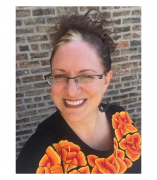
Dr. Kim Potowski is a Professor of Spanish Linguistics at the University of Illinois at Chicago (UIC), specializing in heritage language development, Spanish in the U.S., language and identity, and dual immersion education. She directs UIC's Spanish Heritage Language Program and the summer study abroad program in Oaxaca, Mexico. Her research emphasizes sociolinguistic aspects of Spanish in the U.S., including dialect contact, language maintenance/shift, and bilingual education advocacy. She earned her PhD in Linguistics from the University of Illinois at Urbana-Champaign. Her notable honors include a 2016 CUNY Advanced Research Collaborative Fellowship, a 2013-2014 UIC Institute for the Humanities Fellowship, and a 2011-2012 Fulbright Research Fellowship in Oaxaca. She has authored/edited over 12 books, including El español de los Estados Unidos and Heritage Language Teaching: Research and Practice . Her TEDx talk No Child Left Monolingual advocates for multilingual education equity. She has held editorial roles at Spanish in Context and Heritage Language Journal , and her work bridges sociolinguistic research with pedagogical practice in bilingual settings.
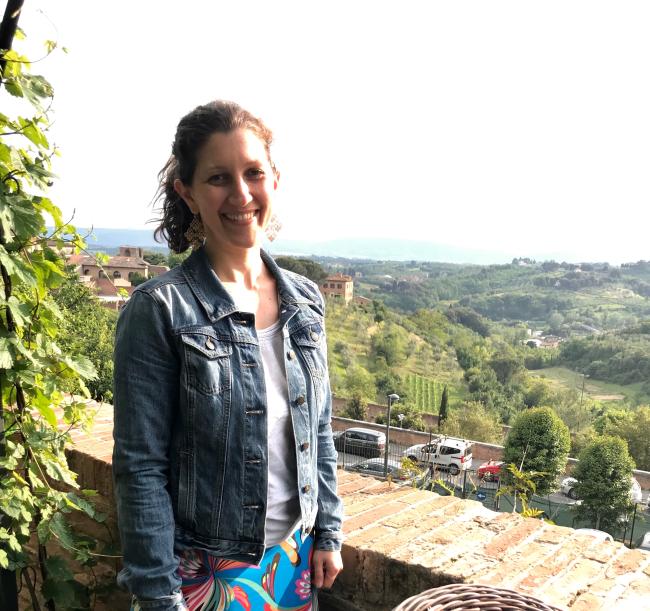
Dr. Jami Fisher serves as Senior Lecturer and Director of the American Sign Language (ASL) Program at the University of Pennsylvania's Department of Linguistics. Affiliated with the College of Arts & Sciences, their work focuses on documenting Philadelphia-area ASL variation, global deaf community collaborations (especially with Italian communities), and integrating sign language studies into broader linguistic curricula. Education includes an Ed.D. in Higher Education from UPenn (2014), M.S.Ed. (2002) and B.A. in Linguistics (1997). Their pedagogical innovations emphasize Academically Based Community Service (ABCS) partnerships with local organizations like the Pennsylvania School for the Deaf and Deaf-Hearing Communication Centre. Research interests bridge sociolinguistics and community engagement, analyzing the linguistic landscape's visual representation of sign languages and exploring how signed languages reflect cultural values. They co-lead the ASL/Deaf Studies minor program, integrating interdisciplinary coursework with field-based capstone projects. Program leadership includes developing UPenn's longest-running Ivy League ASL program, offering advanced courses in Deaf History, Culture, and Linguistics. Collaborative projects emphasize mutually beneficial partnerships with Deaf communities to ensure culturally responsive research and education.
Asim Qayyum is a Senior Lecturer at Charles Sturt University's School of Information & Communication Studies, where he leads the Libraries Research Group. With over two decades of experience in library and information science, his work bridges academic research and professional practice through ongoing projects with ACT libraries and other library sectors across Australia. His educational background includes a PhD from the University of Toronto specializing in Information and Knowledge Management, an undergraduate degree in Electrical Engineering, and an MBA with a focus on Management Information Systems. His career path transitioned from engineering and business analysis to library science practice and academia, with previous positions at the University of Toronto and the University of Puerto Rico's School of Information Sciences. Dr. Qayyum's research focuses on evaluating library impact on communities, information practices of diverse populations including refugees and young adults, online academic reading behaviors, and knowledge management in library settings. His work examines how library and information services can be improved and enhanced to meet evolving community needs in contemporary society. Recent projects have investigated supervision styles in LIS education, service delivery costing for public libraries, and the role of libraries in supporting underserved populations. His publication record spans nearly 60 research outputs from 2002-2024, with consistent scholarly productivity including recent articles on diversity in library hiring practices, community engagement through library programming, and knowledge management in the Australasian region. His work demonstrates strong methodological diversity with both qualitative and quantitative approaches. Faculty's competitive research award (2010) Professional Excellence award (2016) Outstanding Paper for 2013, Journal of Documentation Best paper prize from ASIS&T New England chapter (2004) Research grant from OCLC (2007) As an educator, Dr. Qayyum supervises PhD students and contributes to curriculum development in library and information studies. He serves on the Faculty of Arts and Education Human Ethics Committee and maintains active collaborations with library professionals across Australia and internationally. His current research continues to strengthen the connection between academic research and professional library practice, ensuring libraries maintain their vital role in creating informed and information-literate communities.
Janet M. Fuller is a Professor of Language and Society at the University of Groningen, Netherlands, and Chair of the Language and Society program within the Faculty of Arts. Her expertise spans Sociolinguistics, Discourse Analysis, and Multilingualism. She holds a Ph.D. from the University of South Carolina (1997), an M.A. from Freie Universität Berlin (1992), and a B.A. in Anthropology from Macalester College (1984). Fuller’s research focuses on language ideologies, migration discourses, and national belonging, particularly in Germany and the US. She has authored/co-authored influential textbooks like Introduction to Sociolinguistics and Spanish Speakers in the USA . Her recent work examines media discourses on migration and multilingual psychotherapy practices. She has held leadership roles, including Interim Chief Diversity Officer at Groningen and Director of Women’s Studies at Southern Illinois University. Awards include the 1999 Dean’s Appreciation Award and multiple grants supporting her research on bilingualism and migration. Fuller’s teaching spans undergraduate and graduate courses in Discourse Analysis, Language and Power, and Gender and Diversity research methods. She has supervised numerous theses on topics like Catalan language policy and North Korean media discourses.
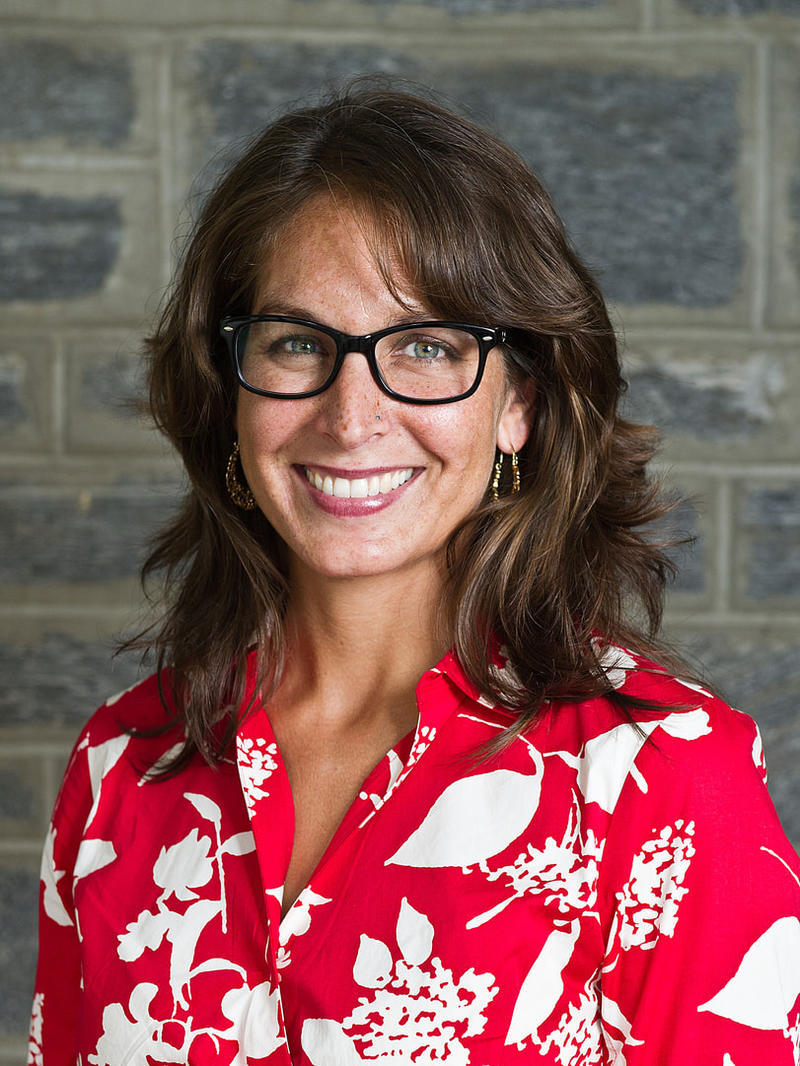
Amber H Abbas serves as Associate Professor of History in the Department of History within the College of Arts and Sciences at Saint Joseph's University, Philadelphia, where she also directs the Nealis Program in Asian Studies (2023–present). Previously Director of the Asian Studies Program, her academic trajectory at Saint Joseph's spans Assistant Professor (2012–2019) to current Associate Professor (2019–present), reflecting sustained institutional engagement and scholarly contribution. Educational background includes: Doctor of Philosophy in History, The University of Texas at Austin (2012) Master of Arts in History, The University of Texas at Austin (2006) Bachelor of Arts in Comparative Area Studies, Duke University (1999) Her research integrates three interconnected strands: South Asian History (specializing in 1947 Partition and Muslim identity formation), Oral History methodology, and South Asian Diaspora studies. Through extensive archival work across England, Pakistan, India, and Bangladesh, she examines state-building, belonging, and narrative construction while pioneering digital oral history approaches. Recent scholarship extends to South Asian American communities through collaboration with the South Asian American Digital Archive, emphasizing decolonial pedagogy and community-centered knowledge production. Publication trends reveal consistent methodological innovation with oral history at the core, increasingly incorporating digital humanities frameworks. Early works (2007–2014) established foundational analyses of Partition's spatial and institutional impacts, particularly at Aligarh Muslim University, while mid-career publications (2015–2021) expanded into diaspora studies and digital archiving. Current output (2022–2025) demonstrates remarkable interdisciplinary range—from world history pedagogy to Gaza conflict analysis—showcasing her ability to bridge historical scholarship with urgent contemporary discourse through distinctive listening-based methodologies. Major recognitions include: Faculty Merit Awards for Teaching (2018), Research (2022), and Service (2025) S.S. Pirzada Dissertation Prize in Pakistan Studies (2015) Jan Carleton Perry Prize for Best Master’s Thesis (2007) Fulbright Fellowships (1999–2000, 2008) Churchill Fellowships (2007, 2011–2012) Critical Language Scholarship (2008) Dr. Abbas has trained numerous students in oral history methodology while securing significant external funding including a $1 million Andrew W. Mellon Change Capital Grant for Digital Humanities (2022) as co-author. Her grant portfolio demonstrates strategic alignment between institutional support—such as Saint Joseph's Summer Research Grants (2013) and sabbaticals (2019)—and major external fellowships from the National History Center and American Institute of Bangladesh Studies, enabling sustained international archival research. She maintains a vital collaborative relationship with the South Asian American Digital Archive as both researcher and pedagogical partner, developing community-based oral history projects that bridge academic scholarship with public history. Her leadership in the Nealis Program in Asian Studies fosters interdisciplinary connections across Saint Joseph's campus while advancing innovative approaches to South Asian studies through digital and decolonial frameworks.
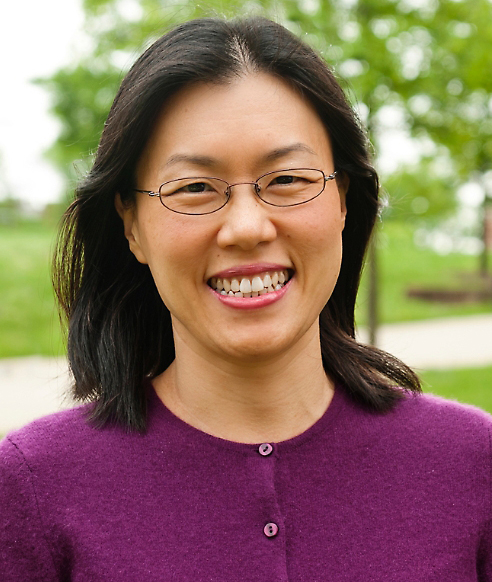
Sarah J. Shin is a Professor of Education at the University of Maryland, Baltimore County (UMBC), affiliated with the College of Arts, Humanities, and Social Sciences. She holds a Ph.D. in Linguistics from the University of Michigan and a B.S. in Communication from Cornell University. Her research focuses on bilingualism, heritage language education, TESOL teacher preparation, and language policy. Dr. Shin has authored/co-authored influential books such as Bilingualism in Schools and Society and Linguistics for Language Teachers , and serves on editorial boards for journals like the Journal of Language, Identity, and Education . Dr. Shin’s professional roles include former Co-Director of the TESOL graduate program (2003–2016), ACE Fellow (2017–2018), and Associate Provost for Academic Affairs (2018–2022). She has received the prestigious UMBC Presidential Research Professorship (2017–2020). Her teaching spans courses on bilingualism, TESOL methodology, and academic language development. Her research explores heritage language maintenance, transnational adoptive families’ language policies, and the sociocultural dimensions of bilingual education. Over 30+ peer-reviewed articles and book chapters reflect her contributions to understanding language education, policy, and multicultural contexts. Dr. Shin’s work emphasizes practical applications for educators and advocates for equitable language policies in diverse educational settings.
Tyler McCormick is a Professor in both the Department of Statistics and Department of Sociology at the University of Washington. He also serves as a Senior Data Science Fellow at the eScience Institute and maintains affiliations with the Center for Statistics and the Social Sciences, the Center for Studies in Demography and Ecology, and the Responsible AI Systems & Experiences (RAISE) initiative. Dr. McCormick earned his Ph.D. in Statistics from Columbia University in 2011. His academic journey has established him as a leading researcher at the intersection of statistical methodology and social science applications. McCormick's research program focuses on developing innovative statistical approaches to address complex societal challenges: Bayesian methods for modeling high-dimensional dependence structures in social networks Estimating vital demographic rates from sparse data sources Developing interpretable predictive models with proper uncertainty quantification Creating methodological frameworks for verbal autopsy analysis in global health His publication record reveals a consistent trajectory of methodological innovation with practical impact. Recent work demonstrates increasing sophistication in handling network interference, integrating machine learning with statistical theory, and addressing data scarcity challenges in global health contexts. His research bridges theoretical advances with applications that inform public health policy and social science understanding. McCormick has received significant recognition for his scholarly contributions: NIH Director's New Innovator Award (2019) Election as Fellow of the American Statistical Association (2023) As an educator, McCormick teaches advanced graduate courses including Hierarchical Modeling for the Social Sciences and Quantitative Techniques in Sociology. His research has been supported by competitive grants from NICHD (2015-2020) focused on vital rate estimation in developing countries and NSF (2016-2018) funding for compact Bayesian models of social networks. His work has influenced policy discussions through media coverage in the Wall Street Journal and Washington Post. McCormick leads the OpenVA initiative, providing open-source tools for verbal autopsy analysis, and has developed multiple R packages implementing his methodological contributions to network analysis and causal inference. His research continues to address critical challenges at the intersection of statistical theory, computational methods, and societal impact.
Dr. Étienne Rivard is an Associate Professor in the Department of Social Sciences and Humanities at the University of Saint-Boniface. Specializing in the geographies of Francophonie in the Americas, his research focuses on Métis identities, colonial spatial practices, and cultural interactions through time. He teaches courses ranging from introductory geography to specialized topics in political geography and intercultural relations. Active in the Center for Research on Territorial Development (CRDT) as a collaborating member Affiliated researcher at the Centre for Research in French-Canadian Civilization (CRCCF) Associate researcher at the Lab for Studies on Brazil, France and the French-speaking World Associate Researcher at the Tier 1 Canada Research Chair on Migration, Circulation and Francophone Communities Research Interests: His work examines the spatial dimensions of Métis identity formation, francophone migration patterns, and the interplay between territorial appropriation and cultural diversity. He employs historical cartography, census analysis, and oral geography methodologies to uncover the colonial legacies shaping contemporary minority francophone communities. Grant Activity: Dr. Rivard has secured significant funding through SSHRC Partnership Grants and Canadian federal immigration programs. His research explores francophone mobility patterns, textbook circulation networks, and the development of cultural identity measurement tools in minority contexts. Community Engagement: He actively participates in public lectures, media interviews, and policy discussions regarding Métis history, francophone immigration, and decolonization efforts, including appearances on Radio-Canada and participation in Manitoba Integration Summits.
Dr. Scott Sterling is a Professor in the Department of Languages, Literatures, & Linguistics at Indiana State University's College of Arts & Sciences. His expertise spans second language acquisition, research ethics, and applied linguistics. He holds a Ph.D. in Second Language Studies from Michigan State University (2015), an M.A. in Linguistics from the University of Montana (2010), and a B.A. in Anthropology and Spanish from Southeast Missouri State University (2008). His research focuses on research ethics in applied linguistics, including questionable research practices (QRPs), community-engaged scholarship, and open science. Notable contributions include developing ethical decision-making taxonomies and advocating for transparent research methodologies. Dr. Sterling has published extensively in journals like TESOL Quarterly and Language Teaching , as well as edited volumes such as Addressing Questionable Research Practices in Applied Linguistics . Recent work emphasizes QRPs prevalence and mitigation strategies Explores student motivation and language program vitality in higher education Pioneers ethics training frameworks for applied linguistics researchers He has received awards including the 2024 Educational Excellence Award and led over $2M in funded projects, including grants from HRSA and Vetenskapsrådet. Dr. Sterling also serves on Indiana State's Institutional Review Board and coordinates ESL programs with international partners like Vietnam's An Giang University.
Dr. Kamal K. Sridhar is a distinguished Professor at Stony Brook University, specializing in sociolinguistics with a focus on language maintenance, bilingualism, and World Englishes. She holds an MA in TESOL and a PhD in Applied Linguistics from the University of Illinois at Urbana-Champaign. From 1986-1997, she directed the TESOL programs and served as Director of ESL at Stony Brook. Her research explores linguistic preservation among Asian Indian communities, particularly the Thanjavur Marathi speakers. She has authored over 30 journal articles and book chapters, including her seminal work English in Indian Bilingualism (1989). Dr. Sridhar has held editorial roles in prestigious journals such as TESOL Quarterly and contributed to the Encarta of World Englishes . Her work bridges theoretical linguistics with practical pedagogy, addressing global language policy and multicultural education challenges. Education: PhD in Applied Linguistics, University of Illinois at Urbana-Champaign MA in TESOL, University of Illinois at Urbana-Champaign Research Interests: Language maintenance strategies among diasporic communities Indigenized Englishes and sociolinguistic variation Bilingual education policies in multilingual societies Cultural dimensions of language use in South Asia Her publications analyze language dynamics in India and global diasporas, emphasizing pragmatic aspects of English usage and the role of language in identity formation. Recent work focuses on sustaining endangered languages like Thanjavur Marathi despite centuries of migration.
Hagop Kouloujian is a faculty member affiliated with the Armenian Studies program within the College of Letters and Science at the University of California, Los Angeles . Holding a PhD in Literature from the Jesuit University of Buenos Aires, he specializes in Armenian diasporic identity, poststructuralist approaches to medieval mysticism, and language vitality initiatives. Education PhD in Literature (Jesuit University of Buenos Aires, with highest distinction) MBA (University of Buenos Aires) His research intersects Armenian diasporic identity , poststructuralist theory , and language preservation strategies , particularly through creative literacy in non-dominant languages. His publications analyze Armenian communities in Los Angeles, globalization’s impact on diasporic literature, and reinterpretations of medieval Armenian texts like Grigor Narekac‘i’s works. Kouloujian’s teaching includes courses such as Elementary Modern Western Armenian , Intermediate Modern Western Armenian , and Language in Action: Producing and Creating in Armenian in Diaspora , emphasizing practical engagement with the language in diasporic contexts.
Fredrica Nyqvist is an Associate Professor at the Faculty of Natural Sciences and Engineering, Health Sciences, at Åbo Akademi University. Her research focuses on aging, loneliness, social exclusion, and civic engagement among older adults, with particular attention to minority populations including Swedish-speaking Finns. Dr. Nyqvist's research interests span multiple dimensions of aging and wellbeing: Loneliness in Later Life : Examining micro, meso, and macro perspectives on loneliness among older populations Civic Engagement : Studying multidimensional participation of older adults across European countries Minority Aging : Focusing on Swedish-speaking older adults in Finland and their experiences with social exclusion Informal Caregiving : Investigating experiences of family caregivers and peer support mechanisms Health and Wellbeing : Exploring connections between social capital, self-rated health, and longevity Her recent publication trends show a strong focus on macro-level analyses of loneliness, multidimensional civic engagement across European countries, and the experiences of linguistic minorities in aging. She employs both quantitative and qualitative methods, often conducting comparative studies between Finland and Sweden. Dr. Nyqvist leads several significant research projects: GERDA : Gerontological Regional Database tracking aging in Western Finland CIVEX : Exclusion from civic engagement of diverse older populations AgeMin : Social inclusion of older adults from a minority perspective Brain health in the very oldest : GERDA home visits project She actively mentors students and collaborators, serving on examination committees and hosting academic visitors. Her work contributes to multiple UN Sustainable Development Goals, particularly those related to health, wellbeing, and reduced inequalities.
Sara Armengot is a Professor and Department Chair of the Department of Modern Languages and Cultures at Rochester Institute of Technology's College of Liberal Arts. She holds a BA from Oberlin College and MA/PhD from Pennsylvania State University. Her research focuses on language program development, inter-American literature/film, and cultural studies. She teaches courses including Spanish for Science/Technology, Professional Spanish, and capstone seminars in applied language and culture. Her scholarship includes a 2023 Springer chapter on RIT's language programs and a 2013 monograph on Inter-American literature/film. Office hours are Tuesdays/Fridays 3-3:50pm in EAS-3223. Armengot leads departmental initiatives in language education and professional language application, emphasizing interdisciplinary connections between technical fields and cultural competence.
Dr. Johan Rasanayagam serves as a Senior Lecturer in the School of Social Science at the University of Aberdeen, a position he has held since joining the department in 2005. His academic profile centers on anthropological engagements with Islamic thought, drawing from extensive fieldwork in Uzbekistan and Morocco to explore questions of morality, subjectivity, and religious experience in post-socialist contexts. His primary research areas include the anthropology of Islam, morality and subjectivity, healing practices and spirit possession, and the dynamics of religion and secularism in Central Asia and North Africa. Rasanayagam has pioneered a post-secular anthropological approach that recognizes Islamic traditions as vital resources for understanding human experience, particularly in contexts of jinn possession and healing. Examining his publication record, a clear trajectory emerges: sustained focus on Central Asia (especially Uzbekistan) and Morocco, with recurring themes of state-society relations, the politics of culture, and the interplay between Islamic traditions and modernity. His work consistently bridges empirical fieldwork with theoretical innovation, contributing to debates on secularism, ethics, and anthropological methodology. Within the University of Aberdeen, Rasanayagam teaches core anthropology courses at both undergraduate and postgraduate levels, including Introduction to Anthropology, Anthropological Theory, and Religion, Power and Belief for the MSc Anthropological Research program. Although specific grant funding and student advising details are not documented in the provided materials, his teaching responsibilities demonstrate active contribution to the department's academic community.
Macarena Sánchez-Izquierdo Alonso is an Associate Professor in the Department of Psychology at the Faculty of Human and Social Sciences, Universidad Pontificia Comillas, where she has over 21 years of academic experience. She holds a PhD in Psychology from the same institution and specializes in psychogerontology, dementia, caregiving, and ageism. PhD in Psychology, Universidad Pontificia Comillas Licentiate in Psychology, Universidad Pontificia Comillas Her research focuses on aging, dementia, caregiver well-being, active aging, brain injury, and age stereotypes. She is a member of the research group Psicología del ciclo vital y la familia and participates in national and international projects such as STEREOTYPES (ICESEN) and EVEN-UPCO, promoting positive images of aging and combating ageism. Her recent work explores behavioral interventions in retirement, motivation for health behaviors, and media representation of older adults. Her publications in journals like Frontiers in Psychology , PLoS One , and Health Psychology Review demonstrate a strong trend in meta-analytic and qualitative studies on aging, longevity, and psychosocial determinants of health. She frequently collaborates with leading researchers such as R. Fernández-Ballesteros and A. Cruz Jentoft. Member, Research Group EVEN (UAM) Participant, Project STEREOTYPES (Ministry of Economy and Competitiveness) Member, EVEN-UPCO Group (Active Aging, Quality of Life and Gender) She has delivered lectures and workshops at conferences across Spain, including expert panels on aging and ageism, and has contributed to training programs for caregivers and religious communities. She holds multiple ANECA certifications confirming her status as a university professor and contracted doctor.