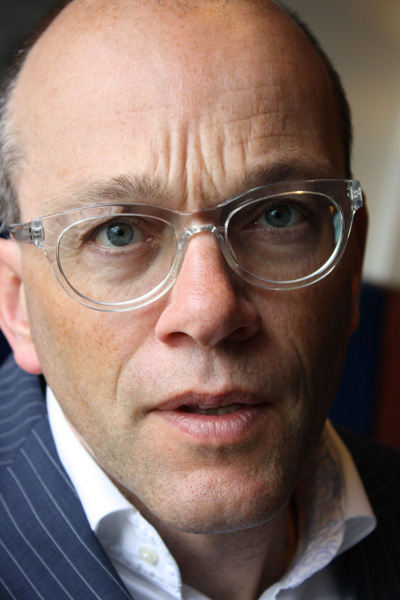
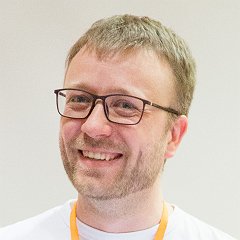
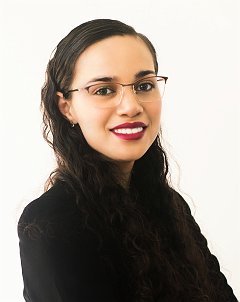
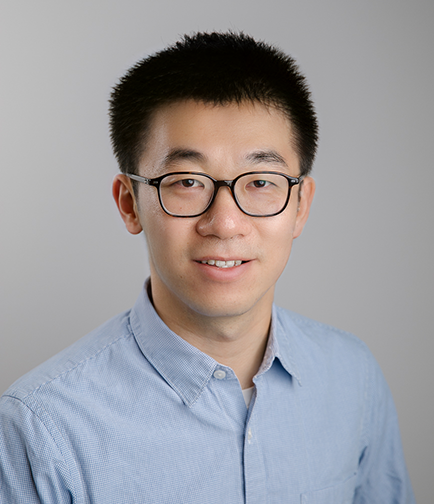
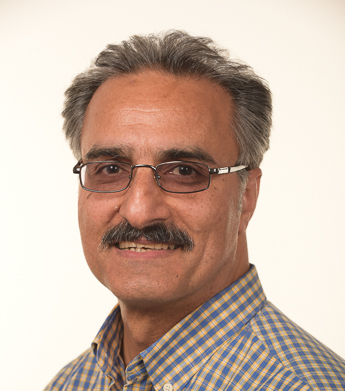
Troy Clifford Dargin is a Clinical Assistant Professor at Yeshiva University , affiliated with the Katz School of Science and Health . He is a certified practitioner in the Arthur Lessac Voice/Body technique and holds a Vocology certificate from the National Center for Voice and Speech. Education: B.S. in Vocal Music Education and Theatre Performance, with graduate degrees in Music, Speech-Language Pathology, Political Science, and Finance. Research interests include Voice Disorders and the Performing Voice , focusing on semi-occluded vocal tract exercises and their impact on vocal function. His scientific awards include the Ringle Health Professions Scholarship and the Margaret L. Anderson Graduate Teaching Award. Key publications explore vocal rehabilitation techniques, stroboscopic imaging, and aerodynamic measurements. His work bridges music , speech therapy , and clinical research , often involving collaborations with Dr. J. Searl. Scientific Awards: Ringle Health Professions Scholarship ($5000) University of Kansas Academic Merit Scholarship Margaret L. Anderson Graduate Teaching Award Troy teaches Voice Disorders , Anatomy and Physiology of the Speech Mechanism , and Research Methods at Yeshiva University. He also leads continuing education programs through his initiative "Visions in Voice" .
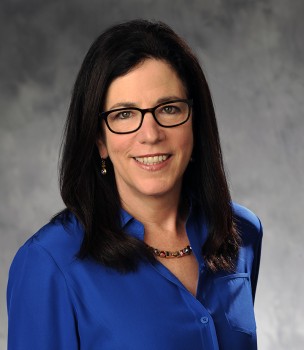
Prof. Dorothy Kenny is a full professor of Translation Studies at Dublin City University, affiliated with the School of Applied Language & Intercultural Studies. She holds a BA in French and German from DCU, an MSc in Machine Translation, and a PhD in Language Engineering from the University of Manchester. Her research focuses on AI in literary translation, corpus linguistics, machine translation ethics, and translation pedagogy. She led the EU-funded MultiTraiNMT project (2019–2022), developing materials for MT education. She co-edits the journal Translation Spaces and is an Honorary Fellow of the Chartered Institute of Linguists (UK). Education: BA in French and German, Dublin City University MSc in Machine Translation, University of Manchester PhD in Language Engineering, University of Manchester Research Interests: Her work bridges theoretical and applied translation studies, emphasizing corpus-based methods, machine translation ethics, and the impact of AI on literary translation. Recent projects explore customization of MT for literary texts and ethical workflows in MT. Awards & Recognition: 2020: Co-edited Fair MT: Towards Ethical, Sustainable Machine Translation 2017: Edited Human Issues in Translation Technology 2020: Honorary Fellowship from the Chartered Institute of Linguists Grants & Projects: Principal Investigator of MultiTraiNMT (EU-funded, 2019–2022) Recipient of Ulysses Travel Grant (2018–2019) for collaboration with Université Grenoble-Alpes Labs & Teams: She directs research at the Centre for Translation and Text Studies (CTTS) , fostering interdisciplinary work on translation technology and corpus linguistics.
Joost-Pieter Katoen is a full Professor at RWTH Aachen University and Head of its Computer Science Department since 2012. He also holds a part-time (20%) Professorship at the University of Twente . His research focuses on model checking , probabilistic verification , formal semantics , and software verification , with applications in aerospace systems. His work has led to significant tools like MRMC (probabilistic model checker), COMPASS (AADL analysis tool-set), and libalf (learning automata library). He has authored over 18 international projects (total €5.2 million) and graduated 12 PhD students. Scientific Awards : Member, German National Academy of Sciences (Leopoldina), 2024 ACM Fellow, 2020 ERC Advanced Grant, 2018 Honorary doctorate, Aalborg University, 2017 Teaching Award, RWTH Aachen, 2010 Philips Early Career Development Award, 1988 Research Trends (from articles): His recent work spans probabilistic program verification , quantitative game theory , Markov chain analysis , and parameter synthesis for stochastic systems, with applications in AI, quantum computing, and fault tree analysis. Leadership & Service : Katoen co-founded the QEST conference , chairs ETAPS steering committee, and has led numerous program committees (CONCUR, TACAS, QEST). He has served on editorial boards and organized conferences/seminars globally.
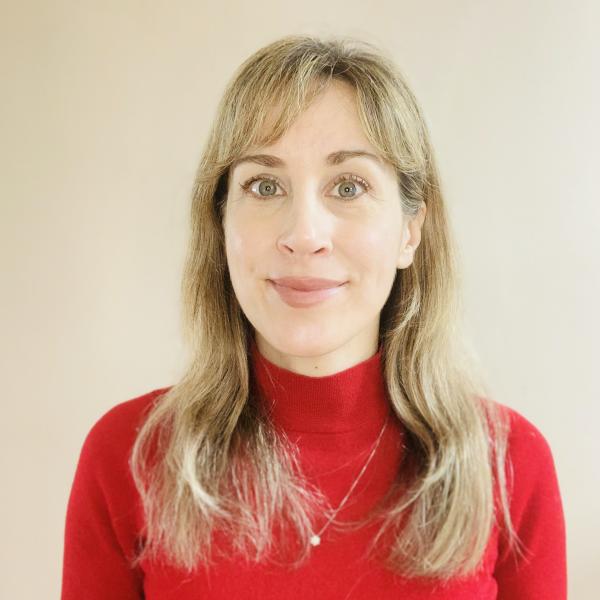
Veronica Vegna is Senior Instructional Professor at the University of Chicago, directing the Italian Language Program and coordinating the Languages Across the Curriculum initiative. She holds a PhD from Middlebury College. Her expertise spans foreign language acquisition pedagogy, Italian cinema analysis focusing on gender dynamics within mafia contexts, and Italian-American literary studies. Research interests include: 1) cinematic representations of women in mafia narratives; 2) innovative language-teaching methodologies; and 3) transnational migration narratives. Her 2017 monograph Donne, mafia e cinema examines interdisciplinary approaches to mafia cinema through gender studies lenses. Award-winning educator, Vegna has received grants from institutions including the University of Chicago International Institute and Collegio Carlo Alberto. Her recent publications analyze mafia cinema, pedagogical innovations during pandemic teaching, and satirical regional cinema. Teaching focuses on integrating cultural studies with linguistic proficiency development. Current courses include advanced Italian language sequences and specialized topics like Women and the Mafia in Contemporary Italian Cinema .
Dmitrii Pastushenkov is a Teaching Professor in the Department of Slavic Languages and Literatures at Harvard University, specializing in the Russian language program. He holds a Ph.D. in Second Language Studies from Michigan State University (2022), an M.A. in Teaching English as a Second Language from Kent State University (2017), and dual M.A. degrees in Russian Translation and Business Administration, also from Kent State (2015). His research focuses on instructed second language acquisition, bridging theory and practice in language education, and the application of psychological theories to literary analysis. He has contributed to journals like The Modern Language Journal and co-edited a Routledge volume on assessment in Russian language classes. His work explores gamification, language immersion programs, and the use of technology in education, including game-based learning and assessment methodologies. Prior to Harvard, Dmitrii taught at Michigan State University, California State University, Northridge, and Kent State University, where he held graduate assistantships and participated in STARTALK programs. He has served as a research assistant at Middlebury College’s Kathryn Wasserman Davis School of Russian, gaining insights into immersive language education. His interdisciplinary research also includes analyzing Russian state media’s portrayal of opposition leaders and examining dystopian narratives in Dmitry Glukhovsky’s novels through psychological frameworks. Pastushenkov’s teaching philosophy emphasizes practical application of research, with a focus on enhancing language learning through innovative pedagogical strategies. His publications address topics such as vocabulary acquisition via gamification, task-based instruction, and the role of individual differences in language learning outcomes. He actively contributes to educational initiatives that integrate cultural and linguistic studies across disciplines.
Dr. Pamela Rollins is a Professor in the School of Behavioral and Brain Sciences at The University of Texas at Dallas, specializing in the social underpinnings of language and intervention efficacy for culturally and linguistically diverse autistic children. She holds an Ed.D. in Psycholinguistics from Harvard University (1994), an M.S. in Communication Disorders from the University of Wisconsin (1983), and a B.S. in Speech Pathology and Audiology from Boston University (1981). Her research focuses on behavioral paradigms to understand social interactions and language development in infants and children, particularly those with Autism Spectrum Disorder (ASD). She has pioneered culturally sensitive interventions like the Pathways Early Autism Program, emphasizing mutual gaze and parent-mediated strategies to improve social skills in Hispanic and linguistically diverse populations. Her work has received significant funding, including a $2.7 million grant from the Department of Defense (DoD) to refine interventions for Hispanic autistic children. Dr. Rollins leads the Social Communication Lab and has authored over 30 publications on early intervention, joint attention, and pragmatic language development. She has held roles such as Founding Director of UTD’s Early Communication, Language, and Social Skills preschool and maintains affiliations with the Callier Center for Communication Disorders. Her grants include evaluations of Pathways’ efficacy, with a focus on mutual gaze and randomized control trials. She has presented widely, including a keynote on naturalistic developmental behavioral interventions at the Association for Behavioral Analysis International Convention (2024).
Weipeng Zhou is a Postdoctoral Associate at the Yale School of Medicine within the Department of Biomedical Informatics and Data Science . Working under Professor Hua Xu , he specializes in pre-training and evaluating large medical language models using electronic health records and medical claims data. His work bridges Natural Language Processing , Biomedical Data Science , and Clinical Informatics to address critical healthcare challenges. PhD in Medical Informatics from the University of Washington (2025) Bachelor's in Computer Science and Statistics from the University of Wisconsin (2019) His research involves NLP/LLM applications in healthcare domains such as: Long COVID characterization and prediction Cardiovascular disease analysis Suicide prevention through clinical text mining Clinical note section identification Emerging water contaminant detection via PubMed article analysis His publications focus on model transferability , automated cohort discovery , and contextual health research tools . Notable collaborations include work with teams at University of Washington and Yale .
Dr. Ana Garcia Melgar is a Lecturer in Disabilities and Inclusive Education at the School of Education, La Trobe University, Australia. She also holds a Research Fellow position at the Living with Disability Research Centre at the same institution, demonstrating her dual commitment to teaching and research in inclusive education and disability support. Her educational background includes a PhD and a Master of Education from La Trobe University, and a Bachelor of Psychology from the Autonomous University of Madrid, Spain. She is fluent in Spanish and English, enabling broad academic collaboration. Ana's research is centered on inclusive education, with a strong focus on reasonable adjustments for students with disabilities, peer mentoring, and access to mainstream services. She has developed a peer-assisted learning framework grounded in cognitive and social learning theories, which has been applied in programs like the Peer Learning Advisers (PLA) at La Trobe and In2Science mentoring. Her work emphasizes practical interventions to improve teacher capacity and educational equity. Her recent research outputs reveal a consistent trend in evaluating inclusive practices through mixed-methods and experimental designs. She has contributed significantly to the development and validation of the Reasonable Adjustments for Inclusive Education (RAIE) rating scale and has explored online training interventions for educators. Her publications span topics including co-teaching, AAC research in schools, collaborative team approaches, and peer mentoring across school and university contexts. Reliability Testing of the Reasonable Adjustments for Inclusive Education Rating Scale (2024) Toward the Improvement of Inclusive Education via Online Intervention (2023) Collaborative team approaches to supporting inclusion (2022) Peer assisted academic support: mentors’ and mentees’ experiences (2021) Ana has served as a program evaluator for large-scale educational initiatives in Victoria, including school improvement and teacher education programs. She is currently leading a research evaluation of the 'Passions & Pathways' program for Goldfields LLEN and is supported by a grant from the Bertalli Family Foundation (2023–2027), indicating sustained funding for her work. She is affiliated with interdisciplinary teams including the Living with Disability Research Centre and has collaborated extensively with colleagues such as Teresa Iacono, Julie Spong, and Kathy Bagley. Her work aligns with Sustainable Development Goals 4 (Quality Education) and 10 (Reduced Inequalities), underscoring its societal impact.
Shahin Jabbari is an Assistant Professor in the Computer Science Department at the College of Computing & Informatics, Drexel University, where he is a member of the EconCS research group. His research lies at the intersection of machine learning, game theory, and algorithmic fairness, with a focus on ethical AI and its societal implications. Prior to Drexel, he was a CRCS postdoctoral fellow at Harvard University's School of Engineering and Applied Sciences, hosted by Milind Tambe, and affiliated with the EconCS group. Education: PhD in Computer and Information Science, University of Pennsylvania (2013–2019), advised by Michael Kearns Master's in Computing Science, University of Alberta, advised by Robert Holte and Sandra Zilles Bachelor's in Computer Engineering, Sharif University of Technology His research interests center on machine learning, algorithmic fairness, and game theory, particularly focusing on how AI systems can be designed to be more equitable, interpretable, and robust. He investigates ethical aspects of algorithmic decision-making, aiming to ensure AI technologies contribute positively to society. His work often integrates human behavior modeling and experimental validation, especially in cybersecurity and public health domains. His recent publications span top venues including ICML, NeurIPS, AAAI, AAMAS, PNAS, and TMLR. The research trends show a consistent focus on fairness in AI, explainability, robustness, and strategic interactions in complex systems. Topics include fair influence maximization, adaptive phishing training, cyber deception games, and ethical machine learning frameworks. These works reflect a multidisciplinary approach combining theoretical rigor with real-world applicability. Scientific Awards and Recognitions: Best Paper Finalist, AAMAS 2021 Best Paper, GameSec 2020 Spotlight Presentation, ICML 2021 Best Paper, KI 2012 Shahin Jabbari actively contributes to the academic community through advising, teaching, and service. He teaches graduate courses such as CS 589: Responsible Machine Learning and CS 590: Privacy. He has served on the senior program committees of ICML and NeurIPS, is an Action Editor for TMLR, and has reviewed for numerous top-tier conferences and journals. He mentors students through research projects and invites prospective PhD candidates to apply through Drexel’s formal channels. He is involved in the Drexel Computer Science Theory Reading Group and contributes to advancing responsible AI practices. He is affiliated with the EconCS group at Drexel, which focuses on economic and computational aspects of AI, including game theory, mechanism design, and multi-agent systems. His lab integrates tools from machine learning, behavioral modeling, and optimization to develop AI systems that are not only intelligent but also fair and trustworthy. Future work is expected to further explore human-AI collaboration, ethical AI deployment, and policy-aware algorithm design.
Dolphia Butler is an Assistant Professor in the Language, Education, and Culture school at Gallaudet University. Her teaching portfolio includes courses such as English Language Study , Introduction to Public and Professional Writing , and Intro to African-American Literature . She has served as an Open House Facilitator and MacDougall Creative Writing Contest Judge, and currently holds roles like Associate Editor of Watchung Review and member of the Graduate Student Advisory Committee (GSAC). Her research focuses on intersections of Deaf identity, multicultural education, and literary analysis. Recent work explores Deaf representation in media (e.g., A Quiet Place ), feedback processes for d/Deaf/HoH students, and BIPOC CODA perspectives. Professional affiliations include the National Council of Teachers of English and Popular Culture Association. Advising: Supervised 1 undergraduate advisee (2023) Committee Roles: Peer Evaluator for Review/Promotion/Tenure, Judge for Professional Writing Contests Professional Development: Completed Bilingual Approach Seminar, CITI Program, Rhetoric: The Art of Persuasive Writing
Tania Cerquitelli is a Full Professor in the Department of Control and Computer Science (DAUIN) at Politecnico di Torino, where she leads research in data science, concept-drift management, and inclusive AI technologies. She is a member of SmartData@PoliTO, the GEDI Observatory for Gender Equality, and serves in leadership roles related to social affairs and community policies at the university level. She also acts as a scientific advisor for the partnership with Accenture. Her research interests span Data Science , Concept-Drift Management , Database Systems , Conversational Data Science , and Industry 4.0 . She applies AI and machine learning to industrial, societal, and ethical challenges, particularly in promoting inclusive communication and gender equality in research. The most recent publications highlight her work in explainable AI, concept drift detection, multimodal diagnostics, and AI for social good. Her research integrates machine learning, natural language processing, and computer vision to address real-world problems in manufacturing, healthcare, agriculture, and education. She is an Associate Editor for several prestigious journals including Expert Systems with Applications , Computer Networks , Future Generation Computer Systems , and Knowledge and Information Systems . She has served on the program committees of major conferences such as ECML PKDD, EDBT/ICDT, and ACM KDD, and has been a reviewer and selection committee member for ETH Zurich and EMPA. She actively supervises PhD students and teaches a wide range of courses including Data Science and Database Technologies, Business Intelligence for Big Data, and Gender and Diversity in Research. She is involved in multiple national and international research projects such as E-MIMIC, WEBFARE, and EnABLES, focusing on inclusive AI, smart data, and industrial applications. Her lab affiliations include the DBDM - Database and Data Mining Group (DAUIN) and the Interdepartmental Center SmartData@PoliTO - Big Data and Data Science Laboratory , where she contributes to advancing data science methodologies and their societal impact.
Stefan Marr is a faculty member at the University of Kent, United Kingdom, focusing on Concurrent Programming , Language Implementation , and Virtual Machines . His research spans projects like optimizing interpreters, improving concurrency models, and enhancing profiling tools for dynamic languages. Projects : Royal Society Industry Fellowship (FastStart), EPSRC-funded CaMELot, Oracle Labs-funded Automatic Superinstructions. Collaborations : With students and researchers across institutions, including Shopify, Vrije Universiteit Brussel, and Johannes Kepler University Linz. His recent work emphasizes profiling reliability for Java, interpreter performance , and tooling for complex concurrent systems . Projects like SOM (Simple Object Machine) and its variants (SOM++, TruffleSOM, PySOM) highlight his commitment to language implementation research and education. Scientific Awards include fellowships and grants from the Royal Society, EPSRC, and Oracle Labs. His contributions to conferences as program committee member , steering committee , and workshop organizer further underscore his academic leadership.
Joanna C. S. Santos is an Assistant Professor at the University of Notre Dame's Department of Computer Science and Engineering. She leads the Security and Software Engineering research lab (S²E) and focuses on Software Engineering, Security, and Program Analysis. Her work bridges empirical studies with practical tool development. PhD in Computing and Information Sciences (Rochester Institute of Technology) M.Sc. in Software Engineering (Rochester Institute of Technology) B.Sc. in Computer Engineering (Federal University of Sergipe) Her research spans Software Security (vulnerability detection, ReDoS), Code Generation (LLM evaluation, benchmarking), and Program Analysis (taint tracking, call graphs). Recent articles show a strong focus on LLM-generated code quality and quantum computing applications. Scientific Awards : 2023 - Distinguished Reviewer (ESEC/FSE) 2020 - Research Pitch Winner (JOBS @MICRO) 2017 - Best Paper (ICSA) 2014 - CAPES Scholarship 2013 - ERBASE 3rd Place She actively contributes to conference committees (OOPSLA, ICSE, SCAM) and collaborates across institutions. Her lab S²E drives research in secure software development and empirical cybersecurity validation.
Dr. Dong Gong is a Senior Lecturer and ARC DECRA Fellow (2023-2026) at the School of Computer Science and Engineering (CSE), UNSW. He holds an adjunct position at the Australian Institute for Machine Learning (AIML), University of Adelaide. His research focuses on machine learning challenges in dynamic environments, including continual learning, foundation models, generative models, and applications in interdisciplinary areas like mining and agriculture. Research interests include learning with non-ideal supervision, foundation model adaptation, generative models, and interdisciplinary problems combining CV/ML with domain-specific applications. His work often addresses real-world scenarios such as mineral exploration and soil trait analysis using CV/ML technologies. Outstanding Reviewer: NeurIPS 2018 Outstanding Area Chair: ACM MM 2024 ARC DECRA Fellowship (2023-2026) Advising and grants: Actively supervises PhD/MPhil students in computer vision and ML. Collaborates with industry and government on research projects. Utilizes advanced infrastructure like UNSW's Katana supercomputing cluster and Gadi (NCI). Labs/Teams: Involved in interdisciplinary research groups at UNSW CSE and AIML, focusing on dynamic learning paradigms and real-world applications of AI.
Faramarz Amiri is a Senior Lecturer in Digital Media at the University of Wolverhampton's Faculty of Arts, Business and Social Sciences. He serves as Course Leader for BA(Hons) Computer Games Design and has been affiliated with the institution since 1997. His expertise spans multiple domains, including Higher Education Pedagogy, Serious Games Design, Educational Technology, TESOL, and Art & Design Pedagogy. PhD in Education (University of Manchester) MSc in Computer Science (University of Exeter) MPhil in Social and Political Theory (University of Cambridge) PG Diploma in TEFL (Brighton Polytechnic) BA in Linguistics with Cognitive Sciences (University of Sussex) His research focuses on the intersection of educational technology, art pedagogy, and socio-political dimensions of game design. His publications analyze programming in art education, multimedia authoring for language teachers, and the integration of digital tools in curricula across disciplines. Awards include Fellowship in the Higher Education Academy. Programming in interactive media curriculum design Teacher empowerment through digital authoring CALL material development standards Role of educators in software lifecycle Grammar teaching via multimedia IT training for educators Dr. Amiri's work bridges technical and pedagogical domains, with a particular emphasis on democratizing digital creation in educational contexts. He currently leads the Computer Games Design program while maintaining active research into technology's role in art and language education.