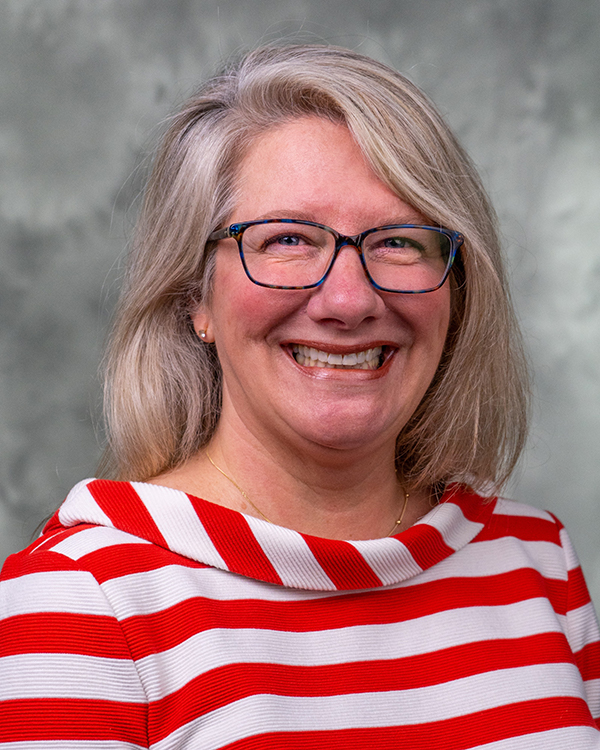
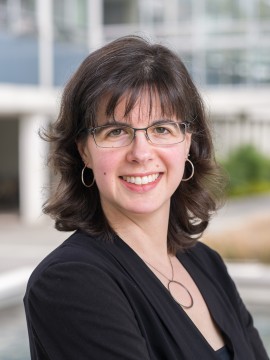
Jose Rafael Prieto García is an Associate Professor at Pablo de Olavide University, affiliated with the Department of Social Anthropology, Basic Psychology and Public Health. His research focuses on cognitive development, educational assessment, and cooperative learning strategies. Education: PhD in Basic Psychology (2009), supervised by Dr. José A. Sánchez Medina and Dr. David Alarcón. Research interests include: Cognitive flexibility in childhood Private speech mechanisms Cooperative learning methodologies STEM education in Andean countries Psychological well-being in vulnerable populations His recent publications highlight trends in: Biomechanical tool development Programming education via GitHub Curriculum reform for Social Sciences Integrating digital tools into pedagogy Language disorders in educational contexts
Pedro Cabalar is Full Professor at the Department of Computer Science of the University of Corunna, Galicia, Spain, and current coordinator of the inter-university Master in Artificial Intelligence (Universities of A Coruña, Santiago de Compostela and Vigo). He also serves as Area Editor (Theory Foundations) for Theory and Practice of Logic Programming and as Standard Editor for the Artificial Intelligence journal. Education: PhD in Computer Science, University of Corunna, 2001 Master in Computer Science, Politéchnic University of Madrid, 1993 Bachelor in Computer Science (3-year degree), University of Santiago de Compostela / University of Corunna, 1989 Research interests revolve around Knowledge Representation & Reasoning , especially Answer Set Programming , non-monotonic reasoning , temporal and modal logics , and causal reasoning . He investigates theoretical foundations (equilibrium logic, temporal extensions, deontic operators) and practical systems (telingo, eclingo, aspBEEF), with applications ranging from planning and diagnosis to explainable AI and healthcare decision support. His recent articles (2023-2025) exhibit a clear trend toward temporal and metric extensions of ASP , explainability , and hybrid reasoning systems , often combining logic programming with deontic or probabilistic features. Scientific awards & recognition: University of Corunna Dissertation Award, 2003 Best Paper Award at LPNMR 2019 Best Student Paper at ICLP 2020 Best Student Paper at JELIA 2019 Grants & projects: He currently leads or co-leads nationally funded Spanish projects (GEISER 2024-2028, ARLEKIN 2021-2024) and has coordinated EU COST actions (DigForASP) as well as earlier MINECO projects on temporal ASP and medical reasoning (TARDIS, MERLOT, FEAST, etc.). PhD supervision: He has successfully supervised three PhD theses (Martín Diéguez, Jorge Fandiño, Brais Muñiz) and continues to advise students within the Information Retrieval Laboratory (IRLab) and the Spanish node of Potassco Solutions.
Eva María Llorens Simón is an Assistant Professor and Researcher at the University of Alicante's Department of English Philology within the Faculty of Philosophy and Letters. She serves as Academic Secretary at IULMA (Interuniversity Institute of Applied Modern Languages), Mobility Coordinator for the English Studies Degree, and Director of the Radio Frequency Motions Program. Her academic background includes a PhD in Philosophy and Letters (Modern Languages and Literatures) from the University of Alicante (2022), a Bachelor's in Translation and Interpreting (English), and a CAP teaching certification. Her research focuses on corpus linguistics and cognitive linguistics , with specialized expertise in emotional persuasion within tourism promotion and gender-sensitive approaches to biomedical discourse. She investigates metaphorical language patterns in women's health communication and cross-linguistic analysis of tourism marketing across English and Spanish contexts. Her work emphasizes empathy triggers, sensory language, and cultural appropriateness in specialized domains. Analysis of her recent publications reveals strong thematic clusters in tourism discourse analysis (emotional persuasion, cross-linguistic patterns) and biomedical communication (gender-sensitive terminology, metaphor deconstruction). Her 2023-2024 work shows increased focus on inclusive language in women's health, corpus-based terminography, and deconstruction of gender stereotypes in medical contexts. She has supervised 26 undergraduate final projects in the past five years across Tourism, English Studies, and Translation degrees. Her research projects include: TED2021-130040B-C21: Digitalización, tratamiento y publicación en línea de recursos terminológicos multilingües abiertos con perspectiva de género (2022-2024) VIGROB24-040: GRUPO DE INVESTIGACIÓN: Inglés profesional y académico (IPA) (2025) GRE16-18: Plataforma para la docencia de la traducción y la conexión con el mundo profesional (2017-2019) She leads research within the Professional and Academic English (IPA) group and collaborates with the terminology accreditation group TETRACOLA. Her work at IULMA involves interdisciplinary approaches to applied modern languages, with current projects developing gender-sensitive bilingual terminologies for biomedical discourse.
Laura Cizek is a Clinical Associate Professor and Master’s Program Director at the University of Houston’s Department of Communication Sciences and Disorders within the College of Liberal Arts and Social Sciences. She supervises graduate students in the University Speech-Language-Hearing Clinic, coordinates community speech and hearing screenings, and leads clinical teams working with adults seeking pronunciation modification. A certified expert in Pronunciation of English as a Second Language (PESL), she teaches courses such as Speech Sound Disorders and Clinical Procedures to graduate, undergraduate, and post-baccalaureate students. Ed.D., Professional Leadership – Special Populations, University of Houston M.A., Communication Disorders, University of Houston B.S., Communication Sciences and Disorders, The University of Texas Her clinical focus includes accent modification for English language learners, clinical education leadership, and community outreach through speech and hearing screenings. She coordinates over 1,000 annual observation hours for students in the Greater Houston area and previously directed the Cougar Communication Group (CCG) summer program from 2009–2016, establishing its structure as a primary training model for clinic externs. Scientific Awards: Outstanding Young Alumni Award, University of Houston (2002) Dr. Cizek advocates for linguistically diverse communication and facilitates collaborative learning experiences that bridge research and clinical practice. Her professional activities include membership in ASHA’s Special Interest Groups (SIGs) 10, 11, and 17, focusing on higher education, administration, and global communication disorders.
Dana Mukamel is a Professor of Medicine at the University of California, Irvine, with an affiliation in the Department of Population Health & Disease Prevention within the School of Public Health. Her research focuses on healthcare policy, geriatrics, mental health, and chronic disease management, particularly advanced chronic kidney disease (CKD) and cancer care. She explores topics such as Medicare Part D cost disparities, nursing home staffing and quality, digital mental health interventions, and rural-urban healthcare gaps. Dana's recent publications highlight trends in digital health adoption during the pandemic, staffing instability in nursing homes, and CKD treatment outcomes. Her work often intersects with health equity, examining disparities in rural and minority populations, and innovates through technology-driven care coordination models for seniors. She contributes to policy evaluations, including the Medicare Prescription Payment Plan, Certificate of Need regulations, and Medicaid waiver programs. Her projects frequently involve multi-site collaborations and stakeholder engagement, especially with peer perspectives in mental health interventions and county-level healthcare systems.
Bas Testerink is a Researcher at the Faculty of Science , Utrecht University , focusing on Responsible AI . He works in the AI & Data Science subtheme with research interests in Human-centered Artificial Intelligence and Applied Data Science . Email: b.j.g.testerink@uu.nl Office: Minnaert Building, Leuvenlaan 4, Room 304, Utrecht His research explores Norm Enforcement in distributed systems, Multi-Agent System design, and Runtime Verification mechanisms. Key projects include AI-assisted message processing for police and Norm-based traffic control systems . Recent publications highlight his work on Argumentation-based Inquiry (2022) and Collaborative Monitoring (2016). He also investigates Security Threats in collaborative verification and Organizational Replication through inheritance models. He contributes to: Autonomous Vehicles regulation Crime Analysis through AI Peer-to-Peer Argumentation frameworks His work appears in venues like PRIMA , ECAI , and AAMAS .
Suhasini VINCENT is an Associate Professor (Maître de conferences) at Paris-Panthéon-Assas University's Department of Languages since 2007. She holds an Authorization to direct research (HDR) from University of Orléans (2024), dual doctorates in postcolonial literature from University of Paris 3 – Sorbonne Nouvelle and University of Madras (2006), and multiple advanced degrees in literature, languages, and education. Authorization to direct research (HDR), University of Orléans (2024) Doctorate in postcolonial literature, University of Paris 3 – Sorbonne Nouvelle (2006) Ph.D. in postcolonial literature, University of Madras and University of Paris 3 (2006) DEA, North American civilization and postcolonial literature in English, University Paris 3 (2003) Masters, Languages, Literature and Civilization in English, University of Reims (2002) Master of Philosophy (M.Phil.), French Language and Literature, University of Madras (1997) Professor VINCENT's research centers on the intersection of postcolonial studies, environmental law, and literary criticism. Her work explores eco-critical activism in postcolonial literature, particularly examining the works of Arundhati Roy, Amitav Ghosh, Sudeep Sen, and Suniti Namjoshi. She investigates how legal frameworks interact with ecological concerns in postcolonial contexts, with special attention to India. Her research also examines comparative law across Commonwealth nations and the dynamics of translation in postcolonial contexts. Her scholarly output reveals a consistent focus on environmental humanities, with particular attention to how literature engages with ecological crises. The articles demonstrate sophisticated analysis of postcolonial ecocriticism, examining themes of climate justice, environmental displacement, and the representation of ecological disasters in literature. Her work frequently bridges legal studies with literary analysis, creating interdisciplinary connections between environmental law and cultural production. Professor VINCENT serves as Academic Co-Director of the Lawyer-Linguist Diploma program (in partnership with ISIT) and coordinates Teaching Legal English at Paris-Panthéon-Assas University. She is an Associate Researcher at CERSA (Panthéon-Assas University) and collaborates with VALE (English Voices Literature and Aesthetics) at University of Paris 4 - Sorbonne.
Branden Ghena is an Assistant Professor of Instruction in the Department of Computer Science at Northwestern University, part of the McCormick School of Engineering. His research focuses on embedded systems, networking protocols for IoT, and operating systems, particularly through the Tock project. He holds a PhD in Electrical Engineering and Computer Science from UC Berkeley (2020), an MSE in Computer Science and Engineering from the University of Michigan (2017), and a BS in Computer Engineering and Electrical Engineering from Michigan Technological University (2013). His research interests include resource-constrained embedded hardware/software, wireless protocols like Bluetooth Low Energy, LoRaWAN, and LTE-M, and energy-harvesting platforms such as Signpost and PowerBlade. He emphasizes open-source contributions and practical embedded systems education. Teaching includes courses like CS211 (C/C++), CS213 (Computer Systems), CS343 (Operating Systems), CE346/CS346 (Microcontroller Design), and CS433 (Wireless IoT Protocols). He has received notable awards, including the 2022 Cole-Higgins Excellence in Teaching Award and the Instructor of the Year award. His teaching philosophy centers on bridging theory to real-world engineering challenges. Awards : Cole-Higgins Award for Excellence in Teaching (2022) Instructor of the Year (2022) Outstanding Graduate Student Instructor (UC Berkeley, 2018) NSF Graduate Research Fellowship (2014–2017) Labs/Teams : Principal contributor to Tock OS, an open-source embedded OS Signpost platform for city-scale sensing Design of PowerBlade energy meters and Buckler development boards His advising includes supporting undergraduate research, with several students proceeding to PhD programs. He has also contributed to curriculum design, including redesigning labs for embedded systems courses using modern tools like Git, Make, and Rust. Branden actively participates in academic service roles, such as faculty search committees and workshop program committees.
Ian Hill is an Associate Professor in the Department of English Language and Literatures within the Faculty of Arts at the University of British Columbia, where he also serves as TA Coordinator. He is additionally affiliated with UBC's Graduate Program in Science and Technology Studies, demonstrating his interdisciplinary approach to scholarship at the intersection of rhetoric and technological studies. Hill earned his PhD from the University of Illinois, Urbana-Champaign, establishing a foundation for his scholarly work in rhetorical theory and its relationship to technology. His academic journey has positioned him as a significant contributor to the understanding of how rhetorical practices interact with technological development and implementation. Hill's research program centers on rhetoric and technology, specifically examining how people advocate, resist, design, and debate machines and systems, as well as how technologies themselves function as persuasive agents. His current book project investigates weapons rhetoric across historical periods from the French Revolution to the Unabomber's mail bombing campaign. His scholarship spans diverse topics including the rhetoric of 'masses' in 19th century political economy, sonic torture methodologies, and Kenneth Burke's philosophy of technology. Hill approaches these subjects through the lens of how technological artifacts and systems shape and are shaped by rhetorical practices. His publication record reveals a consistent trajectory of scholarly engagement with the relationship between rhetoric and technology. His work demonstrates methodological diversity, employing historical analysis, textual criticism, and theoretical exploration to examine how technological systems become embedded in rhetorical practices. The recurring theme across his publications is the examination of technology not merely as tools but as persuasive systems that shape human thought and social organization. As an educator, Hill teaches undergraduate courses where students engage with landmark texts in rhetorical history alongside contemporary documents related to current events, learning how persuasion functions in everyday communication. His graduate courses focus specifically on using artifact criticism to understand the interactivity between rhetoric and technology, guiding advanced students in developing critical approaches to technological systems. Hill maintains an active scholarly presence through his academic website (http://ianejhillrhetoric.wordpress.com) and continues to contribute to ongoing conversations in rhetoric, technology studies, and the interdisciplinary field of Science and Technology Studies.
Laurie McNeill is a Teaching Professor and Associate Dean, Students, at the University of British Columbia's Department of English Language and Literatures within the Faculty of Arts. Her academic work focuses on contemporary autobiography studies, particularly digital life narratives, and she teaches courses in autobiography, archival studies, and academic writing within both English and the Coordinated Arts Program. Education: Earned a PhD from the Department of English at UBC. Her research spans trauma, memory, disability studies , and digital self-representation , examining how rhetorical genre theories frame questions of access and agency in autobiography. She co-edited Online Lives 2.0 (2015) with John Zuern, exploring digital life narratives, and is co-editing Teaching Lives (2017) with Kate Douglas, focusing on pedagogical applications of life writing. Recent publications analyze digital self-narration ( Life Bytes , 2013), social networking's impact on selfhood ( There is No 'I' in Network , 2012), and commemorative writing limitations ( Memory Failure , 2010). Her work frequently intersects Canadian cultural contexts with global auto/biographical practices , emphasizing how narrative forms respond to contemporary cultural situations through social actions and critical pedagogy.
Lucy M. Calkins is the Robinson Professor in Children's Literature and Director of the Literacy Specialist Program at Teachers College, Columbia University. She founded the Teachers College Reading and Writing Project (TCRWP), dedicated to fostering literacy skills in students through research, curriculum development, and collaborative partnerships with educators globally. Her work spans over 600 schools across the U.S. and internationally, emphasizing standards-aligned curricula and leadership development. Education: B.A. in Liberal Arts (Williams College), M.A. in Teaching Reading (University of Hartford), Ph.D. in English Education (NYU). Her research focuses on reading/writing pedagogy, curriculum design, and the role of children's literature in education. Notable publications include The Art of Teaching Reading and Pathways to the Common Core . Her writing emphasizes balancing fiction and nonfiction in literacy programs, advocating for 'real books' to engage young readers. She critiques overly prescriptive curricula while promoting teacher-led, inquiry-based approaches. The TCRWP supports schools through professional development, coaching, and resources like the Units of Study series.
Petra Bauer is an Assistant Professor in German at Durham University's School of Modern Languages and Cultures, specializing in intercultural communication through translation pedagogy. She directs telecollaboration projects between Durham students and peers at Karlsruhe University, enhancing cultural transfer in literary/factual translations. Her research examines translation as a bridge between languages, cultures, and historical contexts. Bauer advocates for 'invisible' translation that creates authentic reader experiences, citing influences from Anthea Bell and Günter Grass. She co-authored 'The Potential of a Telecollaborative Translation Course' (2022), analyzing virtual exchanges during the pandemic. Bauer holds professional qualifications as a Chartered Linguist (Teaching/Translation), Fellow of the Higher Education Academy, and memberships in the Institute of Linguists and Women in German Studies. She teaches German core modules, translation, and coordinates Year Abroad programs.
Paul Gardiner is a Senior Lecturer in Creativity and the Arts at the University of Wollongong’s School of Education. His academic work focuses on creativity in education, arts pedagogy, and interdisciplinary collaboration. He holds a PhD from the University of Sydney and has extensive experience in secondary drama and English education, including roles as Chief Examiner for the NSW HSC Drama exam. Gardiner’s research emphasizes student voice and innovative teaching practices, particularly in playwriting and creative writing. He has published extensively in journals such as Teaching and Teacher Education and authored the book Teaching Playwriting: Creativity in Practice (2019). His work bridges theory and practice, advocating for imaginative pedagogies that foster interdisciplinary thinking. He currently serves as Academic Program Director for the Bachelor of Primary Education (Years 3-4) and coordinates the Arts in Education course, training future educators in creative arts methodologies. Past roles include Director of Research for Drama Australia (2015–2016) and committee membership with Drama NSW (2018–2022). Gardiner’s scholarship explores themes such as feedback mechanisms in creative writing, the psychology of creativity, and leadership frameworks in education. His recent work highlights trends in creativity across primary and higher education contexts, emphasizing collaborative learning and interdisciplinary approaches. No scientific awards are explicitly listed, though his contributions to drama education and creativity research are widely recognized. Current supervision includes a PhD candidate exploring self-authorship through reflective practices.
Lindsey Smith is an Assistant Professor of French at Western Washington University (WWU), serving as French Major & Study Abroad Advisor and ELP Curriculum Coordinator (French). Since 2019, she has taught undergraduate courses in language, literature, and culture. Previously, she held roles at the University of Wisconsin-Madison (Assistant Director of the Center for Interdisciplinary French Studies), Aix-Marseille Université, Luther College, and as a language assistant in Guadeloupe. Her research focuses on the francophone Caribbean, examining the interplay of French and Creole in contemporary literature and the role of multimodal artforms in decolonial movements. Her current project, Writing Relation: Multimodal Resistance in the francophone Caribbean , explores how art and literature contribute to regional decolonization. She also investigates digital humanities, Caribbean history, and the politics of translation. She coordinates the French curriculum for the Employee Language Program and co-leads the Table Française. Recent courses include French language instruction, cultural studies, and specialized topics on Caribbean literature and ecologies.
Ellory Schmucker is a Principal Lecturer of Spanish and Director of the Language and International Health (LIH) Program at Clemson University's College of Arts and Humanities. She holds an MA in Spanish from the University of South Carolina (2010), with a thesis on women's roles in the Spanish surrealist movement. Her roles include coordinating Spanish courses (e.g., Spanish 2010), advising LIH and Modern Language Spanish students, and leading study abroad programs in Ecuador, Spain (CLIP in Granada and Salamanca), and organizing cultural events like the Latinx & Hispanic Film Series. She also serves as Faculty-in-Residence for Mickel and Gressette communities and launched the Passport LLC for first-year students exploring global languages and cultures. Education MA in Spanish, University of South Carolina (2010) Research & Teaching Ellory focuses on Spanish language pedagogy, cultural immersion, and the intersection of health and international studies. Her work emphasizes experiential learning through study abroad and community engagement. Awards CAAH Advisor of the Year (2022-23) CAH Dean's Outstanding Principal Lecturer Award (2023-24) Advising & Leadership Advised Language and International Business Spanish majors, coordinated Spanish 2020, and pioneered the Passport LLC to foster cross-cultural awareness among first-year students. Labs/Teams Coordinated the Clemson Language Immersion Program (CLIP) and organized the Latinx & Hispanic Film Series to promote cultural understanding.