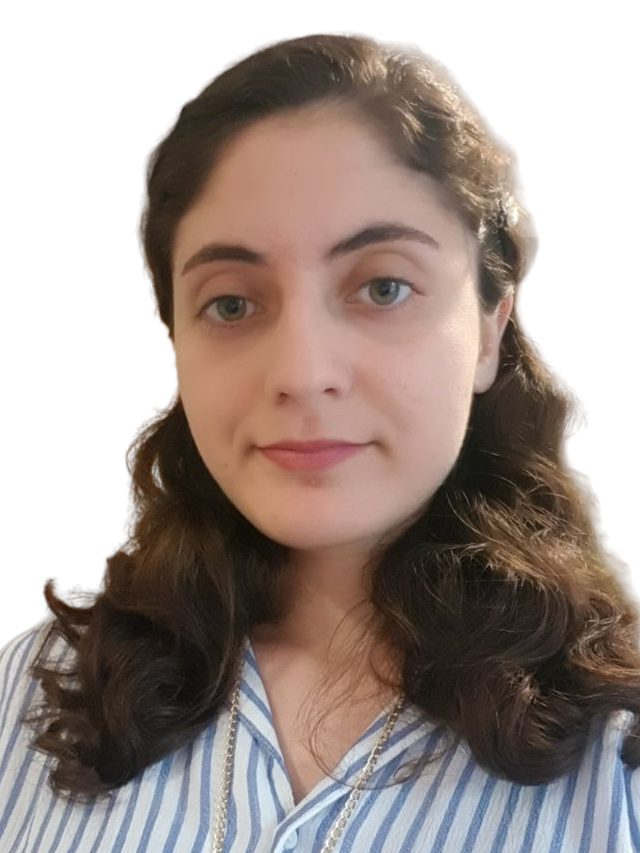
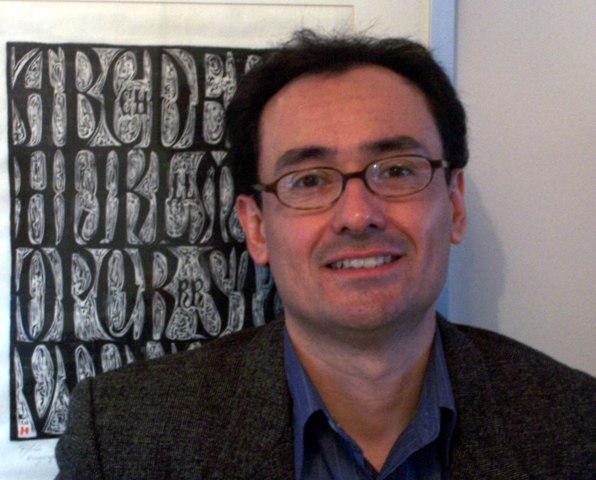
Jon Andoni Duñabeitia is a Full Professor at the School of Languages and Education of Universidad Nebrija in Madrid. He serves as Director of the Centro de Investigación Nebrija en Cognición (CINC) and the International Chair in Cognitive Health . With an h-index of 43 (Scopus), he has published 170+ articles across psycholinguistics, multilingualism, cognitive training, and virtual reality applications in education. His research examines how language processing interacts with cognitive load, emotional modulation, and technological innovation. Principal Investigator for 8+ projects funded by Spanish Government, Basque Government, BBVA Foundation Associate Editor and Editorial Board Member of high-impact journals Recognized among Spain's top 3% scientists across all disciplines Recent publications span topics including: Second-language reading dynamics in VR environments Multilingual cognitive interactions in neurological conditions Emoji/typographic effects on word processing Computerized cognitive assessment and training systems He actively contributes to scientific meetings as invited speaker across Europe, Asia, and Americas. His work bridges basic research in psycholinguistics with applied technologies for cognitive health.
Maryam Meghdadi Esfahani serves as a Researcher in the Department of Computer Science and Computational Linguistics at Saarland University. Since October 1, 2024, she has been working within Prof. Vera Demberg's research group as part of the prestigious ERC-funded project "Individualized Interaction in Discourse". Her research sits at the critical intersection of Cognitive Science and Natural Language Processing, with particular focus on how individual cognitive differences affect discourse comprehension and production. She investigates neural and computational mechanisms underlying human language processing to develop more adaptive communication systems. Meghdadi Esfahani contributes to cutting-edge research in computational linguistics and cognitive modeling through the ERC project, which aims to create discourse models capable of adapting to individual users' cognitive profiles. This work has significant implications for personalized educational technologies and conversational AI systems that require nuanced understanding of human language processing variations. She collaborates within Prof. Demberg's research ecosystem that bridges theoretical linguistics with practical applications in human-computer interaction, working from her office at Campus C7 2, Room 3.08 in Saarbrücken, Germany.
Assoc. Prof. Hana Vančová, PhD., is a dedicated academic at Trnava University's Faculty of Education, where she has served as an Associate Professor in the Department of English Language and Literature since 2013 (promoted from Assistant Professor following her 2022 habilitation). Currently Deputy Head of Department for Education, she oversees curriculum development and serves as study advisor for single-subject and combined English language teacher education programs at bachelor's, master's, and doctoral levels. Her institutional commitment spans over a decade with full-time employment since 2013. Education: 2004–2009: Master of Arts (Mgr.) in English Language and Literature – Slovak Language and Literature, Faculty of Education, Trnava University 2009–2012: Doctor of Philosophy (PhD.) in Pedagogy, Faculty of Education, Trnava University 2019: Professional Development: "Teaching languages in the digital era: the best apps, web platforms and ICT solutions for learning languages", Institute for Training, Employability and Mobile Learning Hana Vančová's scholarly work centers on English pronunciation pedagogy , with pioneering research in technology-enhanced instruction . Her primary domains include phonetics and phonology , lexicology , and digital language learning tools , investigating how AI, mobile applications, and multimedia resources optimize pronunciation acquisition. She bridges theoretical linguistics with practical classroom applications through ergonomic educational design, emphasizing learner-centered methodologies that address sociolinguistic factors like accent identity and intelligibility. Her habilitation thesis established her as a key innovator in pronunciation technology. Analysis of Vančová's publication trajectory (2014-2024) reveals a decisive shift from foundational studies on Slovak learners' pronunciation errors toward cutting-edge research on AI-driven pronunciation training. Her recent work explores karaoke-based methods and ethical AI implementation in CALL (Computer-Assisted Language Learning), highlighting human-AI interaction dynamics. The consistent thread is her commitment to making pronunciation instruction accessible through technological innovation, with publications increasingly addressing inclusivity, ethical considerations, and ergonomic design in digital language learning environments. While no specific scientific awards are documented beyond her academic promotion, Vančová's habilitation procedure—evaluated by an international committee including scholars from Poland, Czech Republic, and Slovakia—represents significant scholarly recognition. Her work has received 36 citations (14 foreign, 22 domestic) as of 2021. As study advisor for English language teacher training programs, Vančová mentors students across bachelor's, master's, and doctoral studies, guiding curriculum development for profile subjects in phonetics, lexicology, and digital language education. She maintains structured consultation hours (Wednesdays 10:00-11:30, study advising 11:30-13:00 via MS Teams) and demonstrates sustained research productivity through monographs, textbooks, and peer-reviewed articles. Though specific grant funding isn't detailed, her habilitation thesis exemplifies capacity for substantial scholarly projects with practical pedagogical impact. No dedicated laboratories or formal research teams are documented; Vančová's academic activities operate within the Department of English Language and Literature framework, focusing on individual research initiatives and departmental leadership in educational technology integration.
Jennifer Culbertson is an Associate Professor at the University of Edinburgh, where she has been a faculty member since 2014 when she took up a Chancellor's Fellowship, later being promoted to Reader (equivalent to Associate Professor) in 2018. She is a founding member of the Centre for Language Evolution at Edinburgh and maintains an active research program in experimental linguistics and cognitive science. Dr. Culbertson obtained her PhD in Cognitive Science from Johns Hopkins University in 2010, with her dissertation receiving the Robert J. Glushko Prize for Outstanding Dissertations in Cognitive Science in 2011. Her primary research investigates how languages are shaped by learning and use, with particular focus on grammatical structures (like word order) and morphological categories (gender and person systems). She employs experimental and computational methods to explore how typological universals arise from properties of the human cognitive system. Her work bridges theoretical linguistics, cognitive science, and language evolution, examining the cognitive constraints that influence linguistic patterns across diverse languages and learning contexts. She frequently uses artificial language learning paradigms to isolate specific cognitive mechanisms underlying language structure. Analysis of her recent publications reveals a consistent focus on cognitive biases in linguistic structure, particularly in word order and morphological systems. Her research increasingly incorporates cross-population studies (including work with autistic learners) and developmental perspectives to understand how language patterns emerge across different populations and throughout the lifespan. She examines how simplicity principles, communicative efficiency, and statistical learning shape linguistic structure. Dr. Culbertson's scientific contributions have been recognized with several prestigious awards: Robert J. Glushko Prize for Outstanding Dissertations in Cognitive Science (2011) ERC Starting Grant Young Academy of Europe membership (2019) Her research has been supported by over €2 million in funding from the ESRC and ERC. While specific advisees aren't mentioned in the provided text, her active publication record with numerous co-authors suggests she mentors graduate students and early-career researchers. Her work has significant implications for understanding language universals, language acquisition, and the cognitive foundations of linguistic structure. As a founding member of the Centre for Language Evolution at Edinburgh, Dr. Culbertson collaborates with an interdisciplinary team investigating the biological, cognitive, and cultural foundations of human language. Her research often intersects with psychology, cognitive science, and computational linguistics, contributing to a comprehensive understanding of language as both a cognitive and social phenomenon.
Janet van Hell is Professor of Psychology and Linguistics at Pennsylvania State University , where she also serves as Co-Director of the Social, Life, and Engineering Sciences Imaging Center (SLEIC) and Co-Director of the Center for Language Science . She leads the Bilingualism and Language Development (BiLD) Lab , investigating neurocognitive aspects of bilingual language use. Education: Ph.D., University of Amsterdam, 1998 Research Interests: Her work centers on bilingualism , second language acquisition , and the neurocognitive mechanisms underlying language development. Using EEG/ERP , behavioral, and linguistic techniques, her lab explores cross-language interaction, code-switching, and foreign-accented speech comprehension. The ‘brain bus’ , a mobile EEG lab, extends her research into schools and public outreach. Publications Overview: Her recent publications span bilingual phonetics , syntax processing , memory consolidation , and executive control , with a focus on EEG/ERP methodologies and experimental behavioral paradigms . Studies often involve heritage speakers , child bilinguals , and late L2 learners . Advising & Collaborations: Advises numerous PhD students and postdocs, many co-authoring papers (marked with *). Collaborates across Psychology, Linguistics, and Neuroscience departments. Leads outreach via the ‘brain bus’ for public engagement in science. Labs & Centers: BiLD Lab – Bilingualism and Language Development Lab SLEIC – Co-Director, Social, Life, and Engineering Sciences Imaging Center Center for Language Science – Co-Director
Radim Lacina, Ph.D., serves as Assistant Professor at Masaryk University's Faculty of Arts with dual appointments in the Department of Czech Language and Department of Linguistics and Baltic Languages. His academic trajectory includes research positions at Osnabrück University and University of Potsdam prior to his current role. His educational foundation comprises a 2025 Ph.D. in Cognitive Science (magna cum laude) from Osnabrück University, where his dissertation examined scalar implicatures and focus processing. This followed a 2020 M.Sc. in Psychology of Language (With Distinction) from the University of Edinburgh and a 2019 B.A. in Psychology, Philosophy and Linguistics (First Class) from the University of Oxford. Lacina's research investigates real-time language comprehension mechanisms, specializing in how contextual information integrates during utterance processing. His experimental pragmatics work centers on Czech language phenomena including scalar diversity, focus alternatives, negation effects, and agreement attraction illusions through behavioral methodologies. Analysis of his recent publications reveals a cohesive research program examining morphosyntactic processing in Czech, particularly agreement phenomena and scalar implicatures. His methodological approach combines probe recognition, lexical decision, and speeded acceptability paradigms to bridge theoretical linguistics with cognitive science, with significant contributions to understanding cross-linguistic variation in language processing. Current research activities include participation in the "Lexikon a gramatika češtiny V" project (2025) as MU Researcher and prior involvement in the LangInLife project. His international collaborations span the Scales in Language Processing and Acquisition project at Osnabrück University and University of Potsdam, plus a 2024 visiting academic position at Oxford's Faculty of Linguistics. He maintains active teaching responsibilities including Psycholinguistics, Pragmatics, and the Roman Jakobson Linguistic Seminar across multiple academic terms, with office hours available in-person (D.413) or online by appointment.
Naomi Yanagida is a Professor at the Graduate School of Japanese Applied Linguistics , Waseda University (since 2023). She holds a PhD in Linguistics and a Master's degree in Area Studies from the University of Tsukuba. Her career spans institutions like Hitotsubashi University, Kwansei Gakuin University, and Yokohama National University. Current affiliation: Waseda University (2023–Now) Previous roles: Hitotsubashi University (2015–2023), Kwansei Gakuin University (2010–2012) Research Interests : Symbiotic Language, Easy Japanese (Yasashii Nihongo), Discourse Analysis, Japanese Language Education Methodology, and Multicultural Communication. She focuses on how native Japanese speakers adapt their communication strategies when interacting with non-native speakers, particularly in discussion and explanatory contexts. Her scientific awards include the 2020 Japanese Language Education Association Encouragement Award and the 2020 'Japanese Language Education' Paper Award, both recognizing her work on native speaker explanatory strategies. She also received the 6th Hayashi Dai Memorial Paper Award in 2011 for early career research on contact situations. Research Trends : Yanagida's publications emphasize practical applications of Japanese language education, including syllabus design, intercultural discussion frameworks, and tools for improving communication between native and non-native speakers. Her work often intersects with policy development for multicultural societies and empirical studies on discourse behavior.
Dr. Judith Riegert is a Research Associate at the Humboldt University of Berlin, Faculty of Humanities, Social Sciences, and Education, working at the Institute of Rehabilitation Sciences in the Department of Education for People with Intellectual Disabilities. She has been in this position since October 2016, with previous experience as Research Associate and Program Coordinator at the same institution. Her academic journey includes serving as Deputy Professor at Leibniz University Hannover (2016-2018) and as a Visiting Professor at Humboldt University (2019). 1997-2002: Studies at Justus Liebig University of Giessen and Heidelberg University of Education 2003-2004: Traineeship at Seminar for Didactics and Teacher Training Heidelberg 2004-2006: Special education teacher at Carl Orff Special School 2012: Completed doctorate (Dr. phil.) at Humboldt University Dr. Riegert's research focuses on educational theory questions in intellectual disability contexts, trans- and intermediality in inclusive literature teaching, pedagogical professionalization for inclusive subject teaching, and participation of adults with severe disabilities. Her work bridges theoretical frameworks with practical classroom applications, examining how to create meaningful learning experiences across subject areas while maintaining academic rigor. She investigates the tension between educational standards and individualized instruction, particularly in German, history, and mathematics education. Her recent publications demonstrate a strong focus on participation frameworks for people with severe disabilities, inclusive teaching methodologies across subject areas, and the development of pedagogical approaches that bridge educational theory and classroom practice. Her work consistently addresses the challenge of maintaining subject integrity while adapting instruction to diverse learning needs. November 5, 2014: Prize for Good Teaching 2014 from Humboldt University's Faculty of Humanities, Social Sciences and Education February 16, 2016: Honorary certificate from Polytechnische Gesellschaft Foundation for the 'Animals in Numbers' project Dr. Riegert provides academic advising for special education and primary school teaching students (surnames He to Z), supervises bachelor's and master's theses, and offers consultation hours both in person and via Zoom. Her advising focuses on supporting students in the M.Ed. program, particularly addressing application concerns and transcript issues. As a member of the German Society for Educational Science (DGfE), she contributes to research teams examining inclusive education methodologies and implementation of inclusive practices across educational settings.
Ambra Ferrari is a Research Fellow at the Interdepartmental Center for Mind/Brain Sciences (CIMEC) within the University of Trento. Her work focuses on cognitive development, multisensory perception, and neuroimaging techniques. She teaches courses such as Cognitive neuroscience of infant development and contributes to the Cognitive Neuroscience program in the Department of Psychology and Cognitive Sciences. Her research integrates methodologies from neuroscience and psychology to study infant cognition, social development, and sensory integration. She develops computational tools like the WTools MATLAB toolbox for analyzing infant neural data. Ferrari's work bridges developmental psychology, psycholinguistics, and sensory neuroscience, emphasizing how prior expectations guide perception during communication. In teaching, she employs journal clubs and seminars to foster critical analysis of empirical studies and contemporary theories in cognitive development. Her courses aim to equip students with skills to evaluate experimental research and understand neurobiological foundations of cognition. Her laboratory (CIMEC) focuses on adaptive behavior, cross-modal plasticity, and embodied communication. Current projects explore statistical learning mechanisms, attention modulation in multisensory perception, and the role of gesture-prosody interactions in language comprehension.
Howard Nusbaum is a Professor in the Psychology Department within the Social Sciences Division at the University of Chicago. His research has focused since 1986 on perceptual learning, attention, and working memory, with significant contributions to understanding speech perception, auditory processing, and more recently, the science of wisdom. His laboratory employs a wide range of methods including high-density EEG, fMRI analysis, auditory brainstem recordings, and sophisticated speech analysis tools. Education: BA in Computer Science and Psychology from Brandeis University (1976) PhD in Cognitive Psychology from State University of New York at Buffalo (1981) Postdoctoral training in Speech, Hearing, and Sensory Communication from Indiana University (1984) Nusbaum's research investigates how humans learn and process speech and other auditory information, with particular emphasis on the role of attention, working memory, and sleep in perceptual learning. His laboratory has made groundbreaking contributions, including the first scientific evidence for sleep consolidation of generalized learning, the first behavioral evidence for functional effects of sleep consolidation in songbirds, and the discovery that adults can learn perfect pitch with this learning dependent on working memory capacity. His recent work has expanded to explore the cognitive neuroscience of wisdom, investigating how self-transcendent experiences contribute to wise reasoning. Nusbaum's publication record demonstrates consistent high-impact research across cognitive neuroscience, with recent work spanning from basic mechanisms of speech perception to broader questions about wisdom and decision-making. His research shows an evolving trajectory from foundational work on perceptual learning and speech processing toward more complex questions about higher cognitive functions and their neural underpinnings, with publications extending into 2025. Scientific Awards: 2018 Stella M. Rowley Professor of Psychology 2014 Fellow, The Psychonomic Society 2012 Llewellyn John and Harriet Manchester Quantrell Award for Excellence in Undergraduate Teaching 2009 Fellow, Association for Psychological Science 2007 Future Faculty Mentorship Award Nusbaum has successfully mentored numerous graduate students and postdoctoral trainees who have gone on to become tenured faculty at prestigious institutions worldwide. His NIH-funded research on 'Structure and Process in Speech Perception' has supported his work for many years. His laboratory provides comprehensive training in behavioral research methods, signal processing, statistical analysis, human electrophysiology, and computational modeling. The APEX (Attention, Perception, and Executive-function eXperience) lab at the University of Chicago, which Nusbaum directs, is equipped for high-density EEG measurements, fMRI data analysis, auditory brainstem recordings, and a wide range of speech analysis tools. The lab conducts research with human participants, including nap studies with polysomnography. Nusbaum also contributes to the UChicago Center for Practical Wisdom, reflecting his expanding research interests into the cognitive neuroscience of wisdom.
Wing Lam is an Assistant Professor at George Mason University specializing in software engineering with a focus on software testing methodologies. His academic service includes program committee membership for major conferences including ASE, ICSE, ISSTA, and ESEC/FSE, as well as session chair roles across multiple tracks. His research interests center on flaky tests , mobile application testing , and continuous development optimization . Lam's work addresses critical challenges in test reliability, particularly order-dependent flaky tests and resource-related flakiness. His research bridges theoretical foundations with practical applications in modern software development pipelines, with recent expansion into AI-assisted testing methodologies. Lam's publication record shows a clear trajectory focusing on flaky test detection and mitigation, with approximately 60% of his recent work dedicated to various aspects of this problem. His research increasingly incorporates machine learning techniques for UI testing and test optimization, reflecting broader trends in the field. The consistent publication venue pattern across top software engineering conferences indicates strong recognition within the academic community. Lam has served in multiple leadership roles including Program Co-Chair for MOBILESoft Research Track and Committee Member for ASE's New Ideas and Emerging Results (NIER) Track. His involvement in workshops focused on flaky testing demonstrates his specialization in this niche area of software testing.
Suzanne Flynn is a Professor of Foreign Languages and Linguistics at the Massachusetts Institute of Technology (MIT), affiliated with the Department of Linguistics and Philosophy. Her research focuses on Second Language Acquisition (SLA), Syntax, Semantics, and the intersection of Universal Grammar with language learning mechanisms. She has contributed significantly to theories such as the Cumulative-Enhancement Model for multilingualism and the Parameter-Setting Model in SLA. Education: Not explicitly mentioned, but her academic roles and publications suggest advanced degrees in Linguistics. Affiliations: MIT Linguistics and Philosophy Department, involvement in academic societies and conferences. Her work explores syntactic and semantic factors in SLA, including free relative clauses, third language acquisition, and the role of cognitive constraints in language learning. Key contributions include co-editing volumes on SLA theories and co-authoring foundational texts like Theoretical Second Language Acquisition (2006). She has also published extensively in journals such as Behavior and Brain Sciences and International Journal of Multilingualism . Research Themes: Universal Grammar, syntactic parameters, comparative language acquisition (children vs. adults). Though no specific awards are listed, her impactful publications and academic leadership reflect scholarly recognition. Her advising and grants are not detailed here, but she has supervised collaborative projects with colleagues like B. Lust and G. Martohardjono. She is involved in the MIT Linguistics community, contributing to pedagogical innovation and theoretical discourse in language studies.
Paul Firbas is an Associate Professor in the Department of Hispanic Languages and Literature at Stony Brook University, with affiliations in the Department of History. He holds a Ph.D. from Princeton University (2001), an M.A. from the University of Notre Dame (1995), and a B.A. from Universidad Católica del Perú (1992). Previously, he was an Assistant Professor at Princeton University (2001-2007) and a Visiting Professor at Columbia University (Spring 2007). Education: Ph.D., Princeton University, 2001; M.A., University of Notre Dame, 1995; B.A., Universidad Católica del Perú, 1992 His research focuses on Epic Poetry , Colonial Latin American Literature , Textual Criticism , Colonial Geopolitics , and Digital Humanities . He has extensively studied Spanish-American texts from the colonial period, particularly those discussing transatlantic South America's geography, information circulation, and moral geography. His work bridges literary analysis with historical documentation, emphasizing the role of epic poetry in shaping colonial identity. Recent publications include a 2025 digital humanities project on Magellanic route information flows, the 2023 two-volume edition of Lima's early news-sheets, and critical studies on 18th-century Lima's satire (2009), 16th-17th century Peruvian poetry (2019), and 2006 critical edition of 'Armas antárticas' . These works highlight transatlantic networks, geopolitical shifts, and literary responses to colonial crises. He has co-edited multiple volumes, including 'La biblioteca del Inca Garcilaso' (2016) and 'La forma inicial' (2015), a conversation book with Ricardo Piglia. His research also intersects with documentary film studies, as seen in 'Conversaciones en Princeton' (1998), co-edited with Pedro Meira Monteiro.
Rachel Ryskin is an Assistant Professor at the Department of Cognitive & Information Sciences, University of California, Merced. She leads the Language, Interaction, & Cognition (LInC) lab, focusing on real-time language comprehension, predictive processing, and cognitive mechanisms in communication. Her research integrates eye-tracking, EEG, computational modeling, and neuropsychological studies. Current affiliation: Assistant Professor at UC Merced Previous roles: Postdoc at MIT (Brain & Cognitive Sciences) and Boston University (Speech, Language & Hearing Science) Education: Ph.D. in Cognitive Psychology (University of Illinois Urbana-Champaign); B.A. in Cognitive Science (Northwestern University) Her work examines how humans use visuospatial perspective, speaker knowledge, and language statistics to resolve ambiguities during communication. She investigates lifelong learning mechanisms enabling adaptive inference in changing environments, with applications to aphasia and language acquisition research. Recent publications highlight her expertise in noisy-channel modeling, cross-situational learning, and lifespan language adaptation. Articles span topics including ERP studies, Bayesian inference in comprehension, and computational approaches to pragmatic reasoning. No scientific awards or formal advisees are listed in available materials.
Dr. Tae Twomey is a Research Fellow in Imaging Neuroscience at University College London (UCL). Their work focuses on the intersection of cognitive neuroscience and language processing, utilizing advanced brain imaging techniques to investigate how the brain processes language across different populations and writing systems. Dr. Twomey's research interests span multiple areas within cognitive neuroscience: Neuroscience of language processing Brain imaging techniques applied to linguistic studies Comparative studies of language processing across different writing systems (including Japanese and Chinese) Effects of auditory experience on brain function Neural mechanisms underlying reading and visual word recognition Dr. Twomey's publication record demonstrates expertise in examining language processing across diverse populations, including studies comparing deaf and hearing adults, investigations of bilingual processing in Japanese readers, and cross-linguistic studies of dyslexia. Their work frequently employs functional neuroimaging methods to uncover the neural basis of language and reading processes. Dr. Twomey has received recognition for their research, with publications in high-impact journals such as NeuroImage, Journal of Neuroscience, and Brain. As an educator, Dr. Twomey has served as: BSc Seminar Leader, Experimental Psychology, UCL (2020/21) Psychology Writing Lab instructor (2020/21) Module Convenor, MSc Introduction to the Brain and Imaging the Brain (2015/16 & 2017/18) Module Convenor, MSc Neuroscience of Language (2015/16)