Flavio Vasconcellos Comim is a Full Professor at IQS School of Management in Barcelona, Spain, holding the Chair of Ethics and Christian Thought (intercenter). His research focuses on the intersections of Sustainability, Economics, and Ethics. Fields of Interest : Human Development, Capability Approach, Social Exclusion, Regional Development, AI Ethics, Poverty Stigma (Aporophobia), Sustainable Development, Social Welfare, Justice, and Happiness. Recent research includes publications on youth HDI in Spain (2025), AI bias against the poor (2024), and critiques of Sen's social choice theory (2024). He leads projects like Big data applied to the study of aporophobia and Population Medicine and Sustainable Development collaborations with China. His academic output spans journals like Regional Studies , AI and Society , and Cambridge Journal of Regions, Economy and Society , with keywords spanning Economics, Machine Learning, Human Development, and Social Justice. No formal students or awards are listed in available records.
Xavier Serra is a Full Professor at the Department of Engineering at Universitat Pompeu Fabra (UPF), Barcelona. He is the founder and director of the Music Technology Group (MTG), and leads the UPF-BMAT Chair on AI and Music. He also coordinates the Master in Sound and Music Computing and serves as President of the Phonos Foundation. His research focuses on audio signal processing, sound and music computing, and computational musicology, emphasizing open science and open innovation. Education: BSc in Biology, University of Barcelona (1981) Master in Music, Florida State University (1983) PhD in Computer Music, Stanford University (1989) Research Interests: Audio Signal Processing Data-Driven and Knowledge-Driven Methodologies Music Information Retrieval Cultural Music Analysis (e.g., Carnatic/Turkish/Andalusian Music) Music Education Technology Notable Projects: CompMusic (ERC Advanced Grant, 2010-2017): Multicultural computational music analysis Open datasets: Freesound, Saraga, FSD50K Technologies: Reactable, Vocaloid, Essentia API Recent Trends in Articles: Focus on AI-driven audio processing (neural fingerprints, generative models), cross-cultural music analysis, and explainable music difficulty estimation. Awards: ERC Advanced Grant (2010) for CompMusic Project. Labs/Teams: Director of MTG, Phonos Foundation, and UPF-BMAT Chair. Active in open-source projects and international collaborations.
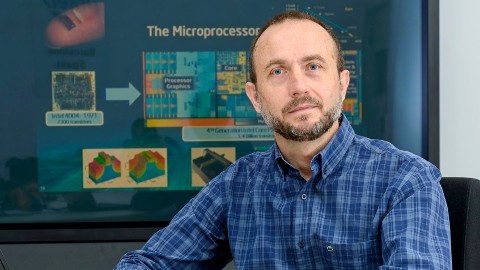
Antonio González is a full Professor at the Barcelona School of Informatics (FIB), Universitat Politècnica de Catalunya (UPC), where he is affiliated with the Department of Computer Architecture. He leads the Microarchitecture and Compilers (ARCO) research group, focusing on robust and energy-efficient computing systems, including general-purpose processors, GPUs, and cognitive computing architectures. His research spans computer architecture, microarchitecture, compilers, GPU design, and deep learning acceleration, with a strong emphasis on energy efficiency and memory optimization. His work integrates hardware and compiler techniques to enhance performance in modern computing systems. The recent publications highlight a strong trend in energy-efficient DNN acceleration, GPU microarchitecture, memory systems, and near-data processing. His team explores novel quantization methods, adaptive caching, and architectural extensions for vision and AI workloads, published in top-tier venues such as MICRO, ISCA, and IEEE/ACM journals. ACM Fellow (2020) ICREA Academia Award (2014, 2019, 2024) UPC Duran Farell Award (2008) HiPEAC 2024 Paper Award (twice) González has supervised several PhD students and leads competitive R&D+i projects, including those funded by ICREA and the European Research Council. His research group collaborates extensively within UPC and with international institutions. He is actively involved in advancing computer architecture through innovation in simulation, hardware design, and AI acceleration. He is a member of IEEE and ACM, and his work continues to influence both academic and industrial developments in high-performance and energy-efficient computing.
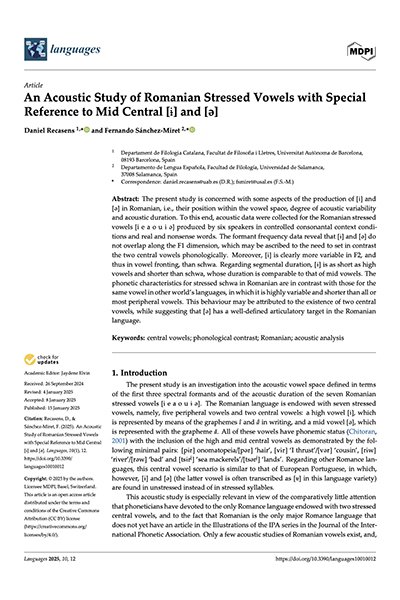
Daniel Recasens is a Full Professor in the Department of Catalan Philology at the Faculty of Arts, Autonomous University of Barcelona, where he has been a permanent faculty member since 1985. He is also affiliated with the Institute for Catalan Studies as a researcher. His academic work centers on experimental phonetics and phonology, with a focus on Romance languages, particularly Catalan. Research Interests: Daniel Recasens specializes in Experimental Phonetics , Phonology , Sound Change , and Phonetic and Phonological Universals . His research investigates articulatory and acoustic aspects of speech production, including coarticulation, assimilation, blending, and the phonetic motivations behind diachronic sound changes in Romance languages. He employs advanced techniques such as ultrasound imaging, electropalatography (EPG), and acoustic analysis to study consonant clusters, vowel-consonant interactions, and the evolution of phonological systems. Scientific Publications and Trends: His recent publications (2020–2025) reflect a consistent focus on the articulatory and acoustic foundations of phonological processes. Key themes include dynamic blending in fricative sequences, tongue configuration in stop-liquid clusters, and the phonetic causes of palatalization and vowel changes. His work combines empirical data with theoretical models such as the Degree of Articulatory Constraint (DAC) model, contributing significantly to laboratory phonology and historical linguistics. Scientific Awards: Member, Academy of Europe (Academia Europaea), 2018 Advising and Research Grants: Daniel Recasens has mentored several doctoral and postdoctoral researchers, including Clara Isabel Rodriguez Casado, Aina Espinosa, and Fernando Sánchez-Miret. While specific grant details are not listed, his extensive publication record and leadership in experimental phonetics suggest sustained research funding and collaborative projects in phonetic and phonological research. Labs and Research Teams: He is associated with the Center for Theoretical Linguistics (CLT) at the Autonomous University of Barcelona, a research group dedicated to theoretical and experimental studies of language. His work often involves collaboration with phonetics laboratories and international scholars in the fields of articulatory phonetics and historical linguistics.
Carme Torras Genís is a Research Professor at the Spanish National Research Council (CSIC), affiliated with the Institute of Robotics and Industrial Informatics (IRI) in Barcelona and the Technical University of Catalonia (UPC). Her career spans over three decades, focusing on robotics, neurocomputing, and artificial intelligence with applications in healthcare and deformable object manipulation. M.Sc. in Mathematics (University of Barcelona, 1978) M.Sc. in Computer Science (University of Massachusetts, 11981) Ph.D. in Computer Science (UPC, 1984) Research Interests : Robotic manipulation of deformable objects (especially textiles) Neurocomputing and machine learning for robotic control Human-robot interaction and assistive robotics Computational topology for cloth state representation Ethics in social robotics and AI Medical applications of robotics for neuromuscular disease assessment Scientific Leadership : ERC Advanced Grant recipient (2016) IEEE and EurAI Fellow Coordinator of Horizon Europe project SoftEnable and former ERC project CLOTHILDE Editorial leadership in IEEE Transactions on Robotics and multiple journals Active in ethics committees and AI policy advisory boards Advisory Committee of Ethics in AI (Catalan Government) Vice-President of CSIC Ethics Committee Member of Royal Academy of Engineering (Spain)
Jan Eeckhout is an ICREA Research Professor at Pompeu Fabra University (UPF) in Barcelona, specializing in macroeconomic theory, labor markets, and urban economics. His work focuses on market power dynamics, wage inequality, and technological impacts on labor and urban systems. He holds a PhD from the London School of Economics (LSE). Eeckhout has received a prestigious ERC Advanced Grant (€2.45M) for research on 'Macro Market Power and Distribution.' He authored the influential book The Profit Paradox (2021), exploring how dominant firms reshape labor markets and economies, translated into multiple languages. His research frequently appears in top journals like the Quarterly Journal of Economics and Review of Economic Studies. Research Interests: Macro-Labor Theory, Labor Markets, Urban Economics, Market Power, and Economic Inequality. Recent work examines technological origins of labor market stagnation, IT-driven urban polarization, and wealth effects on worker productivity. Advising and Grants: Supervises PhD students (e.g., Milena Djourelova, David Puig) and collaborates with institutions globally (CEMFI, EUI, Sciences Po). His team includes co-authors like Jan De Loecker and Philipp Kircher. Active in policy discussions via think tanks and media outlets like VoxEU and the NYT. Labs/Teams: Leads a diverse research group at UPF, with projects on market power, urban economics, and labor dynamics.
Miguel Ángel Bernal Merino serves as a Part-Time Lecturer in the Department of Modern Philology, Translation and Interpretation at the University of Las Palmas de Gran Canaria. Concurrently, he acts as convener of the MA in Translation at the University of Roehampton in London, managing its Specialised Translation, Audiovisual Translation, and Intercultural Communication pathways since 2005. His academic profile bridges theoretical research and industry application in localization disciplines. PhD in The Localisation of Video Games, Imperial College London MSc in The Localisation of Multimedia Interactive Entertainment Software, Imperial College London Certificate in Software Localisation, University of Limerick CELTA, University of Cambridge MPhil in Lip-Synched Dubbing, Universidad de Alicante MA in Hispanic Literature, University of Rhode Island BA in English & Spanish Linguistics, Universidad de Alicante Bernal Merino's research pioneers the expansion of Translation Studies into interactive media domains. His work on video game localization examines interactivity, cultural adaptation, glocalisation, and playability, while his audiovisual translation research investigates creativity in lip-synched dubbing, subtitling, and audiodescription. He extends these frameworks into gaming-based language learning through haptic environments and multisensory reinforcement, exploring physiological aspects of multilingual cognition and polysemiotic neural networks. This multidisciplinary approach fundamentally challenges traditional boundaries in translation theory. His publication trajectory reveals evolving industry-academia integration, shifting from foundational game localization frameworks (2008-2015) toward user-centered research and educational applications (2018-2024). Recent work emphasizes measurable business impacts through quality localization, regional market adaptations, and crowd-sourced methodologies, demonstrating consistent influence on professional standards across gaming and translation sectors. Fellow of the Higher Education Academy Bernal Merino supervises doctoral research on mobile game localization, transmedia fan experiences, and historical game content translation while developing industry-academia pipelines through projects like AHRC's Media Across Borders. His funded initiatives—including Maximising ROI through Quality Game Localisation and Video Games for Language Learning—bridge theoretical innovation with commercial implementation, focusing on glocalisation strategies, interactivity metrics, and playability optimization. These collaborations connect European universities, gaming studios, and localization service providers. As chair of the IGDA Localization SIG and member of GIR Discourse, Communication and Society, he directs international forums for game localization discourse. His work with Routes into Languages promotes audiovisual media in language education, while REF-readiness collaborations enhance research excellence across European institutions through his professional network spanning industry conferences like GDC Summit and Game Global.
Bryon Aragam is an Associate Professor of Econometrics and Statistics and Robert H. Topel Faculty Scholar at the University of Chicago Booth School of Business. His research focuses on the intersection of causality, statistical machine learning, and probabilistic modeling, with particular emphasis on applications to artificial intelligence systems including large language models like ChatGPT and generative models like DALL-E. Dr. Aragam completed his PhD in Statistics and a Masters in Applied Mathematics at UCLA, where he was an NSF graduate research fellow. Prior to joining the University of Chicago, he was a project scientist and postdoctoral researcher in the Machine Learning Department at Carnegie Mellon University. Research Focus: Causal structure learning in probabilistic generative models Key Areas: Causal machine learning, deep generative models, latent variable models, statistical learning theory Applications: AI interpretability, ethics, and fairness in artificial intelligence systems Teaching: Business Statistics, Econometrics and Statistics Colloquium His recent publications demonstrate a strong theoretical foundation combined with practical applications, particularly in understanding and improving AI systems. His work spans causal discovery, graphical models, deep learning, and latent variable modeling, with particular attention to the theoretical properties of these methods and their applications to real-world AI challenges. The research shows a progression toward increasingly complex problems in causal representation learning and AI interpretability. Scientific Awards: Robert H. Topel Faculty Scholar NSF Graduate Research Fellow Dr. Aragam's work has been published in top statistics and machine learning venues including the Annals of Statistics, Neural Information Processing Systems (NeurIPS), the International Conference on Machine Learning (ICML), and the Journal of Machine Learning Research (JMLR). His research group publishes broadly across both statistical and machine learning communities, demonstrating the interdisciplinary nature of his work at the intersection of statistics, machine learning, and causal inference. As a data science consultant for technology and marketing firms, Dr. Aragam has applied his expertise to problems in survey design, customer retention, logistics, and ranking, bridging the gap between theoretical research and practical applications.
Javier Franco Aixelá **Roles and Affiliations**: Full Professor of Translation and Interpreting at the University of Alicante, Director of the Department of Translation and Interpretation (2017–2021). Coordinates the Master's in Institutional Translation (Legal and Economic). Active in teaching Translation Theory, Professional Ethics, and Advanced Literary Translation. **Education**: PhD in English Philology (University of Alicante, 1996), Licenciatura in English Philology (Complutense University of Madrid, 1986), Expert in Translation (Complutense University of Madrid, 1991). **Research**: Specializes in translation theory, cultural aspects of translation, and bibliometrics. Founded the BITRA database (70,000 entries by 2017), a comprehensive online bibliography on translation and interpreting. Recent focus on bibliometric analysis of translation studies, including advertising translation, open access in academia, and cognitive approaches. **Teaching**: Taught courses like Professional Ethics, Advanced Literary Translation, and Translation of Research Genres. Supervised over 125 theses in the last five years, including high-impact works on medical neologisms (Habiba Chbab El Fakhi) and gender-neutral translation (María López Medel). **Awards**: Coordinator of the University of Alicante's Translation Doctoral Program, which received a quality distinction from the Ministry of Education. His theses have been awarded "Excellent Cum Laude" by the university. **Projects**: Led competitive research projects such as the 2021–2025 bibliometric study on economic translation and the BITRA database expansion (2007–2010). Collaborated on international initiatives like the 5th ICEBFIT Conference (2023). **Publications**: Authored 40+ books (e.g., *La traducción condicionada de los nombres propios*), co-edited *ENTI: Encyclopedia of Translation and Interpreting*, and published widely in journals like *META* and *Translation & Interpreting*.
Michalis Vazirgiannis is a Professor at LIX, École Polytechnique (France) leading the Data Science and Mining (DaSciM) group. With academic backgrounds in Physics (Athens University), AI (Heriot-Watt University), and Informatics (Athens University), he has conducted research at Fraunhofer, Max Planck MPI, and INRIA/FUTURS while teaching at institutions across Greece, France, China, and Spain. His research spans Machine/Deep Learning for Graphs (GNNs, graph kernels, embeddings) Text Mining & NLP (Graph-of-Words, biomedical text analysis) Combinatorial Optimization for pandemic forecasting and energy systems Event/Anomaly Detection in time series and sensory data Industrial collaborations with Airbus, Google, Tencent, and BNP . He has supervised 29 completed PhD theses, published over 250 papers, and received prestigious awards including Marie Curie and Tencent Rhino-Bird Fellowships. His team leads the ANR-HELAS Chair (2020-2025) focusing on heterogeneous data deep learning.
Cristina Baus Marquez is a Research Fellow at the University of Barcelona's Faculty of Psychology, affiliated with the Department of Cognition, Development, and Educational Psychology. She holds a Ramon y Cajal Research Fellowship (2020–2025) and leads research in the Brain Dynamics and Structure of Human Cognition (BraCo) group. Her work focuses on cognitive neuroscience, bilingualism, and language processing, with a particular emphasis on electrophysiological and behavioral studies of language production, perception, and social cognition. Education: Bachelor's Degree (Llicenciatura) in Psychology, University of Barcelona (2003) PhD in Cognitive Neuroscience and Specific Educational Needs, Universidad de La Laguna (2010) Research Interests include the neural mechanisms underlying bilingual speech production, cross-modal language interactions, and how linguistic experience shapes perception of faces and voices. She employs EEG/ERP techniques to study self-monitoring processes in bilinguals and investigates the role of iconicity in sign language production. Key Projects: Ramón y Cajal Fellowship (2020–2025): Investigates verbal interactions and learning mechanisms Fundación BIAL Grant (2017–2019): Explored electrophysiology of bimodal bilingualism AGAUR Grant (2018–2020): Studied verbal interactions' cognitive mechanisms Labs/Teams: Active member of the BraCo research group, collaborating internationally on multilingualism and cognitive neuroscience projects.
Bruno Echauri Galván serves as Associate Professor in the Department of Modern Philology at the University of Alcalá (UAH), Spain, teaching core translation courses including Introduction to Translation Theory and English-Spanish Translation across multiple degree programs in Alcalá de Henares and Guadalajara. His research centers on Translation Studies and Reception Theory, with significant contributions to intersemiotic translation (particularly in children's literature), healthcare interpreting, and film adaptation reception. As an active member of the Research Group on Interdisciplinary Reception Studies, he investigates cultural reception, literary reception, and translation through frameworks including cultural mediation, censorship studies, and myth reception. Recent publications (2021-2024) demonstrate consistent innovation in translation pedagogy, including color-based translation assessment tools, service-learning translation projects, and pandemic-era teaching adaptations. His work on collaborative writing projects, mental health communication, and Carver-Lish translation controversies reveals methodological diversity across literary, audiovisual, and healthcare domains. Dr. Echauri Galván has participated in multiple research initiatives including the JOB AND MOVE student network project (2018), Homopoly strategic partnership (2016), and InterMed healthcare mediation project (2011), where he contributed expertise in intercultural communication and translation standards. He maintains active research leadership through the Interdisciplinary Reception Studies group, examining reception phenomena across cultural, literary, musical, and translational contexts while addressing contemporary issues like censorship and myth criticism.
Leland Bybee is an Assistant Professor of Finance at the University of Chicago Booth School of Business . He leverages machine learning and natural language processing to address economic and financial questions, particularly focusing on belief measurement with applications to asset pricing and behavioral economics. Ph.D. in Financial Economics, Yale School of Management (2024) M.S. in Statistics, University of Michigan (2017) B.A. in Economics, University of Chicago (2013) His research integrates computational methods with economic theory to analyze: Textual analysis of business news for macroeconomic tracking Narrative-driven asset pricing models Memory-based belief formation using kernel methods Macroeconomic determinants of currency returns He has received multiple awards including: Dimension Fund Advisors Distinguished Paper Award BlackRock Applied Research Award HEC Top Finance Graduate Award The Brattle Group PhD Candidates Award EFA Engelbert Dockner Memorial Prize Bybee teaches Machine Learning in Finance and participates in finance seminars, contributing computational tools like regIPCA (Python) and changepointsHD (R) to the research community.
Danel Ahman is an Associate Professor at the Institute of Computer Science , University of Tartu , Estonia, specializing in programming language theory . His research focuses on dependent/refinement types , computational effects , and verified software . Education PhD in Theoretical Computer Science (University of Edinburgh, 2017) MPhil in Advanced Computer Science (University of Cambridge, 2012) BSc in Informatics (Tallinn University of Technology, 2010) Research Interests : Danel investigates programming languages with algebraic effects and effect handlers for verified software, exploring denotational/operational semantics and fibrational approaches to effects. His work bridges theoretical computer science with practical formal verification. Scientific Awards : Estonian Research Council grant (2025) Marie Skłodowska-Curie Fellowship (2019) PhD dissertation prize (2018) Google/Citrix dissertation awards (2012) Teaching & Supervision : He teaches courses like Logic in Computer Science and Functional Programming at the University of Tartu, and supervised BSc/MSc theses on topics including asynchronous effects and formal verification. Danel also organizes research seminars and guest lectures on F*.
Jose Antonio Hinojos Morales is a contemporary artist and researcher affiliated with Miguel Hernández University of Elche, where he completed his PhD in 2020. His academic work focuses on contemporary painting practices within the broader context of visual arts research. His research interests center around pictorial languages and procedures in contemporary contexts , with particular emphasis on the relationship between landscape, nature, and culture. He investigates how landscapes function as cultural constructs and explores innovative methodologies in the representation of the human face through art. His work also engages with decolonial thought and aesthetics, media archaeology, and expanded painting techniques. Hinojos Morales' artistic output demonstrates significant trends in contemporary Spanish art, particularly in the exploration of spiritual, philosophical, and scientific concepts through visual media. His work often challenges conventional perceptions and hegemonic epistemological positions, creating dialogues between traditional and contemporary artistic approaches. Second place, VIII International Painting Competition 'Miradas 2018', Chicago (USA), 2018 Second Prize, XIX Pastor Calpena Painting Prize, Aspe (Alicante), 2015 First Prize, XLVI National Painting Contest Vila de Sant Joan d'Alacant, 2013 First Prize, III National Painting Competition No to Fear, La Nucía (Alicante), 2013 Third Prize, XVII National Painting Competition City of Antequera, Antequera (Málaga), 2013 As an educator and researcher, Hinojos Morales has coordinated the Altea Artistic Residency program, directing multiple landscape-focused scholarship-residencies that support emerging artists. His work bridges academic research with professional artistic practice, contributing to both scholarly discourse and the contemporary art scene in Spain.