Thomas Eder is a Lecturer in the Department of German Studies at the University of Vienna, Faculty of Philology and Cultural Studies. He has taught courses on Modern German Literature since 2002/2003 and currently leads classes on topics like 'Erzählen in der Literatur' and 'Schauplätze in der Literatur (Städte, Hotels, Räume)'. His research focuses on Austrian avant-garde movements, cognitive poetics, and the intersection of philosophy, literature, and experimental writing. Key Research Areas: Austrian Neo-Avant-garde, Cognitive Narratology, Poetics of Knowledge, Literary Epistemology, Holocaust Representation, Intermediality Scientific Awards Wissenschaftspreis der Österreichischen Gesellschaft für Germanistik (2002) FWF Fellowship (2005/06) Theodor-Körner-Preis für Wissenschaft (1996) Talentförderungsprämie Oberösterreich (2000) Notable Contributions include editing the Oswald Wiener Werkausgabe , organizing the 34. Autorenprojekt in der Alten Schmiede (1999-2000), and curating the Heimrad Bäcker exhibition (2002-2003). His work bridges Austrian literary avant-gardes with contemporary cognitive theories, emphasizing language's role in knowledge formation and artistic agitation.
Christoph Bock is a Principal Investigator at CeMM Research Center for Molecular Medicine and Professor/Head of the Institute of Artificial Intelligence at Medical University of Vienna. He leads the Biomedical Sequencing Facility and contributes to the Human Cell Atlas and ELLIS initiatives. Key research areas: Single-cell biology , Epigenetics , CRISPR screening , Machine learning , Cell therapy , Multi-omics Major contributions: CellWhisperer (natural language single-cell analysis), JAK-STAT signaling in immune homeostasis, LIQUORICE for liquid biopsies, and RnBeads software Scientific Awards include: ERC Starting Grant (2016) ERC Consolidator Grant (2021) Overton Prize (2017) Erwin Schrödinger Prize (2022) Clarivate Highly Cited Researcher (2019-2024) His lab develops bioinformatics tools (e.g., RnBeads, LIQUORICE) and applies systems immunology to understand disease mechanisms. Startup leadership : Co-founder of Myllia Biotechnology. Collaborations include clinical translations and tech development with the Biomedical Sequencing Facility.
Christoph Ableitinger is an Associate Professor at the Department of Mathematics , Faculty of Mathematics , University of Vienna , with a dual affiliation to the Center for Teacher Education . His academic profile focuses on the intersection of theory and practice in mathematics education, particularly through his roles in curriculum development and teacher training programs. Broadly investigates mathematical procedural knowledge and its assessment Examines technology integration in secondary mathematics instruction Develops modeling seminars and educational outreach initiatives Studies teacher-student belief systems in mathematical contexts Researches the impact of standardized testing on educational practices Recent publications highlight trends in analyzing student errors, optimizing technology use in classrooms, and bridging university mathematics with secondary school requirements through modeling activities. His work offers valuable insights into improving mathematical understanding and instructional effectiveness across educational systems.
Konstantin Schekotihin is an Associate Professor at the Department of Artificial Intelligence and Cybersecurity, Alpen-Adria University of Klagenfurt. His research focuses on artificial intelligence, machine learning, and semantic technologies with applications in industrial systems and semiconductor manufacturing. Reinforcement learning for industrial scheduling Answer Set Programming (ASP) and stream reasoning Failure analysis automation and ontology engineering Neuro-symbolic AI integration Knowledge-based systems in manufacturing Recent publications emphasize AI-driven optimization in semiconductor production, decomposition strategies for scheduling problems, and multi-agent systems for workflow management. His work combines symbolic reasoning with machine learning to address complex industrial challenges. Contact: Konstantin.Schekotihin@aau.at
Roberto Therón is a Full Professor of Computer Science at the University of Salamanca, Spain, and a leading researcher in the GRIAL Group specializing in visual analytics and its interdisciplinary applications. His educational background includes: PhD in Computer Science BA in Audiovisual Communication BA in Humanities Dr. Therón's research spans visual analytics, artificial intelligence, data visualization, educational technology, human-computer interaction, and sustainability. He develops innovative platforms like LATILL for language learning and DETAILLs for AI-driven sustainable living labs, emphasizing user-centered design and domain-specific knowledge integration. His work bridges technical AI development with practical educational and sustainability applications through interdisciplinary collaboration. Analysis of his 2023-2025 publications reveals a dominant trend toward generative AI integration in educational tools, meta-modeling for reusable open educational resources, and context-aware data visualization techniques. His research consistently focuses on enhancing user experience through heuristic evaluation, domain knowledge incorporation, and sustainable AI frameworks across language learning, poetic analysis, and dashboard design. No scientific awards are mentioned in the available information. While specific advising details are unlisted, his leadership in the GRIAL Group and extensive co-authorship network (including Alicia García-Holgado, Andrea Vázquez-Ingelmo, and Francisco José García-Peñalvo) indicate active research supervision. His editorial roles as Chief Editor for Human-Media Interaction at Frontiers in Computer Science and Review Editor for Data Visualization at Frontiers in Bioinformatics demonstrate scholarly influence beyond direct research. As a core member of the GRIAL Group (Research Group in Applied e-Learning), Dr. Therón contributes to advancing e-learning through projects focused on open educational resources, AI-enhanced language platforms, and sustainability-driven living labs. The group emphasizes practical implementation of theoretical frameworks in real-world educational and environmental contexts.
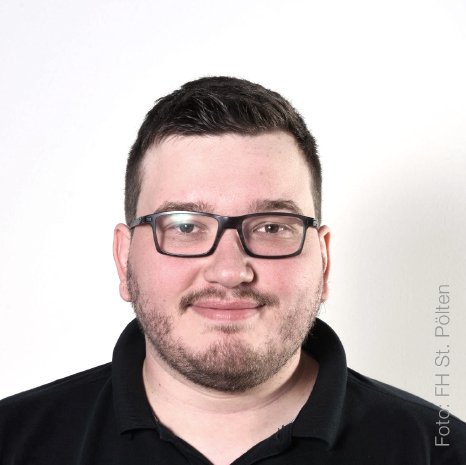
Alexander Buchelt serves as a Researcher in the Department of Computer Science and Security at University of Applied Sciences St. Pölten, contributing to the Data Science and Artificial Intelligence (BA) program. His industry background includes data analytics roles at Hutchison Drei Austria (2014-2018) and MindTake Research GmbH (2019-2020), followed by academic experience as a Student Assistant at FH St. Pölten (2020-2022). His research spans artificial intelligence with emphasis on natural language processing for German content moderation, fractal-based neural network architectures, and AI policy frameworks. Current work demonstrates strong focus on real-world implementation including drone applications in forest ecology, multilingual social media analysis, and regulatory compliance for emerging AI systems. Technical approaches integrate machine learning with domain-specific challenges across environmental science, media analysis, and telecommunications. Publication trends since 2022 reveal increasing emphasis on ethical AI deployment and practical system robustness, with 2024-2025 works addressing content moderation safeguards, neural network innovation, and environmental monitoring solutions. His research consistently bridges theoretical AI development with tangible societal applications, particularly in European regulatory contexts and German-language environments. As part of the Department of Computer Science and Security, Buchelt contributes to Austria's applied research ecosystem focused on practical technology solutions. His work aligns with the university's mission in developing industry-relevant AI applications while addressing emerging challenges in security, ethics, and cross-domain implementation.
Daniela Elsner is a Professor of German Linguistics at Vorarlberg University of Education (PH Vorarlberg) in Austria, specializing in syntax, word formation, and grammar education. Her academic career includes research positions at Ruhr-Universität Bochum (2005-2014), a W1 professorship at Universität Leipzig (2014-2019), and acting professorships at Freie Universität Berlin (2016-2018) before joining PH Vorarlberg in March 2019. As a faculty member in the Department of German Linguistics within the Faculty of Education, she teaches courses including German Grammar of Contemporary Language, Language Didactics, and Specialized Didactic Seminars with Bachelor's theses. Professor Elsner's research primarily focuses on adverbial word formation in German, particularly the suffixes -weise/-erweise, examining their historical development, syntactic properties, and semantic functions. Her work bridges theoretical linguistics with practical applications in language education, investigating how epistemological beliefs affect grammar learning and the role of linguistic knowledge in educational contexts. She has pioneered research on quantifying N+weise formations and the reanalysis processes these constructions undergo in contemporary German usage. Her publication record shows a clear trajectory from early work on sentence structure and language acquisition toward more recent investigations of grammar instruction methods, epistemological beliefs in language learning, and practical applications for classroom teaching. This evolution reflects her commitment to connecting theoretical linguistics with practical educational challenges, particularly in primary and secondary school settings. Throughout her career, Elsner has presented her research at numerous international conferences across Europe and Asia, demonstrating the global relevance of her work on German linguistics and language education. Her lecture topics consistently address the intersection of theoretical analysis and practical application, with recent presentations focusing on integrating language analysis into teacher education and resolving ambiguities in word formation as pedagogical opportunities.
Julia Hüttner serves as Professor and Deputy Head of the Department of English and American Studies at the University of Vienna, with additional affiliation in the Department for Teacher Education. Her academic responsibilities span both institutions, focusing on language education and teacher training. Primary Affiliation: Department of English and American Studies (Spitalgasse 2, 1090 Wien) Secondary Affiliation: Department for Teacher Education (Porzellangasse 4, 1090 Wien) Her research centers on practical applications in language education: English Language Teaching methodology and materials development Second Language Acquisition processes, particularly L2 writing Content and Language Integrated Learning (CLIL) implementation Teacher education frameworks and didactic strategies Professor Hüttner actively supervises Master's and PhD students, maintaining flexible meeting arrangements through Termino scheduling. Currently on research leave during Summer Semester 2025, she holds monthly office hours and remains unavailable for MA defense chairing until October 2025.
Horst Prillinger serves as a Professor in the Department of English and American Studies at the University of Vienna, with additional affiliations at Library - Communications (Universitätsring 1, Room ZG2O1.03B, 1010 Wien) and Library - Content and Data (Universitätsring 1, 1010 Wien). His teaching portfolio includes core language courses such as Integrated Language and Study Skills, English for Academic Purposes, and Language in Use across multiple semesters (2024W, 2025S, 2025W), focusing on academic language proficiency development for university students. His research and instructional expertise centers on applied language education in higher education contexts, with primary emphasis on: Applied Linguistics methodologies English Language Teaching (ELT) frameworks Academic writing skill development Second Language Acquisition processes Language pedagogy for non-native speakers Curriculum design for academic language support These interests directly inform his practical teaching approach in preparing students for English-medium academic environments.
Dominik Vereno is a Researcher at the Information Technologies and Digitalisation Centre for Dependable Systems Engineering, specializing in co-simulation techniques and smart grid integration. His work directly contributes to UN Sustainable Development Goals through advancements in energy system reliability and cybersecurity. His research profile shows dominant expertise in Co-simulation (100%) and Smart Grid technologies (98%), with significant contributions to Model-based Systems Engineering (38%), Artificial Intelligence (38%), Quantum Power Flow (23%), and System of Systems (21%). This fingerprint reveals a strategic focus on solving interoperability challenges in complex energy infrastructures through architectural modeling and simulation frameworks. Recent publications (2024-2025) demonstrate a clear trajectory toward sector-coupled energy systems, with increasing emphasis on retrieval-augmented generation for transportation architectures and computational models for electric vehicle integration. The research consistently bridges automotive and power grid domains while addressing scalability in distributed energy resources. Scientific recognition includes: Best Paper Award (2024) Best Paper Candidate (May 4, 2024) As Co-Investigator in the Josef Ressel Centre for Dependable System-of-Systems Engineering (2020-2025), Vereno leads critical work on smart grid interoperability and co-simulation frameworks with an international research consortium. His grant portfolio demonstrates sustained funding in dependable systems engineering. He operates within a dense research network spanning co-simulation, smart grid cybersecurity, and low-temperature anergy systems, with active collaborations visible across European energy research initiatives and conference circuits.
Michael Christian Leitner serves as Head of Research & Transfer Services and External Lecturer in Information Technologies and Digitalisation at Salzburg University of Applied Sciences. With dual PhDs in Psychology and Communication Science from the University of Salzburg, he bridges academic research with practical applications in neuropsychology and sports psychology. PhD in Psychology (University of Salzburg, 2021) Master in Psychology (University of Salzburg, 2016) Bachelor in Psychology (University of Salzburg, 2014) PhD in Communication Science (University of Salzburg, 2012) Master in Communication Science (University of Salzburg, 2009) Bachelor in Communication Science (University of Salzburg, 2007) Master in Telecommunication & Media (St. Pölten University of Applied Sciences, 2005) Leitner's research spans three primary domains: neuropsychological rehabilitation for visual field defects after stroke, sport psychological effects of crowd absence during the COVID-19 pandemic (ghost games), and social engineering/cybersecurity. His innovative work combines eye-tracking technology, virtual reality interventions, and psychological assessment to address complex rehabilitation challenges and understand human behavior in high-pressure sports environments. The Salzburg Visual Field Trainer (SVFT), his VR-based rehabilitation system, represents a significant advancement over traditional stationary and unreliable visual restitution therapies. His publication record reveals a clear thematic progression from neuropsychological rehabilitation methods toward analyzing the psychological impacts of pandemic conditions on sports. The COVID-19 pandemic created a unique natural experiment for studying home advantage phenomena, resulting in multiple publications examining referee decisions, player behavior, and emotional responses in empty stadiums. His most recent work integrates eye-tracking with social science methodology to assess memory-related response variability. Science award (2022) Young Investigators Award (2022) Leitner has secured funding for significant research projects including 'The Psychological Impact of Ghost Games in Football during the COVID-19 Pandemic' (2020-2030) and 'Advanced Perimetry for the Evaluation of Neuroplasticity in the Visual Cortex' (2018-2023). His collaborative network spans multiple institutions with strong connections to the University of Salzburg's Centre for Cognitive Neuroscience. He actively engages with the public through media appearances discussing topics from emotional behavior in sports to the psychological aspects of neurovisual rehabilitation. As Head of Research & Transfer Services, Leitner leads the strategic reorientation of research at Salzburg University of Applied Sciences through a comprehensive organizational development process. His work contributes to UN Sustainable Development Goals through applications in health, wellbeing, and quality education.