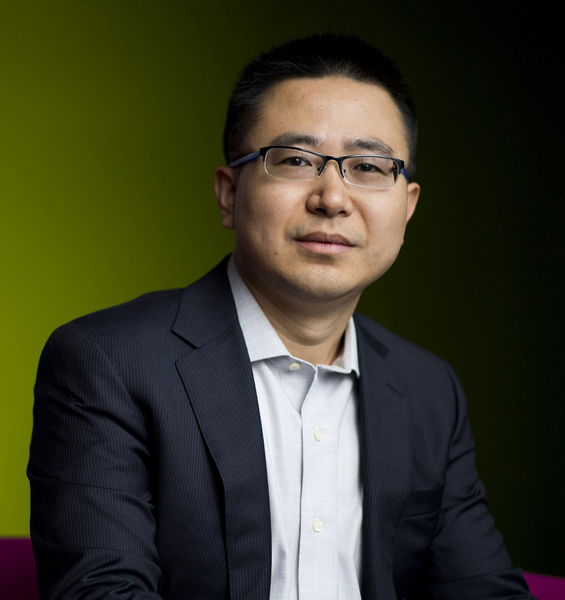
Christian Timmerer is a Professor at the Institute of Information Technology, Alpen-Adria-Universität Klagenfurt. His research focuses on adaptive video streaming , energy efficiency , MPEG standardization , and quality of experience (QoE) , with significant contributions to HTTP Adaptive Streaming (HAS), multi-codec optimization, and immersive media systems. Email: christian.timmerer@aau.at Office Hours: Monday 3:00-4:00 PM (by appointment) Projects: CD-Labor ATHENA, GAIA, SPIRIT His research integrates machine learning and generative AI to enhance video encoding, super-resolution, and voice dubbing, while prioritizing sustainability through energy-aware algorithms and open-source tools like GREEM and VEED. Current work emphasizes latency reduction and dynamic bitrate adaptation in live streaming environments. Recent publications address VVC optimization , multi-resolution encoding , and perceptual quality modeling , reflecting interdisciplinary efforts in networking , computer vision , and human-computer interaction . Awards include leading funded projects on adaptive streaming and green video systems.
Navid Rekab-saz is an Assistant Professor at the Institute of Computational Perception, Johannes Kepler University Linz (JKU), Austria. He is actively involved in research and teaching, offering courses such as Natural Language Processing and Natural Language Processing with Deep Learning . He maintains regular office hours and is accessible via email and a dedicated booking system for meetings. His research focuses on natural language processing , information retrieval , fairness and bias in AI , and recommender systems , with applications in humanitarian action and ethical AI. He employs deep learning and machine learning techniques to address challenges in bias mitigation, explainability, and domain adaptation. His work often bridges technical innovation with societal impact, especially in developing inclusive and fair AI systems. The recent publications of Navid Rekab-saz reflect a strong trend in debiasing strategies , parameter-efficient learning , and evaluation of societal biases in search and recommendation systems. His research spans from foundational work on word embeddings and retrieval models to applied studies in humanitarian NLP and gender bias in user queries. He frequently collaborates with a broad network of researchers and contributes to the development of datasets and benchmarks. Scientific Awards: Best Student Paper Award at ISMIR 2022 for 'Traces of Globalization in Online Music Consumption Patterns and Results of Recommendation Algorithms' Advising and Grants: Navid Rekab-saz has advised and collaborated with numerous students and researchers, many of whom are co-authors on his publications. While specific grant details are not listed in the provided text, his extensive publication record in top-tier venues suggests active involvement in funded research projects, likely supported by national or European funding bodies. He is also engaged in interdisciplinary research, particularly at the intersection of technical AI and legal or social implications. Labs and Teams: He is a core member of the Institute of Computational Perception at JKU, where he contributes to research projects in computational linguistics and AI. He collaborates closely with the team led by Prof. Markus Schedl and participates in initiatives related to music information retrieval, fairness in AI, and humanitarian applications of NLP.
Susanne Reichl is a full Professor at the Department of English and American Studies within the Faculty of Philological and Cultural Studies at the University of Vienna. She serves as Head of the interdisciplinary research platform Mediatised Lifeworlds: Young people's narrative constructions, connections and appropriations, a position she has held since autumn 2021 for its second period. Reichl maintains an active teaching schedule, offering courses on contemporary British literature, children's and young adult literature, and teaching methodology for literature and culture. Her research interests span contemporary British literature and culture, children's and young adult literature, cognitive approaches to literature, tales of time travel, Black and Asian British literature, and teaching literature at university and school. Reichl's work demonstrates a consistent focus on how young people engage with literature and media, particularly examining narrative construction in digital environments and the intersection of reading practices with identity formation. Reichl's recent publications reveal a strong trend toward interdisciplinary research connecting literary studies with media studies, cognitive science, and educational theory. Her work on youth media practices, particularly through the #YouthMediaLife platform, demonstrates innovative approaches to understanding how young people navigate contemporary digital landscapes through narrative construction. She has made significant contributions to understanding time travel narratives, multimodal literature, and social reading practices, particularly on platforms like Goodreads. Figdor-prize of the Austrian Academy of Sciences for literary studies (2005) Erwin-Schrödinger international scholarship by the FWF (Austrian research fund) (2005/2006) Reichl has supervised numerous master's students, though she has announced she cannot take on new master supervision until March 2026. Her research platform Mediatised Lifeworlds has secured significant institutional support at the University of Vienna, indicating successful grant acquisition. Reichl maintains an active research agenda with consistent publication output across multiple formats including monographs, edited collections, journal articles, and book chapters. As Head of the interdisciplinary research platform Mediatised Lifeworlds, Reichl leads a collaborative team examining young people's narrative constructions in digital environments. This platform brings together researchers from multiple disciplines to investigate how youth appropriate and connect through mediatised experiences, with particular attention to the narrative frameworks they employ in social media and other digital spaces.
Shah Nawaz is an Assistant Professor at the Institute of Computational Perception , Johannes Kepler University Linz. His research focuses on multimodal systems, deep learning applications in healthcare, and cross-modal learning frameworks. He leads projects addressing challenges like missing modalities in machine learning, face-voice association, and medical image analysis. Key research interests include machine learning for medical diagnostics (e.g., breast cancer detection, skin lesion segmentation), speech recognition, and adaptive neural network architectures. He has contributed to frameworks like Chameleon for robust multimodal learning and the FAME challenge for face-voice association in multilingual environments. Publications emphasize practical applications, such as bilingual healthcare chatbots for pregnant women and light-weight speech recognition models for resource-constrained systems. His work bridges theoretical advancements and real-world deployment in healthcare and security domains. Shaw Nawaz actively participates in academic communities through workshops like DaQuaMRec@RecSys2025 and has developed open-source frameworks for image restoration and multimodal fusion. His lab focuses on scalable solutions for multimodal data challenges in both technical and clinical contexts.
Judit Gervain is a Research Fellow at the French National Centre for Scientific Research (CNRS) and has held the position of Director of Research since 2017. She has been associated with institutions including the Basque Center on Cognition, Brain and Language (San Sebastian, Spain) and the University of British Columbia (Vancouver, Canada). Her academic journey includes a PhD in Cognitive Neuroscience from SISSA, Italy, and dual MA degrees in Theoretical Linguistics and English/French Language and Literature from the University of Szeged, Hungary. Research Focus: Developmental cognitive neuroscience, speech perception in newborns, and early language acquisition using near-infrared spectroscopy (NIRS). Grants: ERC Consolidator Grant (2018), ANR grants (2015-2018), HFSP Young Investigator Grant (2014-2018), and others. Scientific Contributions: Her work explores how newborns and infants process speech structure, prosody, and word order, leveraging interdisciplinary methods combining neuroscience and linguistics. She has pioneered the use of NIRS in infant cognitive studies. Key Awards: ERC Consolidator Grant, Lorentz/NIAS Fellowship, Mercator Fellowship, and multiple scholarships including Huygens and Erasmus. Mentoring: Supervised 8 Masters students, 3 PhDs (defended), 3 PhDs (ongoing), and 8 postdocs. Leadership: Deputy Director at the Institute of Neuroscience & Cognition (Paris), Board Member of the International Society for fNIRS, and editorial roles in journals like Neurophotonics and Developmental Science .
Dietmar Jannach is a Full Professor at the University of Klagenfurt, Austria, affiliated with the Institute for Artificial Intelligence and Cybersecurity where he leads the Research Group for Information Systems. His academic roles include membership in the university's Senate and Curricular Commissions for Liberal Arts and Information Management. His research spans: Core Areas : Artificial Intelligence, Recommender Systems, and Software Engineering. Methodological Focus : Algorithm reproducibility, fairness in AI, sequential recommendations, and hybrid learning models. Emerging Interests : Generative AI for group decision support, ethical recommender systems, and foundation model applications. Jannach's recent publications critically evaluate reproducibility challenges in AI research, advocate for calibrated recommendations to mitigate bias, and explore agentic paradigms in group recommender systems. He emphasizes real-world validation, with studies on deployment challenges and developer experiences in software processes. He actively contributes to academic governance and mentors through research groups, though specific student advisees are not listed. Contact via Dietmar.Jannach@aau.at .
Christian Fermüller is an Associate Professor in the Department of Theory and Logic at the Faculty of Informatics, Technische Universität Wien (TU Wien). His research focuses on theoretical computer science, artificial intelligence, automated deduction, and formal logic systems. He specializes in fuzzy logic, proof theory, and non-classical logics, with contributions to semantic games, dialogue systems, and computational models of reasoning under vagueness. **Research Interests:** Foundations of fuzzy logic and many-valued logics Proof theory and analytic calculi Game-based semantics for non-classical logics Formal models of judgment aggregation and argumentation theory Applications in automated reasoning and computational intelligence **Grants & Projects:** Austrian Science Fund (FWF) projects on graded deontic reasoning (2025–2027), semantic games and analytic calculi (2019–2023), and fuzzy logic foundations (2008–2013) Co-PI of the LogICCC initiative exploring contextualism and fuzzy logic **Teaching:** Courses include logical methods in computer science, quantum computing, and theoretical computer science. Supervised over 15 PhD and master’s theses on topics ranging from semantic games to argumentation frameworks. **Affiliations:** Active in the LogiCS research group and regularly organizes seminars on logic and computation.
Nelson Nicolas Higuera Ruiz is a PreDoc Researcher at the Vienna University of Technology, affiliated with the Faculty of Informatics' Knowledge-Based Systems research group. His work bridges logic programming and deep learning for explainable AI. Research Focus: Neurosymbolic AI, Visual Question Answering (VQA), Answer Set Programming (ASP), and hybrid reasoning systems Projects: Leads optimization research in the LCS (2017–2025) project, developing neurosymbolic approaches for intelligent systems Key Contributions: Pioneering adaptive large-neighbourhood search algorithms for ASP optimization, modular neurosymbolic architectures, and contrastive explainability frameworks for VQA Collaborations: Active in international workshops and conferences including IJCAI, AAAI, and CLeaR, frequently collaborating with researchers like Thomas Eiter and Johannes Oetsch Publications: Focus on neurosymbolic integration, optimization algorithms, and explainability across AI, logic programming, and computer vision domains
Joost-Pieter Katoen is a full Professor at RWTH Aachen University and Head of its Computer Science Department since 2012. He also holds a part-time (20%) Professorship at the University of Twente . His research focuses on model checking , probabilistic verification , formal semantics , and software verification , with applications in aerospace systems. His work has led to significant tools like MRMC (probabilistic model checker), COMPASS (AADL analysis tool-set), and libalf (learning automata library). He has authored over 18 international projects (total €5.2 million) and graduated 12 PhD students. Scientific Awards : Member, German National Academy of Sciences (Leopoldina), 2024 ACM Fellow, 2020 ERC Advanced Grant, 2018 Honorary doctorate, Aalborg University, 2017 Teaching Award, RWTH Aachen, 2010 Philips Early Career Development Award, 1988 Research Trends (from articles): His recent work spans probabilistic program verification , quantitative game theory , Markov chain analysis , and parameter synthesis for stochastic systems, with applications in AI, quantum computing, and fault tree analysis. Leadership & Service : Katoen co-founded the QEST conference , chairs ETAPS steering committee, and has led numerous program committees (CONCUR, TACAS, QEST). He has served on editorial boards and organized conferences/seminars globally.
Prof. Martin Teufel is a Professor at the University of Teacher Education Styria, Austria, affiliated with the Institute for Digital Media Education. He specializes in educational technology with a focus on mobile learning, digital competency, and innovative teaching methodologies. His work includes developing MOOC-based learning systems and analyzing student digital preparedness. Key projects include the Styrian University Conference digital competency analysis and the Digital Learning Lab initiative. He holds a BEd from the University of Graz and actively contributes to teacher training programs integrating emerging technologies. Research interests span digital pedagogy, seamless learning environments, and computational thinking tools like BBC micro:bit. His publications highlight patterns in online learning behaviors and institutional digital transformation strategies. He advises on educational technology policy and has led cross-institutional studies on student readiness for digital education. His work often bridges theory and practice through collaborative formats like the Hochschuldidaktik-Café for educators' professional development. Teaching responsibilities include courses on digital media in education and technology-enhanced learning design. He manages educational technology projects and serves as a consultant for digital learning infrastructure. His GPG public key (F361ADE9) indicates active engagement in secure academic communication.
Manfred Kern serves as Professor and Head of the Department of German Studies at Paris Lodron University Salzburg. With an extensive publication record dating back to 1995 and continuing through 2025, he maintains an active research profile in medieval literature and digital humanities. His leadership role as department head and project manager for significant research initiatives demonstrates his standing within the academic community. Professor Kern's research interests center on medieval literary cultures, particularly through the lens of digital humanities. His work on the Wenceslas Bible represents a significant interdisciplinary contribution, combining traditional philological approaches with cutting-edge computer vision techniques. His recent editorial work on disability representation in art ( Kunst und Gebrechen ) demonstrates expanding scholarly interests at the intersection of cultural history and visual studies. His research consistently bridges historical scholarship with contemporary methodological innovations. Kern's publication trends reveal a strategic evolution from traditional literary studies toward digital humanities applications. His most recent work (2024-2025) shows a strong emphasis on computational analysis of historical manuscripts, particularly the Wenceslas Bible project, while simultaneously developing theoretical frameworks for understanding disability representation in historical art contexts. This dual focus represents a sophisticated integration of technical and humanistic approaches to cultural heritage. As project manager for significant research initiatives including WB-DEA (The Wenceslas Bible - Digital Edition and Analysis, 2022-2024), TALC_ME (Textual and Literary Cultures in Medieval Europe, 2014-2017), and ALIENA (Old literature re-aestheticized in the experience space, 2010-2013), Professor Kern has secured substantial research funding and built collaborative networks across institutions. His organizational role in numerous academic events, including the IZMF lecture series and the In Nomine conference on medieval naming practices, further demonstrates his leadership in the field. Professor Kern actively participates in departmental and university governance, serving on habilitation committees and appointment committees (Berufungskommission). His academic service extends to editorial work and conference organization, reflecting his commitment to scholarly community building. His leadership of the German Studies department at Paris Lodron University Salzburg positions him at the center of academic activity in his field.
Jennifer Culbertson is an Associate Professor at the University of Edinburgh, where she has been a faculty member since 2014 when she took up a Chancellor's Fellowship, later being promoted to Reader (equivalent to Associate Professor) in 2018. She is a founding member of the Centre for Language Evolution at Edinburgh and maintains an active research program in experimental linguistics and cognitive science. Dr. Culbertson obtained her PhD in Cognitive Science from Johns Hopkins University in 2010, with her dissertation receiving the Robert J. Glushko Prize for Outstanding Dissertations in Cognitive Science in 2011. Her primary research investigates how languages are shaped by learning and use, with particular focus on grammatical structures (like word order) and morphological categories (gender and person systems). She employs experimental and computational methods to explore how typological universals arise from properties of the human cognitive system. Her work bridges theoretical linguistics, cognitive science, and language evolution, examining the cognitive constraints that influence linguistic patterns across diverse languages and learning contexts. She frequently uses artificial language learning paradigms to isolate specific cognitive mechanisms underlying language structure. Analysis of her recent publications reveals a consistent focus on cognitive biases in linguistic structure, particularly in word order and morphological systems. Her research increasingly incorporates cross-population studies (including work with autistic learners) and developmental perspectives to understand how language patterns emerge across different populations and throughout the lifespan. She examines how simplicity principles, communicative efficiency, and statistical learning shape linguistic structure. Dr. Culbertson's scientific contributions have been recognized with several prestigious awards: Robert J. Glushko Prize for Outstanding Dissertations in Cognitive Science (2011) ERC Starting Grant Young Academy of Europe membership (2019) Her research has been supported by over €2 million in funding from the ESRC and ERC. While specific advisees aren't mentioned in the provided text, her active publication record with numerous co-authors suggests she mentors graduate students and early-career researchers. Her work has significant implications for understanding language universals, language acquisition, and the cognitive foundations of linguistic structure. As a founding member of the Centre for Language Evolution at Edinburgh, Dr. Culbertson collaborates with an interdisciplinary team investigating the biological, cognitive, and cultural foundations of human language. Her research often intersects with psychology, cognitive science, and computational linguistics, contributing to a comprehensive understanding of language as both a cognitive and social phenomenon.
Philipp Haindl is a lecturer at the Department of Computer Science and Security at St. Poelten University of Applied Sciences. His work focuses on software engineering, cybersecurity, and AI integration in education and manufacturing. Software Engineering Cybersecurity Artificial Intelligence DevOps Quality Assurance Research Interests: Dr. Haindl explores software metrics, inter-service security in microservices, and AI tools like ChatGPT in programming education. He investigates quality models and non-functional requirements in DevOps environments. Publications: Recent work includes studies on ChatGPT's impact in software engineering education, systematic reviews of microservice security, and frameworks for human-AI teaming in manufacturing.
Fajar Juang Ekaputra is a Tenure Track Assistant Professor at the Institute of Data, Process, and Knowledge Management (DPKM), WU Vienna and a part-time Postdoctoral Researcher at the Data Science research unit, TU Wien . With a focus on Semantic Web , Knowledge Graphs , and their integration with Machine Learning in Neurosymbolic AI systems, his work spans domains like Cyber-Physical Systems and Materials Engineering . Education: Dr.techn. (2018), TU Wien M.T. (2010) and S.T. (2008), Institute Teknologi Bandung (ITB) Research Interests center on hybrid AI systems combining Semantic Web and Machine Learning , with applications in Cyber-Physical Systems (e.g., smart grids, smart buildings), data privacy in smart cities, and materials engineering . His 102+ publications include frameworks like SWeMLS-KG and SHACL4Protege . Recent Articles (2024) address explainable AI in cyber-physical systems, privacy trust in data infrastructures, and neurosymbolic frameworks . Earlier works (2023–2022) explore ontology-based data management , auditable AI , and hybrid system architectures . Scientific Awards: Best Paper Awards (ICoDSE 2023, ICoDSE 2016) Best Poster Nomination (SEMANTiCS 2019) PhD Scholarship (Austria’s Agency for Education and Internationalisation, 2012) Advising includes supervising PhD students (e.g., Majlinda Llugiqi, Katrin Schreiberhuber) and master’s theses on topics like knowledge graph characteristics and data quality assessment . He leads projects such as FAIR-AI (FFG-funded, 2024–2026) and SENSE (Horizon Europe, 2023–2025).
Yun Fu is a Distinguished Professor at Northeastern University, affiliated with the College of Engineering and Khoury College of Computer Science. He holds tenure in Electrical and Computer Engineering (ECE). His roles include Professor, Senior Vice President at Shiseido Americas, founder of Giaran (acquired by Shiseido), and co-founder of TVision Insights. He earned his Ph.D. from the University of Illinois at Urbana-Champaign. His research focuses on artificial intelligence, computer vision, machine learning, and data mining. Key achievements include over 500 publications, 50+ patents, and prestigious awards like IEEE Fellow, OSA Fellow, and AAIA Fellow. He leads the SMILE Lab, exploring AI applications in vision, robotics, and healthcare. Notable entrepreneurship includes AI-driven ventures in cosmetics and media analytics. Research interests emphasize AI-driven solutions for computer vision challenges, including anomaly detection, trajectory prediction, and multimodal learning. His work bridges academia and industry, with impactful contributions to both fields.