Flavio Vasconcellos Comim is a Full Professor at IQS School of Management in Barcelona, Spain, holding the Chair of Ethics and Christian Thought (intercenter). His research focuses on the intersections of Sustainability, Economics, and Ethics. Fields of Interest : Human Development, Capability Approach, Social Exclusion, Regional Development, AI Ethics, Poverty Stigma (Aporophobia), Sustainable Development, Social Welfare, Justice, and Happiness. Recent research includes publications on youth HDI in Spain (2025), AI bias against the poor (2024), and critiques of Sen's social choice theory (2024). He leads projects like Big data applied to the study of aporophobia and Population Medicine and Sustainable Development collaborations with China. His academic output spans journals like Regional Studies , AI and Society , and Cambridge Journal of Regions, Economy and Society , with keywords spanning Economics, Machine Learning, Human Development, and Social Justice. No formal students or awards are listed in available records.
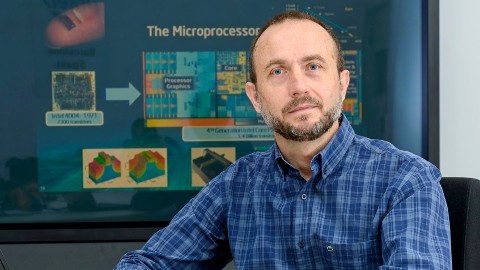
Antonio González is a full Professor at the Barcelona School of Informatics (FIB), Universitat Politècnica de Catalunya (UPC), where he is affiliated with the Department of Computer Architecture. He leads the Microarchitecture and Compilers (ARCO) research group, focusing on robust and energy-efficient computing systems, including general-purpose processors, GPUs, and cognitive computing architectures. His research spans computer architecture, microarchitecture, compilers, GPU design, and deep learning acceleration, with a strong emphasis on energy efficiency and memory optimization. His work integrates hardware and compiler techniques to enhance performance in modern computing systems. The recent publications highlight a strong trend in energy-efficient DNN acceleration, GPU microarchitecture, memory systems, and near-data processing. His team explores novel quantization methods, adaptive caching, and architectural extensions for vision and AI workloads, published in top-tier venues such as MICRO, ISCA, and IEEE/ACM journals. ACM Fellow (2020) ICREA Academia Award (2014, 2019, 2024) UPC Duran Farell Award (2008) HiPEAC 2024 Paper Award (twice) González has supervised several PhD students and leads competitive R&D+i projects, including those funded by ICREA and the European Research Council. His research group collaborates extensively within UPC and with international institutions. He is actively involved in advancing computer architecture through innovation in simulation, hardware design, and AI acceleration. He is a member of IEEE and ACM, and his work continues to influence both academic and industrial developments in high-performance and energy-efficient computing.
Astrid Wagner is a Senior Scientist and Deputy Director at the Institute of Philosophy (IFS) of the Spanish National Research Council (CSIC) in Madrid. She holds a PhD in Philosophy from Technische Universität Berlin, recognized by the National University of Distance Education (UNED), and previously served as professor for 20 years at TU Berlin. Her research focuses on philosophy of culture, science epistemology, and digital society challenges. Key interests include philosophy of language, perception phenomenology, pragmatism, and ethical implications of digital transformation. Recent work examines uncertainty dynamics, trust frameworks, post-truth phenomena, infodemics, conspiracy theories, cognitive vulnerability, and digital citizenship. Wagner leads major research initiatives including the INconRES project on ethical-epistemological keys to digital social dynamics (2021-2025), the ORTEGA-CM interdisciplinary innovation consortium on José Ortega y Gasset's legacy (2024-2026), and previously directed the RESPONTRUST project combating COVID-19 disinformation (2021-2023). She co-leads the DESTERRA project analyzing disinformation's societal foundations (2022-2025) and participates in UCM's Rationality, Knowledge and Action research group. She serves on Spain's Committee of Experts for National Security against disinformation, advises the Congressional Science Office, and holds editorial positions at the Journal of Ortega Studies. Wagner contributes to GENET Association's Gender Studies Network and juries for the Princess of Asturias Award and Javier Muguerza Philosophy Prize.
Carme Torras Genís is a Research Professor at the Spanish National Research Council (CSIC), affiliated with the Institute of Robotics and Industrial Informatics (IRI) in Barcelona and the Technical University of Catalonia (UPC). Her career spans over three decades, focusing on robotics, neurocomputing, and artificial intelligence with applications in healthcare and deformable object manipulation. M.Sc. in Mathematics (University of Barcelona, 1978) M.Sc. in Computer Science (University of Massachusetts, 11981) Ph.D. in Computer Science (UPC, 1984) Research Interests : Robotic manipulation of deformable objects (especially textiles) Neurocomputing and machine learning for robotic control Human-robot interaction and assistive robotics Computational topology for cloth state representation Ethics in social robotics and AI Medical applications of robotics for neuromuscular disease assessment Scientific Leadership : ERC Advanced Grant recipient (2016) IEEE and EurAI Fellow Coordinator of Horizon Europe project SoftEnable and former ERC project CLOTHILDE Editorial leadership in IEEE Transactions on Robotics and multiple journals Active in ethics committees and AI policy advisory boards Advisory Committee of Ethics in AI (Catalan Government) Vice-President of CSIC Ethics Committee Member of Royal Academy of Engineering (Spain)
Jan Eeckhout is an ICREA Research Professor at Pompeu Fabra University (UPF) in Barcelona, specializing in macroeconomic theory, labor markets, and urban economics. His work focuses on market power dynamics, wage inequality, and technological impacts on labor and urban systems. He holds a PhD from the London School of Economics (LSE). Eeckhout has received a prestigious ERC Advanced Grant (€2.45M) for research on 'Macro Market Power and Distribution.' He authored the influential book The Profit Paradox (2021), exploring how dominant firms reshape labor markets and economies, translated into multiple languages. His research frequently appears in top journals like the Quarterly Journal of Economics and Review of Economic Studies. Research Interests: Macro-Labor Theory, Labor Markets, Urban Economics, Market Power, and Economic Inequality. Recent work examines technological origins of labor market stagnation, IT-driven urban polarization, and wealth effects on worker productivity. Advising and Grants: Supervises PhD students (e.g., Milena Djourelova, David Puig) and collaborates with institutions globally (CEMFI, EUI, Sciences Po). His team includes co-authors like Jan De Loecker and Philipp Kircher. Active in policy discussions via think tanks and media outlets like VoxEU and the NYT. Labs/Teams: Leads a diverse research group at UPF, with projects on market power, urban economics, and labor dynamics.
Bernhard Schölkopf is a Director at the Max Planck Institute for Intelligent Systems and holds a Professorship at ETH Zurich. He is one of Europe's leading researchers in Artificial Intelligence and serves as co-founder and president of ELLIS (European Laboratory for Learning and Intelligent Systems). His scientific interests focus on machine learning and causal inference, with applications spanning biomedical problems, computational photography, and astronomy. Schölkopf has conducted research at prestigious institutions including AT&T Bell Labs, GMD FIRST in Berlin, and Microsoft Research Cambridge before joining the Max Planck Society in 2001. Schölkopf's recent work examines the tangible risks of AI systems rather than speculative existential threats, highlighting important challenges including algorithmic bias, lack of transparency, privacy violations, worker exploitation, carbon footprint of AI systems, and job displacement across multiple publications in different languages. His scientific achievements have been recognized with numerous prestigious awards: Academy Prize of the Berlin-Brandenburg Academy of Sciences and Humanities Royal Society Milner Award Leibniz Award Koerber European Science Prize BBVA Foundation Frontiers of Knowledge Award Allen Newell Award Fellow of the ACM Fellow of the CIFAR Program "Learning in Machines and Brains" Schölkopf is a member of the German Academy of Sciences (Leopoldina) and co-founded the series of Machine Learning Summer Schools. His work bridges theoretical advances in machine learning with practical applications across diverse domains, while advocating for responsible AI development that addresses real-world challenges rather than speculative existential threats.
Javier Franco Aixelá **Roles and Affiliations**: Full Professor of Translation and Interpreting at the University of Alicante, Director of the Department of Translation and Interpretation (2017–2021). Coordinates the Master's in Institutional Translation (Legal and Economic). Active in teaching Translation Theory, Professional Ethics, and Advanced Literary Translation. **Education**: PhD in English Philology (University of Alicante, 1996), Licenciatura in English Philology (Complutense University of Madrid, 1986), Expert in Translation (Complutense University of Madrid, 1991). **Research**: Specializes in translation theory, cultural aspects of translation, and bibliometrics. Founded the BITRA database (70,000 entries by 2017), a comprehensive online bibliography on translation and interpreting. Recent focus on bibliometric analysis of translation studies, including advertising translation, open access in academia, and cognitive approaches. **Teaching**: Taught courses like Professional Ethics, Advanced Literary Translation, and Translation of Research Genres. Supervised over 125 theses in the last five years, including high-impact works on medical neologisms (Habiba Chbab El Fakhi) and gender-neutral translation (María López Medel). **Awards**: Coordinator of the University of Alicante's Translation Doctoral Program, which received a quality distinction from the Ministry of Education. His theses have been awarded "Excellent Cum Laude" by the university. **Projects**: Led competitive research projects such as the 2021–2025 bibliometric study on economic translation and the BITRA database expansion (2007–2010). Collaborated on international initiatives like the 5th ICEBFIT Conference (2023). **Publications**: Authored 40+ books (e.g., *La traducción condicionada de los nombres propios*), co-edited *ENTI: Encyclopedia of Translation and Interpreting*, and published widely in journals like *META* and *Translation & Interpreting*.
Danfeng Zhang is a faculty member at Duke University whose research sits at the intersection of programming languages and security. Active across the premier PL conferences since 2015, Zhang has served on more than two-dozen program committees and currently co-chairs the POPL Student Research Competition. Education & Affiliation: Home page: users.cs.duke.edu/~dz132 Affiliation: Duke University, United States Research Interests: Zhang’s work spans programming-language design, static and dynamic analysis, formal verification, and security. A recurring theme is developing language-based techniques that guarantee strong security and privacy properties—ranging from side-channel resistance and constant-time execution to differential-privacy proofs—while preserving performance and usability. His recent projects combine type systems, program logics, and automated reasoning to build practical verification tools for concurrent, speculative, and approximate software. Publication Trends: Across nine representative papers (2015-2024) Zhang has advanced static detection of cache side channels, automated proofs of differential privacy, and relaxed concurrency models. The trajectory shows deepening integration of security concerns into language infrastructure, with tool-building (CtChecker, SpecSafe, LightDP) that bridge formal guarantees and real-world systems. Service & Leadership: 2024 POPL Student Research Competition Co-Chair 2025 POPL Program Committee member Repeated reviewer/PC member: PLDI, SPLASH/OOPSLA, ISSTA, ECOOP, APLAS, PriSC, PASS Zhang regularly mentors student researchers through SRC sessions and workshop panels, fostering diversity and early-career participation in the programming-languages community.
Francisco Javier Murillo Torrecilla is a Professor of Research Methods and Evaluation in Education at the Autonomous University of Madrid (UAM). He serves as Director of multiple educational journals ( REICE , Revista Iberoamericana de Evaluación Educativa , Revista Internacional de Educación para la Justicia Social ) and leads research groups like 'Educational Change for Social Justice' (GICE) and the Ibero-American Research Network on School Change and Effectiveness (RINACE). His work focuses on Education for Social Justice , School Segregation , and Educational Leadership . He holds degrees in Mathematics and Education Sciences, and a PhD in Education Sciences from Universidad Complutense de Madrid. With 5 research sexenios and over 200 publications, his citations exceed 25,000 (h-index: 84) in Google Scholar. He has led 25 competitive research projects, including the 'Network of Excellence' RILME (EDU2017-90606-REDT). Coordinated UNESCO's Latin American Laboratory for Educational Quality Evaluation (LLECE) Former Director of Spain's Centre for Educational Research and Documentation (CIDE) Director of UAM's UNESCO Chair in Education for Social Justice and Institute DEMOSPAZ His research projects on social justice in education include five consecutive Spanish State Program grants (2010-2021) and books like La investigación sobre eficacia escolar (2005). He has consulted for UNESCO, OECD, and governments in Latin America.
Virginia Ferreiro Basurto is an Assistant Professor in the Department of Psychology at the University of the Balearic Islands (UIB), where she teaches undergraduate and postgraduate courses in psychology, with a strong focus on gender equality and gender-based violence. She is actively involved in postgraduate coordination, including the Chair of Gender Violence Studies and the Summer University of Gender Studies at UIB. Assistant Professor, Department of Psychology, University of the Balearic Islands Coordinator, Chair of Gender Violence Studies, UIB Coordinator, Summer University of Gender Studies, UIB Member, Gender Studies Research Group (ESTUDEGE), UIB Education: Degree in Pedagogy, University of the Balearic Islands Master’s in Inclusive Education, University of the Balearic Islands Doctoral Candidate in Interdisciplinary Gender Studies, University of the Balearic Islands Dr. Ferreiro Basurto’s research centers on gender perspectives in the Information Society, with emphasis on ICT-related social-digital exclusion of women and sexist cyberviolence. Her work explores implicit and explicit attitudes toward gender-based violence, bystander intervention, street harassment, and the myth of romantic love as a justification for abuse. She has contributed extensively to academic discourse through publications and participation in national and international conferences. The trend in her recent scholarly output reveals a consistent focus on gender-based violence in both physical and digital environments. Her articles analyze youth perceptions of cyberaggression, the role of bystanders in intimate partner violence, and methodological advancements in measuring supportive attitudes toward violence. The interdisciplinary nature of her work spans psychology, sociology, gender studies, and digital humanities, often informed by empirical data from Spanish populations. Scientific Awards: No specific awards listed in the provided text. She has been involved in multiple research projects funded by national and international institutions, including the Ministry of Science, Innovation and Universities, FECYT, Ministerio de Economía y Competitividad, Fundación BBVA, and Instituto de la Mujer. These projects cover themes such as critical thinking development in education, citizen involvement in violence prevention, and intervention programs for abusers. She also advises and supervises master’s theses and final degree projects, particularly in gender-focused postgraduate programs. Dr. Ferreiro Basurto is a member of the Gender Studies Research Group (ESTUDEGE) at UIB, a consolidated R&D&I group dedicated to advancing interdisciplinary research on gender, violence, and digital society. Her collaborative work involves designing and evaluating gender-sensitive educational and intervention programs.
Pere-Pau Vázquez is an Assistant Professor in AI for Visual Computing at the Computer Vision Lab, TU Wien, Austria . Previously, he held academic positions at the ViRVIG Group and Facultat d'Informàtica de Barcelona (UPC) , where he taught courses in Programming, Computer Graphics, and Visualization for over 20 years. His research focuses on Information Visualization, Scientific Visualization, Medical Data Visualization, Molecular Visualization, and AI applications to Visual Computing . Current Teaching : Data Visualization, Fast Realistic Rendering, Information Visualization, Medical Images, Scientific Visualization, Virtual Reality, and 3D Medical Visualization. Former PhD Students : Elena Molina, Alexandra Cortez, Jesús Díaz, Pedro Hermosilla, Eva Monclús. His scientific awards include the Best PhD Thesis Award (UPC, 2003), Best Student Paper Award (SPIE, 2012), and Best Paper Award (International Conference on Computer Graphics Theory and Applications, 2013). Recent publications explore AI integration in biomedical visualization, molecular data analysis, and interactive techniques for volume rendering. He serves on the EuroGraphics Executive Board as Secretary and is active in steering committees for EuroVis and Visual Computing for Biology and Medicine . His work bridges Computer Graphics, Artificial Intelligence, and Human-Computer Interaction , with applications in medical and molecular data analysis.
Rubén Lluc Comas Forgas is a Full Professor at the University of the Balearic Islands (UIB) in the Department of Applied Pedagogy and Educational Psychology . He holds a European PhD in Educational Sciences from UIB (2009) and has served as a visiting researcher at institutions including the University of East Anglia, Liverpool John Moores University, Panteion University, Autonomous University of Yucatán, and Stockholm University. Current research focuses on Academic Integrity , Research Integrity , Scientific Communication , Educational Uses of ICT , and Environmental Education . He leads multiple EU-funded projects (e.g., AI-UpskillED , CHARLIE ) and national initiatives like Academic Integrity in Initial Teacher Training (MCI-AEI-ERDF). His recent publications analyze the impact of generative AI on academic writing, predatory journals in education sciences, and plagiarism trends among Spanish students. He collaborates with the Research Group on Academic Integrity (GRIAC) and Education for Sustainability (GREAS) .
María da Alba Nogueira López is a Professor of Administrative Law at the University of Santiago de Compostela, affiliated with the Faculty of Law and Department of Public Law and Theory of the State. She holds a European Doctorate in Law (1997) and has conducted extensive research in Environmental Law, Administrative Economic Law, Social Rights, Linguistic Law, and Autonomous Public Law. She leads the ARMELA research network on equality, rights, and the social state and is part of the Center for Interdisciplinary Research in Environmental Technologies (CRETUS). Her work emphasizes sustainable governance, circular economy policies, and language rights in public administration. She has authored over 40 articles, 78 book chapters, and 13 books, focusing on legal frameworks and social equity. Doctorate: University of Santiago de Compostela (1997) Licence in European and International Law from Université Catholique de Louvain (1992-1993) Research Projects: Principal Investigator (PI) on 6 state/autonomous projects and contributor to 25+ others Her research interests include critical analysis of EU environmental policies, administrative practices in social vulnerability, and linguistic normalization in Galicia. She has contributed to legal reforms promoting equity, such as administrative transparency and housing rights. Her recent work highlights the limitations of voluntary approaches in circular economy policies and advocates for stronger regulatory frameworks. Member of the Real Academia Galega since 2012 Contributed to policy documents like “Una Administración para el 99%” (2023) Her legal expertise spans legislative critiques, such as analyzing Galicia’s legislative inaction on language policies and environmental protection. She also engages in public debates on migration policy and social welfare, reflecting her commitment to democratic governance and social justice.
Pedro Sangro Colón serves as both Vice-Rector of Research and Degrees and Titular Professor of Language and Audiovisual Narrative at the Pontifical University of Salamanca's Faculty of Communication since 2008. His academic home is firmly rooted in the Audiovisual Communication and Advertising department where he has established himself as a leading scholar in film theory and audiovisual narrative. Dr. Sangro Colón earned his doctorate from Universidad Complutense de Madrid with his thesis "El concepto de 'montaje cinematográfico': una revisión de su formulación teórica" (2000), supervised by Dr. Manuel Alonso Erausquin. His research interests span cinematic montage theory, Spanish cinema history (particularly during the Francoist period and democratic transition), audiovisual narrative structures, documentary film analysis, and the intersection of cinema with psychoanalysis. His work demonstrates a consistent focus on how film constructs meaning through editing techniques and narrative frameworks. An analysis of his 15 most recent publications reveals a scholarly trajectory deeply engaged with Spanish cinematic history and theoretical film studies. His work frequently examines how film represents historical memory, particularly regarding Spain's transition from dictatorship to democracy, with special attention to montage techniques as tools for constructing historical narratives. More recently, he has expanded his scope to include contemporary media phenomena like the Marvel Cinematic Universe, analyzing how superhero films represent national security apparatuses and historical trauma. His extensive publication record includes numerous books, articles, and book chapters, with notable works such as "Escenas de cine, Guión y análisis" (2017), "La estética televisiva en las series contemporáneas" (2018), and "El clasicismo en el cine Una mirada Intergeneracional" (2015). His research demonstrates both theoretical sophistication and practical application to screenwriting and television production. As Vice-Rector of Research and Degrees, Dr. Sangro Colón oversees academic programs and research initiatives at the university. His leadership role complements his scholarly work by providing institutional perspective on academic innovation and research management. His recent publication "Introducción: la innovación en la Universidad Pontificia de Salamanca" (2021) reflects his engagement with contemporary challenges in higher education. His academic collaborations are extensive, with frequent co-authorship with colleagues like Juan Medina-Contreras and Miguel Ángel Huerta. His work appears in both Spanish and international journals, demonstrating his ability to engage with global film scholarship while maintaining a strong focus on Spanish and Latin American cinematic traditions.
Miguel Ángel Sotelo Vázquez is a full Professor at the University of Alcalá, leading the INVETT Research Group (Intelligent Vehicles and Traffic Technologies). He holds the Department of Automatic Control and specializes in autonomous systems, particularly in path planning, sensor fusion, and human-vehicle interaction. His research integrates machine learning, robotics, and control theory to address challenges in intelligent transportation systems. He earned his Ph.D. in 2001 with a thesis on autonomous vehicle navigation in partially known environments. His work emphasizes real-world deployment, explainable AI, and safety-critical systems. Recent projects focus on lane change prediction, pedestrian behavior modeling, and cybersecurity for autonomous systems. Key contributions include neuro-symbolic frameworks for decision-making, real-time multi-physics field reconstruction, and cross-cultural studies of pedestrian interactions. He collaborates internationally on urban mobility resilience and hydrogen refueling infrastructure. Research Highlights : Development of knowledge graph-based prediction architectures Experimental validation of human-vehicle interaction in VR environments Creation of the SCOUT trajectory prediction framework