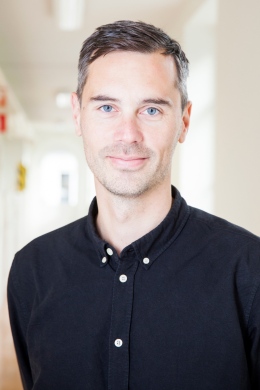
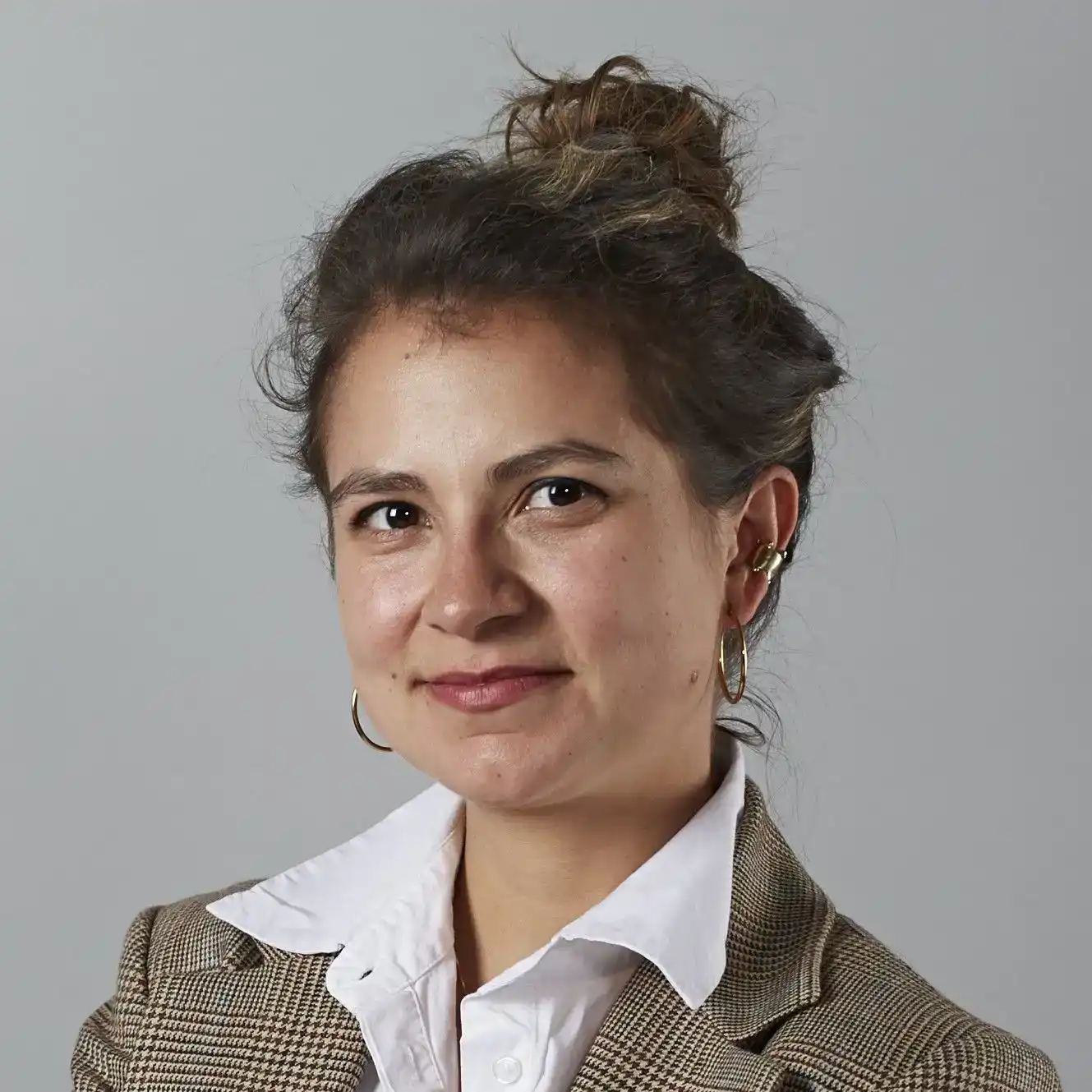
Dr Mark J. Hill is a Lecturer in Cultural Computation at King's College London's Department of Digital Humanities within the Faculty of Arts & Humanities. He holds a DPhil from the University of Oxford, an M.Sc. in Political Theory from the London School of Economics, and a B.A. in Political Science from Concordia University. His interdisciplinary work bridges digital humanities, computational social science, and intellectual history. Research Focus: Social network analysis, public discourse analysis via large datasets, quantitative text analysis, and critical evaluation of digital methods. Current Projects: Investigating discourse patterns across historical and contemporary contexts, including Early Modern Nonconformist networks and digital discourse around football fandom. He collaborates with institutions like the University of Helsinki and engages with public sectors on digital research projects. Teaching includes digital research methods and critical thinking in the digital age. His affiliations include the Computational Humanities Research Group and the Centre for Digital Culture at King's College London.
Sanmi Koyejo is an Assistant Professor of Computer Science at Stanford University and holds an adjunct position as Associate Professor at the University of Illinois at Urbana-Champaign. He leads the Stanford Trustworthy AI Research (STAIR) group, focusing on fairness, robustness, and healthcare applications in machine learning. His work bridges theoretical foundations with practical systems, emphasizing ethical AI and clinical informatics. Affiliations: SAIL, HAI, CRFM, AIMI, AI Safety, and the Machine Learning Group. Research Interests: His expertise spans trustworthy AI, federated learning, and neuroimaging. He actively addresses challenges in algorithmic fairness, particularly in healthcare, where he collaborates with institutions like OSF Healthcare on projects like federated learning for clinical data. Key Contributions: Co-developed frameworks for unlearning in large language models, evaluated AI systems' societal impacts, and advanced benchmarks for medical applications. His work has been featured in venues like NeurIPS, ICML, and AAAI. Awards: NSF CAREER Award, Alfred P. Sloan Fellowship, and Terman Faculty Fellowship. Grants & Teams: Leads NSF-funded projects on domain adaptation and fairness in breast cancer risk scoring. Collaborates with interdisciplinary teams on NIH's MIDRC and NSF's AIFARMS initiative for agricultural sustainability. Labs/Teams: STAIR lab drives interdisciplinary research in ethical AI, with emphasis on real-world deployment and policy implications.
Partow Izadi is a University Lecturer at the Faculty of Education, University of Lapland. His research focuses on culturally-sensitive educational strategies and democratic education frameworks, with a regional emphasis on Lapland's unique socio-cultural context. Research Projects: Cultural-Sensitive Learning Path in Lapland (2018-2020, ESF-funded): Developed inclusive education models addressing Lapland's multicultural student population Demokratia ja ihmisoikeuskasvatus opetta (2016, Gov't-funded): Created human rights education materials for schools Research Interests: Integrating cultural responsiveness into educational practices, democracy education, and supporting youth decision-making through innovative pedagogical approaches. Grants & Funding: Successfully obtained €450k+ in project funding from EU Structural Funds and Finnish Ministry of Education since 2016. Labs/Teams: Collaborates with multidisciplinary teams including Lapland regional education authorities and Sami cultural organizations.
Dr. Dave Murray-Rust is an Associate Professor in Human-Algorithm Interaction Design at TU Delft's Faculty of Industrial Design Engineering. He explores the intersection of humans, data, and AI through design research, focusing on ethical AI systems and sociotechnical interactions. His work bridges computer science, design theory, and digital sociology, addressing challenges like algorithmic fairness and human-AI collaboration. He leads initiatives such as the AI Futures Lab and Data-Centric Design Lab, advancing methods for leveraging behavioral data in design processes. His research emphasizes experiential AI frameworks, metaphors for designers, and the legibility of AI systems. He has been honored with awards including Best alt.HRI 2024 and a CHI 2023 Best Paper Award for contributions to fairness perceptions in algorithmic decision-making. Murray-Rust teaches courses like the Speculative Design Studio and collaborates on projects like DCODE (Designing the Future of AI) and the BrightSky Project. His work extends to public engagement through installations like GeoPact and explorations of blockchain's societal impact. He holds an Honorary Fellowship at the University of Edinburgh.
Lucas Gottzén is a Professor at the Department of Child and Youth Studies, Stockholm University. His research focuses on masculinity, youth studies, affect theory, and extremism, with a particular interest in how these intersect with violence and gender dynamics. He has contributed to understanding radicalization pathways in online spaces, the role of masculinity in intimate partner violence, and the cultural politics of fatherhood in Swedish society. Research interests include ecofascist visual communication, vulnerability and identity politics in digital subcultures, and the sociological analysis of pornography debates. His work often bridges theory and practice, addressing issues of gender equality and violence prevention through innovative methodological approaches. Key publications examine themes such as the 'red pill' phenomenon, affective dimensions of masculinity, and the paradoxes of Sweden's gender-equality reputation alongside high rates of sexual violence. He has collaborated on evaluations of violence prevention programs and authored critical analyses of media representations of fatherhood and youth.
Federico Demaria is a Researcher at the Environmental Science and Technology Institute, Universitat Autònoma de Barcelona. He focuses on ecological economics, political ecology, and environmental justice, advocating for socio-ecological transformation beyond economic growth. As a founding member of Research & Degrowth and a board member of the European Society for Ecological Economics, he bridges academic research with activism. His current role includes deputy coordination of the ERC-funded EnvJustice project, studying global environmental justice movements. Research emphasizes waste management conflicts, informal recyclers' roles, and degrowth alternatives. Key publications include Decrecimiento: Vocabulario para una nueva era and Pluriverse: A Post-Development Dictionary , translated into multiple languages. Research interests coalesce around dismantling growth-based paradigms, centering marginalized groups in environmental struggles, and redefining sustainability beyond capitalist modernity. His work critiques extractive systems while proposing pluriversal alternatives grounded in indigenous and communal knowledge. Key Projects: EnvJustice (ERC), Degrowth initiative Key Themes: Waste politics, environmental conflicts, post-development, degrowth economics
Prof. Anna Franklin is a Professor of Visual Perception and Cognition at the University of Sussex's School of Psychology. She leads the Sussex Colour Group and Sussex Baby Lab , focusing on human color perception, development, and neural representation. Her research combines cognitive psychology, developmental science, and neuroscience to explore how color perception develops, influences aesthetics, and relates to conditions like autism. Key projects include ERC-funded initiatives studying environmental impact on color perception and developing the ColourSpot diagnostic app for childhood color vision deficiency. She also serves as Deputy Director of Research and Knowledge Exchange for the School of Psychology. Education includes a BA from the University of Nottingham and a PhD from the University of Surrey, followed by a postdoctoral fellowship. Her work spans 107+ publications, emphasizing interdisciplinary methods like hyperspectral imaging and fMRI. Collaborations include industry partnerships with ETTA LOVES and COSATTO to apply infant visual preference research in product design. Research grants include European Research Council awards (Starting Grant 2012-2017, Consolidator Grant 2018-2025) and a Proof of Concept grant for ColourSpot . Her labs investigate cross-cultural color categorization, infant aesthetics, and neural correlates of color processing. Future work focuses on calibrating visual systems to environmental statistics and improving early childhood color vision screening.
Benjamin Penny is a Senior Research Fellow in the Australian Centre on China in the World at the Australian National University (ANU), within the School of Culture, History & Language. He holds a BA from the University of Sydney, MPhil from the University of Cambridge, and PhD from ANU. His research focuses on religious movements in modern China, Daoist studies, expatriate communities in Treaty Ports, and new religious movements in Taiwan. He has held significant roles including Director of the Australian Centre on China in the World since 2015, and previously Deputy Director of the School of Culture, History & Language. Notable awards include the Harold White Research Fellowship (National Library of Australia) and the Charles Strong Memorial Trust Annual Lectureship. He has overseen major projects such as the construction of the Australian Centre on China in the World building and led research initiatives like the 'Fragments of the Gaodao zhuan' project (2021–2024). His recent research explores contemporary religious dynamics in China, including Falun Gong history, religious Daoism, and cultural control mechanisms. Key publications analyze moral discourse in Xi Jinping's leadership, cultural policies, and religious practices in colonial contexts. He has edited major journals like Humanities Research and East Asian History . Grants include leadership roles in projects examining Chinese labor dynamics and religious innovation in East Asia. His work bridges historical analysis with contemporary socio-political trends in China and its global diaspora.
Nina Bandelj serves as a Professor in the Department of Sociology at the University of California, Irvine, where she is an active affiliate of the Center for Organizational Research (COR). Her research bridges economic sociology and family studies, examining how money, debt, and market logics permeate intimate social relations. She frequently participates in COR initiatives like the Academic Speed-Dating events held in Social Sciences Plaza B, fostering interdisciplinary collaboration among scholars. Bandelj's research centers on three interconnected domains: (1) the economization of family life , analyzing how parenting transforms into human capital investment through debt-financed childcare and education; (2) cross-national inequality , investigating ethnic marginalization in Eastern Europe and gender pay gaps within workplaces; and (3) money's social meaning , exploring emotional economies of modern parenting and the valuation of 'priceless' social domains. Her work consistently challenges the 'hostile worlds' thesis by demonstrating how economic and intimate spheres co-constitute each other. Recent publications reveal intensifying focus on debt-driven middle-class parenting (e.g., mortgage debt tied to childrearing) and commodified childhood (e.g., pricing early education), while maintaining strong comparative analysis of postsocialist economies. This trajectory reflects broader shifts in economic sociology toward studying financialization's penetration into familial spheres. Bandelj actively cultivates scholarly communities through COR events and writing initiatives like 'U See I Write,' emphasizing collaborative knowledge production. Her work demonstrates how micro-level family economies scaffold macro-level policy failures, particularly regarding America's family-hostile welfare state.
Prof. Roger Goodman is the Nissan Professor of Modern Japanese Studies at the University of Oxford and Warden of St. Antony's College. He holds leadership roles in the Oxford School of Global and Area Studies (OSGA) and the Social Sciences Division. His career spans over 40 years, including a doctorate in social anthropology (1982), a Junior Research Fellowship (1985–88), and professorships at the University of Essex and Oxford. His research focuses on Japanese education, social policy, and comparative studies of East Asia and the UK. Education: PhD in Social Anthropology (St Antony’s College, 1982) Affiliations: Nissan Institute of Japanese Studies, OSGA, St Antony’s College Research interests include Japanese education systems, youth culture, social welfare policies, and cross-cultural comparisons. His work bridges anthropology and sociology, addressing themes like demographic shifts, university governance, and policy reform. Notable publications include Family-Run Universities in Japan (2020) and Children of the Japanese State (2000). Awards: Fellow of the Academy of Social Sciences (2013), Academy President (2020–) He has supervised ~40 doctoral theses, covering topics from Shinto shrines to education reform. His teaching emphasizes anthropological perspectives on Japanese society, including kinship systems, gender, and popular culture.
Tara M. Sinclair is Professor of Economics and International Affairs and Chair of the Department of Economics at the George Washington University. She is also affiliated with the Elliott School of International Affairs through the Institute for International Economic Policy and the Institute for European, Russian, and Eurasian Studies. Additional affiliations include the GW Institute of Public Policy Research, the Regulatory Studies Center, and GW-CIBER. Sinclair has held influential public sector roles, including Deputy Assistant Secretary for Macroeconomics at the U.S. Department of the Treasury (2022–2024) and founding Chief Economist at Indeed Hiring Lab. PhD in Economics, Washington University in St. Louis (2005) AM in Economics, Washington University in St. Louis (2001) BA in Foreign Languages, Wheaton College (1996) Her research centers on macroeconomic fluctuations, labor market dynamics, forecasting, and the application of big data to economic analysis. She employs econometric and time series methods to model business cycles, evaluate forecast accuracy, and assess policy impacts. Her work connects academic research with real-world decision-making, particularly in labor markets and monetary policy. Sinclair frequently uses online job posting data to generate timely insights into employment trends. Her recent publications focus on post-pandemic labor market transformations, remote work persistence, forecast evaluation, and regulatory economics. She has published in top journals such as Labour Economics , Journal of Applied Econometrics , Oxford Bulletin of Economics and Statistics , and International Journal of Forecasting . Her research leverages real-time data to analyze topics like unemployment insurance claims, job mismatch, and global hiring trends. Scientific recognition includes membership in the Conference on Research in Income and Wealth (CRIW), the Federal Forecasters Consortium Governing Board, and authorship at VoxEU. She has served as a Special Government Employee on the Bureau of Labor Statistics Technical Advisory Committee. She advises and collaborates with numerous researchers and institutions. Her leadership roles include directing the GW Center for Economic Research (former) and leading research initiatives at Indeed Hiring Lab. She teaches graduate and undergraduate courses in macroeconomics and econometrics, and is frequently cited in major media outlets including the New York Times , Wall Street Journal , and Financial Times , and appears on networks such as CNN, NPR, and Bloomberg. Her research team includes collaborators from Federal Reserve Banks, international organizations, and academic institutions. She leads projects funded by GW-CIBER and contributes to policy reports for the U.S. Treasury and Indeed Hiring Lab.
Giulio Cimini is Associate Professor of Theoretical Physics in the Department of Physics at the University of Rome Tor Vergata and a Research Associate at the 'Enrico Fermi' Research Center. He is a statistical physicist with a strong interdisciplinary focus on complex networks and their applications in socio-economic systems. His research interests include: Statistical Physics of Complex Networks Reconstruction and Validation of Economic Networks Social Network Interactions and Financial Markets Systemic Risk and Financial Contagion Scientific Success, Fitness, and Complexity Adaptive Social Recommendation Codon Usage Bias and Protein Interaction Networks His recent publications reveal a strong trend in applying statistical physics to real-world networks, particularly in finance and social systems. Key themes include the modeling of systemic risk in supply chains and financial networks, the dynamics of collective action on platforms like Reddit (e.g., the GameStop short squeeze), and the development of network reconstruction methods using maximum entropy and optimal transport frameworks. His work often combines empirical analysis with theoretical modeling. Scientific awards and recognitions include: Associate Editor, Frontiers in Physics – Interdisciplinary Physics Board Member, Network Science Society Member, Council of the Complex Systems Society Steering Committee, CCS/Italy He has advised or collaborated with numerous researchers, particularly in projects related to economic networks and complex systems. His work has been supported by Italian national grants such as PRIN and PNRR. He leads or co-leads research projects including RENet and C2T. His research is conducted within interdisciplinary teams involving physicists, economists, and computer scientists, often in collaboration with institutions like ISC-CNR, IMT Lucca, and the Network Science community.
Beatriz Botero Arcila is an Assistant Professor of Law at Sciences Po Law School and a Faculty Associate at the Berkman Klein Center for Internet and Society at Harvard University. She specializes in the governance of data, artificial intelligence, and digital surveillance. LLM and Doctorate from Harvard Law School Research Focus : Law of the Digital Economy Privacy Law / Global Data Law Surveillance Law Legal Theory Scientific Awards : Future of Privacy Forum's 14th Annual Privacy Papers Award (2024) Labs & Teams : Co-founder of The Edgelands Institute, a pop-up institute incubated at the Berkman Klein Center focused on digital surveillance and cities.
Yu Chen is an Associate Professor in the School of Information Systems and Technology at San José State University’s Lucas College and Graduate School of Business. She holds a PhD in Computer and Communication Sciences from the Swiss Federal Institute of Technology at Lausanne (EPFL), and has held postdoctoral positions at the University of California, Irvine. Her work bridges human-computer interaction, AI, and social impact, with a strong focus on education and inclusive innovation. PhD, Computer and Communication, EPFL, Switzerland MS, Security and Mobile Computing, Aalto University, Finland MS, Security and Mobile Computing, Norwegian University of Science and Technology (NTNU), Norway BE, Information Security, Huazhong University of Science and Technology (HUST), China Her research centers on human-AI interaction , AI for social good , emerging technology education , and health informatics . She is particularly interested in how chat-based interfaces can support student success, career advising, and community problem-solving. She emphasizes design thinking, empathy, and interdisciplinary collaboration in her pedagogy. Her recent publications span AI education, chatbot design, inclusive learning, and ethical AI. A recurring theme is the use of conversational agents to empower students and address societal challenges such as food insecurity, housing, and mental health. The research demonstrates a strong commitment to experiential learning and real-world impact. Collaborative Research: Broadening Inclusive Participation in AI Undergraduate Education (NSF) Girls in AI: AI Education for K-12 Girls (SJSU RSCA) Innovation Farm: AI-Powered Social Innovation (SJSU CEP) AI Counselors and Tutors for Student Development (SJSU RSCA) Yu Chen has received numerous honors, including the SJSU College of Business Distinguished Undergraduate Teaching Award (2024), multiple Master Teacher Awards, and recognition for research excellence at AMCIS and ICIS. She was also awarded the Erasmus Mundus Scholarship and a Swiss National Science Foundation fellowship. She actively mentors undergraduate students in research, many of whom have co-authored peer-reviewed publications and won awards in student competitions. Her lab, the AI for Social Good initiative, fosters a collaborative, student-driven environment where interdisciplinary teams prototype AI solutions for community challenges. She advocates for trust in students, no-code tools, and education that is relevant, creative, and socially responsible.
Lan T. Chu serves as Professor of Diplomacy and World Affairs at Occidental College, where she has held faculty position since 2005. Her office is located in Johnson 205 with regular availability on Tuesdays (11:30 AM-12:45 PM in person/Zoom) and Fridays (9:00-10:00 AM). Her academic credentials include: B.A. and M.A. from New York University Ph.D. from George Washington University Chu's research centers on religion's political dimensions, particularly the Catholic Church's global influence through faith diplomacy and norm entrepreneurship. She examines inter-religious dialogue, ideological frameworks, and democratization processes in communist regimes, with recent work analyzing religious responses to climate change and migration. Her scholarship applies constructivist theory to position religious institutions as transformative actors in international relations. Analysis of her publication history reveals evolving scholarly priorities: early work (2005-2015) focused on church-state dynamics in Vietnam and China, while current research (2022-2025) emphasizes environmental stewardship and citizenship. This trajectory demonstrates increasing engagement with contemporary global crises through religious institutional lenses. Her scholarly recognition includes: Foreign Language Area Studies (FLAS) Fellowship Visiting Fellowship at University of Southern California Linda & Tod White Teaching Prize (2022) As Faculty Director for Equity and Justice, Chu leads campus-wide inclusion initiatives while advancing three major book projects: Catholic Church's global policy influence (Routledge), religion and citizenship (Routledge), and Vietnamese religious freedom (Brill Press). Her mentorship in DWA 299 (Qualitative Methods) trains students in research design for political analysis. Chu contributes to international scholarship as Country Expert for Gothenburg's Varieties of Democracy Project (2012-present) and editorial board member of Politics, Groups, and Identities , building academic networks that inform her classroom instruction on ideology and international relations theory.