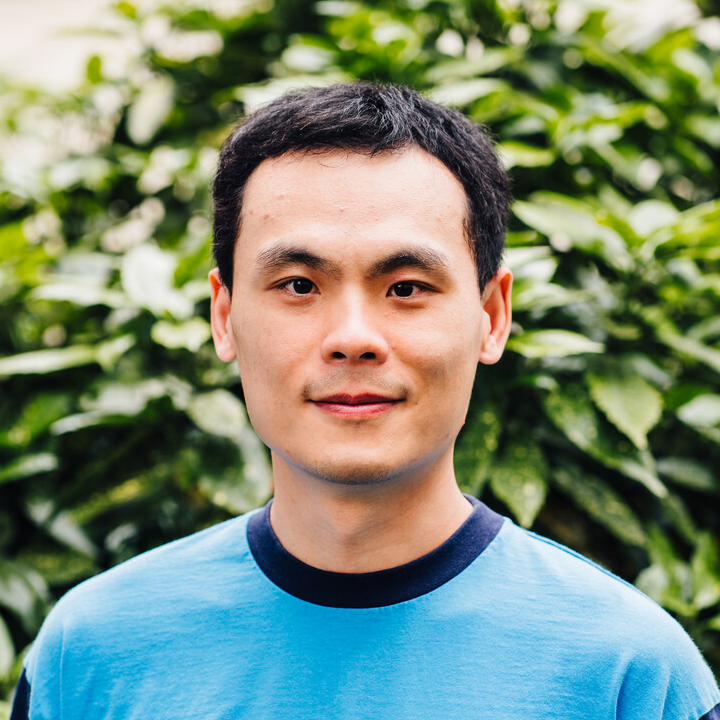
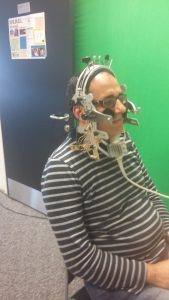
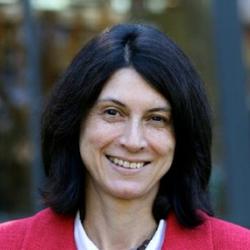
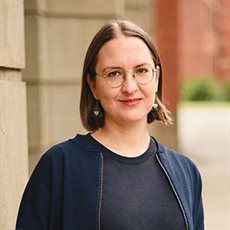
Edgar Weippl is a Professor at the Faculty of Computer Science, University of Vienna, where he serves as Vice Dean and Head of the Research Group Security and Privacy. His work spans cybersecurity, blockchain, and machine learning, with teaching roles in information security and software security courses. Current Positions: Vice Dean (Faculty of Computer Science), Head (Security and Privacy Research Group), Deputy Head (Neuroinformatics & Knowledge Engineering Groups) Research Interests: Cybersecurity, blockchain, IoT security, code obfuscation, privacy technologies, reinforcement learning, and socio-technical systems security Selected Publications: Focus on blockchain privacy, VoWiFi security, code obfuscation, and reinforcement learning applications
Hongkai Wen is a Professor (Chair in Machine Learning Systems) in the Department of Computer Science at the University of Warwick, UK. He holds dual appointments as a Fellow of the Alan Turing Institute (serving as Independent Scientific Advisor for BridgeAI and member of Turing Research Ethics team) and previously worked as Senior Research Scientist at Samsung AI Centre Cambridge and postdoctoral researcher at Oxford University. Education: Computer Science, Keble College, University of Oxford Research Focus: Develops intelligent multi-modal perception systems for real-world deployment with extreme computational efficiency. Core expertise spans ML systems optimization, neural architecture search, and cross-disciplinary applications in robotics, urban mobility, and wearable/IoT security. Pioneered event-based vision techniques and training-free NAS frameworks. Publication Trends: Recent work (2023-2025) demonstrates accelerating innovation in diffusion model efficiency, on-device AI deployment, and sensor fusion techniques. Dominant themes include computational resource optimization for edge devices, multi-modal temporal modeling, and privacy-preserving spatial analytics, with significant contributions to NeurIPS, ICML, and CVPR venues. Scientific Recognition: Best Paper Award, AutoML Conf 2023 (T-CET) Best Paper Runner-up, SenSys 2024 (AdaFlow) Best Paper Awards: IPSN 2014 & EWSN 2013 1st/2nd Place, Zero Cost NAS Competition (AutoML'22) Mentorship & Funding: Actively supervises PhD candidates through thesis committees at Warwick, Ulster, and Queensland universities. Secured National AI Strategy Fund for Macro Neural Architecture Search research. Recruits annually for PhD positions with scholarships from UKRI, Turing Institute, and industry partnerships. Research Leadership: Heads the AI/ML Systems (AMS) Division at Warwick, directing a 15+ member team developing deployable ML frameworks for mobile/robotic platforms. Maintains active collaborations with Samsung AI Centre and Turing Institute's BridgeAI programme on ethical AI deployment.
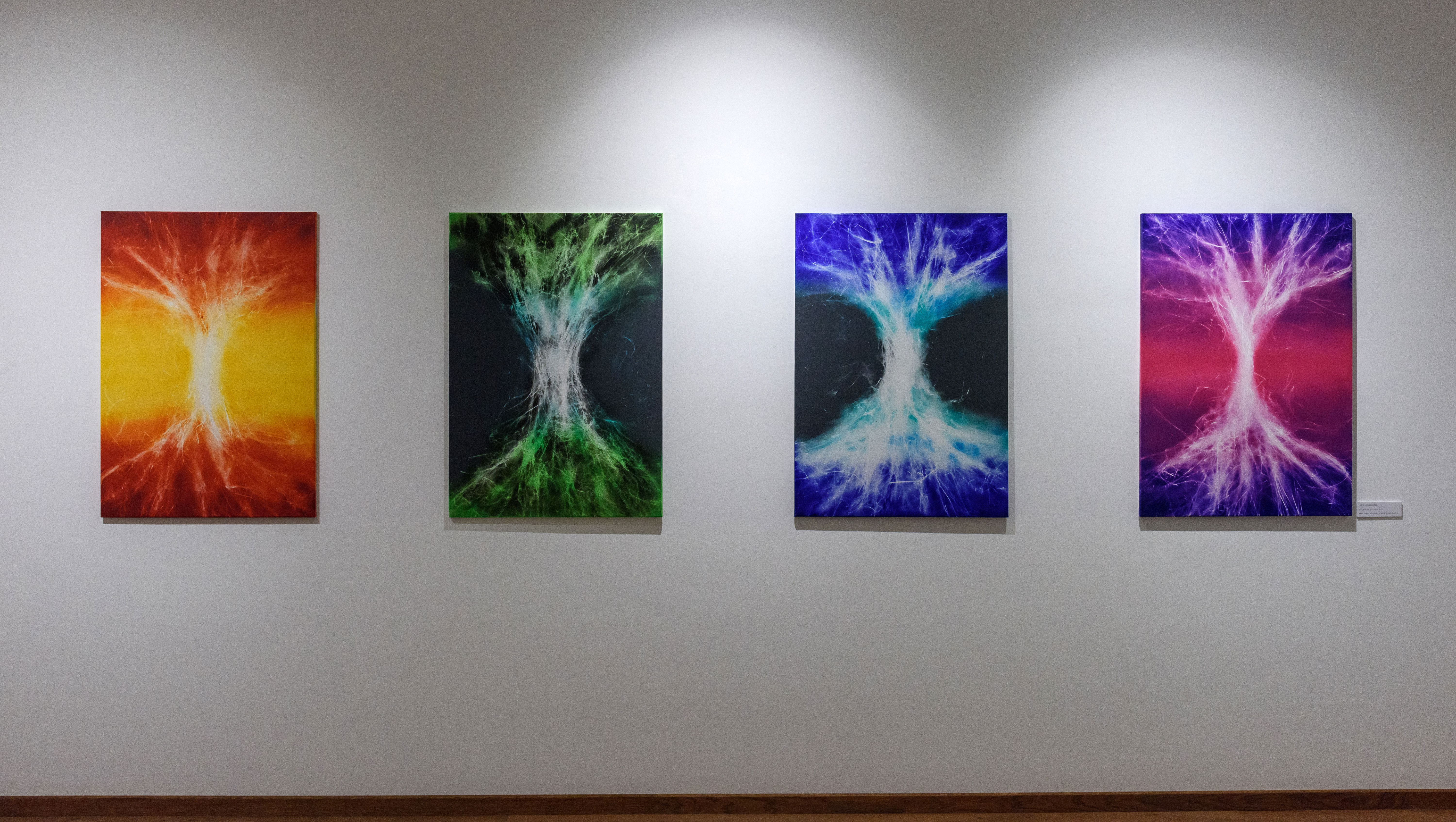
Zsigmond Lucza (born 1978 in Budapest) is a Hungarian contemporary artist and university assistant professor at the Hungarian University of Fine Arts, Department of Visual Art since 2022. He holds a DLA (Doctor of Liberal Arts) degree from the University of Pécs Faculty of Arts (2011-2014) and has extensive international experience including studies at the University of Lapland in Finland (2012-2013). Lucza's educational background includes dual Master's degrees from the Hungarian University of Fine Arts (2002-2007) in both Painting and Visual Art Teacher programs, along with foundational training at the Buda Drawing School (2000-2002). His academic career includes teaching positions at Jelky András Applied Arts Vocational High School (2014-2018), Modell Fashion School (2008-2012), and Kolumbusz Humanities High School (2005-2007). Lucza's artistic practice spans contemporary painting, transmedia art, and mixed media works, with significant focus on digital integration in traditional art forms. His research interests center on transmedia tendencies in contemporary Hungarian painting, visual communication, and the evolving relationship between digital and physical art spaces. His work often explores identity, perception, and the integration of technology in artistic expression, creating pieces that bridge traditional painting techniques with contemporary digital aesthetics. His artistic output shows a consistent evolution from figurative works toward more experimental transmedia approaches, with recent projects focusing on environmental reflection, digital portraiture, and collaborative installations. Lucza's work demonstrates a sophisticated understanding of both traditional painting techniques and contemporary digital media, creating a distinctive visual language that addresses current artistic concerns while maintaining strong technical foundations. Lucza has received multiple awards including an Erasmus scholarship for study at the University of Lapland, a scholarship from the Budapest Gallery and Kunststiftung Baden-Württemberg, and first prizes in national competitions. His professional affiliations include membership in the Hungarian Artists' Association (MAOE) since 2007, the MAMŰ Society since 2015, and non-academic membership in the Hungarian Academy of Arts (MMA) since 2022. As an educator, Lucza has conducted numerous workshops internationally including the Experimental Drawing Course at the Latvian Academy of Arts and Transmedia Workshops at the University of Pécs. His curatorial work includes the 'Medium Summoners' exhibition at MAMŰ Gallery in Budapest (2017). Lucza maintains an active exhibition schedule with solo shows across Hungary, Finland, and Slovenia, alongside participation in numerous international artist colonies and collaborative projects.
Lou Safra is Assistant Professor in political psychology at the Center for Political Research (CEVIPOF) of Sciences Po , Paris, and co-directs the Evaluation of Democracy Research Group at the Laboratory for Interdisciplinary Evaluation of Public Policies (LIEPP) . She is also associate researcher at the Institut d’Études Cognitives (École Normale Supérieure, Paris), bridging political science with cognitive neuroscience. Education: PhD in Cognitive Science, École Normale Supérieure, Paris (2017) Research Interests: Lou Safra investigates the cognitive mechanisms underlying social and political behaviour , focusing on leader choice and cooperation . She adopts an ecological and evolutionary perspective to understand inter-individual differences across space and time. Her methodological toolkit includes behavioural experiments , social surveys , computational modelling , and cultural artefact analysis such as paintings and books. Publication Trends: Her recent work (2020–2024) explores how early-life adversity shapes trust and authoritarian preferences , how cultural evolution influences concepts like love in literature, and how public opinion on defence issues evolves during the Ukraine war . Studies appear in high-impact journals spanning political science , psychology , behavioural economics , and cultural evolution . Scientific Awards & Funding: No specific awards or fellowships are listed in the provided text. Advising & Grants: No named students or specific grant details are provided in the text. Labs & Teams: She is affiliated with CEVIPOF–Sciences Po , LIEPP , and the Laboratoire de Neurosciences Cognitives & Laboratoire de Neurosciences Cognitives et Computationnelles at ENS, indicating active collaboration across political science, cognitive neuroscience, and computational modelling teams.
Haiyang Ai is an Associate Professor in the Literacy and Second Language Studies program at the University of Cincinnati's School of Education. His research applies corpus linguistics and natural language processing to investigate second language acquisition, writing complexity, and bilingual language processing. His educational background includes a Ph.D. in Applied Linguistics from The Pennsylvania State University (2015), an M.A. in Linguistics & Applied Linguistics from the University of Chinese Academy of Sciences (2006), and a B.A. in English from Shaanxi Normal University (2003). Dr. Ai's research spans corpus linguistics, natural language processing, second language acquisition, and computer-assisted language learning. He specializes in compiling and analyzing native and learner corpora to develop intelligent language learning systems and investigate lexical/syntactic complexity in L2 writing. His methodological approach integrates computational tools with theoretical linguistics to address practical language teaching challenges. His recent publications (2019-2023) demonstrate consistent focus on lexical bundles in professional communication, automating complexity measurement in Chinese, speech perception mechanisms in bilinguals, and grammatical puzzles in English learning. These works bridge corpus-based analysis with psycholinguistic experimentation across diverse subfields including morphosyntax, pragmatic competence, and cognitive processing in L2 acquisition. Dr. Ai has secured multiple University of Cincinnati grants including three CECH Faculty Development Grants ($2500 in 2017-2018 for verb-noun collocation research, $2000 in 2016-2017 for corrective feedback tools) and the NCFDD Faculty Success Program ($3250 in 2017), all supporting his development of computational language learning resources.
Dr Chris Carignan serves as Programme Director for the Language Science MSc at University College London's Division of Psychology and Language Sciences within the Faculty of Brain Sciences. His research focuses on the intricate mechanisms of human speech production, particularly through cross-linguistic phonetic studies and articulatory dynamics using advanced imaging technologies. PhD in Speech Science Specializes in the intersection of language heritage and phonetic research Develops innovative methodologies for speech data collection and analysis His work spans multiple areas including nasal coarticulation , real-time MRI of vocal tract movements , and cross-linguistic phonetic analysis . He has contributed significantly to understanding how speakers produce complex speech sounds across different languages through comparative studies. Dr Carignan's research has led to the development of open-source tools for speech production analysis and pioneered new approaches for ultrasound articulography . His work on vowel nasalization and sibilant contrasts has been particularly influential in speech science. As Programme Director, he oversees a comprehensive curriculum that provides students with methodological training , statistical expertise , and hands-on research experience while allowing specialization through optional modules. His teaching philosophy emphasizes the importance of curiosity-driven research and interdisciplinary approaches in advancing language sciences.
Dana Schmalz is a Senior Research Fellow at the Max Planck Institute for Comparative Public Law and International Law in Heidelberg, Germany, and currently serves as a visiting scholar at Columbia Law School and a fellow at the Columbia Center for Contemporary Critical Thought in New York. Funded by an Alexander von Humboldt Foundation fellowship, she pursues a two-year research project examining critical dimensions of international refugee law and migration governance. Her academic profile combines rigorous legal scholarship with theoretical engagement across international law, political philosophy, and migration studies. Dr. Schmalz earned her doctorate from the University of Frankfurt in 2017 with a dissertation on democratic theoretical issues in refugee law, followed by an LL.M. in Comparative Legal Thought from Cardozo Law School, New York, in the same year. She serves as an editor for the journal Kritische Justiz (KJ), contributing to critical legal scholarship in German-speaking academic circles. Her research centers on the intersection of refugee law and democratic theory, examining how political rights are secured for those without voice in democratic processes. She critically investigates population discourse and its relationship to migration governance, exploring how demographic projections shape perceptions of 'too many' migrants. Her scholarship analyzes the language and power structures of international law, examining how legal frameworks construct hierarchies and influence global governance. She has published extensively on European border policies, refugee protection mechanisms, and the theoretical foundations of international legal order. Dr. Schmalz's recent publications reveal a sophisticated analysis of migration governance that connects historical developments with contemporary challenges. She examines how legal concepts like responsibility-sharing function in practice, investigating the role of geopolitical proximity in determining state obligations toward refugees. Her work consistently combines rigorous legal analysis with critical theoretical perspectives, often challenging conventional understandings of migration governance. She explores the internalization of borders in demographic thinking and the ways legal frameworks contribute to perceptions of migration as 'excess.' Alexander von Humboldt Foundation fellowship supporting current research As an active contributor to Völkerrechtsblog, Dr. Schmalz helps shape digital infrastructure for global legal scholarship. Her work connects with broader academic communities through collaborations with scholars across international law and refugee studies. While specific grant details beyond the Humboldt fellowship aren't provided in the source material, her extensive publication record indicates sustained research activity across multiple funding cycles. She engages with practical policy challenges through her analysis of European migration governance and refugee protection mechanisms. Dr. Schmalz's research connects with multiple academic networks through her work at the Max Planck Institute, Columbia University, and her editorial role at Kritische Justiz. Her scholarship bridges German and Anglo-American academic traditions, contributing to transnational legal discourse on migration and refugee protection. She participates in interdisciplinary conversations that connect legal scholarship with political theory, philosophy, and migration studies.
Adam M. Enders is an Associate Professor in the Department of Political Science at the University of Louisville. He also teaches advanced courses on measurement and scaling at the ICPSR Summer Program. His research examines the intersection of political psychology and societal dynamics, focusing on conspiracy theories, core values, partisanship, and polarization. Enders holds a Ph.D. (2016) and M.A. (2013) in Political Science from Michigan State University, and a B.A. (2011) in Political Science and Public Policy from Albion College. His work investigates how conspiratorial thinking influences public opinion, the role of racial prejudice in political behavior, and how subjective perceptions contribute to polarization. Publications appear in top journals like the American Journal of Political Science and Journal of Politics . He has also contributed to The Atlantic and Politico Magazine , analyzing modern conspiracism and its political ramifications. Teaching focuses include political psychology, public opinion dynamics, and quantitative research methods. His methodological expertise in scaling and measurement underpins much of his empirical work, emphasizing rigorous design to explore complex belief systems.
Hakan Karateke is the Kanuni Süleyman Professor for Ottoman and Modern Turkish Studies at the University of Chicago, affiliated with the Department of Near Eastern Languages and Civilizations. He has taught at UChicago since 2009 and serves as Admissions Chair. His research focuses on Ottoman cultural history, philology, and the evolution of Turkish language and historiography. Ph.D., University of Bamberg (1998) His methodological expertise bridges philology and historical analysis, emphasizing textual interpretation and contextual reconstruction. He is currently working on a monograph about 19th-century Ottoman historiography and a multi-year project tracing the cultural history of the Ottoman Turkish language. Recent publications include analyses of Evliya Çelebi’s travel account construction, Ottoman anti-Judaism discourse, and protocol evolution. He co-edits two major academic series: 'Ottoman and Turkish Studies' (Academic Studies Press) and 'The Ottoman Empire and its Heritage' (Brill). His courses cover Ottoman cultural history, language studies, and Near Eastern empires. Research themes span: Ottoman historiography transformation Language perception shifts Inter-ethnic relations Manuscript analysis Political rhetoric Ceremonial studies
Dr. Jacek Kudera is a post-doctoral researcher in the Department of Phonetics at the University of Trier, coordinator of the LODinG project at the Trier Center for Digital Humanities, and adjunct faculty at WSB Merito University in Wrocław. His work bridges phonetics, Slavic linguistics, digital humanities, and forensic speech science. Education 2022 – PhD, Department of Language Science and Technology, Saarland University, Germany 2019 – MA (Linguistics), Department of Linguistics, Cognitive Science and Semiotics, Aarhus University, Denmark 2015 – Magister (Slavic Philology), Institute of Slavic Studies, University of Wrocław, Poland Research Interests His research focuses on phonetic and prosodic aspects of Slavic languages , cross-linguistic speech perception , forensic automatic speaker recognition , and human-robot interaction . He employs experimental methods such as eye-tracking, articulatory measurements (EMA), and large-scale digital corpora to investigate how speakers of closely related languages understand one another and how machines can replicate or support this process. Publication Trends Across more than 25 peer-reviewed articles (2014-2025), Kudera has consistently explored Slavic intercomprehension , speech technology evaluation , and digital humanities infrastructure . Recent work (2024-2025) targets voice cloning security , linked open data for linguistics , and mismatch conditions in forensic speaker recognition . Scientific Awards & Fellowships Visegrad Fellowship, University of Presov (2025) Erasmus+ Fellowships (Ostrava 2025, Zagreb 2014, Rijeka 2012-2013) NAWA Fellowship, Polish Academy of Sciences (2022) Nordlys Fellowship, University of Eastern Finland (2018-2019) CEEPUS & additional Central-European mobility grants (2014-2018) Projects & Funding Coordinator : “Mismatch conditions in machine speaker identification” (University of Trier Research Fund, 2024-2025) Coordinator : LODinG – Linked Open Data in the Humanities (Trier Center for Digital Humanities, ongoing) Coordinator : “Patterns: Linguistic Creativity and Variation” (Trier Center for Language and Communication, 2022-2024) Member : SFB 1102 “Information Density and Linguistic Encoding” (Saarland University, DFG, 2019-2022) Member : Digital Atlas of Dialects of Bosnia and Herzegovina (2017-2018) Member : CLARIN-PL & European Roadmap for Research Infrastructures (2014-2017) Labs & Teams He conducts research within the Phonetics Team at the University of Trier , collaborates closely with the Trier Center for Digital Humanities , and maintains affiliations with the Phonetics Group at Saarland University and the WSB Merito University in Wrocław.
Jalal Al-Tamimi is an Associate Professor (Maître de conférences) in experimental phonetics and phonology at Université Paris Cité, affiliated with the Laboratoire de Linguistique Formelle (LLF). He holds an HDR (Habilitation à Diriger des Recherches) in Phonetics and Phonology and has extensive experience in teaching and research across institutions including Newcastle University, UK. His research focuses on the interface between phonetics and phonology, particularly the role of acoustic and articulatory correlates in speech production, perception, and acquisition. He specializes in Arabic dialects, using advanced quantitative methods like generalized additive mixed models and machine learning techniques. Al-Tamimi’s academic journey includes a PhD from Lyon 2 University (2007) and postdoctoral roles in the UK before joining Paris. He currently directs the Master in Language Sciences and co-leads research strands on phonetic complexity and language variation. His administrative roles include membership in the AFCP and coordination of experimental linguistics at LLF. Research interests span laboratory phonology, articulatory-acoustic mapping, and the application of automated methods in clinical diagnosis. His work explores epilarynx dynamics in Arabic gutturals and forced-alignment systems for dialectal Arabic. Awards include the Peter Ladefoged Prize (2018) and Leverhulme Fellowships. He supervises numerous PhD and MA students across computational linguistics and phonetics. Publications highlight contributions to vowel dynamics, speech processing in Alzheimer’s, and cross-linguistic phonological studies. His lab collaborations involve the MAUS team and Sorbonne’s SCAI, focusing on speech technology and pathological speech analysis.
Professor Usha Goswami is a leading academic in Cognitive Developmental Neuroscience at the University of Cambridge, serving as Professor of Cognitive Developmental Neuroscience and Director of the Centre for Neuroscience in Education. She is also a Fellow at St John's College, Cambridge. Her work focuses on understanding the neural and cognitive foundations of language acquisition, reading development, and developmental disorders such as dyslexia. Key areas of interest include the role of rhythm perception, speech processing, and EEG-based studies of neural entrainment in typical and atypical development. Her research integrates insights from neuroscience, cognitive psychology, and education, emphasizing translational approaches to improve literacy interventions. She has conducted longitudinal studies on infants and school-aged children, examining predictors of language outcomes and the impact of rhythmic training on executive function. Her work bridges developmental linguistics, auditory neuroscience, and educational policy, with a focus on universal speech structures in child-directed communication. Professor Goswami’s contributions include pioneering studies on the neural basis of phonological awareness and the application of machine learning to decode speech information from EEG data in infants. She has also explored cross-linguistic patterns in poetry and infant-directed speech, highlighting universal acoustic features underlying language acquisition. Her research has significant implications for understanding and remediating developmental disorders, particularly dyslexia and developmental language disorder. Her lab, the Centre for Neuroscience in Education, focuses on translating neuroscientific findings into practical educational strategies. Current projects include investigating rhythm-based interventions for children with language difficulties and analyzing the acoustic properties of speech in diverse linguistic contexts.
Dr. Chen Wang is an Assistant Professor in the Department of Computer Science and Engineering at the University at Buffalo. He holds a PhD from Nanyang Technological University and a B.Eng from the Beijing Institute of Technology. His research focuses on robotic perception, vision, and learning, emphasizing algorithm development for autonomous systems. He is affiliated with the Spatial AI and Robotics Lab (SAIR Lab) and serves as an Associate Editor for The International Journal of Robotics Research (IJRR) and IEEE Robotics and Automation Letters (RA-L) . His work spans neuro-symbolic AI, SLAM systems, and reinforcement learning for robotics. Dr. Wang's research interests include creating efficient algorithms with theoretical guarantees, open-source distribution, and real-world validation. He has contributed to areas like visual navigation, few-shot detection, and robot autonomy frameworks. His educational background in electrical engineering and robotics underscores his expertise in bridging theory and practical applications. Notable contributions include the iWalker framework for humanoid robots, AirSLAM for visual SLAM, and SuperPC for 3D point cloud processing. His editorial roles and conference service (e.g., CVPR Area Chair) reflect his leadership in the field. The SAIR Lab under his direction advances spatial AI, robotics, and autonomous systems through interdisciplinary collaboration.
Lori L. Holt is a Professor of Psychology at the University of Texas at Austin (UT-Austin), where she leads the Holt Lab. Previously, she served as faculty at Carnegie Mellon University (1999–2023), contributing to the Center for the Neural Basis of Cognition. Her research focuses on auditory cognitive neuroscience, exploring how learning, attention, and neural mechanisms shape speech perception and communication. She holds a BS and PhD in Psychology from the University of Wisconsin-Madison (1995, 1999). Her work investigates the neural foundations of listening, emphasizing adaptive plasticity in speech perception, statistical learning dynamics, and the interplay between sensory input and cognitive processes. Recent studies examine how short-term sound statistics influence perceptual weighting, the impact of accent exposure on speech production, and neural correlates of auditory category learning. The Holt Lab, equipped with EEG facilities, advances understanding of voice perception, speech motor control, and neurocognitive adaptation. Dr. Holt teaches courses such as Behavioral Neuroscience (PSY 332) and Biopsychology (PSY 308), reflecting her expertise in linking biological mechanisms to psychological processes. Her research has been published in leading journals, with a focus on auditory neuroscience, statistical learning, and neurorehabilitation.
Dr. Maria Witek is an Associate Professor at the Department of Music, University of Birmingham. Her research focuses on the psychology, cognitive neuroscience, and philosophy of musical experience, particularly rhythm, timing, emotion, and body-movement. She leads the Witek Lab, investigating how dance music experiences emerge from interactions between neural, social, and embodied processes. Notable projects include studying rhythmic skill in DJs (funded by AHRC) and ensemble synchronization in the ARME project (EPSRC-funded). She holds a DPhil from Oxford and previously worked at Aarhus University. Her methods span experimental psychology, neuroimaging, and participatory action research. Education: BA Musicology (Oslo, 2006), MA Music Psychology (Sheffield, 2008), DPhil Music (Oxford, 2013) Research interests include groove theory, disabled DJs' embodied timing, and the social dynamics of music-making. She collaborates with artists and tech companies like Drake Music and Native Instruments to develop inclusive musical tools. Articles focus on rhythmic entrainment, neurodiverse musical practices, and the neural basis of musical pleasure. Current grants include work on disability-inclusive DJ practices and virtual ensemble training systems.