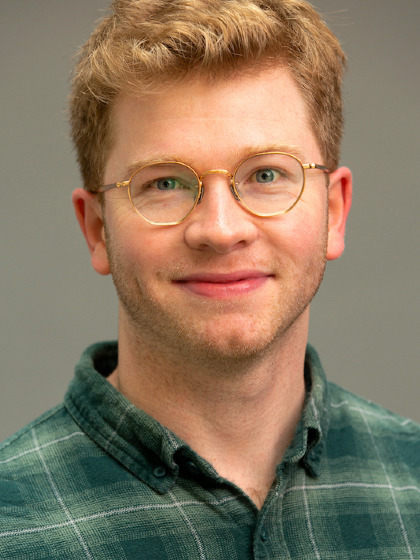
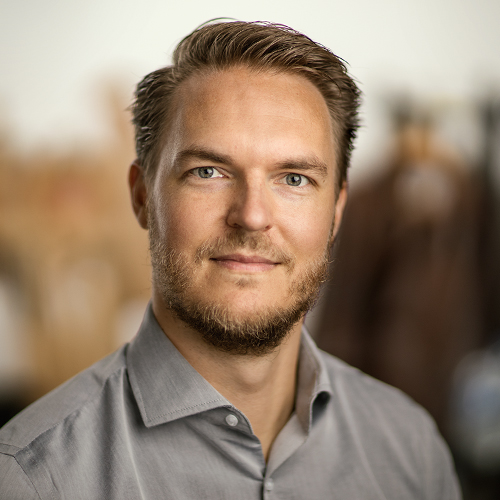
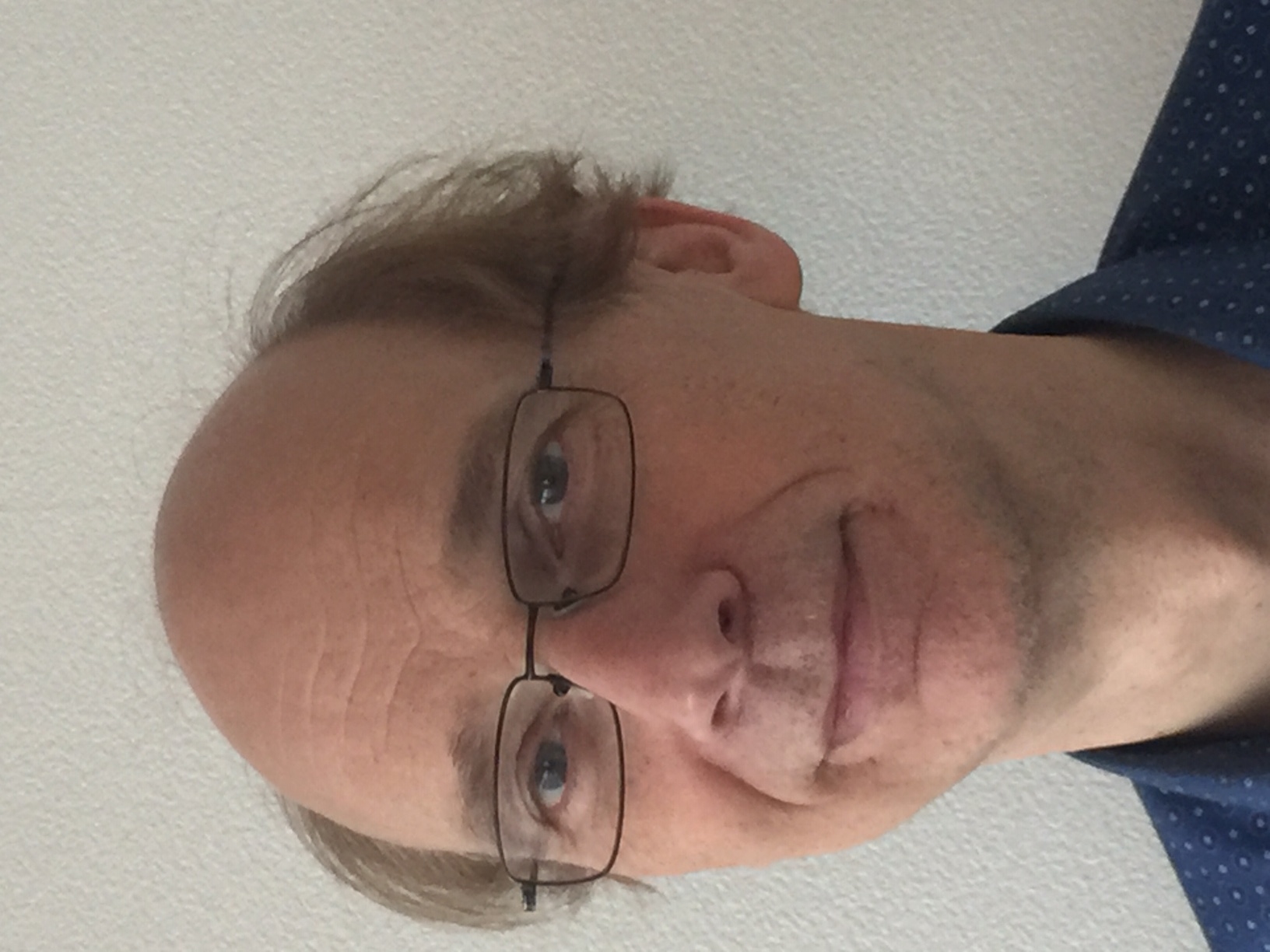
Dr. Nienke Smit is an Assistant Professor in the Department of Education at Utrecht University's Faculty of Social and Behavioural Sciences. Her research focuses on scaffolding processes, adaptive teaching, and classroom observational research from a complex dynamic systems perspective. Specializes in teacher-student interaction Expert in adaptive instruction and observational methods Collaborates with Data Science department Develops tools for classroom observation Research interests include language learning and teaching , judgment and decision-making in education , and professional development of teachers . She leads projects like Eye Get It (joint attention in classrooms) and a replication study on adaptive instruction effectiveness. Her work applies dynamic systems theory to second language development and foreign language pedagogy. Recent publications address translanguaging in multilingual classrooms, replication studies , and process-oriented research . She teaches at Utrecht's Graduate School of Teaching and works on initiatives to reduce teacher shortages through improved training programs.
Karsten Lambers is Professor of Digital and Computational Archaeology at the Faculty of Archaeology, Leiden University, where he leads research and teaching in the application of computational methods to archaeological data. His work integrates machine learning, remote sensing, text mining, and citizen science to advance archaeological prospection and heritage management. He is affiliated with the Department of Archaeological Sciences and plays key roles in research groups and university-wide initiatives such as SAILS and ARCHON. His research interests span Digital Archaeology , Machine Learning in Archaeology , Remote Sensing , Geoarchaeology , and Human-Environment Interaction . He investigates how computational tools can extract meaningful archaeological information from large datasets, including LiDAR imagery and excavation reports. His fieldwork spans Central Europe and Latin America, with a focus on prehistoric landscapes and cultural heritage. The analysis of his recent publications reveals a strong trend toward automated detection using deep learning (e.g., R-CNN, WODAN), named entity recognition in archaeological texts (e.g., ArcheoBERTje), and citizen science integration for data validation. His work bridges archaeology with computer science, geomatics, and environmental science, emphasizing interdisciplinary collaboration and methodological rigor. His scientific awards include: Best Thesis Award (University of Zurich, 2005) EUROPA NOSTRA Award (2020, 2022) Membership in the German Archaeological Institute (since 2022) Lambers actively supervises students and leads major research projects such as ABMA, EXALT, and Heritage Quest. He has secured substantial research funding and collaborates widely with computer scientists, geophysicists, and palaeoecologists. His teaching includes digital methods, modeling, and simulation, often linked to ongoing research. He has also contributed to open educational resources and digital textbooks in archaeology. He leads or participates in several research labs and teams, including the Digital Archaeology Research Group (which he chairs), the Heritage Quest citizen science project, and interdisciplinary teams focusing on alpine terraces and Iraqi prospection. His work emphasizes the integration of digital tools into practical archaeological workflows, advocating for complementary human-computer strategies.
Jakob Schoeffer is a tenure-track Assistant Professor in the Artificial Intelligence department at the Bernoulli Institute for Mathematics, Computer Science and Artificial Intelligence, Faculty of Science and Engineering, University of Groningen (Netherlands). His work focuses on the intersection of human decision-making and artificial intelligence, particularly in high-stakes contexts where fairness, transparency, and appropriate human-AI collaboration are critical. Dr. Schoeffer's research interests center on responsible and explainable AI, with specific focus areas including: Human-AI collaboration dynamics in decision-making processes Fairness perceptions and interventions in AI systems Appropriate reliance on AI recommendations Explainable AI techniques for high-stakes domains Transparency mechanisms that improve human-AI team performance Label indeterminacy issues in medical AI applications His recent publications (2023-2025) reveal a strong trend toward applying AI research in critical domains like healthcare (particularly neurological recovery prediction), while maintaining a rigorous focus on the human aspects of AI deployment. His work spans both theoretical foundations of human-AI interaction and practical implementations, often employing mixed-methods approaches that combine technical AI development with behavioral studies. Dr. Schoeffer actively collaborates with researchers across institutions including the University of Texas at Austin and has made significant contributions to top conferences in AI ethics, fairness, and human-computer interaction. His research has been featured in multiple news outlets and policy discussions, indicating real-world impact of his work on responsible AI development. Prior to his current appointment, Dr. Schoeffer was a Postdoctoral Research Fellow at the University of Texas at Austin. He received his PhD from the Karlsruhe Institute of Technology (KIT) in Germany with a dissertation titled "On the Interplay of Transparency and Fairness in AI-Informed Decision-Making." He also holds a master's degree in Operations Research from Georgia Tech and industry experience as a Senior Data Scientist at IBM.
Raquel Fernández is Full Professor of Computational Linguistics and Dialogue Systems at the University of Amsterdam, where she leads the Dialogue Modelling Group at the Institute for Logic, Language & Computation (ILLC). As Vice-Director for Research at ILLC and a Fellow of the ELLIS Society, she bridges computational linguistics, cognitive science, and artificial intelligence through her research on language use in multimodal and conversational contexts. PhD in Computational Linguistics from King's College London Prior research positions at University of Potsdam and Stanford University's CSLI Her work explores how cognitive constraints, social interaction, and perception shape language use, with a focus on: Visually-grounded language processing Multimodal dialogue modeling Model uncertainty and calibration Language grounding in multimodal data Language learning and semantic change Dialogue reference resolution Recent publications analyze multimodal reasoning limitations, cross-lingual knowledge consistency, and uncertainty modeling in dialogue systems. She has received multiple accolades including an ERC Consolidator Grant , NWO VENI/VIDI/Aspasia fellowships , and EMNLP/GenBench awards . Outstanding Paper Award (EMNLP 2023) Best Data Award (GenBench Workshop 2023) ELLIS Society Fellow ERC Consolidator Grant #819455 recipient NWO VENI/VIDI/Aspasia awardee As a leader in academic service, she serves on the SIGDAT Executive Committee and chairs multiple conference committees. Her lab develops models for multimodal dialogue, visual storytelling, and grounded language understanding.
Mohammad Aliannejadi is an Assistant Professor at the IRLab (formerly ILPS) within the Informatics Institute at the University of Amsterdam. His research focuses on Information Retrieval (IR), machine learning, natural language processing (NLP), and conversational systems, particularly in modeling user information needs on mobile devices and conversational search systems. He holds a Ph.D. in Informatics from Università della Svizzera italiana (USI), Lugano, Switzerland, and a M.Sc. in Computer Engineering from Tehran Polytechnic. During his Ph.D., he visited the CIIR Lab at the University of Massachusetts Amherst, USA. His research interests include conversational search systems, recommender systems, unified search frameworks, and user-centric evaluation methodologies. Notable contributions include work on clarifying questions in open-domain dialogues, contextual suggestion systems, and cross-market recommendation. Aliannejadi has organized major shared tasks and workshops, including the IGLU Contest (NeurIPS 2021) and XMRec Workshop (RecSys 2021). He serves on program committees of top IR conferences like SIGIR, CIKM, and ECIR, and has authored over 50 peer-reviewed publications in these areas. His work has received recognition, including top performance in TREC Contextual Suggestion tracks (2015, 2016). He actively contributes to the IR community through teaching, including courses on Information Retrieval and Human-in-the-Loop Machine Learning at the University of Amsterdam.
Dr. Dicle Yagmur Ozdemir is an Assistant Professor of Business Information Management at the Rotterdam School of Management (RSM), Erasmus University. She joined RSM in September 2023 after earning a PhD in Management Science (Information Systems concentration) from the University of Texas at Dallas, a Master's in Industrial Engineering from Sabanci University, and a Bachelor's in Industrial Engineering from Istanbul Technical University. Her research focuses on user-generated content dynamics in online platforms and the application of generative AI in healthcare. She employs econometric modeling and natural language processing to study how novel information in reviews influences stakeholders' decisions, and designs algorithms to mitigate information overload. In healthcare AI, she experiments with generative AI's impact on patient-provider interactions. Her work has been presented at top conferences including CIST, WITS, ICIS, WCBA, and INFORMS. Key themes in her research include algorithmic fairness in content selection, the psychological effects of AI-driven health advice, and the mediation effects of review novelty on consumer behavior. She has collaborated internationally, with research outputs including 6 works since 2023. Notable contributions address the moderating role of review dissimilarity in credibility assessments and the paradoxical effects of positive/negative review valence in decision contexts.
Prof. Khalil Sima'an serves as Professor of Computational Linguistics and Vice Director of Education at the Institute for Logic, Language and Computation (ILLC), University of Amsterdam, within the Faculty of Science. He joined as Assistant Professor in 2003, advanced to Associate Professor in 2011, and attained Full Professorship in 2014. His academic foundation includes a PhD in Computational Linguistics from Utrecht University, establishing his expertise in formal language modeling. Prof. Sima'an's research drives innovation in Computational Linguistics through rigorous exploration of syntactic structures, semantic processing, and machine translation systems. His work bridges theoretical frameworks with practical NLP applications, particularly in parsing technologies and multilingual processing, positioning him as a key contributor to European language technology initiatives. His distinguished recognition includes: Royal Netherlands Academy for Arts and Sciences (KNAW) Fellowship NWO Vidi Grant (2006) for pioneering early-career research NWO Vici Grant (2013) for groundbreaking senior research leadership He actively shapes the field through editorial stewardship of Machine Translation and Journal of Natural Language Engineering , alongside pivotal conference roles including MT Summit XIV Chair (2013) and ACL 2010 area chair for syntax/parsing. As core faculty in the Natural Language Processing & Digital Humanities (NLP&DH) research group, he advances collaborative projects integrating computational methods with humanities scholarship at LAB42's interdisciplinary hub.
Thomas Bäck is a Professor at the Leiden Institute of Advanced Computer Science (LIACS) , Leiden University , Netherlands, and a member of the interdisciplinary programme Society, Artificial Intelligence and Life Sciences (SAILS) . His academic career spans roles at Leiden University (1996–present) and leadership positions at the Center for Applied Systems Analysis in Dortmund (1994–2000). Education : Diplom-Informatiker (Computer Science), Technische Universität Dortmund (1990) Dr. rer. nat. (Computer Science), Technische Universität Dortmund (1994) Research Interests : Dr. Bäck specializes in evolutionary computation , machine learning , and their applications in sustainable smart industry and healthcare . Recent work focuses on integrating large language models (LLMs) and quantum computing into optimization frameworks, with projects like CIMPLO (predictive maintenance), ECOLE (experience-based optimization), and SAPPAO (airline operations optimization). Scientific Contributions : His 526+ publications cover evolutionary algorithms, quantum optimization, and LLM-driven design, with recent trends including: Quantum computing (e.g., quantum approximate optimization, quantum advantage challenges) LLM integration (e.g., hyperparameter tuning, mutation control, code evolution graphs) Healthcare and industry (e.g., predictive maintenance, anomaly detection, melt quality prediction) Algorithm benchmarking (e.g., IOHprofiler, MA-BBOB, explainable benchmarking) Scientific Awards : IEEE Fellow (2022) Royal Netherlands Academy of Arts and Sciences (KNAW) member (2021) Academia Europaea member (2022) IEEE Computational Intelligence Society Evolutionary Computation Pioneer Award (2015) Fellow, International Society of Genetic and Evolutionary Computation (2003) Best Ph.D. thesis award, German Society of Computer Science (GI) (1995) Advising and Grants : He supervises Ph.D. candidates in evolutionary computation and machine learning and has secured 7 major grants from organizations like the Dutch Research Council , European Commission , and The Research Council of Norway . His editorial roles include Editor-in-Chief of the Evolutionary Computation Journal and associate editorships in leading AI journals.
Mathias Funk is an Associate Professor in the Industrial Design department at Eindhoven University of Technology (TU/e), leading the Things Ecology lab. His research focuses on designing with data and systems behavior, particularly in IoT and medical technology contexts. He co-founded UXsuite GmbH and developed the OOCSI communication framework. With a PhD in Electrical Engineering from TU/e (2011), Funk has held academic roles since 2013, including postdoctoral positions in Electrical Engineering and Industrial Design. He teaches courses like 'Data-enabled design' and supervises projects on AI, data foundry, and OOCSI applications. His work bridges engineering and design, addressing sustainability and human values through systemic design approaches. Education: PhD in Electrical Engineering, TU/e (2011) Computer Science background from RWTH Aachen Postdoc at TU/e's Electrical Engineering and Industrial Design departments Research Interests: Data-driven design methodologies, IoT systems, medical technology innovation, sustainable design practices, and interactive systems for musical expression. Recent work emphasizes telemonitoring efficacy in heart failure care and federated learning applications. Awards: Best Paper Award (2014) Honorable Mention (2021) Grants/Projects: Leading initiatives like MEDICAID (medtech solutions), ACACIA (interpretable AI), and Data-Driven Servitizing in Professional Printing. Active in clinical workflow prototyping and cardiovascular disease detection projects. Lab Activities: Manages the Things Ecology lab, focusing on systemic design challenges in smart ecosystems. Collaborates internationally through spin-offs and visiting lectureships.
Prof. Willemijn van Dolen is a Professor in the Section of Marketing at the Faculty of Economics and Business, University of Amsterdam. Her research focuses on consumer behavior, marketing strategies in digital environments, and the psychological impacts of communication in service encounters. She has extensively studied topics such as visual influence in consumer decisions, corporate greenwashing detection, and the role of humor in service interactions. Her academic career includes notable contributions to understanding online consumer behavior through multimodal datasets and AI frameworks. She has published widely on social media analytics, CSR communication, and child helpline effectiveness, bridging psychological insights with practical marketing applications. Prof. van Dolen’s work emphasizes empirical investigations into customer engagement, ethical consumption, and the interplay between digital platforms and human decision-making. Her research demonstrates a consistent focus on real-world applications, from optimizing brand posts on Instagram to analyzing CEO communication during global crises. Her studies often employ interdisciplinary methods, combining marketing theory with data science and behavioral economics. Despite her prolific output (over 50+ publications), no specific scientific awards are highlighted in the provided texts.
Maureen Sie is a Full Professor of Philosophy of Moral Agency at the Tilburg School of Humanities and Digital Sciences , Tilburg University, and director of the Tilburg Center for Logic, Ethics, & Philosophy of Science (TiLPS) . She specializes in philosophy of action, moral psychology, and meta-ethics , with a focus on moral responsibility, free will, self-control, and the adaptive unconscious . Her work bridges empirical findings in neuroscience and behavioral sciences with philosophical theories of agency and ethics. Her recent publications analyze implicit bias, moral hypocrisy, and emotions as foundational to moral practices , including their role in societal phenomena like #MeToo. She has received a prestigious NWO grant (2009-2014) to study how unconscious influences affect moral agency. She also chairs organizations like the Dutch Research School of Philosophy (OZSW) and the International School for Philosophy (ISVW) , emphasizing public engagement and interdisciplinary collaboration. Key Research Themes : Moral responsibility and neuroscience Celebrity as moral exemplars Implicit bias and social categorization Emotional foundations of ethics Critique of free will as illusion Notable awards include the LOT Grotevragenprijs (2023) . Her projects, such as the GROWTH project on distributed agency , explore legal and ethical dimensions of collective responsibility in AI contexts.
Pascal Mettes is a tenured Assistant Professor at the University of Amsterdam within the Informatics Institute, specializing in Artificial Intelligence. He leads groundbreaking research in hyperbolic deep learning, a field he has significantly advanced through theoretical developments and practical applications in computer vision and multimodal learning. His research focuses on three primary domains: hyperbolic vision-language models that address the hierarchical nature of language-vision relationships; hierarchical deep learning using hyperbolic embeddings that naturally accommodate exponential growth patterns; and robust deep learning in hyperbolic space that improves out-of-distribution detection and network resilience. Mettes has established himself as a leading figure in this emerging field through numerous publications at top-tier conferences including CVPR, ICCV, ICML, NeurIPS, and ICLR. His recent work demonstrates how hyperbolic geometry provides natural solutions to fundamental limitations in modern deep learning, particularly regarding hierarchical data structures that cannot be adequately represented in Euclidean space. The publication trends show increasing impact and recognition in the computer vision and machine learning communities, with multiple papers receiving oral presentations and best paper nominations. Best paper nomination ESWC25 for 'Designing Hierarchies for Optimal Hyperbolic Embedding' Finalist MM 2023 Best Open-Source Software Competition (for HypLL) Multiple reviewer awards across major conferences including CVPR, ICLR, ECCV, ICML, and NeurIPS MM 2016 Best Doctoral Student Award TRECVID 2015 Winner Multimedia Event Detection Benchmark Mettes actively mentors eight PhD students working on hyperbolic learning and related topics, while also securing significant research funding including ELLIs PhD Award, NWO ClickNL, Google Perception Academic Funding, and Data Science Centre PhD Grants. He serves in prominent academic roles as Program Chair for International Conference on Multimedia Retrieval 2026 and has organized multiple workshops on hyperbolic learning at major conferences. His leadership in establishing hyperbolic deep learning as a recognized research direction is evident through his survey paper in IJCV 2024 and the development of the HypLL library for hyperbolic learning.
David Peeters is an Associate Professor at Tilburg University's Department of Communication and Cognition, part of the Tilburg School of Humanities and Digital Sciences. His research focuses on multimodal communication, multilingualism, and digital communication, leveraging immersive virtual reality (VR) technologies combined with EEG, eye-tracking, and fMRI. He explores neurobiological underpinnings of language, including neuropragmatics, non-verbal communication, and multilingualism. His work is supported by grants such as the NWO Veni and Tilburg University Fund. Peeters teaches courses on virtual reality, language psychology, and digital literature integration in education. He is a Research Fellow at the Donders Institute and President of the Tilburg Young Academy. Key research interests include the role of gesture and iconicity in second language acquisition, bilingual language switching in immersive environments, and the impact of dataism on academic publishing. He collaborates with libraries and schools to integrate digital literature into curricula and public collections. His scientific awards include the NWO Veni Grant and a Fellowship from the International Max Planck Research School for Language Sciences. His research bridges cognitive science, linguistics, and technology, emphasizing ecologically valid experimental paradigms.
Mykola Pechenizkiy is a Full Professor at the Department of Mathematics and Computer Science at Eindhoven University of Technology (TU/e), holding the Data Mining Chair. He also serves as an Adjunct Professor in Data Mining for Industrial Applications at the University of Jyväskylä. His research focuses on predictive analytics, data mining, and responsible AI, addressing real-world challenges in industry, healthcare, and education. He leads the Customer Journey research program at the Data Science Center Eindhoven, emphasizing ethical and transparent analytics. Academically, he holds a PhD from the University of Jyväskylä (2005) and has held visiting researcher positions at institutions like Columbia University and NYU. He has co-authored over 300 peer-reviewed publications and serves on editorial boards and committees for leading conferences (e.g., AAAI, IJCAI). He is the President of the International Educational Data Mining Society (IEDMS). His research interests include concept drift adaptation, sparsity techniques in neural networks, and fairness-aware AI. He has led projects such as the TKI PPS KPN Smart Two initiative and collaborates with industries like ASML, Philips, and Rabobank. His work contributes to UN SDGs, particularly in sustainable development through AI-driven solutions. Awards: Best Demo Paper Award (IEEE ICDE 2023), Best Paper Awards (ALA 2022, LoG 2022), and SensorKDD 2009 recognition. Grants/Projects: Active projects include TKI PPS KPN Smart Two (2019–2025) and Smart One W&I TKI KPN Flagship (2018–2022). Labs/Teams: Affiliated with EAISI Health, SIKS Scientific Board, and the University of Waikato’s AI Institute.
Paul Boersma is a Professor of Phonetic Sciences at the University of Amsterdam within the Faculty of Humanities. His research explores how phonetic, phonological, and morphological phenomena emerge through computational modeling using artificial neural networks and Optimality Theory, with a focus on multi-level constraint interactions and distributional learning. University of Amsterdam Faculty of Humanities Phonetic Sciences Key research areas include: Computational Modeling : Simulations of phonological category emergence from phonetic data Optimality Theory : Gradual Learning Algorithm applications BiPhon Framework : Parallel bidirectional phonology/phonetics models Statistical Learning : Cross-situational and distributional learning mechanisms Recent publications emphasize: 2025: Inclusive speech recognition systems using Whisper model 2025: F0 ratio analysis for creaky voice diagnostics 2024: Prosodic clitics in child speech and checked tones in Shanghai Chinese 2023: Distributional learning in developmental language disorder contexts 2022: Substance-free phonological features and ghost segment phenomena He has also contributed extensively to the Praat software for phonetic analysis, with continuous updates since 1993.