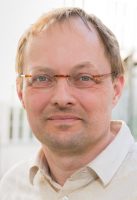
Ken Forbus is the Walter P. Murphy Professor of Computer Science and Professor of Education at Northwestern University. He earned his Ph.D. in Artificial Intelligence from MIT in 1984, along with S.M. and S.B. degrees in Computer Science from the same institution. Current research focuses on qualitative reasoning , analogical reasoning , spatial reasoning , sketch understanding , and the Companion cognitive architecture . He has made foundational contributions to qualitative physics , compositional modeling , and cognitive simulation through systems like CyclePad and Companions . His work spans AI, cognitive science, and education technology with applications in intelligent tutoring systems , educational software , and interactive entertainment . Awards and Fellowships: Humboldt Research Award AAAI Fellow Cognitive Science Society Fellow ACM Fellow AAAS Fellow Herbert A. Simon Prize recipient Research trends in recent publications include analogical reasoning frameworks, normative modeling, pretense simulation, qualitative spatial representations, and applications in education and cognitive systems. Articles frequently address intersections between AI, cognitive science, and human-computer interaction. Teaching activities include core courses like Cognitive Science 207 , Design of Problem Solvers , and Conversational AI . He co-developed the open-source Freeciv game framework for AI research in strategy games.
Dr. Chutima Boonthum-Denecke is a Professor in the Department of Computer Science at Hampton University's School of Science. She joined Hampton University in 2006 as an Assistant Professor and now serves as Director of the Information Assurance and Cyber Security Center (IAC@HU). She leads the NSF CyberCorps Scholarship for Service program and has contributed to NSF initiatives like ARTSI and STARS Alliances. Her educational background includes a Ph.D. in Computer Science from Old Dominion University (2007), an MS in Applied Computer Science from Illinois State University (2000), and a BS in Computer Science from Srinakharinwirot University (1997). Dr. Boonthum-Denecke's research integrates artificial intelligence, natural language processing, and cybersecurity. Key interests include: Developing intelligent tutoring systems and educational games Secure coding practices for software engineering NLP applications in information retrieval and assessment tools Cyber-physical security for IoT and robotics Her recent publications (2016-2021) focus on machine learning applications in cybersecurity, including sentiment analysis for threat detection, blockchain-enhanced IoT security, and vulnerability assessments of emerging technologies. Collaborative work with students frequently addresses privacy ethics in AI assistants, RFID implants, and cloud systems. She mentors students through the IAC@HU lab, resulting in award-winning conference presentations on cybersecurity topics. As Principal Investigator of NSF CyberCorps, she oversees scholarship programs that bridge academic research with national security needs.
Mustafa A. Mustafa is a Senior Lecturer (Associate Professor) in the Department of Computer Science at The University of Manchester, where he leads the Trusted Digital Systems Cluster as part of the university-wide Centre for Digital Trust and Society. His academic journey spans prestigious institutions including The University of Manchester, where he completed his PhD, and KU Leuven in Belgium, where he served as a post-doctoral research fellow. Dr. Mustafa earned his educational qualifications through an impressive academic path: a B.Sc. in communications from the Technical University of Varna, Bulgaria (2007), an M.Sc. in communications and signal processing from Newcastle University, UK (2010), and a Ph.D. in computer science from The University of Manchester, UK (2015). His doctoral research focused on "Smart Grid Security: Protecting Users' Privacy in Smart Grid Applications," laying the foundation for his subsequent research career. Dr. Mustafa's research expertise centers on information security, data privacy, and applied cryptography with particular focus on smart grid systems, smart city applications, e-health, and IoT. His work addresses critical challenges in securing peer-to-peer electricity trading markets, smart metering infrastructure, electric vehicle charging systems, and health data management. He has developed innovative solutions for keyless car sharing systems, frictionless authentication mechanisms, and privacy-preserving protocols for data collection and distribution. His scholarly contributions demonstrate a consistent trajectory toward increasingly sophisticated privacy-preserving techniques applied across multiple domains. Recent work shows a growing integration of artificial intelligence and machine learning approaches with traditional cryptographic methods, particularly in federated learning systems and large language model verification. His research bridges theoretical cryptography with practical implementations in energy systems and healthcare applications. Dr. Mustafa's scientific achievements have been recognized with several prestigious awards: Winner of the Student Video Competition at IEEE SmartGridComm 2017 for "Secure and Privacy-friendly Local Electricity Trading" Best Paper Award at SECURWARE 2017 Distinguished Achievement Award as Postgraduate Research Student of the Year nominee by the School of Computer Science of The University of Manchester (2015) Dame Kathleen Ollerenshaw Research Fellowship (2018-2023) As an academic supervisor, Dr. Mustafa has mentored numerous graduate students through their PhD and Master's research, with a particular focus on privacy and security challenges in emerging technologies. His current supervision portfolio includes research on privacy-friendly multi-agent systems for smart grids, security for IoT in e-health, vulnerability detection in IoT cryptography, and bot detection systems. He has secured significant research funding through multiple competitive grants including EnnCore: End-to-End Conceptual Guarding of Neural Architectures (EPSRC, 2020-2024), SCorCH: Secure Code for Capability Hardware (EPSRC, 2019-2023), and SNIPPET: Secure and Privacy-friendly Peer-to-peer Electricity Trading (FWO-SBO project, 2019-2023). Dr. Mustafa leads the Trusted Digital Systems Cluster within the Centre for Digital Trust and Society at The University of Manchester. His research group comprises PhD students, postdoctoral researchers, and collaborators working on cutting-edge security and privacy solutions. The team maintains strong international collaborations, particularly with KU Leuven in Belgium, and contributes to standards development as evidenced by Dr. Mustafa's role as an expert in the IEC/SYC/WG 3 "IEC Smart Energy Roadmap."
Laurent Daudet is a Professor of Physics at Université Paris Cité (on leave) and CTO & co-founder of LightOn, a startup developing optical computing technologies. His research spans signal processing, wave physics, and machine learning, with a focus on scalable AI solutions. He holds a PhD in Applied Mathematics from Marseille University and is a graduate of École Normale Supérieure in Paris. Research Interests: Laurent’s work bridges academia and industry, addressing challenges in massive-scale AI, optical computing, and hardware optimization. He leads cross-disciplinary R&D projects at LightOn, advancing technologies like the Optical Processing Unit (OPU) for low-power, parallel computing. Awards: Fellow of the Institut Universitaire de France Grants & Advising: Over 200 scientific publications and patents; collaborates globally with researchers and engineers. Former academic roles include Visiting Senior Lecturer at Queen Mary University of London and Visiting Professor at the National Institute for Informatics (Tokyo). Labs & Teams: Leads LightOn’s R&D initiatives, integrating optics, ML, electronics, and software engineering to tackle AI scalability challenges.
Lei Lei is an Associate Professor at the University of Guelph, specializing in Computer Engineering. Her research focuses on Machine Learning/Deep Reinforcement Learning, Internet of Things (IoT)/Internet of Vehicles (IoV), Mobile Edge Computing, and Smart Grid Optimization. She explores cutting-edge applications in energy-efficient systems, autonomous vehicles, and intelligent transportation networks. Her work integrates advanced AI techniques with real-world challenges in communication and control systems. Key research areas include optimizing electric vehicle charging schedules using hierarchical deep reinforcement learning and enhancing vehicular networks through 6G communication protocols. She has pioneered methods for joint communication-control systems, securing federated learning models, and developing robust resource allocation strategies in IoT and edge computing environments. Lei Lei’s publications emphasize interdisciplinary solutions, bridging computer science, electrical engineering, and transportation systems. Her recent work addresses challenges in smart grid security, multitimescale control systems, and the application of AI tools like ChatGPT in connected vehicles. She is affiliated with the AI Affiliated Faculty at the University of Guelph, reflecting her contributions to artificial intelligence research.
Malcolm von Schantz is a Professor and Deputy Faculty Pro Vice-Chancellor at Northumbria University, affiliated with the HLS Faculty Management and Administration. Previously, he held leadership roles at the University of Surrey, including Associate Dean (International) and acting Pro-Vice Chancellor (International Relations). He is also an Honorary Professor at the University of the Witwatersrand, South Africa. He holds a PhD in Zoology from an unspecified institution (awarded 10 Dec 1994). His research focuses on human circadian rhythms and sleep, their molecular determinants, and links to physical/mental health. He has secured over £6.4M in research funding from bodies like the MRC, Wellcome Trust, and NIH. Key research areas include sleep architecture, chronotype variability, HIV-related sleep disruptions, and cardiometabolic health correlations. His work has been published in high-impact journals and widely featured in media. He actively participates in international conferences and public outreach, including translating sleep education materials into multiple languages. Notable collaborations include the BioClocks UK initiative and the Baependi Heart Study in Brazil. His recent articles address daylight saving policies, gender-specific sleep-cardiovascular links, and light sensitivity in bipolar disorder. He supervises PhD students and engages in editorial roles across journals. Public impacts include translating educational comics and participating in community health events. His research emphasizes global health equity, particularly in low-resource settings.
Francesca Grisoni serves as an Assistant Professor in the Department of Biomedical Engineering at Eindhoven University of Technology (TU/e), where she currently leads the Molecular Machine Learning team. She additionally holds appointments as an ICMS Core member and Associate Professor at EAISI (Eindhoven Artificial Intelligence Systems Institute), reflecting her cross-disciplinary role at the intersection of computational science and biomedical applications. Academic Background : Grisoni completed her Environmental Sciences degree and earned a Ph.D. in 2016 from the University of Milano-Bicocca, where her dissertation focused on interpretable machine learning for molecular property prediction. During doctoral studies, she conducted research at ETH Zurich's Department of Chemistry and Applied Biosciences and the U.S. EPA's National Center for Computational Toxicology. Ph.D., University of Milano-Bicocca, 2016 (Dissertation: Interpretable machine learning for molecular property prediction) Environmental Sciences, University of Milano-Bicocca Her research integrates artificial intelligence, chemistry, and biology to develop computational methods for drug discovery, emphasizing wet-lab experimental validation alongside algorithmic innovation. Key focus areas include overcoming activity cliffs in molecular machine learning, generative modeling for scaffold hopping, and AI-augmented decision-making in therapeutic development, with the ultimate goal of achieving 'better decisions faster' in drug discovery pipelines. Analysis of her recent 2025 publications reveals a concentrated trend toward chemical language models and generative deep learning frameworks, specifically addressing low-data drug discovery challenges through active learning and neural network architectures. These works bridge computer science with pharmacology, targeting bioactivity prediction, molecular representation, and enzyme design while maintaining strong ties to experimental validation. Scientific Awards : Lush Young Researcher Prize Early Career Award 2022 from the Dutch Royal Netherlands Academy of Arts and Sciences (KNAW) ERC Starting Grant (2022) Grants and Supervision : Dr. Grisoni secured the prestigious ERC Starting Grant in 2022 to advance her molecular machine learning research. Institutional records indicate she has supervised 7 students (as shown in TU/e's 'Supervised Work (7)' repository section), though specific names aren't provided in the source material. Her group maintains active industry collaborations, including past engagement with Bracco Pharmaceuticals. Laboratory and Team : The Molecular Machine Learning team operates under the ICMS and EAISI frameworks, merging computational AI development with experimental wet-lab validation. This collaborative unit focuses on fragment-based molecular design, chirality representation (evidenced by fragSMILES work), and high-throughput nanoparticle identification using machine learning, as highlighted in recent press coverage and datasets.
Michael Stonebraker is a renowned computer scientist and Adjunct Professor of Computer Science at MIT's CSAIL. He is a pioneer in database technology, having developed foundational systems like INGRES and POSTGRES at UC Berkeley. His work spans database management, distributed systems, and data integration. He has founded multiple startups to commercialize his research and holds numerous awards, including the ACM Turing Award (2014) and IEEE John von Neumann Medal (2005). He earned his Ph.D. from the University of Michigan and undergraduate degrees from Princeton and Michigan. His research focuses on advancing database systems, operating systems, and big data analytics. Recent work includes contributions to video data management, cloud computing optimization, and data discovery systems. Education: Ph.D., Computer, Information and Control Engineering, University of Michigan (1971) M.S.E., Electrical Engineering, University of Michigan (1966) B.S.E., Electrical Engineering, Princeton University (1965) Research Interests: Database Technology, Distributed Systems, Data Integration, and Big Data Analytics. His work bridges theory and practice, emphasizing scalable architectures and real-world applications. Awards & Recognition: ACM Turing Award (2014) ACM SIGMOD Systems Award (2015) MIT Tech Review TR7 (2016) C&C Prize (2020) Grants & Labs: His research is supported by grants from NSF, DARPA, and industry collaborations. He leads MIT's efforts in database systems and is affiliated with CSAIL labs focused on data management and high-performance computing.
ChanMin Kim is a Professor in the Learning and Performance Systems department at Penn State College of Education. With over 80 publications and 2553 citations, their work focuses on integrating artificial intelligence , robotics , and educational technology into science and computer science education. Research interests: Science writing, AI-human partnerships, robotics in education, equity-focused technology design Key methodologies: Natural Language Processing, learning analytics, scaffolding strategies Recent work explores large language models in education, debugging processes in pre-service teacher training, and automated assessment systems for science explanations. While the provided data doesn't show specific scientific awards or student advisees, their publications in venues like British Journal of Educational Technology and Journal of Science Education and Technology demonstrate significant contributions to learning sciences. Kim collaborates extensively with researchers in AI, educational technology, and equity-focused domains.
Andrew Head is an Assistant Professor at the University of Pennsylvania's Department of Computer Science, specializing in Human-Computer Interaction (HCI) and Programming. His work bridges interactive reading , math notation accessibility , and AI-assisted code comprehension . Affiliated with Penn HCI, PLClub, and MindCORE, he co-leads research with Danaé Metaxa and Benjamin Pierce. University of Pennsylvania Assistant Professor, Computer Science Affiliations: Penn HCI, PLClub, MindCORE His research focuses on interactive reading interfaces , AI-powered programming tools , and math notation analysis . Recent projects include: FreeForm : Interactive math notation editor Tyche : Property-based testing tools Explainable Notes : Medical note interpretation systems Publications in CHI , UIST , and ICSE demonstrate his systems-centric approach combining user studies with working prototypes. Notable awards include Best Paper at UIST 2024 and CHI 2022. Advising: Ph.D. Students: Alyssa Hwang, Litao Yan, Hita Kambhamettu, Jeff Tao, Jessica Shi Grants: $1M NSF grant for Property-based Testing Tools (2024) Teaching: Spring 2025: CIS 4120/5120 - Human-Computer Interaction Fall 2024: CIS 7000 - Interactive Reading
Yong-Bin Kang is a Senior Data Science Research Fellow at the ARC Centre of Excellence for Automated Decision Making and Society (ADM+S) at Swinburne University of Technology, affiliated with the School of Social Sciences, Media, Film and Education. He holds a PhD in AI from Monash University and leads numerous transdisciplinary research projects applying artificial intelligence to address complex societal challenges. Education: PhD in Faculty of IT, Monash University, Australia Dr. Kang's research focuses on Responsible AI and Society, with specific interests in developing Societal-AI platforms that integrate social data with ethical principles. His work spans healthcare, humanitech, education, financial planning, environmental health, and justice domains. He investigates how AI can enhance decision-making processes while promoting societal well-being, with particular attention to ethical implementation and human-centered approaches. His expertise encompasses AI, natural language processing, machine learning, and decision-making optimization. Analysis of Dr. Kang's recent publications reveals a strong trajectory toward socially responsible AI applications across diverse domains. His work consistently bridges technical AI capabilities with social implications, particularly focusing on ethical frameworks, community-centered design, and addressing societal inequalities through technology. The publications demonstrate increasing collaboration across disciplines including criminology, environmental science, mental health, and education. Dr. Kang is actively involved in significant research funding initiatives, with multiple ongoing projects that address critical societal challenges through AI. His supervision availability includes Doctorate (PhD) candidates, indicating his commitment to mentoring the next generation of researchers in AI and data science fields. Current Flagship Areas: Digital Capability Innovative Society Manufacturing Futures Sustainable Development Goals: Good Health and Well Being (SDG 3) Industry, Innovation and Infrastructure (SDG 9) Affordable and Clean Energy (SDG 7)
Markus Vincze is an Associate Professor at the Institute of Automation and Control Engineering (ACIN) at Vienna University of Technology (TU Wien). He founded the Vision for Robotics (V4R) group in 1996 to advance robotic perception, particularly in real-world environments and homes. His work focuses on cognitive computer vision techniques for robotics. Education: Diplom in Mechanical Engineering (1988) and PhD (1993) from TU Wien; M.Sc. (1990) from Rensselaer Polytechnic Institute. V4R coordinates EU projects like ActIPret, robots@home, HOBBIT, and national initiatives like vision@home. Markus has edited a book on Robust Vision with Gregory Hager and authored 62 peer-reviewed journal articles and over 400 reviewed publications. His recent research explores zero-shot 6D pose estimation, sim-to-real transfer, and transparent object detection. Markus has served as program chair for ICRA 2013 and organized HRI 2017 in Vienna. He has advised numerous students and secured grants from the Austrian Academy of Sciences for work at HelpMate Robotics and Yale's Vision Laboratory. The V4R group leads innovations in robotic vision, including frameworks for synthetic data generation (Unrealgensyn), depth completion (CAGT), and educational robotics applications for sustainability. Their work spans household robotics (RH3), agricultural robotics (EdgeSoil), and human-robot collaboration.
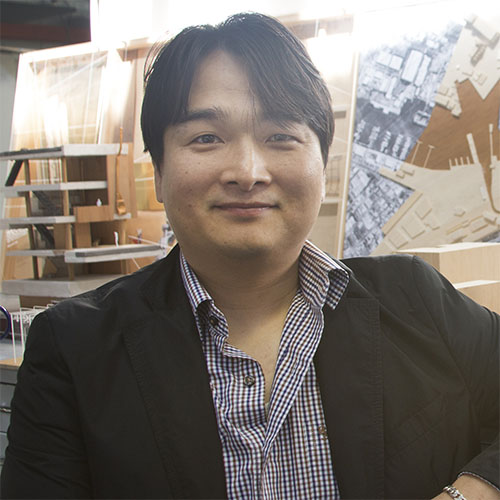
JuHyun Lee is an Associate Professor of Architecture and Computational Design in the School of Built Environment at the Faculty of Arts, Design and Architecture (ADA), University of New South Wales (UNSW) Sydney, where they also hold the prestigious title of Scientia Academic. With a professional background in architecture and construction (1998-2002), they have held academic positions across Australia including a five-year post-doctoral fellowship at the University of Newcastle (2012-2017) and a senior research fellowship at the University of South Australia (2018), following earlier research and teaching roles in South Korea (2003-2011). Lee specializes in architectural design computing, design cognition, and urban complexity, integrating computational methods, cognitive science, and architectural theory to advance architectural intelligence and human-centered design. Their research spans architectural visualization, analysis and design methods, algorithm/protocol design, and data visualization with computational approaches. They have established a strong research program examining the intersection of language, culture, and design cognition, particularly focusing on cross-cultural design communication between Australia and Korea. Lee's recent publications demonstrate a clear trajectory toward increasingly sophisticated integration of computational methods with architectural design theory, particularly in the areas of shape grammar, space syntax, and machine learning applications. Their work shows consistent focus on practical applications of computational design methods to real-world architectural problems, with growing emphasis on cross-cultural collaboration and intelligent design systems. The research portfolio reveals a deepening engagement with AI and machine learning techniques applied to architectural design assessment and generation. Scientia Academic at UNSW Sydney Associate Fellow of the Higher Education Academy (AFHEA, 2020) As an educator, Lee develops cutting-edge courses in computational design and Building Information Modeling (BIM), integrating experiential learning and industry engagement. They have secured over $11 million in research funding, including multiple ARC Discovery Projects and an Australia-Korea Foundation grant. Lee co-directs the Advanced Architectural Analytics Laboratory (A 3 LAB), leading interdisciplinary research on design automation, spatial analysis, and machine learning applications in architecture, while also leading cross-cultural initiatives like the Australia-Korea Architects' Network (AKAN). Lee supervises multiple HDR students working on culturally sustainable urban design, socio-spatial patterns in public housing, and computational layout generation. Their research has significant implications for improving design communication across cultural boundaries and developing more coherent, clear, and accessible built environments through computational design approaches.
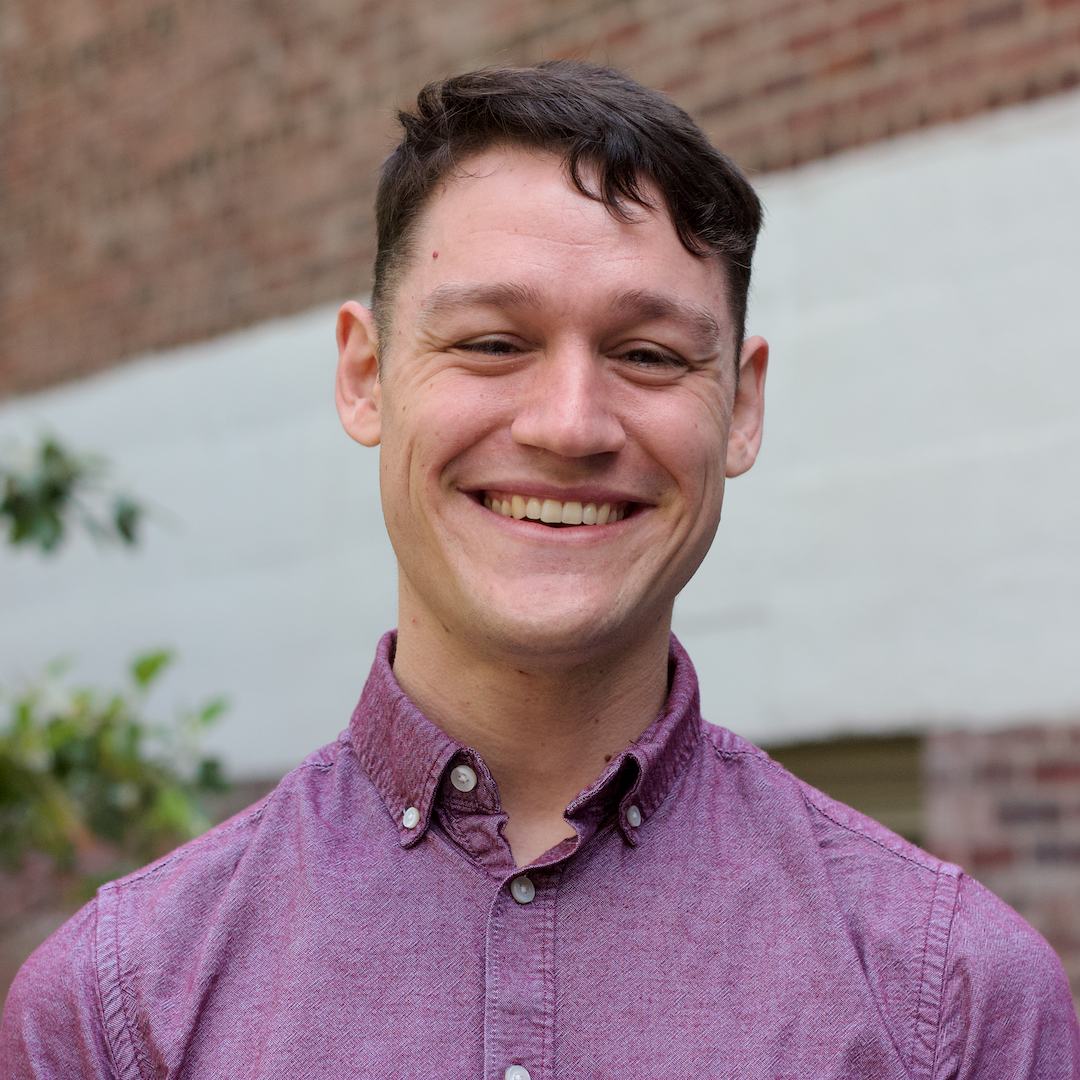
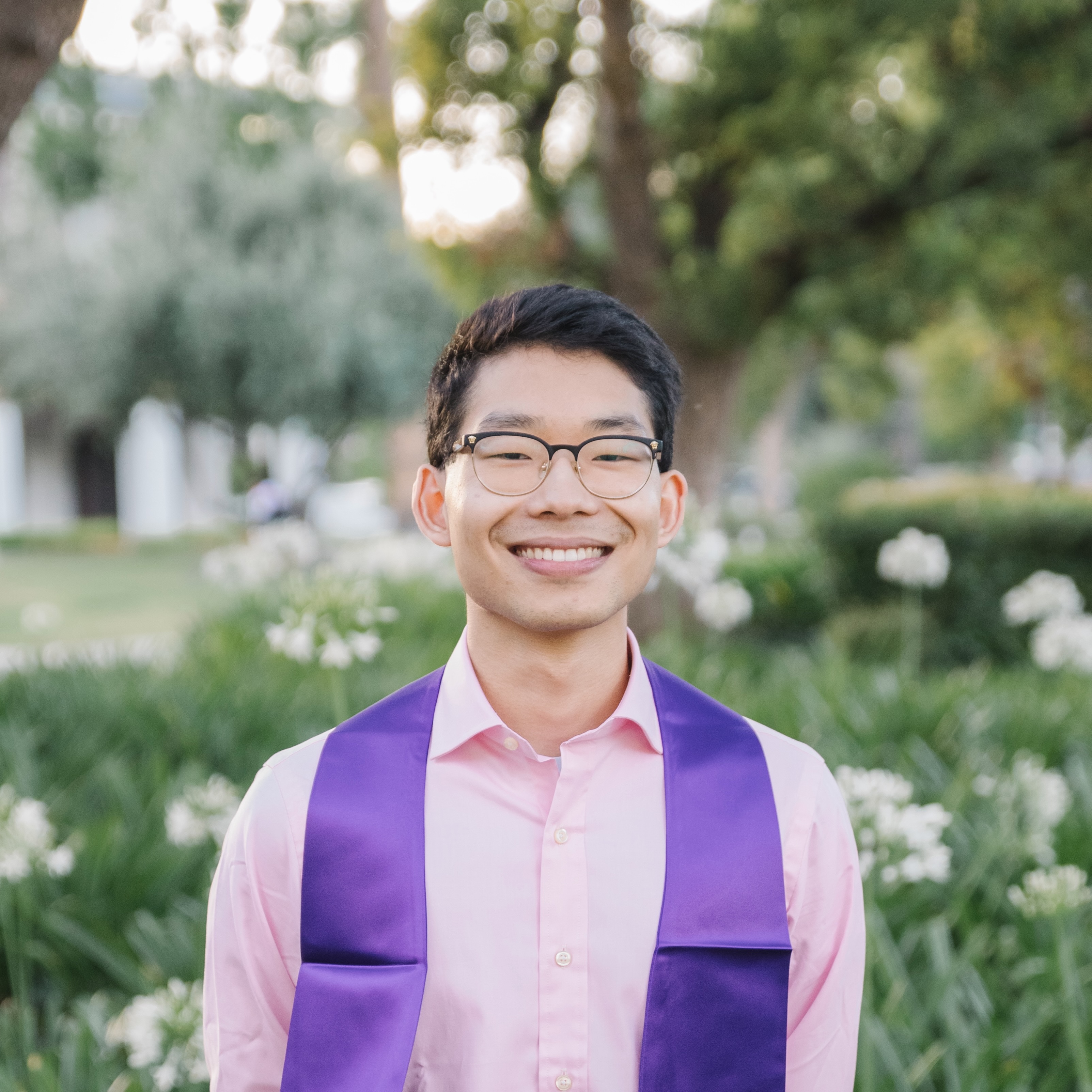
Alexander Pan is a third-year Computer Science PhD student at the University of California, Berkeley, advised by Jacob Steinhardt . His research focuses on developing safe machine learning systems, particularly sequential decision-making agents. He holds a dual bachelor's degree in Mathematics and Computer Science from Caltech, where he worked with Anima Anandkumar and Yuanyuan Shi . His recent work explores AI safety through topics like unlearning , LLM transparency , and reward hacking , with publications at premier conferences including ICML and ICLR. He has received recognition such as the FLI PhD fellowship and hackathon awards for projects like SimSquare and homES ReInvented . Scientific Awards: FLI PhD fellowship Best Social Network Hack - Stanford Hackathon 2021 Best Use of ESRI Technology - Caltech Hackathon 2020 ICML 2023 Oral Presentation
Bonnie Berger is the Simons Professor of Mathematics at the Massachusetts Institute of Technology and head of the Computation and Biology group at MIT's Computer Science and AI Lab. She holds additional appointments as an Associate Member of the Broad Institute, Faculty member of Harvard/MIT Health Science & Technology, and Affiliated Faculty of Harvard Medical School. Her career has been dedicated to pioneering computational approaches in molecular biology, where she has been instrumental in defining the field. Professor Berger's research focuses on designing algorithms to extract biological insights from large-scale data sets. Her work spans Compressive Genomics, Network Inference, Structural Bioinformatics, Genomic Privacy, and Medical Genomics. She actively collaborates with experimental biologists to maximize the power of computation for biological discovery, developing methods that address the challenges of modern high-throughput biological data. Her recent publications demonstrate a strong trend toward integrating machine learning with structural biology and genomic privacy. The articles show increasing sophistication in using deep learning for protein structure prediction, developing privacy-preserving techniques for genomic data sharing, and creating efficient algorithms for massive biological data sets. Her work bridges theoretical computer science with practical biological applications. Professor Berger's scientific recognition includes: Election to the National Academy of Sciences (2021) ISCB Accomplishments by a Senior Scientist Award SIAM Sonya Kovalevsky Lecture Prize Fellowships in ACM, ISCB, AMS, and other prestigious societies Multiple RECOMB Test of Time Awards NIH Margaret Pittman Director's Award She has mentored numerous students who have gone on to make significant contributions in computational biology, including Ellen Zhong, Yun William Yu, and Hyunghoon Cho. Her lab receives substantial research funding supporting projects in genomic privacy, structural bioinformatics, and compressive algorithms for biological data. Professor Berger serves on the Executive Editorial Board of the Journal of Computational Biology and multiple other editorial boards. The Computation and Biology group at MIT CSAIL, which she leads, is at the forefront of developing computational methods for biological discovery. The group combines expertise in algorithms, machine learning, and biology to tackle fundamental challenges in genomics and structural biology. They are currently organizing the Machine Learning in Structural Biology workshop at NeurIPS 2025, highlighting their leadership in this rapidly evolving interdisciplinary field.