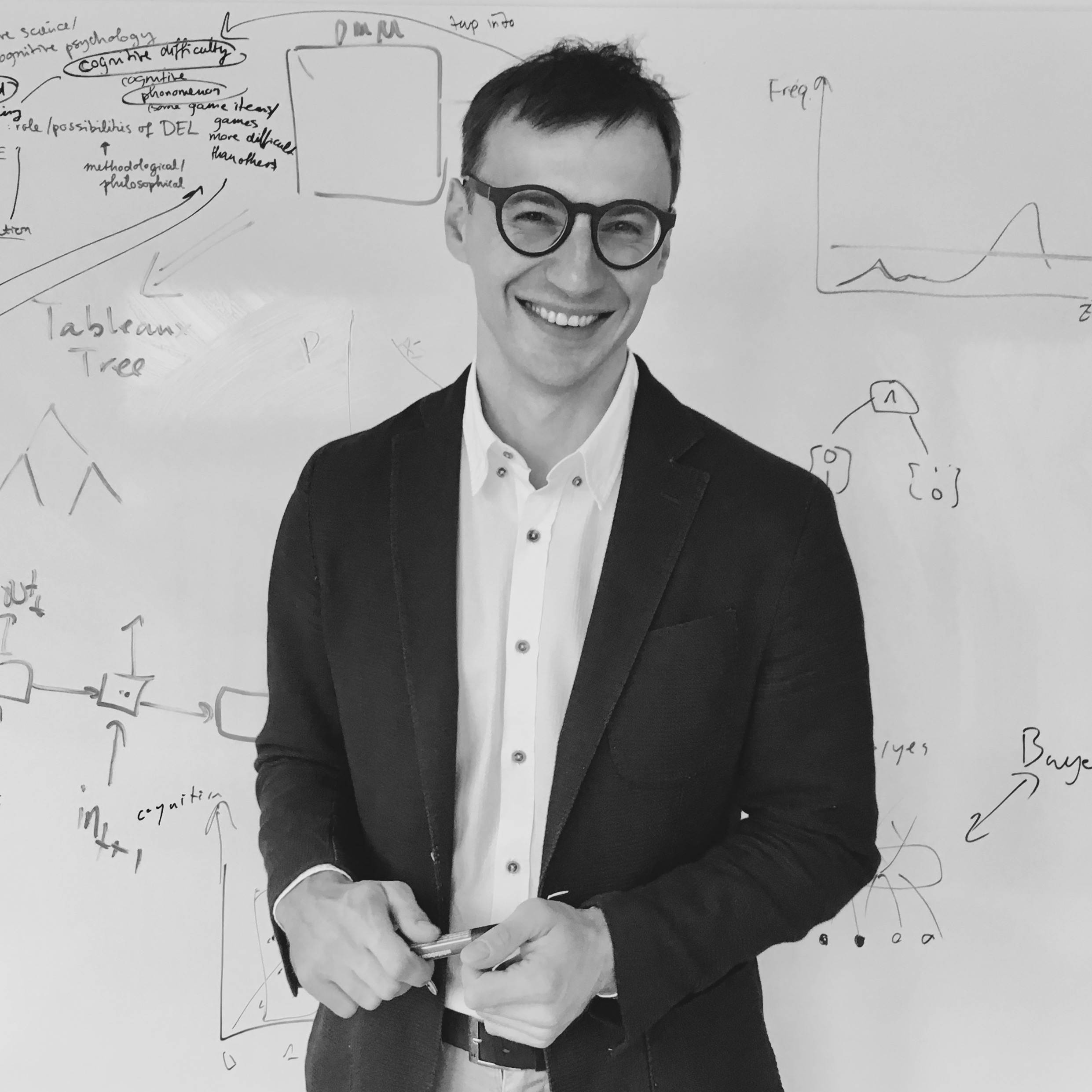
Dr. Jakub Szymanik is an Associate Professor affiliated with the Center for Brain/Mind Sciences and the Computer Science Department at the University of Trento . His research bridges computational modeling, formal logic, and cognitive neuroscience to investigate the relationship between linguistic structures and cognitive processes. Research Focus : Semantic universals, quantifiers, Boolean concepts, and decision-making strategies. Methodology : Combines neural networks, logical complexity analysis, and neurobehavioral experiments. Recent Publications (2020-2023) : Explores quantifier emergence, semantic representation optimization, and computational models of cognitive trade-offs, published in Cognition , Cognitive Science , and Open Mind . Scientific Recognition : ERC Starting Grant: Cognitive Semantics and Quantities NCN Hybrid Reasoning Models NWO VENI Grant: What makes social interactions hard? Research Collaborations : Mentored former group members now at institutions including the University of Washington, Tel Aviv University, and Polish Academy of Sciences.
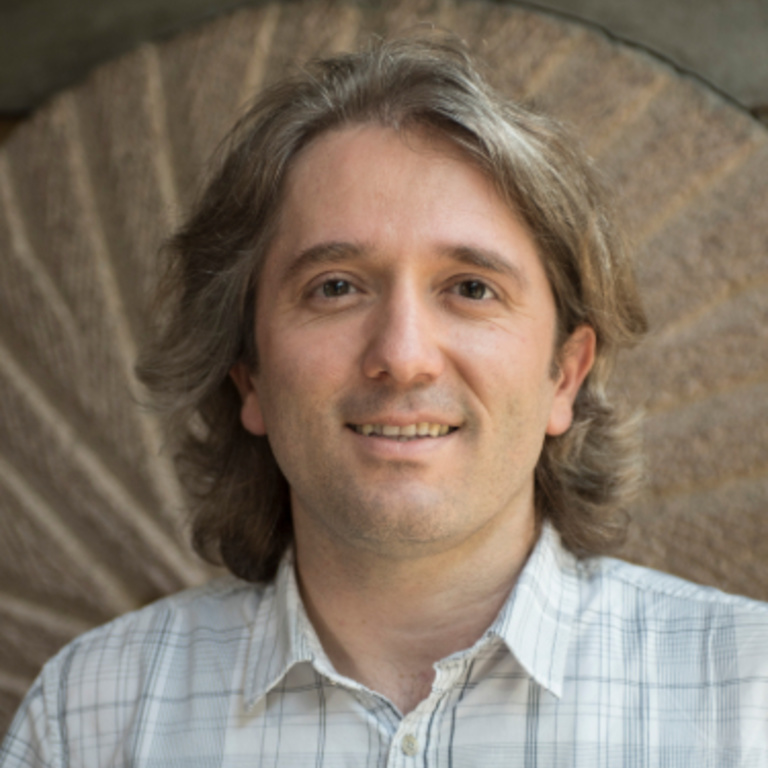
Ibrahim Demir serves as an Adjunct Associate Professor in the Department of Civil and Environmental Engineering at the University of Iowa's College of Engineering, while also holding an Associate Faculty Research Engineer position at IIHR—Hydroscience and Engineering. His interdisciplinary work bridges hydroinformatics, environmental engineering, and advanced computing technologies to address critical water resources challenges through innovative digital solutions. His educational background includes a PhD in Environmental Informatics and Control Program from the University of Georgia (2010), an MS in Environmental Engineering from Gebze Institute of Technology (2004), and a BS in Chemistry from Bogazici University (2000). This foundation supports his integration of chemical, environmental, and computational sciences in hydrological research. Dr. Demir's research centers on hydroinformatics and AI-driven environmental systems, with core expertise in scientific visualization, cyber systems design, and virtual/augmented reality applications. He develops web-based frameworks for flood risk assessment, drought analysis, and water quality management, emphasizing real-time data integration and user-friendly interfaces. Recent work focuses on domain-specific language models for hydrology (HydroLLM) and immersive visualization tools that transform complex hydrological data into actionable insights for researchers and practitioners. Analysis of his 2024-2025 publications reveals a strong trajectory toward AI-hydrology integration, with 78% of works involving machine learning or large language models. Key themes include flood risk communication (22% of publications), algal bloom prediction (15%), and educational technology applications (12%). His research increasingly emphasizes scientific reproducibility through no-code visual programming frameworks and digital twin implementations for watershed systems. Dr. Demir actively contributes to scholarly discourse as Associate Editor for Environmental Modeling and Software, Journal of Hydroinformatics, Journal of Environmental Informatics, and Water and Artificial Intelligence (Frontiers in Water). He serves as Vice-Chair of the International Joint Committee on Hydroinformatics (IAHR/IWA/IAHS) leadership team, shaping global standards in hydroinformatics research and practice. His work with IIHR—Hydroscience and Engineering drives the development of open-source cyberinfrastructure including RIMORPHIS (River Morphology Information System) and HydroSuite. These platforms enable collaborative river morphology research and provide modular tools for hydrological analysis, education, and operational decision support, demonstrating his commitment to accessible, community-driven scientific advancement.
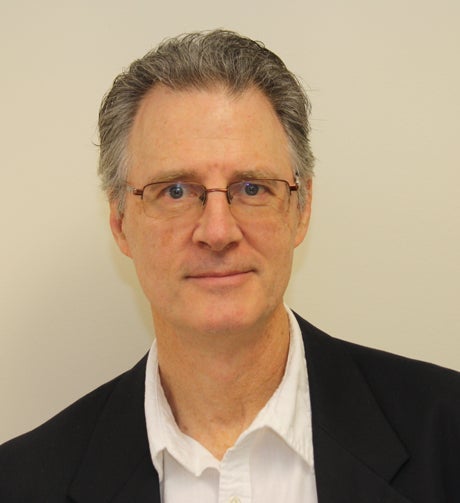
Randy Harris is a Professor in the Department of English Language and Literature at the University of Waterloo, with a cross-appointment to the David Cheriton School of Computer Science. His career spans over three decades, focusing on the intersection of rhetoric , cognitive science , and computational linguistics . He holds a PhD in Communication and Rhetoric from Rensselaer Polytechnic Institute, with postdoctoral experience at the University of Alberta. Education : PhD (Rensselaer), MSc (Rensselaer, Alberta), MA (Dalhousie), BA (Queen's) Research Interests : Cognitive Rhetoric, Computational Rhetoric, Rhetorical Figures, Construction Grammar, Rhetoric of Science, and Neurocognitive Stylistics. His work explores how rhetorical figures like chiasmus and antimetabole reflect brain structure and cognitive processing. Recent projects involve building the Rhetoricon , a collocational database of rhetorical figures, and investigating their role in large language models . He has received numerous awards, including the University of Waterloo Arts Award for Excellence in Research (2023) and Fellow of the Royal Society of Canada (2022) . Harris has supervised graduate students in professional communication , linguistics , and science writing . His grants include NSERC Discovery Horizon (2024-2029) and multiple SSHRC grants for Computational Rhetoric and Rhetorical Figure Ontology . He actively organizes interdisciplinary workshops like Computing Figures and contributes to media discussions on language, AI, and rhetoric.
Manuel Rigger is an Assistant Professor at the National University of Singapore (NUS), leading the TEST Lab (Trustworthy Engineering of Software Technologies) within the PL/SE group at the School of Computing. His research focuses on improving the reliability of data-centric systems through automated testing frameworks and formal methods. Education : PhD from Johannes Kepler University Linz (supervised by Hanspeter Mössenböck), postdoctoral work at ETH Zurich (Advanced Software Technologies Lab under Zhendong Su). Research Interests : Automated testing of database systems Programming language design and verification Incremental build systems Formal methods for software reliability Key Contributions : Developed tools like SQLancer (for finding bugs in databases) and CERT (performance issue detection). His work has uncovered over 800 bugs in real-world systems. Awards : Recipient of the ERC Consolidator Grant (2025) for groundbreaking research in software security and testing. Service Roles : Organizer of ICFP/SPLASH 2025 Outdoor Activities, committee member for OOPSLA Review, PLDI Artifact Evaluation, and ICSE Program Committee. Also actively involved in organizing workshops (e.g., Fuzzing & Software Security Summer School 2025).
Per-Arne Andersen is an Associate Professor at the Department of Information and Communication Technology within the University of Agder . His research focuses on artificial intelligence , reinforcement learning , Tsetlin machines , and deep learning , with applications in real-time strategy games , industrial environments , and IoT systems . Projects: RESTORE Research Groups: CAIR - Center for Artificial Intelligence Research, CIEM - Center for Integrated Crisis Management, Intelligent Mechatronics (iTron) His work explores safe and sustainable reinforcement learning , interpretable AI , and generative environment modeling . He has developed frameworks like CaiRL and CostNet for high-performance RL environments and goal-directed learning. Recent publications include advancements in Tsetlin automaton analysis , GNSS jamming classification , and road quality detection . Articles from 2025-2016 span machine learning , computer vision , and environmental modeling . He contributes to IEEE , Springer , and LNCS publications, with a focus on interdisciplinary AI applications in crisis management , cybersecurity , and industrial optimization .
Luca Luceri is a Research Assistant Professor at the Thomas Lord Department of Computer Science at the University of Southern California (USC) and serves as a Lead Scientist at the USC Information Sciences Institute (ISI) . His work bridges machine learning , data science , and network science to address online harms like misinformation and social media manipulation . Education: Ph.D. in Computer Science, University of Bern, Switzerland M.Sc. in Telecommunications Engineering, Polytechnic University of Milan, Italy B.S. in Telecommunications Engineering, Polytechnic University of Bari, Italy Luca’s research focuses on computational social science and AI for social good , particularly analyzing malicious behaviors and social influence in socio-technical systems. He designs algorithms to detect influence campaigns and online harms , emphasizing actionable mitigation strategies. His recent publications (e.g., Contextualizing Internet Memes Across Social Media Platforms , Leveraging Large Language Models for Influence Campaign Detection ) reflect interdisciplinary trends in network science , NLP , and behavioral modeling applied to real-world socio-political challenges. Scientific Awards: Young Investigator Award for AI research (Embassy of Italy) Best Presentation & Paper Awards (Web Conference 2024) Best Paper Award (BeyondFacts’24) Luca co-leads the DARPA INCAS program and the Swiss NSF-funded CARISMA project , collaborating with policymakers to create scalable tools for combating geopolitical influence campaigns and online harms .
Dr. Jacek Kudera is a post-doctoral researcher in the Department of Phonetics at the University of Trier, coordinator of the LODinG project at the Trier Center for Digital Humanities, and adjunct faculty at WSB Merito University in Wrocław. His work bridges phonetics, Slavic linguistics, digital humanities, and forensic speech science. Education 2022 – PhD, Department of Language Science and Technology, Saarland University, Germany 2019 – MA (Linguistics), Department of Linguistics, Cognitive Science and Semiotics, Aarhus University, Denmark 2015 – Magister (Slavic Philology), Institute of Slavic Studies, University of Wrocław, Poland Research Interests His research focuses on phonetic and prosodic aspects of Slavic languages , cross-linguistic speech perception , forensic automatic speaker recognition , and human-robot interaction . He employs experimental methods such as eye-tracking, articulatory measurements (EMA), and large-scale digital corpora to investigate how speakers of closely related languages understand one another and how machines can replicate or support this process. Publication Trends Across more than 25 peer-reviewed articles (2014-2025), Kudera has consistently explored Slavic intercomprehension , speech technology evaluation , and digital humanities infrastructure . Recent work (2024-2025) targets voice cloning security , linked open data for linguistics , and mismatch conditions in forensic speaker recognition . Scientific Awards & Fellowships Visegrad Fellowship, University of Presov (2025) Erasmus+ Fellowships (Ostrava 2025, Zagreb 2014, Rijeka 2012-2013) NAWA Fellowship, Polish Academy of Sciences (2022) Nordlys Fellowship, University of Eastern Finland (2018-2019) CEEPUS & additional Central-European mobility grants (2014-2018) Projects & Funding Coordinator : “Mismatch conditions in machine speaker identification” (University of Trier Research Fund, 2024-2025) Coordinator : LODinG – Linked Open Data in the Humanities (Trier Center for Digital Humanities, ongoing) Coordinator : “Patterns: Linguistic Creativity and Variation” (Trier Center for Language and Communication, 2022-2024) Member : SFB 1102 “Information Density and Linguistic Encoding” (Saarland University, DFG, 2019-2022) Member : Digital Atlas of Dialects of Bosnia and Herzegovina (2017-2018) Member : CLARIN-PL & European Roadmap for Research Infrastructures (2014-2017) Labs & Teams He conducts research within the Phonetics Team at the University of Trier , collaborates closely with the Trier Center for Digital Humanities , and maintains affiliations with the Phonetics Group at Saarland University and the WSB Merito University in Wrocław.
Professor Usha Goswami is a leading academic in Cognitive Developmental Neuroscience at the University of Cambridge, serving as Professor of Cognitive Developmental Neuroscience and Director of the Centre for Neuroscience in Education. She is also a Fellow at St John's College, Cambridge. Her work focuses on understanding the neural and cognitive foundations of language acquisition, reading development, and developmental disorders such as dyslexia. Key areas of interest include the role of rhythm perception, speech processing, and EEG-based studies of neural entrainment in typical and atypical development. Her research integrates insights from neuroscience, cognitive psychology, and education, emphasizing translational approaches to improve literacy interventions. She has conducted longitudinal studies on infants and school-aged children, examining predictors of language outcomes and the impact of rhythmic training on executive function. Her work bridges developmental linguistics, auditory neuroscience, and educational policy, with a focus on universal speech structures in child-directed communication. Professor Goswami’s contributions include pioneering studies on the neural basis of phonological awareness and the application of machine learning to decode speech information from EEG data in infants. She has also explored cross-linguistic patterns in poetry and infant-directed speech, highlighting universal acoustic features underlying language acquisition. Her research has significant implications for understanding and remediating developmental disorders, particularly dyslexia and developmental language disorder. Her lab, the Centre for Neuroscience in Education, focuses on translating neuroscientific findings into practical educational strategies. Current projects include investigating rhythm-based interventions for children with language difficulties and analyzing the acoustic properties of speech in diverse linguistic contexts.
Andrea Passerini is a Full Professor in the Department of Information Engineering and Computer Science at the University of Trento, Italy, where he also serves as Coordinator of the PhD programme in Information Engineering and Computer Science (Ministerial Decree 45/2013). His academic footprint spans multiple departments including Mathematics, Sociology, Cellular Biology, and Industrial Engineering, reflecting deep interdisciplinary engagement across computational sciences and life sciences. His research centers on Machine Learning and Data Mining with specialized expertise in Neuro-Symbolic AI , Probabilistic Reasoning , and Statistical Relational Learning . He pioneers methods for graph-based learning, medical AI applications, and explainable systems, with significant contributions to bioinformatics (particularly RNA-protein interactions) and healthcare diagnostics. His work bridges theoretical rigor with practical implementations in critical domains. Analysis of his 2025 publications reveals dominant trends in neuro-symbolic integration for graph data, human-AI collaboration in medical decision-making, and robust recommender systems. His research increasingly focuses on interpretable AI for high-stakes applications like surgical planning and physician support, while advancing foundational techniques in graph neural networks and concept-based modeling. As PhD programme Coordinator, Professor Passerini mentors doctoral candidates across AI and computer science disciplines. His collaborative network extends to medical researchers at CIBIO (Cellular, Computational and Integrative Biology department) and industrial partners, though specific lab structures aren't documented in available materials. Current projects emphasize medical AI validation, temporal network modeling, and LLM integration with structured reasoning frameworks.
Supriyo Ghosh is a Senior Researcher at Microsoft Research, India. Prior to this role, he held positions at IBM Research AI Lab (2019–2021) and the Institute of Infocomm Research (I2R), A*STAR. He completed his PhD in Information Systems at Singapore Management University (2017) under Prof. Pradeep Varakantham and conducted postdoctoral research at MIT's SMART and LIDS centers (2016–2017). His research focuses on data-driven decision analytics, including algorithmic optimization, reinforcement learning, urban logistics, and network resilience in cyber-physical systems. His work has addressed cloud incident management, proactive decision-making under uncertainty, and applications of large language models (LLMs) in system reliability. Notable contributions include developing automated root-cause analysis frameworks and improving incident response strategies in large-scale cloud environments. He has also explored reinforcement learning applications in healthcare treatment optimization and air traffic control systems. Award-winning research includes the Best Paper Award at ACM SoCC'22 for an empirical study on high-severity cloud service incidents. He actively serves as a PC member for top conferences like AAAI, NeurIPS, and ICML, demonstrating his leadership in advancing AI and optimization fields. His academic background includes a graduate exchange at Carnegie Mellon University (CMU) and collaborations with MIT faculty like Prof. Patrick Jaillet. His work bridges theoretical foundations with real-world applications in transportation, cybersecurity, and enterprise systems.
Dr. Nhlanhla Mpofu is an Associate Professor in TESOL and Literacy at Stellenbosch University's Faculty of Education, where she serves as Vice Dean for Teaching and Learning and Chair of the Department of Curriculum Studies. She also holds a Visiting Professor position at the University of Antwerp in Belgium. She obtained her PhD in Humanities Education from the University of Pretoria in 2016. Her research focuses on second-language learning in English-medium classrooms , developing culturally sustaining pedagogies that leverage learners' mother tongues, and re-orienting language education research in multilingual systems. She leads the NRF-funded project "Exploring the preparation and experiences of teachers using English across the curriculum: An interdisciplinary approach" and specializes in asset-based approaches that challenge deficit models in language education. Her publications demonstrate consistent focus on language policy implementation , teacher development , and multilingual pedagogies within African educational contexts, with recent work examining translanguaging strategies and disciplinary literacies. Awards & Honors: Fulbright Alumna Golden Key Honor Society Rated Researcher (South African National Research Foundation) Member of South African Young Academy of Science (SAYAS) Margaret McNamara Education Grantee COIL Fellow Grants: 2019: NRF-funded project on teacher preparation for English as Language of Learning and Teaching (Principal Investigator) She maintains professional memberships with the Southern African Linguistics and Applied Linguistics Society (SALALS) and South African Association for Language Teaching (SAALT), and serves on the South African Council on Higher Education Accreditation Committee.
Holly A. Yanco, Ph.D. , is a Professor of Computer Science at the University of Massachusetts Lowell (UML), where she also serves as the Distinguished University Professor and Director of the New England Robotics Validation and Experimentation (NERVE) Center . She founded the Human-Robot Interaction (HRI) Laboratory at UML in 2001, fostering interdisciplinary research in robotics, assistive technology, and artificial intelligence. Education: Dr. Yanco earned her B.A. in Computer Science from Wellesley College , followed by an M.S. and Ph.D. in Computer Science from the Massachusetts Institute of Technology (MIT) . Research Interests: Her work spans human-robot interaction , robotics education , assistive technologies , urban search and rescue (USAR) , and multi-modal interfaces . She has led collaborative initiatives such as Artbotics , integrating art and robotics in K-12 and college curricula, and Pyro , a Python-based robotics platform recognized as Premier Courseware of 2005 . Grants & Funding: Her research has been supported by the National Science Foundation (NSF) , U.S. Army Research Office , Microsoft Research , and National Institute of Standards and Technology (NIST) . Notable grants include an NSF CAREER Award (2005) and leadership roles in DARPA’s Fast Lightweight Autonomy (FLA) program . Awards & Recognition: Dr. Yanco has received teaching awards from UMass Lowell and MIT , served as General Chair of the 2012 ACM/IEEE International Conference on Human-Robot Interaction , and held leadership roles in AAAI’s Executive Council (2006-2009) . Lab & Outreach: The HRI Lab engages students from high school to Ph.D. levels, emphasizing K-12 outreach through Botball tournaments , STREAM teacher workshops , and the Artbotics program in collaboration with The Revolving Museum .
Dr. Jennifer Ahjin Kim is an Assistant Professor in the Department of Neurology at Yale School of Medicine. She specializes in neurocritical care, focusing on quantitative analysis of electroencephalography (EEG) and neuroimaging for early diagnosis and treatment optimization in patients with severe neurologic injuries. Her clinical interests include traumatic brain injury, subarachnoid hemorrhage, stroke, and post-traumatic epilepsy. PhD in Neuroscience, Brown University (2012) MD from Brown University (2012) Neurology Residency, Massachusetts General Hospital/Brigham & Women's Hospital (2016) Neurocritical Care Fellowship, Massachusetts General Hospital/Brigham & Women's Hospital (2019) Dr. Kim’s research integrates multimodal data (EEG, MRI, CT) with machine learning to predict secondary complications after brain injuries. She actively contributes to clinical trials like BOOST3 and ASPIRE, aiming to improve outcomes for patients with traumatic brain injury, stroke, and hemorrhage. Her recent work emphasizes automated detection of epileptiform discharges, predictive modeling for delayed cerebral ischemia, and application of NLP to CT reports. Collaborations include frequent partnerships with Guido Falcone, Lawrence Hirsch, and Emily Gilmore. Dr. Kim leads the Kim Laboratory, which focuses on bedside monitoring technologies and secondary prevention strategies.
Behnam Taebi is Full Professor of Energy & Climate Ethics and Scientific Director of the Safety & Security Institute at Delft University of Technology. He leads TU Delft | The Hague, a university-wide initiative connecting engineering knowledge with public policy. His work bridges technology, ethics, and policy through roles at Harvard University’s Belfer Center (2014–2020) and The Young Academy of the Royal Netherlands Academy of Arts and Sciences (2016–2021). As co-Editor-in-Chief of Science and Engineering Ethics , he contributes to shaping ethical discourse in engineering. BSc in Material Science and Engineering (2006) PhD in Philosophy of Technology (2010) Taebi's research focuses on the ethical dimensions of energy systems, nuclear technology, and climate engineering. He explores intergenerational justice, distributive equity, and responsible innovation frameworks. His work integrates value-sensitive design and moral emotions to address uncertainties in technological risk governance, particularly for nuclear energy and carbon capture. Recent publications highlight ethics in nuclear waste repositories, climate policy metaphors, and synthesizing justice frameworks. His VENI-grant from NWO supports innovative research on technological risks. Collaborations span the OECD Expert Panel on transdisciplinary research and co-editorship of influential volumes like The Ethics of Nuclear Energy (Cambridge, 2015) and Ethics and Engineering: An Introduction (Cambridge, 2021). As Scientific Director of the Safety & Security Institute , he leads interdisciplinary efforts to address societal challenges through engineering ethics. His initiatives emphasize inclusive energy transitions, equitable climate strategies, and bridging technical and social sciences in policy-making.
Susan Fussell is a Professor at Cornell University in both the Department of Communication and Department of Information Science. She received her Ph.D. in psychology from Columbia University and directs graduate studies in Communication. Key research areas: Computer-Mediated Communication, Intercultural Communication, Human-Computer Interaction, Multilingual Collaboration, and Collaborative Intelligence Analysis. Teaching focus: Theories of communication, research methods in social computing, and behavioral foundations of technology. Her publications from 2015-2025 reveal trends in cross-cultural communication technology , AI-mediated interaction , and collaborative problem-solving . Scientific awards include NSF grants #1025425, #1318899, #1314778 Google Faculty Gift She advises students like Nanyi Bi, Ge Gao, and Bin Xu. Notable collaborations include work with Claire Cardie, Sara Kiesler, and Dan Cosley. Projects include Tools for multilingual collaboration Energy conservation through social computing Telepresence robotics and human-robot interaction Contact: 226 Gates Hall, Ithaca, NY 14853 | sfussell@cornell.edu