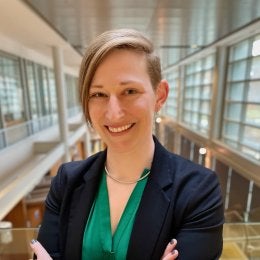
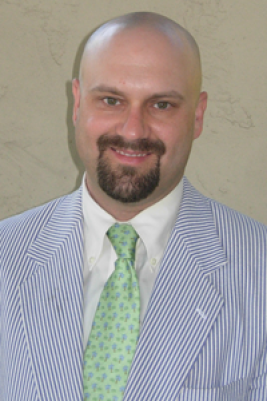
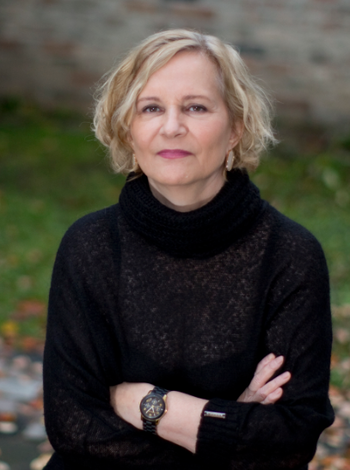
Dr. Leah Perlmutter is a tenure-track Assistant Professor in the Computer Science Department at Grinnell College, focusing on inclusive pedagogy and student belonging in post-secondary CS education. She earned her Ph.D. (2023) and M.S. (2020) in Computer Science and Engineering from the University of Washington, and her B.A. (2012) in Computer Science and Engineering from Colby College. Her research examines how course policies and teaching assistant interactions impact student inclusion in computer science, with a particular emphasis on resubmission opportunities and justice-centered approaches to teaching. Her work also includes human-robot interaction projects like GestureCalc (an eyes-free calculator for touchscreens) and EMAR (a social robot for emotional clarity support). Recent publications explore themes such as algorithmic ethics in education, student belonging in CS, and accessible interface design. She received the NSF Graduate Research Fellowship (2017) and the Outstanding Female Engineer Award (2018). At Grinnell, she teaches courses like Functional Problem Solving, Software Design, and Algorithms, Ethics, and Society.
Rachel R. Romeo is an Assistant Professor at the University of Maryland in the Department of Human Development and Quantitative Methodology. She also holds courtesy appointments in the Department of Hearing and Speech Sciences and the Neuroscience and Cognitive Science program. She is affiliated with the Language Science Center, Field Committee in Developmental Science, Brain Behavior Institute, and Maryland Neuroimaging Center. Education: PhD from the joint Harvard/MIT Program in Speech and Hearing Bioscience and Technology MSc in Language Sciences from University College London BA in Psychology and Linguistics from the University of Pennsylvania Clinical licensure in Speech-Language Pathology from the MGH Institute of Health Professions Translational Postdoctoral Training in Neurodevelopment at Boston Children's Hospital and Harvard Medical School Research Interests: Rachel’s research examines how early experiences, both favorable and adverse, shape children’s neurocognitive and academic development, with a focus on language, literacy, and socioeconomic disparities. She integrates methods from developmental psychology, cognitive neuroscience, and educational interventions to address these questions. Scientific Awards: Young Investigator Award, Flux Society (2024) University of Maryland Research Impact Fellow (2023–2024) Faculty Mentor of the Year Award, UMD Neuroscience and Cognitive Science Program (2023) Early Career Research Contributions Award, American Speech Language Hearing Association (2023) Early Career Research Contributions Award, Society for Research in Child Development (2023) Rising Star, Association for Psychological Science (2021) Flux Congress Science of Learning Award, & Post-Doctorate Award (2019) Society for the Neurobiology of Language Postdoctoral Merit Award (2019) Society for the Neurobiology of Language Graduate Student Award (2017) UCL Language Sciences Dissertation Prize and Overall Achievement Award (2012) The Thouron Award (2011) Fulbright Fellowship (2011) Grants & Projects: Her research is funded by the National Institutes of Health (NIH), Institute of Museum and Library Services (IMLS), and UMD Brain Behavior Institute (BBI). Labs & Teams: Rachel directs the Language, Experience, and Development (LEAD) Lab and collaborates with interdisciplinary teams in developmental science and neuroimaging.
Sven Bölte is a Professor at Karolinska Institutet where he leads the research group focused on Autism, ADHD and other developmental neurological conditions as part of the Center for Neurodevelopmental Disorders (KIND). His work bridges clinical research, education, and practical implementation of evidence-based approaches for neurodevelopmental conditions. Professor Bölte's research spans multiple domains within neurodevelopmental disorders, with particular emphasis on implementing the International Classification of Functioning, Disability and Health (ICF) Core Sets for autism and ADHD using digital solutions. His group has developed and evaluated social skills training programs (KONTAKT, SKOLKONTAKT, iKONTAKT) for autistic children and adolescents, conducted twin research through the Roots of Autism and ADHD Twin Study in Sweden (RATSS), and advanced diagnostic instruments for autism, ADHD, social cognition, and adaptive behavior. His recent publications reveal a strong focus on translating research into practice, with significant work on strengths-based approaches, social inclusion, neurodiversity-affirmative assessment, and the development of practical tools for clinicians and educators. The research demonstrates increasing attention to adult experiences of autism, cross-cultural validation of interventions, and the integration of digital technology in assessment and intervention. Bölte's group also delivers extensive educational components for professionals through KI-Utbildning (Assignment Education), making it one of the largest providers of training on diagnosis and support for individuals with developmental neurological conditions within Karolinska Institutet. His work frequently addresses policy implications, as evidenced by participation in Swedish parliamentary discussions about autism and ADHD.
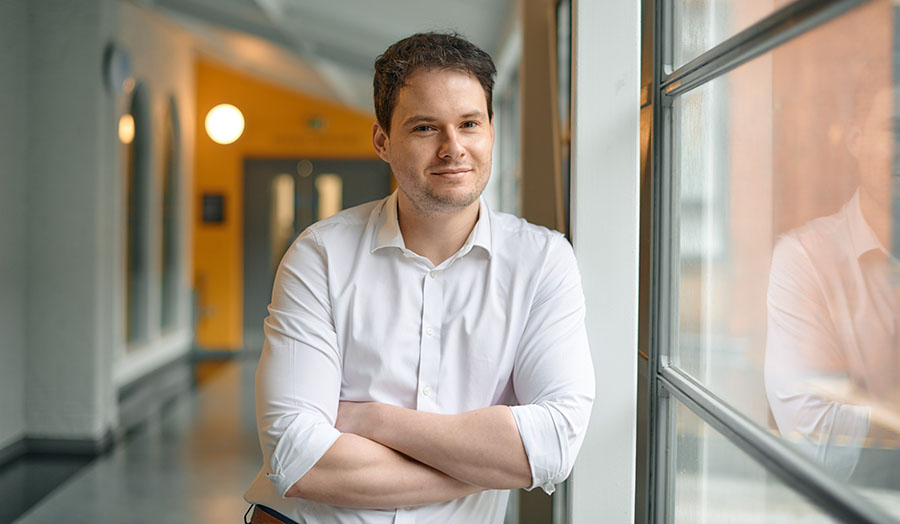
Dr. Mark Thompson is a Senior Lecturer in Psychology and Researcher of Sport Psychology at London Metropolitan University's School of Social Sciences and Professions. He holds a PhD from the University of Hull and is a Fellow of the Higher Education Academy (FHEA). His academic work bridges sport psychology, healthcare rehabilitation, and youth athlete development. Dr. Thompson's education includes a PhD in Psychology from the University of Hull. His research focuses on emotional processes in elite athletes, doping propensity in youth sports, and post-COVID-19 patient rehabilitation. Notable projects include NHS-funded studies on telerehabilitation and collaborations with the International Olympic Committee and World Anti-Doping Agency. Research Interests: Psychophysiological responses to stress in sports Emotional regulation strategies among athletes Anti-doping education and youth athlete behavior Telehealth applications in post-hospitalization recovery His publications emphasize qualitative methodologies, exploring topics like athlete performance under stress, doping prevention programs, and healthcare professional perspectives on self-management approaches. Awards: Fellow of the Higher Education Academy (FHEA). Dr. Thompson has delivered presentations at major conferences such as the American College of Sports Medicine and contributed to media discussions on doping in elite sport via LoveSport Radio. His teaching spans foundational psychology to advanced modules like cognition and behavior, often serving as module leader.
Stephen Ferrigno is an Assistant Professor and Chair of the Biology of Brain and Behavior Area Group at the University of Wisconsin-Madison's Department of Psychology. His research investigates the origins of uniquely human cognition through developmental, comparative, and cross-cultural methodologies. He focuses on foundational cognitive abilities such as number sense, recursive grammar, logical reasoning, and metacognition, exploring their evolutionary and developmental bases. Ferrigno's work bridges disciplines including cognitive neuroscience, developmental psychology, and cultural anthropology, with practical applications in early childhood education and curriculum design. His research employs cross-cultural studies with indigenous populations (e.g., the Tsimane) to assess cultural variability in cognitive development. Key themes include spatial mappings of numerical concepts, recursive sequence processing in non-human primates, and the metacognitive capacities shared between humans and monkeys. The Cognitive Origins Lab, led by Ferrigno, seeks to uncover universal cognitive principles while identifying culturally mediated differences. No scientific awards or grants are explicitly listed in the provided materials. While no advisees are mentioned, his research program suggests involvement in mentoring graduate students through the Department of Psychology's PhD program. Current projects include investigating the developmental trajectories of logical reasoning, the neural correlates of recursive sequence processing, and the design of culturally adaptive educational interventions targeting early math and language skills in preschool settings.
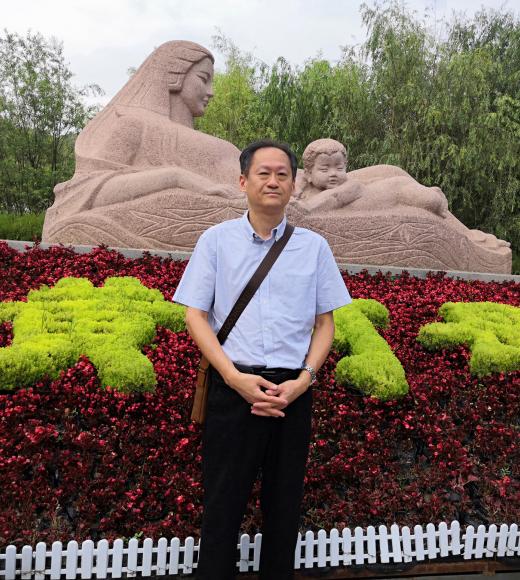
Sheldon Lu is a Distinguished Professor of Comparative Literature at the University of California, Davis. He holds affiliations with East Asian Studies, Performance Studies, Cultural Studies, Film and Media Studies, Critical Theory, and Environmental Humanities. His academic career includes roles as Chair of the Department of Comparative Literature, Director of the Graduate Program in Comparative Literature, and Founding Co-Director of the Film Studies Program. Lu has taught at institutions including the University of Pittsburgh and Beijing Normal University, and served as a Fulbright scholar in Ukraine (2004-2005). Education: B.A. (1984) and Ph.D. (1990) in Comparative Literature from Indiana University and University of Wisconsin-Madison, respectively. His research bridges literary studies, visual culture, film, and China studies. Key publications include Contemporary Chinese Cinema and Visual Culture (2021, BAFTSS Honorable Mention) and Chinese Modernity and Global Biopolitics (2007). He edited the Critical Interventions book series (2009-2019). Lu's work has appeared in journals like New Literary History , Journal of World Literature , and Cinema Journal . Awards include the 2005 Choice Award for Chinese-Language Film: Historiography, Poetics, Politics . He has organized special journal issues on topics ranging from ecocinema to transnational Chinese cinemas. Teaching focuses on Asian literature, film studies, critical theory, and urban culture. Notable courses include World Cinema and East-West Literary Relations .
Dr. Chien-Ming Huang is the John C. Malone Assistant Professor in the Department of Computer Science at Johns Hopkins University. He leads the Intuitive Computing Laboratory and is affiliated with the Malone Center for Engineering in Healthcare, Laboratory for Computational Sensing and Robotics, Institute for Assured Autonomy, and Data Science and AI Institute. His research focuses on human-robot interaction, human-computer interaction, and artificial intelligence applications in healthcare and education. BS in Computer Science, National Chiao Tung University (2006) MS in Computer Science, Georgia Institute of Technology (2010) PhD in Computer Science, University of Wisconsin–Madison (2015) Postdoctoral Research, Yale University (2015-2017) Dr. Huang's work bridges human-robot interaction, robotics, and AI to develop technologies that enhance social, physical, and behavioral support for diverse populations. His research includes adaptive robot systems for autism intervention, aging care technologies, and explainable AI frameworks for medical decision support. Current projects focus on end-user robot programming, socially aware navigation, and conversational agents for health management. His publications span major venues like Science Robotics , HRI, CHI, and ICRA, with recent emphasis on robot error awareness, small talk in collaboration, and AI explanation design for healthcare. Dr. Huang has received numerous accolades including the NSF CAREER Award and John C. Malone Endowed Chair. 2022 NSF CAREER Award John C. Malone Endowed Chair 2013 RSS Best Paper Runner-Up 2012 Human-Robot Interaction Pioneer Dr. Huang mentors PhD, postdoctoral, and undergraduate researchers, emphasizing interdisciplinary collaboration and technical rigor. He serves as Associate Editor for ACM Transactions on Human-Robot Interaction and has organized key conferences including HRI and ICMI. His lab develops systems for robotic assistance in surgical training, home healthcare, and educational contexts.
Hoyt Bleakley is an Associate Professor of Economics at the University of Michigan, where he conducts research at the intersection of economic development, human capital, economic history, and health economics. He also holds positions as a Research Associate Professor at the Institute for Survey Research and a Research Associate at the National Bureau of Economic Research. For the 2024-2025 academic year, he is an Emma and Carroll Roush National Fellow at The Hoover Institution. Bleakley earned his B.A. in Economics from the Massachusetts Institute of Technology in 1995, followed by a Ph.D. in Economics from MIT in 2002. His academic journey has included teaching positions at the University of Chicago Booth School of Business and the University of California, San Diego before joining the University of Michigan faculty. His research focuses on economic development , human capital formation , and economic history , with particular attention to how health interventions, education, and language skills impact long-term economic outcomes. His work often employs historical natural experiments to identify causal relationships in development economics. A significant portion of his research examines the economic effects of disease eradication programs, particularly for hookworm and malaria in the Americas, and how these health interventions affected human capital accumulation and economic development. He has also made important contributions to understanding the economic impacts of slavery, portage and path dependence in economic geography, and the assimilation patterns of immigrants based on language acquisition. Bleakley's publications reveal a consistent focus on using historical data to address contemporary development questions. His recent work has increasingly examined American economic history, with studies on slavery, institutional development, and geographic determinants of economic activity. His research methodology often combines rigorous econometric analysis with deep historical context, resulting in publications in top economics journals including the Quarterly Journal of Economics, Review of Economics and Statistics, and American Economic Journal: Applied Economics. Bleakley serves as a referee for numerous economics journals and has contributed to the profession through his scholarly publications and research. His work on malaria eradication received significant attention in both academic and policy circles. At the University of Michigan, Bleakley teaches courses on Economic Development (ECON 461 for undergraduates and ECON 665 for PhD students) and Human Capital in Historical Perspective (ECON 664). His teaching reflects his research interests, connecting historical economic patterns to contemporary development challenges.
Sandra González-Bailón is the Carolyn Marvin Professor of Communication at the University of Pennsylvania's Annenberg School for Communication and holds a secondary appointment in Sociology. As Director of the Center for Information Networks and Democracy (CIND), her research examines how communication networks shape information exposure, with implications for political engagement, mobilization dynamics, and news consumption patterns. Her methodological work bridges computational social science and political communication. Education M.S. from University of Oxford (2004) Ph.D. from University of Oxford (2007) Research Focus González-Bailón's research program investigates the intersection of technology and society, with emphasis on how digital networks transform political communication. Key areas include: Information diffusion : Studies how content spreads through social platforms during elections and crises Algorithmic curation : Examines how platform algorithms shape ideological segregation and exposure diversity Network dynamics : Maps communication patterns in online collective action and protest movements Her empirical work employs computational methods to analyze digital trace data at scale. Publication Trends Recent publications demonstrate sustained focus on social media's impact during democratic processes, particularly the 2020 U.S. election. Key thematic threads include: misinformation diffusion patterns, asymmetric polarization in news exposure, experimental analysis of platform deactivation effects, and methodological innovations in computational social science. Notable contributions appear in Science , Nature , and PNAS . Center Leadership As founding director of CIND, González-Bailón oversees research examining how digital technologies impact democratic resilience, with projects spanning misinformation analysis, network mapping of political discourse, and policy interventions for platform governance.
Dr. Angelina Vernetti is a Research Scientist at Yale University's Child Study Center, affiliated with the Social and Affective Neuroscience of Autism (SANA) Program. She holds a PhD in Developmental Neuropsychology from Birkbeck, University of London, and completed postdoctoral training at Yale. Her research focuses on social attention, reinforcement learning, and emotional regulation in children with autism, using advanced methodologies like eye-tracking and physiological recordings. Education: PhD in Developmental Neuropsychology, Birkbeck, University of London (2018) MSc in Neurosciences and Neuropsychology, University of Toulouse (2010) BSc in Cell Biology, University of Angers (2008) Research Interests : Dr. Vernetti investigates the neural and behavioral foundations of social difficulties in autism, including social attention mechanisms, emotional regulation abnormalities, and language processing deficits. Her work integrates experimental paradigms with neuroimaging and physiological measures to identify biomarkers for early intervention. Collaborations: She collaborates with prominent researchers like Katarzyna Chawarska and Suzanne Macari, focusing on neurodevelopmental mechanisms and translational research. Her team explores innovative approaches to autism assessment, including live eye-tracking and puppet-based interventions. Labs & Affiliations: Member of the Chawarska Lab and the Center for Brain & Mind Health. Active in training undergraduate, postgraduate, and doctoral students in autism research methodologies.
Emily Falk is a Professor of Communication, Psychology, Marketing, and Operations, Information, and Decisions at the University of Pennsylvania, where she serves as Vice Dean of the Annenberg School for Communication, Director of the Communication Neuroscience Lab, and Director of the Climate Communication Division of the Annenberg Public Policy Center. Her interdisciplinary work bridges communication science, psychology, and neuroscience to understand behavior change and message effectiveness. Dr. Falk received her B.A. in Neuroscience from Brown University and her Ph.D. in Psychology from the University of California, Los Angeles. Her educational background reflects the interdisciplinary approach that characterizes her research program. Dr. Falk's research focuses on the science of behavior change, examining what makes messages persuasive, why and how ideas spread, and what makes people effective communicators. Her work employs tools from psychology, neuroscience, and communication to investigate neural predictors of message effectiveness, social influence, and the spread of ideas through networks. Key research areas include health communication (particularly tobacco use), climate communication, political communication, and the neuroscience of choice and decision-making. Her groundbreaking work has demonstrated how fMRI brain imaging in small groups can predict large-scale public health campaign success. Dr. Falk's research has been recognized with numerous prestigious awards, including early career awards from the International Communication Association and the Society for Personality and Social Psychology Attitudes Division, a Fulbright grant, Social and Affective Neuroscience Society award, DARPA Young Faculty Award, and the NIH Director's New Innovator Award. She was also named a Rising Star by the Association for Psychological Science. As an advisor, Dr. Falk has mentored numerous graduate students who have gone on to successful careers in academia, government, non-profit, and business sectors. Her lab, the Communication Neuroscience Lab, is funded by major organizations including DARPA, NIH, Google, and the Mind & Life Institute. The lab operates with a mission to increase health and happiness for people and the planet through communication science. The Communication Neuroscience Lab is an interdisciplinary research group that uses tools from biological, social, and network sciences to motivate choices that benefit individuals, communities, and the planet. Current major research projects include BB-PRIME (Brain-based Prediction of Message Effectiveness), BB-PRIME Phase II focusing on climate change interventions, and the GeoScan Smoking Study examining tobacco marketing effects.
Federica Agosta is an Associate Professor of Neurology at Vita-Salute San Raffaele University (UniSR) and Functional Unit Head at San Raffaele Hospital (OSR) , Milan, Italy. Her research focuses on neuroimaging in neurodegenerative diseases , including Alzheimer's, Parkinson's, and amyotrophic lateral sclerosis (ALS). PhD in Experimental Neurology (2012), UniSR Neurology Qualification (2008), UniSR MD in Medicine and Surgery (2003), UniSR Research Interests : Federica Agosta's work bridges functional MRI (fMRI) with clinical applications in neurodegenerative disorders. She investigates: Brain network alterations in Alzheimer's and Parkinson's Neuroimaging biomarkers for ALS and dementia Gender-specific neurological manifestations Advanced MRI techniques for early disease detection Cognitive rehabilitation strategies Neurodegeneration and brain connectivity Recent Publications highlight trends in neuroimaging endpoints for ALS, memory systems, Parkinson's scales, sleep apnea, and epilepsy diagnostics. Her ERC Starting Grant (2017) and European Grand Prix for Young Researcher (2019) underscore her leadership in neurodegenerative disease research. Scientific Roles : Coordinator, Doctoral Program in Cognitive and Behavioral Sciences (UniSR, 2024–) Co-PI, San Raffaele Neurotech Hub (2024–) President, Master's Degree Council in Rehabilitation Sciences (2021–) Visiting Professor, University of Belgrade (2017–) Editorial & Societal Contributions : Member of the EAN Scientific Committee , Co-Chair of the ALS & FTD Panel , and active roles in societies like SIN and SINdem . She serves on editorial boards for Neurological Sciences and Neurology .
Lieselotte Ahnert serves as a Visiting Professor for Developmental Psychology at the Free University of Berlin's Department of Education and Psychology, specifically within the Department of Developmental Science and Applied Developmental Psychology. Her academic journey began at Humboldt University in East Berlin, where she studied psychology during a period of significant political change in the GDR. After completing her doctorate in 1982, she held various research positions including director of the Interdisciplinary Center for Applied Socialization Research (IZAS e.V.) from 1991-1996 and a visiting scientist position at the National Institutes of Health in Washington from 1996-1999. Prior to her current position at FU Berlin (since 2019), she was a Professor of Developmental Psychology at the University of Vienna from 2008-2019. Professor Ahnert's research focuses on early childhood development, attachment theory, and the specific contributions of fathers to child development. Her work examines how children develop within various caregiving contexts, including the transition from home to childcare settings, the effects of socioeconomic disadvantage on attachment security, and the unique role fathers play in children's language development and emotional regulation. She has conducted extensive research on stress responses in infants during childcare transitions and how care providers influence these responses. Her interdisciplinary approach draws from behavioral biology, genetics, neuroscience, pediatrics, and education to understand the complex interplay between genetic and environmental influences in early development. Ahnert's publication record demonstrates significant contributions to understanding father-child relationships, with recent work exploring how fathers' attachment security and education contribute to early child language skills beyond mothers' influence. Her research has also examined the 'terrible twos' phase, investigating how children cope with frustration and tantrums and how parents support them through these developmental challenges. She has published extensively in high-impact journals including Child Development, Developmental Psychobiology, and Attachment and Human Development. Professor Ahnert has received recognition for her expertise, including being commissioned to provide expertise for the Federal Chancellery of Austria in 2021. Her work has practical applications in early childhood education and intervention programs, particularly in understanding how public childcare can compensate for developmental risks in socioeconomically disadvantaged children. In addition to her research, Ahnert has made significant contributions to academic training and supervision. Her book publications, including 'It's the fathers who matter' (2023) and 'How much mother does a child need?' (2020), bridge the gap between academic research and public understanding of child development. Her work continues to influence both academic discourse and practical approaches to early childhood care and education.
Dr. Wanju Huang is a Clinical Assistant Professor in the Learning Design and Technology program at Purdue University , where she focuses on enhancing online learning experiences through innovative instructional design and emerging technologies. Prior to joining Purdue in Fall 2016, she served as an instructional design manager at Teaching and Learning Technologies and spent six years as a lecturer and instructional designer at Eastern Kentucky University. Education: Ph.D. in Curriculum & Instruction (Technology concentration) from University of Illinois at Urbana-Champaign Her research interests center on technology-mediated online communities, instructor presence in digital learning, augmented reality applications, and faculty development programs. She has published extensively on these topics, including studies on multimedia interventions for teaching presence, immersive technologies in ESL education, and adaptive cyber training platforms. Dr. Huang's publications reflect a strong focus on EdTech innovation , with trends spanning AI integration in K-12 , model-based systems engineering , and microlearning strategies . Her work bridges theoretical frameworks like social constructivism with practical implementations in professional education. Professional memberships include the American Educational Research Association, Association for Educational Communications and Technology, and Quality Matters. She teaches courses on learning design foundations, e-learning systems, and professional competency demonstrations in LDT.
Professor Brian C. Williams is a leading academic at the Massachusetts Institute of Technology (MIT) , holding the position of Professor of Aeronautics and Astronautics and directing the Autonomous Systems Laboratory (ASL) . He is also a member of the Computer Science and Artificial Intelligence Laboratory (CSAIL) and the Space Systems Laboratory (SSL) . His work focuses on advancing model-based autonomy, enabling robots to operate independently in extreme environments such as space, underwater, and urban traffic. His contact details include email williams@csail.mit.edu and phone 253-2739 . Education : S.B., S.M., and Ph.D. in Computer Science and Electrical Engineering from MIT (1989). Williams' research spans risk-bounded decision making , collaborative robotics , and neural-symbolic learning . He has pioneered systems like Remote Agent, which demonstrated autonomous self-repair in NASA's Deep Space One mission, and Geordi, a risk-aware driver assistant. His work integrates symbolic reasoning, probabilistic methods, and machine learning to create resilient robotic systems for space exploration, manufacturing, and transportation. The most recent publications highlight trends in risk-aware planning , multi-agent robotics , and stochastic control . Key innovations include tube-based trajectory optimization, conflict-directed task allocation, and theory-of-mind guided interventions, reflecting his focus on robustness in uncertain environments. Scientific Awards : NASA Space Act Award (1999), AAAI Fellow, and multiple best paper awards from AAAI, IJCAI, ICAPS, CDC, HRI, and ECAI. Williams leads the Model-Based Embedded and Robotics Systems Group at CSAIL, collaborating with institutions like NASA's Jet Propulsion Laboratory. His projects include ASIST (Artificial Social Intelligence for Teams), RADMAX (Risk and Deadline Aware Planning), and Uhura (risk-aware personal assistants), addressing challenges in health care, manufacturing, and defense applications.