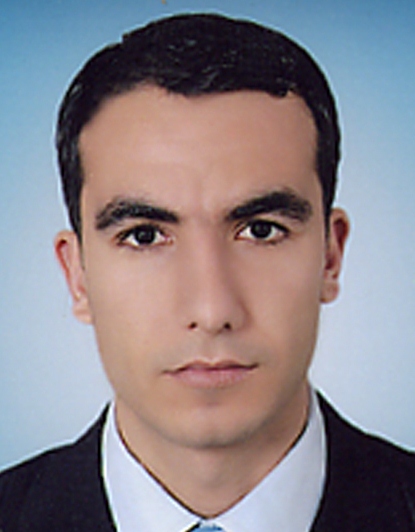
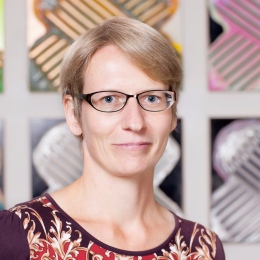
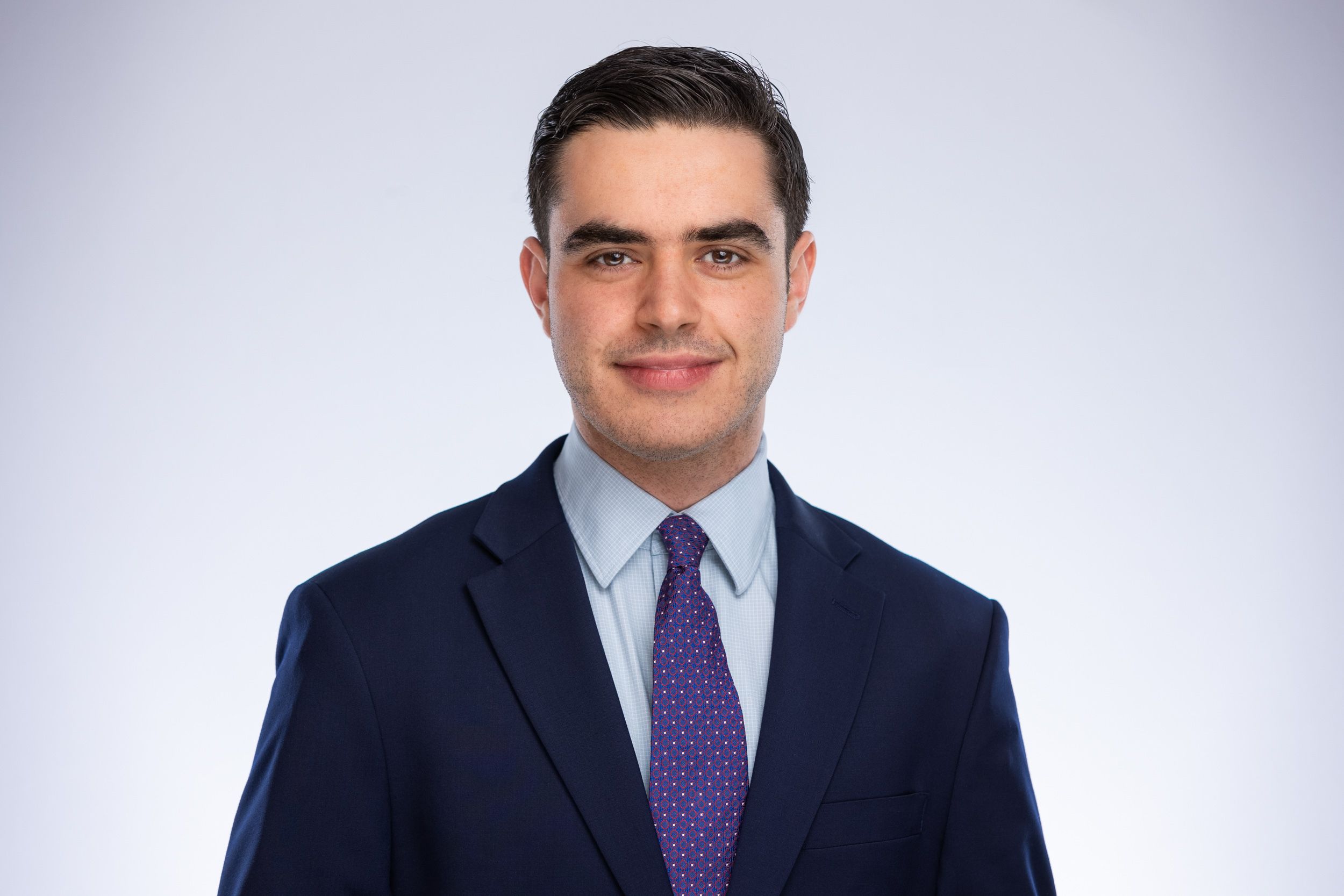
Andrew Ho is an active academic researcher with publications spanning computer science, electrical engineering, and interdisciplinary applications. His recent work focuses on hybridizable discontinuous Galerkin methods for plasma simulations (2024) and AI/LLM applications in scholarly knowledge organization. 2025: Project Alexandria (LLM for copyright-free knowledge) 2024: Hybridizable DG plasma methods, GPU-accelerated kinetic simulations 2023: Low-resource translation techniques 2022: Multimodal VR interfaces 2003-2006: High-speed serial link transceivers and radiography artifact detection His research interests include: Computer science applications in plasma physics and medical imaging LLM-based scholarly knowledge graphs and literature reviews High-speed communication systems Educational technology implementations Co-authors include Vladimir Stojanovic (Stanford, 2003-2005), Carl W. Werner (2003-2005), and Genia Vogman (GPU plasma simulations, 2024).
Beatriz Naranjo Sanchez is a researcher at the University of Murcia, Spain, currently affiliated with the Translation, Didactics and Cognition research group and previously with the Translation, Lexicology and Writing Group. Her work bridges translation studies, cognitive psychology, and musicology through experimental methodologies. She earned her PhD from the University of Murcia in 2017 with the dissertation La influencia de la música sobre la calidad y la creatividad en traducción literaria (inglés-español, inglés-italiano) una aproximación estético-psicológica , supervised by Dr. Ana María Rojo López. Her research centers on psychological and emotional dimensions of translation processes, particularly examining how background music influences literary translation creativity, how anger affects decision-making with offensive content, and emotional processing in dubbing. She employs cognitive-experimental approaches to investigate narrative engagement, vocal qualities in emotionally charged scenes, and pandemic-related stressors on evaluative language translation. Analysis of her 2015-2023 publications reveals consistent focus on music-translation interactions and emotional variables, with methodological emphasis on laboratory experiments, psycholinguistic measurements, and cognitive assessments. Her work demonstrates interdisciplinary innovation through the fusion of aesthetic theory, cognitive science, and translation practice. Scientific awards: No awards documented in provided sources. Regarding advising and grants, while she supervises research within university groups, no specific students or funded projects were mentioned. Her institutional affiliation suggests collaborative research within translation psychology frameworks. She actively contributes to the Translation, Didactics and Cognition research group, which investigates cognitive-affective translation processes through experimental paradigms, likely involving lab-based studies on emotional and musical variables in professional translation contexts.
Rianne Conijn is an assistant professor in the Human-Technology Interaction group at Eindhoven University of Technology (TU/e), Netherlands. Her research bridges data-driven methodologies (machine learning, statistical modeling) with human-centered design to enhance learning analytics, explainable AI, and writing process analysis. She holds a joint PhD (cum laude) from Antwerp University and Tilburg University, and an MSc (cum laude) in Human-Technology Interaction from TU/e. Academic Background: MSc (2015, TU/e, cum laude), PhD (2020, Antwerp University & Tilburg University, cum laude). Research Focus: Learning analytics, keystroke logging, explainable AI for education, data dashboards, and self-regulated learning dynamics. Teaching: Courses in Advanced Research Methods, Human-AI Interaction, Behavioral Research Methods, and AI ethics in education. Her recent publications explore parallel language planning in writing, longitudinal self-regulated learning strategies, and generalizability of academic performance prediction models. She leads an NWO Veni project on Human-Centered AI in education, emphasizing tailored explanations for student-AI collaboration. Scientific awards include cum laude distinctions for her MSc and PhD, and the NWO Veni grant. Collaborative work spans institutions in the Netherlands, Norway, and the U.S., with applications in intelligent tutoring systems and ethical AI deployment in exams. Key trends across her work: integration of machine learning with educational theory, leveraging keystroke data for cognitive process insights, and prioritizing actionable, explainable AI systems for student support. Publications span journals like the Journal of Experimental Psychology: General , Computers and Education , and IEEE Transactions on Learning Technologies . Scientific Awards: NWO Veni grant for Human-Centered AI in education Cum laude for MSc and PhD Grants & Collaborations: National Science Foundation grants (2016868, 2302644) for biometric feedback in writing UK Research and Innovation grant (ES/W011832/1) for real-time AI scaffolding TU/e Boost! Program grant for self-regulated learning analysis Labs & Teams: EAISI Foundational (Eindhoven AI Systems Institute) Human Technology Interaction group at TU/e Collaboration with Norwegian Reading National Center (University of Stavanger) Project teams for Waterproof ITS and ProWrite grants
Dianna Townsend serves as Professor of Literacy Studies in the Department of Literacy Studies within the College of Education and Human Development at the University of Nevada, Reno. She directs the M.Ed., Ph.D. programs in Reading Curriculum & Instruction and Reading Specialist Endorsement Certificate. Nationally, she holds key roles as Principal Member of the Institute of Education Sciences (IES) Education Research Scientific Review Panel and member of the National Assessment of Education Progress (NAEP) Reading Standing Committee. In Nevada, she co-founded and presides over the Nevada Adolescent Literacy Network (NALN). Her educational credentials include an Ed.D. from the University of California-Irvine and an M.Ed. from Boston University, establishing her expertise in literacy education. These qualifications underpin her leadership in graduate programs and statewide literacy initiatives. Dr. Townsend's research fundamentally addresses academic language development for adolescent learners, with concentrated focus on vocabulary acquisition, reading comprehension, and disciplinary literacy across academic subjects. Her work investigates how discipline-specific language demands impact student learning and develops evidence-based instructional scaffolds. She prioritizes culturally and linguistically sustaining approaches, particularly for multilingual adolescents, as demonstrated in her Spencer Foundation-funded intervention research comparing background knowledge activation and academic language support strategies. Analysis of her 15 most recent publications reveals consistent emphasis on sentence-level language features, academic vocabulary instruction, and disciplinary literacy across K-12 contexts. Her scholarship demonstrates methodological diversity through mixed-methods designs while maintaining focus on practical classroom applications. Key trends include the integration of writing in content areas, multimodal vocabulary instruction, and culturally responsive comprehension strategies that address equity gaps for linguistically diverse learners. Her scientific recognition includes the Tibbetts Distinguished Teacher Award, validating her exceptional pedagogical contributions. This award reflects her innovative approaches to literacy education and teacher development. Dr. Townsend secured significant research funding from the Spencer Foundation for adolescent literacy interventions and created the Virtual Reading Clinic to provide remote graduate practicum experiences for teachers in rural areas. While specific advisee names aren't documented, she mentors through her directed graduate programs. Her national committee work with IES and NAEP demonstrates sustained leadership in education research policy. She leads the Virtual Reading Clinic as an innovative online platform connecting graduate students with rural teachers, and through NALN she coordinates statewide efforts to advance adolescent literacy practices. These initiatives demonstrate her commitment to bridging research-practice gaps and expanding access to literacy expertise across Nevada's diverse educational landscape.
Dr. Mevlüt Kara is an Associate Professor at the Department of Basic Education , Nizip Faculty of Education , Gaziantep University since 2023. Previously served as a Doctorate Lecturer at the same institution (2019-2023). Holds a PhD in Educational Sciences (2012-2018) and Master’s in Educational Sciences (2007-2012) from Gaziantep and Harran Universities, respectively. His academic career combines theoretical research with practical contributions to school management and educational policy. Education: PhD in Educational Sciences, Gaziantep University (2018) Master’s in Educational Sciences, Harran University (2012) BA in Public Administration, Anadolu University (2011) BA in Classroom Teaching, Gaziantep University (2007) Research interests span educational leadership , social justice leadership , teacher autonomy , and school administrative processes . Specializes in analyzing relationships between leadership styles and organizational trust, with particular focus on crisis management during the Covid-19 pandemic and integration of migrant students . Has developed scales for measuring collective teacher efficacy and social media literacy in educational contexts. Scientific contributions include 32 refereed articles and 9 book chapters in international and national publications. Collaborated with researchers like Sedat Alev and Bayram Bozkurt on comparative studies across Turkey, Sweden, and global contexts. Key thematic trends: school culture , leadership theories , digital technology integration , and multicultural education . Academic Roles: Deputy Dean (2025-) Deputy Dean (2020-2024) Session Chair at 11+ international conferences Administrative Experience: Coordinated teacher training programs Supervised school improvement projects Organized leadership workshops
Stephen Turner is an Associate Professor of Data Science and Assistant Dean for Research at the University of Virginia School of Data Science . His work bridges genomics, data science, and national security , focusing on biosecurity, synthetic biology, conservation, and bioinformatics applications in human health . Previously, he was a faculty member in the UVA School of Medicine’s Department of Public Health Sciences (2011–2019) and directed the UVA Bioinformatics Core . Ph.D., Human Genetics, Vanderbilt University M.S., Applied Statistics, Vanderbilt University B.S., Biology, James Madison University Turner’s research spans computational approaches to biosecurity, biodiversity conservation, and human health . Recent publications highlight tools like the qqman and kgp R packages, PLANES for epidemiological modeling, and biorecap for bioRxiv preprint summarization. His work integrates large-scale sequencing, genome editing, and machine learning in conservation biotechnology and public health forecasting. Scientific contributions include applications in infectious disease forecasting , forensic genomics , and maternal-fetal biology . He has mentored interdisciplinary students and collaborated on NIH-funded research , while advising biotech startups at the intersection of academia, industry, government, and policy .
Eric Le Bourhis is a Senior Lecturer in Latvian language, literature, and civilization at the Institut National des Langues et Civilisations Orientales (INALCO) in Paris. He serves as head of the Latvian curriculum in the Europe department and as INALCO's anti-racism and anti-Semitism representative. As a member of the Centre de recherches Europes-Eurasie (CREE), he conducts research focused on urban history in the Soviet Union and Latvia, France, and Paris, employing a social history approach attentive to spatial dimensions and varying observational scales. Le Bourhis's research centers on three major projects: housing construction and urban planning practices in Riga (1945-1990), the history of Jewish persecution under Nazi occupation through the 'Connus à cette adresse' collective (examining Riga and Paris from a housing perspective), and Soviet trials of local Nazi criminals in Soviet Latvia (1957-1974). His methodological approach emphasizes micro-history with intensive archival research, often conducted collaboratively to enable comparative analysis across different contexts. His work reveals how urban spaces functioned under authoritarian regimes, with particular attention to how ordinary people navigated systems of oppression. Le Bourhis's publications demonstrate a consistent focus on the intersection of urban spaces, housing, and historical trauma, particularly during the Holocaust and Soviet era. His recent work increasingly employs comparative frameworks across geographical and political contexts to identify broader historical patterns. A significant portion of his scholarship examines how housing and urban planning served as tools of social engineering and control, while documenting resistance and adaptation by ordinary citizens. Académie d'Architecture, prix de la recherche, premier prix, 2017 Société française d'histoire urbaine, prix de thèse, prix spécial, 2016 As an educator, Le Bourhis teaches undergraduate courses in Latvian grammar, Latvian culture and literature history, Baltic region history from the Middle Ages to Modern Era, and Estonian/Latvian history (19th-20th centuries). At the graduate level, he co-organizes research seminars on Baltic spaces at EHESS, the liberation of Paris, and Soviet Union history and historiography. His commitment to addressing contemporary social issues is reflected in his institutional role as anti-racism and anti-Semitism representative. Le Bourhis actively participates in the 'Connus à cette adresse' research collective examining everyday Jewish persecution under Nazi occupation through housing perspectives. His institutional affiliation with CREE (Centre de recherches Europes-Eurasie) provides a framework for his interdisciplinary work bridging European and Eurasian studies, with particular focus on the Baltic region's complex historical relationship with both Western Europe and the former Soviet Union.
Michael Oberst is an Assistant Professor of Computer Science at Johns Hopkins University's Whiting School of Engineering, affiliated with the Malone Center for Engineering in Healthcare and the Data Science and AI Institute. His research focuses on developing reliable machine learning systems for healthcare decision-making, emphasizing causal inference and robust performance across diverse clinical settings. Key research themes include: Ensuring ML system reliability comparable to FDA-approved medical tools Causal reasoning in observational healthcare data Robustness to dataset shifts across hospitals Algorithmic fairness under unobserved confounding Medical adaptation of large language models Recent publications (2025-2024) demonstrate trends in prediction-powered inference, clinical validation frameworks, and robustness evaluation methods. His work appears in top ML venues (NeurIPS, ICML, UAI, EMNLP) and translational medicine journals. Michael holds a BS in Statistics from Harvard University and a PhD in Computer Science from MIT, with postdoctoral training at Carnegie Mellon University's Machine Learning Department. His group actively seeks PhD students and postdocs for developing trustworthy AI solutions in healthcare.
Kathrin Kaufhold is an Associate Professor in Applied Linguistics at Stockholm University's Department of English. Her research examines academic writing practices in multilingual and interdisciplinary contexts, focusing on knowledge recontextualization, translanguaging strategies, and institutional communication dynamics. She coordinates undergraduate thesis projects and teaches academic writing, research methods, and sociolinguistics. Current research explores participation in academic writing dialogues Investigates English's role in multilingual university environments Examines institutional communication mediation processes Her work bridges theoretical frameworks from Vygotskian socio-cultural theory and genre pedagogy with practical applications in writing center operations and healthcare communication. She leads the Language and Power research network addressing contemporary linguistic challenges in polarized academic environments. Key collaborations include projects with: Karolina Wirdenäs (healthcare communication) Niina Hynninen (academic writing evolution) Maria Kuteeva (language policy in Nordic universities) Her teaching emphasizes: Academic writing development Research methodology applications Discourse analysis frameworks Applied linguistics principles
Dr. Efisio Manunta is an Associate Professor at the University of Toulouse , affiliated with the Cognition, Languages, and Ergonomics (CLLE) laboratory. His research bridges political psychology , health psychology , and social identity processes , focusing on topics like populism , radicalization , and pro-health behavior . He has co-authored high-impact studies in Personality and Social Psychology Bulletin , Political Psychology , and Nature Human Behaviour . Research Interests : Motivational processes in identity construction Impact of identity threat on political and health behaviors Psychometric scale development (e.g., POP-ThIS for populism) Cross-cultural studies on sociosexual exchanges (e.g., sugar relationships) Notable Collaborations include ERC Advanced Grant projects at the University of Limerick, visiting positions at the University of Sussex and Sapienza Università di Roma, and contributions to global datasets during the COVID-19 pandemic.
Troy McDaniel is an Assistant Professor at Arizona State University's School of Manufacturing Systems and Networks, specializing in haptic interfaces and assistive technologies for people with disabilities. With over 50 peer-reviewed publications and two authored books, his work bridges engineering, computer science, and healthcare to develop innovative rehabilitation solutions. Ph.D. from Arizona State University His research focuses on haptic perception and human augmentation through wearable technologies, with emphasis on assistive devices for motor and cognitive rehabilitation. Key areas include vibrotactile communication systems, social robotics for elderly care, and machine learning applications for activity recognition. His work prioritizes user-centered design for real-world disability challenges. Recent publications (2023-2025) demonstrate strong trends in haptic neuro-spatial rehabilitation, executive function therapy apps, and social robot companionship systems. His research increasingly integrates privacy-preserving AI for smart city health applications while maintaining clinical validity through partnerships with institutions like Mayo Clinic. Multiple Top 5% teaching awards for faculty at the Ira A. Fulton Schools of Engineering Dr. McDaniel advises graduate students in manufacturing systems and robotics through dissertation committees (MFG 799, CSE 799), with recent projects spanning haptic training simulations to PERACTIV activity monitoring systems. His research funding includes significant NSF grants like the IGERT program on person-centered technologies for disabilities and collaborations with Intel Corp on smart stadium applications. He contributes to ASU's Smart Living Research initiative, developing haptic neuro-spatial rehabilitation devices and social robotics frameworks within interdisciplinary teams focused on translating lab innovations to community health solutions.
Xiao Tan serves as an Assistant Professor in the English Department of the College of Arts & Sciences at Utah State University, specializing in writing pedagogy and multimodal composition within second language contexts. Research expertise includes: Second Language Writing Development Generative AI Integration in Academic Writing Multimodal Literacy Pedagogy ESL Writing Assessment Teacher Cognition in Technology Adoption Tan's scholarly output (2023-2025) demonstrates concentrated investigation into generative AI's impact on L2 writing classrooms, examining teacher perceptions of ChatGPT, student transparency practices, and voice construction in AI-assisted multimodal texts. This body of work bridges composition theory with emerging technologies, revealing critical tensions between pedagogical innovation and academic integrity while establishing Tan as a significant contributor to technology-enhanced writing education research.
Alipaşa Ayas is a Professor and Dean of the Faculty of Education at Bilkent University, where he also serves as Chair of the Department of Educational Sciences. His research focuses on science education, teacher training, conceptual understanding, and inclusive education. He has led numerous national and international projects, including UNICEF- and EU-supported initiatives. Ph.D., University of Southampton M.A., University of New Brunswick MSc., Karadeniz Technical University BSc., Karadeniz Technical University His research interests span teacher education, science education (particularly chemistry), concept development, curriculum design, and assessment strategies. He employs both qualitative and quantitative methods to explore these areas. His publications emphasize inquiry-based learning, conceptual change strategies, and the effectiveness of interventions such as the 5Es model, constructivist activities, and analogies in enhancing science learning. These works often address misconceptions in chemistry and methods to improve scientific process skills. He has contributed to projects supported by the World Bank, EU, and UNICEF, including initiatives on lifelong learning, education development, and inclusive teacher training. His administrative roles include a 6-year deanship at Karadeniz Technical University and leadership of Bilkent University’s Graduate School of Education since 2017.
Scott Singer is a Research Fellow in the Technology and International Affairs Program at the Carnegie Endowment for International Peace, focusing on AI development and governance in China. He co-founded the Oxford China Policy Lab and is affiliated with the Oxford Martin School AI Governance Initiative . His research spans U.S.-China AI dynamics, cross-Strait relations, public opinion in technology governance, and UK foreign policy. Education: PhD in International Relations (University of Oxford, ongoing), MPhil with Distinction (University of Oxford), BA in Economics and Fundamentals (University of Chicago). Languages: Mandarin (professional fluency), English, Spanish. His work addresses global AI governance trends, emphasizing balancing development with risk management. Recent publications analyze China's AI ambitions, U.S. state-level AI laws, and frameworks for international AI safety cooperation. Scientific Awards Clarendon Scholar (University of Oxford) Singer’s expertise has been cited in Foreign Policy , Bloomberg , and Lawfare , and he has contributed to UK parliamentary discussions. He previously worked for the U.S. State Department and Senate, with a focus on China-facing policy capabilities.
Andrew James Davies is a researcher at Swansea University, affiliated with the School of Social Sciences - Education and Childhood Studies. His work focuses on education policy, curriculum development, teacher training, and leadership in educational contexts within Wales. He has contributed extensively to discussions on the Curriculum for Wales, professional teacher standards across the UK, and the challenges of policy implementation in education. His research explores the intersection of educational leadership and political reform, particularly the impact on headteacher recruitment and professional identity. He has led studies on the reliability of teacher practice evaluations, the role of job descriptions in framing leadership, and the complexities of professional learning environments for new teachers. Davies has published widely in journals such as The Teacher Educator , International Journal of Leadership in Education , and Cylchgrawn Addysg Cymru / Wales Journal of Education . His methodological approaches include discourse analysis, mixed-methods research, and cross-national comparisons, with a strong emphasis on qualitative evidence and sociocultural contexts.