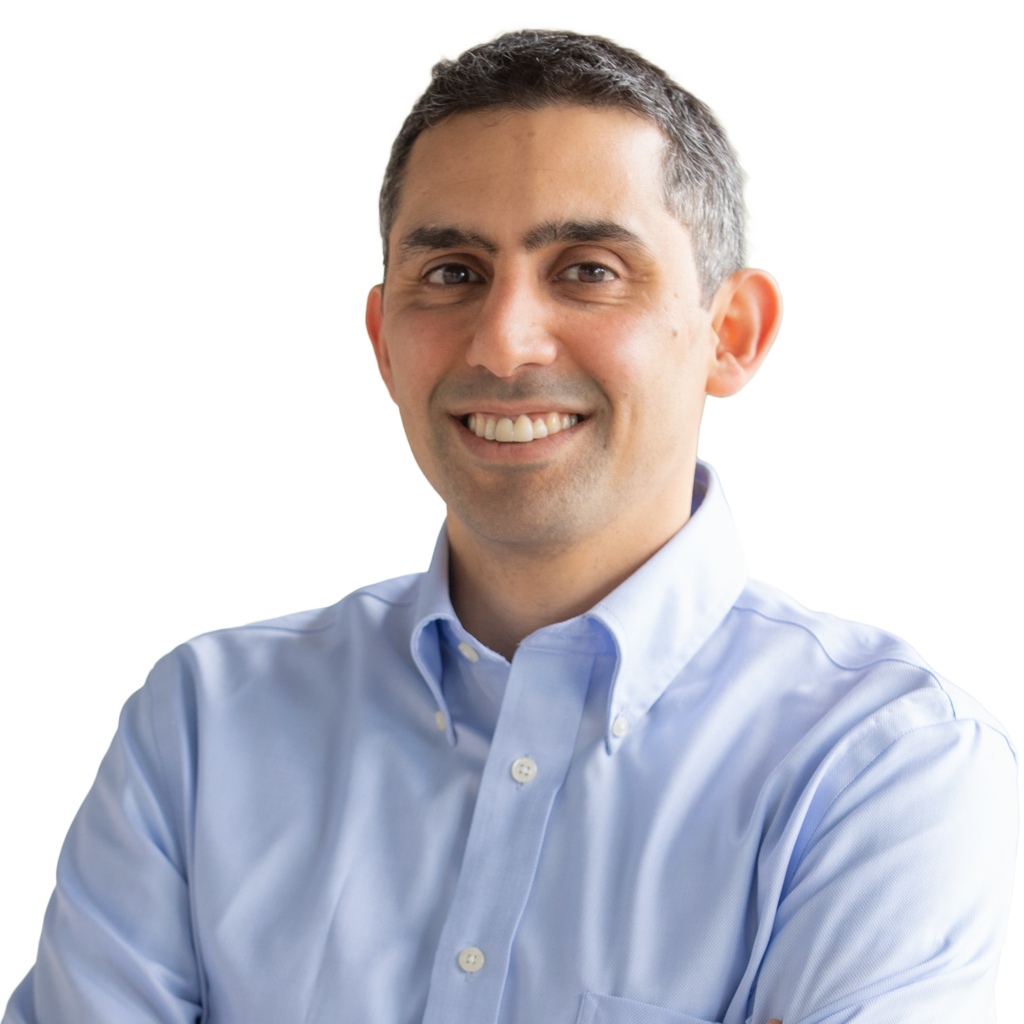
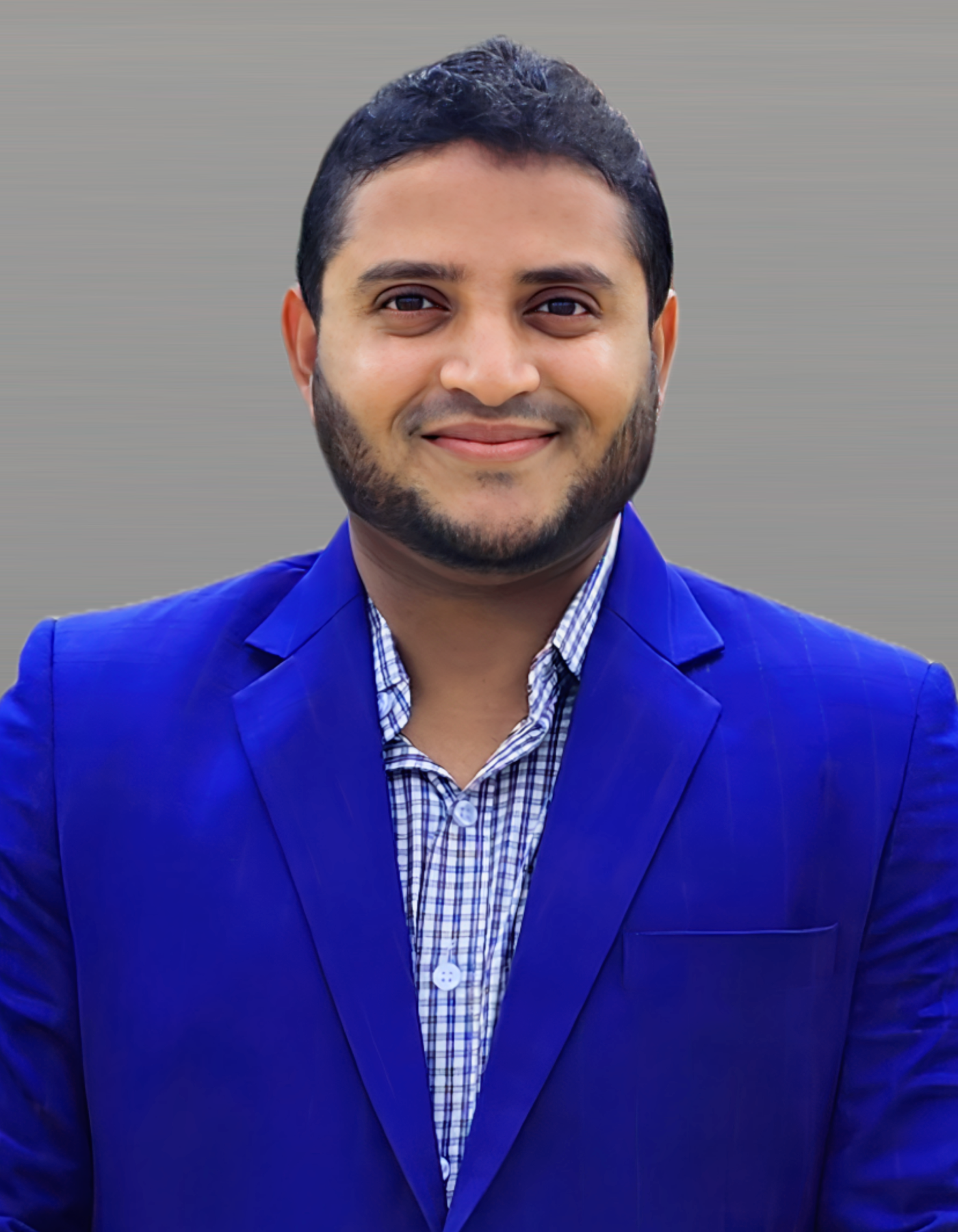
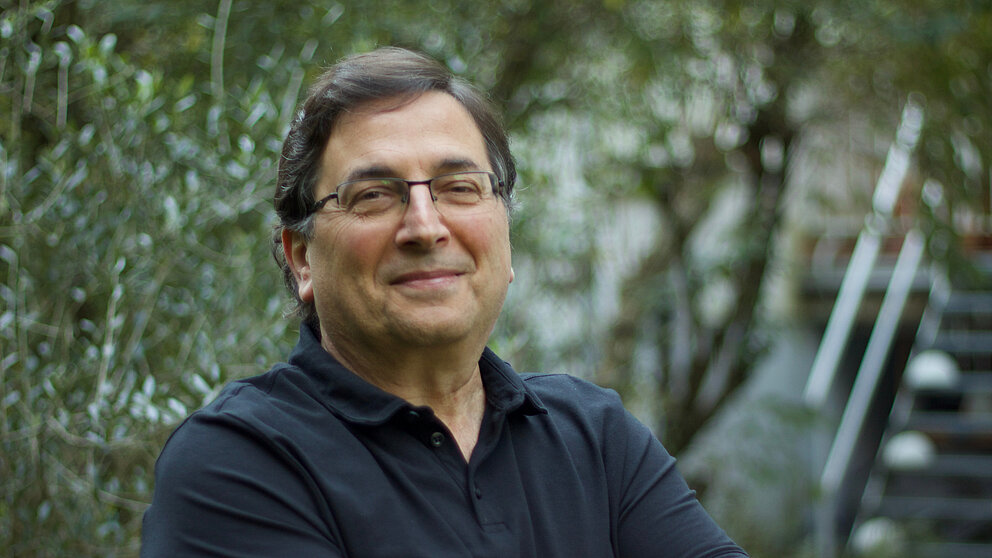
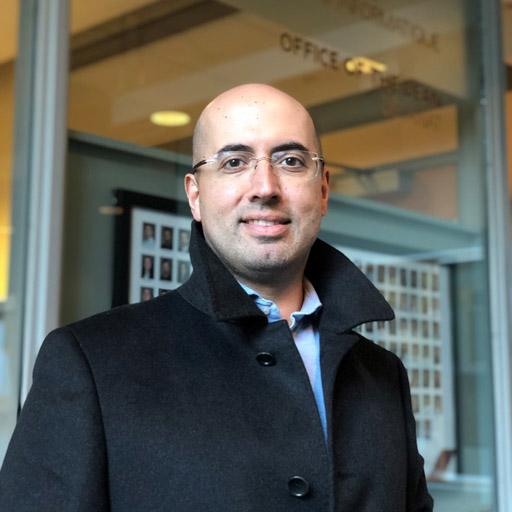
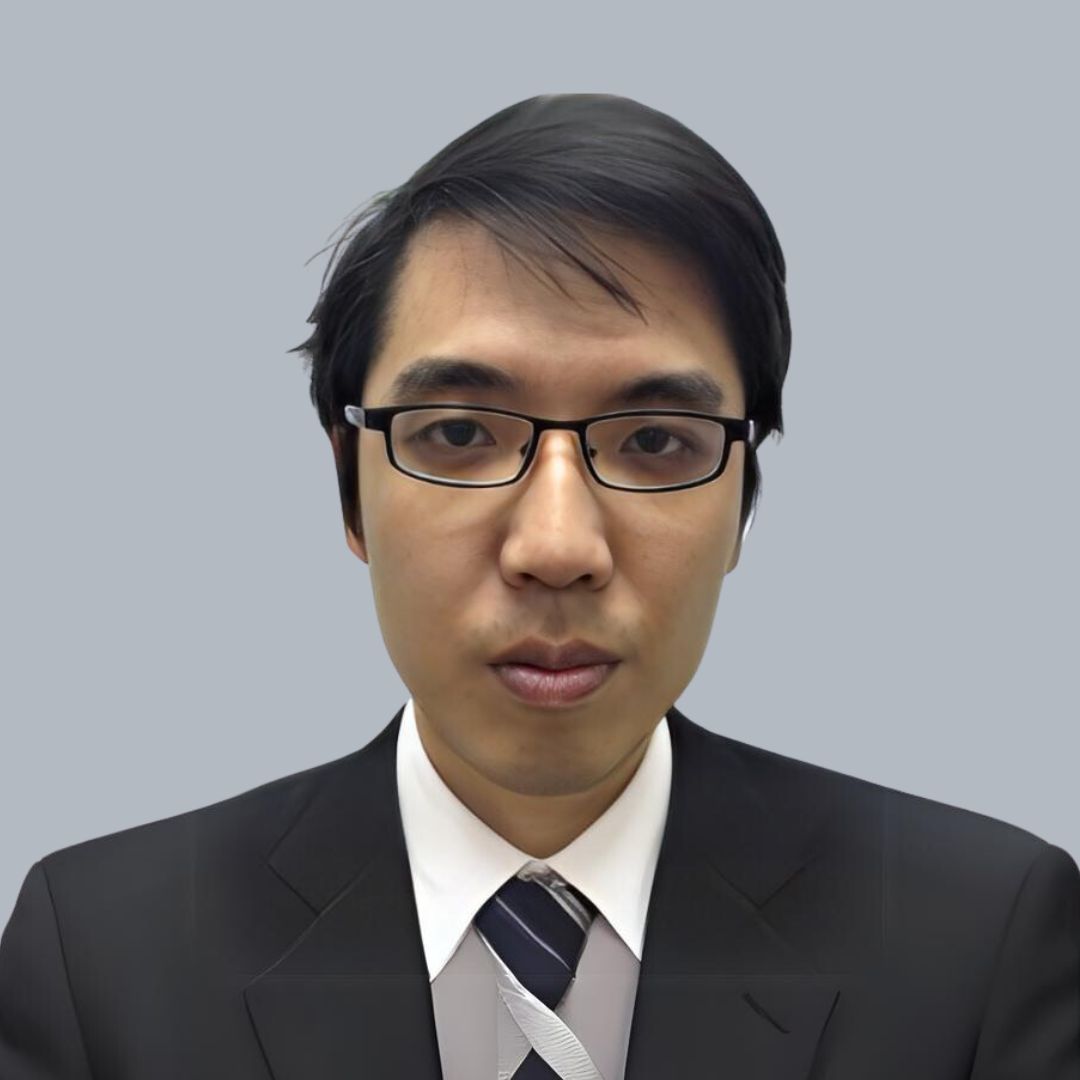
Kassem Fawaz is an Assistant Professor in the Department of Electrical & Computer Engineering at the University of Wisconsin-Madison. His research focuses on security, privacy, and mobile computing, with applications in social robotics, generative AI, and adversarial machine learning. He teaches graduate-level courses including Advanced Computer Security, Master's Research, and Independent Study in Electrical & Computer Engineering. Education: PhD (2017) and MS (2011) from the University of Michigan, BE (2009) from the American University of Beirut His work addresses challenges in privacy-preserving analytics, model robustness, and ethical AI, leveraging commodity devices for secure systems. Recent publications explore social media algorithms, black-box attacks, and family dynamics in generative AI use. Key scientific awards include the NSF CAREER Award (2020), Caspar Bowden Award (2019), and multiple student travel grants from ACM, PETS, and USENIX. He has supervised graduate research projects and taught core security courses since 2023.
David Lillis is an Associate Professor in the School of Computer Science at University College Dublin (UCD). His research focuses on Natural Language Processing (NLP), Artificial Intelligence (AI), and their applications in legal and forensic contexts. He leads projects like CeADAR (Ireland’s Applied AI Center) and the Transpire project, collaborating with organizations such as Corlytics and the Department of Enterprise, Trade and Employment. He holds adjunct roles as a Guest Professor at Beijing University of Technology’s Data Mining and Security Lab and has been a Fulbright Scholar at the University of New Haven’s Cyber Forensics Research and Education Group. Education: B.A. (Hons) in Law and Accounting, University of Limerick Higher Diploma in Computer Science, UCD M.Sc., Ph.D. in Computer Science, UCD Professional Certificate in University Teaching & Learning, UCD Research Interests: Legal AI, digital forensics, machine learning, multi-agent systems, and information retrieval. Recent work includes NLP for regulatory analysis, crop yield prediction via neural networks, and AR-driven decision support systems. Grants & Projects: Principal Investigator: Transpire (AI Platform for Regulation) SFI Funded Investigator: CONSUS (Crop Optimization) PI: CeADAR Technology Centre Teaching roles include Deputy Programme Director for Software Engineering at Beijing-Dublin International College (BDIC) since 2014. Labs & Groups: UCD Forensics and Security Research Group, ML-Labs (SFI Centre for ML Training), and the Data Mining and Security Lab (BJUT).
Eleanor O'Rourke is an Associate Professor at Northwestern University with joint appointments in the Department of Computer Science and the Learning Sciences, part of the McCormick School of Engineering. She co-directs the Delta Lab, focusing on interdisciplinary research in Human-Computer Interaction, Artificial Intelligence, and Learning Sciences. Her work examines how learning environments can foster motivation and effective practices in computer science education, supported by grants from NSF and Google. Educated at the University of Washington (PhD, MS in Computer Science & Engineering) and Colby College (BS in Computer Science and Spanish), her research employs mixed methods, including design-based research and grounded theory, to study student motivation, affective responses during programming, and AI-driven interventions. Notable contributions include tools like Ply and Isopleth , which support novice web developers, and studies on student self-assessment biases and growth mindset incentives. Her work has been recognized with multiple Best Paper Awards at ACM conferences, including ICER 2024 and SIGCSE 2022. She teaches courses such as Transformative AI and the Learning Sciences and Design of Learning Environments , and advises a diverse cohort of PhD students and undergraduates. The Delta Lab’s collaborative approach emphasizes innovation in educational technology and human-centered design.
Dr. Sajedul Talukder is an Assistant Professor in the Department of Computer Science at The University of Texas at El Paso (UTEP), directing the SUPREME Lab. He holds a Ph.D. in Computer Science from Florida International University (2019) and has held prior faculty positions at Southern Illinois University (2021-2024) and Pennsylvania Western University (2019-2021). Education: Ph.D. in Computer Science, Florida International University (2019) M.S. in Computer Science, Florida International University (2018) B.S. in Computer Science and Engineering, Bangladesh University of Engineering and Technology (2014) Research Interests: Focuses on cybersecurity, privacy-enhanced machine learning, and AI-driven solutions for social good. Key areas include: Security and privacy in online systems Abuse detection in social networks Quantum security and distributed systems Federated learning for healthcare and industrial IoT His work emphasizes practical applications like AI for nuclear plant cybersecurity and mitigating sockpuppet attacks. Recent Article Trends: Recent publications highlight advancements in federated learning frameworks (e.g., SAFARI, FLASH), context-aware emotion detection (CAMERA), and AI-driven nuclear facility security (ContextGPT, AML-TIN). These contributions address privacy, scalability, and real-time threat monitoring. Awards & Grants: $500K NRC grant (2024) for AI-driven nuclear plant cybersecurity NSF CISE CRII Award ($157K) for sockpuppet defense IMEC/NIST grant ($99K) for industrial IoT security Best Paper Awards (ICEEICT 2014, ACM SAC 2022) Advising & Labs: Mentored over 40 students (K-12 to Ph.D.), including 2 recent M.S. graduates. Leads SUPREME Lab and affiliated with UTEP AI Institute and NSF IDEAS Center. Active in program committees for ASONAM, ICWSM, and CHI.
Graham Neubig is an Associate Professor at the Language Technologies Institute (LTI) within Carnegie Mellon University (CMU). His research focuses on advancing artificial intelligence, particularly in natural language processing (NLP), multimodal reasoning, and large language models (LLMs). He explores topics such as AI safety, generative AI, and human-AI interaction, with an emphasis on practical applications like machine translation and web-agent systems. His work often involves developing frameworks for evaluating AI systems, such as OpenAgentSafety and BehaviorBox, which assess real-world agent performance and model behavior. Neubig's research also delves into improving LLM capabilities through reasoning analysis, hallucination detection (e.g., ZINA), and culturally aware systems (e.g., CAIRe). He has contributed to open-source projects like Pangea (a multilingual LLM) and frameworks such as Cmulab for model deployment. His recent work addresses challenges in agentic tasks, self-improving agents (Skillweaver), and benchmarking across domains like visual reasoning (VisualPuzzles) and software engineering. Notable achievements include advancing evaluation methodologies for LLMs, developing tools for ethical AI, and creating benchmark suites that test systems under realistic conditions. His lab collaborates on projects like the BrowserGym ecosystem and OpenHands platform, which aim to standardize web-agent research and AI-driven software development. Neubig's contributions span theoretical advancements and practical implementations, bridging the gap between cutting-edge research and real-world applications. He advises students such as Apurva Gandhi and actively publishes in top venues, addressing topics from instruction-following improvements to the societal impacts of AI. His work frequently emphasizes the importance of transparency, controllability, and cultural awareness in AI systems.
Joseph Monteyne is a Professor and Department Head in the Department of Art History, Visual Art & Theory at the University of British Columbia (UBC). He holds a PhD and MA from UBC. His research focuses on early modern art and print culture, ecocritical approaches to landscape, and indigenous representation in colonial contexts. Education : PhD and MA in Art History from UBC. Research Interests : Monteyne’s work examines the intersection of art, print culture, and environment in early modern Europe. Recent projects include ecocritical studies of British visual culture and connections between trees, language, and mediation. He also engages with contemporary art criticism and has published essays on exhibitions by artists like Myfanwy MacLeod and Alex Tedlie-Stursberg. Awards and Fellowships : Recipient of the Governor General of Canada’s medal for his Master’s thesis, multiple postdoctoral fellowships, and prestigious Mid-Career Fellowship from the Paul Mellon Centre. He is also a member of the European Science Foundation College of Expert Reviewers (2020–2023). Teaching : Teaches courses on Renaissance Italy, Counter-Reformation Rome, 17th-century Spain, and Northern European art. Recent graduate seminars include 'Early Modern Landscape and Ecocritical Perspectives' and 'The Ecstasy of Violence: Pain and Pleasure in Early Modern Visual Culture.' Labs/Teams : Leads research initiatives on early modern print culture and ecocritical art history within UBC’s Faculty of Arts.
Immanuel Trummer is a Professor of Computer Science at Cornell University, specializing in database systems, query optimization, and applications of large language models (LLMs) and quantum computing. He leads research projects such as DB-BERT, UDO, and SkinnerDB, focusing on automated database tuning, adaptive query processing, and leveraging LLMs for code synthesis and system optimization. His research interests span quantum computing for database optimization, cost-efficient LLM utilization, and voice-based data exploration. Key contributions include developing systems like CEDAR for claim verification, CodexDB for LLM-driven code generation, and ThalamusDB for multimodal data querying. Trummer has received prestigious awards, including the NSF CAREER Award (2023-2028) and the Best Demonstration Award at BDA 2020. His work has been funded by NSF, Google, Huawei, and others, supporting projects like quantum-index selection and misinformation detection. He advises graduate students in database systems and teaches advanced courses such as CS 6320 (Advanced Database Systems) and CS 7390 (Seminar in Database Systems). His research lab hosts open-source tools like JoinGym and maintains extensive collaborations in industry and academia.
Professor Charlotte Deane is a leading academic in structural bioinformatics, holding the position of Professor at the University of Oxford's Department of Statistics and Executive Chair of the Engineering and Physical Sciences Research Council (EPSRC). She leads the Oxford Protein Informatics Group (OPIG), focusing on protein structure prediction, immunoinformatics, and AI-driven drug discovery. Her research integrates computational methods with biological insights, developing tools widely used in academia and industry. Prior roles include Head of the Department of Statistics, Deputy Head of the Mathematical, Physical and Life Sciences (MPLS) Division at Oxford, and Chief Scientist of Biologics AI at Exscientia. During the COVID-19 pandemic, she served on SAGE and as UKRI's COVID-19 Response Director. In 2022, she was awarded an MBE for her contributions to pandemic research. Her research group's work spans antibody design, T-cell receptor analysis, and small molecule discovery, with a focus on open-source software development. Current projects include advancing AI methods for protein structure prediction and therapeutic antibody engineering. Recent publications highlight innovations in computational drug design, antibody developability, and machine learning applications in structural biology.
Hector Geffner is an Alexander von Humboldt Professor at RWTH Aachen University, leading the Chair of Machine Learning and Reasoning. He specializes in automated planning, machine learning, and reasoning, with a focus on representation learning for acting and planning. His work bridges symbolic and model-based AI, emphasizing general policies and subgoal decomposition. Education & Background : PhD from UCLA (1989), prior roles at IBM Watson Research Center and Universidad Simón Bolívar. Former ICREA researcher and professor at Universitat Pompeu Fabra (2001–2022). Research Interests : Classical and probabilistic planning, reinforcement learning, knowledge representation, and applications in robotics. His ERC-funded RLeap project explores learning generalized policies and symbolic representations for effective decision-making. Teaching : Courses include 'Actions and Planning in AI' and 'Social and Technological Change', emphasizing interdisciplinary AI applications. Awards & Recognition : Alexander von Humboldt Professorship (2023), AAAI/EurAI Fellowships, and editor of influential works on Judea Pearl’s contributions to AI. Grants & Projects : Advanced ERC grant (2020–2025), Humboldt Foundation support, and RWTH funding for research on planning and reasoning. Labs & Teams : Heads the Chair of Machine Learning and Reasoning at RWTH, focusing on interdisciplinary research in AI, robotics, and planning algorithms.
Steven Swanson is a Professor in the Department of Computer Science and Engineering at the University of California, San Diego, within the Jacobs School of Engineering. He is the Director of the Non-Volatile Systems Laboratory (NVSL), where he leads cutting-edge research in non-volatile memory, storage systems, and hardware-software co-design. His work bridges computer architecture, systems, and software to develop efficient, reliable, and secure computing platforms. Ph.D., University of Washington, 2006 B.S., University of Puget Sound, 1999 Dr. Swanson's research centers on non-volatile and persistent memory systems , exploring how next-generation storage technologies can transform computing. His lab develops full-stack solutions including file systems like NOVA and Orion , programming models such as NV-Heaps , and hardware prototypes like Moneta and Onyx . The team also works on low-power co-processors (e.g., GreenDroid ) and tools for debugging and verifying persistent memory programs. Research spans system reliability, security, energy efficiency, and performance optimization. His recent publications reveal a strong focus on persistent memory safety , zero-copy I/O , RDMA-based distributed file systems , and real-world characterization of Intel Optane . These works appear in top venues including ASPLOS, FAST, MICRO, and USENIX ATC, demonstrating sustained innovation in storage and systems research. Scientific honors include: NSF CAREER Award Google Faculty Award Facebook Faculty Award NetApp Faculty Fellow Dr. Swanson has advised 15 PhD students and 4 postdocs , many now faculty or senior engineers at Google, Microsoft, Intel, and other leading tech firms. He has secured significant research funding and leads major community initiatives such as the annual Non-Volatile Memories Workshop and Persistent Programming In Real Life (PIRL) . His educational efforts include innovative courses on robotic system design, quadcopter building, and modern storage systems, emphasizing hands-on learning and real-world implementation. The Non-Volatile Systems Laboratory (NVSL) under his leadership fosters a collaborative, international research environment, hosting visitors and postdocs from around the world. The lab is recognized globally as a pioneer in storage systems research and a key contributor to the adoption of persistent memory technologies in industry.
Dr. Yingyu Liang is an Associate Professor at the University of Hong Kong (HKU), affiliated with the Department of Computer Science and the Musketeers Foundation Institute of Data Science. Previously, he held an Associate Professor position at the University of Wisconsin-Madison and was a postdoc at Princeton University. He earned his PhD from Georgia Tech and holds M.S. and B.S. degrees from Tsinghua University. His research focuses on theoretical foundations of machine learning, particularly optimization and generalization in deep learning, robust machine learning, and practical applications. Key contributions include analyzing neural network feature learning, adversarial robustness, and contrastive learning efficiency. Education: PhD (Georgia Tech, 2014), M.S. (Tsinghua, 2010), B.S. (Tsinghua, 2008) Awards: NSF CAREER Award Labs/Groups: Research Group focused on theoretical ML and algorithm design Publications span top venues like NeurIPS, ICML, and ICLR, addressing topics such as deep learning theory, adversarial robustness, and graph representation learning.
Charles Walter is an Assistant Professor of Computer and Information Science at the University of Mississippi, joining in Fall 2019. He holds a PhD in Computer Science from The University of Tulsa (2018), with prior degrees from the same institution (M.Sc 2016; B.S. 2014). His research focuses on Mobile and Wearable Security, Adversarial Machine Learning, Privacy, Malware Analysis, Fog Computing, and Self-Adaptive Systems. He leads the SPARC Lab, exploring cutting-edge topics like data privacy, malware detection, and security in fog computing environments. Education: B.S. Computer Science, University of Tulsa (2014) M.Sc Computer Science, University of Tulsa (2016) Ph.D. Computer Science, University of Tulsa (2018) Research Interests: His work addresses critical challenges in cybersecurity, including securing low-power wearable devices through fog computing architectures, developing adversarial machine learning defenses, and investigating human factors in code trustworthiness. Recent projects include studying privacy threats in diffusion models and creating frameworks for robust stability estimation in AI systems. Lab Activities: The SPARC Lab actively researches topics such as adversarial ML attacks, privacy-preserving video processing, and adaptive system security. Collaborative efforts focus on real-world applications like improving university transportation systems through smart bike rental programs.
David Hsu is Provost's Chair Professor in the Department of Computer Science at the National University of Singapore (NUS) School of Computing, where he founded and directs the NUS Artificial Intelligence Laboratory (NUSAIL) and leads the Smart Systems Institute. His academic leadership includes chairing major conferences such as Robotics: Science & Systems (2015) and IEEE ICRA (2016), alongside editorial roles in IEEE Transactions on Robotics and the Journal of Artificial Intelligence Research. He earned a B.Sc. in Computer Science & Mathematics from the University of British Columbia and a Ph.D. in Computer Science from Stanford University. His research spans robotics, AI, and computational biology, with recent focus on robot planning under uncertainty and human-robot collaboration. Current work integrates machine learning with decision-theoretic planning to enable robust human-robot co-existence in unstructured environments. Analysis of his 2023-2025 publications reveals dominant trends in deformable object manipulation (e.g., clothes handling via semantic keypoints), open-world navigation using scene graphs, and LLM-driven multi-agent reasoning for complex tasks. Key innovations include perspective-aware visual grounding for human-centric interaction and functional object arrangement through compositional generative models, reflecting a strong emphasis on real-world applicability. His scientific contributions have earned prestigious recognition: IJCAI-JAIR Best Paper Prize (2022) for foundational AI research Robotics: Science & Systems Test of Time Award (2021) IEEE Fellowship (2018) for contributions to robotic planning RSS Best Systems Paper Award (2017) RoboCup Best Paper Award at IROS (2015) Humanitarian Robotics Award at ICRA (2015) As director of the Adaptive Computing Laboratory, Hsu drives research on fundamental computational frameworks for human-robot interaction. The lab's work on uncertainty-aware decision-making has secured significant research funding through grants from Singapore's National Research Foundation and industry partnerships with robotics firms. While specific student names aren't publicized, his leadership in the NUSAIL indicates extensive mentorship of doctoral candidates in AI and robotics.
Mahdi S. Hosseini is an Assistant Professor in the Department of Computer Science and Software Engineering at Concordia University and a faculty member of the Applied AI Institute. He holds a PhD from the University of Toronto (2016) and completed a postdoctoral fellowship at UofT, supported by MITACS-Elevate and NSERC fellowships. His research focuses on advancing deep learning and computer vision for computational pathology and healthcare technologies, aiming to develop AI tools for clinical diagnosis. He currently supervises graduate students and has published over 30 papers and two patents. Education: PhD in Electrical and Computer Engineering from the University of Toronto (2016), postdoctoral training at UofT collaborating with Huron Digital Pathology Inc. (Waterloo, Ontario). Research interests include deep learning, computer vision, computational pathology, medical imaging, and AI ethics (P4AI project). His work emphasizes developing explainable AI systems for clinical pathology, biomarker discovery, and efficient learning algorithms. Professional service includes serving as Area Chair for NeurIPS 2023, CVPR 2023-2024, and ECCV 2024. He reviews grants for CIHR, NSERC, and serves on program committees for key conferences (ICCV, CVPR, NeurIPS). Teaching includes courses on applied AI, machine learning, and deep learning for computational pathology at both graduate and undergraduate levels. Awards: MITACS-Elevate Fellowship (postdoc), NSERC Research Funding (2016-2017). His work has led to patents in diagnostic systems and has collaborated with hospitals and pathologists to advance clinical applications. Labs/Teams: Active collaborations with the Applied AI Institute at Concordia, Huron Digital Pathology, and healthcare institutions. Research emphasizes interdisciplinary approaches between computer science and clinical medicine.
LING Chun Kai is an Assistant Professor in the Department of Computer Science at the National University of Singapore (NUS), School of Computing. His research focuses on multiagent systems, computational game theory, and machine learning applications in adversarial real-world domains like cybersecurity and logistics. Educational background includes a PhD in Computer Science (2017-2023) from Carnegie Mellon University and a First Class BEng in Computer Engineering (2015) from NUS. Previously, he was a Postdoctoral Research Scientist at Columbia University. Current research interests span computational game theory, machine learning for multi-agent systems, equilibrium characterization in imperfect information settings, and applications in network security, logistics, and recreational games. Key methodological contributions include scalable algorithms for game solving, differentiable game solvers, and copula-based statistical modeling. Recent publications focus on attacker-defender graph games, language negotiation agents, and modeling games with incomplete information. Collaborations include researchers from Columbia University, Carnegie Mellon, and institutions working on GameSec, AAAI, Neurips, and ICML venues. Scientific Awards: IJCAI 2018 Distinguished Paper Award GameSec 2023 Best Paper Award GameSec 2024 Best Paper Award Singapore Teaching and Academic Research Talent Scheme (2024) Teaching includes courses on AI Planning and Decision Making (CS4246, CS5446) and Advanced Topics in Artificial Intelligence (CS6208).