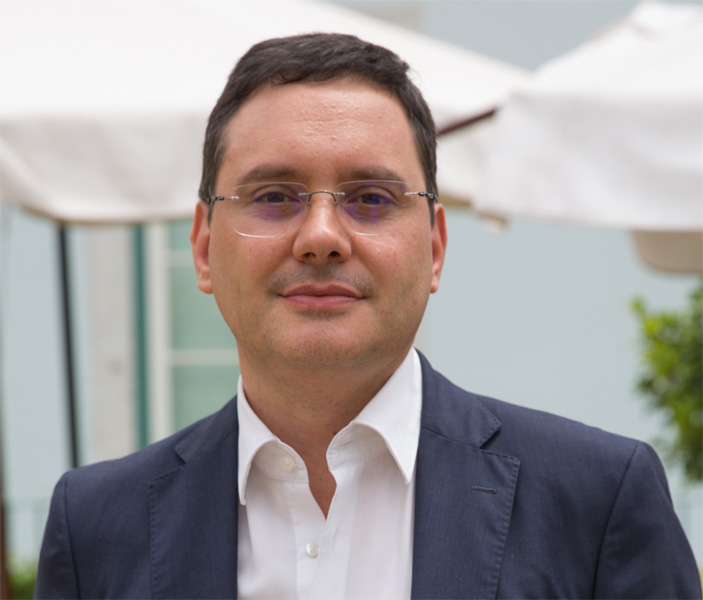
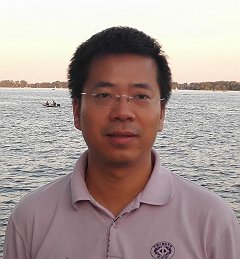
Nelson Ribeiro is a Full Professor and Vice-Rector for Transformation, Collaboration, and International Affairs at Universidade Católica Portuguesa. He serves as Dean of the Faculty of Human Sciences (2016–2025) and coordinates the Doctoral Program in Communication Sciences and the research group 'Media Narratives and Cultural Memory' at the Center for Communication and Culture Studies (CECC). As a member of Academia Europaea (elected 2023) and ethics committee member at the International Panel on the Information Environment (IPIE), he holds leadership roles in academic governance. His research spans Media history Propaganda and disinformation Media and colonialism Journalism studies Political economy of media . He has authored extensively on radio broadcasting in authoritarian regimes, transnational media history, and disinformation frameworks. Recent publications focus on Media propaganda in the digital age Colonial broadcasting models Political media manipulation Historical radio analysis Crisis journalism Transnational media diplomacy , reflecting his interdisciplinary approach to communication history. Scientific accolades include: 2022 Hoover Institution Fellowship 2022 CAPES-Brazilian University Grant 2015 University of Augsburg Fellowship 2004 & 2000 Institute for Social Communication Prizes . He founded the Lisbon Winter School for Communication Study, partnering with global institutions like Annenberg and Helsinki University.
Prof. Bruce FUDGE is a Full Professor at the University of Geneva within the Department of Mediterranean, Slavic and Oriental Languages and Literatures . His academic work bridges Qur'anic studies and Arabic literature , with a particular focus on the Arabian Nights tradition. He has made significant contributions to understanding scriptural hermeneutics, Islamic identity formation, and cultural symbolism through works like Qur'anic Hermeneutics: al-Tabrisi and the Craft of Commentary (2011) and A Hundred and One Nights (2016). Research Focus : Qur'anic exegesis, medieval Islamic storytelling, and sociocultural symbolism in Middle Eastern traditions Key Publications : The Turban and the Hat (2022) Non Sola Scriptura: Essays on the Qur'an and Islam (2022) Barbe et barbus (2019) His 2025 BSOAS article critiques Stephen J. Shoemaker's historical-critical approach to Quranic origins, while his 2022 Routledge publication explores mimetic representation theories. FUDGE's analysis of beard symbolism (2019) connects ancient Mesopotamian practices to modern ISIS propaganda. He has extensively reviewed works on Islamic civilization, including Robert Irwin's Ibn Khaldun biography (2018) and Shahab Ahmed's Before Orthodoxy (2017). Recent 2023 MLA publication examines teaching methodologies for the Thousand and One Nights , and his 2018 Die Welt des Islams article compares Qur'anic theocentrism with Western tragic traditions. FUDGE's 2008 Brill publication deconstructs al-Rummānī's taḍmīn concept, influencing modern Arabic literary theory.
Dr. Anders Karlsson is a distinguished scholar of Korean history at SOAS University of London, where he has been a faculty member since 2000. He is affiliated with the School of Languages, Cultures and Linguistics and the Centre of Korean Studies. His academic career has established him as a leading Western expert on Choson Korea (1392-1910), with particular expertise in legal history, statecraft, and social institutions of the period. Dr. Karlsson received his PhD in Korean history from Stockholm University in 2000 with a dissertation on the Hong Kyongnae Rebellion, which erupted in the North-western part of the Korean peninsula in 1812. His doctoral research established the foundation for his subsequent scholarship on rural society, famine relief, and local administration in late Choson Korea. Dr. Karlsson's research focuses on the social, institutional and intellectual history of Choson Korea. His work explores Confucian statecraft, famine and disaster relief mechanisms, penal law, rural unrest and rebellion, and writing systems. His scholarship is characterized by meticulous archival research and innovative theoretical approaches that bridge historical, legal, and cultural studies perspectives. He has made significant contributions to understanding how law functioned as an instrument of statecraft in premodern Korea, particularly examining the relationship between legal theory and practice, and how social status influenced legal outcomes. His publication record demonstrates a clear evolution from early work on peasant rebellions to increasingly sophisticated analyses of legal and administrative systems. The most recent fifteen years of his scholarship show a pronounced focus on legal history, with particular attention to how Confucian ideology shaped legal development and implementation. His articles reveal expertise in analyzing primary sources in Korean, Chinese, and Swedish, reflecting his unique position as a European scholar deeply immersed in East Asian historical materials. Dr. Karlsson has supervised numerous doctoral students working on Korean history topics, including: Lee H. - "The effect of the genre-based approach on KFL advanced learners' writing and reading" Jang H.J. - "Exploring the Development of Intercultural Competence of University Students Majoring in Korean" Kilkelly P. - "Mainstream culture and the inculturation of Catholicism in late Chosŏn Korea" Choi Y.-C. - "A History of Protestant theory of liberty in Korea, 1886-1917" Jin S.P. - "Korean neutralisation attempts (1882-1907): retracing the struggle for survival and imperial intrigues" Verdier-Shin M.-L. - "Contextualised mission: the South Korean evangelical response to the humanitarian crisis in North Korea (1995-2012)" Song S.K. - "Intellectuals and the state: the resilience and decline of Neo-Confucianism as state ideology in Joseon Korea" At SOAS, Dr. Karlsson teaches courses on Korean history, contemporary Korean culture and society, and Chinese characters (Hanja) as they are used in Korean. His teaching reflects his deep engagement with both historical and contemporary aspects of Korean studies, providing students with comprehensive perspectives on Korean civilization. He also maintains a significant profile as a literary translator, having translated Korean novels into Swedish for 25 years, including recent works by Han Kang, the 2024 Nobel Prize in Literature laureate.
Kelly McDonough is a Tomás Rivera Regents Professor and Graduate Adviser at the University of Texas at Austin, affiliated with the College of Liberal Arts. She holds a Ph.D. from the University of Minnesota and specializes in interdisciplinary research bridging Colonial Literary and Cultural Studies, Critical Indigenous Studies, Ethnohistory (Nahuatl Studies), Science and Technology Studies, and Digital Humanities. Ph.D., University of Minnesota Her research focuses on Nahua intellectual production in Mexico over the past 500 years, challenging racialized discourses that exclude Nahuas from intellectual history. Her books The Learned Ones: Nahua Intellectuals in Postconquest Mexico and Indigenous Science and Technology: Nahuas and the World Around Them (2024) explore Nahua theoretical and practical inquiries into their environments across pre-invasion, colonial, and contemporary periods. McDonough leads collaborative digital humanities projects, including the digitization of the Fondo Real de Cholula judicial archive and the Co-PI role in the Unlocking the Colonial Archive initiative, which harnesses AI for Indigenous and Spanish American historical collections. She teaches courses covering global Indigenous media, critical Indigenous studies, and Nahuatl language. Key Research Themes: Indigenous knowledge systems, colonial archives, environmental inquiry, digital humanities methodologies, ethnohistory.
Behnam Taebi is Full Professor of Energy & Climate Ethics and Scientific Director of the Safety & Security Institute at Delft University of Technology. He leads TU Delft | The Hague, a university-wide initiative connecting engineering knowledge with public policy. His work bridges technology, ethics, and policy through roles at Harvard University’s Belfer Center (2014–2020) and The Young Academy of the Royal Netherlands Academy of Arts and Sciences (2016–2021). As co-Editor-in-Chief of Science and Engineering Ethics , he contributes to shaping ethical discourse in engineering. BSc in Material Science and Engineering (2006) PhD in Philosophy of Technology (2010) Taebi's research focuses on the ethical dimensions of energy systems, nuclear technology, and climate engineering. He explores intergenerational justice, distributive equity, and responsible innovation frameworks. His work integrates value-sensitive design and moral emotions to address uncertainties in technological risk governance, particularly for nuclear energy and carbon capture. Recent publications highlight ethics in nuclear waste repositories, climate policy metaphors, and synthesizing justice frameworks. His VENI-grant from NWO supports innovative research on technological risks. Collaborations span the OECD Expert Panel on transdisciplinary research and co-editorship of influential volumes like The Ethics of Nuclear Energy (Cambridge, 2015) and Ethics and Engineering: An Introduction (Cambridge, 2021). As Scientific Director of the Safety & Security Institute , he leads interdisciplinary efforts to address societal challenges through engineering ethics. His initiatives emphasize inclusive energy transitions, equitable climate strategies, and bridging technical and social sciences in policy-making.
Dr. Duygu Yavuz is an Assistant Professor at Yeditepe University's Faculty of Arts and Sciences, Department of Turkish Language and Literature. Her academic journey includes a PhD in Turkish Language and Literature from Sakarya University (2011-2017), MA in Old Turkish from Mimar Sinan Fine Arts University (2009-2011), and BA in Turkish Language and Literature from the same institution (2005-2009). Education: PhD: Turkish Language and Literature, Sakarya University (2011-2017) MA: Old Turkish, Mimar Sinan Fine Arts University (2009-2011) BA: Turkish Language and Literature, Mimar Sinan Fine Arts University (2005-2009) Her research focuses on historical linguistics, Turkic dialectology, metaphorical semantics, and loanword adaptation in Old Turkish texts. She has extensively analyzed Turkic conceptual systems through light and fire metaphors, verb morphology, and reduplication patterns in folklore. Recent publications examine Harezm Turkish, Uyghur texts, and compounding mechanisms in Turkic languages. She has presented at international conferences on topics like dialectal variations and cultural symbolism in historical linguistics. Teaching Experience: Turkish Language History (EDTR 121, TLL 113) Old Turkish (EDTR 211-212, TLL 219-220) Contemporary Turkish (EDTR 261-262, TKL 201-202) Teacher Training (PTUR 402-403) Previously worked at the Turkish Ministry of National Education (2014) teaching Turkish Language and Literature. Affiliated with academic societies tracked through memberships in indexing services like TR DİZİN, MLA, and SOBIAD.
Daniel W. Smith is a Professor of Philosophy at Purdue University , specializing in Continental Philosophy with a focus on Gilles Deleuze . He is the author of Essays on Deleuze (2012) and co-editor of The Cambridge Companion to Deleuze (2012). His scholarly work includes translations of key French philosophers like Deleuze, Klossowski, and Serres. PhD from the University of Chicago Co-director of The Deleuze Seminars project ( deleuze.cla.purdue.edu ) funded by NEH Research interests: Deleuze studies, ethics, metaphysics, philosophy of technology, temporality, political philosophy Recent publications explore Deleuze’s theories of time, technology, and language. Notable works include Deleuze and Time (2023) and Deleuze and Technology (2024). His scholarship emphasizes conceptual innovation, immanent ethics, and interdisciplinary analysis of philosophical traditions. Scientific Awards : National Endowment for the Humanities (NEH) grant for The Deleuze Seminars project Smith’s career bridges academic rigor and public scholarship, maintaining a presence on platforms like PhilArchive and PhilPapers. His work contributes to ongoing debates about Deleuze’s relevance to contemporary philosophy and technology.
George M. Church is a Professor of Genetics at Harvard Medical School and affiliated with MIT, where he directs PersonalGenomes.org, providing open-access genomic, environmental and trait data. His laboratory focuses on transformative technologies for reading and writing 3D/4D biological structures with attention to ethics, safety, and equitable access. Church has co-initiated major scientific initiatives including the BRAIN Initiative (2011) and multiple Genome Projects (GP-Read-1984, GP-Write-2016, PGP-2005). Church's research spans multiple cutting-edge domains including genome engineering, synthetic biology, aging reversal, and space genetics. His lab pioneered foundational methods for direct genome sequencing, molecular multiplexing and barcoding in 1984, leading to the first genome sequence in 1994. His innovations contributed to nearly all next-generation DNA sequencing methods and companies. Current research directions include machine learning for protein engineering, tissue reprogramming, organoids, gene therapy, and in situ 3D DNA/RNA/protein imaging. His work bridges fundamental biology with therapeutic applications across diverse fields from Alzheimer's disease to de-extinction biology. Church's recent publications reveal a remarkable breadth of scientific inquiry, spanning from fundamental genome editing techniques to applications in aging research, neuroscience, and space biology. His work increasingly integrates artificial intelligence with biological systems, as seen in papers on machine-guided cell-fate engineering and automation of systematic reviews with large language models. His research maintains a strong translational focus, with numerous papers addressing therapeutic applications in cancer immunotherapy, gene therapy, and diagnostics. The consistent theme across his diverse publications is the development and application of transformative technologies to address fundamental biological questions and medical challenges. National Academy of Sciences (NAS) membership National Academy of Engineering (NAE) membership Franklin Bower Laureate for Achievement in Science Co-initiator of the BRAIN Initiative (2011) Director of multiple NIH Centers for Excellence in Genomic Science (2004-2020) Church directs numerous research centers including the NIH-CEGS, Personal Genome Project (PGP), Lipper Center for Computational Genetics, and Wyss Institute Synthetic Biology center. His laboratory has trained PhD students across multiple Harvard and MIT programs including Biophysics, BBS, Biomedical Informatics, ChemBio, Chemistry, SSQB, MCO, Virology, HST, EE/CS, Physics and Applied Math. His commercial impact is extensive through companies spanning medical diagnostics (Knome/PierianDx, Alacris, Nebula, Veritas) and synthetic biology/therapeutics (AbVitro/Juno, Gen9/enEvolv/Zymergen/Warpdrive/Gingko, Editas, Egenesis). Church also pioneered new privacy, biosafety, ELSI, environmental and biosecurity policies. The Church Lab operates across multiple research domains including molecular multiplexing, next-generation sequencing, nanopore technology, and genome engineering. The lab maintains strong connections with the Personal Genome Project, Wyss Institute, and multiple commercial ventures. Current research directions include the Spatial Atlas of Human Anatomy (SAHA), human skin rejuvenation via mRNA, and space genetics research through the Consortium for Space Genetics and BioAstra. The lab's mission focuses on transformative technologies for reading and writing 3D/4D structures at any scale, inspired by but not limited by biology.
David Clingingsmith is an Associate Professor in the Department of Economics at the Weatherhead School of Management, Case Western Reserve University, where he has been faculty since 2007. His research integrates economic theory with empirical analysis across diverse domains including automation, entrepreneurship, and social behavior. Education: PhD in Economics, Harvard University (2007) MA in Anthropology, University of Chicago (1998) BA, University of Toronto (1994) His research program explores the socioeconomic impacts of technological change, particularly how automation transforms manufacturing work and entrepreneurship. He employs mixed methodologies spanning causal inference econometrics, lab/field experiments, and qualitative analysis, with recent work developing AI techniques for analyzing interview corpora. Current projects examine job design in craft entrepreneurship and historical automation effects. Publication trends reveal strong focus on automation's economic consequences (2022-2024), pitch dynamics in entrepreneurship (2018-2023), and crisis policy responses (2020). His work consistently bridges economic history with contemporary issues, showing particular interest in behavioral mechanisms underlying status, consumption, and charitable behavior. Scientific Awards: Academy of Management Prize for Best Paper in Organizational Neuroscience (2021) Academy of Management Lewis-Progressive Fellowship (2016) Weatherhead School of Management Explorations Prize (2009) Dr. Clingingsmith serves as reviewer for top journals including Journal of Political Economy and Quarterly Journal of Economics, and participates in institutional governance through the Academic Integrity Board. While no specific grants are detailed in source materials, his research appears in leading outlets like Management Science and Experimental Economics. He also contributed COVID-19 policy analysis through Economic Policy Ideas for COVID-19 initiatives. He collaborates with interdisciplinary teams including healthcare economists (Helper, Shane) and development researchers (Khwaja, Kremer), and maintains an active ceramics practice at Brick Ceramic + Design studio since 2023.
Atsumi Okada is an Associate Professor at Waseda University's School of Creative Science and Engineering , specializing in History of Europe and America , Area studies , and Cultural anthropology and folklore . Her research bridges historical analysis with contemporary media studies. Doctoral research on Mexican Revolution's impact on business Extensive work on public space and disaster memory Major contributions to understanding Japanese media's portrayal of Mexico Specialist in water resource history and language education Dr. Okada's recent work focuses on 19th-century Japanese media representations of Mexico (2024), Spanish education during pandemic (2022), and Yaqui people's image construction (2020). Her publications span from 2000 to 2024 . Her academic activities include Waseda Research Institute for Science and Engineering (2024-2026) and International Conference presentations since 2010. She has taught Spanish language and cultural studies at multiple schools within Waseda University.
John Loehr is a principal investigator (PI) and research coordinator at the University of Helsinki , serving as the head of the Wildlife Ecology Research (WildER) group at Lammi Biological Station . He also coordinates the university’s Wild Animal Phenotyping Infrastructure and is a supervisor and research coordinator for multiple doctoral programs including Wildlife Biology and Interdisciplinary Environmental Sciences. Education: PhD (specific discipline not stated) Research Interests: John’s research integrates wildlife ecology , evolutionary biology , and conservation science . His work with the Eurasian lynx explores acoustic communication and landscape-scale conservation. He also investigates microevolutionary change in amphipods, facial morphology and behavior in humans, and the life-history consequences of forced migration using the MiKARELIA database. His team pioneers non-invasive wildlife monitoring and human-wildlife coexistence technologies . Scientific Contributions: John has authored or co-authored 42 peer-reviewed publications , including recent articles in Nature Ecology & Evolution , Oecologia , and Plant Ecology . His research spans acoustic ecology, forest integrity, conservation policy, and digital humanities. Awards and Outreach: Featured in national and international media for research and science communication Leads public science trails and citizen science initiatives Developed the international internship program at Lammi Biological Station Supervision and Teaching: John supervises multiple PhD and MSc students and teaches courses such as Technology in Ecological Research and Environmental Monitoring and Mammal Ecology . He is actively involved in doctoral training across interdisciplinary environmental sciences. Labs and Teams: He leads the WildER group at Lammi Biological Station and coordinates research infrastructure across the University of Helsinki. His lab uses advanced tools such as 4G trail cameras, bioacoustic recorders, and UAVs for ecological monitoring.
National and Kapodistrian University of AthensGreece
Fei He is an Associate Professor at Tsinghua University's School of Software, where he leads the THUFV research lab focused on formal verification and program analysis. His research spans formal methods, automated reasoning, and program verification, with applications in concurrent systems, networking (P4 programs), and probabilistic systems. Education & Employment: PhD from Tsinghua University (2008) Visiting Scholar at Carnegie Mellon University (2010-2011) and Politecnico di Milano (2006-2007) Faculty positions at Tsinghua since 2008 (Assistant Professor 2008-2011, Associate Professor 2011-present) Research: He's developed innovative techniques in SMT solving for concurrency verification, termination analysis, and regression verification. His tools like Deagle have won gold medals at SV-COMP. Current work focuses on probabilistic program verification and network program analysis. Publications: His 80+ publications demonstrate consistent contributions across formal methods (PLDI, OOPSLA, ICSE), networking (NSDI, INFOCOM), and software engineering (TSE, TOSEM), with recent emphasis on data-driven verification and automated invariant inference. Awards: Gold Medals in SV-COMP ConcurrencySafety (2022, 2023, 2025) Best Paper Awards at PPoPP 2022 and SETTA 2022 Advising: Mentors 13 PhD/Master's students in THUFV lab, with graduates joining Huawei, MPI-SP, and research institutions. Secured multiple NSF China grants for trustworthy software research. Service: Associate Editor for Theory of Computing Systems, program committees for PLDI/ICSE/OOPSLA, and former Local Chair for ISSTA 2019.
Erich Schweighofer serves as Associate Professor at the University of Vienna within the Institute for European, International and Comparative Law, specifically affiliated with the Department of International Law and International Relations. His research activities are centered at the Juridicum building (Schottenbastei 10-16, 1010 Vienna), where he maintains an active office presence with scheduled consultation hours. His scholarly focus spans Legal Informatics , Artificial Intelligence and Law , Data Protection , and Legal Knowledge Representation , with particular emphasis on explainable AI systems for legal contexts and formal methodologies for translating legal norms into computational frameworks. This interdisciplinary work bridges jurisprudence and computer science through projects examining biometric regulation, autonomous vehicle governance, and natural language processing applications in legal domains. Analysis of his 2021-2024 publications reveals consistent thematic progression toward operationalizing legal principles in AI systems, with increasing focus on transparency mechanisms, temporal logic for dynamic regulations, and cross-jurisdictional compliance challenges. His work predominantly appears in the International Legal Informatics Symposium (IRIS) proceedings and JURIX conferences, reflecting deep engagement with the legal informatics community. Professor Schweighofer leads a dedicated research team including project assistants Mag. Jessica Fleisch, Mag. Jonas Pfister, Felix Schmautzer, and Mag. Jakob Zanol, while actively participating in the University of Vienna's Working Group on Legal Informatics (Arbeitsgruppe Rechtsinformatik). His collaborative approach extends to organizing the biennial IRIS symposium, which has established itself as a cornerstone event for European legal informatics scholarship since 1998.
Professor Irene Schneider is a distinguished scholar of Arabic and Islamic Studies at the University of Göttingen, currently on sabbatical as a Distinguished Fellow at the Max Weber Institute/University of Erfurt since October 2024. She leads the ERC Advanced Grant project '(De)Colonizing Sharia?' focused on tracing transformation, change and continuity in Islamic Law in the Middle East and North Africa during the 19th and 20th centuries. Her research spans Islamic law (particularly family, criminal, and public law), gender studies with emphasis on gender constructions in law, legal history, and contemporary Muslim societies in Morocco, Egypt, Palestine, Iran, and Afghanistan. She has made significant contributions to understanding the relationship between international law and national legislation in Palestine, as detailed in her influential book 'Debating the Law, Creating Gender: Sharia and Lawmaking in Palestine, 2012-2018.' Professor Schneider's scholarly work demonstrates a remarkable historical depth, examining issues from Islam's formative period to contemporary contexts. Her publications span multiple languages including German, English, French, and Farsi, reflecting her interdisciplinary approach that combines historical analysis with contemporary legal and social issues. Her recent research particularly focuses on conceptual history, civil society development, and the translation of global legal concepts into local Islamic contexts. Among her notable achievements is the establishment of the 'Islamic Law' specialization in the Master's program at Göttingen in 2011, which allows students to gain intensive insight into Islamic legal language while simultaneously taking modules from the Faculty of Law. She has also established the research and teaching focus 'Palestine and the Middle East Conflict' in 2014. ERC Advanced Grant recipient (2024) Deputy Chair of the German Working Group on the Middle East (DAVO) since 2022 Director of SAI II since 2021 Former Chair of Gender Studies Working Group at University of Göttingen (2010-2013) Professor Schneider has supervised numerous academic projects and collaborations, including work with Judge Somoud al-Damiri on Palestinian women's legal status, and has been instrumental in fostering academic dialogue between German and Palestinian institutions. Her research methodology uniquely combines socio-legal analysis with detailed linguistic examination of legal terminology evolution, particularly examining how terms like 'moussab' (equality) transform during legal discourse.
PD Dr. Ansgar Schanbacher serves as a Research Fellow at the Institute for Regional Historical Research, University of Göttingen, specializing in environmental and urban history of Early Modern Central Europe and the Netherlands. His work examines resource management and hazard responses in cities like Braunschweig, Würzburg, and Utrecht through interdisciplinary environmental history frameworks. His academic formation includes a Dr. phil. from Göttingen University (2011-2015) on Potato Blight and Famine in Northwestern Germany (1845-1848), completed within the Research Training Group Interdisciplinary Environmental History. Earlier, he earned an M.A. in History, Economy, and Polish Language/Literature from Leipzig University and Lublin's Catholic University (2003-2010), followed by freelance translation work (2009-2011). Schanbacher's research centers on Environmental History, Urban History (17th-19th centuries), History of Science, and Eastern European History. His scholarship reveals how early modern cities navigated ecological challenges through municipal policies, technological adaptations, and social coping mechanisms, with particular attention to waste management, fire prevention, food crises, and horticulture across German and Dutch urban contexts. His 15 most recent publications demonstrate consistent focus on urban environmental resilience, showing evolution from specific hazard case studies (fires, earthquakes) toward broader sustainability frameworks. Key trends include comparative analysis of municipal responses, interdisciplinary methodology bridging history and environmental science, and contextualization of historical practices within modern sustainability discourse. His scientific recognition includes: Prize of the Historical Commission for Lower Saxony and Bremen (2016) DFG Scholarship at Göttingen University (2011-2014) DAAD Scholarship for Poznań/Kraków (2008) Grant leadership includes Scientific Coordination of 'Sustainability as Argument' (2016-2020) and a 2016 Graduate School of Humanities research grant. He actively disseminates research through the 'Stadtgeschichten' urban history blog (co-editor), 'Epidemien in der frühneuzeitlichen Stadt' podcast series, and public lectures on Central European urban environments. Current affiliations include the European Society for Environmental History and European Association for Urban History, with contributions to the Portal zur Geschichte and Frauenstift Gandersheim projects. Based at Göttingen University's Heinrich-Düker-Weg campus, he maintains active scholarly engagement through editorial work, conference presentations, and interdisciplinary collaborations exploring historical dimensions of urban sustainability.