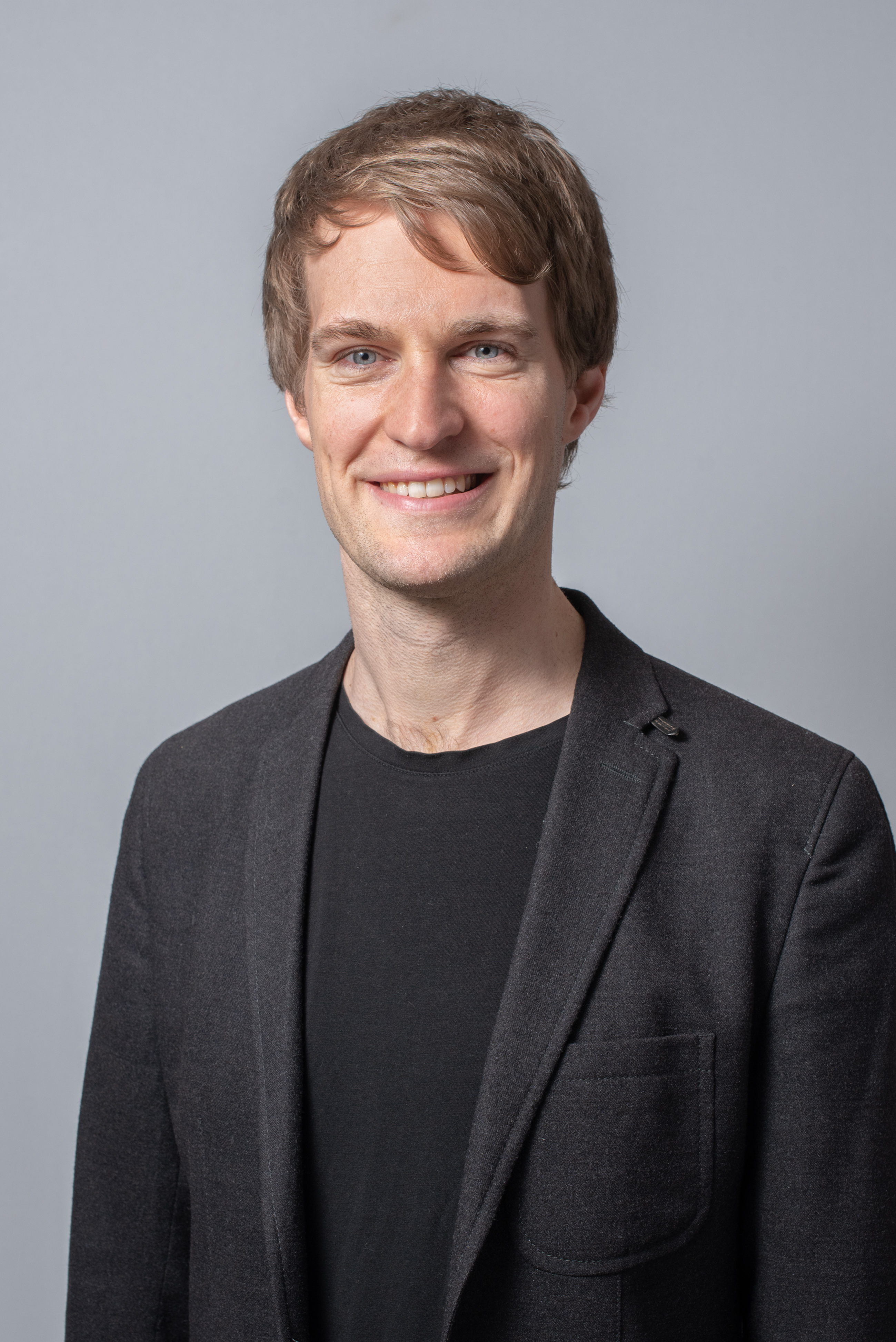
Prof. Alois Christian Knoll is a full professor at the Technical University of Munich (TUM) in the School of Computation, Information and Technology. His academic career includes roles at Bielefeld University and leadership in major EU initiatives like the Human Brain Project and ECHORD++. He specializes in robotics, AI, and autonomous systems, with a focus on medical robotics, sensor-based systems, and neuromorphic engineering. Knoll has supervised over 100 doctoral theses and authored/co-authored over 1,000 publications. Education: Diploma in Electrical Engineering (University of Stuttgart, 1985); PhD in Computer Science (Technical University of Berlin, 1988); Habilitation (TU Berlin, 1993). He has been at TUM since 2001, leading the Robotics, AI, and Real-Time Systems department. Research interests span autonomous systems, neuro-IT integration, and traffic simulation. Key projects include fortiss (Bavarian State Institute for Computer Science) and TUM-CREATE (Singapore collaboration). Awards include IEEE Fellow, University of Tokyo Fellow, and the Carl-Ramsauer-Prize (1990). Current roles include editorships in robotics journals, leadership in EU flagship projects, and teaching across multiple programs. His work bridges computer science, neuroscience, and engineering, with applications in healthcare, automotive systems, and urban mobility.
Max Planck Institute for Human Cognitive and Brain SciencesGermany
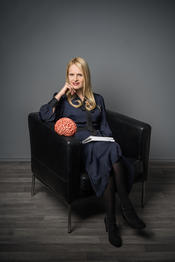
Dr. Charlotte Grosse Wiesmann is a Researcher and Minerva Fast Track Junior Research Group Leader at the Max Planck Institute for Human Cognitive and Brain Sciences since 2019. She explores the cognitive and neural foundations of social cognition, theory of mind, self-awareness, agency, action understanding, executive function, and language development in early childhood. Education: Dipl. Phys. in Physics (specialization: theoretical particle physics and gravitation) from Humboldt University of Berlin (2002-2009) Dr. rer. nat. in Psychology from the University of Leipzig (2012-2017) Her research integrates interdisciplinary approaches to understanding early cognitive development, with a focus on neural mechanisms. She has been supported by prestigious fellowships, including the German National Academic Foundation (2002-2009, 2012-2015) and the Minerva Fast Track Fellowship (since 2019), and led a DFG-funded project on implicit theory of mind (2019-2021). Scientific Awards & Funding: Physics Study Prize, Wilhelm and Else Heraeus Foundation (2010) German National Academic Foundation funding for undergraduate and doctoral studies Marie Curie Fellowship (2018-2019) Minerva Fast Track Fellowship (since 2019) DFG project funding (2019-2021) Her career includes postdoctoral work in Social Neuroscience at the Max Planck Institute (2017-2018) and a research associate role in 3D Quantum Gravity at the University of Hamburg (2009). She leads the "Milestones of Early Cognitive Development" group, advancing understanding of cross-disciplinary cognitive science topics.
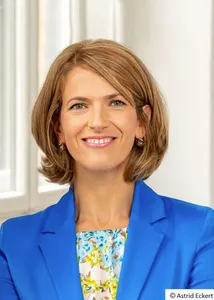
Dr. Ulrike Kuhl is a Researcher at the University of Bielefeld, serving as Project Coordinator for the AI Academy OWL at the Research Institute for Cognition and Robotics and as Scientific Project Coordinator within the Faculty of Engineering's Machine Learning Group. Her office is located at CITEC 2-412, and she can be reached at +49 521 106-12125. Dr. Kuhl's research spans several interconnected domains at the forefront of human-centered AI development: Explainable Artificial Intelligence (XAI) frameworks and their psychological impact Cognitive learning enhanced through AI technologies Counterfactual explanation methodologies and user behavior Human-AI interaction design principles Applications of machine learning in environmental monitoring and sports analytics Analysis of Dr. Kuhl's publication trajectory reveals a consistent focus on bridging the gap between sophisticated AI systems and human understanding. Her work particularly examines how different explanation types affect user trust and decision-making, with recent publications exploring counterfactual explanations in contexts ranging from water distribution networks to educational technology. She has developed experimental frameworks like the 'Alien Zoo' methodology for systematically studying explanation usability. Dr. Kuhl actively contributes to the Center for Cognitive Interaction Technology (CITEC) at the University of Bielefeld, an interdisciplinary hub where computer scientists, engineers, and cognitive scientists collaborate on next-generation interactive technologies. Through her coordination of the AI Academy OWL initiative, she facilitates regional collaboration between academic researchers and industry partners to advance artificial intelligence applications in the Ostwestfalen-Lippe region.
Max Planck Institute of Colloids and InterfacesGermany
Dr. Yolanda Gil is a Research Professor in Computer Science and Spatial Sciences at the University of Southern California, where she serves as Principal Scientist and Senior Director for Strategic Initiatives in Artificial Intelligence and Data Science at the Information Sciences Institute (ISI). She is also the Director of AI and Data Science Initiatives in the Viterbi School of Engineering and leads the USC Center for Knowledge-Guided Interdisciplinary Data Science (CKIDS). Dr. Gil received her Licenciatura in Computer Science from the Polytechnic University of Madrid and her M.S. and Ph.D. in Computer Science from Carnegie Mellon University, with a focus on artificial intelligence and cognitive science. Her research focuses on developing AI approaches that use knowledge to accelerate scientific discovery processes. Her key research interests include knowledge capture and representation, semantic workflows, ontology tools, scientific discovery methods, task-based collaboration, provenance tracking, knowledge networks, reproducibility in science, and machine learning for data analysis. She collaborates with scientists across multiple domains to improve how scientific knowledge is created, shared, and used. Dr. Gil's work has significant impact across multiple scientific domains including climate science, neuroscience, and omics research. Her projects demonstrate her commitment to building knowledge-guided systems that transform how scientists conduct research. She has pioneered approaches to capture the provenance of scientific experiments and to automate the analysis of complex scientific data. Fellow of the Association for Computing Machinery (ACM) Fellow of the Association for the Advancement of Science (AAAS) Fellow of the Institute of Electrical and Electronics Engineers (IEEE) Fellow of the Association for the Advancement of Artificial Intelligence (AAAI) 24th President of the Association for the Advancement of Artificial Intelligence Co-chair of the CRA/AAAI 20-Year Artificial Intelligence Research Roadmap for the US Initiator and leader of the W3C Provenance Group that resulted in a widely-used standard for web trust As an educator and leader, Dr. Gil directs the Data Science Program in Computer Science and serves as Co-Director of multiple joint MSc programs including Communication Data Science, Spatial Data Science, Environmental Data Science, Public Policy Data Science, and Healthcare Data Science. She also leads the new dual degree USC-Tsinghua University on Communication Data Science. Her leadership extends to mentoring numerous students and researchers in AI and data science. Through the USC Center for Knowledge-Guided Interdisciplinary Data Science (CKIDS), Dr. Gil organizes DataFest events each semester, fostering collaboration and innovation in data science across disciplines.
Max Planck Institute of Colloids and InterfacesGermany
Shrikanth (Shri) Narayanan is University Professor and Niki & C. L. Max Nikias Chair in Engineering at the University of Southern California (USC), with appointments spanning Electrical & Computer Engineering, Computer Science, Linguistics, Psychology, Neuroscience, Pediatrics, and Otolaryngology-Head & Neck Surgery. He serves as Research Director of the Information Sciences Institute and Director of the Ming Hsieh Institute. PhD in Electrical Engineering (UCLA, 1995) Engineer and MS in Electrical Engineering (UCLA, 1992 and 1990) BE in Electrical Engineering (Anna University, India, 1988) His interdisciplinary research focuses on human-centered signal processing and machine intelligence , addressing societal challenges in health, education, defense, and media arts. Key areas include: Behavioral signal processing Affective computing Multimodal signal processing Computational speech science Biomedical applications Scientific Awards : IEEE James L. Flanagan Speech and Audio Processing Award (2025) Edward J. McCluskey Technical Achievement Award (2024) ISCA Medal for Scientific Achievement (2023) Claude Shannon-Harry Nyquist Technical Achievement Award (2023) ACM ICMI Sustained Accomplishment Award (2020) USC Distinguished Faculty Service Award With over 1,000 publications and 19 patents , his work has been commercialized through startups like Behavioral Signals Technologies and Lyssn . He leads transformative university initiatives and has served in editorial roles for top journals including Computer Speech and Language and IEEE Transactions on Affective Computing .
Prof. Torsten Wolfgang Kuhlen serves as a Universitätsprofessor at RWTH Aachen University, leading the Teaching and Research Area for Virtual Reality and Immersive Visualization within the Department of Computer Science. He is affiliated with Chair of Computer Science 12 (High Performance Computing), the Visual Computing Institute, and remains an integral part of the RWTH IT Center where his research group operates one of the world's largest Virtual Reality laboratories including the 30 sqm aixCAVE visualization chamber. The group maintains strong connections with Computational Science & Engineering Division, National High Performance Computing Center for Computational Engineering Science (NHR4CES), and VR in Science and Industry Network NRW e.V. Prof. Kuhlen's research spans virtual reality, immersive visualization, and multimodal 3D user interfaces with applications across simulation science, production technology, neuroscience, and medicine. His work combines basic research on advanced methods and algorithms with interdisciplinary collaborations involving RWTH Aachen institutes, Forschungszentrum Jülich, and industry partners. Recent publications demonstrate strong focus on audiovisual perception, immersive analytics, collaborative virtual environments, and practical VR applications in education and manufacturing. His research group has produced significant work on listening effort in virtual environments, immersive authoring techniques, and VR applications for scientific visualization. Notable projects include VRScenarioBuilder for automated vehicle testing and applications in monitoring additive manufacturing processes. The group actively participates in major conferences including IEEE VIS and EuroVis, with several award-winning contributions. Prof. Kuhlen has advised PhD students including Martin Bellgardt who recently completed his doctoral degree on "Increasing Immersion in Machine Learning Pipelines for Mechanical Engineering". The research group maintains state-of-the-art VR infrastructure including the aixCAVE facility which is open to all RWTH research groups.
Lieselotte Ahnert serves as a Visiting Professor for Developmental Psychology at the Free University of Berlin's Department of Education and Psychology, specifically within the Department of Developmental Science and Applied Developmental Psychology. Her academic journey began at Humboldt University in East Berlin, where she studied psychology during a period of significant political change in the GDR. After completing her doctorate in 1982, she held various research positions including director of the Interdisciplinary Center for Applied Socialization Research (IZAS e.V.) from 1991-1996 and a visiting scientist position at the National Institutes of Health in Washington from 1996-1999. Prior to her current position at FU Berlin (since 2019), she was a Professor of Developmental Psychology at the University of Vienna from 2008-2019. Professor Ahnert's research focuses on early childhood development, attachment theory, and the specific contributions of fathers to child development. Her work examines how children develop within various caregiving contexts, including the transition from home to childcare settings, the effects of socioeconomic disadvantage on attachment security, and the unique role fathers play in children's language development and emotional regulation. She has conducted extensive research on stress responses in infants during childcare transitions and how care providers influence these responses. Her interdisciplinary approach draws from behavioral biology, genetics, neuroscience, pediatrics, and education to understand the complex interplay between genetic and environmental influences in early development. Ahnert's publication record demonstrates significant contributions to understanding father-child relationships, with recent work exploring how fathers' attachment security and education contribute to early child language skills beyond mothers' influence. Her research has also examined the 'terrible twos' phase, investigating how children cope with frustration and tantrums and how parents support them through these developmental challenges. She has published extensively in high-impact journals including Child Development, Developmental Psychobiology, and Attachment and Human Development. Professor Ahnert has received recognition for her expertise, including being commissioned to provide expertise for the Federal Chancellery of Austria in 2021. Her work has practical applications in early childhood education and intervention programs, particularly in understanding how public childcare can compensate for developmental risks in socioeconomically disadvantaged children. In addition to her research, Ahnert has made significant contributions to academic training and supervision. Her book publications, including 'It's the fathers who matter' (2023) and 'How much mother does a child need?' (2020), bridge the gap between academic research and public understanding of child development. Her work continues to influence both academic discourse and practical approaches to early childhood care and education.
Prof. Dr. Wolfgang Nejdl is a Professor at the Institute for Data Science within the Faculty of Electrical Engineering and Computer Science at Leibniz University Hannover. He serves as Executive Director of the L3S Research Centre and Leibniz Forschungszentrum Inclusive Citizenship. Web Science Information Retrieval Artificial Intelligence Deep Learning His recent research focuses on AI applications in medicine , multimodal data fusion , and ethical AI systems . Projects include CAIMed (AI in Causal Medicine) and DAISEC (AI & Cybersecurity). His publications span conferences like AAMAS, WWW, and SIGIR. Notable awards include membership in the National Academy of Science and Engineering (acatech) . Former students hold positions at institutions like Stanford, TU Dresden, and ETH Zürich. Current projects involve climate resilience AI , federated learning for healthcare , and quantum-inspired data science .
Mariya Toneva is a tenure-track faculty member at the Max Planck Institute for Software Systems , conducting groundbreaking research at the intersection of Machine Learning , Natural Language Processing , and Neuroscience . She leads the Bridging AI and Neuroscience (BrAIN) group , focusing on computational models that align AI systems with human brain processes. Her work aims to enhance both AI capabilities and neuroscience understanding through this cross-disciplinary approach. Actively recruiting postdocs, PhDs, and research interns in areas like code/text representation, brain-AI alignment, and neuroimaging data analysis Collaborator on NIH-funded projects using fMRI and neuropixel data Research Themes : Her group explores neural mechanisms of language processing, event segmentation in narratives, memory reactivation via music, and effective human-AI collaboration frameworks. Key methods include LLM analysis, cross-modal similarity metrics, and naturalistic task-based fMRI studies. Key Publications (2024-2025): Brain-tuned speech models (INTERSPEECH 2025) Cognitive event boundaries in LLMs (Behavioral Research Methods 2025) Music-induced memory reactivation (biorxiv 2024) LLM-brain alignment reasons (EMNLP 2024) Advising : Mentors PhD candidates Omer Moussa (speech processing), Camila Kolling (representational similarity), and Gabriele Merlin (LLM alignment). Collaborates with institutions like MIT, NYU, and ETH Zurich.
Univ.-Prof. Dr. Michaela Sambanis is a Professor of English Didactics at the Institute of English Philology within the Department of Philosophy and Humanities at Freie Universität Berlin. She has held this position since 2011 and previously served as the managing director of the Institute from Winter semester 2017/2018 to October 2019. Her academic journey includes research work at the Transfer Center for Neuroscience and Learning at the University of Ulm (2008-2011), completion of her habilitation in 2006, and her promotion in 2001. Professor Sambanis's research centers on the innovative intersection of educational neuroscience and language teaching methodology. Her work pioneers the field of Positive Foreign Language Didactics, connecting positive psychology with language education. She investigates embodied cognition approaches, particularly movement-based learning, and explores theater methods and arts integration in language instruction. Her research also addresses teacher well-being and health, multilingualism in educational settings, and the application of neuroscience findings to practical classroom situations. The k2teach project represents her current focus on teaching-learning labs in English teacher education. Her scholarly output demonstrates a consistent trajectory toward integrating neuroscience with language pedagogy, with recent publications increasingly addressing mental health, digital transformation in education, and positive psychology applications. The evolution of her work shows a progression from practical teaching methods to increasingly sophisticated neurodidactic frameworks that bridge scientific evidence with classroom practice. Professor Sambanis serves on multiple scientific advisory boards including the Goethe Institut in Munich, the Transfer Center for Neuroscience and Learning at the University of Ulm, and the Schlözer Program for Teacher Education. She is also the founding chair of the cross-state E&M Berlin-Brandenburg section and a member of the German Society for Foreign Language Research (DGFF). Her editorial work includes the SELT book series on English Language Teaching. Her teaching responsibilities include supervising master's theses in English teaching, and she has developed numerous teaching-learning laboratories that connect theoretical knowledge with practical application in teacher education. Her work demonstrates a strong commitment to evidence-based foreign language didactics that incorporates insights from neuroscience, psychology, and educational research.
Max Planck Institute for Security and PrivacyGermany
Dr. Yu Huang is an Assistant Professor in the Department of Computer Science at Vanderbilt University's School of Engineering, with a secondary appointment in the Department of Teaching and Learning at the Peabody School of Education. She is affiliated with the Institute for Software Integrated Systems, the Frist Center for Autism and Innovation, the Vanderbilt Lab for Immersive AI Translation (VALIANT), and the Vanderbilt LIVE Learning Innovation Incubator. Her academic journey began with a BS in Aerospace Engineering from Harbin Institute of Technology in China (2011), followed by an MS in Computer Engineering from the University of Virginia (2015), and culminated with a PhD in Computer Science and Engineering from the University of Michigan in 2021 under Professor Westley Weimer. Dr. Huang's research bridges human cognition and machine intelligence to enhance software development. Her work spans software, hardware, AI, medical imaging (fMRI/fNIRS), eye tracking, and mobile sensing through collaborations with Security, Education, Psychology, and Neuroscience researchers. She leads the MIND Lab (Mixed INtelligence Development for programming lab), investigating programming expertise formation, code comprehension processes, cognitive error patterns, and diversity in programming communities. Her innovative approach combines empirical human studies with AI model development to create more effective programming tools. Her recent publications reveal a growing emphasis on leveraging human attention data to improve code language models, analyzing cognitive biases in security contexts, and examining social factors in technical communication. The research shows strong interdisciplinary connections between neuroscience, psychology, and software engineering, with increasing applications of LLMs in developer tooling. Dr. Huang's work consistently demonstrates how understanding human cognition can inform better AI systems for programming tasks. Dr. Huang has received numerous prestigious recognitions including the 2025 ICPC Vaclav Rajlich Early Career Achievement Award and three ACM SIGSOFT Distinguished Paper Awards (ICSE 2019, FSE 2023, ICSE 2024). Her lab has earned the Best Presentation Award at GI2024, while her students have received the Richard Bennett/Dorothy Danforth Compton Prize scholarship and the C. F. Chen Best Paper award. She actively mentors a diverse team of graduate students (Yifan Zhang, Zach Karas, Zihan Fang, Yueke Zhang, Jiahao Zhang) and undergraduate researchers, with many former students advancing to top institutions (Stanford, Harvard, Duke, UC Berkeley) and organizations (NASA JPL). Her research is supported by a 4-year NSF grant, GitHub Tech for Social Good funding, and the Provost's Faculty Immersion Vanderbilt Grant, enabling comprehensive studies of human-AI collaboration in software engineering. The MIND Lab maintains a strong collaborative culture, frequently working with Professor Kevin Leach's research group and organizing retreats to locations like Radnor State Park and the Great Smoky Mountains. This environment fosters innovation at the intersection of human cognition and software engineering while supporting the professional development of emerging researchers in the field.
Schloss Dagstuhl - Leibniz Center for InformaticsGermany
Dr. Jing Wang is a Professor in the Department of Bioinformatics at Southern Medical University's School of Medicine, with extensive research at the intersection of artificial intelligence and biomedical applications. Her work demonstrates strong cross-disciplinary collaboration across medical institutions, engineering departments, and computer science research groups. Her primary research interests include Artificial Intelligence in Healthcare , Biomedical Engineering , and Traditional Chinese Medicine Informatics , with recent publications showing particular expertise in medical imaging analysis, diagnostic assistance systems, and clinical decision support. Her work spans both theoretical algorithm development and practical clinical implementations. Analysis of her 15 most recent publications (2025-2026) reveals a strong trend toward clinically applicable AI systems, with approximately 60% of publications focused on medical diagnostics and treatment support systems. The remaining publications demonstrate expertise in industrial applications of computer vision and fundamental AI research. Her work shows consistent collaboration with both domestic Chinese institutions and international research groups. Notable scientific contributions include: Development of 'Tianyi', a traditional Chinese medicine language model for clinical practice Innovations in bionic soft robotics for rehabilitation assistance Novel approaches to medical image analysis for cancer diagnostics Her research program appears well-funded with consistent publication output across high-impact journals in biomedical engineering, AI, and medical informatics. Current work suggests strong emphasis on translating AI research into clinical practice, particularly in diagnostic support systems and rehabilitation technology.
Prof. Dr. Enkelejda Kasneci is a Distinguished Professor at the Technical University of Munich (TUM), leading the Chair of Human-Centered Technologies for Learning. She holds dual affiliations within TUM School of Social Sciences and Technology and TUM School of Computation, Information and Technology. Her research integrates AI, eye-tracking, and immersive technologies to advance educational paradigms. She directs the TUM Center for Educational Technologies and chairs the MSc program 'AI in Society.' Education: PhD in Computer Science from University of Tübingen (2013), M.Sc. from University of Stuttgart (2007). Earlier roles include Assistant Professor and Dean of Studies at University of Tübingen. Research Focus: Human-centered AI applications in education, multimodal interaction design, and privacy-preserving eye-tracking. Her work bridges technology and pedagogy through projects like AI tutor PEER, VR Classroom, and Privacy-Preserving Eye-tracking. Key Projects: Leads EU-funded projects VIVA (€1.125M), DigiProMIN (€163K), and SARA Kids (€244.8K). Active in policy initiatives like Europe’s AI Imperative. Awards: TUM Heinz Maier-Leibnitz Medal (2024), Liesel Beckmann Distinguished Professorship (2022), and Südwestmetall Research Prize (2014). Grants & Advising: Over €5M in secured funding across 12+ projects. Supervises 14+ PhD researchers and mentors postdocs in AI education and HCI. Labs & Teams: IT-Stiftung EdTech Lab houses advanced VR/eye-tracking setups. Research group includes 20+ members spanning AI, HCI, and educational technology.
Prof. Dr. Garvin Brod is a Research Professor at the DIPF | Leibniz Institute for Research and Information in Education and Goethe University Frankfurt, specializing in individualized learning and cognitive development. He is affiliated with the Department of Educational Psychology within the College of Psychology & Sports Science. His research focuses on technology-supported educational interventions, memory and learning dynamics, and the development of knowledge acquisition processes. Brod leads projects like ACHILLES (learning success diagnostics), PROMPT (digital prompting techniques), and VokSi (vocabulary learning), addressing self-regulated learning, reading education, and cognitive strategies. The 13 most recent publications highlight trends in educational technology, self-regulated learning mechanisms, and cognitive development. Key themes include mobile learning interventions, memory retention strategies, and the role of executive functions in belief revision. Brod’s work bridges experimental psychology with practical EdTech solutions for children’s learning challenges. As a visiting fellow at St John's College, University of Cambridge, and head of DIPF’s departments for Individualized Support and Education and Development, Brod collaborates on data-sharing initiatives like ShaReD. He holds a doctorate from Humboldt University and a diploma in psychology from Saarland University.
Luisa Wellert is a Research Associate at the Innovative Educational Technologies Department within the Tübingen Center for Digital Education (TüCeDE) at the University of Tübingen since September 2023. She is also a PhD student at TüCeDE since October 2022. Education: Master of Arts in Intermedia and General Educational Science (2020-2022) from University of Cologne Bachelor of Arts in Media Studies and Educational Science (2016-2019) from University of Tübingen Research Focus: Her work centers on media pedagogy , media didactics , and adaptive learning systems , with particular emphasis on AI integration in educational contexts. Recent projects examine automated qualitative coding of AI tutoring dialogues using large language models and effectiveness of self-developed adaptive systems in schools. Publications: Recent work analyzes assessment methodologies in adaptive learning systems, compares performance-based and cognitive load-based evaluation approaches, and explores implementation challenges of DIY adaptive technologies. She actively contributes to open-source AI tutoring initiatives through the OSATI project. Presentations: Luisa presents her research at major conferences including EARLI, LEAD Research Meeting, and GEBF Conference, focusing on practical implementations of AI-based educational tools and their cognitive impacts. Professional Activity: Prior to her current role, she served as Project Manager for Educational Research at TüCeDE (2022-2023) and worked as a Research Assistant at mmb Institut GmbH (2021-2022) and mecodia GmbH (2018-2020). She also has experience in media education and empirical media research.