Flavio Vasconcellos Comim is a Full Professor at IQS School of Management in Barcelona, Spain, holding the Chair of Ethics and Christian Thought (intercenter). His research focuses on the intersections of Sustainability, Economics, and Ethics. Fields of Interest : Human Development, Capability Approach, Social Exclusion, Regional Development, AI Ethics, Poverty Stigma (Aporophobia), Sustainable Development, Social Welfare, Justice, and Happiness. Recent research includes publications on youth HDI in Spain (2025), AI bias against the poor (2024), and critiques of Sen's social choice theory (2024). He leads projects like Big data applied to the study of aporophobia and Population Medicine and Sustainable Development collaborations with China. His academic output spans journals like Regional Studies , AI and Society , and Cambridge Journal of Regions, Economy and Society , with keywords spanning Economics, Machine Learning, Human Development, and Social Justice. No formal students or awards are listed in available records.
Xavier Serra is a Full Professor at the Department of Engineering at Universitat Pompeu Fabra (UPF), Barcelona. He is the founder and director of the Music Technology Group (MTG), and leads the UPF-BMAT Chair on AI and Music. He also coordinates the Master in Sound and Music Computing and serves as President of the Phonos Foundation. His research focuses on audio signal processing, sound and music computing, and computational musicology, emphasizing open science and open innovation. Education: BSc in Biology, University of Barcelona (1981) Master in Music, Florida State University (1983) PhD in Computer Music, Stanford University (1989) Research Interests: Audio Signal Processing Data-Driven and Knowledge-Driven Methodologies Music Information Retrieval Cultural Music Analysis (e.g., Carnatic/Turkish/Andalusian Music) Music Education Technology Notable Projects: CompMusic (ERC Advanced Grant, 2010-2017): Multicultural computational music analysis Open datasets: Freesound, Saraga, FSD50K Technologies: Reactable, Vocaloid, Essentia API Recent Trends in Articles: Focus on AI-driven audio processing (neural fingerprints, generative models), cross-cultural music analysis, and explainable music difficulty estimation. Awards: ERC Advanced Grant (2010) for CompMusic Project. Labs/Teams: Director of MTG, Phonos Foundation, and UPF-BMAT Chair. Active in open-source projects and international collaborations.
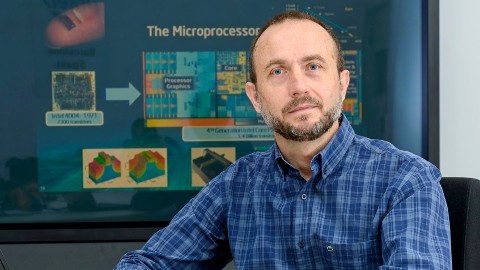
Antonio González is a full Professor at the Barcelona School of Informatics (FIB), Universitat Politècnica de Catalunya (UPC), where he is affiliated with the Department of Computer Architecture. He leads the Microarchitecture and Compilers (ARCO) research group, focusing on robust and energy-efficient computing systems, including general-purpose processors, GPUs, and cognitive computing architectures. His research spans computer architecture, microarchitecture, compilers, GPU design, and deep learning acceleration, with a strong emphasis on energy efficiency and memory optimization. His work integrates hardware and compiler techniques to enhance performance in modern computing systems. The recent publications highlight a strong trend in energy-efficient DNN acceleration, GPU microarchitecture, memory systems, and near-data processing. His team explores novel quantization methods, adaptive caching, and architectural extensions for vision and AI workloads, published in top-tier venues such as MICRO, ISCA, and IEEE/ACM journals. ACM Fellow (2020) ICREA Academia Award (2014, 2019, 2024) UPC Duran Farell Award (2008) HiPEAC 2024 Paper Award (twice) González has supervised several PhD students and leads competitive R&D+i projects, including those funded by ICREA and the European Research Council. His research group collaborates extensively within UPC and with international institutions. He is actively involved in advancing computer architecture through innovation in simulation, hardware design, and AI acceleration. He is a member of IEEE and ACM, and his work continues to influence both academic and industrial developments in high-performance and energy-efficient computing.
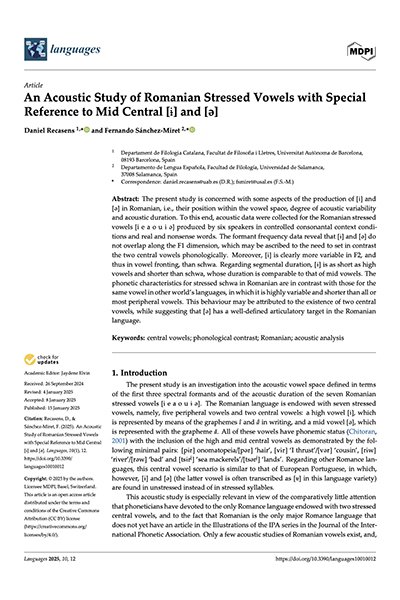
Daniel Recasens is a Full Professor in the Department of Catalan Philology at the Faculty of Arts, Autonomous University of Barcelona, where he has been a permanent faculty member since 1985. He is also affiliated with the Institute for Catalan Studies as a researcher. His academic work centers on experimental phonetics and phonology, with a focus on Romance languages, particularly Catalan. Research Interests: Daniel Recasens specializes in Experimental Phonetics , Phonology , Sound Change , and Phonetic and Phonological Universals . His research investigates articulatory and acoustic aspects of speech production, including coarticulation, assimilation, blending, and the phonetic motivations behind diachronic sound changes in Romance languages. He employs advanced techniques such as ultrasound imaging, electropalatography (EPG), and acoustic analysis to study consonant clusters, vowel-consonant interactions, and the evolution of phonological systems. Scientific Publications and Trends: His recent publications (2020–2025) reflect a consistent focus on the articulatory and acoustic foundations of phonological processes. Key themes include dynamic blending in fricative sequences, tongue configuration in stop-liquid clusters, and the phonetic causes of palatalization and vowel changes. His work combines empirical data with theoretical models such as the Degree of Articulatory Constraint (DAC) model, contributing significantly to laboratory phonology and historical linguistics. Scientific Awards: Member, Academy of Europe (Academia Europaea), 2018 Advising and Research Grants: Daniel Recasens has mentored several doctoral and postdoctoral researchers, including Clara Isabel Rodriguez Casado, Aina Espinosa, and Fernando Sánchez-Miret. While specific grant details are not listed, his extensive publication record and leadership in experimental phonetics suggest sustained research funding and collaborative projects in phonetic and phonological research. Labs and Research Teams: He is associated with the Center for Theoretical Linguistics (CLT) at the Autonomous University of Barcelona, a research group dedicated to theoretical and experimental studies of language. His work often involves collaboration with phonetics laboratories and international scholars in the fields of articulatory phonetics and historical linguistics.
Jan Eeckhout is an ICREA Research Professor at Pompeu Fabra University (UPF) in Barcelona, specializing in macroeconomic theory, labor markets, and urban economics. His work focuses on market power dynamics, wage inequality, and technological impacts on labor and urban systems. He holds a PhD from the London School of Economics (LSE). Eeckhout has received a prestigious ERC Advanced Grant (€2.45M) for research on 'Macro Market Power and Distribution.' He authored the influential book The Profit Paradox (2021), exploring how dominant firms reshape labor markets and economies, translated into multiple languages. His research frequently appears in top journals like the Quarterly Journal of Economics and Review of Economic Studies. Research Interests: Macro-Labor Theory, Labor Markets, Urban Economics, Market Power, and Economic Inequality. Recent work examines technological origins of labor market stagnation, IT-driven urban polarization, and wealth effects on worker productivity. Advising and Grants: Supervises PhD students (e.g., Milena Djourelova, David Puig) and collaborates with institutions globally (CEMFI, EUI, Sciences Po). His team includes co-authors like Jan De Loecker and Philipp Kircher. Active in policy discussions via think tanks and media outlets like VoxEU and the NYT. Labs/Teams: Leads a diverse research group at UPF, with projects on market power, urban economics, and labor dynamics.
Miguel Ángel Bernal Merino serves as a Part-Time Lecturer in the Department of Modern Philology, Translation and Interpretation at the University of Las Palmas de Gran Canaria. Concurrently, he acts as convener of the MA in Translation at the University of Roehampton in London, managing its Specialised Translation, Audiovisual Translation, and Intercultural Communication pathways since 2005. His academic profile bridges theoretical research and industry application in localization disciplines. PhD in The Localisation of Video Games, Imperial College London MSc in The Localisation of Multimedia Interactive Entertainment Software, Imperial College London Certificate in Software Localisation, University of Limerick CELTA, University of Cambridge MPhil in Lip-Synched Dubbing, Universidad de Alicante MA in Hispanic Literature, University of Rhode Island BA in English & Spanish Linguistics, Universidad de Alicante Bernal Merino's research pioneers the expansion of Translation Studies into interactive media domains. His work on video game localization examines interactivity, cultural adaptation, glocalisation, and playability, while his audiovisual translation research investigates creativity in lip-synched dubbing, subtitling, and audiodescription. He extends these frameworks into gaming-based language learning through haptic environments and multisensory reinforcement, exploring physiological aspects of multilingual cognition and polysemiotic neural networks. This multidisciplinary approach fundamentally challenges traditional boundaries in translation theory. His publication trajectory reveals evolving industry-academia integration, shifting from foundational game localization frameworks (2008-2015) toward user-centered research and educational applications (2018-2024). Recent work emphasizes measurable business impacts through quality localization, regional market adaptations, and crowd-sourced methodologies, demonstrating consistent influence on professional standards across gaming and translation sectors. Fellow of the Higher Education Academy Bernal Merino supervises doctoral research on mobile game localization, transmedia fan experiences, and historical game content translation while developing industry-academia pipelines through projects like AHRC's Media Across Borders. His funded initiatives—including Maximising ROI through Quality Game Localisation and Video Games for Language Learning—bridge theoretical innovation with commercial implementation, focusing on glocalisation strategies, interactivity metrics, and playability optimization. These collaborations connect European universities, gaming studios, and localization service providers. As chair of the IGDA Localization SIG and member of GIR Discourse, Communication and Society, he directs international forums for game localization discourse. His work with Routes into Languages promotes audiovisual media in language education, while REF-readiness collaborations enhance research excellence across European institutions through his professional network spanning industry conferences like GDC Summit and Game Global.
Bernhard Schölkopf is a Director at the Max Planck Institute for Intelligent Systems and holds a Professorship at ETH Zurich. He is one of Europe's leading researchers in Artificial Intelligence and serves as co-founder and president of ELLIS (European Laboratory for Learning and Intelligent Systems). His scientific interests focus on machine learning and causal inference, with applications spanning biomedical problems, computational photography, and astronomy. Schölkopf has conducted research at prestigious institutions including AT&T Bell Labs, GMD FIRST in Berlin, and Microsoft Research Cambridge before joining the Max Planck Society in 2001. Schölkopf's recent work examines the tangible risks of AI systems rather than speculative existential threats, highlighting important challenges including algorithmic bias, lack of transparency, privacy violations, worker exploitation, carbon footprint of AI systems, and job displacement across multiple publications in different languages. His scientific achievements have been recognized with numerous prestigious awards: Academy Prize of the Berlin-Brandenburg Academy of Sciences and Humanities Royal Society Milner Award Leibniz Award Koerber European Science Prize BBVA Foundation Frontiers of Knowledge Award Allen Newell Award Fellow of the ACM Fellow of the CIFAR Program "Learning in Machines and Brains" Schölkopf is a member of the German Academy of Sciences (Leopoldina) and co-founded the series of Machine Learning Summer Schools. His work bridges theoretical advances in machine learning with practical applications across diverse domains, while advocating for responsible AI development that addresses real-world challenges rather than speculative existential threats.
Albert Atserias is a Professor in the Department of Computer Science at the Universitat Politècnica de Catalunya (UPC), affiliated with the Faculty of Informatics of Barcelona (FIB) and the ALBCOM research group (Algorithms, Bioinformatics, Complexity, and Formal Methods). He is also associated with the Institut de Matemàtiques de la UPC-BarcelonaTech. His research is central to theoretical computer science, with a strong emphasis on logic and complexity. Atserias's research interests span Computational Complexity, Logic in Computer Science, Finite Model Theory, Proof Complexity, and Constraint Satisfaction Problems . His work explores the fundamental limits of computation, the expressive power of logical languages over finite structures, and the complexity of proving mathematical statements. He investigates the algebraic and combinatorial properties of proof systems, the limits of efficient algorithms for constraint solving, and the theoretical foundations of databases. His research often bridges logic, algebra, and combinatorics to provide deep insights into computational phenomena. The trends in his recent publications show a sustained focus on the logical and algebraic underpinnings of computational problems. Key themes include the consistency and complexity of database queries , the power and limitations of proof systems (like resolution and sum-of-squares), and the expressive power of homomorphism counts in graph theory. His work on the hardness of automating resolution and the development of circular proof systems are particularly significant contributions to proof complexity. The 2024 PODS Best Paper Award for work on relational consistency underscores the impact and timeliness of his research. Among his notable scientific awards are the prestigious ICREA Acadèmia , the PODS 2024 Best Paper Award , the Premi Extraordinari de Doctorat (Extraordinary Doctoral Prize), and the Kleene Award for Best Student Paper . These accolades reflect both the excellence of his early work and his continued leadership in the field. Atserias has been a principal investigator on numerous competitive research projects, including funding from the European Research Council (ERC) and the Spanish Ministry of Science. He has advised doctoral students, such as Toni Hakoniemi, whose thesis on proof complexity he supervised. His extensive collaborative network includes leading researchers like Phokion Kolaitis, Anuj Dawar, and Victor Dalmau. He has also served on the scientific committees of major conferences, contributing to the academic community. He is a core member of the ALBCOM research group , a leading team at UPC focused on theoretical aspects of computer science, which provides a vibrant environment for research in algorithms, complexity, and formal methods. His work is also connected to the broader Institut de Matemàtiques de la UPC, fostering interdisciplinary collaboration between computer science and mathematics.
Cristina Baus Marquez is a Research Fellow at the University of Barcelona's Faculty of Psychology, affiliated with the Department of Cognition, Development, and Educational Psychology. She holds a Ramon y Cajal Research Fellowship (2020–2025) and leads research in the Brain Dynamics and Structure of Human Cognition (BraCo) group. Her work focuses on cognitive neuroscience, bilingualism, and language processing, with a particular emphasis on electrophysiological and behavioral studies of language production, perception, and social cognition. Education: Bachelor's Degree (Llicenciatura) in Psychology, University of Barcelona (2003) PhD in Cognitive Neuroscience and Specific Educational Needs, Universidad de La Laguna (2010) Research Interests include the neural mechanisms underlying bilingual speech production, cross-modal language interactions, and how linguistic experience shapes perception of faces and voices. She employs EEG/ERP techniques to study self-monitoring processes in bilinguals and investigates the role of iconicity in sign language production. Key Projects: Ramón y Cajal Fellowship (2020–2025): Investigates verbal interactions and learning mechanisms Fundación BIAL Grant (2017–2019): Explored electrophysiology of bimodal bilingualism AGAUR Grant (2018–2020): Studied verbal interactions' cognitive mechanisms Labs/Teams: Active member of the BraCo research group, collaborating internationally on multilingualism and cognitive neuroscience projects.
Danfeng Zhang is a faculty member at Duke University whose research sits at the intersection of programming languages and security. Active across the premier PL conferences since 2015, Zhang has served on more than two-dozen program committees and currently co-chairs the POPL Student Research Competition. Education & Affiliation: Home page: users.cs.duke.edu/~dz132 Affiliation: Duke University, United States Research Interests: Zhang’s work spans programming-language design, static and dynamic analysis, formal verification, and security. A recurring theme is developing language-based techniques that guarantee strong security and privacy properties—ranging from side-channel resistance and constant-time execution to differential-privacy proofs—while preserving performance and usability. His recent projects combine type systems, program logics, and automated reasoning to build practical verification tools for concurrent, speculative, and approximate software. Publication Trends: Across nine representative papers (2015-2024) Zhang has advanced static detection of cache side channels, automated proofs of differential privacy, and relaxed concurrency models. The trajectory shows deepening integration of security concerns into language infrastructure, with tool-building (CtChecker, SpecSafe, LightDP) that bridge formal guarantees and real-world systems. Service & Leadership: 2024 POPL Student Research Competition Co-Chair 2025 POPL Program Committee member Repeated reviewer/PC member: PLDI, SPLASH/OOPSLA, ISSTA, ECOOP, APLAS, PriSC, PASS Zhang regularly mentors student researchers through SRC sessions and workshop panels, fostering diversity and early-career participation in the programming-languages community.
Bruno Echauri Galván serves as Associate Professor in the Department of Modern Philology at the University of Alcalá (UAH), Spain, teaching core translation courses including Introduction to Translation Theory and English-Spanish Translation across multiple degree programs in Alcalá de Henares and Guadalajara. His research centers on Translation Studies and Reception Theory, with significant contributions to intersemiotic translation (particularly in children's literature), healthcare interpreting, and film adaptation reception. As an active member of the Research Group on Interdisciplinary Reception Studies, he investigates cultural reception, literary reception, and translation through frameworks including cultural mediation, censorship studies, and myth reception. Recent publications (2021-2024) demonstrate consistent innovation in translation pedagogy, including color-based translation assessment tools, service-learning translation projects, and pandemic-era teaching adaptations. His work on collaborative writing projects, mental health communication, and Carver-Lish translation controversies reveals methodological diversity across literary, audiovisual, and healthcare domains. Dr. Echauri Galván has participated in multiple research initiatives including the JOB AND MOVE student network project (2018), Homopoly strategic partnership (2016), and InterMed healthcare mediation project (2011), where he contributed expertise in intercultural communication and translation standards. He maintains active research leadership through the Interdisciplinary Reception Studies group, examining reception phenomena across cultural, literary, musical, and translational contexts while addressing contemporary issues like censorship and myth criticism.
Rebekah Elizabeth Clements is a Researcher at the Department of Translation and Interpreting and East Asia Studies at Universitat Autònoma de Barcelona, affiliated with the East Asian Studies and Research Centre (CERAO) and ICREA (Institució Catalana de Recerca i Estudis Avançats). Her scholarly work focuses on East Asian historical dynamics with particular emphasis on Japanese and Korean studies. Her research interests include: Early Modern East Asian History, especially the Imjin War (1592-1598) Japanese-Korean historical relations and cultural exchange Translation studies and national language consciousness Korean nationalism and symbolic identity formation Cross-cultural encounters between East Asia and Europe Early modern warfare and diplomatic history Dr. Clements' recent publications demonstrate a sustained scholarly focus on the East Asian War of 1592-1598, with interdisciplinary approaches combining military history, cultural studies, and translation theory. Her work bridges Japanese and Korean historical scholarship while incorporating European perspectives on East Asian conflicts. She serves as Principal Investigator for significant research projects: AFTERMATH: The Aftermath of the East Asian War of 1592-1598 (2018-2024), funded by the European Commission EURO-IMJIN: European Literature and the 'First East Asian War' of 1592-1598 (2020-2022) Her research profile shows active supervision of students and collaboration with international scholars across multiple institutions, reflecting her standing in the field of East Asian historical studies.
Francisco Javier Murillo Torrecilla is a Professor of Research Methods and Evaluation in Education at the Autonomous University of Madrid (UAM). He serves as Director of multiple educational journals ( REICE , Revista Iberoamericana de Evaluación Educativa , Revista Internacional de Educación para la Justicia Social ) and leads research groups like 'Educational Change for Social Justice' (GICE) and the Ibero-American Research Network on School Change and Effectiveness (RINACE). His work focuses on Education for Social Justice , School Segregation , and Educational Leadership . He holds degrees in Mathematics and Education Sciences, and a PhD in Education Sciences from Universidad Complutense de Madrid. With 5 research sexenios and over 200 publications, his citations exceed 25,000 (h-index: 84) in Google Scholar. He has led 25 competitive research projects, including the 'Network of Excellence' RILME (EDU2017-90606-REDT). Coordinated UNESCO's Latin American Laboratory for Educational Quality Evaluation (LLECE) Former Director of Spain's Centre for Educational Research and Documentation (CIDE) Director of UAM's UNESCO Chair in Education for Social Justice and Institute DEMOSPAZ His research projects on social justice in education include five consecutive Spanish State Program grants (2010-2021) and books like La investigación sobre eficacia escolar (2005). He has consulted for UNESCO, OECD, and governments in Latin America.
Virginia Ferreiro Basurto is an Assistant Professor in the Department of Psychology at the University of the Balearic Islands (UIB), where she teaches undergraduate and postgraduate courses in psychology, with a strong focus on gender equality and gender-based violence. She is actively involved in postgraduate coordination, including the Chair of Gender Violence Studies and the Summer University of Gender Studies at UIB. Assistant Professor, Department of Psychology, University of the Balearic Islands Coordinator, Chair of Gender Violence Studies, UIB Coordinator, Summer University of Gender Studies, UIB Member, Gender Studies Research Group (ESTUDEGE), UIB Education: Degree in Pedagogy, University of the Balearic Islands Master’s in Inclusive Education, University of the Balearic Islands Doctoral Candidate in Interdisciplinary Gender Studies, University of the Balearic Islands Dr. Ferreiro Basurto’s research centers on gender perspectives in the Information Society, with emphasis on ICT-related social-digital exclusion of women and sexist cyberviolence. Her work explores implicit and explicit attitudes toward gender-based violence, bystander intervention, street harassment, and the myth of romantic love as a justification for abuse. She has contributed extensively to academic discourse through publications and participation in national and international conferences. The trend in her recent scholarly output reveals a consistent focus on gender-based violence in both physical and digital environments. Her articles analyze youth perceptions of cyberaggression, the role of bystanders in intimate partner violence, and methodological advancements in measuring supportive attitudes toward violence. The interdisciplinary nature of her work spans psychology, sociology, gender studies, and digital humanities, often informed by empirical data from Spanish populations. Scientific Awards: No specific awards listed in the provided text. She has been involved in multiple research projects funded by national and international institutions, including the Ministry of Science, Innovation and Universities, FECYT, Ministerio de Economía y Competitividad, Fundación BBVA, and Instituto de la Mujer. These projects cover themes such as critical thinking development in education, citizen involvement in violence prevention, and intervention programs for abusers. She also advises and supervises master’s theses and final degree projects, particularly in gender-focused postgraduate programs. Dr. Ferreiro Basurto is a member of the Gender Studies Research Group (ESTUDEGE) at UIB, a consolidated R&D&I group dedicated to advancing interdisciplinary research on gender, violence, and digital society. Her collaborative work involves designing and evaluating gender-sensitive educational and intervention programs.
Jose Antonio Hinojos Morales is a contemporary artist and researcher affiliated with Miguel Hernández University of Elche, where he completed his PhD in 2020. His academic work focuses on contemporary painting practices within the broader context of visual arts research. His research interests center around pictorial languages and procedures in contemporary contexts , with particular emphasis on the relationship between landscape, nature, and culture. He investigates how landscapes function as cultural constructs and explores innovative methodologies in the representation of the human face through art. His work also engages with decolonial thought and aesthetics, media archaeology, and expanded painting techniques. Hinojos Morales' artistic output demonstrates significant trends in contemporary Spanish art, particularly in the exploration of spiritual, philosophical, and scientific concepts through visual media. His work often challenges conventional perceptions and hegemonic epistemological positions, creating dialogues between traditional and contemporary artistic approaches. Second place, VIII International Painting Competition 'Miradas 2018', Chicago (USA), 2018 Second Prize, XIX Pastor Calpena Painting Prize, Aspe (Alicante), 2015 First Prize, XLVI National Painting Contest Vila de Sant Joan d'Alacant, 2013 First Prize, III National Painting Competition No to Fear, La Nucía (Alicante), 2013 Third Prize, XVII National Painting Competition City of Antequera, Antequera (Málaga), 2013 As an educator and researcher, Hinojos Morales has coordinated the Altea Artistic Residency program, directing multiple landscape-focused scholarship-residencies that support emerging artists. His work bridges academic research with professional artistic practice, contributing to both scholarly discourse and the contemporary art scene in Spain.