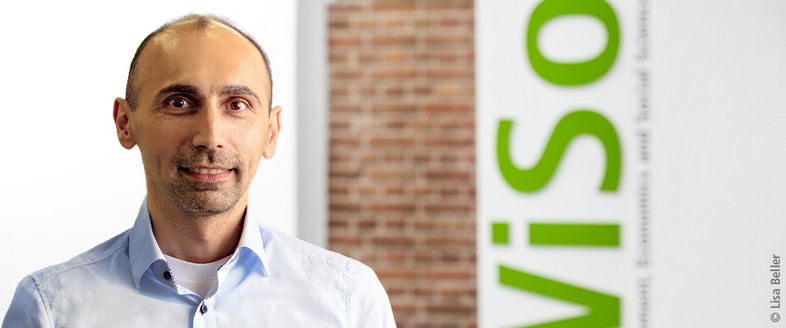
Eldad Davidov is a Professor of Methods of Comparative Cross-National Social Research at the Institute of Sociology and Social Psychology, University of Cologne. He previously held professorships at the University of Zurich (2009-2016) and served as President of the European Survey Research Association (ESRA, 2015-2017). His research focuses on quantitative methods, cross-cultural comparisons, structural equation modeling, and attitudes/values analysis. Davidov has held visiting professorships at Mannheim and Cologne, and his work emphasizes methodological rigor in social research. PhD: Social Sciences, University of Giessen (2004) MA: Economics, Tel Aviv University (1996) BA: Economics, Tel Aviv University (1995) His research interests include: Measurement equivalence in cross-national surveys Value orientations and their societal implications Immigration attitudes and prejudice mechanisms Longitudinal survey data analysis Key publication themes involve analyzing immigration opposition, human values measurement, and methodological advancements in cross-cultural research. His work bridges theory and practice, contributing to the European Social Survey and policy-relevant studies on integration policies. Davidov is affiliated with the Center for Social and Economic Behavior (C-SEB) and contributes to the ECONtribute Cluster of Excellence. His research addresses societal challenges through interdisciplinary collaboration, emphasizing evidence-based approaches to public policy.
Inger Petersen is a Professor and Managing Director at the German Studies Seminar of Kiel University, Faculty of Philosophy. She holds the W2 Professorship for German as a Second Language and Subject-Integrated Language Education. She is actively involved in research, teaching, and academic leadership, including serving as the academic director of the International Conference of German Teachers 2025, Family Representative of the Faculty of Philosophy, and member of key institutional committees. Academic Background: Doctorate in Philosophy, Saarland University (2013) Master of Arts in German Studies and History, Eberhard Karls University of Tübingen (2004) Maîtrise, Université Aix-Marseille I, France (2004) Academic Expert in German as a Foreign Language, Karl-Franzens-University Graz (2005) Her research focuses on the didactics of German as a second language, language education in subject teaching, second language writing, and multilingualism. She investigates how students develop writing and argumentation skills in multilingual contexts and how teachers can be trained to support linguistic diversity in classrooms. Her work emphasizes practical applications in teacher education and curriculum development. Recent publications show a strong trend in interdisciplinary language education, writing assessment across subjects, and teacher training for linguistic responsiveness. Her work spans educational linguistics, teacher education, and inclusive pedagogy, with a focus on empirical and practical frameworks for improving language support in schools. Scientific and Institutional Roles: Member, Integration Advisory Board of Schleswig-Holstein (since 2023) Family Representative, Faculty of Philosophy, Kiel University (since 2021) Member, Evaluation Committee for Integration Courses (since 2020) Academic Director, International Conference of German Teachers 2025 She has led and contributed to multiple research projects on language integration in teacher education and subject teaching. Grants and collaborative initiatives include the LeaP project and network projects on diversity in teacher training. She has advised on language policy and integration at regional and federal levels. Laboratories and Research Teams: Inger Petersen leads and collaborates with interdisciplinary research teams focused on language-sensitive education. She is involved in the SCENE project on language-sensitive nursing education and has co-led the LeaP project on networking in teacher education. Her work involves close collaboration with researchers in linguistics, education, and subject didactics, particularly in history and social sciences.
Jatinder Singh is a Professor at the RC Trust and Principal Research Associate (equivalent to Research Professor) at the Department of Computer Science & Technology, University of Cambridge. He is primarily affiliated with the University of Duisburg-Essen, Germany, where he leads the Compliant and Accountable Systems research group within the Law department. His work operates at the critical intersection of computer science, legal frameworks, and societal impact, focusing on practical implementations that align technology with regulatory requirements while addressing user and community concerns. Research interests center on accountability mechanisms for AI systems, responsible development practices, data governance, and privacy/security in emerging technologies. He examines governance, agency, trustworthiness, and transparency gaps in algorithmic systems through interdisciplinary socio-technical lenses. Current work addresses bias in LLMs, stakeholder participation frameworks, and human rights implications in domains like healthcare, maritime enforcement, and consumer IoT, emphasizing contextual awareness and real-world applicability. His 15 most recent publications (2025-2024) reveal dominant trends in AI transparency, fairness proxy development, and legal-compliance engineering. Key focus areas include stakeholder involvement in AI governance, bias mitigation in language models, data justice applications for vulnerable populations, and operationalizing human-centered AI in clinical settings. The work consistently bridges technical implementation with regulatory frameworks like the EU Cyber Resilience Act and GDPR. Scientific Awards: No awards or fellowships were mentioned in the provided text. Advising and Grants: The text does not specify PhD/Master's students or grant details. As leader of an active research group publishing high-impact work on EU regulations and human rights, he likely directs funded projects and mentors early-career researchers, though concrete evidence is absent in the source material. His position suggests involvement in interdisciplinary grant consortia addressing socio-technical challenges. Labs and Teams: Singh leads the Compliant and Accountable Systems research group at University of Duisburg-Essen, which collaborates across university-wide clusters including Artificial Intelligence and Society, Human-AI Interaction, Trustworthy Human Language Technologies, and Verification of Machine Learning. The group develops frameworks for legal compliance in AI, focusing on demonstrable accountability through tools for transparency, bias auditing, and stakeholder engagement in real-world deployments.
Dan Casas is a Senior Applied Scientist at Amazon in Seattle and an Associate Professor (Profesor Titular) on leave from King Juan Carlos University in Spain. His research spans the intersection of Computer Graphics, Computer Vision, and Machine Learning with a focus on 3D reconstruction, modeling, and animation of virtual humans and clothing. He has authored over 40 high-impact publications in top venues including SIGGRAPH, CVPR, and NeurIPS, and holds 3 international patents. Dr. Casas received his M.Sc. degree (2009) from Universitat Autònoma de Barcelona (Spain), including a research visit at Carnegie Mellon University. He earned his Ph.D. in Computer Graphics (2014) from the University of Surrey (UK), supervised by Prof. Adrian Hilton. He completed postdoctoral research at the University of Southern California's Institute for Creative Technology (2014-2015) and the Max Planck Institute in Saarbrücken (2015-2016). His research interests center on creating realistic virtual humans and digital clothing through advanced techniques in computer vision and machine learning. Casas has pioneered methods for 3D reconstruction of humans and garments from video input, physics-based simulation of soft-tissue deformations, and data-driven approaches to character animation. His work bridges the gap between theoretical computer graphics and practical applications in virtual reality, digital fashion, and immersive communication. Analysis of his recent publications reveals a consistent focus on human digitization, with increasing emphasis on machine learning approaches. His work has evolved from traditional computer graphics techniques toward neural representations and diffusion models, particularly in the areas of 3D garment simulation and human avatar creation. The trend shows growing integration of physics-based modeling with data-driven approaches to achieve both realism and computational efficiency. Marie Skłodowska-Curie Individual Fellowship (2015) FBBVA Leonardo Fellowship (2021) Medal from the Royal Academy of Engineering of Spain for Young Researcher Award (2023) i3 certification (outstanding researcher) from Spanish Ministry of Universities (2022) Winner of 2021 IEEE Retail Digital Transformation Grand Challenge Multiple Outstanding Reviewer Awards at top conferences (CVPR, BMVC, 3DV) Dan Casas has successfully advised multiple PhD students including Suzanne Sorli, Cristian Romero, Raquel Vidaurre, and Igor Santesteban (now at Meta Reality Labs), with several ongoing students including Melania Prieto-Martin, Gonzalo Gómez-Nogales, and Andrés Casado-Elvira. He has secured significant research funding as Principal Investigator, totaling over €1.2 million from Spanish Ministry of Science projects, EU H2020 programs, and industry fellowships including the FBBVA Leonardo Fellowship. His leadership extends to conference organization as Area Chair for ICCV 2023 and General Chair for ACM i3D 2020. Dr. Casas leads research in digital human modeling with applications in virtual reality, fashion technology, and immersive communication. His team develops advanced techniques for creating personalized 3D avatars from minimal input (like smartphone videos), addressing challenges in geometry, appearance, and physical simulation of virtual humans and their clothing.
Morris Siu-Yung Jong is a Professor at The Chinese University of Hong Kong's Faculty of Education, Department of Educational Administration and Policy. With over 100 publications from 2006 to 2025, he has established himself as a leading researcher in educational technology, particularly focusing on innovative applications of virtual reality, artificial intelligence, and game-based learning in formal education settings. His work bridges theoretical frameworks with practical classroom implementations, making significant contributions to how technology enhances teaching and learning experiences. Professor Jong's research interests span multiple cutting-edge domains in educational technology. He has pioneered work in spherical video-based virtual reality (SVVR) applications for education, developing frameworks for immersive learning experiences that transform traditional classroom instruction. His research on AI in education, particularly examining ChatGPT's impact on student engagement and language learning, positions him at the forefront of understanding how emerging technologies reshape educational practices. Additionally, his extensive work on game-based learning, flipped classroom methodologies, and STEM education integration demonstrates a comprehensive approach to technology-enhanced learning across multiple educational contexts and age groups. Analysis of Professor Jong's recent publications reveals a clear progression from foundational work in game-based learning to more sophisticated applications of immersive technologies. His research increasingly focuses on AI integration in educational settings, with a significant portion of his 2023-2025 publications examining ChatGPT's educational applications. The methodological approaches in his work have evolved from basic implementation studies to more sophisticated designs incorporating hierarchical linear modeling, longitudinal analyses, and systematic reviews, demonstrating growing methodological rigor and impact across the educational technology field. Professor Jong has made substantial contributions to educational research through his extensive publication record in top-tier journals including Computers & Education, British Journal of Educational Technology, and Educational Technology & Society. His work has significantly influenced how educators implement virtual reality, AI, and game-based approaches in classrooms worldwide. His research on teacher concerns, implementation challenges, and pedagogical frameworks provides crucial insights for successful technology integration in formal educational settings. Through his supervision of numerous research projects and collaborations with scholars worldwide, Professor Jong has fostered a robust research ecosystem focused on advancing educational technology. His work on design-based research approaches has provided valuable methodological frameworks for studying technology implementation in authentic educational contexts. His recent focus on AI in education positions him as a key contributor to understanding how emerging technologies can be effectively integrated into teaching and learning processes. Professor Jong's research laboratory focuses on immersive learning environments, with particular emphasis on spherical video-based virtual reality applications. His team has developed several innovative frameworks for implementing VR in educational settings, addressing both technical and pedagogical challenges. Current projects appear to focus on AI integration with immersive technologies, exploring how generative AI can enhance virtual learning experiences and support student engagement across various subject areas.
Prof. Azzurra Ruggeri is a Professor in the Professorship for Cognitive and Developmental Psychology at Technical University of Munich (TUM). Her research focuses on understanding how children and adults strategically gather information, make decisions, and learn through embodied and active processes. She leads the iSearch Lab (https://isearchlab.org) and explores topics such as active learning, embodied cognition, and social-cognitive development. Her academic background includes a Dr. rer. nat. (PhD) in Psychology. She is based in Munich, coordinating research on developmental trajectories of learning, exploration strategies, and the interplay between motor skills and cognitive planning. Key areas of investigation include children's decision-making in uncertain environments, the impact of active learning on memory, and the role of embodiment in cognitive development. Recent work emphasizes adaptive information search behaviors, the effectiveness of question-asking strategies, and the application of embodied cognition principles to training interventions. Her studies often employ experimental paradigms involving climbing and spatial navigation to explore motor-cognitive interactions.
Prof. Dr. Matthias Althoff is an Associate Professor of Cyber-Physical Systems at the Technical University of Munich (TUM), leading the Chair of Cyber-Physical Systems within the TUM School of Computation, Information and Technology. His research focuses on formal safety verification, model-based design, and reachability analysis for systems such as autonomous vehicles, robotics, and power grids. Education: He earned his diploma in Mechatronics and Information Technology (2005) and PhD (2010, summa cum laude) from TUM. He held postdoctoral positions at Carnegie Mellon University (2010–2012) and served as a junior professor at TU Ilmenau (2012–2013) before joining TUM as a full professor in 2013, becoming an associate professor in 2019. Research Interests: His work spans cyber-physical systems, formal methods for safety assurance, autonomous vehicles, modular robotics, and smart grid control. He develops tools like CommonRoad and CORA for scenario-based testing and reachability analysis. Awards: He has received the IEEE/ACM William J. McCalla ICCAD Best Paper Award (2012) and the Best Poster Award at the IEEE Intelligent Vehicles Symposium (2009). Labs/Projects: Leads the Cyber-Physical Systems group, collaborating on projects such as the Scenario Factory for automated vehicle testing and CommonPower for safe smart grid control. He also co-founded startups RobCo and aiina .
Santiago Berrezueta is a Lecturer at the School of Computation, Information and Technology within Technical University of Munich (TUM). He actively contributes to research in Virtual Reality , Artificial Intelligence , and Robotic Assistance , with a focus on applications in Education and Healthcare . 2025 : 10 publications in VR, robotics, and AI ethics. 2024 : 4 co-authored studies on ChatGPT in ADHD therapy and collaborative learning. His research intersects Interactive Learning and Computer Vision , particularly in ADHD treatment , Language disorder detection , and VR-based education . He supervises Bachelor’s/Master’s theses on topics like gaze-based interaction, collaborative VR workflows, and AI-driven therapeutic tools. 2025: Excellent Paper Award at International Symposium on Educational Technology (ISET 2025) 2024: Best Presentation Award at International Conference in Intelligent Environments (IE 2024) He leads courses on Software Engineering and Programming Fundamentals at TUM’s Heilbronn campus. His work also explores IoT applications and ethical AI in vulnerable populations.
Nicolai Kröger is a researcher at the Chair of Communication Networks (Prof. Kellerer) at the Technical University of Munich (TUM). He holds an M.Sc. in Electrical and Computer Engineering from TUM, where his thesis focused on P4 switch performance modeling using queuing theory. His current research centers on 6G networks for critical telemedicine applications, particularly within the 6G-Life project, emphasizing end-to-end communication for medical robotics and surgical systems. He contributes to projects like the 6G Future Lab Bavaria and collaborates with the MITI group at Rechts der Isar Hospital to develop medical testbeds requiring high availability and low latency. Kröger also supervises student theses on 5G/6G security, network optimization, and in-network computing. His technical expertise spans programmable networks (P4), SDN, and performance analysis of network devices. He serves as a supervisor for student projects and internships, including implementations of medical testbeds and security analyses of cellular broadcast messages. His work bridges academic research with practical applications, aiming to advance communication networks for healthcare and future 6G systems.
Laura Andrea Cecchi is an active researcher specializing in computer science education, logic programming, and ontology engineering. Her work focuses on developing innovative pedagogical approaches for teaching computational thinking at early educational stages, with significant contributions to gender-inclusive STEM education. Research Interests: Her primary research explores: Logic programming curriculum development for primary education Visual tools for ontology engineering and knowledge representation Eye-tracking and HCI applications in programming pedagogy Gender-inclusive strategies for computer science education Automated reasoning in ontology-based systems Publication Trends: Her recent work (2020-2024) shows a strong focus on educational technology and democratizing programming education, while earlier publications (2015-2019) centered on formal methods and ontology engineering. She consistently publishes at premier computer science conferences including ICLP, CLEI, and IJCAI. Collaborations: Frequent collaborations with Jorge Pablo Rodríguez and Verónica Dahl appear across her publication record, particularly in education-focused research.
Jan Peleska is a Professor at the Department of Computer Science, Faculty of Mathematics and Computer Science, University of Bremen. He is a member of the Bremen Institute of Safe Systems (BISS) and co-editor of the BISS Monographs series. His research focuses on the application of formal methods and model-based testing to safety-critical embedded systems in domains such as avionics, railways, and automotive engineering. Affiliation: University of Bremen, TZI (Center for Computing Technology), BISS (Bremen Institute of Safe Systems) Academic Role: Professor of Computer Science Research Interests Peleska’s work emphasizes formal methods for dependable systems, particularly distributed and reactive real-time systems. Key areas include: Formal methods (safety, reliability, availability, security) Development of fault-tolerant systems Test automation for reactive systems Tools development for formal methods Integration with software development standards His research is applied to industrial projects involving safety-critical embedded systems, such as avionic systems and railway control systems. A comprehensive overview is provided in his Habilitation Thesis: Formal Methods and the Development of Dependable Systems . Publication Trends Peleska’s recent publications (2012–2022) focus on model-based testing (e.g., symbolic finite state machines, CSP refinement), standardisation of autonomous train control, and tools for automated testing. His work addresses challenges in railway interlocking systems, avionic software verification, and hybrid system validation, often combining formal methods with practical industrial applications. Scientific Awards Best Paper Award at FORMS/FORMAT 2014 Best Paper Award at QA+Test 2007 Other Responsibilities Peleska co-manages the Post Graduate Programme Embedded Systems GESy and serves as a shareholder/consultant for Verified Systems International GmbH. He has delivered invited lectures on industrial verification, model-based testing, and formal methods at institutions like the University of Tunghai (2016) and workshops including CyPhyAssure Spring School (2019).
Dr. Lisa Adams is a Research Fellow at the Technical University of Munich (TUM) and an Attending Radiologist at TUM University Hospital Rechts der Isar, affiliated with the Diagnostic and Interventional Radiology department. She holds an Albrecht Struppler Clinician Scientist Fellowship (2024) and leads research in the Quantitative Imaging Biomarkers for Predictive Healthcare focus group. Adams earned her MD from Charité - Universitätsmedizin Berlin (2016), completed board certification in radiology (2021), and conducted postdoctoral research at Stanford University (2022-2023). She transferred her Habilitation in Experimental Radiology to TUM in 2024. Her research integrates AI with radiology diagnostics, specializing in: Developing machine learning methods for early disease detection and risk assessment Advancing quantitative imaging biomarkers across organ systems Body composition analysis and biological age estimation Multimodal analysis for personalized healthcare Ethical implementation of AI in clinical practice Adams' recent publications demonstrate strong focus on AI applications in radiology, spanning large language models for clinical reporting, deep learning for medical image interpretation, nanoparticle tracking in regenerative medicine, and radiomics for cancer diagnosis. Her work consistently bridges technical innovation with clinical translation. Awards & Recognition: Walter-Friedrich-Prize, Deutsche Röntgengesellschaft (2023) Alavi Mandell Award (2021) Invest in the Youth Stipend, ECR Vienna (2017) She actively mentors doctoral candidates, having supervised seven PhD students to completion since 2020 with two more nearing submission. Adams secures substantial research funding from DFG, EU, Wilhelm Sander Foundation, Bayern Innovativ, and Berlin Institute of Health. She serves as Scientific Editor for European Radiology and Trainee Editorial Board Member for Radiology: Artificial Intelligence , while also holding leadership positions in the German Radiological Society.
Sebastian Gäb is a Professor of Philosophy of Religion at Ludwig-Maximilians-Universität München (LMU Munich) in the Faculty of Philosophy, Philosophy of Science and Religious Studies. He received his PhD in 2012 from Universität Trier's Department of Philosophy, establishing the foundation for his academic career in philosophy of religion. His educational background includes completing his doctoral studies at Universität Trier in 2012, where he developed expertise in religious language and philosophical methodology. His dissertation work 'Wahrheit, Bedeutung und Glaube' defended two key theses: that realism is a semantic thesis and that religious language ought to be interpreted realistically. Gäb's research primarily focuses on the philosophy of religion, with special emphasis on religious language, mystical and meditative experiences, and the integration of non-Western thought into contemporary philosophical discourse. His work explores topics such as the noetic character of mystical experiences, the ineffability of religious experience, and the meaning of religious language, particularly non-literal language, metaphor, and negative theology. He also makes significant contributions to Buddhist philosophy, afterlife studies, and religious skepticism. His approach combines analytic philosophy with engagement with Eastern philosophical traditions. An analysis of Gäb's recent publications reveals a consistent focus on the boundaries of religious language and experience. His work frequently examines the concept of ineffability in mystical experiences, the relationship between spirituality and religion, and the philosophical implications of non-theistic approaches to religious concepts. There's a clear trajectory in his research toward globalizing philosophy of religion beyond traditional theistic frameworks while maintaining rigorous analytic methodology. His 2025 paper on global philosophy of religion represents the cutting edge of this work. Professor Gäb has made substantial contributions to edited volumes and authored significant monographs, including 'Die Philosophie des Buddha' (2024) and 'Religionsphilosophie' (2023), demonstrating his commitment to making complex philosophical concepts accessible to broader audiences. His work on non-personal immortality and mystical ineffability represents innovative approaches to longstanding philosophical problems. His academic leadership is evident through his editorship of important collections such as 'Philosophie der Spiritualität' (2024) and 'Philosophie der Unsterblichkeit' (2023), which have shaped contemporary discourse in their respective fields. His collaborative work with scholars like Georg Gasser and Doris Reisinger demonstrates his commitment to interdisciplinary and collaborative approaches to philosophical problems.
Armin Linke is a Professor of Photography at the Academy of Fine Arts Munich (AdBK Munich), where he has been teaching since 2024. His studio is located in the old building at A.U1.38. He has previously held academic and research positions at MIT Visual Arts Program, IUAV Venice, HfG Karlsruhe, ISIA Urbino, the Kunsthistorisches Institut in Florence, and CERN in Geneva. His research and artistic practice focus on the critical investigation of media technologies, narrative structures, and the sociopolitical dimensions of photography and film. Linke treats his artistic work as a set of tools to demystify design strategies and visual languages. A central aspect of his practice is the critical engagement with personal and institutional media archives, often expanded through collaborations with artists, researchers, and academics. His work frequently explores questions of installation, presentation, and the discursive potential of visual media. Notable projects include Alpi , which received a special prize at the 2004 Venice Architecture Biennale, and Image Capital , a research and exhibition project on photographic archives that won the Kubus.Sparda Art Prize in 2019. His work has been exhibited internationally in both solo and group exhibitions. His awards include: Special Prize for Best Work in the 'Episodes' section, Venice Architecture Biennale (2004) Kubus.Sparda Art Prize for Image Capital (2019) Linke has collaborated widely across disciplines, particularly at the intersection of art, science, and technology, including a residency at CERN. While no formal students are listed in the provided text, his collaborative approach suggests an active mentorship role within interdisciplinary contexts. He is associated with the Faculty of Fine Arts at AdBK Munich, contributing to the development of contemporary photographic practice through teaching and artistic research.
Benoît Valiron is a Professor in Computer Science at CentraleSupélec, Université Paris-Saclay. He conducts his research at the Laboratoire Méthodes Formelles (LMF) and is a member of the joint Inria/LMF team QuaCS (Quantum Computing and Systems), focusing on foundational aspects of quantum computation and formal verification. His research interests lie at the intersection of theoretical computer science and quantum computing. He works on programming languages for quantum systems, type theory, semantics of computation, and formal methods applied to quantum algorithms and protocols. His work contributes to the rigorous development and verification of quantum software. Benoît Valiron is actively involved in research through his roles at LMF and Inria. The QuaCS team aims to bridge theoretical advances with practical implementations in quantum computing, emphasizing correctness, expressiveness, and efficiency of quantum programs. He advises students and contributes to academic training in computer science, particularly in quantum computing and programming language theory, though specific advisees are not listed in the available text. There are no mentioned grants or funding sources in the provided information. The research environment includes collaboration within the LMF laboratory and the Inria joint team QuaCS, both located at the Paris-Saclay campus, a leading hub for mathematics, computer science, and engineering in Europe.