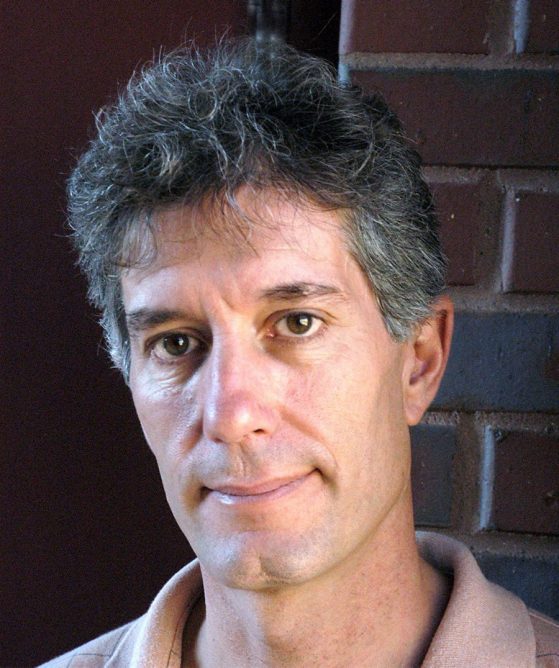
Peter Dinda is a Professor in the Department of Computer Science at Northwestern University , with a secondary appointment in the Department of Electrical and Computer Engineering . He has authored over 130 scientific papers, holds five patents, and is a Fellow of the IEEE . As the former head of the Computer Engineering and Systems division, he has contributed extensively to experimental computer systems. Education: B.S. in Electrical and Computer Engineering from the University of Wisconsin Ph.D. in Computer Science from Carnegie Mellon University Research Focus: Experimental computer systems, particularly parallel and distributed systems , virtualization , operating systems , and empathic systems that integrate user satisfaction with systems-level decision-making. His work also spans compiler design, memory management, and hardware-software co-design for performance optimization. Recent Trends: His publications emphasize virtualization efficiency, memory protection frameworks, parallel programming language design, and power management in heterogeneous computing environments. Key areas include exascale systems, IoT privacy, and physiological sensor-based user modeling. Scientific Awards: Fellow, IEEE Leadership: Served as Director of Graduate Studies and previously led the Computer Engineering and Systems division.
Dr. Xiaofeng Qian is an Associate Professor in the Department of Materials Science & Engineering at Texas A&M University, with joint appointments in Physics and Astronomy, and Electrical & Computer Engineering. His research focuses on materials theory , quantum materials design , and high-throughput computational discovery , particularly for 2D materials and energy applications . Educational Background: Ph.D., Nuclear Science and Engineering, Massachusetts Institute of Technology (2008) B.S., Engineering Physics, Tsinghua University (2001) Research spans first-principles electronic structure methods , nonlinear optical responses , and multiscale modeling of electronic, thermal, and ionic transport. Key areas include quantum spin Hall effect , ferroelectric switching , and machine learning for materials prediction . Notable Awards: Dean of Engineering Excellence Award (2024) Engineering Genesis Multidisciplinary Award (2024) AZZ Faculty Fellow (2021) NSF CAREER Award (2018) Manson Benedict Fellowship (2006) Actively recruiting PhD, MS, and UG researchers with backgrounds in physics, materials science, or computational methods. Collaborates extensively on hybrid AI-materials projects and topological device concepts .
Phillip B. Gibbons is a Professor in both the Computer Science Department and Electrical & Computer Engineering Department at Carnegie Mellon University. He received his Ph.D. in Computer Science from the University of California at Berkeley in 1989 and has held research positions at AT&T Bell Laboratories, Lucent Bell Laboratories, and Intel Research Pittsburgh before joining CMU's faculty. His research spans parallel computing, distributed systems, databases, computer architecture, and machine learning. Gibbons' work bridges theory and systems, with publications in top-tier conferences including SOSP, OSDI, SIGMOD, VLDB, NeurIPS, and many others across computer science and engineering disciplines. His research has been supported by significant funding from NSF, Intel, and other organizations. Gibbons has made substantial contributions to streaming algorithms, parallel computing frameworks, distributed systems security, and large-scale machine learning systems. His work on data stream algorithms with Alon, Matias, and Szegedy has been particularly influential in the field. He has served in numerous leadership roles including Editor-in-Chief of ACM Transactions on Parallel Computing (2012-2018) and on the editorial boards of Journal of the ACM and IEEE Transactions on Cloud Computing. He has also been active on program committees for major conferences in systems, databases, and theory. IEEE Fellow (2014) - For contributions to parallel computing and databases ACM Fellow (2006) - For contributions to parallel computing, databases, and sensor networks Selected for Oral Presentation at NeurIPS '13 (only 20 selected out of 1420 submissions) Co-winner of the best paper award for NSDI '06 Gibbons has advised numerous students and mentored researchers who have gone on to make significant contributions in academia and industry. His research has been supported by major grants including the $15M Intel Science and Technology Center for Cloud Computing (2011-2015) where he served as Co-PI/Co-Director. He currently leads research projects on write-efficient algorithms, big learning systems, and visual cloud systems. His laboratory work focuses on bridging theoretical computer science with practical systems implementation, particularly in the areas of parallel and distributed computing. Current research directions include adapting algorithms for emerging memory technologies and optimizing machine learning systems for large-scale deployment.
Cristina Bicchieri is the S. J. Patterson Harvie Professor of Social Thought and Comparative Ethics at the University of Pennsylvania , where she also holds appointments as Professor of Philosophy and Psychology and Professor of Legal Studies at the Wharton School. She founded and directs the Penn Center for Social Norms and Behavioral Dynamics , the Philosophy, Politics & Economics Program , and the Master of Behavioral and Decision Sciences . Education : PhD in Philosophy from Cambridge University and a Laurea (Summa cum Laude) from the University of Milano . Her research lies at the intersection of philosophy , game theory , and cognitive psychology , focusing on: Judgment and Decision-Making : Fairness, trust, cooperation, and how expectations influence behavior. Social Norms : Their nature, evolution, measurement, and application in policy (e.g., sanitation, corruption). Epistemic Foundations of Game Theory : Rational choices under bounded knowledge and computational models for game solutions. Her recent articles explore topics like norm stability , language framing effects , and sanitation interventions in India . These works emphasize behavioral dynamics , cognitive psychology , and public policy applications . Scientific Awards : Member, American Academy of Arts and Sciences (2021) Member, German Academy of Sciences (2021) Honorary Fellow, Wolfson College, Cambridge (2016) Pufendorf Medal (2015) Cavaliere Ordine al Merito della Repubblica Italiana (2007) She leads the Behavioral Ethics Lab and collaborates with organizations like UNICEF , the World Bank , and the Gates Foundation to implement norm-based interventions globally.
Pascal Mettes is a tenured Assistant Professor at the University of Amsterdam within the Informatics Institute, specializing in Artificial Intelligence. He leads groundbreaking research in hyperbolic deep learning, a field he has significantly advanced through theoretical developments and practical applications in computer vision and multimodal learning. His research focuses on three primary domains: hyperbolic vision-language models that address the hierarchical nature of language-vision relationships; hierarchical deep learning using hyperbolic embeddings that naturally accommodate exponential growth patterns; and robust deep learning in hyperbolic space that improves out-of-distribution detection and network resilience. Mettes has established himself as a leading figure in this emerging field through numerous publications at top-tier conferences including CVPR, ICCV, ICML, NeurIPS, and ICLR. His recent work demonstrates how hyperbolic geometry provides natural solutions to fundamental limitations in modern deep learning, particularly regarding hierarchical data structures that cannot be adequately represented in Euclidean space. The publication trends show increasing impact and recognition in the computer vision and machine learning communities, with multiple papers receiving oral presentations and best paper nominations. Best paper nomination ESWC25 for 'Designing Hierarchies for Optimal Hyperbolic Embedding' Finalist MM 2023 Best Open-Source Software Competition (for HypLL) Multiple reviewer awards across major conferences including CVPR, ICLR, ECCV, ICML, and NeurIPS MM 2016 Best Doctoral Student Award TRECVID 2015 Winner Multimedia Event Detection Benchmark Mettes actively mentors eight PhD students working on hyperbolic learning and related topics, while also securing significant research funding including ELLIs PhD Award, NWO ClickNL, Google Perception Academic Funding, and Data Science Centre PhD Grants. He serves in prominent academic roles as Program Chair for International Conference on Multimedia Retrieval 2026 and has organized multiple workshops on hyperbolic learning at major conferences. His leadership in establishing hyperbolic deep learning as a recognized research direction is evident through his survey paper in IJCV 2024 and the development of the HypLL library for hyperbolic learning.
Edith Hemaspaandra is a Professor in the Department of Computer Science at the Rochester Institute of Technology (RIT), located in the Golisano College of Computing and Information Sciences. She holds a BS, MS, and Ph.D. in Computer Science from the University of Amsterdam (the Netherlands). Her research focuses on computational social choice, computational complexity theory, logic complexity, and formal methods. She teaches courses such as CSCI-262/263 (Introduction to Computer Science Theory) and CSCI-664 (Computational Complexity). Her work explores the algorithmic aspects of voting systems, including election manipulation, control, and bribery, with a focus on their computational complexity. She has also contributed to formal methods for automata theory, educational tools like JFLAP extensions, and the study of complexity classes such as LWPP and WPP. Her research bridges theoretical computer science with practical applications in social choice theory and algorithm design. Her grants include an NSF-funded project on computationally protecting elections from manipulation (2011). She actively publishes in top venues like STACS and ISAAC, addressing topics ranging from graph reconstruction to hybrid election models. Though no awards are explicitly listed, her extensive publication record highlights her contributions to theoretical computer science. Her advising and grant activities include collaborative research projects and educational tool development. She is affiliated with RIT’s Department of Computer Science and maintains a personal website and ORCID profile.
Professor Luke Harding is a faculty member at the Department of Linguistics and English Language , Lancaster University , within the School of Social Sciences . His work bridges applied linguistics, language assessment, and critical discourse studies, with a focus on the ethical and societal implications of testing. Research Interests : Language testing and assessment, World Englishes and English as a Lingua Franca (ELF), second language listening and pronunciation assessment, diagnostic approaches to language evaluation, and language assessment literacy. Recent projects integrate digital technology and corpus linguistics into testing frameworks. Publications : Published extensively in Language Testing , Applied Linguistics , and Language Assessment Quarterly . Co-edited the Routledge Handbook of Language Testing (Second Edition) (2022), a key reference work in the field. Teaching : Leads modules in Language Test Construction and Evaluation , Issues in Language Testing , and Statistical Analysis for Language Testing within the university's distance MA program. Leadership : Convened the Language Testing Research Group with colleagues Tineke Brunfaut and John Pill, advancing interdisciplinary approaches to assessment.
Zohreh Sharafi is an Assistant Professor of Software Engineering in the Department of Computer and Software Engineering (GIGL) at Polytechnique Montréal. Previously, she served as a Senior Research Fellow in the Department of Electrical and Computer Engineering at the University of Michigan, Ann Arbor, where she worked with Dr. Westley Weimer and was awarded the prestigious NSERC Postdoctoral Fellowship. Prior to her academic career, she worked as a software engineer at Morgan Stanley, contributing to the firm's electronic trading platform and serving as principal architect of SURF, a market data simulator. Her educational background includes a Ph.D. in Computer Engineering from École polytechnique de Montréal under the supervision of Dr. Giuliano Antoniol and Dr. Yann-Gaël Guéhéneuc, a Master of Applied Science in Software Engineering from Concordia University, and a Bachelor of Computer Engineering from the University of Tehran. Dr. Sharafi leads the SENSE Lab, a multidisciplinary software engineering research laboratory focused on understanding problem-solving strategies developers use during software development, with particular attention to human factors such as gender and native language. Her research combines human-centric design with experimental methodologies, investigating cognitive processes involved in software development using biometric measures including eye tracking and neuroimaging. Current active projects include evaluating trustworthiness perceptions of software artifacts and studying the role of creativity in software engineering tasks. She has made significant contributions to understanding how gender influences program comprehension and code review processes. Her publication record demonstrates a strong focus on empirical methods in software engineering, particularly eye tracking and neuroimaging techniques to study developer cognition. Her work spans program comprehension, code review, requirements engineering, and the impact of human factors on software development processes. She has developed methodological frameworks for conducting eye tracking studies in software engineering and has made notable contributions to understanding how visualization techniques affect software development tasks. NSERC Postdoctoral Fellowship NSERC Discovery Grant Program and Launch Supplements (Sep 2024-Sep 2029) IVADO Startup & Operation Fund (Jan 2022-Jan 2023) Scholarship for Doctoral Studies from Fonds de Recherche du Quebec Distinguished Reviewer Awards from IEEE ICPC 2020 and ACM FSE 2024 Dr. Sharafi actively mentors students including Mahta Amini (PhD Candidate, IVADO Scientifique en résidence 2024 Laureate), Cameron Cherif (PhD Candidate), Sara Yabesi (Master's Student), and Anthonia Njoku (Graduate research intern). She serves on numerous conference organizing committees including as Local Arrangement Chair for SANER 2025, Program Co-chair for SEMLA 2024, and as a reviewer for top-tier journals including IEEE Transactions on Software Engineering and ACM Computing Surveys. Her research is supported by multiple grants focused on understanding human factors in software engineering through empirical methods. At Polytechnique Montréal, Dr. Sharafi directs the SENSE Lab which brings together computer scientists, cognitive scientists, and software engineering researchers to investigate the cognitive aspects of software development. The lab employs advanced methodologies including eye tracking, functional near-infrared spectroscopy (fNIRS), and functional magnetic resonance imaging (fMRI) to study how developers comprehend, navigate, and modify software systems. Current projects examine trustworthiness perceptions in code review, the role of creativity in software engineering tasks, and gender differences in software development processes.
Jon Brennan is an Assistant Professor in the Department of Linguistics at the University of Michigan, affiliated with the College of Literature, Science, and the Arts (LSA). His research focuses on neurolinguistics, computational linguistics, and psycholinguistics, particularly investigating how the brain processes language structure and meaning. He leads the Computational Neurolinguistics Lab, which develops neurocomputational models to study language comprehension mechanisms. Brennan received an NSF Grant for collaborative research with Christophe Pallier (Paris) on neurocomputational models of natural language processing. His work integrates EEG, fMRI, and MEG techniques to decode linguistic features in neural signals. Key research areas include syntax-semantics interfaces, multilingual processing, and developmental disorders like dyslexia. Notable contributions include studies on hierarchical syntactic structure, minimal pairs in language models, and neural correlates of theory of mind in children. Brennan collaborates internationally, exemplified by the US-French NSF-CRCNS grant. He has published extensively on topics like neural decoding of grammatical features, LLM internal representations, and bilingual processing mechanisms. Scientific awards include the NSF Collaborative Research in Computational Neuroscience (CRCNS) Grant (2016). His research bridges computational modeling and experimental neuroscience, aiming to reveal how language mechanisms are implemented in neural systems.
Professor August Evrard is a distinguished academic at the University of Michigan, holding the Arthur F. Thurnau Professorship in Physics and Astronomy. He is affiliated with the Department of Physics within the College of Literature, Science, and the Arts. Known for his contributions to cosmology and astrophysics, he pioneered the Problem Roulette tool, recognized with the Provost's Teaching Innovation Prize. His research focuses on galaxy clusters, dark matter, and cosmological surveys like the Dark Energy Survey (DES) and XXL Survey. He has been honored as an AAS Fellow (2025) and has contributed to advancements in physics education through innovative teaching methods and technologies. In research, Prof. Evrard explores topics such as dark matter halo dynamics, galaxy cluster properties, and weak lensing analyses. His work spans observational cosmology, computational modeling, and multi-wavelength astronomy. Notable projects include studies on galaxy cluster mass distributions, the relationship between X-ray emissions and velocity dispersions, and the application of machine learning to astrophysical data analysis. His contributions to education highlight the integration of AI-driven tools to enhance learning, as seen in initiatives like the Problem Roulette and course recommendation systems. Prof. Evrard's awards include the Provost's Teaching Innovation Prize for Problem Roulette and his AAS Fellowship. His academic leadership and innovative approaches to both research and education solidify his role as a pivotal figure in astrophysics and STEM pedagogy.
Petteri Nurmi is a Professor of Computer Science at the University of Helsinki, affiliated with the Department of Computer Science and the Helsinki Institute of Sustainability Science (HELSUS). His research focuses on IoT systems, environmental monitoring, AI-driven solutions, and sustainable computing. He leads projects such as the NordForsk-funded initiative (2024-2028) and the Team Finland Knowledge programme (2024-2026), emphasizing large-scale IoT deployments and quantum computing integration. Key research interests include drone-based air quality monitoring, low-cost sensor networks, and AI applications in environmental science. Nurmi has published extensively in top venues like IEEE IoT Journal and ACM workshops. His work bridges technical innovation with societal challenges, such as urban pollution reduction and sustainable resource management. He supervises doctoral students in the Computer Science program and collaborates internationally on projects like underwater plastic detection (SEAGULL) and smart city infrastructure. Nurmi’s contributions to edge computing and pervasive sensing have been recognized through grants totaling over €2M. His lab develops tools for data-intensive systems, including thermal imaging for energy efficiency analysis and AI-driven sensor fusion frameworks.
Sharon Macdonald is Alexander von Humboldt Professor of Social Anthropology and Director of the Centre for Anthropological Research on Museums and Heritage (CARMAH) at Humboldt-Universität zu Berlin. She holds honorary professorships at the University of York and University of Aberdeen, with research focusing on museums, heritage, memory studies, and European anthropology. Her research explores difficult heritage, museum practices, cultural diversity, and the anthropology of Europe. Key projects include 'Making Differences: Transforming Museums and Heritage in the Twenty-first Century' and 'Heritage Futures', examining how societies preserve cultural and natural heritage. Notable awards include the Alexander von Humboldt Professorship and fellowships from the Royal Anthropological Institute and Royal Historical Society. She serves on editorial boards for leading journals including Memory Studies and International Journal of Heritage Studies . She has supervised over 15 PhD students in topics ranging from queer museum representation to Islamic art preservation. Current doctoral projects include studies on wearable ontologies and digital curation in heritage contexts. Macdonald frequently engages in public discourse through keynote lectures, museum consultations, and international panels on heritage politics and decolonization practices.
Prof. Dr. Fabian Gieseke is a Professor and Chair of Machine Learning and Data Engineering at the University of Münster. He holds a PhD in Computer Science from Carl von Ossietzky University of Oldenburg and a dual degree in Mathematics and Computer Science from the University of Münster. His research focuses on Machine Learning, High-Performance Computing, and their applications in Geosciences, Smart Cities, and Astrophysics. Education: PhD in Computer Science (2012), Carl von Ossietzky University of Oldenburg University studies in Mathematics and Computer Science (2006–2011), University of Münster Research Interests: Data Mining and Machine Learning High-Performance Computing & Distributed Systems Deep Learning Applications in Environmental Science and Astrophysics Geospatial Data Analysis using Satellite Imagery Publications Trends: His recent work emphasizes large-scale environmental monitoring via deep learning, including canopy height estimation, forest biomass prediction, and national-scale tree counting. He also explores interactive systems for geospatial data retrieval and optimization of machine learning models for resource-constrained environments. Advising & Grants: Supervised over 30 theses on topics like satellite image analysis, deep learning on microcontrollers, and data marketplaces for smart grids. Active in securing grants for interdisciplinary projects combining AI with Earth observation. Labs/Teams: Leads the Machine Learning and Data Engineering group at the University of Münster, focusing on scalable AI solutions for real-world challenges in science and industry.
Carlos Guestrin is the Fortinet Founders Professor of Computer Science at Stanford University and serves as Director of the Stanford AI Lab (SAIL) and Senior Fellow at the Institute for Human-Centered AI (HAI). He holds dual roles as Chief Scientist at Visual Layer and Virtue AI. His research focuses on machine learning methods, explainability, fairness, and ethics of AI, alongside systems for scalable AI deployment. Education details are not explicitly provided, but his work spans foundational contributions to machine learning systems (e.g., XGBoost) and explainable AI frameworks like Anchors and LIME. He emphasizes ethical AI through projects like CheckList for model testing and Model Equality Testing for API transparency. His scientific contributions include advancing optimization techniques (AdaScale SGD, TVM compiler) and ethical benchmarks for generative AI. He has been recognized as a Member of the National Academy of Engineering for his transformative impact on AI systems and their societal applications. Guestrin leads interdisciplinary initiatives at SAIL and HAI, fostering collaboration between technical innovation and human-centered design. His work bridges theory and practice, addressing challenges in healthcare (diabetes management systems) and AI security.
Zhiqiang Yu serves as an Associate Professor in the Department of Modern Languages and Comparative Literature at Baruch College's Weissman School of Arts and Sciences, City University of New York. With over two decades of teaching experience, he has established himself as a dedicated educator specializing in Chinese language, cinema, and civilization courses. Education: Ph.D. in Chinese, University of Washington M.A. in Asian Civilization, University of Iowa B.A. in Chinese Literature, Fudan University (Shanghai) Professor Yu's research focuses on innovative approaches to Chinese language pedagogy, with particular interest in applying economic principles and artificial intelligence to language teaching. His work bridges traditional linguistic scholarship with modern educational technology, examining how efficiency, resource allocation, and technological advancements can enhance language learning outcomes. His research spans Chinese linguistics, dialectology, cinema studies, and cultural elements in language teaching. His publication record reveals a consistent trajectory toward optimizing language instruction through systematic analysis. Recent work increasingly focuses on AI applications in language education and the economic framework of pedagogical efficiency. His scholarship demonstrates a progression from traditional linguistic analysis toward innovative teaching methodologies that incorporate modern technological and theoretical frameworks. Scientific Awards: Award of Excellent Academic Research Reviewer from Journal of International Chinese Education (2016) Graduate Teaching Fellowship from University of Washington (1993) Graduate Teaching Fellowship from University of Iowa (1989) Graduate Research Fellowship from University of Iowa (1988) Student Excellency Award from Fudan University (1984) Professor Yu has served extensively on departmental committees including as Department Assessment Coordinator and Secretary of the Asian and Asian-American Studies Committee. He has organized numerous academic events featuring prominent Chinese cultural figures and has contributed to developing Chinese language curriculum resources including online placement tests. His professional service extends to editorial work for CUNY publications and Chinese language training for the New York Police Academy. He maintains active involvement with multiple professional organizations including the American Name Society, American Oriental Society, American Society of Geolinguistics, Association for Asian Studies, and Chinese Language Teachers Association, frequently presenting at international conferences on Chinese language pedagogy.