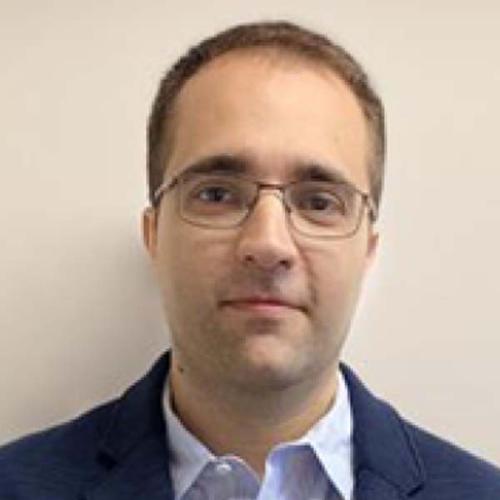
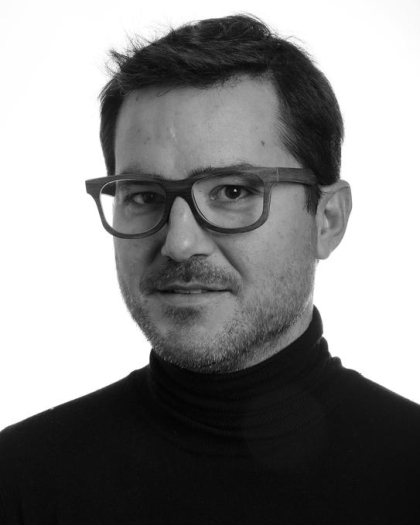
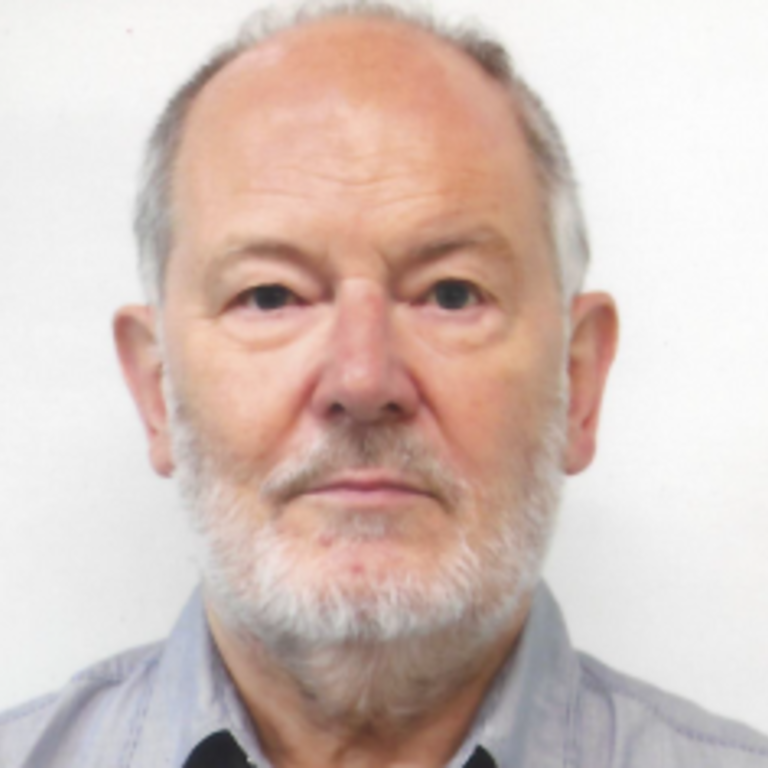
Jim McKinley is a Professor of Applied Linguistics at University College London (UCL), specifically within the IOE - Culture, Communication & Media. His career spans 25+ years across the UK, Japan, Australia, Uganda, and the US, focusing on the interplay between globalization, language education, and higher education. Education : PhD from Victoria University of Wellington, MA and BA (Hons) from the University of Sydney and Susquehanna University, respectively. His research bridges applied linguistics and higher education studies, emphasizing English Medium Instruction (EMI), teacher training, and the teaching-research nexus. Funded by the Economic and Social Research Council (ESRC), British Academy, British Council, and John Fell Fund, he explores linguistic challenges in EMI and Content and Language Integrated Learning (CLIL). Recent publications address EMI policy in Ethiopia/Poland/Japan, academic literacy in EMI, and systematic review methodologies. He is Editor-in-Chief of System and co-Editor of Cambridge Elements: Language Teaching . Scientific Awards : Senior Fellow of the Higher Education Academy (2020-present), Honorary Research Fellow at the University of Oxford (2021-2023). Leadership Roles : Former Director of Studies for PhD in Education at UCL, Head of Programme, and leadership in academic organizations.
Jessica Young Schmidt is an Associate Teaching Professor in the Department of Computer Science at North Carolina State University, serving as ABET Coordinator since 2017 and Course Coordinator for CSC226: Discrete Mathematics. Her primary focus is undergraduate education, particularly CSC116: Introduction to Computing – Java and CSC226, where she implements flipped classroom models and comprehensive end-of-semester exercises. Her educational background includes: Ph.D. in Computer Science, North Carolina State University, 2012 M.S. in Computer Science, North Carolina State University, 2009 B.S. in Computer Science and Mathematics, Roanoke College, 2007 Dr. Schmidt's research centers on computer science education, emphasizing active learning, instructional design, and software engineering pedagogy. She has pioneered methods like collaborative software engineering exercises for CS1 materials and frameworks for assessing critical thinking, with her work on end-of-semester integration earning a SIGCSE 2020 award. Her publications reveal an evolution from privacy policy analysis (2009-2012) toward educational innovation in recent years. Her scholarly contributions demonstrate consistent focus on curriculum development and assessment, particularly in integrating software testing throughout computer science education and enhancing student comprehension through structured reflection. She has received the following recognition: Third Best Paper, SIGCSE 2020 Technical Symposium (Experience Reports and Tools Track) As ABET Coordinator, Dr. Schmidt drives curriculum assessment and continuous improvement, while her CSC226 coordination ensures pedagogical consistency across sections. Her teaching innovations directly support student success in foundational computer science concepts.
Ramavarapu S Sreenivas is a Professor in the Industrial and Enterprise Systems Engineering department at the University of Illinois at Urbana-Champaign , with research appointments at the Coordinated Science Laboratory (CSL) and the Information Trust Institute (ITI ). He holds a joint affiliation with the Electrical and Computer Engineering department and serves as the Arthur Davis Faculty Scholar since 2016. Ph.D. , Electrical and Computer Engineering, Carnegie Mellon University (1990) M.S.E.E. , Carnegie Mellon University (1987) B.Tech , Electrical Engineering, Indian Institute of Technology Madras (1985) His research focuses on Discrete-Event/Discrete-State (DEDS) systems , applying Coding Theory, Machine Learning, and Information Theory to develop near-optimal supervisory policies for applications in wireless networks, automated manufacturing, and healthcare systems . He leads the Center for Autonomous Construction and Manufacturing at Scale (CACMS) , established in 2023. Recent publications highlight advancements in liveness enforcement in Petri nets , fault-tolerant control , and IoT-based load scheduling . His work bridges theoretical rigor with practical implementations in Distributed Control, Network Coding , and Reinforcement Learning . UIUC Campus Award for Excellence in Graduate and Professional Teaching (2023) Arthur Davis Faculty Scholar (2016) Senior Member, IEEE (2002) James Franklin Sharp Outstanding Teaching Award in Industrial Engineering (2017, 2012) Sreenivas has taught graduate and undergraduate courses in Control Systems, Integer Programming, and Financial Computing since 1992. He co-instructed courses in Health Technology and contributed to the Master of Science in Financial Engineering (MSFE) program, which ranks 4th nationally.
Jorge Camba is an Associate Professor at the School of Engineering Technology and holds a courtesy appointment in the Department of Computer Graphics Technology at Purdue University . He also serves as a Senior Research Scientist (by courtesy) in the Department of Industrial Engineering at the University of Naples Federico II , Italy. PhD in Systems and Engineering Management (Universidad Politécnica de Valencia, Spain) MSc in Digital Media (East Tennessee State University) MSc in Computer Science (Universidad de Vigo, Spain) His research explores intelligent CAD systems , digital manufacturing , and mixed reality environments , focusing on model quality assurance , design intent communication , and collaborative design tools . Recent work investigates spatial cognition in CAD education , geometric variability analysis , and annotation-driven knowledge management . Key trends in his publications include parametric modeling strategies , 3D annotation systems , and XR applications in design evaluation. Awards include the Purdue Faculty Scholar (2021) and I3B Fellow (2021). He has presented at conferences on topics like Industry 4.0 , space habitat design , and digital product quality .
Onur KARDEŞ serves as Assistant Professor in the Department of Computer Engineering at Beykent University's Faculty of Engineering and Architecture since 2020. His prior academic appointments include: Research Assistant, Department of Computer Science, Stevens Institute of Technology (2004-2008) Lecturer, Department of Mathematics and Computer Science, Faculty of Arts and Sciences, Beykent University (2000-2004) His research integrates data mining, privacy-preserving computation, and artificial intelligence with practical applications in educational technology and urban systems. Key contributions include developing privacy-enhancing protocols for distributed data mining and pioneering generative AI solutions for automated student assessment and digital teaching assistants. Analysis of his 2023-2025 publications reveals accelerating focus on generative AI implementations, particularly in educational evaluation (automated examination paper analysis) and urban planning (AI-driven smart city frameworks). This evolution demonstrates strategic adaptation to emerging technologies while maintaining core expertise in secure computation and data mining.
Lale Tükenmez Ergene is a Professor at Istanbul Technical University 's Department of Electrical Engineering, specializing in Electrical Machines and Energy Conversion . Her work bridges theoretical research and practical applications in motor design for electric vehicles and home appliances. Ph.D. in Electrical Engineering from Rensselaer Polytechnic Institute 20+ years of academic and administrative leadership Focus areas: Permanent Magnet Motors, Synchronous Reluctance Motors, and Sensorless Control Systems Her research explores: Optimization of traction motors for electric vehicles Advanced sensorless control algorithms for motor drives Reduction of voltage distortion in high-performance motors Integration of predictive diagnostics in motor systems Applications of neurofuzzy control systems in multicopters Recent publications highlight trends in PMaSynRM parameter estimation , flux weakening capabilities , and real-time motor diagnostics . Her work spans both traditional electrical engineering and cross-disciplinary innovations like VR-based language learning systems for EU workforce mobility. Scientific recognition includes: Best Poster Paper Award (2016) 2nd Prize in Graduation Design Competition (2015) Doctoral Thesis Excellence Award (2015) She leads projects such as: Pmasynrm's Innovative Real-Time Model Diagnostic System (2021-2024) Sensorless Magnet-Supported Motor Drive for Washing Machines (2019-2022) VR-based Business English Training for Engineers (2018-2022)
Yvonne Hallesson is an Associate Professor and Senior Lecturer in Swedish at Uppsala University's Department of Nordic Languages, where she serves as Director of Studies for postgraduate education. Her research centers on subject literacy, focusing on students' reading and writing development through school texts across disciplines. Her academic qualifications include: Associate Professor of Swedish, Uppsala University (2021) Senior Lecturer in Swedish Language, Uppsala University (2019–present) Senior Lecturer in Didactics with focus on Swedish, Uppsala University (2016–2019) PhD in Language Didactics, Stockholm University (2015) Licentiate in Educational Science, Stockholm University (2011) Master of Education in Swedish and English, Stockholm University of Education (1999) Hallesson investigates the relationship between language and learning, particularly how students develop subject-specific literacy through text work in social sciences and other disciplines. Her research examines reading comprehension strategies, writing development, and the integration of national minority languages in educational contexts. She analyzes how text properties affect learning across different school subjects and student demographics. Her recent publications reveal consistent focus on subject literacy development, with particular attention to reading comprehension in social sciences and representation of national minority languages in textbooks. Her work demonstrates strong methodological emphasis on discourse analysis and classroom-based research, often involving collaborative teacher-researcher partnerships to bridge theory and practice. Hallesson supervises doctoral students including Jim Stefansson (main supervisor) and Linnea Wenell (assistant supervisor), and mentors numerous graduate students. She has secured significant research funding from the Swedish Research Council for projects including "Läsmetoder under lupp" (2022) and the current "Building subject knowledge in text" (2025-2027). She actively contributes to academic governance as board member of the Department of Nordic Languages and the research network SMDI, and coordinates Uppsala University's subject didactic network for Swedish and Swedish as a second language. She also represents the Swedish Teachers' Association in the Language Care Group.
Suzanne C. Hopf is a Senior Lecturer and Course Director for the Master of Speech Pathology at Charles Sturt University, Australia, within the School of Allied Health, Exercise and Sports Sciences. Based in Nadi, Fiji as an Australian-Fijian citizen, she leads the blended online Master of Speech Pathology program and serves as Discipline Lead for Speech Pathology. Her work bridges academic leadership with on-ground clinical innovation in Pacific Islander communities. Her educational background includes: BAppSc (Speech Pathology) Hons Cert TESOL AdCert TEYL GradCertLTHE (Graduate Certificate in Learning and Teaching in Higher Education) PhD in 'Supporting Fijian children's communication' Dr. Hopf's research centers on equity in communication disability services, examining how individual, community, and societal factors create barriers and facilitators in underserved regions. She developed the Communication Capacity Research and Culturally Responsive Teamwork frameworks to guide evidence-informed, culturally responsive service development. Current projects focus on Fijian children's oral/written communication acquisition and culturally appropriate pre-school interventions, with strong emphasis on Pacific Islander contexts and multilingual populations. Her work directly contributes to UN Sustainable Development Goals for health equity and quality education. Analysis of her recent publications reveals consistent thematic focus on culturally responsive practice across 111 research outputs, with accelerating productivity (21 publications in 2024). Key trends include innovative arts-based methodologies for child voice research, decolonizing clinical frameworks, and virtual work-integrated learning models addressing global workforce shortages. The research demonstrates strong interdisciplinary connections across speech pathology, early childhood education, and Pacific Islander health equity. Scientific recognition includes: 2021 Charles Sturt Executive Dean’s Teaching Award for blended online Master of Speech Pathology 2021 Staff Excellence Award: Successful Graduates 2022 Research Excellence Through Partnership Award 2023 Excellence Awards: Research (Early Childhood Interdisciplinary Research group) 2023 Excellence Awards: Social Responsibility (Highly Commended) As an educator and supervisor, Dr. Hopf has guided PhD and Honours students to timely completion while fostering collaborative publication opportunities. Her student-centered approach maximizes engagement through innovative learning spaces, recognized through departmental teaching awards. Current grants support Fijian communication capacity building and virtual study abroad placements, with active partnerships including the Frank Hilton Organisation's Technical Governance Team. Dr. Hopf co-leads the Children's Voices Centre and Social Equality Intersectionality & Inclusion Research Group, while contributing to the Early Childhood Interdisciplinary Research group. Her Pacific-focused work involves community co-design through initiatives like the Fiji National Consultation on Assistive Technology, ensuring research directly addresses local needs while building sustainable service capacity.
Prof. Dr. Haris Gačanin is a faculty member at RWTH Aachen University, affiliated with the Institute for Distributed Signal Processing under the College of Electrical Engineering. His research focuses on integrating machine learning with wireless communication systems, particularly in industrial IoT, edge computing, and network optimization. Current academic rank: Professor Contact: harisg@dsp.rwth-aachen.de Research Interests: Wireless systems, machine learning, signal processing, and network optimization. Key contributions include: Adaptive resource allocation in IIoT and vehicular networks AI-driven channel estimation and feedback mechanisms Security-oriented emitter identification via metric learning Federated/transfer learning for edge environments Hardware-efficient deep learning models for mmWave and THz communications Methodological Focus: Combines reinforcement learning, attention mechanisms, and robust neural architectures with practical implementations on FPGA and vehicular systems.
Prof. Dr. Catrin Misselhorn serves as Professor of Philosophy at the University of Göttingen since 2019, focusing on theoretical philosophy, machine ethics, and human-AI interaction. She is Deputy Director of the Institute of Philosophy and a member of the supervisory board at KIT (Karlsruhe Institute of Technology). Education Studied at University of Tübingen and University of North Carolina at Chapel Hill (1991-1998) PhD in Philosophy (2003) and Habilitation (2010) at University of Tübingen Feodor-Lynen Fellowship at Center of Affective Sciences (2007-2008) Research Interests Her work bridges machine ethics , philosophy of artificial intelligence , and human-machine interaction , with emphasis on moral agency in autonomous systems, empathy in AI, and ethical evaluation of technologies. She explores applications in geriatric care, autonomous weapons, and self-driving vehicles. Recent Article Trends Her 15 most recent publications (2022-2025) highlight intersections between AI governance , robot empathy , and moral implementation . Topics span care robotics , autonomous weapons , AI-generated art , and ethics of language models . Scientific Awards Feodor-Lynen Fellowship (2007-2008) Member, Niedersächsische Akademie der Wissenschaften (2024) Academic Leadership Director of Institute of Philosophy (2012-2019), University of Stuttgart Current editorial roles and media engagements (ARD, Süddeutsche Zeitung, DWIH New York)
Xavier Llovet Vila is an Associate Professor in the Department of Foreign Languages at the University of Bergen . With a PhD in Spanish Didactics (2016) and an MA in Teaching Spanish as a Foreign Language (Universitat de Barcelona), he has extensive international teaching experience across institutions like Columbia University and the Norwegian School of Economics. Research Focus: Teacher cognition, communicative language teaching, curriculum reform (LK20), oral skill development, and intercultural competence. Publications: Over 15 peer-reviewed articles, lectures, and monographs analyzing the alignment of didactic practices with modern educational frameworks in Norway and Sweden. Scientific Recognition: Awarded the ASELE Prize for best PhD thesis in 2016.
Gaang Lee is an Assistant Professor in the Department of Civil and Environmental Engineering at the University of Alberta's Faculty of Engineering, where he joined in 2022 after earning his Ph.D. from the University of Michigan. His research pioneers 'sympathetic' built environments that enhance safety, health, productivity, and comfort for workers and users through integration of wearable biosensors, AI, extended reality, and robotics with psychophysiological theories. Education: Ph.D in Civil and Environmental Engineering, University of Michigan, Ann Arbor (2022) - Emphasis: Construction Engineering and Management; Graduate Certificate in Computational Discovery and Engineering Graduate Certificate in Computational Discovery and Engineering, University of Michigan, Ann Arbor (2022) M.S. in Architectural Engineering, Yonsei University, South Korea (2012) - Emphasis: Construction Engineering and Management B.S. in Architectural Engineering, Yonsei University, South Korea (2010) Dr. Lee combats technological exclusion for marginalized groups (construction workers, older adults) by developing empathetic technologies for workplaces, buildings, and urban spaces. His work applies human sensing, AI, and digital twins to create environments that adapt to diverse human needs, with key projects spanning psychophysiological safety monitoring, human-robot collaboration, and inclusive urban design. He integrates psychophysiological and socio-cognitive theories to address real-world gaps in construction engineering and computer science. His recent publications (2023-2025) reveal strong trends in AI-driven safety hazard identification, biosensor-based stress/fatigue monitoring, and virtual reality for construction team dynamics. A critical emerging focus is equity-centered technology design, with increasing publications addressing inclusive built environments and technological access for vulnerable populations through graph-based algorithms, domain adaptation, and interpretable AI models. Scientific Awards: No awards mentioned in the provided text. Dr. Lee actively recruits students for his 'Empathetics' research group starting in 2026, prioritizing candidates with empathy, research motivation, and commitment to diversity and inclusion. While specific grants are not detailed, his research program receives institutional support from the University of Alberta and likely external funding given its interdisciplinary scope and industry relevance. He leads the 'Empathetics' research group (part of Attentive Hub) which emphasizes diversity as fundamental to innovation. Current projects include psychophysiological monitoring for occupational safety, trustable human-robot collaboration systems, and extended reality frameworks for empathetic built environments. The group collaborates with IHT LAB (https://www.iht-lab.com/) and focuses on deploying technologies that make daily surroundings safe, healthy, and truly inclusive for all individuals.
Jamie J. Baker serves as Associate Dean and Director of the Law Library and Dean's Distinguished Service Professor of Law at Texas Tech University School of Law. She oversees all Law Library operations while teaching Civil Trial: Practice & Litigation Materials, Academic Legal Writing, Intro to the Study of Law, and Legal Practice research workshops for first-year students through the Excellence in Legal Research Program. Her educational background includes a B.S. in Political Science & Public Administration from Central Michigan University, an M.L.I.S. from Wayne State University's School of Library & Information Science, and a J.D. from Western Michigan University Cooley Law School, where she was recognized as the most outstanding editor of the Cooley Law Review. Professor Baker's research centers on cognitive computing applications in legal research, legal research pedagogy, and the evolving role of law librarianship. She examines how artificial intelligence disrupts traditional legal research methods and addresses the duty of technology competence for legal professionals. Her work bridges library science and legal education, focusing on practical implementation in academic settings. Analysis of her 15 most recent publications reveals consistent focus on AI's impact on legal research, with recurring themes including algorithmic regulation, technology competence ethics, and future law library services. Her scholarship spans law reviews, book chapters, and conference presentations, demonstrating interdisciplinary engagement between legal academia and library science. ABA Blawg 100 recognition Top-Ten Blog for Information Professionals Best of the Legal Blogs by Internet Legal Researcher Most outstanding editor of Cooley Law Review As an educator, she mentors students through specialized research workshops and legal writing instruction. Her professional engagement includes frequent presentations at major conferences like the American Association of Law Schools and American Association of Law Libraries annual meetings. She previously served as a Law Librarian and Adjunct Professor at Western Michigan University Cooley Law School and worked at the Michigan Supreme Court's Friend of the Court Bureau. Her influential blog, The Ginger Law Librarian, serves as a hub for discussions on AI in legal research and modern law librarianship, reflecting her commitment to advancing the profession through technological innovation.
Steve Duck is a Professor in the Department of Rhetoric at the University of Iowa. He previously served as Department Chair (2010-2022), Chair of the Faculty Assembly (2020-2021), and held roles on University College and CLAS Executive Committees. His research focuses on personal relationships and their rhetorical dimensions in everyday interactions, including workplace dynamics, dissolution processes, and relational maintenance. He edited the Journal of Social and Personal Relationships for 15 years and authored/edited over 55 books. Key scholarly contributions include exploring relational communication, workplace relationship appropriateness, and the evolution of personal relationships research. Notable works include Rethinking Relationships through Rhetoric (2023) and textbooks like Communication in Everyday Life (2021). His research integrates rhetoric with interpersonal processes, examining intimacy, dissolution models, and public speaking pedagogy. Awarded the Doug Trank Memorial Award, Duck’s work emphasizes interdisciplinary connections between rhetoric, psychology, and social structures. He advises graduate programs and has shaped university governance through leadership roles. Ongoing interests include historical analyses of relational studies and future directions in communication theory.
Professor Sophia Drossopoulou is a Professor of Programming Languages in the Department of Computing at Imperial College London, part of the Faculty of Engineering. Her affiliations include the Centre for Cryptocurrency Research and Engineering and the Sound Programming Languages research group. She holds a visiting researcher position at Microsoft Research (UK) from May 2019 to May 2020. Her research focuses on foundational programming language design and formal methods, emphasizing concurrency, type systems, and program verification. Key areas include concurrent program reasoning (e.g., TaDA framework), memory management (reference capabilities, garbage collection), and secure systems (smart contracts, cyber-physical systems). She explores practical language extensions for performance optimization (e.g., cache locality) while maintaining safety guarantees through formal verification techniques. Her work spans theoretical contributions (formal semantics, logical frameworks) and applied systems (compilers, runtime verification tools like Zeno). Recent trends show strong engagement with actor-based models (Pony language), digital twins, and cybersecurity challenges in modern software systems. Awards and recognitions are not explicitly listed in the provided text, but her extensive publication record in top venues (ECOOP, POPL, TOPLAS) indicates academic impact. Her advising focuses on graduate students in systems programming and formal methods, though specific student names are not mentioned here. Labs and collaborations involve the Sound Programming Languages group at Imperial College, emphasizing interdisciplinary work between formal methods and practical language implementation. Current projects include improving concurrency semantics and verifying complex systems through compositional reasoning techniques.