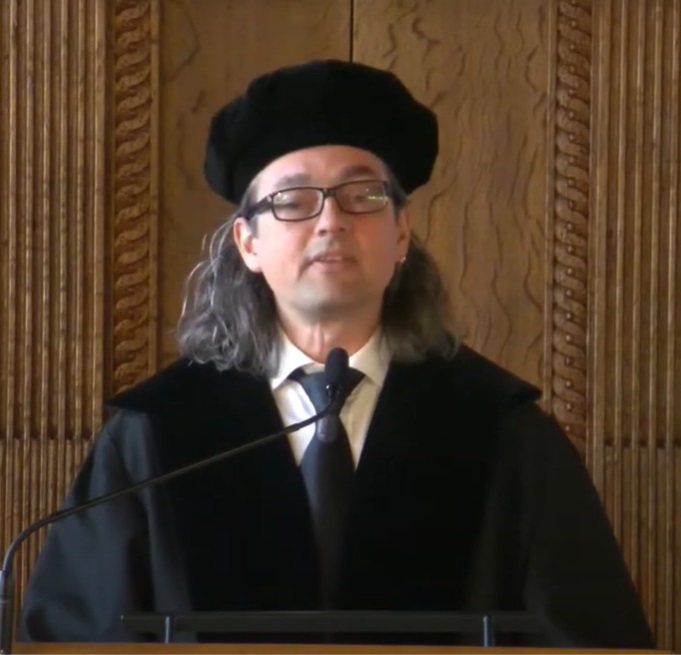
Dr. Nienke Smit is an Assistant Professor in the Department of Education at Utrecht University's Faculty of Social and Behavioural Sciences. Her research focuses on scaffolding processes, adaptive teaching, and classroom observational research from a complex dynamic systems perspective. Specializes in teacher-student interaction Expert in adaptive instruction and observational methods Collaborates with Data Science department Develops tools for classroom observation Research interests include language learning and teaching , judgment and decision-making in education , and professional development of teachers . She leads projects like Eye Get It (joint attention in classrooms) and a replication study on adaptive instruction effectiveness. Her work applies dynamic systems theory to second language development and foreign language pedagogy. Recent publications address translanguaging in multilingual classrooms, replication studies , and process-oriented research . She teaches at Utrecht's Graduate School of Teaching and works on initiatives to reduce teacher shortages through improved training programs.
Professor Michael Burke holds a full professorship in Rhetoric at Utrecht University (Faculty of Humanities) and teaches at University College Roosevelt (UCR) in Middelburg. Previously, he served as UU Honours Dean (2016–2021). His research focuses on rhetoric, stylistics, cognitive aspects of language, and education. He earned his Ph.D. in English Language and Literature from the University of Amsterdam, where he also completed his undergraduate studies. Research interests span written, oral, and digital rhetoric, emphasizing pedagogical, cognitive, stylistic, and neuroscientific dimensions. He has held visiting roles at institutions like the University of Cambridge and University of Bologna. Editorial roles include series editor for Routledge’s 'Research Monographs in Linguistics' and board memberships with journals like Language and Literature . Teaching includes undergraduate courses on classical rhetoric, argumentation, and public speaking at UCR, plus leadership and interdisciplinary research modules for Utrecht’s Honours College. He supervises PhD students in the UiL-OTS linguistics research school. Notable publications include The Routledge Handbook of Stylistics (2023) and studies on critical thinking, digital literacy, and cognitive literary science. Professional activities include keynote speaking at conferences like PCST and EARS, and contributions to projects such as ‘Undergraduate Research in the Netherlands’. His work bridges rhetoric, cognitive science, and education, emphasizing practical applications for students and educators.
Lesya Ganushchak is Assistant Professor in Educational Sciences at Erasmus School of Social and Behavioural Sciences, Erasmus University Rotterdam. Her research employs cognitive neuroscience methods to examine language processing, reading development, and educational interventions. Using EEG/ERP and eye-tracking methodologies, she investigates cognitive mechanisms underlying self-monitoring, lexical access, and sentence production. Recent publications demonstrate her focus on evidence-based educational interventions: Meta-analyses of reading proficiency interventions (2024) Inference-making development in early readers (2023) Behavioral nudges improving online learning engagement (2022) Her ORCID profile documents extensive research output with collaborative networks spanning cognitive psychology and education research.
Paul Boersma is a Professor of Phonetic Sciences at the University of Amsterdam within the Faculty of Humanities. His research explores how phonetic, phonological, and morphological phenomena emerge through computational modeling using artificial neural networks and Optimality Theory, with a focus on multi-level constraint interactions and distributional learning. University of Amsterdam Faculty of Humanities Phonetic Sciences Key research areas include: Computational Modeling : Simulations of phonological category emergence from phonetic data Optimality Theory : Gradual Learning Algorithm applications BiPhon Framework : Parallel bidirectional phonology/phonetics models Statistical Learning : Cross-situational and distributional learning mechanisms Recent publications emphasize: 2025: Inclusive speech recognition systems using Whisper model 2025: F0 ratio analysis for creaky voice diagnostics 2024: Prosodic clitics in child speech and checked tones in Shanghai Chinese 2023: Distributional learning in developmental language disorder contexts 2022: Substance-free phonological features and ghost segment phenomena He has also contributed extensively to the Praat software for phonetic analysis, with continuous updates since 1993.
Sible Andringa is Professor of Second Language Pedagogy at the University of Amsterdam's Faculty of Humanities, officially inaugurated on June 16, 2023. Dr. Andringa serves as Academic Director of the Institute for Dutch Language Education (INTT), Coordinator of the Language Learning, Literacy and Multilingualism research group, and Coordinator of the Master's program in Dutch as a Second Language and Multilingualism. Dr. Andringa's research focuses on second language acquisition and bilingualism, specifically investigating the added value of explicit instruction, how input distribution affects language learning outcomes, and the role of awareness in language learning trajectories. Key ongoing projects include the Meta-LLL project examining how literacy shapes language learning, the SLA4All initiative for reproducing SLA research with non-academic samples, and the OASIS project creating accessible research summaries for practitioners. Previously, Dr. Andringa led Project MIND studying bilingual daycare effects and contributed to the Stilis project on listening proficiency. As General Editor of the Dutch Journal of Applied Linguistics (DuJAL), Dr. Andringa promotes open science principles in language research. Recent publications demonstrate a focus on addressing sampling biases in SLA research, open access publishing ethics, and practical applications of language acquisition research for educational settings. Academic Director, Institute for Dutch Language Education (INTT) Coordinator, Language Learning, Literacy and Multilingualism research group Coordinator, Master's program Dutch as a Second Language and Multilingualism General Editor, Dutch Journal of Applied Linguistics (DuJAL) Member, Mastery Team for Modern Foreign Languages Member, OASIS project team Member, IRIS database advisory group Dr. Andringa supervises PhD candidates including Kyra Hanekamp and Darlene Keydeniers, particularly in research related to bilingual daycare environments and language development. The research program has received funding from the Dutch ministry of Social Affairs for Project MIND and continues to secure support for ongoing projects examining language learning mechanisms. Dr. Andringa leads the Language Learning, Literacy, and Multilingualism research group which investigates language and literacy acquisition across the lifespan, with emphasis on how language skills are learned, maintained, and used in educational contexts. The group meets weekly to discuss projects, plans, funding opportunities, and research topics while promoting collaboration, methodological innovation, and open science principles.
Nina Schwarz is Assistant Professor of human-environment interactions in cities at the Department of Urban and Regional Planning and Geo-Information Management, ITC—University of Twente. Holding a Diploma in Environmental Sciences (University of Lüneburg, 2003) and a PhD in Social and Economic Sciences (University of Kassel, 2007), she spent a decade as senior scientist at the Helmholtz Centre for Environmental Research – UFZ before joining ITC. Her interdisciplinary research integrates urban land-use science, ecosystem-service evaluation and advanced modelling techniques—especially agent-based models—to explore sustainable urban development under global change. Research interests revolve around three interconnected themes: (i) urban land-use change —understanding how residential, commercial and green-space dynamics co-evolve; (ii) urban ecosystem services —quantifying both supply and demand of services such as local climate regulation, recreation and biodiversity; and (iii) behavioural modelling —formalising human decision-making to simulate policy scenarios ranging from slum-upgrading to vineyard management. She actively links these themes to UN Sustainable Development Goals, notably SDG 11 (Sustainable Cities) and SDG 15 (Life on Land). Recent publications (2022-2025) reveal a methodological breadth spanning citizen-science impact assessment in Suriname, cooling effects of urban water bodies in Chinese mega-cities, European wine-growers’ adaptive behaviour, and methodological advances in upscaling and validating agent-based land-use models. Across these studies, Schwarz consistently combines empirical field data, geospatial analytics and participatory approaches to produce policy-relevant insights for cities in both the Global North and South. She has (co-)authored >80 peer-reviewed works, accumulating c. 5 900 citations and an h-index of 28 (Scopus). While specific honours are not itemised in the supplied text, her sustained citation impact and invited contributions to major conferences (e.g., iEMSs 2020, IAHR 2025) underscore scientific recognition. Schwarz frequently engages with societal stakeholders: her projects have generated open datasets on urban green-space monitoring in Paramaribo, e-learning modules for Latin-American universities, and interactive dashboards for sustainable water management. Within ITC she contributes to capacity-building programmes for emerging economies, supervises graduate researchers and maintains active collaborations across Europe, Latin America, Africa and Asia. No explicit lists of PhD students or personal grants are provided in the current corpus, but her leadership of externally funded projects (e.g., citizen-science evaluation, vineyard decision-making database) indicates ongoing acquisition of research funding.
G.J. Greg Poarch, PhD is an Associate Professor of English Linguistics and English as a Second Language (ESL) at the University of Groningen's Faculty of Arts. He holds positions on the Cluster Board 2 as Secretary and serves as President of the International Association of Multilingualism (IAM). His research focuses on bilingualism, multilingualism, psycholinguistics, and the cognitive impacts of language learning. He is affiliated with the Neurolinguistics and Language Development (NLD) research group. Research interests include cross-linguistic activation in multilingual speakers, executive function development in multilingual children, and the relationship between multilingualism and neurocognitive health in aging populations. His work addresses topics like translanguaging theory, structural priming in language acquisition, and the role of genetic factors in Alzheimer's risk mitigation among multilinguals. Poarch collaborates internationally, organizing conferences such as the 13th International Conference on Third Language Acquisition and Multilingualism (2024). His research has been published in journals like Linguistic Approaches to Bilingualism , Language Learning , and Journal of Experimental Child Psychology .
Annemarie Kalis is an Associate Professor in Theoretical Philosophy at the Department of Philosophy and Religious Studies, Faculty of Humanities, Utrecht University. Her academic career spans over fifteen years with significant contributions to philosophy of psychology, action theory, and philosophy of mind. She maintains an active research profile with numerous publications in leading philosophy and interdisciplinary journals. Dr. Kalis's research primarily focuses on agency, normativity, and reasoning , with particular emphasis on self-control, akrasia (weakness of will), and the philosophical implications of ecological psychology. Her work often employs a neo-Wittgensteinian approach to mind-related phenomena and has increasingly engaged with Gilbert Ryle's ideas on reasoning and perception. She has developed a situated perspective on self-control that challenges traditional mechanistic understandings. Her scholarly output demonstrates a consistent trajectory from early work on akrasia and irrational behavior through to her current situated approach to self-control. The articles reflect a deep engagement with interdisciplinary perspectives, bridging philosophy with psychology, cognitive science, and even applications to mental health conditions like eating disorders. Her work shows increasing attention to ecological and situated approaches to philosophical problems. Dr. Kalis has received significant research funding, including an NWO-VENI grant (2014) for her project on the metaphysics of psychological attitudes and an NWO-VIDI project (2019-2024) titled 'Shaping our action space: a situated perspective on self-control.' These competitive grants from the Netherlands Organization for Scientific Research highlight the significance and innovation of her research program. She has contributed to major debates in philosophy of mind and psychology, including discussions on implicit bias, folk psychology, and the network approach to psychopathology. Her work often challenges reductionist approaches while developing nuanced philosophical frameworks for understanding human cognition and behavior. Dr. Kalis's research demonstrates how philosophical analysis can provide valuable insights for empirical research in psychology and cognitive science.
Rianne Conijn is an assistant professor in the Human-Technology Interaction group at Eindhoven University of Technology (TU/e), Netherlands. Her research bridges data-driven methodologies (machine learning, statistical modeling) with human-centered design to enhance learning analytics, explainable AI, and writing process analysis. She holds a joint PhD (cum laude) from Antwerp University and Tilburg University, and an MSc (cum laude) in Human-Technology Interaction from TU/e. Academic Background: MSc (2015, TU/e, cum laude), PhD (2020, Antwerp University & Tilburg University, cum laude). Research Focus: Learning analytics, keystroke logging, explainable AI for education, data dashboards, and self-regulated learning dynamics. Teaching: Courses in Advanced Research Methods, Human-AI Interaction, Behavioral Research Methods, and AI ethics in education. Her recent publications explore parallel language planning in writing, longitudinal self-regulated learning strategies, and generalizability of academic performance prediction models. She leads an NWO Veni project on Human-Centered AI in education, emphasizing tailored explanations for student-AI collaboration. Scientific awards include cum laude distinctions for her MSc and PhD, and the NWO Veni grant. Collaborative work spans institutions in the Netherlands, Norway, and the U.S., with applications in intelligent tutoring systems and ethical AI deployment in exams. Key trends across her work: integration of machine learning with educational theory, leveraging keystroke data for cognitive process insights, and prioritizing actionable, explainable AI systems for student support. Publications span journals like the Journal of Experimental Psychology: General , Computers and Education , and IEEE Transactions on Learning Technologies . Scientific Awards: NWO Veni grant for Human-Centered AI in education Cum laude for MSc and PhD Grants & Collaborations: National Science Foundation grants (2016868, 2302644) for biometric feedback in writing UK Research and Innovation grant (ES/W011832/1) for real-time AI scaffolding TU/e Boost! Program grant for self-regulated learning analysis Labs & Teams: EAISI Foundational (Eindhoven AI Systems Institute) Human Technology Interaction group at TU/e Collaboration with Norwegian Reading National Center (University of Stavanger) Project teams for Waterproof ITS and ProWrite grants
Dr. Anne-France Pinget is an Assistant Professor in Linguistics at Utrecht University's Department of Languages, Literature and Communication, where she has been working since 2015. She is embedded within the Institute for Language Sciences (ILS) and holds an active position in the research domain of Language structure: variation and change. Her academic journey began with a PhD completed in 2015 on 'The Actuation of Sound Change,' supervised by Prof. Hans Van de Velde and Prof. René Kager, funded by an NWO doctoral scholarship. Her research spans three interconnected domains: sociolinguistics (sound change, imitation, language attitudes), sociophonetics, and language acquisition (acquisition of variation, language policy, fluency, accent, and attitudes). She has taught various courses primarily focused on Sociolinguistics at Utrecht University and has been involved in multiple educational programs including Linguistics (BA & RMA), Multilingualism and Language Acquisition (MA), and Language and Cultural Studies (BA). Her recent publications demonstrate a consistent focus on language variation and change, with particular attention to Dutch language phenomena, accent recognition, and multilingual contexts. Her work combines experimental and sociolinguistic approaches, often examining the intersection of social factors and phonetic variation. Scientific Contributions: NWO XS Project (2023-2024): 'Growing up in multilectal and multilingual Netherlands: The acquisition of sound variation by primary school children' Editor of Journal Nederlandse Taalkunde/Dutch Linguistics (2022-present) Member of editorial team for Journal Glossa Psycholinguistics (2023-present) Treasurer of NVFW (Netherlands Association for Phonetic Sciences) (2018-present) Dr. Pinget has been actively involved in academic service, serving on Utrecht University's Examination Board (2017-present), previously as a member of the Ethics Committee (2017-2020) and Study Programme Committee (2016-2018). She also contributed to the development of laboratory and experimental sociolinguistic research as a postdoctoral researcher at the Fryske Akademy (2021-2025).
Gesa van den Broek is an Assistant Professor at Utrecht University's Faculty of Social and Behavioural Sciences , specializing in Education and Learning: Development in Interaction . Her research focuses on instructional design, cognitive psychology, and memory studies, particularly in foreign language pedagogy and higher education research. Areas of Expertise: Instructional Design, Cognitive Psychology, Memory Studies, Foreign Language Pedagogy Research Themes: Dynamics of Youth (DoY), Game Research, Higher Education Research Her recent work investigates retrieval practice mechanisms, stepwise worked examples, and multimedia learning effects. She actively collaborates on educational technology tools like ET_cam_home and participates in public engagement activities, including media contributions to Dutch outlets like Volkskrant and Trouw.
Dr. Silke Hamann is a researcher at the University of Amsterdam, Faculty of Humanities, Department of Linguistics. Her work bridges phonology and phonetics, focusing on the emergence of phonological features, perceptual cues in segmental contrasts, and the interaction of phonology with orthography and language acquisition. Current projects: diachronic loanword adaptation, congenital amusia's impact on speech perception, Bantu languages (with Nancy Kula and Laura Downing), Catalan studies (with Francesc Torres-Tamarit) Research interests span synchronic/diachronic phonology, phonetic perception, computational modeling of phonological acquisition, and cross-linguistic analysis of retroflex consonants. Her publications analyze phenomena in Korean, Japanese, Bantu languages, German, Portuguese, and Slavic languages, with recurring themes of cue weighting, phonological constraints, and orthographic influence. Recent articles highlight her focus on creaky voice diagnostics, loanword phonotactics, congenital amusia, and Bantu intonation systems. Collaborations with Nancy Kula (Bantu) and Francesc Torres-Tamarit (Catalan) underscore her international research network.
Arianna Bisazza is an Associate Professor in the Computational Linguistics Group at the University of Groningen, where she leads the InClow research group focused on Interpretable, Cognitively inspired, Low-resource language models. Her work bridges computational linguistics, cognitive science, and language acquisition to develop more robust and interpretable language processing algorithms that can adapt to diverse linguistic phenomena worldwide. Dr. Bisazza's research interests span statistical modeling of human languages in multilingual contexts, with particular focus on improving language model performance for "challenging" or low-resource languages. Her work explores how insights from human language acquisition can inform better language modeling techniques, and she investigates methods to make state-of-the-art NLP systems more interpretable and transparent. As a cross-disciplinary researcher, she actively seeks to enhance our understanding of human language processing and evolution through computational modeling tools. Her recent publications reveal a strong emphasis on multilingual evaluation frameworks (like TurBLiMP and MultiBLiMP), interpretability of language models, and connections between human language acquisition and neural network learning. Her work consistently addresses the challenge of making language technology more robust across diverse linguistic structures and typological features. Outstanding Paper Award at the BabyLM Challenge (CoNLL'24 Shared Task) for "BabyLM Challenge: Exploring the Effect of Variation Sets on Language Model Training Efficiency" Dr. Bisazza currently leads a Vidi project funded by the Dutch Research Council (NWO) on improving low-resource language modeling through child language acquisition insights. She is also part of two national consortium projects funded by NWA-ORC initiatives: InDeep (Interpreting deep learning models for language, speech & music) and LESSEN (Low Resource Chat-based Conversational Intelligence). She supervises multiple PhD students, including two China Scholarship Council (CSC)-funded researchers working on simulating human patterns of language learning and change. Her earlier research was supported by a Veni grant (2017-2021) focused on understanding and improving the encoding of linguistic structure in Neural Machine Translation models. As head of the InClow research group, Dr. Bisazza oversees a team investigating interpretable, cognitively inspired approaches to low-resource language modeling. The group's work combines insights from cognitive science and linguistics with cutting-edge NLP techniques to develop language models that better reflect human language processing capabilities, particularly in resource-constrained settings.
Peng Wang is a Visiting Professor at the Department of Philosophy of the Sciences within the Faculty of Humanities at Vrije Universiteit Amsterdam. His academic qualifications include a PhD in Language and Emotion from VU University Amsterdam, and advanced studies in Linguistics, Education Research, and Public Health Statistics from Missouri State University, the University of Edinburgh, and the University of Oxford. His research focuses on interdisciplinary topics such as mental health interventions, emotion dynamics in education, neurodiversity advocacy, and healthcare communication. Key areas include transdiagnostic mental health approaches, ecological momentary assessment frameworks, and the integration of AI with neurotechnological research. Recent publications explore innovative methods for mental health monitoring (e.g., trimodal emotion assessment systems), universal school-based interventions for children, and the neuroethical implications of neurodiversity research. His work bridges philosophy of science with applied research in healthcare and education systems. No formal awards are listed, though his research has garnered attention across multiple platforms including Mendeley and Bluesky. Collaborations span global institutions with a focus on child mental health and healthcare professional wellbeing.
Marco Spruit is a Professor of Advanced Data Science in Population Health at Leiden University, holding dual appointments at the Leiden University Medical Center (LUMC) and the Faculty of Science's Leiden Institute of Advanced Computer Science (LIACS). His research focuses on translational data science, integrating machine learning, natural language processing, and healthcare applications to bridge fundamental and applied research. He leads the Translational Data Science & AI Lab (TDS Lab), aiming to establish a national infrastructure for Dutch health data science. Education & Leadership: Spruit earned his PhD in computational linguistics from the University of Amsterdam. He has led numerous initiatives, including the Data Science strategy at Utrecht University and the Translational Data Science research theme at Leiden. His leadership style emphasizes mentorship and collaborative innovation. Grants & Collaborations: Key projects include UNCAN-Connect (€30M EU grant for cancer research), INSAFEDARE (synthetic data for regulatory decisions), and Phaeton (pandemic preparedness platform). He collaborates with institutions globally, including Universitas Gadjah Mada in Indonesia. Research Interests: Spruit specializes in federated learning, synthetic data generation, clinical NLP, and AI-driven healthcare solutions. His TDS Lab addresses challenges in data engineering, analytics, and eHealth implementation, with applications in mental health, diabetes management, and elderly care. Awards: He received the ALLC Bursary Award (2005) for computational linguistics research. His work emphasizes ethical AI and responsible data practices. Lab & Teams: The TDS Lab includes 1 assistant professor, 2 postdocs, 6 PhD students, and 4 external collaborators. Monthly meetings foster academic and social cohesion, with a focus on mentorship and innovation.