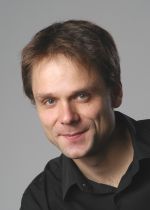
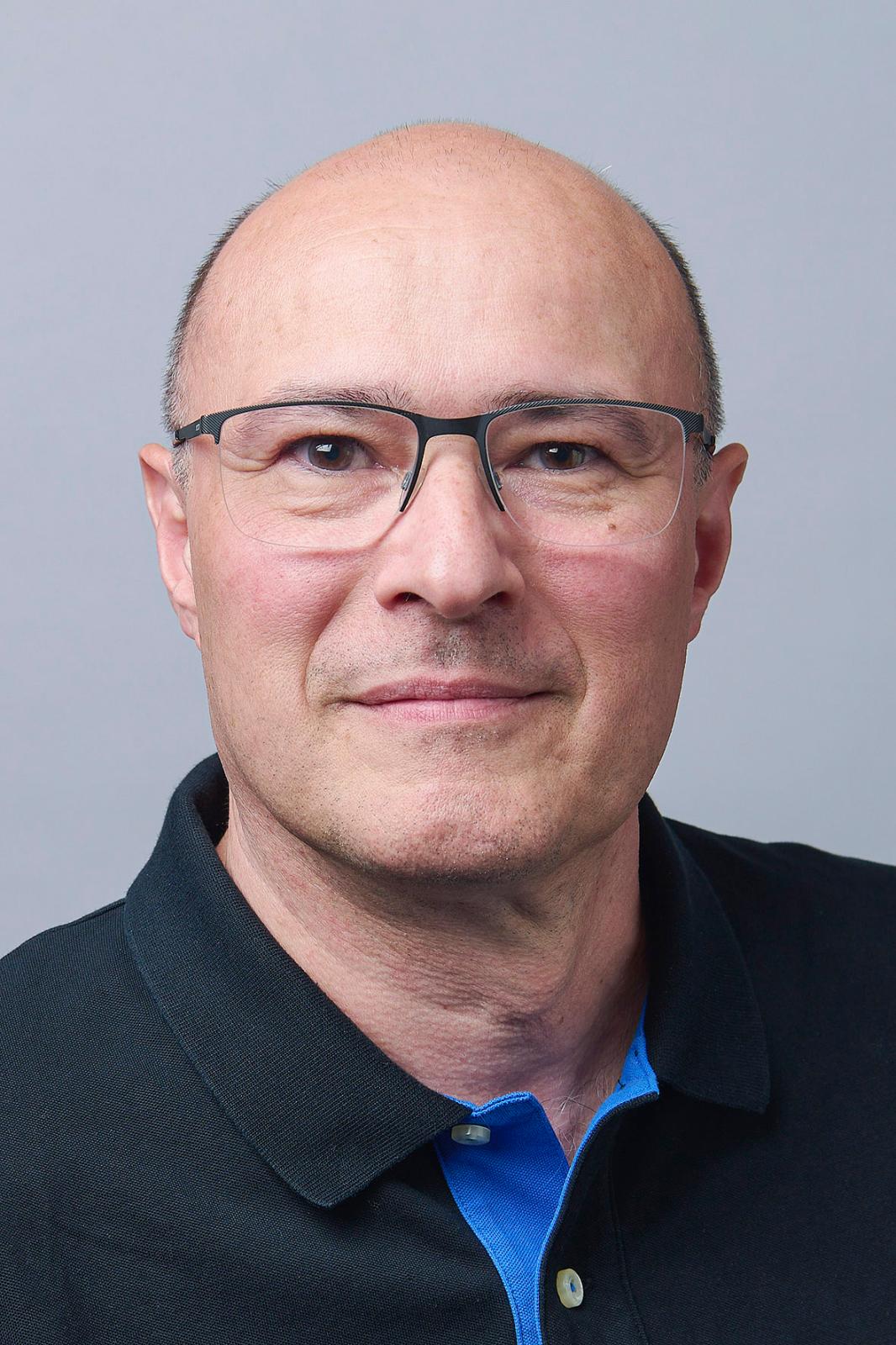
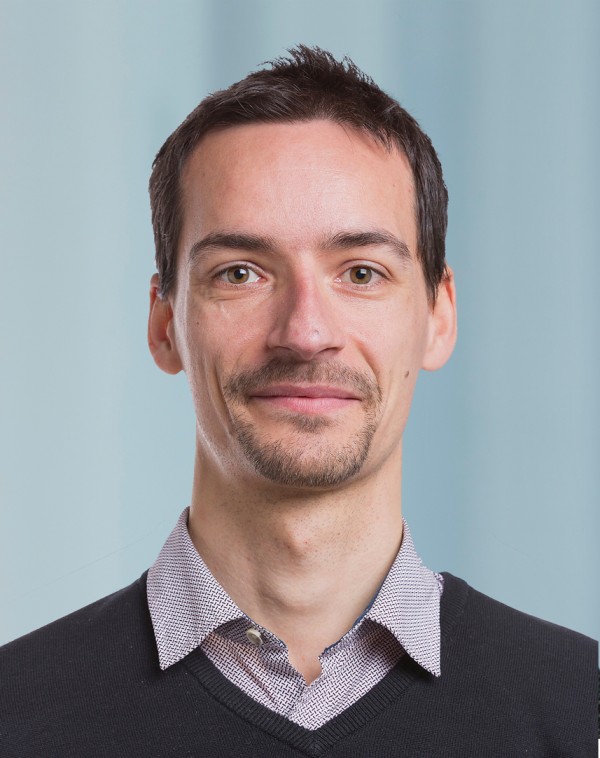
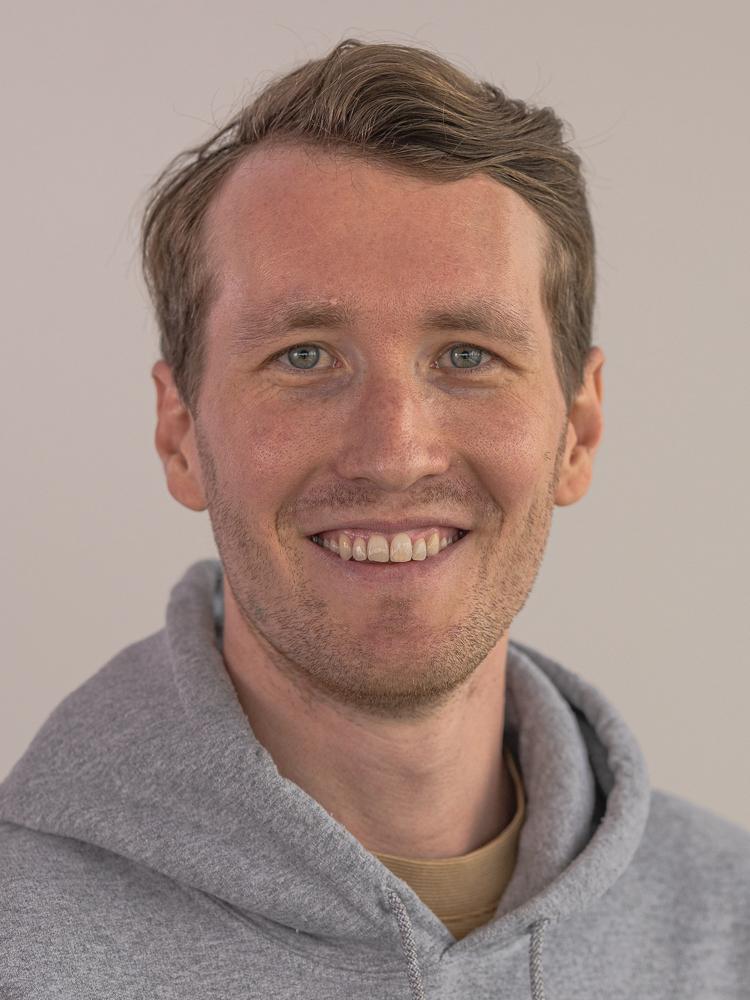
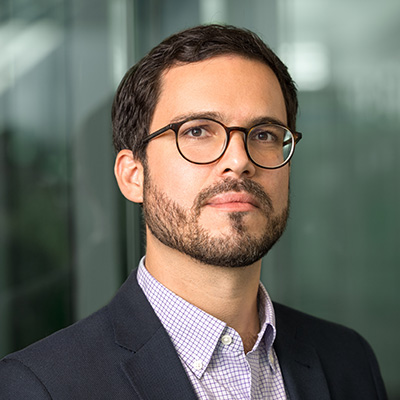
Prof. Dr. Alex Hall is an Associate Professor at the Department of Environmental Systems Science and Head of the Institute of Integrative Biology at ETH Zürich , Switzerland. He holds a PhD from the University of Edinburgh (2008), followed by postdoctoral work at the University of Oxford and ETH Zürich, including prestigious SNSF Ambizione and Marie Curie Intra-European fellowships. Research Focus: The Hall lab investigates Microbial interactions in human microbiomes Antibiotic resistance evolution Horizontal gene transfer dynamics Computational and in vitro modeling of microbial communities Evolutionary medicine applications Scientific Contributions: His recent studies analyze probiotic treatments for Staphylococcus aureus decolonization, strain-specific ecological success in gut microbiomes, and CRISPR-Cas system roles in plasmid conflicts. The lab employs computational frameworks combined with experimental validations. Scientific Awards: SNSF Ambizione fellowship Marie Curie Intra-European fellowship He also serves on the SNSF PRIMA fellowship evaluation panel and the ETH Zürich Coordination Council Medicine .
Adam B. Badawi is a Professor of Law at the University of California, Berkeley - School of Law, where he maintains an active research agenda at the intersection of law, finance, and corporate governance. His scholarly work has established him as a leading expert in contract law, M&A transactions, securities litigation, and ESG compliance. Professor Badawi's research interests span multiple dimensions of corporate law and legal theory. His work on contractual complexity, particularly in debt agreements and M&A transactions, has provided significant insights into how legal drafting affects economic outcomes. He has extensively examined the business judgment rule, board authority, and the role of courts in corporate governance. More recently, his research has expanded into ESG-related topics, analyzing how environmental, social, and governance considerations intersect with traditional corporate law frameworks. His methodological approach often combines legal analysis with empirical techniques, including text analysis of legal documents and event studies of litigation outcomes. Professor Badawi's scholarly output demonstrates consistent high-impact research across multiple domains of corporate law. His early work focused on foundational aspects of contract theory and interpretation, while his more recent publications reflect growing interest in ESG metrics, executive compensation structures tied to sustainability goals, and the evolving regulatory landscape. The trajectory of his research shows a progression from theoretical legal analysis toward increasingly empirical and interdisciplinary approaches that bridge law with finance and data science. Professor Badawi has collaborated with numerous scholars across different institutions, including Duke University, Stanford Law School, and the University of Chicago Law School, reflecting the interdisciplinary nature of his work and its relevance to multiple academic communities.
Swiss Federal Institute of Technology in LausanneSwitzerland
Michael Gastpar is a full Professor at École Polytechnique Fédérale de Lausanne (EPFL) in the School of Computer and Communication Sciences, where he leads the Laboratory for Information in Networked Systems (LINX). He previously held faculty positions at the University of California, Berkeley (2003-2011, earning tenure in 2008) and Delft University of Technology. His research spans information theory, signal processing, communications, and systems neuroscience. His research interests focus on network information theory and related coding and signal processing techniques, with applications to sensor networks and neuroscience. Recent work demonstrates a strong shift toward exploring the theoretical foundations of modern machine learning, particularly investigating transformer architectures from an information-theoretic perspective. His research group at EPFL explores how information theory principles can provide fundamental limits and novel approaches for contemporary machine learning problems. His recent publications reveal a clear trend toward bridging classical information theory with modern machine learning. The 15 most recent papers show increasing focus on theoretical analysis of transformers, rate-distortion frameworks for language models, universal prediction methods, and applications of information measures to machine learning theory. This represents a strategic evolution from his earlier work on sensor networks and physical-layer network coding toward foundational questions in artificial intelligence. Scientific Awards: IEEE Fellow 2013 Communications Society & Information Theory Society Joint Paper Award Information Theory Society Distinguished Lecturer (2009-2011) ERC Starting Grant (2010) Okawa Foundation Research Grant (2008) NSF CAREER award (2004) 2002 EPFL Best Thesis Award Professor Gastpar has advised over 20 PhD students who have gone on to successful careers in both academia and industry. His research has been generously supported by major grants including an ERC Starting Grant "ComCom" (2011-2016) and ongoing support from the Swiss National Science Foundation. He has served in significant editorial roles, including as Associate Editor for Shannon Theory for the IEEE Transactions on Information Theory (2008-11) and as Technical Program Committee Co-Chair for the IEEE International Symposium on Information Theory in 2010 and 2021. He leads the Laboratory for Information in Networked Systems (LINX) at EPFL, which brings together researchers working at the intersection of information theory, machine learning, and networked systems. The lab maintains strong connections with both theoretical research communities and practical applications in communications and neuroscience.
Philippe Christe is an Associate Professor in the Department of Ecology and Evolution at the University of Lausanne (UNIL), Faculty of Biology and Medicine. His research centers on host-parasite interactions, with a focus on bats, birds, and their ectoparasites, integrating behavioral, physiological, and genetic approaches. He leads the Christe Group, which investigates evolutionary and ecological dynamics in host-parasite systems, particularly avian malaria and bat-mite relationships. He is actively involved in conservation initiatives, including the Jorat Peri-Urban Nature Park, and collaborates with KORA on human-wildlife interactions. Bachelor's degree in biology, UNIL (1989) PhD in Zoology and Animal Ecology, UNIL (1994) Philippe Christe’s research interests lie at the intersection of parasitology, evolutionary ecology, and conservation biology. He investigates how host defenses evolve in response to parasitic pressures, examining trade-offs between immunity and life history traits such as reproduction and survival. His work often integrates field studies with experimental and molecular techniques. Key model systems include Parus major (great tit) and Culex pipiens in avian malaria, and bat species with their ectoparasitic mites. He also explores broader ecological interactions, including predator-prey dynamics and wildlife conservation in human-modified landscapes. His recent publications reflect a strong emphasis on disease ecology, wildlife conservation, and molecular methods. Articles span topics such as avian malaria transmission, lynx population dynamics, snow leopard behavior, and habitat fragmentation effects on insects. These works employ advanced techniques like DNA metabarcoding, spatial modeling, and long-term monitoring, demonstrating a trend toward interdisciplinary, data-driven ecological research with direct conservation applications. Dubois Foundation Prize for an educational CD-Rom on bats (2004) Communication Award from the Faculty of Biology and Medicine of UNIL (2017) Philippe Christe has supervised numerous PhD and Master’s students, contributing significantly to training the next generation of ecologists and evolutionary biologists. His group collaborates widely with institutions such as the Museum of Zoology in Lausanne and KORA, and participates in large-scale conservation projects involving snow leopards, lynx, and bats. He has been involved in research grants related to host-parasite coevolution, wildlife monitoring, and conservation strategies. His leadership in establishing the Jorat Peri-Urban Nature Park and involvement in the UNIL Interdisciplinary Center for Mountain Research highlight his commitment to applied science and environmental stewardship. He leads the Christe Group, which conducts research on host-parasite coevolution, with a focus on bats and their ectoparasites, and birds affected by avian malaria. The group combines fieldwork, laboratory experiments, and molecular analyses, and includes post-docs, PhD students, and technical staff. Collaborations extend to researchers in Bern, Paris, and Spain, fostering an international and interdisciplinary research environment.
Swiss Federal Institute of Technology in LausanneSwitzerland
Inès Lamunière is an Honorary Professor at École Polytechnique Fédérale de Lausanne (EPFL), where she previously held roles including Full Professor and Chair of the Department of Architecture (2008–2011). She is also a renowned architect, leading the firm dl-a, designlab-architecture SA in Geneva. Her academic career includes positions as Adjunct Professor at ETH Zurich (1991) and Visiting Professor at Harvard University’s Graduate School of Design (1996, 1999, 2008). She directed the LAMU-EPFL Laboratory (2001–2018), focusing on urban architecture and mobility. Education: Architect degree from EPF Lausanne (1980), followed by studies at the Swiss Institute in Rome and assistant lectureship under Werner Oechslin at ETH Zurich. Research Interests: Urban planning, sustainability, architectural history, and the integration of infrastructure into urban environments. Notable projects include the revitalization of Bellerive-Plage and the LAMU Laboratory’s studies on risky urban objects. Awards: 2011 Meret Oppenheim Prize (Swiss Art Award) and 2017 Chevalier des Arts et Lettres (France). Her work emphasizes context-sensitive design and sustainable urban development. She has supervised numerous theses and contributed to publications on architectural pedagogy, urban theory, and historical analyses of Le Corbusier’s work. Active in academic governance, she served as Vice President of the EPFL WISH Foundation (2006–2016) and on the Fondation pour le Développement des Arts et de la Culture board since 2016.
Nathalie Pignard-Cheynel is a Full Professor of Journalism and Digital Communication at the University of Neuchâtel since 2020, where she leads cutting-edge research on digital transformations in journalism. Previously, she held academic positions at the University of Neuchâtel (Assistant Professor, 2016-2020), University of Lorraine (2013-2016), and Grenoble 3 University (2005-2013), where she earned her doctorate in Information and Communication Sciences (2004). Doctorate in Information and Communication Sciences, University of Grenoble 3 (2004) Full Professor of Journalism and Digital Communication, University of Neuchâtel (2020-present) Assistant Professor in Digital Journalism, University of Neuchâtel (2016-2020) Lecturer in Information and Communication Sciences, Grenoble 3 University (2005-2013) Her research focuses on: Mutations in journalistic practices during digital transformations Social media usage by journalists, media, and audiences Participatory journalism and media-audience relationships Journalism and data practices Disinformation content dissemination and reception Platformization of information and algorithmic roles Digital formats analysis in journalism She has led multiple funded research projects including: PANDA (2023-2026, CHF 499,986) on pandemic data communication #sad2 (2021-2022, CHF 138,460) on disinformation architectures LINC (2018-2021, CHF 184,586) on local journalism innovation International collaborations on pandemic communication and digital media Her teaching includes: Digital technology courses for economics students NewsLab projects for journalism master's students Advanced seminars on digital media and communication Innovative journalistic format production She serves in leadership roles for: President of the Scientific Council, Initiative for Media Innovation (2018-2022) Board Member, Hirondelle Foundation (2021-present) Editorial Board Member, Cahiers du journalisme (2020-present) Qualis Commission, University of Neuchâtel (2019-present)
Prof. Flavio Anselmetti is a Full Professor of Quaternary Geology and Paleoclimatology at the University of Bern , where he has been employed since 2012. He also serves as the Managing Director of the Institute of Geological Sciences . Prior to this, he held significant roles at ETH Zurich, including SNSF Assistant Professor, and at EAWAG Dübendorf as Head of the Sedimentology Group, while remaining a Titular Professor at ETH Zurich until 2012. His academic training includes a Diploma in Geology (1990) from the University of Basel , followed by a PhD (1994) from ETH Zurich and University of Miami (USA) . He spent three years as a Postdoctoral Fellow and Research Associate at the University of Miami between 1994 and 1997. Paleoseismology : Using lacustrine and marine sediments to reconstruct earthquake and tsunami records Climate Change Studies : Investigating Holocene and Pleistocene climate shifts through sediment cores Sediment Dynamics : Analyzing source-to-sink systems and glacial sediment properties His recent publications focus on sedimentary archives in Science Advances , Quaternary Research , and Environmental Modelling and Software , with an emphasis on deep learning applications in sediment analysis , multi-proxy paleoenvironmental reconstructions , and human impact assessments over millennia. He has contributed to major projects in the Alpine foreland and Caribbean regions . Prof. Anselmetti leads the Quaternary Geology and Paleoclimatology Research Group and collaborates with international teams on ICDP-DOVE drilling campaigns and multibeam bathymetry mapping in Swiss lakes. His work extends to geohazard assessment , carbonate-siliciclastic shelf dynamics , and subaqueous fault analysis in active tectonic zones.
Marcus Christl is a Lecturer at the ETH Zürich Department of Physics and Head of the Laboratory of Ion Beam Physics (LIP) . His academic profile focuses on Accelerator Mass Spectrometry (AMS) , cosmogenic nuclide dating, and environmental applications of isotope geochemistry. Office: HPK H 33, Otto-Stern-Weg 5, 8093 Zürich, Switzerland Phone: +41 44 633 38 84 / +41 44 633 65 07 Email: mchristl@phys.ethz.ch ORCID: 0000-0002-3131-6652 Dr. Christl teaches courses in Accelerator Mass Spectrometry and Quaternary Dating Methods , including: 402-0180-00L Ethics and Scientific Integrity for Doctoral Students in Physics 402-0620-00L Current Topics in Accelerator Mass Spectrometry and Its Applications 402-0621-00L Introduction to Accelerator Mass Spectrometry His research spans multiple disciplines through cosmogenic isotope analysis: Climate Science : Using 10 Be and 14 C records to reconstruct solar activity cycles and climate fluctuations over millennial timescales Geochronology : Developing novel dating techniques using 36 Cl/ 10 Be ratios for ice cores and landscape features Geomorphology : Quantifying erosion dynamics in diverse environments from the Alpine foreland to South African pediments Oceanography : Tracing Atlantic water transport patterns using 129 I– 236 U dual tracers Radiochemistry : Advancing methods for nuclear forensics and environmental pollutant analysis Recent publications reveal trends in: Refining AMS systems for analyzing transuranic elements Quantifying landscape evolution through multi-isotope approaches Understanding ocean circulation pathways using artificial radionuclides Investigating soil dynamics in glaciated and tropical environments Correlating cosmogenic production with sea level and climate changes
Daniel Farinotti is a Professor of Glaciology at the Department of Civil, Environmental and Geomatic Engineering at ETH Zurich and at the Swiss Federal Institute for Forest, Snow and Landscape Research (WSL). His work focuses on understanding glacier evolution and its impacts on water resources across mountainous regions globally. Dr. Farinotti's research interests center on glaciological modeling and its applications to water resource management. His expertise includes estimating glacier ice thickness from surface properties, long-term modeling of glacier mass changes, quantifying runoff contributions from glaciated catchments, and implications for water management in high mountain areas. His research integrates field observations, remote sensing data, and numerical modeling to address critical questions about glacier response to climate change. Dr. Farinotti's scientific achievements have been recognized with prestigious awards including the 2017 Nature Research Award for Outstanding Achievements in Review and the 2013 Award for Outstanding Contributions to Review from the Journal of Geophysical Research - Earth Surface. His publications demonstrate a consistent pattern of high-impact research across glaciology, hydrology, and climate science, with particular emphasis on the interactions between glacier dynamics and water resources. As a principal investigator, Dr. Farinotti has secured significant research funding from organizations including the Swiss National Foundation and German Federal Foreign Office. His work often involves international collaborations across multiple institutions, reflecting the global nature of glacier research and its implications for water security. He maintains active involvement in major scientific initiatives focused on glacier monitoring and climate change impacts. Dr. Farinotti leads the Glaciology research group at ETH Zurich's Laboratory of Hydraulics, Hydrology and Glaciology (VAW), which conducts fieldwork across multiple mountain ranges globally. The group employs advanced techniques including geophysical surveys, remote sensing, and numerical modeling to investigate glacier dynamics and their hydrological impacts.
Yves Marc Räth is a Ph.D. researcher at the ETH Zürich within the Department of Civil, Environmental, and Geomatic Engineering (D-BAUG). His work intersects urban morphology, historical settlement analysis, and network modeling. Education: MSc in Spatial Development and Infrastructure Systems (2018-2020), BSc in Geography (2015-2018) at University of Zurich Research focuses on urbanization patterns , settlement network evolution , and geospatial time series analysis . Key projects include the EMPHASES study on socio-ecological systems and HistoRiCH research on historical river landscapes. Recent publications analyze settlement archetypes through ResearchGate projects, with a 2025 Cities journal article identifying five distinct urban development pathways on the Swiss Plateau since 1899. His 2023 Scientific Reports study examines morphological homogeneity in small settlements near urban centers. Current affiliations include: Ph.D. Researcher at Institute for Spatial and Landscape Development Visiting Scholar at Urban Systems Lab, New York City (2024) Contributor to Swiss transport planning at INFRAS and EBP Technical expertise spans: Historical map digitization Building footprint analysis Commuter flow modeling Predictive urban archetypes
Prof. Dr. Christoph Oberlack is an affiliated Professor of Sustainability Governance at the University of Bern's Institute of Geography and the Centre for Development and Environment (CDE). His work focuses on institutional barriers to climate adaptation, land-use governance, and sustainable development. He holds a PhD in Institutional Economics of Climate Adaptation from the University of Freiburg (2015). Research Interests: - Sustainability governance frameworks - Deforestation-free supply chains - Climate adaptation policies - Telecoupling in socio-ecological systems - Environmental justice in global value chains - Archetype analysis methodologies Recent work explores implementation challenges of EU deforestation regulations in Peru's cocoa/coffee sectors and gender equity in cacao cooperatives. He frequently collaborates with international organizations and policymakers to translate research findings into actionable strategies. Key contributions include developing diagnostic frameworks for institutional analysis in climate adaptation contexts. Publications span 20+ peer-reviewed journals including Nature Climate Change and Global Environmental Change. He actively participates in international conferences such as POLLEN and Swiss Geoscience Meetings. Current research emphasizes participatory approaches to landscape governance and private sector roles in sustainability transitions.
Daniel Vogler is a Senior Research and Teaching Associate and Head of Research at the University of Zurich , affiliated with the Institute of Communication Science and Media Research (IKMZ) . He serves as Deputy Director of the fög – Research Center for Public Opinion and Society , with a career spanning over 15 years in academic communication research. Education: Communication Science, Political Science, and Ethnology at University of Zurich (2003-2013), culminating in a 2020 PhD on Media Reputation of Universities . His research focuses on Journalism Research, Public Relations, Online Communication, Crisis Communication, and Computational Social Science , with notable work on media reputation dynamics, AI's impact on journalism, and crisis-driven norm formation. Recent publications analyze Swiss media ecosystems using automated content analysis and longitudinal studies. Key awards include the 2023 ICA Health Communication Top Paper Award and the 2020 ICA Best Student Paper Award . He contributes to editorial boards of journals like the International Journal of Crisis and Risk Communication Research and co-edits the Yearbook Quality of the Media – Switzerland .
Karina Liechti is a Senior Research Scientist at the Centre for Development and Environment (CDE) of the University of Bern . Her work focuses on governance of natural resources , commons , traditional irrigation systems , and mountain agriculture , with field experience in the Swiss Alps , Kyrgyzstan , Tanzania , and Mongolia . She is multilingual in German , English , French , Italian , and Russian . Research Focus: Liechti examines societal transformation processes linked to land use , protected areas , and climate adaptation . Her recent publications analyze forest fire risk communication , traditional irrigation as cultural heritage , and future Swiss landscapes under +4°C warming scenarios . Network Affiliations: She collaborates with organizations like the International Centre for Traditional Irrigation in Europe (IZTB) , Swiss Landscape Protection Foundation , and Forum Landscape, Alps, Parks (FoLAP) . Methodological Expertise: Liechti employs interdisciplinary approaches, integrating social anthropology , conflict mediation , and field research to study cultural landscapes and resource governance .
Dr. Maria Giuditta Fellin is a Lecturer at the Department of Earth and Planetary Sciences at ETH Zurich, affiliated with the Institute of Geochemistry and Petrology. She is part of the Earth Surface Dynamics Group and specializes in low-temperature thermochronology, using fission-track and (U-Th)/He dating techniques on zircon and apatite to study mountain belt exhumation and erosion processes. Her work focuses on linking tectonic activity, erosion patterns, and long-term landscape evolution. Her research spans global tectonic regions including the Pamir, Alps, Apennines, and Andes. She teaches courses on sedimentary petrography, microscopy, geochronology, and climate-soil-water interactions. No specific scientific awards are listed in the provided information. Her technical expertise includes advanced geochronological methods and quantitative modeling of tectonic-erosional systems.
Benno Albrecht is a faculty researcher at Università Iuav di Venezia , affiliated with the Dipartimento di Culture del Progetto . His work focuses on architectural composition, urban planning, and historical reconstruction, particularly in post-conflict and post-disaster contexts. Lead researcher on projects like BoSS - Bauhaus of the Seas Sails (EU Horizon) and Atlante del 'sistema Mediterraneo' Specializes in sustainable urban development and cultural heritage preservation Active in public engagement through exhibitions and conferences His recent publications and projects emphasize innovative design strategies for urban resilience, with a focus on Mediterranean and Venetian contexts. He collaborates with research groups including FEEM@IUAV and Urbicide Task Force .