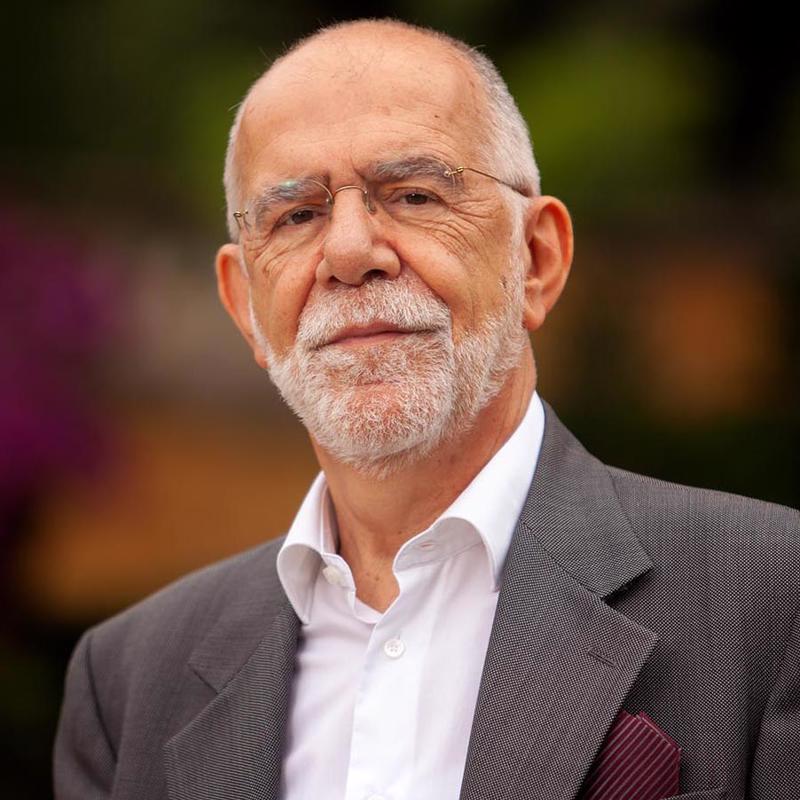
Vera M. Hesslinger is a Researcher at the Department of General Psychology and Methodology , Faculty of Human Sciences, Otto-Friedrich-Universität Bamberg. She earned her PhD in Experimental Psychology from Johannes Gutenberg University Mainz , supervised by Univ.-Prof. Dr. Heiko Hecht. Her work focuses on the perception and experience of art , cognitive maps , and social perception dynamics . Research Interests : Art perception, cognitive processing of visual ambiguity, social factors in aesthetics, and psychophysical analysis of color and depth perception. Key Contributions : Co-authored studies on the Mona Lisa’s 3D implications, #TheDress color perception, and social conformity in aesthetic judgments. Explored semantic instability in art and cognitive mapping. Recent Trends : Her 2022-2023 publications examine analytic vs. synthetic art perception and cross-cultural emptiness in architecture , reflecting a blend of experimental psychology and applied aesthetic research. Teaching : Conducts seminars on perception and observation exercises for BSc Psychology students, emphasizing empirical methods. Contact : Located at Markusplatz 3, Bamberg; office hours by appointment via email vera.hesslinger@uni-bamberg.de .
Univ.-Prof. Dr. Carsten Winter is a Professor of Media and Music Management at the Department of Journalism and Communication Research, Hanover University of Music, Drama and Media. He focuses on historical and systematic research of media development at the intersection of culture, economy, and politics, with particular emphasis on networked media, music industry transformations, and transdisciplinary communication studies. Department: Journalism and Communication Research University: Hanover University of Music, Drama and Media Research Areas: Media Development, Cultural Studies, Music Economy, Digital Transformation Research Interests center on the evolution of media as cultural artifacts, their role in societal change, and the strategic management of media and music industries. He explores how digital networks reshape music production, distribution, and consumption, advocating for inclusive and sustainable cultural policies. Academic Contributions include co-founding the Society for Music Economy and Music Culture Research (GMM e.V.) and serving on editorial boards like the International Journal of Music Business Research . His work bridges media theory, cultural management, and socio-economic analysis. Key Themes: Mediatization, Prosumer Dynamics, Cultural Policy, Music Networks Leadership: Speaker of the Master Program 'Media and Music' (2008–2013) Methodology: Transdisciplinary frameworks combining communication studies, cultural theory, and management research
Professor Neil Arnold is a faculty member at the University of Cambridge , affiliated with the Department of Geography and serving as Director of the Scott Polar Research Institute . He holds multiple college roles including Fellow, College Lecturer, and Director of Studies at St John's College. Research Focus: Arnold's work spans Earth and Mars, examining glacier melt dynamics, subglacial hydrology, and planetary geomorphology. He employs field studies, numerical modelling, and remote sensing across diverse locations including the Alps, Himalaya, Svalbard, Iceland, Greenland, Antarctica, and Mars. Key Article Trends: His publications focus on Martian glaciology (subglacial water, debris-covered glaciers), Antarctic ice shelf meltwater (slush contributions, surface hydrology), and Greenland Ice Sheet processes (lake drainage, meltwater impacts). Methodologies emphasize numerical modelling, remote sensing, and comparative planetary analysis. Scientific Awards: Fellow of the Royal Geographical Society (FRGS)
William Dickson Cunningham is a Professor in the Department of Environmental Earth Science at Eastern Connecticut State University, where he has been since 2012. He is an internationally recognized expert in global tectonics and mountain building processes, with 35 years of fieldwork in Central Asia, the Andes, Alps, Antarctica, and the southwestern United States. His research has been cited over 5,200 times, and he has presented at international conferences in 15+ countries. Prior to Eastern Connecticut, he served as Senior Lecturer at the University of Leicester for 18 years. Education Ph.D., University of Texas at Austin (1993) M.S., University of Arizona (1986) A.B., Dartmouth College (1982) His research interests focus on mountain building processes , active fault systems , intracontinental deformation , and earthquake hazards . He also investigates the tectonic history of Connecticut , neotectonics , and LiDAR applications in tectonic studies . Recent publications highlight fault kinematics in western China, crustal reactivation, and earthquake risk assessment. Professor Cunningham has supervised over 40 senior projects, M.Geol. theses, and Ph.D. students in structural geology, tectonics, and remote sensing. His scientific awards include the ECSU Distinguished Professor Award (2019) , Antarctic Service Medal (1990) , NSF Postdoctoral Research Associate (1993-1994) , and European Commission Marie Curie Fellowship (1999) . He has led domestic and international field courses in Arizona, Idaho-Wyoming, and Iceland.
Professor Dame Alison Wolf, Baroness Wolf of Dulwich, is the Sir Roy Griffiths Professor of Public Sector Management at King’s Business School, King's College London. She is a cross-bench peer in the UK House of Lords and a leading expert on education policy, skills, and the relationship between education and the labor market. Her work integrates academic research with high-level policy influence, particularly in vocational education, higher education reform, and lifelong learning. Education: MA and MPhil from the University of Oxford, and studies at the University of Neuchâtel Early Career: Policy analyst in the U.S. federal government Professional Affiliation: Visiting Professor at the Institute of Education, University of London Alison Wolf’s research centers on public sector management, higher education policy, qualifications frameworks, and labor market skills. She has long-standing interests in assessment systems, mathematics education, and the role of universities in society. Her influential publications include The XX Factor (2013), which examines the societal transformation driven by working women, and numerous policy reports on vocational training, apprenticeships, and post-18 education. Her recent scholarly output reveals a sustained focus on the evolution of the UK’s education landscape, particularly the impact of funding models, reputation, and rankings on universities. She has also contributed to interdisciplinary efforts, including a 2023 publication with the IceCube-Gen2 Collaboration in astrophysics, indicating broad academic engagement. Her work emphasizes evidence-based policy, critiques of one-size-fits-all approaches, and the need for flexible, responsive education systems. CBE for services to education (2012 Queen’s Birthday Honours) Dame Commander of the Order of the British Empire (DBE) (2024 King’s Birthday Honours) Sam Aaronovitch Memorial Prize (2008) Alison Wolf has played a pivotal role in shaping national education policy. She led the 2011 Wolf Review of Vocational Education, contributed to the Augar Review (2019), advised the Prime Minister on skills policy (2020–2023), and helped draft the Skills and Post-16 Education Act 2022 and the Lifelong Learning Act 2023. She also served as a non-executive director for the Department for Science, Innovation and Technology (2023–2024) and advises on the UK’s Levelling Up strategy. She was the founding Chair of Governors of King's College London Mathematics School and remains a trustee of the University Maths School Network (U-Maths), supporting mathematics education for 16–18-year-olds. She has directed the MSc in Public Services Policy and Management and has been a specialist adviser to the House of Commons Education Committee, a BBC Radio 4 presenter, and an advisor to international bodies including the OECD, European Commission, and ministries of education in New Zealand, France, and South Africa.
Gui Becker is an Associate Professor in the Department of Biology at Pennsylvania State University, where he investigates critical intersections of disease ecology, microbiome dynamics, and conservation biology with a focus on amphibian populations. As an Affiliate Researcher in Penn State's Climate and Natural Systems theme, his work addresses environmental change impacts on wildlife disease in tropical ecosystems, particularly Brazil's Atlantic Forest and Cerrado biomes. His research spans four core areas: Disease Ecology: Mechanisms of fungal pathogens like Batrachochytrium dendrobatidis (Bd) in amphibian declines Microbiome Research: Protective roles of skin and gut microbiomes against disease Conservation Biology: Effects of habitat fragmentation, drought, and pollution on population viability Wildlife Disease Dynamics: Climate-pathogen interactions driving outbreaks Analysis of his 15 most recent publications reveals interdisciplinary trends combining field ecology, microbiome sequencing, and computational modeling. Key findings demonstrate drought-induced microbiome disruption increasing disease susceptibility, thermal mismatch effects on fungal virulence, and habitat fragmentation altering host-pathogen interactions. His work consistently links environmental stressors to disease outcomes, providing actionable insights for amphibian conservation in changing landscapes. Scientific Awards: No awards were mentioned in the provided text. Advising and Grants: The provided information does not specify student mentorship or grant funding details. Labs and Teams: Becker leads collaborative research across Brazil and North America, working with institutions in the Atlantic Forest region. His team integrates field ecologists, microbiologists, and conservation practitioners to address amphibian disease crises through the Climate and Natural Systems initiative at Penn State.
Christina Grozinger is a Professor in the Department of Entomology at Pennsylvania State University and serves as the Director of the Huck Institutes of the Life Sciences. Her research integrates genomics, molecular biology, and ecology to understand social behavior, chemical communication, and health in honey bees and other pollinators. She leads a highly collaborative and interdisciplinary research program focused on improving pollinator conservation and management. Her research interests include: Genomic and molecular basis of social behavior in insects Chemical communication and pheromone signaling in honey bees Host-parasite interactions and immune responses in pollinators Landscape genomics and environmental stress responses Pollinator conservation and sustainable beekeeping practices The recent articles (2024–2025) reflect a strong focus on applying cutting-edge molecular tools—such as transcriptomics, DNA metabarcoding, and machine learning—to address urgent conservation challenges. Themes include climate change impacts on bee fertility, viral infections in insect hosts, landscape-level pathogen dynamics, and the use of citizen science for monitoring firefly populations. Her work bridges fundamental biology with applied solutions for pollinator decline. Scientific awards and recognitions include: Distinguished Professor at Pennsylvania State University Publius Vergilius Maro Professor of Entomology Appointment to the National Academies Committee on Insect Declines Dr. Grozinger leads major research initiatives, including Scialog grants on environmental impacts on animal behavior, and advises numerous graduate students and postdoctoral researchers. She has secured significant funding for interdisciplinary projects, such as those combining ecological modeling with decision support systems for land managers. Her leadership extends to directing the Huck Institutes, where she fosters innovation across life sciences. She is actively involved in science communication and education, including courses on pollinator conservation that assess cognitive impacts on students. She leads research teams focusing on: The Grozinger Lab at Penn State, which studies molecular mechanisms of social behavior Interdisciplinary collaborations in landscape ecology, genomics, and conservation Citizen science and machine learning applications in pollinator monitoring Development of spatial decision support tools for ecological management
Guido Grosse is a prominent researcher specializing in permafrost dynamics, Arctic environments, and climate change impacts. His work explores geomorphological processes, carbon cycling, and remote sensing applications in polar regions. Research Interests: Quantifying permafrost degradation and its implications for Arctic landscapes Analyzing methane emissions from thermokarst lakes and their climate feedback mechanisms Developing remote sensing techniques to monitor high-latitude environmental changes Studying thermo-erosional valleys and fluvio-thermal interactions in ice-rich permafrost Assessing the vulnerability of permafrost landforms under global warming Investigating submerged talik refreezing in Siberian lake-lagoon systems Collaborative Networks: Guido has co-authored studies with experts from institutions like the Alfred Wegener Institute, University of Alaska Fairbanks, and Stockholm University. His recent publications integrate multi-sensor satellite data for enhanced environmental time series analysis.
Pier Luigi Parcu is a PartTime Lecturer at the Robert Schuman Centre for Advanced Studies of the European University Institute. He also serves as Director of the Centre for Media Pluralism and Media Freedom and the Centre for a Digital Society. His research focuses on industrial organization , law and economics , and the intersection of regulation and antitrust . In media studies, he examines digital platforms , media pluralism , and ownership concentration in media enterprises. He holds a Ph.D. in Economics from the University of California, Los Angeles (UCLA). Recent work includes analyzing EU competition law enforcement , media pluralism monitoring , and innovation models in technology. He supervises Annaliese Milano Merfield and has contributed to 6 publications in 2025.
Åsa Bergman is a Senior Lecturer in Cultural Studies at the University of Gothenburg , with a focus on musicology and aesthetics. Her work spans research, teaching, and critical analysis of music's role in identity formation, social inclusion, and mediatized culture. Her research explores: Classical music's evolution in digital/media landscapes Gender dynamics in jazz and music institutions El Sistema's educational and social integration models Emotional and political dimensions of music consumption Recent publications address marketing strategies of concert institutions, identity creation through music, and critical perspectives on equality in music education. While her articles span symphonic music commodification, feminist activism, and ethnographic methodologies, no scientific awards are explicitly mentioned. She teaches and supervises at both undergraduate and doctoral levels.
Mats Björkin is a Professor in the Department of Aesthetics at the University of Gothenburg. His research focuses on film distribution , industrial media culture , and technological/economic media history . Currently, he is developing methodological frameworks for analyzing organizational and technological influences on media evolution. His publications traverse diverse subfields but consistently examine media's role in societal transformation . Recent work includes analyses of 1950s youth fashion documentaries , WWI-era film logistics , and 1945-60 Swedish industrial modernization . Earlier contributions explore Swedish cinema's sexual revolution , peer-to-peer distribution , and media archaeology . Mats specializes in historical media ecologies through lenses of film logistics , corporate communication , and technological transitions . His work connects media historiography with contemporary issues like digital film preservation and gender representation in archives. Email: mats.bjorkin@filmvet.gu.se
Univ.-Prof. Dr. Hubert Job is a Senior Professor of Geography and Regional Research at the Institute of Geography and Geology, Faculty of Philosophy, University of Würzburg. His work bridges spatial planning, regional development, and environmental economics with regional focus on Central Europe, the Alps, and Africa. Research Interests : Protected area management, ecological connectivity, sustainable tourism economics, socio-economic impact analysis, cultural landscape preservation, and transnational spatial governance. Projects : Leads PlanToConnect (€301,000 sub-budget) for ecological corridor integration in Alpine spatial systems, contributes to multi-regional input-output analyses (DBU-funded), and evaluates nature tourism impacts in Lüneburger Heide, Wadden Sea, and Bavarian Forest National Parks. Awards : Recipient of the Austrian Geographical Society's Hans Bobek-Preis (2000) for exceptional contributions to geographical research. Collaborations : Chairs ARL European Working Group AlpPlan, collaborates with institutions across Sweden, Mexico, Tanzania, and Italy, and integrates UNESCO MAB frameworks into Alpine conservation.
Simone Marsi is a Research Fellow at University of Parma and Adjunct Professor of Contemporary Italian Culture at University of Urbino . Their work bridges literary historiography, contemporary Italian literature, and didactic innovation. PhD in Philological-Literary, Historical-Philosophical and Artistic Sciences from University of Parma Research explores contemporary Italian literature (with focus on authors like Rebora, Satta, Gadda), literary canon formation processes during Italy's unification, and literature-science-environment intersections . Recent publications examine spatial representation in visual-literary works, Dante's modern pedagogical adaptations, and fascist traces in educational materials. Current articles (2024-2022) reveal a trajectory through literary historiography , geocritical analysis , and ecocritical frameworks . Key trends include textbook evolution , gender studies in canon debates, and digital humanities approaches to memory.
Philippe Steer is an Assistant Professor at Geosciences Rennes, University of Rennes, and a junior member of the Institut Universitaire de France. His research bridges climate, tectonics, and surface processes, with a focus on stochastic events like earthquakes and typhoons shaping mountain landscapes. University: University of Rennes Department: Geosciences Rennes Academic Rank: Assistant Professor Scientific Initiative: Institute member, ERC FEASIBLe Project Leader Steer’s work explores the feedback between tectonic deformation and erosion during seismic cycles, using numerical models to analyze landslides, river dynamics, and carbon fluxes. Key projects include the ERC-funded FEASIBLe (2019-2025) and ANR EROQUAKE (2014-2019). Recent publications reveal trends in climate-tectonic interactions , post-earthquake landscape recovery , and 3D sediment transport quantification . His modeling approaches integrate stochasticity in natural hazards and long-term geomorphological evolution. Scientific Recognition: Junior Member, Institut Universitaire de France ERC Starting Grant (FEASIBLe, 1.5M€) ANR JCJC Grant (EROQUAKE, 200k€) Steer has advised four PhD students and collaborated with postdoctoral researchers on topics spanning landslide mechanics , fjord erosion , and glacial landscape evolution . His work contributes to understanding how extreme events drive Earth’s surface dynamics across timescales.
Hans-Georg Beyer is a Research Professor for Operations Research, Modeling and Simulation at the Vorarlberg University of Applied Sciences in Dornbirn, Austria, where he leads research at the Research Center Business Informatics (formerly Center Process and Product Engineering). He is also a Co-opted Member of the Faculty of Engineering, Computer Science, and Psychology at Ulm University, Germany. Previously, he held positions at the Chair of Systems Analysis at the Department of Computer Science of the University of Dortmund, Germany, including as a Professor of Computer Science. Dr. Beyer's research focuses on Evolutionary Computation, particularly Evolution Strategies and Genetic Algorithms, with significant contributions to theoretical analysis and practical applications. His work spans Computational Intelligence, Natural Computing, and various optimization techniques including noisy and constrained optimization. He has made substantial advancements in Matrix Adaptation Evolution Strategies (MA-ES), developing algorithms that efficiently handle large-scale and constrained optimization problems by learning correlations between decision variables. His recent publications demonstrate a clear trend toward analyzing Evolution Strategies in highly multimodal landscapes, with particular focus on the Rastrigin and Griewank functions as benchmark test cases. Beyer's research has evolved from theoretical foundations to practical implementations, with a strong emphasis on understanding population sizing, self-adaptation mechanisms, and convergence properties in complex optimization scenarios. His work bridges theoretical analysis with practical algorithm design, making significant contributions to the field of evolutionary computation. Editor-in-Chief of Journal Evolutionary Computation (MIT-Press, 2010-2016) Associate Editor of IEEE Transactions on Evolutionary Computation (1997-2021) Member of VDI/VDE GMA Fachausschuss 5.14 Computational Intelligence Member of ACM Special Interest Group for Genetic and Evolutionary Computation Author of the Springer book "The Theory of Evolution Strategies" Beyer has led several significant research projects including the FWF project "Evolutionary Global Optimization in Highly Multimodal Landscapes" (P 33702) and the FWF project "Evolution Strategies for Constrained Optimization." His research group has developed practical implementations of Evolution Strategies, including fast MA-ES with O(N^2) complexity, Meta MA-ES (Bi-Population MA-ES), and Limited Memory MA-ES (LM-MA-ES) for large-scale optimization problems. He regularly contributes tutorials at major conferences including GECCO and WCCI, sharing his expertise on Matrix Adaptation Evolution Strategies with the broader research community.