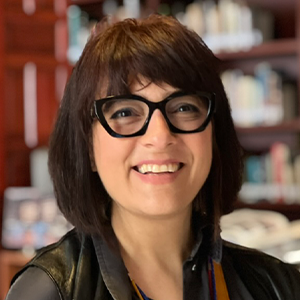
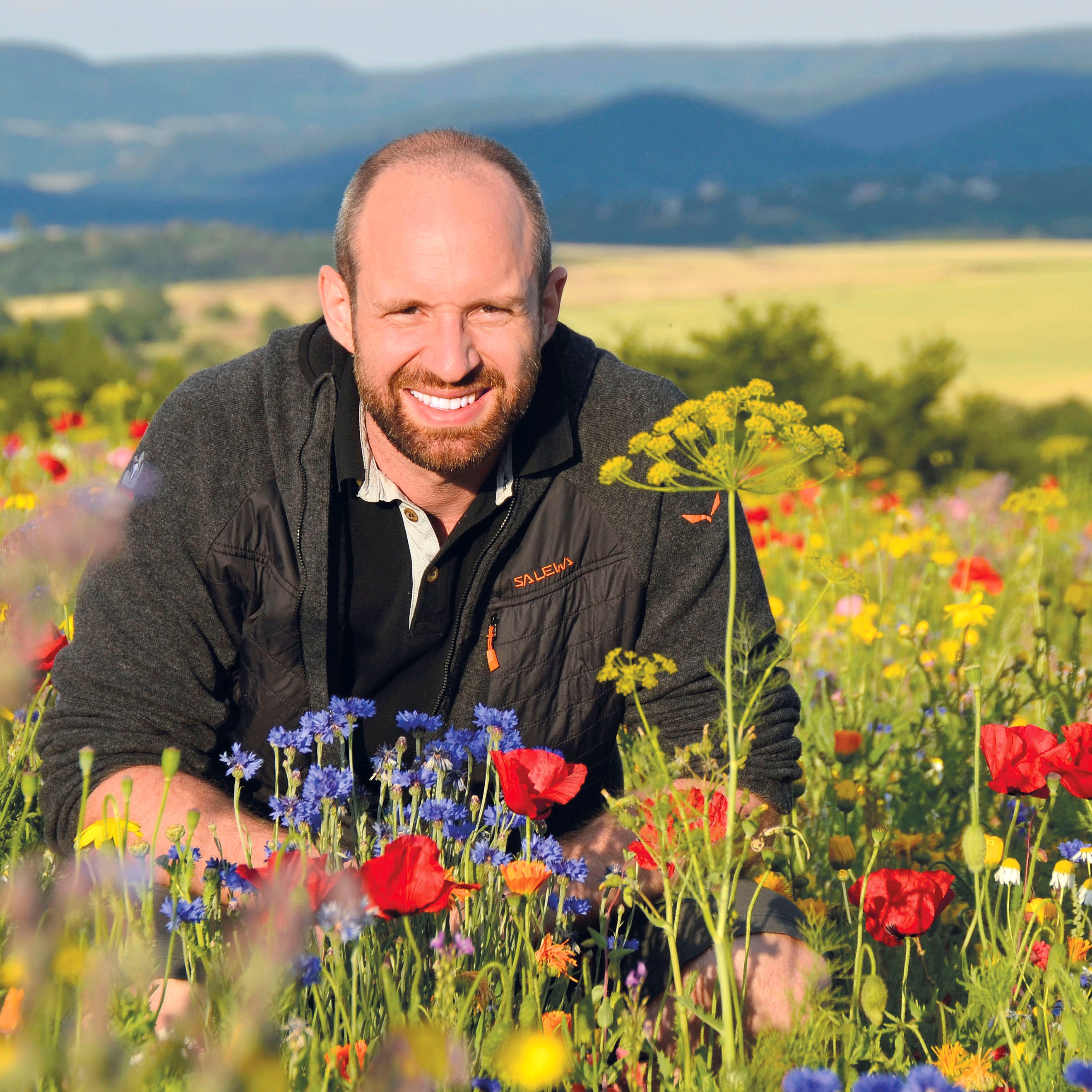
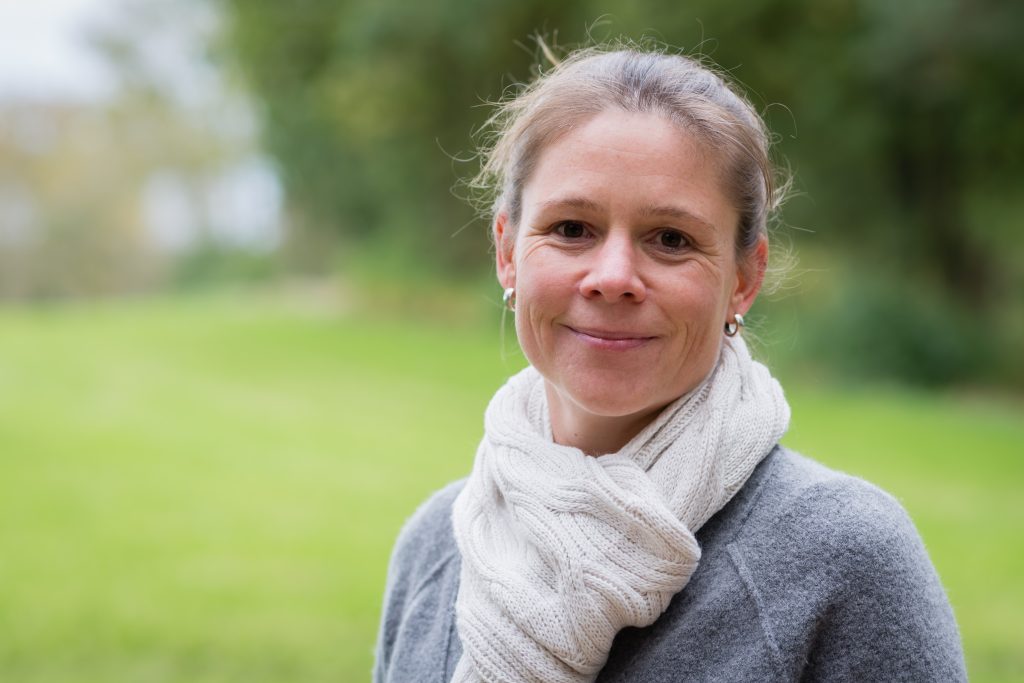
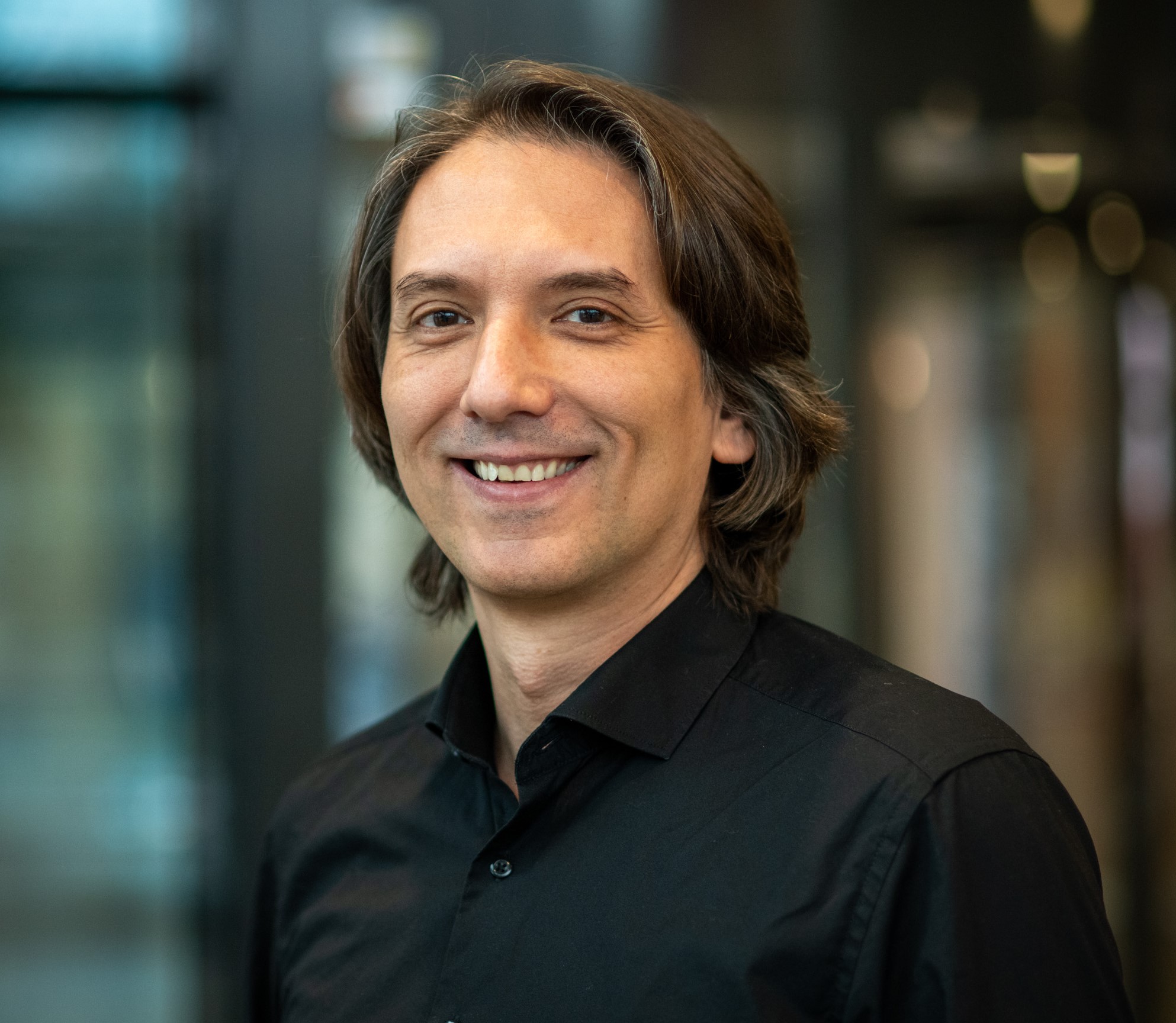
Dr. James Oliver is an Associate Professor in the School of Design at RMIT University, Australia. His research focuses on visual arts, design theory, and decolonial practices, with a strong emphasis on Indigenous knowledge systems, cultural co-design, and ethical relational frameworks. He supervises research in areas such as Indigenous game design, algorithmic futures, and reconciliation practices. His work bridges artistic creativity with sociocultural critique, addressing contemporary challenges through transdisciplinary approaches. Research interests include speculative design methodologies, multispecies storytelling, and the intersection of technology with cultural identity. Oliver’s projects often involve collaborative engagements with First Nations communities, emphasizing ethical frameworks and ontological pluralism. He has contributed to global dialogues on urban futures, decolonial research practices, and the role of design in fostering social resilience. His publications span journals and edited volumes, exploring topics from Gàidhealtachd futures to post-anthropocentric urban planning. Oliver is open to supervising PhD and Masters students in topics such as illustrated humor performance, co-design practices with autonomous traditions, and reconciliation through creative methodologies. His work is informed by extensive field research and ethical commitments to marginalized voices.
Brian Williams is an Assistant Professor of Geography in the Department of Geosciences at Mississippi State University. He holds affiliations with the African American Studies program and the Gulf Scholars Program, focusing on race, social inequalities, and their environmental impacts in the U.S. South and Latin America. Position: Assistant Professor, Geography University: Mississippi State University Affiliations: African American Studies, Gulf Scholars Program Research Interests include political ecology, environmental justice, food and health geography, and critical race studies. His work explores how systemic racism and socio-environmental injustices intersect, particularly in agrarian systems and carceral geographies. Publication Trends reflect his focus on agrarian racial regimes, pesticide politics, and Black geographies, with recent works addressing resilience in small-scale farming, plantationocene critiques, and racialized urban development. Collaborative efforts with scholars like Mansfield, Freshour, and Shelton highlight interdisciplinary approaches. Teaching Areas encompass Political Ecology, Cultural Geography, Human Geography, and regional courses on the U.S. South and Latin America. He co-edits the Southeastern Geographer , contributing to academic discourse on southern and Black geographic traditions.
Caren Cooper is a Professor at North Carolina State University in the Department of Forestry and Environmental Resources, College of Natural Resources. Her research focuses on geospatial analytics to study bird ecology, environmental hazards, and equity in environmental data. She leads the Public Science Lab, developing participatory programs to engage volunteers in large-scale environmental data collection. Her work emphasizes racial and economic disparities in environmental risks and the representativeness of scientific data. Research interests include urban forest ecosystem services, citizen science methodology, and ethical frameworks for participatory projects. Notable projects include Crowd the Tap to assess lead plumbing disparities and the IDEAL Guide for inclusive science initiatives. Cooper has secured grants totaling over $2M from NSF, DoD, and other agencies for projects addressing environmental justice, STEM diversity, and citizen science infrastructure. Her publications span ethics in citizen science, participatory science design, and environmental equity. Cooper collaborates with organizations like the Citizen Science Association and SciStarter to advance equitable practices. She teaches courses on science communication and public engagement, leveraging interdisciplinary approaches at NC State. Labs/Teams: Public Science Lab, IDEAL Working Group. Key grants include 'Advancing Capacity for a Resilient NC Sentinel Landscape' ($124K) and 'Iterative Improvement of IDEAL Participatory Science' ($1.1M).
Tiffany Jo Werth is Professor of English at the University of California, Davis, in the College of Letters and Science. She holds a PhD from Columbia University and previously taught at Simon Fraser University in British Columbia. She is actively involved in academic leadership, currently serving as Program Director for Medieval and Early Modern Studies (MEMS) and Director of Undergraduate Studies. Education: PhD, Columbia University Her research spans Renaissance literature—particularly non-dramatic forms—Reformation history, print culture, posthumanism, and environmental narratives. She teaches courses on speculative fiction, fantasy literature, and utopian thought, linking past literary traditions with contemporary ecological and philosophical concerns. Her work explores how romance functioned after the Reformation and how mineral matter challenges humanist ideals in early modern literature. Her recent publications reflect a deep engagement with the more-than-human world, ecocriticism, and the material imagination. Themes across her articles include the role of stones and minerals in literary thought, early modern cosmology through cosmocriticism, energy transitions, and coastal ecologies. These works demonstrate a sustained interdisciplinary focus on how environment, matter, and narrative intersect in historical and modern contexts. Scientific Awards and Honors: Mellon Long-Term Fellow at the Huntington Library (2016–2017) President of the International Spenser Society (2018–2019) She has led significant scholarly initiatives, including serving as Principal Investigator for a UC Humanities Research Institute-funded multi-campus working group on sea and coastal ecologies. She is co-founder and former Director of Oecologies, a Pacific Coast research collective, and has edited special issues for journals such as The Spenser Review and Spenser Studies . Her mentorship and collaborative projects highlight her role in shaping emerging scholarship in premodern ecologies and literary humanism. Labs and Research Teams: She co-founded and led Oecologies, a vibrant scholarly collective focused on premodern environmental studies. She also directed the multi-campus research group 'On the Sea and Coastal Ecologies: Early Modern Pasts and Uncertain Futures' (2020–2022), fostering collaboration across UC campuses.
University of Natural Resources and Life Sciences ViennaAustria
Daniel Dörler is a Senior Scientist at the Institute of Zoology, University of Natural Resources and Life Sciences, Vienna (BOKU), where he has been employed since 2019. His academic background includes a doctorate in Natural Resources and Life Sciences from BOKU and studies in Biology/Zoology from the University of Vienna. He is a leading figure in the Austrian and European citizen science movement, with a focus on biodiversity, road ecology, and public engagement in science. Institution: University of Natural Resources and Life Sciences, Vienna (BOKU) Department: Institute of Zoology Position: Senior Scientist (wissenschaftlicher Mitarbeiter) Email: daniel.doerler@boku.ac.at ORCID: 0000-0003-2056-4084 Daniel Dörler’s research interests center on citizen science, biodiversity monitoring, and ecological research, particularly in urban and road environments. He investigates the role of public participation in data collection for scientific research and conservation, with a focus on roadkill and amphibian populations. His work bridges ecology, social science, and science communication, emphasizing the transformative potential of citizen science for both science and society. He is deeply involved in methodological development, quality criteria, and the scalability of citizen science projects. His recent publications demonstrate a strong trend towards the integration of technology, policy, and community engagement in citizen science. Works such as automated species detection for anurans, roadkill hotspot analysis, and the development of scalability toolkits highlight a move towards data-driven, policy-relevant, and ethically sound citizen science. The articles consistently focus on practical applications, project design, and the societal impact of participatory research, spanning sub-fields like conservation biology, bioacoustics, and science policy. Daniel Dörler has received numerous scientific awards, reflecting his excellence in research, teaching, and public outreach: 2023: Ars Docendi Award for excellent teaching, Honorary Mention for the Roadkill project (EU Citizen Science Prize), and multiple awards for co-supervised Master’s theses. 2022: Sustainability Award from Austrian Federal Ministries. 2017: BOKU Sustainability Prize and recognition as a Pioneer of Open Innovation in Science. 2018: Nomination for the National Animal Welfare Prize. Dörler is a principal investigator and project leader on numerous research grants from the European Commission, Austrian Science Fund (FWF), and national agencies. He is a key figure in the Citizen Science Network Austria and the platform "Österreich forscht." He frequently presents at international conferences, contributes to policy discussions, and mentors students. His collaborative work with Florian Heigl and others has established a robust network for citizen science in Austria and beyond. Daniel Dörler is a core member of the Citizen Science Network Austria and leads multiple projects such as "Leading Lights," "STEM education," and "Explore Research from East to West in Austria." He is also deeply involved in the "Roadkill" project and the "AmphiBiom" initiative for amphibian conservation. His work fosters a collaborative environment that brings together researchers, citizens, and policymakers to address pressing environmental challenges.
University of Natural Resources and Life Sciences ViennaAustria
Josef Eitzinger is a full Professor at the University of Natural Resources and Life Sciences, Vienna (BOKU), affiliated with the Institute of Meteorology and Climatology. His research bridges agricultural meteorology, climate change impacts, and sustainable farming systems. He holds a Dr.nat.techn. degree and completed postdoctoral work at Colorado State University. His research focuses on: Agricultural meteorology and microclimatology Climate change impacts on crop production and water resources Drought monitoring and forecasting systems Agrivoltaics and renewable energy integration in agriculture Recent publications (2023-2025) emphasize climate risk modeling, soil moisture dynamics, agrivoltaic design, and sustainable land management. Trends show strong integration of remote sensing, machine learning, and cross-disciplinary approaches to address agricultural resilience. Awards & Honors: Austrian Sustainability Award 2018 WMO Award as RA VI expert team leader (2014) Klimaschutzpreis (2002) Pöttinger Preis (2001) He leads 67+ projects including EU initiatives like CropShift (climate-driven crop shifts) and Machine Learning ET Estimation . His team develops tools like the Agricultural Risk Information System (ARIS) for real-time agrometeorological forecasting. At BOKU's Institute of Meteorology and Climatology, he oversees micrometeorological field studies and collaborates with European research networks on climate adaptation strategies.
Pamela Karimi is an Associate Professor in the Department of Architecture at Cornell University’s College of Architecture, Art, and Planning (AAP). She is a trained architect and historian of art and architecture with a focus on the modern and contemporary Middle East. Her interdisciplinary research bridges architecture, art, environmental studies, and socio-political dynamics, particularly in contexts of resistance, spatial justice, and sustainability. Ph.D., History, Theory & Criticism of Art and Architecture, MIT (2009) Previous teaching positions: University of Massachusetts Dartmouth, Brandeis University, NYU, Wellesley College Her research centers on critical spatial practice , artistic activism , and gendered spatial politics , especially in Iran. She explores how artists and architects navigate state restrictions to reclaim public space and foster democratic expression. Her work also extends to post-industrial cities in North America and the global politics of cultural heritage. Her recent publications include the award-winning Alternative Iran: Contemporary Art and Critical Spatial Practice (2022) and the newly released Women, Art, Freedom: Artists and Street Politics in Iran (2024), which examines the role of art in the 2022 Woman, Life, Freedom uprising. Her publications and curated exhibitions reveal a consistent focus on resistance, memory, and spatial transformation. Notable awards include the Sharmin and Bijan Mossavar-Rahmani Book Award (2024), a NEH Summer Stipend (2023), and grants from the Graham Foundation and the Käte Hamburger Institute . She has also received recognition for teaching excellence. She has curated impactful exhibitions such as Black Spaces Matter (2017–2019), which explored race and architecture in 19th-century New Bedford, MA, and has held leadership roles in academic organizations including the Aggregate Architectural History Collaborative and the Thresholds Journal . Her research is widely covered in media outlets like NPR, BBC, Al-Jazeera, and The Washington Post. She is currently working on a book titled Survival by Design: Desert Architecture at the End of the World and contributing to the Cultural History of Asian Art series, reflecting her broad and evolving scholarly engagement with global spatial and cultural issues.
Chad Wriglesworth is an Associate Professor in the Department of English at the University of Waterloo, specializing in interdisciplinary research at the intersection of 20th/21st century American literature, ecocriticism, religion, and environmental humanities. His work explores the cultural and spiritual dimensions of North American regional landscapes. PhD in Twentieth-Century American Literature, University of Iowa MA in Theology and Literature, Regent College, University of British Columbia MA in English, Portland State University BA in English, Warner Pacific University Wriglesworth's research focuses on literary representations of environmental reclamation, theological perspectives in contemporary poetry, and bioregional theory. He is currently completing two major projects: editing 'What Clever Friends' (University of Michigan Press) and authoring 'Geographies of Reclamation' (University of Nevada Press), both examining Pacific Northwest cultural and environmental narratives. His recent work demonstrates expertise in analyzing literary responses to ecological challenges, indigenous land rights, and the intersection of spirituality and environmental stewardship. Wriglesworth's publications span interdisciplinary journals and book chapters addressing water ethics, salmon habitat restoration, and agrarian philosophies in American literature. 2025 Distinguished Teacher Award, University of Waterloo 2024 Arts Award for Excellence in Teaching, University of Waterloo 2018 Ontario Undergraduate Student Alliance Award for Teaching Excellence 2016 Best Interview Award (Evangelical Press Association) 2015 Robert Harding Humanities and Social Sciences Award 2009-2011 Mellon Foundation Early Career Fellowship As Associate Editor of The Raymond Carver Review, Wriglesworth contributes to ongoing scholarship on Pacific Northwest literary traditions. His teaching excellence has been recognized multiple times, including through the University of Waterloo's Federation of Students Excellence in Undergraduate Teaching Award (2018, 2014, 2008). He supervises graduate students in American literature, ecocriticism, and Native American studies.
Professor Martin Bryant is a landscape architecture academic and practitioner at the University of Technology Sydney (UTS), with over three decades of experience. He has held leadership roles such as Head of School of Architecture (UTS), Director of Postgraduate Studies (UTS), and Course Director for landscape architecture programs at both Victoria University of Wellington (VUW) and UTS. His work bridges professional practice and academia, focusing on urban ecology, resilience, and Indigenous knowledge systems. University: University of Technology Sydney Academic Rank: Professor Research Focus: Urban ecology, resilience, interdisciplinary design, and climate change adaptation His research integrates traditional ecological practices (e.g., Arab hima, Māori mātauranga) with modern urban planning, emphasizing sustainable resource management and cultural preservation. He has contributed to international policy, including the UN Habitat III policy paper on urban ecology (2017). Scientific Awards: Lloyd Rees Award for Urban Design (Australian Institute of Architects) Supreme Awards (NZIA and NZILA) 2013 Rosa Barba Prize (prestigious international award for landscape architecture) Charlie Challenger NZILA Award for resilience research Recent Publications: Explore topics like hima knowledge systems in Saudi Arabia, Li agrarian culture in China, and climate diasporas. They emphasize cross-cultural resilience strategies and green infrastructure. Funded Research: Includes projects on coastal Māori communities in New Zealand, Granville Smart Precinct Pilot (Cumberland Council), and phytoremediation gardens (UrbanGrowth NSW). He also contributed to the 2050 Master Plan for Sydney Olympic Park Authority.
Helmholtz Centre for Environmental ResearchGermany
Dr. Yves Zinngrebe is Deputy Head of the Department for Conservation Biology and Social-Ecological Systems at the Helmholtz Centre for Environmental Research – UFZ in Leipzig, Germany, where he also leads the working group on Governance of Biodiversity and Nature Conservation. He is actively involved in major international science-policy initiatives including IPBES and the EU Horizon program. Research Interests: Transformative governance for biodiversity Science-policy-society interfaces EU Common Agricultural Policy and its environmental impacts National implementation of the Convention on Biological Diversity (CBD) Agroforestry and landscape approaches in Peru, Honduras, Uganda, Rwanda, and Indonesia Governance of social-ecological systems Recent Research Trends: His recent publications (2016–2025) reflect a strong focus on policy integration, transformative change, and science-policy interfaces. Key themes include mainstreaming biodiversity targets into sectoral policies, assessing sustainability in EU agri-food trade, and strengthening governance frameworks for biodiversity and climate. His work increasingly emphasizes systemic and integrative solutions, often in collaboration with international panels like IPBES and IPCC. Scientific Leadership and Projects: Coordinator, EU Horizon project RESPIN (2024–2027) Lead, Scientific support for the German National Biodiversity Strategy (2020–2023) Coordinating Lead Author, IPBES Report on Transformative Change Co-Lead, Earth System Governance Task Force on Governance of Nature and Biodiversity Project lead, DeForESG on Amazon deforestation dynamics (2021–2024) Advising and Grants: While specific advisees are not listed, Dr. Zinngrebe leads a working group and supervises research within major funded projects. His work is supported by significant grants from the EU, national German agencies, and international collaborations, indicating active grant leadership and team supervision. Labs and Teams: He leads the Governance of Biodiversity and Nature Conservation working group within the Department for Conservation Biology and Social-Ecological Systems at UFZ. His team collaborates across institutions including iDiv, Leibniz Universität Hannover, and international partners in Africa and Latin America.
Adam Thomas Clark is an Associate Professor in the Department of Biology at the University of Graz, Austria, where he leads research on ecological community stability, self-assembly, and persistence across spatial and temporal scales. He is affiliated with the Institute of Biology and the Department of Plant Sciences, focusing on predictive models of community ecology. His academic journey includes a PhD from the University of Minnesota under David Tilman, postdoctoral work at the Helmholtz Centre for Environmental Research (UFZ) and iDiv with Stan Harpole and Helmut Hillebrand, and undergraduate research at Harvard University's Museum of Comparative Zoology. His research interests span Community Ecology , Grassland and Plant Ecology , Ant Community Assembly , Biodiversity , and Theoretical Modeling . He investigates how ecological systems maintain stability despite disturbances, integrating field experiments, taxonomy, and data synthesis. His work has particular emphasis on tallgrass prairies in the US Midwest, Central European grasslands, and ant communities in the Caribbean and northeastern US. The recent publications and social media activity highlight a strong focus on ecological acclimation , coexistence mechanisms , landscape and historical ecology , climate change impacts , and food web dynamics . His work often bridges empirical data with theoretical frameworks to improve predictive ecology. He is actively involved in mentoring, having advertised funded PhD and postdoctoral positions, and collaborates with institutions across Europe. ORCID: 0000-0002-8843-3278 Homepage: adamclarktheecologist.com Social: Bluesky , Twitter , GitHub , Google Scholar Clark is engaged in broader academic discourse, commenting on faculty hiring practices, research evaluation, and scientific trust. He promotes interdisciplinary climate research and has contributed to studies on public perception of science and ecological resilience in marine and terrestrial systems.
Anna Cord is a Professor and Chair of Computational Landscape Ecology at the Technische Universität Dresden, Faculty of Environmental Sciences. She leads research at the intersection of remote sensing, biodiversity, and ecosystem services. Previously, she headed the working group 'Biodiversity and Ecosystem Services' at the Helmholtz Centre for Environmental Research – UFZ from 2012 to 2020. Doctorate (Dr. rer. nat): University of Würzburg, 2012 Studies: Biology and Geography, University of Würzburg and University of Umeå, Sweden Research Assistant: German Aerospace Center (DLR) and University of Würzburg, 2007–2012 Her research focuses on spatial analysis and modeling of land use impacts on biodiversity and ecosystem services , using remote sensing and GIS. She investigates trade-offs and synergies in multifunctional landscapes and develops methods to monitor ecosystem services via Earth observation. Her work supports sustainable land management and policy design. Her recent publications reveal strong trends in ecosystem multifunctionality , multi-objective land use optimization , and integration of socio-environmental data . She emphasizes scalable models, interdisciplinary frameworks, and policy-relevant tools, often using national and global datasets. Her work bridges computational ecology, environmental modeling, and conservation science. Scientific Awards and Honors: Best PhD Student Paper Award, iEMSs Conference, Ottawa, 2010 Scholarship, German Academic Scholarship Foundation, 2004–2007 Member, Young Academy of BBAW and Leopoldina, since 2019 Anna Cord is actively involved in academic service and mentoring. She serves as Study Programme Coordinator for BSc and MSc Geography and teacher training programs at TU Dresden. She leads major research grants such as BESTMAP (EU Horizon 2020) and ECO²SCAPE (BMBF) . She is also an editor for Regional Environmental Change and Remote Sensing in Ecology & Conservation . She contributes to international scientific coordination as Task Leader for Remote Sensing of Ecosystem Services in GEO BON . She has previously served on the Main Committee of the Scientific and Technical Council at UFZ. Her leadership extends to curriculum development and examination boards in geosciences.
Jaboury Ghazoul serves as Full Professor of Ecosystem Management at ETH Zurich's Department of Environmental Systems Science since October 2005, holding a concurrent Prince Bernhard Chair of International Nature Conservation at Utrecht University since 2015. His academic journey spans from PhD studies at University of St Andrews to faculty positions at Imperial College London (1998-2005), with extensive fieldwork across tropical regions including Vietnam and Thailand. His educational background includes a 1993 PhD in evolutionary ecology of wasps from University of St Andrews under Prof. Pat Willmer, preceded by biodiversity survey work with Vietnam's Ministry of Forestry (1993-1994) and postdoctoral research at London's Natural History Museum (1995-1998). Ghazoul's research centers on plant reproductive processes in natural and human-altered environments, with three interconnected pillars: Pollination ecology - examining bee behavior and coffee fruit set dynamics in tropical agroforestry systems Forest conservation - investigating landscape fragmentation impacts on tree reproduction and genetic diversity Ecosystem services - quantifying climate and pest-driven shifts in agricultural systems while assessing carbon storage implications His work uniquely bridges molecular genetics, landscape ecology, and human livelihoods in tropical settings. Publications reveal a consistent focus on tropical ecosystems (70%), pollination networks (60%), and human-environment interactions (50%), with growing emphasis on climate change impacts since 2012. Key methodological approaches include field experiments across landscape mosaics, genetic analysis of fragmented populations, and interdisciplinary assessment of ecosystem services. Major recognitions include: ETH Zurich Golden Owl Teaching Award (2011) ATBC Award for Excellent Service (2013) President of Association of Tropical Biology and Conservation (2015) Prince Bernhard Chair appointment (2015) UK Forest Commission Expert Committee membership (2014) Ghazoul has supervised numerous doctoral students through ETH Zurich's environmental programs and secured significant research funding from CIFOR, WWF Netherlands (supporting his Utrecht chair), and Swiss National Science Foundation. His editorial leadership as Biotropica Editor-in-Chief (2006-2013) shaped tropical ecology discourse globally. Current projects integrate coffee agroforestry systems with forest conservation in Southeast Asia, supported by interdisciplinary grants examining climate-resilient agricultural landscapes. He maintains active field research in the Seychelles (evidenced by 'Working hard in the Seychelles' reference) and collaborates with institutions including CIFOR, UK Forest Commission, and Utrecht University's conservation programs. His lab focuses on tropical tree reproductive ecology using molecular tools combined with landscape-scale field studies.
Helmholtz Centre for Environmental ResearchGermany
Prof. Dr. Antonis Chatzinotas is a leading figure in Microbial Interaction Ecology at the Helmholtz Centre for Environmental Research (UFZ) and holds a Professorship at the University of Leipzig since 2020. His research focuses on understanding microbial and viral interactions in terrestrial and aquatic ecosystems, particularly how environmental changes affect community composition, genetic landscapes, and biogeochemical cycles. Head of Microbial Interaction Ecology group at UFZ Professor at University of Leipzig Key research areas include: Microbial and viral diversity in pristine/aquifer systems Predatory interactions between protists/bacteria/viruses Applications in agroecosystems and environmental biotechnology Functional redundancy in microbial communities Impact of environmental variability on coexistence Recent publications highlight interdisciplinary approaches combining DNA stable isotope probing , metagenomics , and ecological modeling to study bioaugmentation, pesticide-microbe interactions, and viral transport mechanisms. His work bridges theoretical ecology with practical environmental solutions. Collaborations span institutions like EPFL, ETH Zurich, and University of Otago. Current projects explore low-risk biopesticides, virome-land use relationships, and microbial stability-vegetation links. The group actively supports open science principles and participates in transformative publishing agreements.
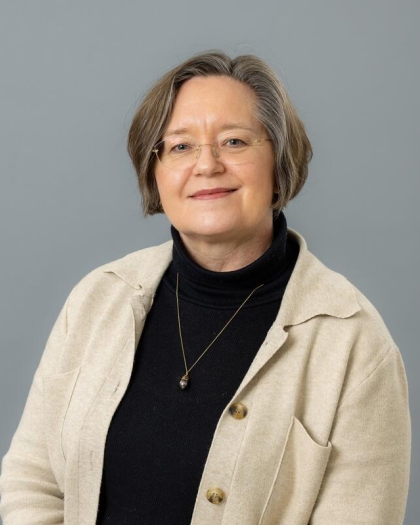
Ragnhild Overå is a Professor in the Department of Geography at the University of Bergen, specializing in human geography with a focus on African countries, particularly Ghana. Her research combines fieldwork examining socio-economic processes in local communities with analysis of national and global scale dynamics. Her educational background includes a Dr.polit. degree with a dissertation titled 'Partners and competitors: Gendered entrepreneurship in Ghanaian canoe fisheries' (1998). Research Interests Professor Overå's research spans multiple interconnected areas including gender studies, small-scale fisheries, food systems, food and nutrition security, territorial markets, informal economies, entrepreneurship, urban development, globalization, and political ecology. She has developed particular expertise in studying how local communities navigate global economic processes, with a consistent focus on gender dynamics. Her current research projects include: SAMAKI (2021-2026): Examining the overlooked role of small fish in fighting malnutrition Small Fish and Food security (SmallFishFood) (2018-2022): Investigating how small fish species contribute to food security in Ghana, Kenya, and Uganda Enclaving: Patterns of global futures in three African cities (2018-2023): Studying urbanization and inequalities in Johannesburg, Maputo, and Accra MARICA: Mapping marine resource conflicts across sub-Saharan Africa (2019-2022): Analyzing conflicts in coastal communities Her publications reveal a consistent focus on the intersection of gender, economic development, and resource management in African contexts, with particular attention to fisheries, urban development, and food systems. Over her career, she has demonstrated how local actors, especially women, navigate and shape global economic processes. Scientific Recognition While specific awards aren't listed in the provided materials, Professor Overå's extensive publication record in high-impact journals and her leadership of multiple research projects funded by the Research Council of Norway demonstrate significant recognition in her field. Mentorship and Collaboration Professor Overå has supervised numerous master's and doctoral students, particularly focusing on Ghanaian contexts. Her collaborative work spans disciplines including biology, nutrition science, anthropology, and geography, reflecting her commitment to interdisciplinary approaches to complex development challenges. Laboratory and Research Groups She is affiliated with research groups including Environment and Landscape Geography and Human Geography at the University of Bergen. Her work often involves field research teams in Ghana and other African countries, collaborating with local researchers and institutions.