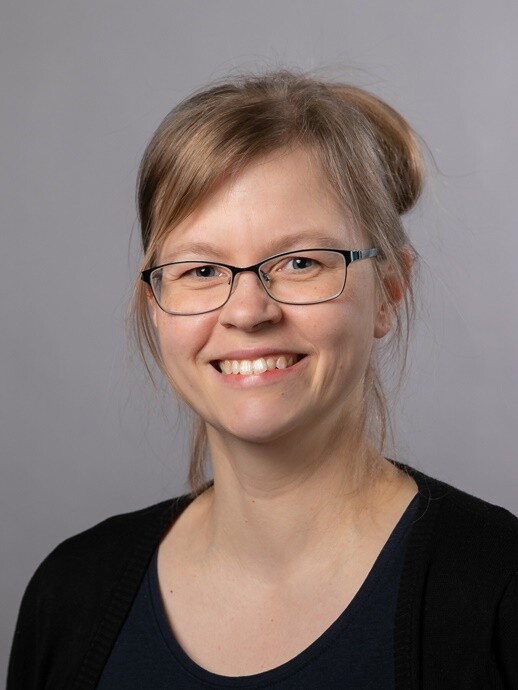
Raakel Plamper is a Doctoral Researcher at the Department of Education, University of Turku, with additional roles as Project Specialist in Geography and Development Specialist in Research Services. Her research focuses on higher education sociology, academic work dynamics, student roles in marketized systems, and university history. She teaches courses on social class and education, research methods, and multivariable analysis. Her work critically examines the marketization of universities, student-as-customer discourses, and managerialism in academic leadership. Key themes include tuition fee policies, institutional identity shifts, and equality in education systems. Recent publications analyze leadership rhetoric, writing retreats for researchers, and cross-country education strategies. Plamper actively contributes to interdisciplinary projects, such as the EU-funded Young Adulllt study on skill governance, and maintains a blog (Kas! blogi) discussing academic work and education policy. She holds an MA and is pursuing a PhD examining student roles in neoliberalized higher education.
Jari Murto serves as Associate Professor at the Faculty of Law, University of Helsinki, where he specializes in Labour and Social Law. With over two decades of academic and practical experience, he contributes significantly to Finnish and European labour law discourse through publications, policy analysis, and academic leadership. His educational qualifications include a Doctor of Laws (LL.D), Master of Science in Economics and Business Administration, and Master of Laws (LL.M). Murto's doctoral dissertation Ryhmänormit yrityksessä (Group Norms in Companies, 2015) established foundational research on workplace norm systems. Murto's research examines labour law doctrines, norm systems, working conditions determination, and transition-phase labour market issues. He analyzes EU policy impacts on national frameworks, lifelong learning integration into labour law, and psychosocial workplace safety. Recent work addresses digital workplace challenges, parental employment policies, and just transitions in green/digital economies. His scholarship bridges theoretical legal frameworks with practical industrial relations through frequent commentary on Supreme Court decisions. As Doctoral Programme Supervisor, Murto mentors emerging legal scholars while maintaining active peer review roles. He serves on Finland's Board for Strengthening General Applicability of Collective Agreements and participates in European labour law networks including the Labour Law Research Network and Nordic Network of Labour Law Scholars. His conference activities span topics from social packages in income policy agreements to lifelong learning's role in modern labour law. Murto maintains strong engagement with practical legal applications through Supreme Court commentary series ( KKO:n ratkaisut kommentein ) and regular contributions to Lakimies journal. His research methodology combines doctrinal analysis with empirical studies of workplace practices and policy implementation.
Ulla Liukkunen is a Professor of Labour Law and Private International Law at the University of Helsinki's Faculty of Law. She also serves as a Docent at the University of Helsinki and is affiliated with the Helsinki Institute of Sustainability Science (HELSUS). Professor Liukkunen has held significant leadership roles including Director of the Center of Chinese Law and Chinese Legal Culture until 2022 and has been actively involved in numerous research projects funded by the Finnish Academy and other organizations. Professor Liukkunen's primary research interests focus on Labour Law, Private International Law, Comparative Law, Transnational Law, and Sustainability Law. Her work particularly examines the intersection of labour rights with international legal frameworks, with special attention to Chinese labour law and Nordic perspectives. She has made significant contributions to understanding collective bargaining systems, decent work standards, and the role of the International Labour Organization in global governance. Analysis of Professor Liukkunen's recent publications reveals a consistent focus on transnational labour governance, private international law applications to labour issues, and comparative analyses of labour law systems. Her work increasingly addresses contemporary challenges such as platform work, global value chains, and sustainability dimensions of labour regulation. There is a notable emphasis on bridging theoretical frameworks with practical policy implications, particularly in European and Chinese contexts. Professor Liukkunen has received significant recognition for her scholarly contributions: Member of the Finnish Academy of Science and Letters (2022) First Class Knight of the Order of the White Rose of Finland (2016) Professor Liukkunen has supervised numerous doctoral students and has been involved in significant research projects throughout her career. She has led Finnish Academy-funded research projects on international labour law and comparative labour law, as well as private international law. Her projects include 'Relevant Problems and Perspectives for the Development of International Private Law in Modern Conditions' (2023-2026), 'Employee Participation and Collective Bargaining in the Era of Globalization – Nordic and Chinese Perspectives' (2013-2016), and 'ILO Core Labour Standards Implementation in China: Legal Architecture and Cultural Logic' (2012-2015). Professor Liukkunen is actively involved with the Helsinki Institute of Sustainability Science (HELSUS) and has played key roles in establishing the Finnish Center of Chinese Law and Chinese Legal Culture. She has served in numerous advisory capacities including as a member of the Finnish Committee for Confirming the General Applicability of Collective Agreements, the Market Court until 2022, and as Vice Member of the Labour Court. Internationally, she serves as Vice Chair of the Mediation Board of the European Labour Authority and is a member of the European Centre of Expertise in the Field of Labour Law.
Satu Ojala is an Associate Professor at the Unit of Social Research, Faculty of Social Sciences, Tampere University. Her research focuses on social policy, labour market dynamics, and work careers, with expertise in quantitative methods and analysis of survey and register data. She has led multiple nationally and internationally funded projects, including 'Demanding Activation – Harming Outcomes?' (2024–2028) and 'Tendered Services and Job Quality' (2024–2026). Her work addresses issues such as precarious employment, active labour market policies, and the impact of economic crises on workers. Key Research Projects: Principal Investigator (PI) of projects like 'Employment and Social Security Careers of the Population out of Labour Force' (Kone Foundation, 2021–2025) and 'The Future of Work: Opportunities and Challenges for the Nordic Models' (Nordic Council of Ministers, 2017–2021). Contributed to studies on workplace discrimination, temporal flexibility, and the effects of temporary employment. Teaching & Grants: Teaches courses on social policy and work life research. Her grants include funding from the Research Council of Finland, The Finnish Work Environment Fund, and the Academy of Finland. She collaborates with institutions such as the Work Research Centre, VATT Institute, and the Finnish Institute of Occupational Health. Labs/Teams: Affiliated with the Work Research Centre (WRC) and collaborates in interdisciplinary teams addressing labour market reforms, social security policies, and workplace well-being.
Heli Mutanen is a University Lecturer at the School of Educational Sciences and Psychology within the Philosophical Faculty of the University of Eastern Finland. Her research focuses on youth education, employability dynamics, labor market pathways, and identity/agency studies. She co-leads the HighEmploy research project (2018–2022) investigating graduate employability and social positioning. Her work critically examines how social class intersects with educational and career trajectories, particularly through studies of Finnish business graduates. She employs narrative analysis to explore how individuals construct employable identities and negotiate agency in marginalized contexts. Mutanen's research outputs include peer-reviewed articles in Sosiologia and British Journal of Sociology of Education , as well as chapters in edited volumes like Rethinking Graduate Employability in Context . She collaborates with researchers such as Maija Korhonen and Nina Haltia on projects analyzing capital inheritance, career narratives, and activist interventions.
Päivi Oinas is an Adjunct Professor and University Lecturer in Geography at the University of Turku's Department of Geography and Geology. Her research focuses on innovation districts, spatial innovation systems, and corporate geography. She has held roles including Research Director at the Department of Geography (2019-2020), Guest Lecturer at the University of Cologne, and Visiting Scholar at Technical University of Berlin. She earned a Doctor of Science in Economics and has been a Docent at Aalto University School of Business and Turku School of Economics. Education: Dr.Sc.(Econ.), Lic.Sc.(Econ.), M.Sc.(Econ.) from the Helsinki School of Economics (now Aalto University) Research Interests: Oinas examines innovation ecosystems, corporate responsibility, and entrepreneurship through a spatial lens. Key themes include the socio-spatial embeddedness of economic action, internationalisation of architecture, and methodological advancements in economic geography. Advising & Grants: She has supervised numerous doctoral candidates including Janne Lindstedt and Susanna Kivelä. Her grants include the Australian Research Council's "Rebuilding Troubled Regions" project (2021-2023). She has led major initiatives like the IDeaS project on innovation districts and collaborated on studies of MNE strategies and cluster transformation. Labs/Teams: Active in Turku Science Park's innovation district initiatives and the Traveling Start-Up Scene project, emphasizing quadruple helix collaboration between academia, industry, government, and civil society.
Tuukka Lehtiniemi is a University Researcher at the Centre for Consumer Society Research, part of the Faculty of Social Sciences at the University of Helsinki. He holds a PhD in Economic Sociology (2020) and serves as a Docent in Economic Sociology at the University of Turku (2024–present). His research focuses on digital society, datafication, algorithmic systems, and the data economy. He examines societal changes driven by datafication, particularly human roles in automation and the distribution of agency between humans and machines. His work spans qualitative studies on data work in prisons, AI in child welfare, data activism, and journalistic personalization. Education: PhD in Economic Sociology (2020), multidisciplinary background in technology and economics. Research Interests: Algorithmic decision-making, automated systems, data activism, digital inequalities, and the sociotechnical implications of AI. Lehtiniemi has led or contributed to major projects like 'Pleasing the Algorithm' (2023–2025) and 'REPAIR: Valuable Breakages' (2022–2025), addressing algorithmic governance and societal values. He actively supervises Master's students in digital inequalities and teaches at the university level. His work bridges critical research with actionable insights for societal improvement. He is frequently engaged in academic activities, including organizing conferences (e.g., Sosiologipäivät 2025) and peer-reviewing for journals like New Media & Society and Information Society . Media outlets such as Euronews and Wired have highlighted his research on topics like AI training in prisons.
Mervi Lahtomaa is a Doctoral Researcher at the Department of Education, University of Turku, Finland, actively contributing to research and teaching in educational sciences. Her institutional affiliation encompasses both research and pedagogical responsibilities within the university's educational framework. Her teaching portfolio includes: Social Class and Education (2021-2022) Introduction to Learning, Instruction and Student Assessment (Open University Studies, 2022) Educational Policies (group teaching, 2022-2024) Adults in Changing Education and Working Life (Open University Studies, 2023-2024) Lahtomaa's research centers on the complex relationships between education, economy, and society. She investigates open university pathways within marketizing higher education systems and analyzes assessment conceptions among special needs educators. Her work critically examines how labor market transformations impact educational access and equity, particularly for adult learners navigating alternative pathways to higher education. Analysis of her publications from 2019-2024 reveals consistent thematic focus on educational equity in open and adult higher education, special education assessment practices, and policy implications for inclusive education systems. Her research demonstrates methodological diversity through qualitative analyses of student experiences, teacher perspectives, and pathway models within the Finnish educational context. Lahtomaa has secured research funding from the Finnish Cultural Foundation (Varsinais-Suomi Regional fund) for 2021 and contributed to Ministry of Education and Culture-funded projects OPA (Teacher Assessment Competence) and TRY (Alternative Path to University). She also coordinated the NERA2020 Conference, demonstrating active engagement in Nordic educational research networks.
Anastasia Tsvetkova is a Senior Lecturer and Docent at the University of Turku's Faculty of Science and Engineering, affiliated with the Laboratory of Industrial Management and the Sea Technologies for a Sustainable Future initiative. Her work focuses on maritime innovation, sustainable development, and digitalization in transport systems. Education: She holds a PhD and has conducted advanced research in industrial management and maritime systems. Her academic career includes leadership roles in multiple research projects funded by organizations such as the European Commission and Business Finland. Research Interests: Tsvetkova's expertise spans autonomous shipping, digital transformation in ports, sustainable propulsion technologies, and the governance of passenger mobility innovations. She actively explores how technological advancements can align with the UN Sustainable Development Goals (SDGs), particularly regarding environmental sustainability and economic resilience. Projects & Grants: She leads or co-leads 12 projects, including the SMART PORT CITY initiative (EU-funded) and DECATRIP (decarbonizing transport corridors). Her work often bridges academia and industry, addressing challenges like clean propulsion adoption, port-city integration, and curriculum development for autonomous shipping. Labs & Teams: She collaborates with interdisciplinary teams in the Laboratory of Industrial Management, focusing on maritime technology, sustainable logistics, and policy frameworks. Her research has informed policy recommendations for the European Commission and contributed to industry standards for autonomous systems.
Jani-Petri Laamanen serves as a University Lecturer in the Department of Economics at Tampere University's Faculty of Management and Business. His research integrates labor, public, and behavioral economics with policy-relevant investigations into housing markets, well-being, and consumer behavior. His scholarly focus encompasses: Labor market effects of home-ownership and housing deregulation Subjective well-being dynamics relative to GDP fluctuations Payment frequency impacts on spending patterns Entrepreneurship barriers linked to residential stability Cultural consumption determinants Occupational mobility drivers Recent publications reveal methodological emphasis on natural experiments and regional variation, particularly examining procrastination in commitment choices, rent control consequences, and universal basic income implementation. His work appears in journals spanning Labour Economics , Journal of Economic Behavior and Organization , and Journal of Happiness Studies . No scientific awards were documented in source materials. Information regarding student supervision and research grants remains unspecified in available documentation. Research team affiliations or laboratory associations are not referenced within the provided texts.
Lappeenranta-Lahti University of Technology LUTFinland
Zhen Jie Im is a postdoctoral researcher at LUT University (Lappeenranta, Finland) within the School of Engineering Sciences, focusing on social sciences. She is affiliated with the REMPEAT project and holds an additional researcher role at the Department of International Economics, Government and Business at Copenhagen Business School . Her work bridges structural economic transformations with political sociology, particularly examining technological change, green transition, and welfare state dynamics. Education : PhD in Sociology (University of Helsinki), MSc in Comparative Political Sociology (Institut d'études politiques de Paris), BA in History (Sciences Po - Campus Europe-Asie au Havre) Her research explores how citizens respond politically to automation, decarbonization, and labor market shifts, emphasizing fairness perceptions in policy outcomes. She investigates the interplay between welfare chauvinism, status decline, and support for radical right parties, alongside policy mechanisms like parental leave directives and green industrial strategies. Recent publications focus on EU social and environmental policies, with a 2025 Global Social Policy article analyzing decarbonization trade-offs and a 2024 Electoral Studies paper on redistribution preferences in Nordic welfare states. She contributes to debates on labor market training access, automation risks, and multi-level governance of social policies. Peer review activities span 49 reviews across journals like European Political Science Review , Journal of European Social Policy , and Political Studies , reflecting her expertise in policy analysis and political sociology.
Katri Pauliina Kantojärvi is a Docent at the Faculty of Medicine, University of Helsinki, actively contributing to biomedical and psychiatric research. Her work spans sleep disorders, schizophrenia, genetic risk factors, and neurodegenerative diseases, with extensive collaborations across Finnish population cohorts. Research Interests: Her research focuses on the intersection of sleep, mental health, and genetic predispositions. She investigates how polygenic risk scores for schizophrenia influence both clinical outcomes and broader social impacts, such as labor market performance. Her work also explores the role of sleep disturbances, including nightmares, as markers of psychiatric and neurodegenerative risk. Using large-scale genomic and epidemiological data, she contributes to understanding how genetic variants modulate brain and liver function. Recent Research Trends: Her recent publications (2024–2025) highlight a strong emphasis on psychiatric genetics, sleep phenotypes, and their overlap with neurodegeneration and metabolic health. There is a clear trend toward integrative studies combining genetic, epigenetic, and clinical data to predict disease outcomes and understand modifiable risk factors. Scientific Awards: No awards listed in the provided text. Advising and Grants: While specific students are not listed, Dr. Kantojärvi is an active participant in a major Academy of Finland-funded project titled Sleep as a key to understand the symptoms and course of Schizophrenia (2023–2027), indicating her role in mentoring and collaborative research. This project underscores her leadership in translational psychiatric research. Labs and Teams: She is part of a multidisciplinary research team led by Professor Tiina Paunio, involving experts in psychiatry, genetics, and sleep medicine. The group leverages biobank data and population registries to explore the biological underpinnings of mental illness.
Milla Salin is a University Lecturer in Social Policy at the Department of Social Research, Faculty of Social Sciences, University of Turku, Finland. She is also a Senior Researcher at the INVEST Research Flagship Centre and VTT. Her work integrates teaching, research, and editorial contributions in the domain of social policy and family studies. Her research focuses on labour market dynamics, family life, and gender roles, particularly examining mothers' employment, work-time patterns, and the challenges of combining work and family life. Methodologically, she specializes in quantitative and comparative cross-national research. Her current projects explore the impact of the COVID-19 pandemic on families with children and broader European work-family policy frameworks. Recent publications highlight trends in joint physical custody, parental leave uptake, work-life conflict, and editorial practices in Finnish academic publishing. Her work spans peer-reviewed journal articles, book chapters, and commentaries, reflecting both empirical research and scholarly engagement. Scientific Awards: None mentioned. She supervises master's theses and teaches courses in employment and family policy, quantitative research methods, and thesis writing. She is actively involved in the editorial board of Janus: Journal of Social Policy and Social Work Research . No information is available regarding PhD or master's students she may have advised. She has no listed scientific awards. Her research is embedded within collaborative teams at the University of Turku and the INVEST flagship, focusing on social and health disparities, family dynamics, and policy evaluation.
Mia Tammelin is an Associate Professor of Social Policy and Research Director at the Centre for Childhood, Youth and Family Research (Perla) within Tampere University’s Faculty of Social Sciences. She specializes in families, livelihoods, poverty, social relations, working life, and digitalization’s societal impacts. Her research bridges social policy analysis with empirical studies on care work, welfare systems, and technology integration in eldercare and social services. Previous roles include Principal Lecturer at JAMK University of Applied Sciences and Research Director at Tampere University’s Working Life Research Centre. Internationally, she has worked with the International Labour Organization (ILO) in Geneva. Her work emphasizes critical perspectives on digital transformations in care for older people, explored in her co-edited Routledge book Digital Transformations in Care for Older People: Critical Perspectives (2022). Key research projects include the DailyLife study on poverty and wellbeing in families with children, and the NuoriSO project addressing youth inclusion in social work. Her scholarship intersects work-life balance, policy reform impacts, and the sociomaterial dimensions of care work. Publications span academic journals like Journal of Applied Psychology and Frontiers in Rehabilitation Sciences , focusing on themes such as work-family conflict, policy alienation, and digital agency in eldercare. She collaborates internationally, contributing to debates on sustainable welfare models and digitalization’s societal implications.
Lappeenranta-Lahti University of Technology LUTFinland
Zhen Im is a postdoctoral researcher at LUT School of Engineering Sciences, Department of Social Sciences, LUT University, Lappeenranta, Finland. He is also affiliated with the Department of International Economics, Government and Business at Copenhagen Business School and is completing his PhD at the University of Helsinki. His research centers on citizens’ political responses to structural transformations such as technological change and the green transition, with a focus on fairness, welfare state legitimacy, and social policy preferences. PhD in Sociology, University of Helsinki (2017–present) MA in Comparative Political Sociology, Sciences Po Paris (2014–2016) BA in Social Sciences, Sciences Po Le Havre (2011–2014) His research interests lie at the intersection of political sociology, public opinion, and socio-economic change. He investigates how automation, digitalization, and green transitions affect citizen attitudes toward redistribution, welfare policies, and political parties—especially the radical right. A key focus is the role of fairness perceptions and how social and labor market policies moderate public responses to economic disruption. The most recent 15 publications reveal a strong thematic consistency in comparative European politics, social policy, and political behavior. His work spans journals such as Electoral Studies , Journal of European Social Policy , and Social Policy & Administration , with recurring keywords including green transition, automation, welfare chauvinism, labor market training, and EU social policy. The subfields reflect deep engagement with institutional change, public attitudes, and policy design in advanced democracies. Scientific Awards and Recognition: No formal awards listed in the provided text. Zhen Im has been actively involved in peer review for over 25 journals, including British Journal of Political Science , Comparative Political Studies , and European Journal of Political Research , indicating strong scholarly engagement. He has received doctoral funding from the Doctoral School of Humanities & Social Sciences at the University of Helsinki (2017–2020). While formal student advising is not explicitly detailed, he has co-authored with early-career researchers and PhD candidates. He is affiliated with the REMPEAT project at LUT and contributes to broader EU-focused social policy research networks. Labs and Research Teams: REMPEAT Project, LUT School of Engineering Sciences EuSocialCit Research Network Centre d’études européennes de Sciences Po (past affiliation) Laboratoire interdisciplinaire d'évaluation des politiques publiques (LIEPP), Sciences Po Paris (past role)