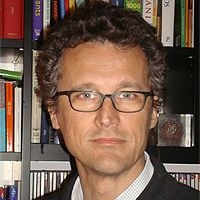
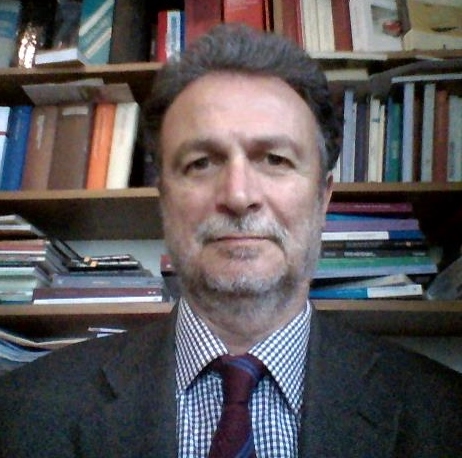
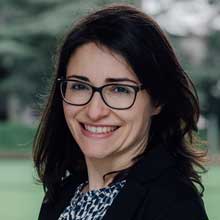
Giuseppe Motta is an Associate Professor at the Department of Modern Literature and Culture , Sapienza University of Rome. He holds a PhD in European History from Sapienza (2002) and focuses on minorities, ethnic conflicts, and human rights in 20th-century Central and Eastern Europe. His work bridges historical analysis with international legal frameworks, particularly the League of Nations and post-WWI nation-building. Research Projects : Currently leads PRIN 2023–2025 on Eastern Europe between Russia and the West; directs Sapienza research on Italy and the Middle East (2021–2024). Teaching : Courses on States and Minorities in the International Dimension , Human Rights and International Relations , and Eastern European history. Research Interests : His scholarship examines the humanitarian aspects of international institutions, anti-Jewish violence, kin-state policies, and migration studies. Recent work includes analyses of cultural genocide and the Armenian Question. Publications highlight trends in minority rights, postwar European history, and interwar antisemitism, with keywords spanning History, Political Science, and Social Sciences. Scientific Awards : 2023 Nabokov Prize (Special Mention). Affiliations : Vice-director of Archivi e Documenti , editorial board member of journals like Istorijski Casopis , and active in networks such as the Study Group on Minority History (BASEES) and Society of Romanian Studies . Collaborates with NATO 2020 on cultural heritage security.
Aldo Geuna is a Full Professor at the Department of Cultures, Politics and Society at the University of Torino and a Fellow of the Collegio Carlo Alberto. He previously served as Full Professor at the Department of Economics and Statistics Cognetti de Martiis (2008-2020) and has held academic positions at SPRU, University of Sussex (1998-2008), where he advanced from Lecturer to Senior Lecturer. His international experience includes Senior Research Fellowships at RSCAS-European University Institute and research positions at BETA-Strasbourg and MERIT-Maastricht. His educational background includes a PhD in Economics from Maastricht University (1993-1998), following Master's degrees in Technology Policy and Innovation Management from MERIT (1992-1993), Economics from University of Torino (1991-1992), and Management Engineering from Politecnico di Milano (1984-1991). Geuna's research focuses on: Economics of Science Economics of Innovation Science and Technology Policy Political Economy of Science and Technology ICT and Internet Economics Economic Growth and Development Economics His work centers on the socio-economic analysis of university research behavior and its links to innovation and economic growth. His recent publications reveal a strong emphasis on university-industry collaboration, research assessment methodologies, academic mobility, and the economic impact of technological advancements across multiple disciplines. Key recognitions include: Included in the list of Top Italian Scientists of VIA-Academy CIFAR Fellow Member of Editorial Boards for Research Policy, Journal of Technology Transfer, Italian Economic Journal, and others Geuna has coordinated numerous research projects funded by the European Commission, UK Research Councils, and Italian Ministry, including the current HPC/AI Transformative Impact on Science project. He has supervised PhD students and served on defense committees at institutions worldwide, while also advising governmental bodies and non-profit organizations across multiple countries including the OECD, National Academies (US), and EU.
Stefano Musso is an Associate Professor at the University of Turin, specializing in Contemporary History, Labor History, and Business History. His career spans decades of academic and institutional leadership, including roles at the Institute for the History of Labor and Business (ISMEL) and the Italian Society for the History of Labour (SISLAV). Education: BA+MA in Philosophy (1975), Master in History and Geography (1979), both from the University of Turin. His research focuses on Social History, Urban History, Labor Movements, Industrial Relations, and Vocational Training. He has extensively documented Italian labor dynamics from unification to modern globalization. His recent publications analyze 20th-century Italian labor trends, workforce governance under fascism, and post-WWII business responsibility. Articles often intersect with historical case studies, industrialization impacts, and socio-political frameworks. Scientific Awards: Fellowship from Feltrinelli Foundation (1977-78). Musso has directed ISMEL (2008-2012) and presided over SISLAV (2012-2017), contributing to institutional and academic networks. No student advising details are provided in the text.
Giuseppe De Arcangelis is an Ordinario Professor of Political Economy and International Economics at the Department of Social and Economic Sciences, Sapienza University of Rome, since 2005. He holds a PhD in Economics from the University of Michigan (1996) and has taught there as a Visiting Professor (2015-2017, 2020-2022). He previously held teaching positions at the Faculty of Economics, University of Bari, and Sapienza University of Rome. Consultancy Roles : Ministry of Economy and Finance, ICE, European Central Bank Visiting Positions : Sorbonne University, University of Lille 1, University of Michigan Research Interests Giuseppe's research focuses on international migration, migrant remittances, and international trade. His work explores the economic effects of migration on production structures, trade policy, and globalization sustainability. He has published extensively on topics like migration networks, remittance allocation, trade liberalization, and the political economy of sanctions. Publications & Projects He is the author of the textbook Economia Internazionale (2024) and leads research projects on migration-institutions-trade links, economic impacts of migration in Europe, and migration-outsourcing-firm dynamics. His recent articles address trade-migration historical patterns, remittance behavior, vaccine inequality, and the economic consequences of protectionism. Current Courses Teaching International Economics (2024-25) with a curriculum covering balance of payments, exchange rates, and trade policy. Students must register on Moodle for materials and updates.
Chiara Bonfiglioli is an Associate Professor in Contemporary History at the Department of Humanities, Ca' Foscari University of Venice, where she serves as Principal Investigator for the ERC Consolidator project WO-NAM: Women and Non-Alignment in the Cold War era: biographical and intersectional perspectives . Her academic trajectory spans multiple European institutions, reflecting a transnational research approach focused on gender history in socialist and post-socialist contexts. Dr. Bonfiglioli's research interests center on women's history, gender studies, and Cold War history with particular emphasis on Yugoslavia and the Non-Aligned Movement. Her work employs oral history and qualitative methodologies to explore the politics of memory , transnational feminist networks , and women's labor experiences in socialist contexts. She has developed innovative approaches to studying women's activism within state socialist structures, particularly examining women's organizations in Yugoslav factories and their legacy in post-Yugoslav spaces. Analysis of her most recent publications reveals consistent thematic focus on gendered dimensions of socialist and post-socialist transitions, with particular attention to textile industry workers, reproductive rights in socialist Yugoslavia, and women's diplomatic roles within the Non-Aligned Movement. Her work bridges historical analysis with contemporary feminist concerns, demonstrating how Cold War-era women's activism continues to shape current gender politics in Southeastern Europe. Her scientific recognition includes: ERC Consolidator grant for WO-NAM project EURIAS Junior Fellowship at Institute for Human Sciences (IWM), Vienna Elisabeth List grant from University of Graz NWO Rubicon postdoctoral fellowship NEWFELPRO postdoctoral fellowship Dr. Bonfiglioli has secured substantial research funding through competitive European grants and collaborative projects. Her teaching portfolio includes graduate courses on Cold War history, and she previously coordinated the interdisciplinary MA in Women's Studies at University College Cork. Her scholarly network spans institutions across Croatia, Austria, Germany, Slovenia, and the Netherlands, reflecting the transnational nature of her research focus on Southeastern Europe.
Jasmine Pisapia is a Researcher in the Department of Humanities at Ca' Foscari University of Venice . Her work intersects Environmental Anthropology , Anthropology of Images , and Theater & Performance Studies , with a focus on postindustrial landscapes and ecological trauma. Education : PhD in Sociocultural Anthropology (Columbia University), MA in Comparative Literature and Media Studies (Université de Montréal), BA in Literature and Humanities (Université de Montréal). Current Appointment : Principal Investigator for the project Ecologies of Performance: A Multimodal Ethnography of Environmental Violence and Embodied Resistance (2025–2028). Her research combines Literary Theory , Psychoanalysis , and Feminist Studies to analyze environmental conflicts and aesthetic responses. Key article themes include Postindustrial Heritage , Embodied Resistance , and Ecological Grief . Notable awards include the SSHRC Postdoctoral Research Fellowship . She has presented at major conferences like the American Anthropological Association and organized sessions on biosecurity and performance pedagogy. Collaborations : Institute for Cultural Inquiry (Berlin), McGill University, Columbia University. Teaching : Graduate courses on Visual Anthropology and Environmental Conflicts .
Diego Villar is a Researcher at the Department of Humanities of Ca' Foscari University of Venice , specializing in South American indigenous cultures through ethnographic and ethnohistorical approaches. His work focuses on material culture, historical anthropology, and cultural documentation of lowland societies. Geographical expertise: Latin America (Bolivian Amazon, Chaco region), Europe Research keywords: Cultural anthropology, Social anthropology, Ethnography, Ethnohistory Recent publications analyze Amazonian technology, myth reconstruction, and historical figures like Dr. Vellard and Nicolás Armentia. His 2025 book Antropología en singular explores minor histories of South American lowlands. Current projects examine cultural transformation in horticultural societies (2013 study) and material culture's role in indigenous identity formation.
Jacopo Cellini serves as a Research Fellow at the Historical Archives of the European Union, part of the European University Institute in Florence, Italy. His work bridges historical research with contemporary European governance challenges, focusing particularly on the evolution of European institutions and policy frameworks. His research interests encompass European integration history, environmental policy development within EU institutions, political dynamics of the European Parliament, and the social dimension of European governance. Cellini's work demonstrates a clear trajectory from examining foundational EU political structures to addressing current sustainability challenges, with increasing emphasis on climate change governance in his recent projects. Cellini's publications reveal a consistent methodological approach utilizing archival research to analyze historical developments in European institutions. His work connects historical analysis with contemporary policy challenges, particularly in environmental governance and social policy, showing how historical institutional development informs current EU responses to sustainability challenges. His collaborative research projects include ongoing work on 'Environmental challenges and climate change governance,' 'Sustainable Archives and Greener Approaches,' and 'The Social Partners as shapers and makers of Social Europe: discovering foundations and futures,' reflecting his commitment to linking historical understanding with contemporary European challenges.
Consuelo R. Nava is Associate Professor of Economic Statistics at the University of Aosta Valley (University of Valle d'Aosta) in the Department of Economic and Political Sciences. She also serves as a visiting professor at the Catholic University of the Sacred Heart in Milan and the University of Turin. Additionally, she is a member of the Cross-Border Center on Tourism and Mountain Economies. Dr. Nava earned her undergraduate degree (laurea triennale) in Business Economics from the University of Aosta Valley and Economics from the University of Turin, both with highest honors (110 e lode). She completed her PhD in Economics with a focus on applied mathematics and statistics at the University of Turin's Vilfredo Pareto Doctoral School in 2014. Following her doctorate, she worked as a research fellow at the Department of Economics and Statistics Cognetti de Martiis at the University of Turin (2014-2016) and as a research grant recipient with the Department of Translational Medicine at the University of Eastern Piedmont (2016-2017). Dr. Nava's research focuses on econometrics, time series analysis in the frequency domain, price indices, Bayesian inference, and discrete choice models. Her work bridges theoretical statistical methods with practical applications in economics, energy markets, tourism, and public health. She has developed innovative approaches to price index construction, switching behavior analysis in electricity markets, and Bayesian methods for modeling complex economic phenomena. Her publications demonstrate a strong interdisciplinary approach, with research spanning economic statistics, public health applications, tourism economics, and energy market analysis. Recent work shows an increasing focus on applying machine learning techniques alongside traditional econometric methods, particularly in analyzing startup survival during economic crises and modeling consumer behavior in liberalized markets. Dr. Nava has received several prestigious awards and recognitions: TEM Summer School Grant, Aosta, Italy Civil Society Talents Fellowship, Giovanni Goria Foundation, Asti, Italy Junior DESPINA Fellow, Big Data Lab, Turin, Italy Google Early Career Researchers Travel Grant, ISBA Socialis Prize, 7th edition, for her thesis on Corporate Social Responsibility Honor Student Scholarship, Collegio Carlo Alberto, Moncalieri, Italy As an educator, Dr. Nava has taught extensively across multiple institutions including Statistics, Quantitative Methods for Management, Econometrics, and Bayesian Statistics. She has served as a reviewer for several academic journals including Economics of Innovation and New Technology, Italian Journal of Applied Statistics, L'Industria, and Bayesian Analysis. Her research projects include studies on cruise ship impacts on destinations, illegal gambling analysis, switching behavior in European electricity markets, and Bayesian methods for analyzing asbestos exposure effects on mesothelioma risk. Her work with the Cross-Border Center on Tourism and Mountain Economies reflects her commitment to regional economic development research.
Giovanni Dosi is Professor of Economics at the Institute of Economics, Sant'Anna School of Advanced Studies, and co-director of the 'Intellectual Property Rights' task force at Columbia University's Initiative for Policy Dialogue. He serves as continental Europe editor of Industrial and Corporate Change and is recognized as an ISI Highly Cited Researcher and corresponding member of Italy's Accademia Nazionale dei Lincei. His research centers on evolutionary economics frameworks, examining innovation dynamics, technological change, and industrial organization within complex economic systems. Key interests include the interplay between knowledge accumulation, firm-level organizational capabilities, and Schumpeterian competition, with growing emphasis on global value chains, rentified capitalism, and policy interventions for productive efficiency. His work bridges theoretical modeling with empirical analysis of economic development trajectories. Recent publications (2023-2024) reveal a sustained focus on structural economic transformations, utilizing agent-based and evolutionary methodologies to investigate pharmaceutical innovation systems, labor market dynamics, and Italy's position in European production networks. These studies consistently integrate historical perspectives with contemporary policy challenges, particularly regarding wage regulation, intellectual property, and industrial policy. Professor Dosi's scholarly impact is reflected in major accolades: Wiley TIM Distinguished Scholar Award (2016) from the American Academy of Management Penrose Award by EURAM (2022) ISI Highly Cited Researcher designation Election to the Accademia Nazionale dei Lincei His editorial leadership extends to two volumes of selected essays (2000, 2012) and the 2023 monograph 'The Foundation of Complex Evolving Systems,' which synthesizes decades of research on capitalism as an evolving complex system. While advising activities and specific grant details are not documented in the source text, his extensive publication record and institutional roles indicate significant mentorship and collaborative research engagement.
Giuliana Freschi is a Post-Doc fellow in economic history at Sant’Anna School of Advanced Studies, Pisa, where she completed her PhD in May 2024. Her academic trajectory includes prior studies at Tor Vergata University, Pompeu Fabra University, and the University of Oxford, establishing a foundation in advanced historical and economic research methodologies. Educational background: PhD in Economic History, Sant’Anna School of Advanced Studies, Pisa (2024) Previous academic training at Tor Vergata University, Pompeu Fabra University, and University of Oxford Her research program critically examines Italian economic history through the lens of gender and social mobility, with sustained focus on female employment patterns, occupational transitions, and historical infant abandonment practices. Current investigations extend to long-term analysis of paid care work emergence in Italy, incorporating sex-selectivity frameworks to understand demographic-economic interactions across centuries. Methodologically, she integrates quantitative historical analysis with socio-economic theory to reconstruct labor market dynamics. Publication trends reveal concentrated expertise in 19th-20th century Italian socioeconomics, with recurring analytical threads connecting gendered labor participation, intergenerational mobility mechanisms, and institutional impacts on vulnerable populations. Recent outputs demonstrate increasing methodological sophistication in handling fragmented historical datasets while maintaining strong thematic coherence around marginalization and economic agency. No scientific awards are documented in available materials. Information regarding student advising, grant funding, or collaborative research teams remains unspecified in current records. Research infrastructure involvement including laboratories or institutional teams is not referenced in provided documentation.